
As India Gets Hotter, Clothing Adds a Layer to Caste Inequality

Wearing breathable textiles like cotton is becoming a form of heat adaptation, but for many Dalit families, they remain out of reach. Inside the narrow lanes of Shahbad Dairy, a suburb outside north-west Delhi, is a concrete maze of houses packed tightly together. Trees are scarce. A breeze is hardly able to pass through these cramped and unventilated alleys, and by afternoon, the heat is oppressive and inescapable. Poonam and her sister-in-law Ritika, who live next door to each other, ask their kids not to play outdoors under the hot sun. But though the temperature outside is 40°C, it feels a lot hotter indoors. The tin and concrete roofs of their houses trap heat. With no windows, there is barely any ventilation. Had they been men, Poonam and Ritika could have changed into shorter or looser clothing. Instead, tradition dictates that they cover their bodies in multiple layers. “This material makes you sweat more. It does not absorb sweat,” says Poonam, gesturing towards her salwar kameez and dupatta made of synthetic textiles. This forms a three-piece ensemble consisting of a long tunic, ankle-length trousers and a scarf – the dupatta – draped around the shoulders, neck and sometimes over the head. As heatwaves become more frequent and intense, experts Dialogue Earth spoke to say wearing natural fabrics like cotton and linen is emerging as a form of heat adaptation. But for many like Poonam and Ritika, they are a luxury, costing double their synthetic counterparts. Their family belongs to the Dalit community, a historically oppressed group of castes. Despite finishing high school, their father-in-law Paale Ram was pushed into sanitation work because of his caste, cleaning sewers like his father and grandfather before him. His sons do the same work, their family’s economic circumstances reflecting generations of exclusion from better paid and more secure livelihoods. (The Dalit families Dialogue Earth spoke to do not use last names to avoid further caste-based discrimination.) The family’s earnings barely cover household expenses, leaving little money for clothing. In Delhi, many of the workers most exposed to extreme heat, including sanitation and informal labourers, continue to come from historically marginalised caste communities. A 2024 analysis by The Hindu notes that nearly 70% of sewer and septic tank workers in India belong to oppressed castes. For workers spending long hours performing physically demanding labour in hot conditions, clothing matters. But “when income is limited, food and shelter become bigger priorities,” says Afrose Farid, a professor in the Department of Textile Design at Kerala’s National Institute of Fashion Technology. The cost of comfort Natural fabrics such as cotton and linen are widely preferred for hot weather because of their superior moisture absorption and breathability, Farid tells Dialogue Earth. Synthetic materials like polyester and nylon can feel uncomfortable in extreme heat, particularly for those spending long hours outdoors or in poorly ventilated homes. But the cost of polyester and cotton in India differ significantly. Dalit families struggle to reconcile that steep difference. Paale Ram earns around INR 35,000 (USD 371) a month, while Poonam’s husband, a bus conductor who also cleans sewers, earns up to INR 40,000 (USD 424). Their combined income, for a family of seven, barely covers household expenses and their three children’s education. “A cotton salwar suit [consisting of a salwar kameez and dupatta] will cost you more than INR 1,000 (USD 10), whereas blended fabric or synthetic fibres will only cost you INR 300,” says Riya, who is also from a Dalit household in Shahbad Dairy. Her husband works on the city’s sewer lines and earns INR 15,000 a month. They have five kids, and buying them clothes made of breathable fabric has been an added expense the family never anticipated. “Unequal access to comfortable clothing is not just poverty but a caste issue,” says Bezwada Wilson, the national convenor of the Safai Karmachari Andolan, an Indian organisation campaigning to eradicate manual scavenging, which means cleaning human waste from sewers by hand. Historically, clothing has been a tool of caste discrimination, Farid notes. “Earlier, caste-based discrimination focused on giving them less clothes to wear to humiliate them. But today, they are unable to access proper clothing because of their economic conditions,” she says. “In India, class is always… going to be affected by caste. You cannot take caste away from class,” anti-caste activist and designer Jay Sagathia tells Dialogue Earth. Double discrimination Marginalised communities face “double discrimination” – economic deprivation layered with caste-based exclusion that determines where services, infrastructure and dignity are available, notes Wilson, who is also from the Dalit community. Many Dalit families working in caste-linked occupations rely on second-hand clothing or local markets that cater to low-income customers, he says. Local markets often reflect assumptions about what poor communities can afford. “Near our houses, we won’t get cotton at all because they know that we are not using this,” Wilson adds. Despite India being one of the largest producers of cotton globally, with an industry employing up to 50 million people, the fabric remains out of reach for many low-income families. Sagathia says during visits to craft-producing communities in Gujarat, he met artisans from marginalised communities making intricate garments that were sold at prices they themselves could not afford. “The people who are making it are not able to wear it,” he says. Synthetic clothing could also become more ubiquitous in India through government schemes to boost the textile industry. In 2021, the government began offering companies incentives totalling over INR 10,000 crore (USD 1.1 billion) to expand production of manmade fabrics such as polyester, acrylic and viscose. Government officials told industry publication Apparel Resources earlier this month that the scheme could be extended by several years to accommodate more applicants. Unequal impacts of heat For five to six hours a day, 60-year-old Paale Ram wears a uniform made of synthetic materials to carry out his sanitation work, which involves shovelling waste from open drains near hot paved surfaces. Though it’s a simple vest worn over clothes, it traps
Unity among BCs, Dalits, minorities need of the hour: Markfed Director
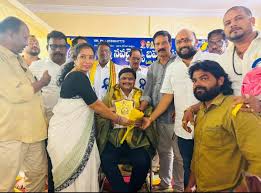
Nava Chaitanya Bahujana Sangham organisation members felicitating Markfed Director Anepu Ramakrishna Naidu in Srikakulam on Sunday. Nava Chaitanya Bahujana Sangham organisation members felicitating Markfed Director Anepu Ramakrishna Naidu in Srikakulam on Sunday. | Photo Credit: Special arrangement Andhra Pradesh Markfed Director and Turpu Kapu Samkshema Sangham’s State honorary president Anepu Ramakrishna Naidu said unity among the Backward Classes, Scheduled Castes, Scheduled Tribes and Minorities was need of the hour, asserting that these communities were not getting legitimate political opportunities as they face troubles from influential persons. The State Nava Chaitanya Bahujana Sangham invited Mr. Naidu as a chief guest to a meeting, in which the issues of Backward Classes, Scheduled Castes, Scheduled Tribes, were discussed. The Markfed Director was also felicitated at the event. He said administration had to be done in accordance to the Indian Constitution which ensured several welfare measures and opportunities for neglected sections of the society. Mr. Naidu said political power needed to be shared with BCs, SCs and STs. Courtesy : The Hindu Note: This news is originally published on https:/thehindu.com/bha and is used purely for non-profit/non-commercial purposes, especially human rights
Transgender Bill: Hashtag resistance turns humour into protest
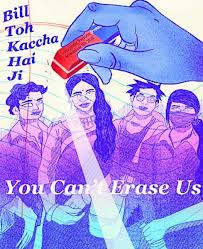
India’s trans community has used humour to critique the Transgender Persons (Protection of Rights) Amendment Bill. It has parodied famous songs and employed clever hashtags that have gained popularity on social media. The Indian Parliament succeeded in passing the Transgender Persons (Protection of Rights) Amendment Bill earlier this year, despite loud and unanimous protests from the very community that it claims to protect. This is the height of irony: a weapon masquerading as armour. India’s trans community have, however, refused to crawl back into the closet. They have been out on the streets, and in the digital public square, asserting their collective strength. Their resistance is both ferocious and tender, fuelled by joy and humour. The hashtag #BillTohKachchaHaiJi (and its differently spelt versions) which set social media on fire, is a riff on the song ‘Dil Toh Bachcha Hai Ji’ that noted lyricist and poet Gulzar wrote for Vishal Bhardwaj’s film Ishqiya (2010). Cleverly substituting ‘dil’ with ‘bill’ and ‘bachcha’ with ‘kachcha’, this hashtag calls out the half-baked quality of the legislation because it lacks inputs from the community it was meant to benefit. ‘Badtameez Bill’, the song that trans artist Anshumaan Sathe sang at the protest held at Mumbai’s Azad Maidan, is a parody of ‘Badtameez Dil’ written by Amitabh Bhattacharya for Ayan Mukerji’s film ‘Yeh Jawaani Hai Deewani’ (2013). By calling the bill ‘badtameez’, translated both as ‘ill-mannered’ and ‘uncultured’, it throws a moral challenge to a legal mandate. It questions the attempt to police gender identity and expression by demanding that trans people present themselves before a medical board and a district magistrate for certification. The hashtag and the parody draw on shared cultural knowledge to ridicule the powerful, who are far removed from the daily struggles faced by a community that lives on the margins of society. When protestors use language in such creative and subversive ways, they plug into a longer tradition of court jesters, stand-up comics, graffiti artists, and graphic novelists. The humour becomes a safe container to deliver their message effectively, and bypass political censorship. Garvit Garg and Shikha Rai from the School of Journalism and New Media Studies at the Indira Gandhi National Open University looked at 18 political parody songs to examine how they work through ‘frame-shifting’. In their study titled, ‘More than a laugh: examining the role of parody songs on Indian political discourse’, they show how these songs establish a cognitive frame through familiarity, then disrupt it by tweaking the lyrics to make listeners construct new meaning. Take the song, ‘Dil Toh Bachcha Hai Ji,’ for instance. Gulzar’s lyrics, set to music by Vishal Bhardwaj and sung by Rahat Fateh Ali Khan, are about a man whose heart remains childish and unruly even though his body has been growing older. #BillTohKachchaHaiJi, on the other hand, hints at various shades of meaning implied by the word ‘kachcha’. The legislation is raw, weak and unsustainable. It might have been received differently had it been shaped by the lived experiences of people from the trans community. ‘Badtameez Dil’, written by Amitabh Bhattacharya, is about a stubborn heart that refuses to be reined in by logic. It has been repurposed to offer legal critique. The original, set to music by Pritam, and sung by Benny Dayal, shifts from its playful register to an accusatory tone in its parody avatar. A law that does not care for What could be more strategic than using a song that is heard at weddings, on public transport, and in nightclubs? Emotional connect When protests ride on songs already buzzing inside people’s heads and dancing on their lips, they are able to strike an emotional connection that goes deeper than any press conference or white paper. This is what Garg and Rai call ‘affective leverage’: beloved melodies break through cognitive defences, so political commentary feels less like a sermon and more like an inside joke. The ones having the last laugh though are trans people themselves. They have been around forever, and will continue to exist far into the future, unlike law makers who occupy rickety seats that might seem like thrones but are actually cages that bind them with the fear of losing power. Chintan Girish Modi (The author is a journalist, educator and a literary critic. Courtesy : DH Note: This news is originally published on https:/deccanherald.com/bha and is used purely for non-profit/non-commercial purposes, especially human rights
Congress thoroughbred Hariprasad will lead party in Karnataka
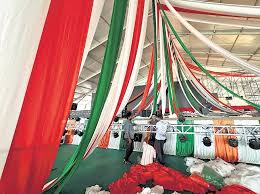
He was a Congress Working Committee permanent invitee and Haryana state in-charge before being elevated to the post. BENGALURU: The state is all set to witness 71-year-old Congress thoroughbred Bengaluru Kempaiah Hariprasad taking charge as new president of the Karnataka Pradesh Congress Committee (KPCC) at Palace Grounds on Sunday. He was a Congress Working Committee permanent invitee and Haryana state in-charge before being elevated to the post. A four-time Rajya Sabha member and two-time MLC, he is a staunch loyalist of the Nehru-Gandhi family, who has worked closely with Congress Parliamentary Party chief Sonia Gandhi. Kodandarama Nagara — close to Malleswaram, where Hariprasad was born and brought up, wore a festive look with residents, especially women, welcoming him with traditional aarti during his padayatra on Saturday. CM DK Shivakumar, who was KPCC president, will hand over the party flag officially to Hariprasad at 11 am. Hariprasad was among the five party candidates elected in the recent MLC polls, helping the party achieve the majority mark of 39 in a 75-member House. That victory has apparently energised the party’s rank and file. They will now pin their hopes on the Hariprasad-Shivakumar combination to work their magic to get the party reelected in the 2028 Assembly polls. Soon after Siddaramaiah passed the CM baton to Shivakumar, the party high command picked Hariprasad, who hails from the Ediga community, in a backward classes outreach. The Sunday rally, where Siddaramaiah too will be felicitated, will be attended by over one lakh people, said former Bengaluru Rural MP DK Suresh, Shivakumar’s younger brother. AICC president Mallikarjun Kharge, AICC General Secretary (Organisation) KC Venugopal and state in-charge Randeep Singh Surjewala are expected to attend. KPCC working president and Rajya Sabha member GC Chandrashekhar requested party workers not to hold up traffic in view of the NEET retest. Around 350 dignitaries will be on the main stage, while 200 others on the other one. Party workers will be ferried in 1,200 buses. Resolution to make Rahul PM The congregation will pass a resolution to make leader of opposition in the Lok Sabha Rahul Gandhi the prime minister in 2029 and also to bring the party to power in the state in 2028. “This is not just a power transfer programme. It is a party organisation ceremony, a ceremony for the future. This will be a platform to take a big decision. The next two years are election years,” said GC Chandrashekar. Devaraj B Hirehalli Courtesy : TNIE Note: This news is originally published on https:/thenewindianexpress.com/bha and is used purely for non-profit/non-commercial purposes, especially human rights
Rahul meets Punjab Congress’ top leaders amid speculations of organisational change; calls for unity

According to the leaders, Rahul Gandhi held one-on-one meetings with each of them, to get their views on the roadmap in the run-up to the Punjab Assembly polls. Amid speculations of an organisational restructuring in Punjab Congress, Rahul Gandhi on Sunday met top leaders of the state unit and urged them to fight the upcoming Assembly elections collectively, stressing that the party has a “very good chance” to win. Punjab goes to polls early next year. Punjab Congress chief Amarinder Singh Raja Warring, Leader of Opposition in the Punjab Assembly Pratap Singh Bajwa, former Punjab chief minister Charanjit Singh Channi, senior leaders Sukhjinder Singh Randhawa and Vijay Inder Singla met Rahul Gandhi at 10, Janpath, Sonia Gandhi’s residence. “I put forward my viewpoint on what is best for the party, and I’ve said whatever decision you (Rahul Gandhi) take, we will stand by that. We are committed soldiers of the Congress. Our families have sacrificed for the interest of Punjab, for the unity and integrity of this nation,” Bajwa told reporters after the meeting. “The leadership decision is with Rahul, whatever position he may give or not give, we stand by him,” Bajwa asserted. Gandhi met the five leaders one-on-one separately to get their views on the roadmap in the run-up to the Punjab Assembly polls, according to the leaders who met Gandhi. “Rahul Gandhi’s message was, ‘You have to fight collectively, Punjab is an important state, and we stand a very good chance.’ The leaders shared their views on the leadership issue and the best way forward. Basically, he stressed that we must protect Punjab’s interests,” a source privy to the meetings said. Earlier this month, the Congress named Ajay Maken, Meenakshi Natarajan and Bhajan Lal Jatav as All India Congress Committee observers to assess and submit a report on the current political scenario in Punjab. They submitted their report to the high command. Courtesy : TNIE Note: This news is originally published on https:/thenewindianexpress.com/bha and is used purely for non-profit/non-commercial purposes, especially human rights
Shashi Tharoor’s praise for PM Modi sparks political slugfest
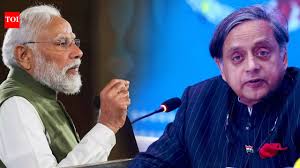
NEW DELHI: Congress MP Shashi Tharoor’s statement that Prime Minister Narendra Modi had conveyed India’s concerns to US President Donald Trump regarding the safety of civilian sailors has earned him the ire of his party. “Admiration for PM Modi appears to have transcended the limitations of the physical world” and he now “seems capable of hearing what Modi doesn’t even say”, Congress spokesperson Pawan Khera said in response to queries regarding Tharoor’s remarks which were at odds with leader of opposition Rahul Gandhi’s allegation that PM had not taken up with Trump the issue of deaths of three Indian seafarers who were killed by the US navy after their Palau-flagged ship breached the US-imposed naval blockade. Tharoor responded on X that he found it extraordinary that a statement about protecting Indian civilian sailors was “being twisted into a partisan political controversy”. Tharoor’s statement saying that the PM had raised the issue of Indian seafarers with the US President, led BJP to take a dig at Rahul Gandhi. “Dr Shashi Tharoor contradicted Rahul Gandhi’s stand on the same issue…” party spokesperson Shehzad Poonawalla said. “Not just that, Tharoor has effusively praised PM Modi’s vision, articulation, dynamism and oratory. He has said Modi has left a stamp on the lives of Indians,” he added. Courtesy : TOI Note: This news is originally published on https:/timesofindia.com/bha and is used purely for non-profit/non-commercial purposes, especially human rights
Tiruchy MGMGH to recruit transgender staff, forms eight-member panel to boost clinic infra
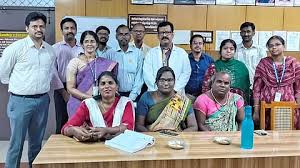
MGMGH Dean S Kumaravel convened a meeting on Friday with members of the transgender community and an eight-member expert committee constituted to study their needs. TIRUCHY: Days after trans persons raised concerns over inadequate facilities at the transgender person clinic in Mahatma Gandhi Memorial Government Hospital (MGMGH), the hospital has decided to appoint a member of the community to work at the clinic and ward, and also changed the OP services to Monday. The decision comes following a TNIE report on June 18 highlighting grievances raised by trans persons, including the lack of a separate toilet and inadequate infrastructure at the clinic. MGMGH Dean S Kumaravel convened a meeting on Friday with members of the community and an eight-member expert committee constituted to study their needs. He said, “A trans person willing to take up the responsibility would be employed at the clinic and ward to assist patients and help the administration better understand issues faced by the community.” The hospital has officially formed the committee to recommend measures for improving facilities and services for trans persons. The members are expected to visit the Government Rajaji Hospital in Madurai to study the facilities available before submitting its recommendations. In another measure, the trans persons clinic’s outpatient timings have also been revised. The clinic will now function on Mondays from 9 am to 11 am. Earlier the clinic functioned on Wednesdays. The dean said, “All experts will be available in the clinic to address health-related queries and concerns of the community.” During Friday’s meeting, trans persons reiterated concerns over the absence of dedicated toilets and other infrastructure gaps at the hospital. Participants said the interaction provided an opportunity to directly place their demands before the administration. “We explained the difficulties faced by trans persons visiting the clinic and requested better facilities. The dean and committee members listened to our concerns and assured us that steps would be taken,” said Oviya, a trans person activist who attended the meeting. Courtesy : TNIE Note: This news is originally published on https:/thenewindianexpress.com/bha and is used purely for non-profit/non-commercial purposes, especially human rights
Horror killing: Sister strangled to death; brother was angry over her eloping and marrying a Dalit boy.

When the husband was released from jail, he released a video demanding the arrest of his wife’s killers, prompting the police to launch an investigation. The girl’s brother was taken into custody and questioned, leading to the discovery of the murder. Reported by: In the Siwaipatti police station area of Muzaffarpur, a girl’s love marriage with a Dalit boy proved costly. Her brother Abhishek Kumar strangled her to death. When the police took the accused into custody and interrogated him, he confessed to the crime and explained the reason for the murder. The police arrested the accused brother and his accomplice and sent them to jail. Love Marriage with a Dalit Man The woman’s brother, Abhishek Kumar Yadav, told the police that his sister was in love with a Dalit man and had eloped with him and married him, leaving him deeply hurt and angry. When the man went to jail and the court sent the woman to her aunt’s house, the woman’s mother persuaded her to return home on Holi. Then, her brother, along with other relatives and associates, strangled the woman to death. The body was then cremated. The girl ran away from home in January. Gauri Shankar Kumar (22), son of Raju Ram, a resident of Ghansaut village, had been in a relationship with Sujata Kumari, a resident of Kodaria Gosaipur, since 2020. The girl was studying at her maternal uncle’s house in Ghansaut village. It was there that Sujata met Gauri Shankar and they would communicate. On January 18, 2026, they ran away from home. The girl’s family filed a police report. Gauri Shankar arrested from Haryana Gauri Shankar and Sujata got married at their friend’s house in Samastipur. On January 20, they moved to Haryana and began living there. Police arrested them on February 11 and brought them to Bihar on February 12. After presenting them in court, the man was sent to jail, and the girl was sent to her aunt’s house. After being released from jail, Gauri Shankar spoke to Sujata for the last time on the phone. After that, when he couldn’t hear from her, he went to the police and filed a complaint. When his complaint was not heard, he released a video and threatened suicide. Subsequently, the police became active, detained the woman’s brother, and began questioning him. The police uncovered the murder. Mani Bhushan Sharma, Correspondent, Muzaffarpur Edited by : Upendra Singh, Bihar Courtesy : Hindi News
A Dalit youth was brutally murdered by slitting his throat in Sant Kabir Nagar; an angry mob set the main accused’s house on fire.

A Dalit youth was brutally murdered in Sant Kabir Nagar, Uttar Pradesh, for protesting against molestation. An enraged mob set the house of the main accused, Nasir, on fire. Uttar Pradesh: The Bakhira area of Sant Kabir Nagar district was gripped by intense tension on Friday. A day earlier, on Thursday, a 29-year-old Dalit youth was brutally murdered by slitting his throat with a sharp-edged weapon. The horrific incident sent shockwaves through the area, and angry villagers staged a protest by placing the body on the road. The situation escalated to the point where the angry mob, demanding justice, set the main accused’s house on fire. According to police, the deceased, Anand Kumar, a resident of Kolki village, was a tile-layer. On Thursday, while he was returning home, he was ambushed by the attackers near Babhani intersection. The accused brutally slit Anand’s throat and fled the scene. As news of the murder spread, the victim’s family and villagers erupted in anger, blocking the road for several hours. Initial investigations have revealed that the murder stems from a dispute that occurred approximately 10 days ago. Police say that during a function, Anand’s niece complained that the main accused, Nasir Ali, had molested her. Angered by this, Anand confronted Nasir, leading to a scuffle. It is believed that the murder was orchestrated to avenge this rivalry. An FIR has been registered at the Bakhira police station against three people, including Nasir Ali. One of the accused remains unidentified. Police have formed several teams to apprehend the killers. Since the incident, the accused and his family have fled their homes to neighboring villages. A heavy police force has been deployed to prevent any untoward incidents and maintain peace in the area. Additional Director General of Police (ADG) of Gorakhpur Zone, Mutha Ashok Jain, stated that the situation is currently under control and a vigorous search for the accused is underway. When the mob set the accused’s house on fire on Friday, senior police and administrative officials immediately arrived at the scene. They spoke with the victim’s family and villagers and calmed them down. The family’s clear demand was that the accused be arrested as soon as possible, given severe punishment, and that their house be demolished. Only after the administration provided firm assurances of a fair investigation and prompt legal action did the protesters decide to end their protest. Following this, the administration took possession of the body and sent it for post-mortem, and the family performed Anand’s last rites on Friday itself. This single incident has forever devastated a happy family. Anand leaves behind his wife and two innocent children, the youngest of whom is just three months old. Rajan Chaudhary Courtesy: Hindi News
A case of molestation and assault of a Dalit woman in Asandra: FIR filed on court orders, neighbor accused of filling water from a government tap

A case of molestation, assault, and caste-related abuse of a Dalit woman has come to light in the Asandra police station area of Barabanki district. The police did not take action against the accused, prompting the victim to file a petition in court. On Friday night, the police registered a case of assault and under the Harijan Act. In the petition filed with the court, the victim, from the Asandra police station area, stated that on the evening of May 30th, she had gone to fill water and wash clothes at the government tap in front of her house. When her neighbor, Narendra Verma, arrived and began making obscene remarks to her, she objected. According to the victim, Narendra Verma became enraged. He hurled caste-related abuse at her and pushed her to the ground. When she ran inside to save her life, the accused, Narendra Verma, also entered the house after her. He tore her clothes and beat her with kicks, punches, and sticks. Hearing the woman’s screams, her sister-in-law and other neighbors rushed to the scene. Seeing the neighbors approach, the accused, Narendra Verma, threatened to kill the victim and her family and fled. Following the incident, the victim called 112 and complained about filing a report at the police station. However, the victim alleges that the police, under the influence of the accused, did not take appropriate action. The victim approached the court for justice. On Friday night, on the orders of the court, Asandra Police Station Officer Anil Singh filed a case against the accused, Narendra Verma, under sections 333, 76, 115, 352, 351 of the Indian Penal Code, and the Scheduled Castes and Scheduled Tribes Act. The case is being investigated by CO Ramsanehi Ghat, Saurabh Srivastava. Neeraj Shukla | Haidergarh, Barabanki Courtesy: Hindi News