
Outfit seeks arrest of prime accused in dalit murder case

Madurai: The Dalit Unity Federation staged a picketing at the Madurai district collectorate on Monday, demanding the immediate arrest of the prime accused in the murder of a 34-year-old dalit man from Avaniyapuram. The federation members submitted a petition to Madurai collector Nishant Krishna, seeking the arrest of one of the main accused in the case. Balaji was hacked to death on Friday following a dispute that reportedly broke out during a temple festival held earlier last week at Avaniyapuram near Madurai. Police said the incident was linked to a quarrel during the Veerakaliyamman Temple festival on June 12, when Sanjay Ramasamy allegedly misbehaved with girls. When Balaji questioned him, an argument broke out, leading to hostility between the two groups. On Friday around 2.30pm, Sanjay, along with five others, allegedly chased and attacked Balaji and his friend Raja Hussain with swords. While Raja Hussain escaped with minor injuries, Balaji suffered multiple head injuries and died on the spot. Raja Hussain is undergoing treatment at Government Rajaji Hospital. Earlier on Saturday, Balaji’s family staged a sit-in protest at the collectorate, demanding the arrest of the accused. The protest was withdrawn after police assured them of action. Courtesy : TOI Note: This news is originally published on https:/timesofindia.com/bha and is used purely for non-profit/non-commercial purposes, especially human rights
Kerala HC dismisses PIL against free KSRTC bus travel for women, transgender persons
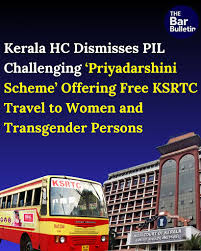
The Kerala High Court on Monday dismissed a Public Interest Litigation (PIL) challenging the state government’s newly-launched “Priyadarshini Scheme, which provides free travel to all women and transgender persons in ordinary KSRTC buses. A Division Bench comprising Chief Justice Soumen Sen and Justice Syam Kumar VM dismissed the PIL petition that sought to quash the Government Order (GO) which introduced the scheme. “There is nothing before us that Exhibit P1 G.O is contrary to the statutory norms or is perverse or illegal. Hence the litigation fails and it is dismissed,” the Court pronounced. The court rejected the argument that a few affluent beneficiaries could invalidate a welfare scheme targeted at broader socio-economic empowerment. The PIL petitioner, Muhammed Firdouz, challenged the scheme on the ground that it was arbitrary, discriminatory, and violative of Articles 14 and 15 of the Constitution of India. He claimed that there was no income criterion, residential qualification, or specifically identified disadvantage that was sought to be remedied by the scheme which would cost the public exchequer approximately Rs.2 crores per day or around Rs.800 crore per annum. “The Impugned GO itself acknowledges the financial impact by creating a ‘dedicated cash-transfer mechanism’ and directing the KSRTC CMD to develop non-fare revenue sources, which is an admission that the scheme imposes a significant, ongoing burden on a public institution already receiving Rs. 1,500 Crore per year in State support, now burdened with an additional Rs. 800 Crore without any demonstrated operational, social, or constitutional necessity,” the petition stated. The state government submitted that similar travel schemes are available in different parts of the country and contended that gender-based affirmative action has been affirmed by the Supreme Court. Courtesy : The Statesman Note: This news is originally published on https:/thestatesman.com/bha and is used purely for non-profit/non-commercial purposes, especially human rights
AIMPLB to launch nationwide movement against social, political marginalisation of Muslims
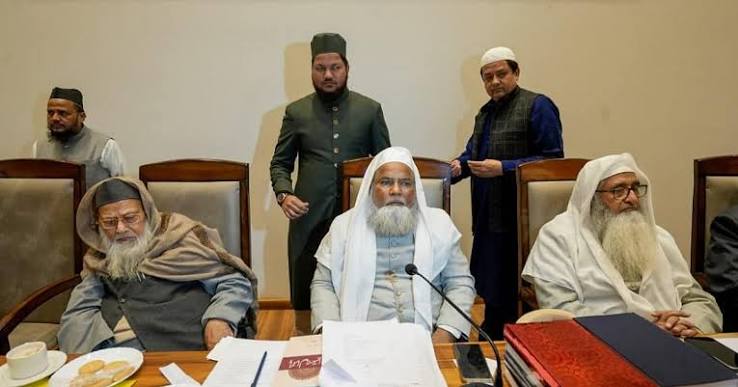
The Executive Committee expressed grave concern over the “rapidly deteriorating situation in BJP-administered states, the country and the Muslim community.” The All India Muslim Personal Law Board on Monday said it would soon come out with a comprehensive document on the “deteriorating condition” of Muslims in the country and launch a nationwide movement against the social and political marginalisation of the community. The Board made the announcement a day after a meeting of its executive committee. Briefing reporters on the decisions and deliberations at the meeting, AIMPLB spokesperson SQR Ilyas said the Board reviewed in detail the current situation facing the country and the Muslim community, and took a number of important decisions. “These decisions relate in particular to the growing incidents of mob violence or lynching against Muslims in BJP-ruled states; demolition drives targeting Muslim homes and localities, against mosques and madrasas; bulldozer terrorism; attempts to make Vande Mataram compulsory in government functions and schools; implementation of uniform government-aided madrasas; developments concerning the Madhya Pradesh High Court Civil Code in various states; and the recent judgment regarding the Kamal Maula Mosque,” he said. The Executive Committee expressed grave concern over the “rapidly deteriorating situation in BJP-administered states, the country and the Muslim community”, he said. The committee stated that Muslims’ lives, property, honour and dignity, mosques, madrasas, graveyards, personal law, fundamental rights, and even their faith and beliefs are under continuous attack. “We are unhappy with all parties, including the Congress. None of them raises issues of Muslims strongly,” Ilyas said, when asked about Rahul Gandhi’s reported remarks that if the issue pertains to Muslims, the community be specifically mentioned and not a generalised reference to minorities be made. The Executive Committee decided that a comprehensive document would be prepared and published on the “deteriorating condition of the Muslim community, communal tensions and violations of fundamental rights, so as to awaken the conscience of the people,” he said. “With regard to the Kamal Maula Mosque case, the Executive Committee expressed deep concern over the Madhya Pradesh High Court’s judgment, stating that there were historical evidence, revenue records, and colonial-era official documents. The judgment is contrary to centuries-old Muslim tradition of worship at the site. Furthermore, it is also inconsistent with the spirit of the Places of Worship Act, 1991,” Ilyas said. The Executive Committee welcomed the Kamal Maula Mosque Committee’s challenge of the judgment in the Supreme Court, and resolved that the AIMPLB would extend every possible assistance to the Mosque Committee in their legal struggle, he said. The Executive Committee declared that attempts to make Vande Mataram compulsory are contrary to Article 25 of the Constitution of India, Ilyas said. The Board welcomed the Calcutta High Court’s interim order staying the government directive requiring the singing of Vande Mataram in madrasas, he said. The Executive Committee also expressed serious concern over the ongoing legislative efforts in BJP-ruled states in the name of the Uniform Civil Code (UCC), Ilyas said. The meeting noted that after Uttarakhand and Gujarat, preparations are now underway to implement the UCC in Assam, Madhya Pradesh and Maharashtra as well. The Board clarified that the Uniform Civil Code is not a mandatory constitutional command that courts are bound to enforce; rather, it is a non-binding guiding principle included among the Directive Principles of State Policy. The Executive Committee further resolved that, against the social and political marginalisation of Muslims, violation of constitutional norms, the promotion of hatred and hostility, the damage to communal harmony, attacks on life, property, honour and dignity of Muslims and the demolition of mosques and madrasas, the Board will launch a nationwide movement in partnership with justice-loving, democracy-loving, and peace-loving sections of society, Ilyas said. For this purpose, an Action Committee is being constituted, he said, adding that the movement may begin by July end. The Executive Committee meeting on Sunday was presided over by AIMPLB president Maulana Khalid Saifullah Rahmani, and the proceedings were conducted by general secretary Maulana Fazlur Rahim Muiaddidi. Executive Committee members from across the country attended the meeting. Courtesy : TNIE Note: This news is originally published on https:/thenewindianexpress.com/bha and is used purely for non-profit/non-commercial purposes, especially human rights
Jairam Ramesh seeks Centre’s clarity on private control, funding of Great Nicobar port
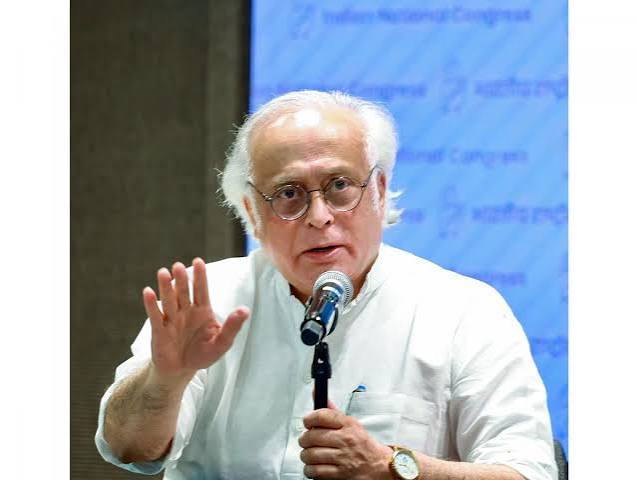
Congress leader questions ownership pattern, VGF support and risks flagged by PPPAC for the Galathea Bay transhipment project. Congress leader Jairam Ramesh has sought clarifications from Union Ports, Shipping and Waterways Minister Sarbananda Sonowal over the proposed International Container Transhipment Port (ICTP) at Galathea Bay in Great Nicobar Island, raising questions over private participation, funding and environmental concerns. In a letter to Sonowal, Ramesh asked the ministry to share the timeline for inviting private participation for the project and the process for selecting the private co-owner and operator of the proposed port. He also sought clarity on the ownership structure of the project’s special purpose vehicle (SPV), pointing out that recommendations of the Public Private Partnership Appraisal Committee (PPPAC) specify that a minimum of 55 per cent shareholding should be held by an Indian-owned and controlled entity. “I seek clarity on three specific points. Since the minimum private shareholding is to be 55%, does it mean that 100% private shareholding will be allowed, or is there a minimum shareholding by public entities as well?” Ramesh said in his letter. The Congress leader also questioned whether private ownership of ports would be diversified or whether a situation similar to the airport sector would be allowed. “Is private ownership of ports to be diversified, or will the airports-like situation be permitted, where only one private company has acquired the six airports sold off so far,” he asked. Ramesh further sought details on funding after the PPPAC rejected the ministry’s request for a Viability Gap Funding (VGF) grant. “Since the PPPAC has turned down the Ministry’s request for a Viability Gap Funding (VGF) grant, will the Ministry provide VGF/capital grant support from its own allocated budget?” he asked. The letter comes amid Ramesh’s repeated objections to the Great Nicobar Island (GNI) project, which includes the transhipment port, a civilian-cum-naval airport, a township and a power plant. Calling himself among those concerned about the project’s ecological impact, Ramesh said the government was pushing ahead with the port despite acknowledging major risks. “You are aware that the PPPAC of the Ministry of Finance had met on March 17, 2026 and March 19, 2026 to consider the proposal of the Ministry of Ports, Shipping and Waterways for the development of an international container transshipment port at Galathea Bay, Great Nicobar Island,” Ramesh said. He cited the PPPAC’s record of discussions issued on April 2, which identified two major risks associated with the project — developing a large-scale greenfield port and attracting transhipment traffic away from established ports. “I take it that these competing well-established ports are Colombo, Singapore and Port Klang — It is extraordinary that even while recognizing these huge risks — quite apart from the certainty of ecological devastation that will be caused by its construction — the transshipment port is being pushed through,” Ramesh said. Ramesh has previously written to Environment Minister Bhupender Yadav, Tribal Affairs Minister Jual Oram and Defence Minister Rajnath Singh, raising concerns over environmental clearances, tribal rights and defence-related aspects of the project. On Friday, he wrote to Yadav alleging that environmental impact assessments for different components of the project were “demonstrably inadequate” and questioned the transparency of the approval process. The Congress has repeatedly criticised the project, claiming the Galathea Bay port would cause large-scale ecological damage, including destruction of coral colonies. Ramesh has also raised concerns over the impact on tribal rights and has urged the government to ensure implementation of the Forest Rights Act, 2006. Congress leader Rahul Gandhi has also attacked the project, alleging that the government’s stated reasons of defence and port development were not the real motivation behind it. Gandhi had earlier claimed the project was aimed at benefiting a private businessman by enabling the development of hotels and casinos on ecologically sensitive land. He also released a video after his visit to the Andaman and Nicobar Islands and urged people to oppose the project through a public campaign. Courtesy : TNIE Note: This news is originally published on https:/thenewindianexpress.com/bha and is used purely for non-profit/non-commercial purposes, especially human rights
Rahul Gandhi attends Congress training camp in Chhattisgarh
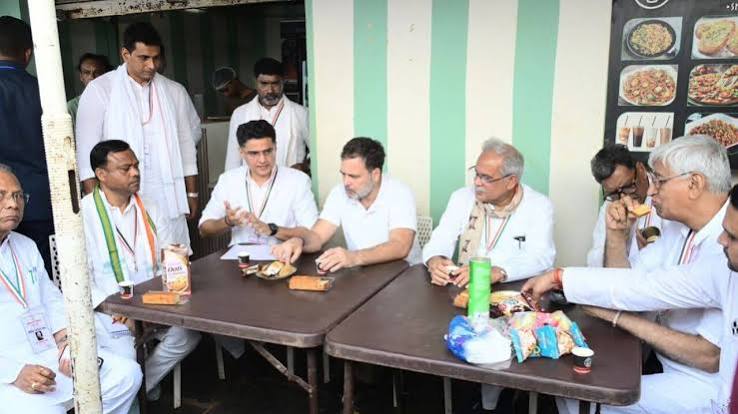
Leader of Opposition in the Lok Sabha Rahul Gandhi arrived in Abhanpur on a day-long visit to attend a 10-day Congress training camp on Sunday. During his four-hour visit, Gandhi held a 40-minute meeting with senior party leaders before interacting directly with district and city unit presidents. On his way back to the airport, Gandhi stopped at a roadside tea stall where he was seen sharing biscuits with Pradesh Congress Committee (PCC) chief Deepak Baij. Senior leaders including Sachin Pilot, Bhupesh Baghel, T S Singh Deo, and Charan Das Mahant accompanied him. While the ongoing training camp in Abhanpur was scheduled as a closed-door event, a large number of Congress workers gathered at the venue from across the state. The heavy rush led to brief chaos at the entrance. In the ensuing push and shove, Leader of Opposition in the Chhattisgarh Legislative Assembly Charan Das Mahant was left stranded outside the main gate for a period. Videos of the incident have since surfaced on social media. Gandhi departed for the airport following the conclusion of the interaction sessions. Courtesy : TOI Note: This news is originally published on https:/timesofindia.com/bha and is used purely for non-profit/non-commercial purposes, especially human rights
Rahul meets 5 key Punjab netas ahead of call on party rejig

NEW DELHI: As Congress rethinks its organisational leadership in poll-bound Punjab, Rahul Gandhi Sunday met five key state functionaries ahead of a decision on a reshuffle. Leader of the opposition Partap Singh Bajwa, state chief Amarinder Raja Warring, ex-CM Charanjit Singh Channi, Sukhjinder Randhawa and Vijay Inder Singla met Rahul at 10, Janpath. Sources said Rahul asked them to fight the polls collectively, a day after the party brass discussed a report of the Ajay Maken panel set up to look into the Punjab unit. Meenakshi Natarajan and Bhajan Lal Jatav were other members of the panel. The five state functionaries are said to have given their views on the nature of the team with which Congress should go to the polls. Rahul called the leaders individually and sought their opinions. Bajwa told reporters, “I put forward my viewpoint on what is best for the party, and I said whatever decision you (Rahul) take, we’ll stand by it. We’re committed soldiers of Congress.” Courtesy : TOI Note: This news is originally published on https:/timesofindia.com/bha and is used purely for non-profit/non-commercial purposes, especially human rights
Human Rights Commission Takes Strict Action on Liquor Shops in Dalit Settlements: Demands Report from Agra DM-Commissioner within Four Weeks
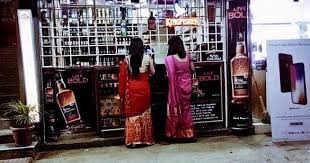
Agra: The National Human Rights Commission has taken a very serious view of liquor shops operating in Dalit, slum, and densely populated residential areas, issuing a notice to the Agra administration. Taking cognizance of a complaint filed by human rights activist and advocate Naresh Paras, the Commission has directed the District Magistrate and the concerned administrative officials to submit a detailed Action Taken Report (ATR) within four weeks. Issues of Security and Social Justice In the complaint, advocate Naresh Paras argues that the presence of liquor shops in these areas has made life difficult for women, students, and ordinary citizens. Incidents such as gatherings of antisocial elements outside the shops, molestation, abuse, and assault have become a daily occurrence, violating the fundamental rights of citizens. He also cited the recent tragic road accident in Nagla Budhi, New Agra, where five people lost their lives due to the negligence of a drunk driver. Proposed Solution: ‘Wine Zones’ and Strict Policies The complainant not only demanded the removal of liquor vends, but also suggested the development of ‘wine zones’ (controlled areas) as a concrete solution. He proposed that all liquor vends be relocated from residential and sensitive areas to the outskirts of the city or industrial areas. These zones should have CCTV surveillance and adequate police security. Liquor sales hours should be limited to 10 a.m. to 10 p.m. Emphasis on Constitutional Provisions In his complaint, Naresh Paras cited Article 21 (Protection of Life) and Article 46 (Protection of the Interests of Scheduled Castes and Scheduled Tribes) of the Constitution, demanding accountability of the administration. They have also appealed for an investigation against the excise officials who allowed the liquor shops to open in populated areas. Suggestions for the Future The proposals presented to the Human Rights Commission include important demands such as ensuring a minimum distance of 200 meters between liquor shops and schools, religious places, and residential complexes, making public hearings mandatory, and making a Social Impact Assessment a prerequisite for contract approval. This issue has now become not just about local law and order, but about social justice and the protection of women’s dignity. This directive from the Commission poses a major challenge to the administration, as it will now have to explain its stance on the operation of liquor shops in these sensitive areas. Courtesy: Hindi News
Deadly attack on Dalit youth in Balrampur: Casteist slurs hurled, FIR filed against 4

A case of assault, casteist slurs, and death threats against Dalit youth has come to light in Balrampur village, under the Narsena police station jurisdiction. The victims have filed a complaint against four named accused at the Narsena police station, demanding strict action. According to the complaint, Ankit Kumar, son of Dharamveer, Dharmendra, son of late Sukhdev Singh, and Bobby Kumar, son of Vijendra Singh, residents of Balrampur village, told the police that they were attacked by Shiva, son of Kiranpal Singh, Shailesh, and Mainpal, along with others from the same village. The attackers allegedly assaulted them with sticks and sharp weapons (shovels). The victims reported that when they protested, the accused abused them, used casteist slurs, and threatened to kill them. The victims allege that the accused have a domineering nature, creating an atmosphere of terror within their families. Following the incident, the victim’s family reached the Narsena police station and filed a written complaint naming the accused, demanding legal action by filing a case against them. Station House Officer Ram Kishore Gautam stated that the complaint has been received and the matter is being investigated. Further legal action will be taken based on the investigation. Dushyant Kumar Rana | Unchagaon (Syana), Bulandshahr Courtesy: Hindi News
Police solve mystery behind Dalit youngster’s murder in Adilabad

Adilabad police arrested six persons for the murder of 23-year-old Nathari Sathish in Neradigonda. Investigators said the crime was linked to a personal dispute involving a girl. The case was solved within 48 hours using technology and CCTV footage Adilabad: Police swiftly solved the mystery behind the sensational murder of a Dalit youth by arresting six persons in Neradigonda on Sunday. Police seized five mobile phones, two motorcycles and empty beer bottles from the accused. Briefing newsmen, Utnoor ASP Ruthwik Sai Kotte said that Shaik Sumer and Gangadhari Sai Krishna, both from Neradigonda mandal, and Bojja Vishnuvardhan, Shaik Akram and Syed Noman, belonging to Boath town, were apprehended on charges of killing Nathari Sathish (23) on June 17. During interrogation, Sumer confessed to killing Sathish as he was obstructing his efforts to pursue a relationship with a girl. He allegedly strangled Sathish to death after forcing him to consume excessive liquor at an irrigation tank with the help of the other accused. He revealed that they later dumped the body in the tank. The accused further disclosed that they shifted Sathish’s two-wheeler to Adilabad town and threw his mobile phone from a train. Police initially registered a missing case after Sathish’s parents lodged a complaint when he went missing on June 17. They traced the body in the tank and altered the case to murder on June 19. Two special teams were formed to crack the mystery. Ruthwik said the investigators managed to unravel the mystery within 48 hours with the help of technology and CCTV camera footage. He stated that a case had been registered against the accused under the SC/ST (Prevention of Atrocities) Act. Courtesy : Telangana Today Note: This news is originally published on https:/telanganatoday.com/bha and is used purely for non-profit/non-commercial purposes, especially human rights
A 16-year-old Dalit girl was gang-raped in Kishangarhbas.

Khairthal-Tijara. A case of gang rape of a 16-year-old Dalit girl has come to light in a village in the Kishangarhbas police station area of Khairthal-Tijara district in Rajasthan. The victim’s grandmother, while filing the case on Sunday, stated that after the death of their son, the family had gone to the Ganges River to immerse his ashes. At around 12 a.m. on June 20th, two men from the same village forcibly abducted her granddaughter, who was sleeping at home. They took the girl to a nearby field, where two other men were present. The four men raped her. Police have registered a case and launched a search for the accused. Courtesy: Hindi News