
CPI to hold nation-wide protest on Nov 18 on crimes against women minorities Dalits

New Delhi, Nov 11 (PTI) The Communist Party of India will hold a nation-wide protest on November 18 on issues of equality and justice, party General Secretary D Raja said, claiming that atrocities against women, Dalits and minorities are increasing. The Left party would hold demonstrations across the country to highlight issues related to incidents of crimes against women, Dalits and minorities. “Atrocities against these sections which are already vulnerable are increasing. Even a Supreme Court justice observed that women are the largest minority in the country,” Raja told PTI. He was referring to an observation by Justice B V Nagarathna of the top court, who observed that women who form 48.44 per cent of the country’s population are the largest minority in India, while hearing a petition on ‘Nari Shakti Vandan Adhiniyam’ — a law for providing reservation to women in Parliament and state assemblies. “India is a secular, democratic republic… But the way minorities are attacked, it is challenging the idea of India,” Raja said. “To uphold Constitutional principles and ideas of social justice and equality, our party has given this call for a protest across the country on November 18,” he said. (This story has not been edited by THE WEEK and is auto-generated from PTI) Courtesy : The Week Note: This news is originally published on https:/theweek.com/bha and is used purely for non-profit/non-commercial purposes, especially human rights
Dalit, Tribal Women Lose Strongholds as NMC’s 2025 Reservation Draw Reshapes Nagpur’s Civic Map
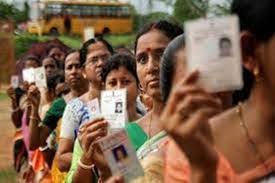
Nagpur’s civic map has been redrawn once again, with the 2025 Nagpur Municipal Corporation (NMC) reservation draw overturning long-standing caste and gender alignments. While 76 of 151 total seats remain reserved for women, the latest reshuffle has dealt a major blow to Scheduled Caste (SC) and Scheduled Tribe (ST) women leaders who had emerged as powerful local voices since 2017. In the last civic election, 15 seats were reserved for SC (women), giving dalit women a stronghold across north and east Nagpur. But in the new 2025 chart, half of those wards have been rotated to SC (open) or General (women), forcing several sitting corporators out of their constituencies. Among the worst hit are Sneha Nikose (Prabhag 9A, Congress), whose ward is now open, and Shakuntala Parve (Prabhag 20A, BJP), who also loses her SC (women) seat. Veteran corporators like Kanta Rarokar (23A, BJP), Usha Palat (31A), Minakshi Telgote (36A), and Ujwala Bankar (38A) face similar displacements, as their wards shift out of the women’s quota. The change has fractured traditional dalit clusters in Prabhags 5, 7, and 20, once known as SC-ST belts, now replaced by OBC and General category seats. For the first time in two terms, no single SC (women) cluster remains intact in the city’s northern zone — a major setback for grassroots dalit women leadership. In contrast, ST (women) seats remain relatively stable, retaining six of the total 12 ST positions. Congress corporator Asha Uikey (8A) and Jyoti Bhisikar (21A) are expected to retain influence, while the conversion of Prabhag 34B to ST (women) has opened new opportunities for emerging tribal leaders from east Nagpur. Overall, SC representation remains at 30 seats and ST at 12, but the internal balance has shifted sharply. Political observers see this as the end of an era where dalit women leaders enjoyed secure, cluster-based representation. The 2025 elections, they say, will test whether the social and political capital these women built through years of grassroots work can endure beyond the protective boundaries of reservation. Written by TLN Team Courtesy : The Live Nagpur Note: This news is originally published on https:/thelivenagpur.com/bha and is used purely for non-profit/non-commercial purposes, especially human rights
Dalit woman raped for eight years under false pretenses of marriage: Asif accused of forced religious conversion, feeding her beef, and forcing her to undergo an abortion

A Dalit woman in Akbarpur has accused a young man named Asif of raping her for eight years under false pretenses of marriage. The woman alleges that Asif forced her religious conversion, fed her beef, and forced her to wear a burqa. She has also alleged forced abortion and attempted murder. Police have registered a case of rape against Asif and attempted rape against his father and brother and have begun an investigation. In her complaint to the police, the woman stated that Asif, a resident of Miranpur in Akbarpur, has relatives in her village. They met about eight years ago and began communicating. During this time, Asif, under false pretenses of marriage, began raping her. According to the woman, on September 6, 2023, Asif took her to his home and raped her. When she resisted, he stabbed her in the hand, injuring her. After keeping her at his home for a few days, Asif took her to Ludhiana. When the woman became pregnant, Asif abandoned her and returned home. The woman somehow reached Asif’s home, where Asif, his father Jalaluddin, and brother Arif forcibly administered medication and caused her to have an abortion. After recovering, she was taken to a madrasa, where she was converted to Islam. She was then fed beef and forced to wear a burqa. When she protested, she was also subjected to casteist abuse. The woman stated that on October 30, 2025, Asif drove her out of his home and, despite repeated persuasion, refused to keep her with him. On Monday, the woman reported the matter to the police. Police Inspector Srinivas Pandey stated that based on the complaint, a case has been registered against Asif for rape under the pretext of marriage, and against her father and brother for attempted rape. He stated that both applications are being investigated, and one of the accused is being interrogated. Courtesy: Hindi News
Bhadohi: Dalit women who went to relieve themselves were molested; a case was filed against two youths under the SC/ST Act on a court order.

Police did not register an FIR; the victim appealed to the court, and now a case has been filed against two youths under the SC/ST Act. Bhadohi: A shameful incident of ambushing and molesting Dalit women who were going to relieve themselves near a pond in Bhadohi district, Uttar Pradesh, has come to light. After accusing the local police of inaction, the victim’s family moved the court. Now, on the orders of a local court, a case has been filed against two youths under serious sections. Police stated on Monday that both accused are currently absconding and efforts are being made to arrest them. What is the whole matter? According to the police, this incident occurred in the Gyanpur Kotwali area. 60-year-old Raj Bahadur Gautam filed a petition in the court of Special Judge (SC/ST Act) Amit Verma on April 23rd of this year. Gautam stated in his petition that there is a pond in front of his house, where his family, as well as women and girls from several neighboring houses, go to defecate at night. The heinous acts were committed under the cover of darkness. The petition made the serious allegation that two young men, Ramesh Bind and Shyamdhar Bind, would hide near the pond under the cover of darkness. When women arrived, they would molest and engage in obscene acts. The victim’s wife was also abused. Petitioner Raj Bahadur Gautam alleged that on the evening of February 24th, when his wife went to the pond to defecate, the two accused subjected her to the same heinous acts. When his wife strongly objected, the accused not only abused her but also used casteist slurs and drove her away. Upon returning home, the woman narrated the entire ordeal to her husband. Husband beaten after complaining, police accused of inaction Gyanpur Kotwali SHO Manoj Kumar stated that after listening to his wife, Raj Bahadur Gautam went to confront the accused. It is alleged that the two youths also abused Gautam and beat him so severely that he had to be taken to the hospital for treatment. The victim Gautam also alleges that when he complained to the police about the incident, his FIR was not registered. Failing to receive justice, he was forced to approach the court. Case filed on court order After hearing arguments in the case, Special Judge (SC/ST Act) Amit Verma on November 8th clearly ordered the police to file a case. The police stated that, in compliance with this court order, a case was registered against both accused—Ramesh Bind and Shyamdhar Bind—at the Gyanpur Kotwali on Sunday under relevant sections of the Indian Penal Code (IPC) and the Scheduled Castes and Scheduled Tribes (Prevention of Atrocities) Act. Police are now searching for the absconding accused. Rajan Chaudhary Courtesy: Hindi News
IOC set to ban transgender women from all female events at LA 2028 amid fairness debate

The International Olympic Committee (IOC) is planning a total ban on transgender women from playing in women’s events at the 2028 Los Angeles Games. The new IOC president, Kirsty Coventry, is leading this move to “protect fairness in female sports,” according to Daily Mail Sport and AP News. Right now, every sport can make its own rules for transgender athletes, based on their testosterone levels. But the IOC now wants one rule for all sports, which would stop all transgender women from competing in women’s categories. Sources told Daily Mail Sport this new rule could be announced in early 2025 and might take six months to a year to fully pass. It will likely start before the Winter Olympics in Italy next February. IOC officials said this is the “direction of travel,” but no final decision has been made yet. An IOC statement to Daily Mail Sport said, “The working group is continuing discussions. No decisions have been taken yet.” Imane Khelif’s Paris 2024 boxing win sparks IOC debate on DSD and transgender athlete ban for LA 2028 The new rule also raises a big question, what happens to athletes like Imane Khelif from Algeria?Imane Khelif, who won boxing gold at the 2024 Paris Olympics, has what reports call a “difference in sexual development” (DSD). That means she has male chromosomes but was raised as female. Her win, and that of Lin Yu-ting from Taiwan, caused a huge storm. Both had earlier been disqualified from the 2023 World Championships for not passing gender tests. But the IOC still allowed them to fight in Paris, which led to global outrage. — dailymail (@dailymail) Now, the IOC is deciding if DSD athletes should also face limits like transgender athletes. But insiders told Daily Mail Sport that there’s internal opposition to banning them completely. The IOC’s medical chief, Dr. Jane Thornton, gave a report in Lausanne last week about transgender and DSD athletes. The report reviewed the latest science on hormones and performance. It showed how hard it is to set fair rules for everyone. President Kirsty Coventry, a former Olympic swimmer from Zimbabwe, promised to “protect the female category” when she was elected. Many think the upcoming rule will help her keep that promise, and also avoid clashes with U.S. President Donald Trump, who already signed an order banning transgender women from female sports earlier this year. For now, the IOC says no final decision has been made. But all signs point to a total ban coming before the Los Angeles 2028 Olympics. Courtesy : TOI Note: This news is originally published on https:/timesofindia.com/bha and is used purely for non-profit/non-commercial purposes, especially human rights
Asothar police accused of assaulting a Dalit family: Woman suffers head injury, station in-charge calls allegations baseless

Police in Fatehpur’s Asothar police station area have been accused of assaulting women and girls from a Dalit family. The incident came to light after a video went viral on social media, allegedly showing two girls and two women being assaulted by policemen inside the police station premises. It is alleged that 10 to 12 policemen kicked, punched, and beat a young woman with belts, both inside and outside the police station, resulting in serious head injuries. The medical report also documented the injuries.Family members of the victim, Deepika, stated that the incident stemmed from a dispute over the payment for a pig. Deepika’s elder mother had sold a pig to a trader, and an argument ensued over the payment. The businessman filed a complaint at the Asothar police station, following which a police team arrived at Kauder village and summoned the family. The family alleges that upon arriving at the police station, the policemen misbehaved with the women and their daughters and then began beating them inside.According to the victim, Deepika, after the beating, the police issued a challan under Section 151. Despite suffering a serious head injury, she was not given a medical examination. The family reported that Deepika’s health is continuously deteriorating and she is vomiting. The woman’s wedding is scheduled for November 22nd, which is worrying the family.Asothar police station in-charge Abhilash Tiwari presented his side of the story. He stated that people who had come to buy pigs were assaulted and injured. A case has been registered in this regard, and some of the accused have been detained and presented in court, while one is still absconding. The station in-charge alleged that false videos and photographs are being circulated against the police to protect the absconding accused. He clarified that the police did not assault anyone and all the allegations are baseless.Amar Kesharwani Courtesy : Hindi News
UPSC Gender Gap: Women See Gradual Progress, Transgender Inclusion Remains Almost Nonexistent

Despite forming nearly half of India’s population, women and transgender individuals continue to be vastly underrepresented in the country’s most prestigious recruitment process — the UPSC Civil Services Examination. Data from the Union Public Service Commission’s (UPSC) Annual Reports between 2010 and 2021 paints a telling picture: while women’s participation has slowly increased, transgender representation remains almost invisible. Women’s Representation: A Slow but Steady Climb According to the UPSC’s 2021 Annual Report, women constituted 32.98% of candidates appearing for the Preliminary Examination. However, only 14.75% progressed to the Mains, 26.87% reached the Interview stage, and ultimately, a mere 15.66% — or 201 women — made it to the final list of selected candidates. Although modest, the upward trend is clear: women’s participation rose from 23% in 2010 to nearly 33% in 2021, signaling a slow but steady shift toward gender inclusion in India’s civil services. Transgender Participation: Progress Still Out of Sight In contrast, the transgender community remains almost absent from the UPSC landscape. Following a 2016 court directive, the Commission added a “third gender” option in its application forms — a milestone for inclusivity. However, the impact has been minimal. In 2021, only 19 transgender candidates applied, with just four appearing for the exam — none qualified. Similarly, 2020 saw 16 applicants and five appearances, while 2018 and 2019 recorded just one application each. Experts attribute this near-zero participation to systemic barriers — widespread stigma, identity-based exclusion, and a lack of institutional support prevent many transgender students from even reaching higher education, let alone competing in national-level exams. Professor Rajeev from Delhi University explained that while initiatives like his department’s Transgender Resource Center offer training and counseling, broader social awareness and inclusive educational policies are urgently required to bridge the gap. Societal Pressures Continue to Constrain Women Aspirants For countless women, preparing for the UPSC remains a struggle against entrenched cultural expectations. Anshika Moyal from Rajasthan recalled how her decision to move to Delhi for exam preparation invited constant reminders from relatives to get married. “There’s still a belief that girls should be married by their late twenties. That constant pressure makes it hard to stay focused,” she said. Similarly, Aayushi from Uttarakhand, a government employee, shared that she faced ridicule from family elders for continuing her studies instead of marrying. “My grandmother used to say I was wasting time, but my mother stood by me and encouraged me to keep going,” she added. IAS officer Ira Singhal noted that many families see the UPSC as a “risky pursuit” for women, preferring the perceived stability of marriage over the uncertainty of years-long preparation. Economic and Structural Challenges Deepen the Divide Beyond social barriers, financial constraints often determine who can afford to chase their civil services dream. UPSC preparation typically demands hefty expenses — coaching fees, accommodation, and study materials add up quickly. Aayushi shared that while her parents funded her education, they couldn’t afford to send her to Delhi for coaching, forcing her to rely on self-study. Such financial disparities highlight how families often invest more readily in sons’ education, while daughters’ ambitions are seen as secondary. The Balancing Act: Marriage, Family, and Ambition For married women and mothers, the challenge intensifies. Anshika noted that several of her married friends preparing for UPSC can barely dedicate three to four hours a day to study after managing household and childcare responsibilities. These stories underline the dual burden of domestic expectations and academic competition that women face, often making their journey longer and harder. The Road Ahead: Building a Gender-Just Bureaucracy The trends suggest that while women are gradually carving a space in India’s administrative services, transgender representation is still at a nascent — almost invisible — stage. Experts argue that meaningful reform will require inclusive educational policies, gender-sensitive coaching programs, targeted scholarships, and affirmative institutional support. As India strives toward a modern, equitable civil service, the challenge is clear: to build a system where merit prevails over gender, ensuring that every talented individual — regardless of identity — can aspire to serve the nation through its most respected bureaucratic institutions. Parijat Tripathi Courtesy : North Block South Block Note: This news is originally published on https:/northblocksouthblock.com/bha and is used purely for non-profit/non-commercial purposes, especially human rights
Dalit group condemns violation of women sanitation workers’ dignity at MDU, Rohtak

The Dalit Adivasi Shakti Adhikar Manch (DASAM) has strongly condemned what it described as a “dehumanising and horrific” incident at Maharshi Dayanand University (MDU), Rohtak, Haryana, involving the harassment and humiliation of women sanitation workers on October 26, 2025. According to the group, the women, employed on a contractual basis and largely from Dalit communities, were allegedly coerced and subjected to gross indignities by university officials while cleaning the sports complex ahead of a scheduled visit by the Haryana Governor. The workers reportedly informed their supervisors that they were unwell and in pain due to menstruation but were allegedly pressured to continue working and threatened with dismissal when they resisted. In a shocking development, they were allegedly ordered to provide photographic “proof” of menstruation, violating their dignity, bodily autonomy, and privacy. Two of the women reportedly complied under duress. DASAM termed the incident a grave case of sexual harassment, caste-based violence, and abuse of authority, exposing the systemic oppression that continues to affect Dalit women in India’s informal and contractual labour sectors. The organisation noted that such acts reflect entrenched caste and gender hierarchies that perpetuate exploitation and indignity.Bank loan insights An FIR has reportedly been registered against the accused under relevant sections of the Bharatiya Nyaya Sanhita for sexual harassment, assault, and intimidation. DASAM, while welcoming this step, insisted that mere suspension of the officials was insufficient and demanded a transparent, independent, and time-bound inquiry. It also called for strong institutional reforms to ensure accountability and prevent recurrence. The group emphasised that the incident represents institutional complicity, not just individual misconduct, and mirrors a broader culture where Dalit women sanitation workers across universities, municipalities, and public institutions face daily indignities, wage theft, and casteist treatment without adequate protection or grievance redressal. DASAM underlined that the acts committed at MDU constitute criminal offences and violate several constitutional rights, including equality before the law, protection against discrimination, abolition of untouchability, and the right to live with dignity and privacy. It noted that the incident also breaches multiple statutory provisions under the Bharatiya Nyaya Sanhita, the Scheduled Castes and Scheduled Tribes (Prevention of Atrocities) Act, the Sexual Harassment of Women at Workplace (Prevention, Prohibition and Redressal) Act (POSH Act), and the Contract Labour (Regulation and Abolition) Act. Calling the episode a manifestation of the “triple oppression of caste, gender, and labour exploitation,” DASAM urged the Haryana government, the National Commission for Women, the National Commission for Scheduled Castes, and the University Grants Commission to intervene and ensure justice for the victims. The organisation demanded the immediate dismissal and prosecution of all responsible officials, a court-monitored investigation, and protection for the survivors from retaliation or job loss. It also called for trauma counselling, psychological support, and adequate compensation. DASAM further sought the establishment of a fully functional Internal Complaints Committee (ICC) at MDU with representation from women sanitation workers, Dalit rights advocates, and independent observers. It urged all universities and government institutions in Haryana to introduce menstrual leave policies that safeguard women’s privacy and prohibit intrusive verification, alongside mandatory caste and gender sensitisation training for staff. Beyond this incident, the group demanded the regularisation of sanitation workers with permanent status, fair wages, and safe working conditions, in line with existing labour laws. It also proposed a state-wide audit of workplace conditions, an independent oversight mechanism to monitor implementation of the SC/ST and POSH Acts, and stronger whistleblower protections. DASAM asserted that justice must go beyond filing FIRs or punitive actions and must address structural and institutional failures that enable such degradation. It praised the women of MDU for their courage in speaking out and said their ordeal should lead to transformative reforms, not token gestures. “The right to equality and dignity is not negotiable; it is the cornerstone of democracy,” the statement declared, urging the state, judiciary, and society to uphold their constitutional and moral duty to ensure justice and systemic change. By A Representative Courtesy : Counterview Note: This news is originally published on https:/counterview.com/bha and is used purely for non-profit/non-commercial purposes, especially human rights
Decapitated body of Dalit married woman recovered in Bachhrawan: Missing since October 26, family accuses police of negligence

The discovery of the decapitated and decomposed body of a Dalit married woman from a field in Samodha village, Bachhrawan, has caused a sensation. The deceased, identified as Soni, had been missing since October 26. The family has accused the police of failing to register a case despite a missing person complaint, causing anger among the villagers. Villagers reported that the body was severely decomposed and her head was separated from the body. The discovery, which occurred in the Bachhrawan area, has caused a stir in the area. Soni, a resident of Samodha village, was married to Guru Prasad of Ichauli village about eight years ago. Even after marriage, she lived with her mother, Kusuma Devi, at her parents’ home. Her eight-year-old daughter, Aarti, and approximately six-year-old son, Krishna, also lived with their mother. Soni went missing from her home on the afternoon of October 26. Her mother, Kusum Devi, and other family members searched for her extensively, but were unable to find her. According to Kusum Devi, she submitted a complaint regarding her daughter’s disappearance to the Bachhrawan police on October 30th. The family alleges that the police assured them of registering a case and searching for her, but did not even register a missing person report. When contacted on the police station’s CUG number, a sub-inspector stated that no application related to the matter was recorded in the register or the GD. He denied receiving the application or registering a case. This alleged police negligence has caused considerable anger among the villagers. The villagers believe that if the police had been vigilant in time, the accused could have been apprehended before the murder. The family has expressed suspicion that Soni was murdered and her body was dumped. However, Circle Officer Pradeep Kumar stated that the case will be resolved soon. Ashish Kumar Srivastava Courtesy: Hindi News
Dalit women forced to show menstrual proof at Haryana University: DASAM condemns ‘grotesque violation’ of dignity, privacy

Dalit Adivasi Shakti Adhikar Manch (DASAM) has strongly condemned a shocking incident at Maharshi Dayanand University (MDU) in Rohtak, Haryana, where women sanitation workers were allegedly forced by their supervisors to provide “photographs of their private parts and sanitary pads” as proof that they were menstruating. The workers, most of whom belong to Dalit communities, said they were threatened with dismissal when they refused, and two women, under extreme pressure, were compelled to comply with the degrading demand. In a press release issued on Monday, DASAM described the act as a “dehumanising and grotesque violation” of women’s dignity, bodily autonomy, and privacy. The incident reportedly occurred on 26 October 2025, when the sanitation workers were cleaning the university’s sports complex ahead of Haryana Governor Ashim Kumar Ghosh’s scheduled visit. The two male supervisors, Vitender and Vinod Hooda, along with Assistant Registrar Shyam Sunder, allegedly coerced the women to work despite them saying they were in pain due to menstruation. DASAM said the act amounted to both sexual harassment and caste-based humiliation, calling it a “gross abuse of authority and obscene intrusion into the most intimate aspects of women’s lives.” The organisation said it exposed “the deeply entrenched casteist and patriarchal control” that governs India’s informal and contractual labour systems. The group welcomed the registration of an FIR against the two supervisors and the assistant registrar under relevant provisions of the Bharatiya Nyaya Sanhita (BNS) for sexual harassment, intimidation, and outraging the modesty of women. However, it asserted that mere suspension of the accused was not sufficient, stressing that justice required a transparent, independent, and time-bound investigation. DASAM’s statement said the MDU case revealed not only individual misconduct but institutional complicity, reflecting how caste and gender hierarchies collude to dehumanise Dalit women workers. It pointed out that thousands of Dalit women employed as sanitation workers in universities and public institutions face daily indignities, wage theft, and harassment without job security or grievance mechanisms. The organisation noted that the accused had violated several constitutional rights, including Articles 14, 15, 17, 19(1)(g), and 21, and committed criminal offences under Sections 73, 77, and 124 of the BNS (corresponding to Sections 354A, 354, and 506 of the IPC), as well as the Scheduled Castes and Scheduled Tribes (Prevention of Atrocities) Act, the POSH Act, 2013, and the Contract Labour (Regulation and Abolition) Act, 1970. DASAM called upon the Haryana government, the National Commission for Women, the National Commission for Scheduled Castes, and the University Grants Commission (UGC) to intervene decisively. It demanded the immediate dismissal and prosecution of all officials involved and sought a court-monitored, independent investigation to prevent institutional cover-up or retaliation. The organisation urged that the affected women be provided job security, protection from intimidation, trauma counselling, psychological support, and fair monetary compensation. It also demanded the establishment of a fully functional Internal Complaints Committee (ICC) at MDU with representation from women sanitation workers and Dalit rights advocates, as well as the introduction of humane menstrual leave policies that respect privacy and prohibit any form of intrusive verification. DASAM said the incident underscored the urgent need for systemic reform to end the exploitative contractual labour system that perpetuates vulnerability and caste-based discrimination. It called for the regularisation of sanitation workers with permanent status, fair wages, insurance, provident fund, and safe working conditions, along with a statewide audit of workplace environments and an independent oversight mechanism to monitor caste- and gender-based harassment cases. “The women of MDU have shown extraordinary courage in asserting their rights and humanity,” DASAM said. “It is now the moral and constitutional duty of the State, judiciary, and society to ensure that their suffering leads to transformative change, not silence or token reform.” Courtesy : Maktoob Media Note: This news is originally published on https:/maktoobmedia.com/bha and is used purely for non-profit/non-commercial purposes, especially human rights