
Telangana: Dalit Woman Sets Example by Becoming Unopposed Sarpanch from General Seat in Maratha-Majority Village

A unique example of social harmony in a Maratha-majority village, SHG member Gangubai elected from a general seat. Kamareddy/Hyderabad: A new dawn has broken in the backward Jukkal mandal of Kamareddy district in Telangana. 40-year-old Waghmare Gangubai of Bijjalwadi village has made history. An active member of a Self-Help Group (SHG), Gangubai has set a powerful example for society by becoming the first Dalit woman to be elected unopposed as Sarpanch from a general seat. Geographical and Social Dynamics Located 190 kilometers from the state capital and 112 kilometers from the district headquarters of Kamareddy, Bijjalwadi Gram Panchayat is situated near the Maharashtra border. Looking at the social dynamics of this village, there are a total of 931 voters, of which only 230 are Dalit voters. The remaining population mainly comprises influential Maratha, Hatkar, and Lingayat communities, along with some Muslim, Gowda, and other backward class (OBC) families. Traditionally, the politics and leadership of this village have been decided by the influential Maratha residents, but this time the tide turned. MLA’s Initiative and Social Justice Congress MLA from Jukkal, Thota Laxmikanth Rao, explained that the Maratha community dominates the village and owns most of the agricultural land. He said, “I wanted to instill a new level of confidence in the people. I planned this experiment and held several gram sabhas (village meetings). We educated and explained to both Scheduled Castes (SC) and upper castes that by giving a chance to a deserving SC person, an ideal example could be set for others.” The MLA’s idea worked. Bijjalwadi elected its first Dalit woman Sarpanch unopposed from the general category seat. Villagers say that electing a Dalit as Sarpanch from a general seat reflects their commitment to social justice and harmony. Gangubai’s Emotional Reaction Ms. Gangubai, who has no formal education and was elected Sarpanch, is still overwhelmed by her new responsibility and the honor bestowed upon her. Her interaction with the outside world had so far been limited to her role as a member of the village’s Self-Help Group (SHG). When her name was announced as the Sarpanch, tears of joy welled up in her eyes. Expressing her emotions, she said, “This is something I never expected in my life. I have been helping women with childbirth for so many years, taking them to nurses and hospitals, but I never thought that one day I would become a Sarpanch.” A Wave of Development and Change The Jukkal MLA stated that 25 candidates supported by the ruling party in this constituency have been elected unopposed as Sarpanches. He attributed this to the development and welfare programs of the Revanth Reddy-led Congress government. Mr. Laxmikant Rao said that he ensured that deserving candidates from poor and underprivileged communities got the opportunity to contest even from general seats. He said, “The response was mixed. Not everyone appreciated it immediately, but I managed to bring them together and convince them.” Incentives for Development The MLA announced that the Gram Panchayats elected unanimously would be given a grant of ₹10 lakh as announced by the government. In addition, extra funds would be provided from the MLA’s fund to ensure their comprehensive development. He also appealed to the voters to elect Congress-supported candidates with a huge majority in the elections. Rajan Chaudhary Courtesy: Hindi News
Khandwa Incident: Salman Blackmailed and Repeatedly Raped Dalit Woman; Victim Also Alleges Pressure to Convert Religion

Madhya Pradesh News: A shocking case has come to light in Khandwa, Madhya Pradesh. A Dalit woman has accused a young man named Salman of trapping her by using a Hindu name and then blackmailing and repeatedly raping her. The accused is also charged with attempting to forcibly convert the woman’s religion and having ill intentions towards her minor daughter. The victim has filed a complaint with the police. She stated that the accused, Salman, befriended her by introducing himself as Sanjay. Later, he took her pictures from social media and edited them into obscene images. He then started blackmailing the woman by threatening to make these edited pictures go viral. Through this blackmail, the accused repeatedly raped the victim. The woman alleged that Salman pressured her to convert her religion. He also threatened her and forced her to be raped by his brother-in-law, Shahrukh. This continued for a long time. Accused also had ill intentions towards the woman’s daughter The victim told the police that the accused Salman would often enter her house. He also had his eyes on the woman’s minor daughter. The accused attempted to sexually assault the girl as well. This is why the woman finally filed a police complaint. The victim’s family was initially silent due to fear of social stigma. The victim’s husband told the police that the accused demanded money. They even had to take out a loan to pay the accused. In total, the family paid up to two and a half lakh rupees. Friendship began during a bus journey Police investigation revealed that the victim previously lived in Piplod. She commuted to the city daily by bus. During this time, the accused Salman contacted her. Salman worked as an agent on the bus. He obtained the woman’s mobile number and started talking to her. Gradually, he targeted the woman. He introduced himself with a false Hindu name. After gaining her trust, he found the woman’s pictures on social media. Then he edited those pictures and made them obscene. Case registered under serious sections Police have arrested the accused, Salman. CSP Abhinav Barange said that a case has been registered against Salman, a resident of Singot, under serious sections. He has been charged with rape. A case has also been registered under the Religious Freedom Act 2021. Sections of the SC-ST Act have also been applied against the accused. Police said that currently, the complaint is only against Salman. A thorough investigation of the case is underway. Other potential accused are also being investigated. The police investigation revealed that the accused first pretended to befriend the woman to trap her. Then he resorted to blackmail. In this entire incident, he tried to take advantage of the woman’s religion and social status. The case falls under the jurisdiction of the local Padam Nagar police station. Police have started questioning the accused. Further action will be taken based on the victim’s statement and evidence. This case has become a topic of discussion in the state. Courtesy: Hindi News
Dalit Christian prof dismissed from SRM University after targeted attacks

The university has given her a month to submit an appeal to the vice chancellor, the appellate authority in this matter. Chennai: A Dalit Christian assistant professor at Chennai’s SRM University was dismissed for sharing anti-war views when Operation Sindoor was executed. Lora Santhakumar was dismissed from service after the university’s internal inquiry confirmed she committed “grave misconduct.” In May, students had allegedly exposed Lora’s identity after she posted a WhatsApp status calling for peace during the tumultuous times. Add as a preferred source on Google “King According to The News Minute, the termination order accused her of tagging herself as an assistant professor at the University and sharing “unethical remarks” on the internet against the army. “Therefore, she is unfit to continue her job in the institution and is dismissed from service with immediate effect,” the order accessed by TNM said. The inquiry held at the Kattankulathur SRM campus from July 15 to September 26, and was headed by the Director of Student Affairs at SRMIST, Dr Nisha Ashokan. Memory Khan Seminar The committee submitted its final report to the university registrar on October 30. Her suspension was prompted after her WhatsApp status, along with her phone number and photo were leaked to right-wing social media accounts, resulting in targeted cyber-bullying, harassment, and intimidating phone calls, including death threats. Those handles had taken parts of her status and circulated on social media platforms, accusing her of speaking negatively of the Indian army. She was publicly denounced as an anti-national. So much so that she was forced to move out of her home in Chennai. Lora headed back to her hometown, Kallakurichi, in Tamil Nadu, to shield herself from the incessant harassment. What did she post? On May 7, Lora used her WhatsApp status to strongly criticise calls for war during the India–Pakistan conflict. She shared several posts throughout the morning, including quotes and facts, urging people to remember the human cost of fighting. She also warned others not to trust or share fake social media profiles posing as Indian Army officers. She posted a total of 12 anti-war messages according to the committee report, out of which two were publicly shared. One of her messages detailed the real-life consequences of war, listing everything from economic shutdowns to loss of life. Another criticised the killing of civilians in a strike, calling the act cowardice instead of bravery. The committee charged her with 5 reasons, with an additional charge memo issued against her on June 16. The charge memo claimed she posted unethical remarks against India’s armed forces, lacked patriotism, and acted against national interests. “Your act amounts to action against the interests of the nation and also disrupts the cordial atmosphere and smooth functioning of the institution and invites legal implications harmful for the reputation of the institution and it amounts to major misconduct.” She was further accused of “criminal” antisocial activities, which the committee called major misconduct. Denying all charges, Lora had maintained that her comments were never intended to demean the armed forces and that they were, in reality, misinterpreted and shared with the wrong perspective. Lora denied harming the university’s reputation. She explained that she never said she was a professor in her posts. She pointed out that the WhatsApp number she used was her personal number and had no link to the university. She also clarified that the comments were not posted on public social media, but only on her temporary, personal WhatsApp status. However, the inquiry committee found that all five of her charges were proven and gave the same allegations for all of them. The order stated, “When the presenting officer conducted the chief examination of Ms S Lora, she confirmed posting in her personal capacity and denied charges 1, 2, 3, 4 and 5, which were read out to her by the presenting officer. “Hence, this charge is proof of her posting on social media in her personal capacity. It is not proved by the delinquent employee that she has not officially tagged SRMIST in her capacity as assistant professor. Therefore, it is deemed that the entire charge against her is proved.” The university has given her a month to submit an appeal to the vice chancellor, the appellate authority in this matter. “When I was placed under suspension, they did not tell me why I was being suspended and the claims made in the charge memo and the screenshots of my messages have no time stamp. There are also no details of where it was taken. All the accusations are wrong and illegal,” Lora was quoted by TNM. She added that the law officer Ravi’s actions were absent from the report. “The entire inquiry happened under his control, and he was the one who was dictating the terms. I have initiated criminal action against those who targeted me online and none of it has been recorded in this inquiry report,” she stated. Moreover, she has also reportedly filed a petition with the Tamil Nadu chief minister’s cell. Courtesy : TSD Note: This news is originally published on https:/lhesiasatdaily.com/bha and is used purely for non-profit/non-commercial purposes, especially human rights
In Khandwa, bus agent Salman, posing as “Sanjay,” trapped a Dalit woman, accused of blackmailing and raping her using an edited photo.

Blackmailing by editing photos: Extorted 2.5 lakh rupees and also had her brother-in-law raped, and the accused also had an evil eye on his minor daughter. Madhya Pradesh: A very serious and shocking case has come to light from Khandwa district. A 30-year-old married woman has made sensational allegations of rape and blackmail after holding her captive for several months. The victim alleges that the accused edited her photos to make them obscene and subjected her to constant physical and mental abuse by threatening to make them viral on social media. Furthermore, the accused is also accused of forcing the woman to convert to Islam. Police have taken action and arrested the accused, Salman, and a case has been registered against him under serious sections including rape, the Religious Freedom Act, and the SC-ST Act. He befriended her by changing his name and then began blackmailing her. According to a report in Dainik Bhaskar, the victim told the police in her complaint that she traveled to and from the city daily by bus. During this time, the bus agent became acquainted with her. The accused cleverly concealed his real name, “Salman,” and befriended her by introducing himself as “Sanjay.” It is alleged that Salman later stole photos from the woman’s social media account and edited them to make them objectionable. Using these photos, he began threatening her and pressuring her to meet him. Allegations of blackmailing, rape, and rape by brother-in-law According to the complaint, Salman repeatedly raped the woman by threatening to leak the photos. Fearing for her reputation, the victim tried to silence him by offering him money several times, but the accused’s harassment did not stop. The woman also made the serious allegation that Salman intimidated her and even got her raped by her brother-in-law, Shahrukh. Evil Eye on Daughter and Pressure to Convert The victim told the police that Salman had been constantly pressuring her to change her religion. He would often come to her house without permission and threaten her. The woman’s patience broke when the accused also attempted to molest her minor daughter. Fearing for her daughter’s safety, the woman gathered courage and filed a police complaint. Took a Loan and Paid 2.5 Lakh Rupees The woman’s husband says they remained silent until now due to fear of social stigma. They later realized that the accused was continuously demanding money through blackmail. The family said they took a loan and gave approximately 2.5 lakh rupees to the accused, but despite this, his threats and demands did not subside. Police Action: Accused Arrested Given the seriousness of the case, the police took immediate action. CSP Abhinav Barange confirmed that the accused, Salman, son of Salim and a resident of Singot, has been arrested. Police have registered a case against the accused under sections of the rape charges, the Madhya Pradesh Religious Freedom Act, 2021, and the SC-ST Act. Police officials say that Salman is currently the main accused in the FIR and the case is being thoroughly investigated. Rajan Chaudhary Courtesy: Hindi News
SRM Uni dismisses Dalit Christian professor targeted by right-wing for anti-war views

Lora Shanthakumar, a Dalit Christian assistant professor, was previously suspended on May 8, after her WhatsApp status warning against the dangers of war, phone number and photo were leaked to right-wing social media handles — leading to targeted online abuse, intimidating phone calls and death threats. Lora Shanthakumar, an assistant professor at Chennai’s SRM University, has been dismissed for expressing anti-war views at the time Operation Sindoor was carried out. SRM’s internal inquiry ‘confirmed’ that she has committed ‘grave misconduct’. Lora, who worked at the university’s Career Development Centre (CDC), was allegedly doxxed by students in May, after she posted a WhatsApp status calling for peace. The termination order accessed by TNM accused her of posting “unethical remarks” on social media against the armed forces and of tagging herself as an assistant professor of SRMIST. “Therefore, she is unfit to continue her job in the institution and is dismissed from service with immediate effect,” the order said. The internal inquiry committee was headed by the Director of Student Affairs at SRMIST, Dr Nisha Ashokan. Deputy Director of Student Affairs, Dr Prince Kalyanasundaram, was the committee’s presenting officer. The inquiry was held at the Kattankulathur SRM campus between July 15 and September 26. The committee submitted its report to the university registrar on October 30. Lora, a Dalit Christian, was first suspended on May 8, after her WhatsApp status, phone number and photo were leaked to right-wing social media handles, leading to targeted online abuse, intimidating phone calls and death threats. She was branded an anti-national and accused of speaking against the Indian Army. Further, she was forced to vacate her home in Chennai and move back to Kallakurichi, where she’s from, to protect herself. The committee’s report Lora shared a series of WhatsApp status messages on May 7, voicing strong opposition to the calls for war during the India–Pakistan conflict. Starting early that morning, she posted quotes, warnings and fact-checks, including a message urging people to recognise the human cost of conflict alongside a George Orwell quote about war propaganda. She also flagged fake social media accounts posing as Indian Army officers and asked others not to amplify them. In total, Lora posted 12 anti-war messages, though only two were circulated publicly. One listed the real-life consequences of war, from economic shutdowns to loss of lives and another criticised the killing of civilians in a strike, calling it cowardice rather than bravery. During the internal inquiry, Lora was charged on 5 counts and a charge memo was issued against her on June 16. The charge memo accused her of posting unethical remarks against India’s armed forces on social media platforms. She was also accused of acting against national interests and lacking patriotism. “Your act amounts to action against the interests of the nation and also disrupts the cordial atmosphere and smooth functioning of the institution and invites legal implications harmful for the reputation of the institution and it amounts to major misconduct.” Further, she was accused of involvement in antisocial activities which are “criminal”, which the committee considered a “major misconduct”. Lora had denied all charges and made it clear that her comments were not against the nation and that they had been misconstrued and misinterpreted. Denying the charge that she had brought disrepute on the university, she clarified that she had not identified herself as a professor of the university in her posts. She stated that the WhatsApp number on which she had posted the status was personal and not linked to the university in any way. She also noted that the remarks in question were not posted on social media but as a personal WhatsApp status that was temporary in nature. The inquiry committee, in its findings, claimed that all five charges were proven and gave identical findings for all the charges. “When the presenting officer conducted the chief examination of Ms S Lora, she confirmed posting in her personal capacity and denied charges 1, 2, 3, 4 and 5, which were read out to her by the presenting officer,” the order said. “Hence, this charge is proof of her posting on social media in her personal capacity. It is not proved by the delinquent employee that she has not officially tagged SRMIST in her capacity as assistant professor. Therefore it is deemed that the entire charge against her is proved.” read the order. The termination order further said that on perusal of all the records and evidence produced during the enquiry proceedings, the enquiry officer has proved all the charges framed against Lora. SRM university has given Lora 30 days to make an appeal to the vice chancellor, who is the appellate authority in this case. Reacting to the development, Lora told TNM that the inquiry was an eyewash and she has been made a scapegoat here. “Until now the university management has not been able to tell me where they saw my WhatsApp status messages posted in the capacity of an assistant professor? When I was placed under suspension, they did not tell me why I was being suspended and the claims made in the charge memo and the screenshots of my messages have no time stamp. There are also no details of where it was taken. The entire accusations are wrong and illegal,” she said. Lora added that the actions of the law officer Ravi, who was also present when she was being questioned by the committee, are absent in the report. “The entire inquiry happened under his control and he was the one who was dictating the terms. I have initiated criminal action against those who targeted me online and none of it has been recorded in this inquiry report,” she added. Meanwhile, sources told TNM that the Maraimalai Nagar police have summoned the registrar Dr S Ponnuswamy of SRM University after Lora filed a petition with the Tamil Nadu Chief Minister’s cell. Written by:Shabbir Ahmed, Edited by:Bharathy Singaravel Courtesy : TNM Note: This news is originally published on https:/lhenewsminute.com/bha and is used
Dalit Women And Gender Justice: The Lasting Impact Of Periyar In Tamil Nadu
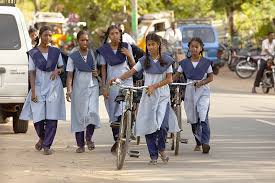
Today, Periyar’s legacy continues to influence Tamil Nadu’s social landscape, driving higher female enrollment in education, empowering first-generation learners, and shaping the voices of Dalit women leaders in movements for social justice. Understanding Periyar’s impact is essential for anyone exploring the intersections of caste, gender, and education in contemporary Tamil society. When N. Aathirai first realised something was wrong in her home in Tiruchirappalli, she did not yet know the word “patriarchy”. She was only a child, but the imbalance was clear. “I just saw the difference in how men and women were treated,” says the 25-year-old psychologist. Years later, living with her in-laws, she understood it more sharply while watching her mother, a history graduate who became a housewife, repeatedly dismissed in her own home. “So much of it came from women having no autonomy,” she says. Her first real attempt to make sense of it came in college, when she picked up Pen Yen Adimai Aan? The title alone startled her, pushing her to confront questions she had only sensed growing up. After graduation, she worked with Pa. Ranjith’s Neelam Social, where conversations on caste and Periyar deepened her thinking. His emphasis on self-respect resonated the most. “Women are taught to value ourselves only in relation to men, how we adjust, how we behave,” she says. “Reading Periyar helped me understand why we were treated the way we were.” Lawyer Mathivadhani, now 29, arrived at these ideas from the opposite direction, through immersion rather than discovery. “My father was a Dravida Kazhakam state spokesperson, so I grew up in the Dravidian movement from the age of three,” she says. Her father handed her Pen Yen Adimai Aanen? at fourteen, insisting she would understand the meaning as she grew older. When he died the next year, the family refused orthodox rituals and honoured him according to Dravidar Kazhagam customs. “That taught me to stand by my principles.” Many of Periyar’s century-old positions now feel embedded in everyday life. Inter-caste marriage is more accepted, dowry is publicly challenged, and women’s education has expanded dramatically. Tamil Nadu’s high female school enrolment and the rise of first-generation women learners reflect Periyar’s insistence that educating a woman transforms society. According to the School Education Department, 74 per cent of Class 12 students enrolled in colleges in the 2023–24 academic year, an increase driven by the Pudhumai Penn scheme for girls and the Tamil Pudhalvan scheme for boys introduced in 2024. Over five academic years from 2017–18 to 2021–22, Tamil Nadu consistently maintained the highest Gross Enrollment Ratio (GER) in higher education, reaching 47 per cent, compared with the all-India average of 28.4 per cent. Mathivadhani shares the example of A. Rajeshwari, a student at the Government Tribal Residential Higher Secondary School in Karumandurai. She cleared the JEE (Advanced) 2025, securing a place at one of the Indian Institutes of Technology (IITs), becoming the first person from her tribal village to do so. “Where else do you hear of such examples?” Mathivadhani asks. She credits Periyar’s ideology and his insistence on educating women for paving the way. Scholar V. Geetha argues that understanding Periyar requires returning to the late 1920s, when the Madras Presidency was alive with debates on women’s rights—from the Devadasi Abolition Bill to raising the age of consent, and the uproar over Katherine Mayo’s Mother India. Periyar entered this turbulent landscape and pushed each debate further. On the Devadasi question, he amplified anti-Brahminical criticism but went further, attacking the very ideal of chastity. By elevating chastity as the defining marker of womanhood, he argued, society bound women to unhappy marriages and curtailed their emotional and sexual autonomy. Former Devadasis, some defending their artistic traditions, others condemning the system, were central to the debate. Periyar’s description of chastity as “a form of slavery” provoked argument for years. His rejection of early marriage emerged from the same concern for autonomy. Witnesses in the Madras Presidency demanded higher marriage ages than elsewhere in India, and Periyar pressed further: marriage, he insisted, must be a choice, not a woman’s destiny. By the 1940s, he was urging women to postpone marriage entirely and enter public life. Here he differed even from Phule and Ambedkar, seeing patriarchy not only as an extension of caste and property but as embedded in intimate relationships. He was equally blunt about compulsory motherhood, dismissing childbirth as a sacred duty. After visiting the Soviet Union in 1931, he praised communal kitchens and childcare centres as models for a more equal family structure. These ideas reshaped how women in the Self-Respect Movement saw themselves. Activist Neelavati famously declared women “the oldest working class”, highlighting the labour performed at home, in factories, fields, and along coasts. Yet translating these ideals into daily life was challenging. Inter-caste couples had little legal protection and relied on movement support. Still, it was through these struggles, Geetha notes, that Periyar’s ideas were tested, interpreted, and expanded by women such as Neelavati and Annapurni. Education was central to this transformation. R. Ovia, founder of the cultural organisation Puthiya Kural, explains Periyar’s approach on two levels: immediate access to schooling, and a deeper liberation from the mindset shaped by religious structures, particularly Hindu traditions. “Education should root women in rationalism and self-respect,” she says. She also emphasises that Periyar’s ideas are dynamic. “They always allow space for growth.” Ovia highlights another critical dimension: it is mostly Dalit men and women who have owned, defended, and expanded Periyar’s ideas, translating them from text to practice. Leaders like Annai Meenambal Sivaraj and Annai Sathyavani Muthu brought Dalit voices into Periyarist movements, nurturing women as leaders. Today, Dalit women are prominent in the Dravidar Kazhagam and other Periyarist platforms. “Only when Dalit women—and equally Dalit men—consider Periyar’s movement as their own can they build a truly effective, rights-based platform,” she says. She stresses that Periyar’s ideas are inseparable. “Women’s liberation, caste abolition, atheism—they are all linked. You cannot pick one part and ignore the rest. To approach Periyar as a women’s liberationist
India‘Called Me Low Caste, Beat Me, Threw Me Out’: Dalit Woman Names Nine In-Laws in Noida FIR
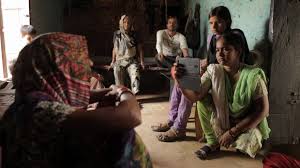
A Dalit woman in Noida has accused her in-laws of constant harassment after she married a man from an upper-caste family. The woman said her brother-in-law misbehaved with her and casteist slurs were repeatedly used against her. She also alleged that her in-laws beat her and eventually forced her out of the house. She has filed a police complaint against nine members of the family at Sector-20 police station. Sector-20 SHO D.P. Shukla said the woman reported that she married Bharat Sharma, son of Ravindra Sharma of Nithari village, on 5 February 2018 under Hindu rituals. According to her, her family spent around ₹25 lakh on the wedding, including jewellery and other items. She said it was an inter-caste love marriage, and from the very beginning her in-laws started demanding ₹50 lakh as dowry. The woman claimed she was repeatedly taunted for belonging to a “lower caste”. She said her in-laws openly insulted her by calling her caste names and would often tell her husband that he had brought home a girl from a “low caste”. She also alleged that one of her brothers-in-law refused to eat food cooked by her. According to the complaint, her husband began drinking heavily because he was disturbed by the constant harassment she faced. He later left her at her parental home, telling her to stay there until his family changed their behaviour. The woman said she gave birth to a child, but even then the harassment from her in-laws did not stop. She alleged that her elder brother-in-law molested her and she had earlier gone to the police with this complaint. When the matter reached the police station, she claims the accused family filed false allegations against her and her husband. According to the SHO, the woman has now filed an FIR against her father-in-law Ravindra Sharma, mother-in-law Rajrani Sharma, brothers-in-law Chandrakant Sharma and Sunil Sharma, a relative from her aunt-in-law’s side, her younger sister-in-law Renu, her younger brother-in-law Ram Sewak Sharma, her sister-in-law Sarika Sharma and her brother-in-law Gajendra Sharma. The charges include molestation, dowry harassment, assault, domestic violence and offences under the SC/ST Act. Police are investigating the case. Courtesy : TOP Note: This news is originally published on https:/theobserverpost.com/bha and is used purely for non-profit/non-commercial purposes, especially human rights
Dalit women’s achievements: Tina Dabi wins Barmer a 2 crore water award, Dipna Netrapal makes history at the CAG!
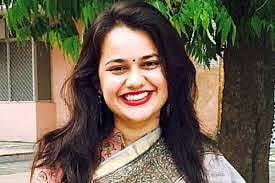
These achievements are not only personal triumphs but also send a strong message against caste- and gender-based discrimination. While one officer is greening the environment, another is strengthening accounting and financial transparency. New Delhi – The stellar performance of Dalit women officers in India’s administrative system is once again in the headlines. Rajasthan’s IAS officer Tina Dabi has made history by securing her district, Barmer, the Jal Sanchay Jan Bhagidari Puraskar (JSJB) for environmental protection, while Bengaluru’s senior IA&AS officer Dipna Netrapal has received the National CAG Award for innovation in GST audit and training reform. Dipna is the first Dalit woman officer to receive these awards. These achievements are not only personal triumphs but also send a strong message against caste- and gender-based discrimination. While one officer is greening the environment, another is strengthening accounting and financial transparency. The arid Barmer district of Rajasthan has won the first Jal Sanchay Jan Bhagidari Puraskar for its outstanding public participation in rainwater harvesting. The district will receive a prize of ₹2 crore for this achievement. District Collector Tina Dabi stated that President Draupadi Murmu will present the award at the sixth National Water Awards ceremony to be held at Vigyan Bhawan in New Delhi on November 18th. Tina Dabi has previously received numerous awards for her meritorious work. IAS Tina Dabi created history in 2015 by securing the first rank in the UPSC Civil Services Examination. At the age of 22, she became the first Dalit woman to achieve this feat in her first attempt. Tina has extensively promoted the construction of traditional ‘tanks’ (underground water tanks) in Barmer. Under the Union Ministry of Jal Shakti’s ‘Catch the Rain’ initiative, the state was divided into five zones and given the target of installing at least 10,000 artificial recharge and water storage structures. Barmer surpassed this target and topped the Northern region, reviving local water sources through thousands of tanks. This initiative by DABI is not only addressing the water crisis but also empowering rural communities, proving to be a milestone in quenching the thirst of the desert region. Meanwhile, Deepna Netrapal, Principal Director of the Regional Training Centre (RTC) and Capacity Building and Knowledge Centre (RCB&KC) in Bengaluru, has been awarded the National CAG Award. She received this award for two key initiatives: innovation and excellence in public accounting and auditing in GST audits, and the transformation of the training setup in Bengaluru. The Comptroller and Auditor General of India launched the scheme of “CAG’s Awards for Innovation and Excellence in Public Audit and Accounting” in 2021 to recognize and reward exceptional and innovative work done by officers and employees of the Indian Accounts Department in the areas of public audit, accounting, entitlements, and support functions. While the CAG Awards Scheme 2021 recognizes exceptional team excellence, which fosters a meritocratic environment, fostering overall qualitative improvement is even more important from an organizational perspective. To this end, in addition to the existing scheme that rewards team efforts toward excellence and exceptional work, a new award category has been instituted in 2022: the award for the “Most Improved Office.” This award category seeks to recognize offices working in the areas of accounting, audit, and training that have demonstrated the greatest improvement in performance during the prescribed evaluation period. Geetha Sunil Pillai Courtesy: Hindi News
Nomination papers of UDF’s transgender candidate cleared
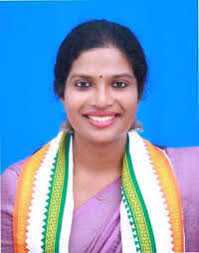
Kottayam: After officials on Saturday cleared her nomination papers, transgender woman Arunima M Kurup will be the UDF candidate from Vayalar division of the Alappuzha district panchayat. The 26-year-old is not new to politics as she is the state general secretary of KSU and the founder president of Kerala Pradesh Transgender Congress. She is also a KPCC member. Arunima, a native of Cherthala, is currently doing her LLB from an institute in Kottayam. Arunima expressed happiness as the panel approved her as a transwoman. “There was no objection from anyone,” she told TOI after her nomination was accepted. “I am contesting as a political leader. I have several ideas and projects to be implemented. A good hospital, roads, anganwadis, care for pregnant women, more workdays for MGNREGA workers and finding employment avenues for women etc., are among them,” she said. Arunima had earlier dismissed allegations made against her which claimed that she could not contest from a seat reserved for women. Arunima said that she was legally a woman in all records and was living as a woman after undergoing gender affirmation surgery six years ago. She also said that she was classified as a woman in the voter ID, Aadhaar and in the voters’ list. Courtesy : TOI Note: This news is originally published on https:/timesofindia.com/bha and is used purely for non-profit/non-commercial purposes, especially human rights
“You’re a Dalit, you can’t marry”: Karnataka HC denies bail to constable accused of having a relationship with a woman on the pretext of marriage, calling it a clear caste atrocity…
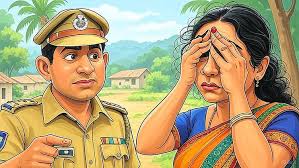
The High Court said, “According to the victim, the accused married her in front of a photo of Sai Baba and had physical relations with her several times, but refused to accept her as his wife. When she insisted, he deceived her using caste as an excuse.” Bengaluru – The Karnataka High Court has rejected the anticipatory bail plea of a police constable accused in a case where a Dalit woman was deceived in the name of love. The accused had physical relations with the woman after promising marriage, but later broke off the relationship and even assaulted her, citing her Scheduled Caste (SC) identity. In his judgment delivered on November 3, High Court Justice S. Rachaiah clearly stated that this is a serious offense under the SC/ST (Prevention of Atrocities) Act, and bail is strictly prohibited under Section 18A. The court stated, “It is clear from the allegations in the complaint that the accused refused to accept her as his wife because she belonged to a Scheduled Caste. The essential elements of the crime are established. Therefore, he is not entitled to anticipatory bail under Section 18A of the said Act.” Learn about the entire case The case relates to the Amrutur police station in Tumkur district, where both the accused constable and the victim were posted as colleagues. According to the prosecution, the incident began on February 14, 2023, when the accused arrived at the victim’s official residence. There, he expressed his desire to marry her and performed a simple wedding ceremony in front of a picture of Sai Baba. The accused assured the victim that the marriage would be kept secret until the caste dispute was resolved. Following this, the accused had physical relations with the victim several times, but did not allow her to wear a mangalsutra, fearing it would cause problems for both of them. The victim, trusting him, remained silent. However, when she demanded that the marriage be made public, the accused flatly refused. His excuse was that the victim belonged to a Scheduled Caste, while he himself belonged to a different caste. Not only did he refuse, but when she insisted on marriage, the accused also assaulted her. Hurt and betrayed, the victim finally filed a complaint, based on which the Amritsar police registered Crime No. 81/2025. Legal provisions applied in the case The accused has been charged under sections 318(2) (cheating), 352 (assault), 115(2) (criminal conspiracy), 351(2) (criminal intimidation), 54 (concealment of an offence), and 74 (abetment of an offence) of the Indian Penal Code (IPC), 2023, as well as section 3(5). Additionally, sections 3(1)(r) (insult on grounds of caste), 3(1)(s) (cheating on grounds of caste), 3(1)(w)(i) (caste-based offences), and 3(2)(va) (group offences on grounds of caste) of the SC/ST (Prevention of Atrocities) Act, 1989 (Amendment 2015) have also been added. The case is pending in the court of the Additional District and Sessions Judge, Tumkur. The trial court had rejected the accused’s bail plea (CRL.Miss.761/2025) on June 9, against which the accused filed an appeal under Section 14(A)(2) of the SC/ST Act. This appeal was filed in the Karnataka High Court as CRL.A No. 1363/2025, where the SPP appeared for the State and the lawyer appeared for the victim. The accused said the victim had proposed marriage. The appeal hearing took place on September 26th, where the accused’s lawyer, Dayanand Hiramath, presented a powerful argument. He claimed that the entire case was fabricated and that the victim had proposed marriage. When the accused refused, false allegations were made as revenge. The lawyer stated that there was no concrete evidence that the accused had married or physically abused her. He also refuted the caste-based denial, stating that mere allegations do not prove a crime. The lawyer also emphasized the accused’s personal hardship. The accused is a police constable and the sole earning member of the family. He is a permanent resident of Manapura village in Sindgi taluk, Vijayapura district. Failure to grant bail would cause financial hardship to the entire family. The lawyer requested that anticipatory bail be granted with strict conditions, stating that the accused is willing to comply with the court’s conditions. On the other hand, High Court government lawyer Waheeda M.M., representing the state, strongly objected. Citing the facts of the complaint, she argued that the accused deliberately lured the victim into a love affair. He engaged in physical relations with her repeatedly under the false promise of marriage, but when it came to granting her wifely status, he used caste as an excuse. She stated that the accused refused to recognize the victim as his wife and assaulted her. This constituted clear caste-based atrocity under the SC/ST Act. The lawyer cited Section 18A, which prohibits bail in such cases, and demanded that the appeal be dismissed so as not to hamper the investigation. The High Court rejected the bail plea for this reason. After hearing arguments from both parties, the High Court thoroughly reviewed the complaint record. Justice Rachaiah reiterated the facts in the judgment. He wrote that both the accused and the victim worked as constables at the Amritur police station. They grew close, leading to a decision to marry. According to the victim, the accused married her in front of a photo of Sai Baba at her home and began living as husband and wife. They had physical relations several times, but he avoided making a public announcement. When the victim insisted, the accused deceived her by citing caste. The court stated, “According to the victim, the accused married her in front of a photo of Sai Baba and engaged in physical relations several times, but refused to accept her as his wife. When she insisted, he deceived her by citing caste.” The court held that the allegations in the complaint attracted elements of the offense under the SC/ST Act. Therefore, bail cannot be granted due to the prohibition of Section 18A. The appeal was dismissed, and the accused will have to face trial. Geetha