
Dalit woman alleges rape in Inayatnagar: Exploited for six months on the pretext of getting a job, case registered
A Dalit woman from a village in the Inayatnagar police station area has accused a young man of rape, prolonged exploitation, assault, and death threats on the pretext of getting her a job. Based on the victim’s complaint, the police have registered a case against the accused under various sections and have started an investigation. In her complaint to the police, the victim stated that about six months ago, Ram Avtar, a resident of Mukimpur village, promised to get her a job. On this pretext, he took her to his house, where he allegedly drugged her and raped her. The woman alleges that the accused threatened to defame her by making the pictures of the incident public, due to which she continued to be exploited for six months. According to the victim, on Wednesday, the accused again called her to his room and tried to force her into an illegal relationship. When the woman resisted, the accused abused her with casteist slurs, brutally assaulted her, and threatened to kill her. Due to fear, the victim did not inform her husband about the incident at that time. The woman later reached the Inayatnagar police station and filed a complaint. Considering the seriousness of the matter, the police have registered a case against the accused under sections related to rape, assault, threats, and the Scheduled Castes and Scheduled Tribes (Prevention of Atrocities) Act, among other relevant sections. In this regard, Inayatnagar Station House Officer Ratan Kumar Sharma said that a case has been registered based on the victim’s complaint. The matter is being investigated thoroughly, and further legal action will be taken based on the evidence. Shiv Kumar Pandey | Milkipur Courtesy: Hindi News
Allegations of betrayal against a young woman in Khutar: After living together for 4 years, the young man refused to accept her

A case of betrayal against a Dalit woman has come to light from a village in the Khutar area of Shahjahanpur. The woman alleges that after living together for four years, the young man has refused to accept her as his wife. The victim says that four years ago, she was married to a young man from the same village in a temple. After that, they were living together as husband and wife. The woman trusted the young man and spent her life with him. The woman alleges that the young man, along with his family, is now flatly refusing to accept her. She said that he maintained a relationship with her for years on the promise of marriage, and now he has left her helpless. Distraught by this incident, the victim reached the Khutar police station. She has filed a complaint against the young man and his family, demanding action. Station House Officer Shyamveer Singh said that the matter is being investigated. Further legal action will be taken based on the facts. Devnarayan | Chandpur (Khutar), Shahjahanpur Courtesy: Hindi News
Transgender spits on woman at metro station after she refuses to give money

A video capturing a heated exchange between a transperson and a young woman at a metro station has surfaced online after the latter was spat on. A video recorded at a metro station has triggered widespread discussion after a woman alleged she was spat on by a transgender person for refusing to give cash. The incident, whose exact location remains unverified, has drawn attention to issues of harassment and accountability in public spaces. According to the woman recording the video, a transperson approached her at the station and offered blessings in exchange for cash, an interaction familiar to many commuters in public spaces. When the woman declined, the situation escalated. In the video, the transperson is heard saying, “Kinnar ki baddua lagegi,” which translates to, “You will be cursed by a transgender person,” moments before allegedly spitting on her. The footage shows the woman confronting the transperson immediately. “Record hua hai isme,” she says, meaning, “This has been recorded.” She then questions the attempt to hide her face, adding, “Ab toh viral ho gaya, aapne mere upar thuka kaise? (It’s already gone viral, how could you spit on me?)” Her voice reflects visible shock and anger. In a subsequent clip, the trans woman is seen asking the victim to delete the recording. Bystanders at the station can be heard commenting on the incident, with some pointing out that the spit had landed in the woman’s hair. The argument grows increasingly heated as raised voices and verbal threats are exchanged. The video has sparked a broader discussion online around public safety, harassment in shared spaces, and accountability. Many users noted that while the transgender community continues to face discrimination and marginalisation, acts of harassment or assault, if proven, cannot be excused. Courtesy : India Today Note: This news is originally published on https:/indiatoday.com/bha and is used purely for non-profit/non-commercial purposes, especially human rights
Dalit woman’s suspicious death aparks allegations of caste, dowry abuse

According to her family, the marriage was conducted in the presence of the groom’s family and was kept undisclosed from Priya’s relatives. VILLUPURAM; A 22-year-old Dalit Christian woman died under suspicious circumstances at Soranavur village in Villupuram district on Monday, with her family alleging dowry harassment and caste-based abuse by her husband and in-laws. The deceased, A Devajessi Priya, had allegedly married her long-time college friend M Vasantha Kumar (24), who belongs to the Hindu Vanniyar community, around three months ago. The couple had been living in Soranavur village near Valavanur in Villupuram district. According to her family, the marriage was conducted in the presence of the groom’s family and was kept undisclosed from Priya’s relatives. Based on a complaint lodged by her elder brother A Richard (26), Priya was allegedly subjected to continuous mental and physical harassment by her husband, his parents Murugan and Lakshmi, and his elder brother Bhakthavachalam. On January 31, Priya allegedly called her aunt and said she was being assaulted and harassed for dowry. About an hour later, her husband informed the family that she had died. Richard has alleged that his sister was murdered and that the incident was made to appear as a suicide, claiming that injuries were found on her body. Speaking to TNIE, Richard said, “We want the police to investigate the case with due sensitivity to caste discrimination and dowry harassment. My sister was subjected to severe torture and was killed.” Priya, a Christian convert, was a native of Alagappa Samuthiram in Panruti taluk of Cuddalore district. She lost her parents at a young age and was brought up by her elder brother with the support of their grandmother Josephina Mary and aunts at Madampattu village near Thiruvennainallur in Villupuram district. She had completed a BSc in Microbiology from Periyar Government Arts College, Cuddalore, and was employed with a private firm in Sunguvarchatram near Chennai. Family sources said she had been in a relationship with Kumar since her college days. Though Kumar later dropped out of college, the relationship continued, culminating in their marriage three months ago. Despite the complaint seeking action for dowry harassment and caste abuse, Valavanur police registered a case only under Section 194 (3) of BNSS and arrested Kumar on Tuesday. Family members of the deceased have refused to receive Priya’s body, demanding the arrest of Kumar’s parents and other relatives. The body has been kept at the Government Medical College Hospital in Mundiyambakkam, where an autopsy was conducted. Krithika Srinivasan Courtesy : TNIE Note: This news is originally published on https:/thenewindianexpress.com/bha and is used purely for non-profit/non-commercial purposes, especially human rights
Tamil Nadu: Dowry or Casteism? Dalit daughter dies just three months after marriage. Love marriage:

A tragic end to a love marriage in Villupuram, Tamil Nadu. A Dalit woman’s death comes amid allegations of dowry and caste-based harassment. Villupuram (Tamil Nadu): A shocking incident has emerged from Sornavur village in Tamil Nadu’s Villupuram district, where a 22-year-old Dalit Christian woman has died under suspicious circumstances. The deceased’s family has accused her husband and in-laws of harassing her for dowry and using caste-related abuses. What is the whole matter? The deceased has been identified as A. Devjessy Priya (22), who had a love marriage with her college friend, M. Vasanth Kumar (24), about three months ago. Vasanth Kumar belongs to the Hindu Vanniyar community. After marriage, the couple lived in Sornavur village near Valavanur in Villupuram district. Priya’s family says the marriage took place in the presence of the groom’s family, but Priya’s relatives were not even informed of it. According to a complaint filed by Priya’s elder brother, A. Richard (26), Priya was subjected to constant mental and physical abuse since the wedding. According to the allegations, in addition to her husband Vasantha Kumar, her parents, Murugan and Lakshmi, and her elder brother, Bhaktavachalam, were also involved in this abuse. The last phone call The incident occurred on January 31st, when Priya called her aunt. She told her that she was being beaten and harassed for dowry. Ironically, just an hour after this call, her husband informed the family that Priya had died. Richard has claimed that his sister did not commit suicide, but was murdered, and that an attempt is being made to pass it off as a suicide. He stated that injuries were found on Priya’s body, indicating assault. Speaking to the media, Richard said, “We want the police to investigate this case with the sensitivity of caste discrimination and dowry harassment in mind. My sister was brutally tortured and then killed.” Priya’s life has been full of struggles. Priya originally hailed from Alagappa Samudram in Panruti taluk, Cuddalore district. After losing her parents in her childhood, she was raised by her elder brother, grandmother Josephina Mary, and aunts in Madampattu village near Thiruvennainallur in Villupuram district. A bright student, Priya earned a B.Sc. degree in Microbiology from Periyar Government Arts College, Cuddalore, and was working at a private company in Sunguvarchatram, near Chennai. According to family sources, she had been in a relationship with Vasanth Kumar since her college days. Although Kumar later left college, their relationship continued and they married three months ago. Police Action and Family Protest Despite complaints of dowry harassment and caste abuse, the Valavanur police registered a case under Section 194 (3) of the Indian Penal Code (BNSS) and arrested husband Kumar on Tuesday. However, the deceased’s family is not fully satisfied with the police action. They have refused to accept Priya’s body and are demanding that Kumar’s parents and other relatives also be immediately arrested. Currently, the body is being held at the Government Medical College Hospital in Mundiambakkam after the post-mortem, where the family is pleading for justice. Rajan Chaudhary Courtesy: Hindi News
Denied access to funeral ground, Dalits light pyre on Bihar road
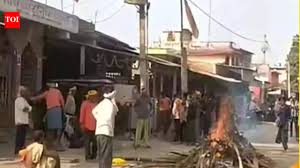
PATNA: Dalit villagers in Bihar’s Vaishali lit the pyre of a 91-year-old woman in the middle of a public road after allegedly being prevented from accessing the local cremation ground, sparking tensions and an inquiry. According to villagers and police, the funeral procession of Jhapsi Devi, a resident of Sondho-Vashudeo village in Goraul area, was on its way to the cremation ground on Thursday when some “influential” villagers allegedly stopped them. Enraged, the villagers carried the body to the middle of the road and cremated it there in full public view amid chants of Vedic rituals. Jhapsi died late Wednesday. The woman’s son, Sanjeet Manjhi, said the family was left with no option. “Jab ham logon ko nahin jane diya, toh gaon ke log bole ki yahi (road) par phoonk do (When we were not allowed to go the cremation site, villagers said we should hold the cremation here on the road itself,” Sanjeet said. Mewalal Manjhi, 67, another villager who was part of the procession, voiced deep despair. “We are poor, with no house and no land. Now, we are not even being allowed to cremate the bodies of our dead,” Mewalal asked. Courtesy : TOI Note: This news is originally published on https:/timesofindia.com/bha and is used purely for non-profit/non-commercial purposes, especially human rights
Periods will no longer stop girls from studying! A historic Supreme Court decision that you need to understand
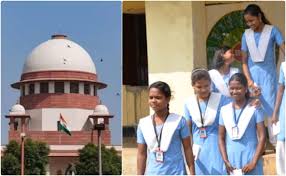
The Supreme Court acknowledged that the lack of menstrual hygiene management (MHM) prevents girls from attending school, thereby violating their dignity, privacy, bodily autonomy, and reproductive health. This situation is a clear violation of Article 14 (Right to Equality), Article 15(3) (Special provisions for women and children), Article 21 (Right to life and personal liberty), and Article 21A (Right to education). New Delhi – In a very important and far-reaching decision on January 30, the Supreme Court declared menstrual health an integral part of the right to life under Article 21 and the right to education under Article 21A of the Indian Constitution. A bench of Justices J.B. Pardiwala and R. Mahadevan delivered a detailed 126-page judgment in the case of Dr. Jaya Thakur vs. Union of India, in which the Court clearly stated that the absence of girls from school or dropping out entirely due to menstruation is unconstitutional. The Court said, “A period ends a sentence – not a girl’s education.” In the judgment, the Court acknowledged that the lack of menstrual hygiene management (MHM) prevents girls from attending school, thereby violating their dignity, privacy, bodily autonomy, and reproductive health. This situation is a clear violation of Article 14 (Right to Equality), Article 15(3) (Special provisions for women and children), Article 21 (Right to life and personal liberty), and Article 21A (Right to education). The Court stated that the right to live a life of dignity is only possible when girls can attend school during menstruation without shame, fear, or discomfort. The Court also analyzed Sections 3 and 19 of the RTE Act (2009) and clarified that “free education” means not only school fees but also includes all expenses and facilities related to menstrual hygiene management. If girls do not have access to sanitary napkins or if there are no separate, clean toilets in schools, it is a violation of the RTE Act. The court stated that “barrier-free access” in schools means not only access to the building but also the removal of all obstacles that prevent a child from attending school regularly. Under Section 3 of the RTE Act, free education includes not only school fees but also expenses related to menstrual hygiene management. The lack of separate toilets in schools is a violation of “barrier-free access.” Menstruation is no longer just a “women’s issue”; it is a collective responsibility. Under this judgment, the Supreme Court has issued strict instructions to all states and Union Territories to mandatorily provide the following facilities within three months: Every school (government or private) must have separate, fully functional toilets for boys and girls, with running water, soap, and privacy. Toilets must also be accessible for children with disabilities. Oxo-biodegradable sanitary napkins (meeting ASTM D-6954 standards) will be provided free of charge in every school, ideally through vending machines. If installing a machine is not immediately possible, these napkins will be kept at a designated place or with a designated person in the school. An “MHM Corner” will be established in every school, where spare undergarments, spare uniforms, disposable bags, and other necessary materials will be kept to deal with any emergencies during menstruation. Arrangements for the safe and environmentally friendly disposal of sanitary napkins must be made in every school, in accordance with the Solid Waste Management Rules. The court placed great emphasis on awareness and education. NCERT and SCERT have been directed to include menstruation, puberty, and problems like PCOS/PCOD in the curriculum to eliminate the shame and myths associated with it among girls. Training on sensitivity and support regarding menstrual health will be mandatory for all teachers (both male and female). The court specifically stated that it is also essential to educate boys that menstruation is a normal biological process, so that they can show empathy and respect towards their female classmates. For monitoring, the District Education Officer (DEO) has been ordered to inspect schools annually and collect anonymous feedback (surveys) from female students. The NCPCR and SCPCR have been entrusted with the responsibility of monitoring the implementation of this decision across the country. Non-compliance could lead to action, including the cancellation of the school’s recognition under Section 18 of the RTE Act. The court concluded with an emotional appeal, stating that this decision is not just a legal document, but for every girl who has been forced to drop out of school due to menstruation. The court said, “The fault is not yours. The change has now begun.” This case is still “part-heard.” Compliance reports have been sought from all states and union territories after three months. The Supreme Court has directed that this decision be communicated to all High Courts, state governments, and the Ministries of Education, Health, Jal Shakti, and Women and Child Development. Geetha Sunil Pillai Courtesy: Hindi News
Elderly Dalit Woman Cremated on Road in Bihar After Family Barred from Village Cremation Ground
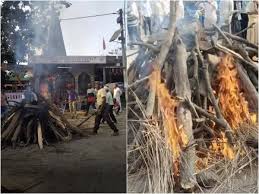
An elderly Dalit woman was cremated on a public road in Bihar’s Vaishali district after her family was allegedly stopped from accessing the village cremation ground, triggering outrage and tension in the area. The incident took place on Thursday at Sontho Andhari village under the Goraul police station limits. The woman, identified as Jhapki Devi, 95, belonged to a Mahadalit family. According to locals and police, when her family tried to take her body to the cremation ground, some people blocked the route, leaving the family with no option but to perform the last rites on the road. Family members and residents said the obstruction has been a long-standing issue. “Every time we take a body for cremation, the way is blocked. This has happened earlier too, but no permanent solution was given,” said a local resident from Manjhi Tola, expressing anger over repeated denial of access. As tensions rose, the funeral procession stopped at Andhari Gachi Chowk, where the body was placed on a pyre in front of a Shiva temple and cremated on the road. Angry villagers alleged that the pathway from the main road to the cremation ground has been encroached upon by local landowners. Police and administrative officials later reached the spot. A fire brigade vehicle was called to extinguish the pyre, and the road was cleaned after the cremation. Public representatives who arrived at the scene were reportedly chased away by protesting villagers, who accused the administration of ignoring their complaints for years. Vaishali Superintendent of Police Vikram Sihag said the issue arose due to the absence of a clear path. “Earlier, there was a route to the cremation ground, but some people built a temple on that path. Due to the lack of access, the family carried out the cremation on the road,” he said. He added that discussions were held with local officials and that arrangements would be made to restore access to the cremation ground. “The situation is currently under control,” the SP said. Block Development Officer Pankaj Kumar Nigam and Circle Officer Divya Chanchal said the area has been cleared and the matter is being investigated. “All aspects will be examined, and steps will be taken to ensure that such incidents do not happen again,” they said. Courtesy : TOP Note: This news is originally published on https:/theobserverpost.com/bha and is used purely for non-profit/non-commercial purposes, especially human rights
From the memoir: A Dalit woman writer on domestic violence, casteism, and emotional subjugation
The savarnas in the village always used coercion to force the safai karamcharis to do the filthy work of collecting night soil. If anyone refused, the village headmen and businessmen would summon and question them. The Thakurs and Raghuvanshis hurled abuses and threats. “Do you want to live in the village or not? We will not spare your lives.” There was no point in leaving the village either, because people of our jati had to do this work everywhere. Besides, forming new relationships in a new place was a daunting task. Our refusal to do this work invited a flood of abusive words and poisonous behaviour, enough to keep our people in constant fear. The threat of sexual violence against our women also remained a powerful weapon of control. Even after the municipality was formed, the savarnas continued to hold on to their dominance. Once, the safai karamcharis of the municipality went on strike. Their monthly wages were a mere five rupees, and even that was never paid on time. They demanded an increase in their pay. The protestors would be summoned to the police station – sometimes urged to compromise, and at other times, beaten brutally by the police. Many people were badly injured. In Seoni, Hari Rathore, Phoolchand Baggan, Chhotelal Baggan, Gorelal, and Dulichand Rathore were the bold and outspoken men of our community. After striking work, a jati panchayat was called, and a unanimous decision was made to go on an indefinite strike. Our people were prepared for the worst, and the savarnas failed to intimidate them. The strike was announced publicly and lasted an entire week, throwing Seoni and Banapura into chaos. Villagers came to our homes, urging us to return to work. People of our jati were summoned to the police station and threatened with dire consequences, but this time, no one gave in. This was the result of their newfound resolve. The distraught women of our community described the condition of their injured husbands and sons to other women and wept over the uncertain future of their children. Another jati panchayat was held to discuss possible solutions to this grim situation. During the strike, policemen constantly patrolled our mohallas, forcing our men into hiding. When they couldn’t find the men, they summoned the women to the police station and made them sit there all day. The women were subjected to verbal abuse and humiliation, threatened with dire consequences, and told to persuade their men to end the strike. Terrified, the women yielded easily. Hearing them weep filled me with fear too. Kalicharan Bhaiya’s wife, Budhia Bhabhi, however, was a bold and fearless woman. Whenever she saw the policemen, she hurled abuses at them: “May you rot in hell! You envy our men and cast lustful eyes on our women. Don’t you have women at home?” The villagers always managed to break such strikes; this was true of strikes in places like Hardi, Itarsi, and Hoshangabad too, which would be forcibly brought to an end. On such occasions, a jati panchayat was convened, and the elders would advise the people of our community to compromise. But we continued to do the same work as before, and we continued to endure the same hardships. This pattern had been reproduced for generations. Young men who resisted and refused to work without pay were summoned to the police station and beaten. False charges of theft and robbery were levelled against them. Then they were given a choice – return to work or rot in jail. The constant threat of the police kept us living in fear. Many such atrocities were committed against our people in Madhya Pradesh, Rajasthan, and other states of northern India. Goons hired by casteist savarnas would storm into our mohallas, beat up our men, and publicly humiliate our women. They even set fire to our bastis. On hearing about such incidents from Pitaji and my brothers, Ma and Nani would tremble with fear and pray to God for protection. Yet the injustices and atrocities committed by the savarnas continued without end. And so, the safai karamcharis of the municipality in Seoni went on strike in 1968 to demand better wages and working conditions, but also to protest against the harassment they were constantly subjected to. I was in class eight then. This time, they showed unity and firm resolve. The demands that had been ignored by government officials for years were now quickly accepted. When the week-long strike ended, the villagers heaved a sigh of relief. After this incident, our people began to be treated with a measure of respect. This was a big achievement, yet our people never realised their own strength. Had they understood the meaning of this change, they could have moved further towards liberation from their oppression. After the strike ended, they struggled immensely clearing the backlog of work that had piled up over those eight days. The second major strike took place in protest against dry latrines. The workers stopped work for many days. Official notifications were issued, recognising the seriousness of the situation. Flush latrines were built to replace the dry ones. This was a major victory for us, yet the work of carrying night soil continued wherever dry latrines remained. Our people still did this degrading work – out of ignorance, fear, or helplessness. Gandhiji’s ideas about the upliftment of the Harijans were widely promoted in our region, but our people didn’t realise that they had brought no real improvement in our condition. Having deep faith in Gandhiji, they often said, “Mahatma Gandhi cleaned his toilet himself. Under his influence, even the traders and moneylenders had begun to pick up the garbage around their homes and dispose of it themselves. When such big businessmen didn’t hesitate to do this work, why should we? We were born into this caste and must do this work, whether we like it or not.” This was a kind of conspiracy, a trap to deceive innocent people and stop them from
Sister Chandra and how Parai Attam announced the coming of Dalit women Sakthi to the world
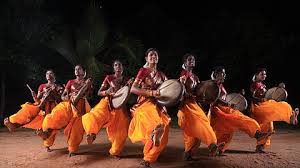
“I was rejected by village folk artistes as they didn’t believe a woman was strong enough to carry a parai and perform,” Sister Chandra remembered. It was the best of times, it was the worst of times for Dalit women to start performing Parai Attam, a traditional art form historically performed by Dalit men during funerals. Sister Chandra, the woman behind this quiet cultural revolution, had been doing community service in Dindigul when she noticed how poorly paid the men performing Parai Attam were. “I felt that people were not respecting the art or the artiste because of their social status,” she recalled. Sister Chandra also sensed the quick shift of the villagers’ interest from folk arts to community TV. “Each village has different art forms which they used to perform during festivals, but when people started enjoying television, art forms started dying,” she went on. Determined to revive the art form, Sister Chandra decided to form a troupe of her own. But being a woman, she had to also fight many gendered stereotypes around the art form, which was considered exclusively the domain of Dalit men. “I was rejected by village folk artistes as they didn’t believe a woman was strong enough to carry a parai and perform,” she remembered. At last, seeing her persistence, traditional village folk artiste Guru Ramadass taught her Parai Attam. Soon, Sister Felci and a group of village women joined, becoming the first batch of what would eventually be known as the Sakthi group. Now, Sister Felci has taken charge of it. As public perceptions changed, Sakthi’s popularity grew significantly. It began teaching more than 20 art forms including Parai Attam, Oyil Attam, and Silambam. Along with an offline batch of 20 students, two batches of online art classes were also introduced. They perform in and around several districts of Tamil Nadu and have also made their mark on the international stage. Sakthi is now flourishing. ‘Finally, you are making our girls take up Parai?’ In ancient Tamil society, parai, a hollow drum made out of a wooden frame and cow skin, was used as a percussion instrument to gather people and make announcements. Over time, it evolved into an art form predominantly performed by Dalit men. In the beginning, the idea of women performing Parai Attam was alarming to a society fed with stereotypical narratives on the art form. Concerned about their social status and perpetuating caste stereotypes, families strongly opposed the participation of their daughters. Parai artistes did not want their daughters to take up the art form as they believed their children would be discriminated against for their social status. “Initially, parents resisted sending their daughters to learn Parai Attam,” Sister Felci reminisced. They were met with questions filled with disbelief and anxiety such as ‘How can you make our girls take up Parai?’ Yet, against all odds, the team’s first performance became both a personal victory for Sister Chandra and a cultural milestone. “After that, we were invited to several villages to perform,” she said. Sakthi went on to become one of the earliest all-women Parai Attam troupes in Tamil Nadu. Sister Chandra and Sister Felci, driven by their mission to empower Dalits and women, were posted in Dindigul by their congregation, the Missionary Sisters of the Immaculate Heart of Mary, ICM. Every year, a new batch of twenty students joined Sister Chandra’s year-long residential course to learn various folk art forms such as Parai Attam, Oyil Attam, and Karagattam. The mix included young women who were school dropouts. “We encourage school dropouts to finish their studies and enroll in college. Some of them later became folk dance teachers in nearby village schools,” said Sister Chandra. Martial arts such as silambam and taekwondo are also taught by Sakthi. “This is a life-oriented program as women are also taught vocational skills such as tailoring, besides sex education and other lessons,” she said. Performances with social messages Rather than performing solely for entertainment, Sakthi’s programs are society-oriented. To spark a social dialogue and make society rethink its assumptions became the group’s goal. Sister Chandra believes that the dialogue initiated after performances has brought changes in society. She proudly spoke about how turning Parai Attam into an inclusive art form is part of such a change. “Now, women from non-Dalit communities also train for Parai Attam with the Sakthi group, which shows acceptance and how people are willing to challenge stereotypes,” she said. Sakthi’s unique style of incorporating social messages with performances made the team stand out. “Our performances raise awareness about social issues such as women empowerment, communal harmony, sexual harassment, caste, globalisation and unemployment,” said Sister Chandra. The importance of developing a reading habit is a recurring theme expressed by the team whenever it is invited for book launches and similar events. To instill confidence and capability among young talents, Sister Chandra believed that the group should be involved in choreographing, decision-making and every other aspect of their performance. This let the girls feel empowered by occupying spaces which were dominated by men, she said. ‘To build a better humanity, we have to break the chains of oppression’ is Sakthi’s motto. The group’s name reflects its goal of holding on to the female ‘energy’ and empowering women by creating a space exclusive to them. As recently as the early 2000s, women across different states were excluded from performing certain folk art forms. “For example, in Kerala, women were not allowed to perform chenda melam, an art form that involved drums. This trend is slowly changing nowadays,” said Sister Chandra. The logo of Sakthi depicts one foot of a performer bound by a chain, signifying the historical oppression, and the other foot adorned with an anklet, representing resilience and the struggle to break free from marginalisation. Taking Parai attam to the world The team of performers has kept changing over the years as many women dropped out after marriage and childbirth. However, that didn’t stop Sakthi from carrying forward its mission.