
Congress MLA’s PA arrested for cheating dalit woman in Bhupalpally

Chityal police arrested and remanded the personal assistant of Bhupalpally MLA Gandra Satyanarayana Rao for allegedly cheating a Dalit woman by promising marriage. The accused was also booked under provisions of the SC/ST (Prevention of Atrocities) Act Bhupalpally: Chityal Police in the district arrested and remanded Gandra Satyanarayana Rao’s personal assistant, Ch Srinivas, for allegedly cheating a Dalit woman. Srinivas was accused of physically exploiting the woman, promising to marry her while making arrangements to marry another woman. When the Dalit woman confronted him about the matter, he verbally abused her using her caste identity. When a panchayat was held in the presence of family elders, he refused to marry the Dalit woman. Based on a complaint by her parents, Srinivas was booked under the provisions of the Scheduled Castes and Scheduled Tribes (Prevention of Atrocities) Act besides Sections 69 (false promise of marriage), 296(b) (uttering obscene words) and 351(2) (criminal intimidation), informed CI Mallesh Yadav. Courtesy : Telangana Today Note: This news is originally published on https:/telanganatoday.com/bha and is used purely for non-profit/non-commercial purposes, especially human rights
‘Deadly Game’ at Private Hospital Ahead of CM’s Visit; Dalit Woman Loses Life

In Sheikhpura, a pregnant Dalit woman died due to medical malpractice at an illegally operating private hospital, just prior to the Chief Minister’s scheduled visit. Trapped in the clutches of touts, the woman’s family was extorted of ₹51,000; yet, her life could not be saved. Sheikhpura – A shocking incident that puts humanity to shame has come to light at ‘Ananya Hospital,’ located on Bhojdih Road in Sheikhpura district. Soni Devi, a resident of Kashichak in the neighboring Nawada district, was admitted to this facility through an ASHA worker after she went into labor. Her family alleges that the hospital administration extorted a hefty sum of ₹51,000 under the pretext of performing a surgical operation. Contrary to official government claims, touts active at the grassroots level deceived this impoverished family, effectively pushing them into a “well of death”—the very place masquerading as a hospital. **A Farce of Treatment and the ‘Referral Game’** As soon as the surgical procedure began, the hospital management—in a desperate attempt to conceal their incompetence—sent the family scrambling to procure two units of blood. By the time the family returned with the blood, the patient’s condition had already deteriorated critically. To save their own skins, the hospital authorities hastily referred the patient to Bihar Sharif. Tragically, the woman succumbed to excessive bleeding while being transported in the ambulance. This was, unequivocally, a fatal outcome resulting from gross medical negligence and a severe lack of necessary medical resources. **Old Peddlers of Death, New Address** Alarmingly, the hospital where this tragedy occurred is reportedly linked to the ‘Maa Savitri Hospital,’ a facility that had previously been sealed by the authorities. Locals allege that whenever the administration shuts down a hospital, the very same individuals simply put up a new signboard and resume their deadly trade under a different name. The names of the establishments change, but the operators—and their horrific modus operandi—remain exactly the same. From Patel Chowk to Bhojdih Road, numerous such clinics continue to flourish without any valid medical licenses. Doctors and Staff Flee Amidst Uproar As news of the woman’s death spread, the fury of her family members erupted. A massive commotion ensued outside Ananya Hospital, accompanied by loud demands for justice. Perceiving that the situation was spiraling out of control, the doctors and the entire hospital staff locked up the premises and fled the scene. This hasty escape, in itself, speaks volumes about their complicity and fear. The crowd gathered at the site raised vociferous slogans against the administration, creating an atmosphere of palpable tension in the area. Questions Raised Over the Administration and Health Department Occurring just prior to Chief Minister Nitish Kumar’s arrival in the district, this incident has placed the functioning of the Health Department squarely in the dock. The pertinent question remains: if the administration is aware that illegal clinics are operating in the region, why is no concrete action taken against them? Are authorities waiting for yet another poor person to lose their life? It now remains to be seen what action the district administration will take against these “white-collar criminals”—or whether the matter will once again end up buried within bureaucratic files. Report – Umesh | Edited By: Anubh Suman | Courtesy: Hindi News
Probe MP Dalit woman’s death, SC instructs CBI

NEW DELHI: Supreme Court on Wednesday directed CBI to conduct a preliminary inquiry into the circumstances surrounding the death of a 20-year-old Dalit woman in MP’s Sagar district in 2024. It rejected the plea of the state that the case was politically motivated, and said the truth must come out. A bench of Justices M M Sundresh and N Kotiswar Singh said its conscience did not allow it to accept state govt’s plea, and ordered an inquiry by the central agency. The court left it to CBI to take a call on registering an FIR. SC had last year issued notice on a petition by the woman’s mother, who was seeking a CBI or SIT probe into the dea-ths of three family members. “We direct CBI to conduct a preliminary inquiry on the ci-rcumstances surrounding the death of the girl,” SC said. Courtesy : TOI Note: This news is originally published on https:/timesofindia.com/bha and is used purely for non-profit/non-commercial purposes, especially human rights
Allegations of Sexual Exploitation Following a Fraudulent Marriage: Woman Arrives from Andhra Pradesh in Search of Accused; FIR Filed Against Youth from Rohtak
In Rohtak district, a woman hailing from Andhra Pradesh has accused a youth from Tilak Nagar of sexually exploiting her under the pretext of a fraudulent marriage. Furthermore, she alleges that he swindled lakhs of rupees from her under the guise of building a house. The victim, in collaboration with social organizations, has filed a complaint against the youth at the Civil Lines Police Station regarding this matter. The victim stated that she resides in a district within Andhra Pradesh. She had uploaded her profile on a matrimonial website. Coincidentally, the youth—a resident of Tilak Nagar in Rohtak—had also posted his profile on the same site. Their communication began in 2022 through this platform. Their interactions remained limited to phone calls for a period of approximately 6 to 7 months. The victim recounted that in 2023, the youth traveled to Andhra Pradesh and, while standing on a beach, accepted her as his wife by performing a symbolic ritual involving water held in his hands. When she requested that they solemnize their marriage according to full traditional rites, the youth claimed to be an Arya Samaji and asserted that such a ceremony constituted a valid marriage within his community. The youth also refused to allow the marriage to be officially registered. **Youth Takes Money and Returns to Rohtak; Fails to Return** The victim stated that the youth took approximately ₹40 lakhs from her—ostensibly for the construction of a house—and returned to Rohtak, never to come back. When she attempted to contact him via phone, she found that he had switched off his mobile number. Subsequently, she called the youth’s brother—who is posted as an Assistant Sub-Inspector (ASI) in Gurugram—but he, too, failed to provide any response. **Sexual Exploitation in Both Andhra Pradesh and Rohtak** The woman has alleged that, following the fraudulent marriage, the accused youth sexually exploited her in Andhra Pradesh for nearly four months while they lived together as husband and wife. Later, when she traveled to Rohtak in search of him, she claims she was subjected to further sexual exploitation on multiple occasions at a hotel there. **Youth Admits Guilt at Police Station, Then Retracts Statement** The woman revealed that, at the Civil Lines Police Station and in the presence of representatives from social organizations, the youth had admitted his wrongdoing and acknowledged her as his wife. A written settlement agreement was also drafted at the police station; however, that document has now mysteriously gone missing. Instead of taking the young man home with him from the police station, he took him to a hotel and, from there, dropped him off at the bus stand before leaving. **Allegations of Collusion Leveled Against the Family** The woman stated that the entire family of the accused is complicit in the matter. She alleged that the young man’s brother, who holds the rank of Assistant Sub-Inspector (ASI), is misusing his official position. Consequently, the police have refrained from taking any action. Under pressure from social organizations, the police did register a case under the SC/ST Act; however, they have yet to arrest the accused young man. **DSP and ASP Kept Informed** The woman alleged that both the ASP and the DSP were fully apprised of the details of the case immediately after the complaint was lodged. She claimed that the DSP’s Reader had even visited and inspected the hotels in question alongside the accused, yet no action has been taken. On the contrary, the police have transferred her FIR to Andhra Pradesh, despite the fact that she was also subjected to sexual exploitation in hotels within Rohtak. **We Will Fight Every Battle to Secure Justice** Social activist Surendra Panchal stated that, for the past two and a half months, the district administration has forced the victim to wander from door to door in search of redressal. Despite repeated attempts to meet with the Superintendent of Police (SP), the administration continues to adopt a lax and indecisive attitude. He alleged that the administration is mentally harassing the victim with the sole intent of sweeping the case under the rug. Under the SC/ST Act, immediate arrest is mandated; however, although nearly a month and a half has passed since the FIR was registered, the accused remains unarrested. **Administration Will Face Trouble if the Issue Takes on a Casteist Hue** Manisha Birla Bohat of the Bharat Mukti Morcha Women’s Wing asserted that a grave injustice has been committed against the woman, and the administration is failing to provide her with justice. She warned that if the community unites and launches a protest—framing the issue through the lens of caste-based discrimination—the administration will face severe repercussions. Therefore, she urged the police administration to act promptly to deliver justice to the victimized woman and to immediately apprehend the accused. Courtesy: Hindi News
Dalit woman, UPSC AIR 1 at 22: How Tina Dabi topped India’s toughest exam in her first attempt

In May 2016, when the results of the Union Public Service Commission (UPSC) Civil Services Examination were announced, one name quickly travelled across the country: Tina Dabi. At just 22 years old, the Delhi-based student had secured All India Rank 1 in the 2015 UPSC exam and she had done it in her very first attempt. But the achievement carried a deeper significance. Dabi became the first Dalit woman to top the civil services examination, a moment many saw as both a personal triumph and a symbol of changing social realities in India. Her story is not just about a difficult exam cleared at a young age. It is about ambition, discipline, and the quiet power of persistence. Scroll down to read more. A childhood shaped by education Tina Dabi was born on 9 November 1993 in Bhopal, Madhya Pradesh. Her family later moved to Delhi in 2005, where she spent most of her formative years. Education was always central to her upbringing. Both her parents were engineers; her father, Jaswant Dabi, served in the Indian Telecom Service, while her mother, Himani Dabi, was an officer in the Indian Engineering Services. Growing up in a household that valued learning meant expectations were high, but it also meant support. Teachers and classmates often noticed her academic focus early on. She studied at the Convent of Jesus and Mary in Delhi, where she consistently performed well in school. Later, she joined Lady Shri Ram College for Women (LSR), Delhi University, one of India’s most prestigious colleges, graduating with a degree in political science. At LSR, she wasn’t just another student preparing for exams. She topped her college and was recognised as “Student of the Year,” reflecting both academic excellence and leadership potential. The decision to attempt UPSC For many students in India, the civil services exam is a distant dream, an exam known for its vast syllabus and extremely low success rate. Dabi decided to pursue it while still in college. Political science, her graduation subject, also became her optional subject for the UPSC examination, helping her build on what she had already studied deeply. Unlike many aspirants who spend years attempting the exam, she appeared for it only once and cleared it at the very first attempt. The scale of the achievement is difficult to overstate. Every year, hundreds of thousands of candidates apply for the UPSC exam, yet only a few hundred finally enter the prestigious Indian Administrative Service (IAS). At just 22 years old, Dabi finished ahead of everyone else in the country. A moment that sparked national conversation Her result triggered enormous media attention. News channels, newspapers and social media celebrated the young topper who had emerged from Delhi’s academic circles. But alongside admiration came another conversation, about caste and opportunity. As a Dalit woman topping India’s most competitive exam, Dabi’s success challenged deeply entrenched stereotypes about merit and social mobility. In fact, she later recalled that while congratulatory messages poured in immediately after the results, some media outlets quickly began asking about her caste rather than her preparation strategy. For many observers, the episode highlighted how achievements by individuals from historically marginalised communities often carry a larger social meaning. From topper to administrator After clearing the exam, Dabi joined the 2016 batch of the Indian Administrative Service (IAS) and was allotted the Rajasthan cadre. During her training at the Lal Bahadur Shastri National Academy of Administration in Mussoorie, she was awarded the Director’s Gold Medal, given to the best trainee officer. Her first posting came in 2017 as an assistant collector in Ajmer, Rajasthan. Over the years, she held several administrative roles in the state, working in areas ranging from governance to development initiatives. She later served as district collector in Jaisalmer and is currently posted as collector and district magistrate of Barmer in Rajasthan, one of the state’s largest districts. More than an exam result UPSC toppers often fade from public conversation after their results. Tina Dabi did not. Part of that is because of the larger story attached to her success, a young woman from a scheduled caste community rising to the very top of India’s most prestigious examination. But another reason is simpler: her journey represents the quiet possibility that education can reshape lives. At 22, when most graduates are still uncertain about their next step, Tina Dabi had already crossed one of the toughest academic barriers in the country. For thousands of UPSC aspirants studying late into the night across India, her story remains a reminder that the exam may be daunting, but sometimes, the first attempt is all it takes. Courtesy : TOI Note: This news is originally published on https:/timesofindia.com/bha and is used purely for non-profit/non-commercial purposes, especially human rights
‘Sickening’: Meghalaya CM condemns assault on Manipur woman, Assam transgender person in Delhi park

Meghalaya Chief Minister Conrad Sangma on March 9 strongly condemned an alleged racial assault on two people from the Northeast in New Delhi, describing the incident as “sickening” and urging authorities to take stringent action against the perpetrators. The alleged attack took place near the Saket District Court Complex in the Malviya Nagar area on Sunday evening, where a young woman from Manipur and a transgender person from Assam were reportedly assaulted by a group of men in a park, raising fresh concerns over the safety of Northeastern residents in the national capital. Reacting to the incident, Sangma said he was angered by the repeated attacks on people from the Northeast living in mainland India. “The physical attack on two of our people from Manipur and Assam near Saket Court, Delhi is sickening. Racial bullying should not be accepted as the new normal and we must act against it. Urge the authorities to take stringent action,” the chief minister wrote on social media. According to preliminary accounts, the victims were taking a walk in the park near the court complex when a group of youths allegedly began passing racially derogatory remarks at them. When the woman objected to the comments, the situation reportedly escalated into a confrontation. The victims alleged that the group then physically assaulted them, punching them and striking them with belts while hurling abusive slurs. One of the assailants allegedly used derogatory terms during the altercation. Sources also indicated that the victims had faced similar verbal harassment in the locality on earlier occasions. In a statement, the Delhi Police confirmed that a team responded to information about an alleged assault near the Saket court complex. According to the police, the woman from Manipur and her friend were walking in the park when a group of men passed remarks at them, leading to an argument. “When one of the girls objected to the comments, the situation escalated and she was reportedly assaulted by the accused,” police said. The injured woman was later taken to Safdarjung Hospital for medical examination and treatment. Authorities said that, according to preliminary reports, she is in stable condition and has suffered minor injuries. Police officials said they are in constant touch with the victims and assured that strict action would be taken against those responsible. The matter is currently under investigation. The incident comes just days after another case of racial abuse in the capital sparked widespread outrage. In that case, a Delhi resident, Harsh Singh, was booked for allegedly racially abusing three women from Arunachal Pradesh following a dispute over repair work at their rented apartment. The back-to-back incidents have renewed concerns about racial discrimination faced by people from Northeast India in metropolitan cities and prompted calls for stronger enforcement of laws against hate crimes and harassment. Courtesy : India Today NE Note: This news is originally published on https:/indiatodayne.com/bha and is used purely for non-profit/non-commercial purposes, especially human rights
The Blistered Hands No One Talks About: Reading Dalit Women’s Labour Through Literature And Data
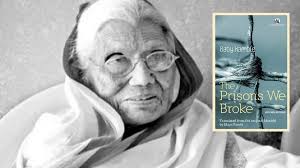
Scholarly work needs to centre Dalit women as narrators of their own labour—like Kamble, Pawar and Bama—whose literary testimonies document care work as political resistance. Dear reader, this article is free to read and it will remain free – but it isn’t free to produce. If you want to support the work that goes behind publishing high-quality feminist media content, please donate to FII and keep us paywall free. Thank you! » Editors Note: #MoodOfTheMonth for February 2026 is Gender and Literature. We are inviting submissions on this theme throughout February 2026. If you would like to contribute, please refer to our submission guidelines and email your pitches to info@@feminisminindia.com. When Babytai Kamble penned The Prisons We Broke, the first published autobiography by a Dalit woman in Marathi, she did more than just narrate a life; she exposed the architecture of caste-determined care. “We clean the filth others create, then are called filthy ourselves,” wrote Kamble, naming an untouchable reality that Indian literature has long rendered invisible. While mainstream narratives celebrate the housewife’s domestic sacrifice, they systematically erase the Dalit and Bahujan women whose blistered hands scrub floors before dawn, wash vessels others have dirtied, and absorb the household’s emotional dumping, only to disappear from the stories when the time comes. Their labour is what sustains the upper-caste domesticity, yet remains the silent infrastructure of comfort: foundational, uncredited, unnamed. Literary Testimonies of Embodied Labour Kamble’s testimony resonates powerfully across Dalit feminist literature. Bama’s seminal Tamil autobiography Karukku (1992) documents how Paraiyar Christian women scrubbed floors on their knees while being denied dignity by upper-caste nuns who “would not even drink water touched by our hands.” Similarly, Shantabai Kamble’s Majya Jalmachi Chittarkatha (The Kaleidoscope Story of My Life) traces how Mahar women’s bodies became sites of caste-allocated sanitation work, writing, “Our hands were meant only for sweeping, scrubbing, and serving.” Dalit feminist scholar Urmila Pawar writes in The Weave of My Life, “My mother used to weave aaydans,” the Marathi generic term for all things made from bamboo. “I find that her act of weaving and my act of writing are organically linked. The weave is similar. It is the weave of pain, suffering, and agony that links us.” This metaphor transcends poetry: her mother’s bamboo weaving, like the Dalit domestic worker’s scrubbing, was never “just labour”. It was an unacknowledged infrastructure of survival, transformed into literary resistance. Interestingly, however, Pawar has analysed the differences between Brahman and Dalit women, arguing that the Dalit woman, in contrast to the Brahman woman, was not bound by customs such as sati, child marriage, among others. Pawar further exploded some myths regarding the gender question in relation to the Dalit movement, such as the wide gap between Dalit and Brahman women on economic, social and educational levels. Pawar continues, “A myth is harboured that unlike the brahman woman the dalit woman is free from bondage and stifling restrictions. The pain of the devadasi, the deserted woman and the murali is ignored in this stand. In fact the woman in the household is yet to get recognition as a full and equal human being (ibid: 94).” On similar lines, Joanna Liddle and Rama Joshi, in their work entitled Daughters of Independence, write about the non-sexual and the sexual divisions of labour. Although economically deprived, Dalit women lead more sexually liberated lives than upper-caste women. Lower caste women, by contrast, experience far fewer controls over their physical freedom. “The economic benefits and the social constraints of seclusion are unknown to them. Sati was never demanded of them, widowhood was no curse, divorce was allowed in many lower caste communities and widows and divorced people could re-marry without disgrace (Liddle and Joshi 1986: 95-69 and 91).” In Aayda: Mahila Adivasi Jivan Katha (edited by Pawar and Meenakshi Moon), oral histories of Adivasi and Dalit women reframe domestic work not as a naturalised duty but as caste-determined exploitation. Oxfam’s data confirms this structural truth: urban Indian women spend 312 minutes daily on unpaid care work, compared with men’s 29 minutes; rural women spend 291 minutes, compared with men’s 32 minutes. What The Data Says? The rate of this invisibility is concerning. Oxfam’s 2020 report, Time to Care, along with an India-focused supplement, demonstrates how our sexist economies are acting as a catalyst for the inequality crisis. “Women and girls are among those who benefit least from today’s economic system. They spend billions of hours cooking, cleaning and caring for children and the elderly. Unpaid care work is the ‘hidden engine’ that keeps the wheels of our economies, businesses and societies moving. It is driven by women who often have little time to get an education, earn a decent living or have a say in how our societies are run, and who are therefore trapped at the bottom of the economy,” stated former Oxfam India CEO Amitabh Behar. Furthermore, the report suggests that women make up two-thirds of the paid ‘care workforce’. Jobs such as nursery workers, domestic workers, and care assistants are often poorly paid, provide scant benefits, impose irregular hours, and can take a physical and emotional toll. Thus, pressure on carers, whether unpaid or paid, is set to grow over the coming decade as the global population ages. Climate change could worsen the looming global care crisis —by 2025, up to 2.4 billion people will live in areas without enough water, and women and girls will have to walk even longer distances to fetch it. 80% of indigenous people live in Asia and the Pacific, a region vulnerable to climate change. “Governments must prioritise care as being as important as all other sectors in order to build more human economies that work for everyone, not just a fortunate few,” said Behar. In the Periodic Labour Force Survey (2017–18) report, it is seen that in rural areas, the share of helper in household enterprises was nearly 17 per cent among male self-employed workers whereas 67 per cent among female self-employed workers while in urban areas, the
In a first for the state, transgender woman elected in Chityala municipality

Hyderabad: For the first time in municipal elections in the state, a transgender woman has won a seat, with Nagilla Sudhakar elected from Ward 1 of Chityala municipality in Nalgonda district. The independent candidate defeated nominees of major political parties with a majority of over 100 votes. Sudhakar, alias Kaveri, secured 429 votes, while CPM’s Jitta Nagesh polled 327 votes. BRS candidate Rudravaram Yadaiah and BJP’s Rudravaram Linga Swamy secured 198 and 45 votes respectively. A resident of Shivanenigudem in Chityala municipality, Kaveri works as a labourer to earn her livelihood. “I will work for the development of the ward,” said the 45-year-old, adding that there are several problems in her ward that require immediate attention. “There is a dumping yard, because of which many residents in the ward are falling ill. I will ensure that it is relocated. Also, there are a few stretches without street lighting. I will also stand by the girl child by providing 10,016 at the time of their marriage,” she added. Kaveri also highlighted the monkey menace in her village. “Farmers and villagers are suffering because of the monkey menace. I will work towards finding a solution to address this problem as well,” she said, adding that she would stand by the villagers who supported her and ensured her victory. Kaveri studied at ZPHS, Chityala, but did not clear her class 10 examination. Chityala municipality has 12 wards. Of these, Congress candidates won nine wards, BRS won two wards, and the independent candidate, Sudhakar, won one seat. In Nalgonda district, there are six municipalities, including Miryalguda, Devarakonda and Chandur. Courtesy : TOI Note: This news is originally published on https:/timesofindia.com/bha and is used purely for non-profit/non-commercial purposes, especially human rights
Right-wing group forces Dalit woman to‘postpone’ her interfaith wedding in UP

Bareilly: An interfaith couple’s planned wedding in Meerut was “postponed” following threats and protests by members of a right-wing group. An FIR was also registered against the groom under the Prohibition of Unlawful Conversion of Religion Act following allegations of “love jihad”. TOI had reported about the FIR earlier this week. The couple — Akanksha Gautam, who follows Buddhism and works in the private sector, and Shahvez Rana, a medical professional — was scheduled to marry on Friday. Both belong to Meerut city. Following news of their wedding a few days ago, members of Hindu Suraksha Sangathan protested and, accompanied by Akanksha’s uncle, Premchand Gautam, filed a complaint at the city’s Ganga Nagar thana. Speaking to TOI on Friday, Akanksha said, “My wedding is a non issue. This (right-wing) group wants to make it a national headline. I want to ask who are these men to take a decision on my behalf, and how can they thrust their decision on me? My life has turned into a complete chaos, but the man I chose to marry still stands by me. I gave my statement to the court, and I want to marry him. Our marriage has been postponed, not cancelled.” The 29-year-old added: “My father passed away in 2023, after which my uncle, who filed this complaint against Rana, wants to grab our property. We have a house and other properties in my mother’s name, which he wants to be registered in his name… When my mother and sister are happy for me, why is he (uncle) creating a problem?” The woman’s mother, Lata Rani, meanwhile, said, “We’re Buddhists and not Hindu. This is open bullying… Whatever we’re doing is within the framework of the Indian Constitution. I fully stand by my daughter and Shahvez. They will get married, come what may.” In his complaint, Akanksha’s uncle alleged deception. “Shahvez Rana deceived her with the intention of grabbing property. He conspired after manipulating and brainwashing her,” he stated. Meanwhile, the right-wing members failed to go ahead with their ‘maha panchayat’ at the wedding venue in Meerut on Friday after police locked up the place and prevented them from reaching the venue. Courtesy : TOI Note: This news is originally published on https:/timesofindia.com/bha and is used purely for non-profit/non-commercial purposes, especially human rights
Odisha: Anganwadi in Nuagaon Shuts After Villagers Refuse to Let Dalit Woman Cook for Children
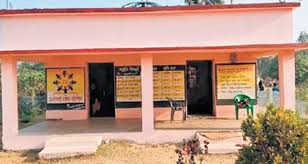
Odisha Anganwadi Shuts as Villagers Bar Dalit Woman In rural Odisha, deep-rooted caste prejudice has forced the closure of an anganwadi centre in Nuagaon village, Rajnagar block, Kendrapara district, for nearly three months. Parents have reportedly stopped sending their children to the centre after a 23-year-old Dalit woman, Sarmista Sethi, was appointed as a helper-cum-cook on November 24, 2025. According to Sarmista, villagers from upper-caste families openly resisted her appointment, saying their children would not eat food prepared by a Dalit woman. The village committee, which also included instructions for Dalit households, reportedly told families not to send their children to the centre. “After my appointment, some upper-caste villagers warned me not to cook for the children. When I refused, they stopped sending their kids. Even women stopped coming to the centre,” Sarmista said. Around 45 families, including seven Dalit households, live in the riverside village. The social boycott has affected nearly 60 children who are now deprived of anganwadi services. Pregnant and lactating women have also stopped visiting the centre, missing out on crucial health benefits, according to Ghadiamala sarpanch Sailendra Mishra. “We have repeatedly urged villagers to send their children, but they have not listened,” he said. Anganwadi worker Lizarani Pandav informed the chief development project officer (CDPO) of Rajnagar block about the situation. CDPO Dipali Mishra said, “We have been trying to convince parents to send their children. The tehsildar and I held discussions with villagers, but the issue remains unresolved.” A team of Dalit leaders visited Nuagaon village on Tuesday, demanding legal action against those preventing children and women from attending the centre. Nagen Jena, district president of Dalit Samaj, cited the 2004 Supreme Court interim order in PUCL vs Government of India, which prioritises SC/ST candidates as cooks in midday meal schemes. Kendrapara district collector Raghuram R Iyer said he has directed the district social welfare officer to submit a detailed report. “After receiving the report, appropriate action will be taken against those who are illegally preventing children and women from attending the anganwadi centre. We are also trying to resolve the matter amicably through discussions with villagers,” he added. Courtesy : TOP Note: This news is originally published on https:/theobserverpost.com/bha and is used purely for non-profit/non-commercial purposes, especially human rights