
Denied access to funeral ground, Dalits light pyre on Bihar road
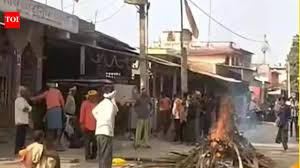
PATNA: Dalit villagers in Bihar’s Vaishali lit the pyre of a 91-year-old woman in the middle of a public road after allegedly being prevented from accessing the local cremation ground, sparking tensions and an inquiry. According to villagers and police, the funeral procession of Jhapsi Devi, a resident of Sondho-Vashudeo village in Goraul area, was on its way to the cremation ground on Thursday when some “influential” villagers allegedly stopped them. Enraged, the villagers carried the body to the middle of the road and cremated it there in full public view amid chants of Vedic rituals. Jhapsi died late Wednesday. The woman’s son, Sanjeet Manjhi, said the family was left with no option. “Jab ham logon ko nahin jane diya, toh gaon ke log bole ki yahi (road) par phoonk do (When we were not allowed to go the cremation site, villagers said we should hold the cremation here on the road itself,” Sanjeet said. Mewalal Manjhi, 67, another villager who was part of the procession, voiced deep despair. “We are poor, with no house and no land. Now, we are not even being allowed to cremate the bodies of our dead,” Mewalal asked. Courtesy : TOI Note: This news is originally published on https:/timesofindia.com/bha and is used purely for non-profit/non-commercial purposes, especially human rights
Periods will no longer stop girls from studying! A historic Supreme Court decision that you need to understand
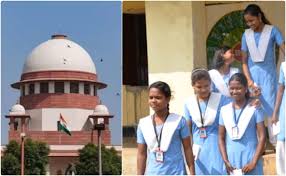
The Supreme Court acknowledged that the lack of menstrual hygiene management (MHM) prevents girls from attending school, thereby violating their dignity, privacy, bodily autonomy, and reproductive health. This situation is a clear violation of Article 14 (Right to Equality), Article 15(3) (Special provisions for women and children), Article 21 (Right to life and personal liberty), and Article 21A (Right to education). New Delhi – In a very important and far-reaching decision on January 30, the Supreme Court declared menstrual health an integral part of the right to life under Article 21 and the right to education under Article 21A of the Indian Constitution. A bench of Justices J.B. Pardiwala and R. Mahadevan delivered a detailed 126-page judgment in the case of Dr. Jaya Thakur vs. Union of India, in which the Court clearly stated that the absence of girls from school or dropping out entirely due to menstruation is unconstitutional. The Court said, “A period ends a sentence – not a girl’s education.” In the judgment, the Court acknowledged that the lack of menstrual hygiene management (MHM) prevents girls from attending school, thereby violating their dignity, privacy, bodily autonomy, and reproductive health. This situation is a clear violation of Article 14 (Right to Equality), Article 15(3) (Special provisions for women and children), Article 21 (Right to life and personal liberty), and Article 21A (Right to education). The Court stated that the right to live a life of dignity is only possible when girls can attend school during menstruation without shame, fear, or discomfort. The Court also analyzed Sections 3 and 19 of the RTE Act (2009) and clarified that “free education” means not only school fees but also includes all expenses and facilities related to menstrual hygiene management. If girls do not have access to sanitary napkins or if there are no separate, clean toilets in schools, it is a violation of the RTE Act. The court stated that “barrier-free access” in schools means not only access to the building but also the removal of all obstacles that prevent a child from attending school regularly. Under Section 3 of the RTE Act, free education includes not only school fees but also expenses related to menstrual hygiene management. The lack of separate toilets in schools is a violation of “barrier-free access.” Menstruation is no longer just a “women’s issue”; it is a collective responsibility. Under this judgment, the Supreme Court has issued strict instructions to all states and Union Territories to mandatorily provide the following facilities within three months: Every school (government or private) must have separate, fully functional toilets for boys and girls, with running water, soap, and privacy. Toilets must also be accessible for children with disabilities. Oxo-biodegradable sanitary napkins (meeting ASTM D-6954 standards) will be provided free of charge in every school, ideally through vending machines. If installing a machine is not immediately possible, these napkins will be kept at a designated place or with a designated person in the school. An “MHM Corner” will be established in every school, where spare undergarments, spare uniforms, disposable bags, and other necessary materials will be kept to deal with any emergencies during menstruation. Arrangements for the safe and environmentally friendly disposal of sanitary napkins must be made in every school, in accordance with the Solid Waste Management Rules. The court placed great emphasis on awareness and education. NCERT and SCERT have been directed to include menstruation, puberty, and problems like PCOS/PCOD in the curriculum to eliminate the shame and myths associated with it among girls. Training on sensitivity and support regarding menstrual health will be mandatory for all teachers (both male and female). The court specifically stated that it is also essential to educate boys that menstruation is a normal biological process, so that they can show empathy and respect towards their female classmates. For monitoring, the District Education Officer (DEO) has been ordered to inspect schools annually and collect anonymous feedback (surveys) from female students. The NCPCR and SCPCR have been entrusted with the responsibility of monitoring the implementation of this decision across the country. Non-compliance could lead to action, including the cancellation of the school’s recognition under Section 18 of the RTE Act. The court concluded with an emotional appeal, stating that this decision is not just a legal document, but for every girl who has been forced to drop out of school due to menstruation. The court said, “The fault is not yours. The change has now begun.” This case is still “part-heard.” Compliance reports have been sought from all states and union territories after three months. The Supreme Court has directed that this decision be communicated to all High Courts, state governments, and the Ministries of Education, Health, Jal Shakti, and Women and Child Development. Geetha Sunil Pillai Courtesy: Hindi News
Elderly Dalit Woman Cremated on Road in Bihar After Family Barred from Village Cremation Ground
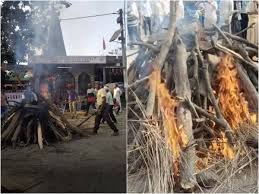
An elderly Dalit woman was cremated on a public road in Bihar’s Vaishali district after her family was allegedly stopped from accessing the village cremation ground, triggering outrage and tension in the area. The incident took place on Thursday at Sontho Andhari village under the Goraul police station limits. The woman, identified as Jhapki Devi, 95, belonged to a Mahadalit family. According to locals and police, when her family tried to take her body to the cremation ground, some people blocked the route, leaving the family with no option but to perform the last rites on the road. Family members and residents said the obstruction has been a long-standing issue. “Every time we take a body for cremation, the way is blocked. This has happened earlier too, but no permanent solution was given,” said a local resident from Manjhi Tola, expressing anger over repeated denial of access. As tensions rose, the funeral procession stopped at Andhari Gachi Chowk, where the body was placed on a pyre in front of a Shiva temple and cremated on the road. Angry villagers alleged that the pathway from the main road to the cremation ground has been encroached upon by local landowners. Police and administrative officials later reached the spot. A fire brigade vehicle was called to extinguish the pyre, and the road was cleaned after the cremation. Public representatives who arrived at the scene were reportedly chased away by protesting villagers, who accused the administration of ignoring their complaints for years. Vaishali Superintendent of Police Vikram Sihag said the issue arose due to the absence of a clear path. “Earlier, there was a route to the cremation ground, but some people built a temple on that path. Due to the lack of access, the family carried out the cremation on the road,” he said. He added that discussions were held with local officials and that arrangements would be made to restore access to the cremation ground. “The situation is currently under control,” the SP said. Block Development Officer Pankaj Kumar Nigam and Circle Officer Divya Chanchal said the area has been cleared and the matter is being investigated. “All aspects will be examined, and steps will be taken to ensure that such incidents do not happen again,” they said. Courtesy : TOP Note: This news is originally published on https:/theobserverpost.com/bha and is used purely for non-profit/non-commercial purposes, especially human rights
From the memoir: A Dalit woman writer on domestic violence, casteism, and emotional subjugation
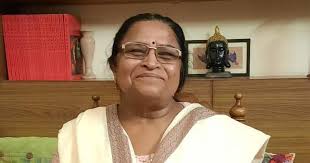
The savarnas in the village always used coercion to force the safai karamcharis to do the filthy work of collecting night soil. If anyone refused, the village headmen and businessmen would summon and question them. The Thakurs and Raghuvanshis hurled abuses and threats. “Do you want to live in the village or not? We will not spare your lives.” There was no point in leaving the village either, because people of our jati had to do this work everywhere. Besides, forming new relationships in a new place was a daunting task. Our refusal to do this work invited a flood of abusive words and poisonous behaviour, enough to keep our people in constant fear. The threat of sexual violence against our women also remained a powerful weapon of control. Even after the municipality was formed, the savarnas continued to hold on to their dominance. Once, the safai karamcharis of the municipality went on strike. Their monthly wages were a mere five rupees, and even that was never paid on time. They demanded an increase in their pay. The protestors would be summoned to the police station – sometimes urged to compromise, and at other times, beaten brutally by the police. Many people were badly injured. In Seoni, Hari Rathore, Phoolchand Baggan, Chhotelal Baggan, Gorelal, and Dulichand Rathore were the bold and outspoken men of our community. After striking work, a jati panchayat was called, and a unanimous decision was made to go on an indefinite strike. Our people were prepared for the worst, and the savarnas failed to intimidate them. The strike was announced publicly and lasted an entire week, throwing Seoni and Banapura into chaos. Villagers came to our homes, urging us to return to work. People of our jati were summoned to the police station and threatened with dire consequences, but this time, no one gave in. This was the result of their newfound resolve. The distraught women of our community described the condition of their injured husbands and sons to other women and wept over the uncertain future of their children. Another jati panchayat was held to discuss possible solutions to this grim situation. During the strike, policemen constantly patrolled our mohallas, forcing our men into hiding. When they couldn’t find the men, they summoned the women to the police station and made them sit there all day. The women were subjected to verbal abuse and humiliation, threatened with dire consequences, and told to persuade their men to end the strike. Terrified, the women yielded easily. Hearing them weep filled me with fear too. Kalicharan Bhaiya’s wife, Budhia Bhabhi, however, was a bold and fearless woman. Whenever she saw the policemen, she hurled abuses at them: “May you rot in hell! You envy our men and cast lustful eyes on our women. Don’t you have women at home?” The villagers always managed to break such strikes; this was true of strikes in places like Hardi, Itarsi, and Hoshangabad too, which would be forcibly brought to an end. On such occasions, a jati panchayat was convened, and the elders would advise the people of our community to compromise. But we continued to do the same work as before, and we continued to endure the same hardships. This pattern had been reproduced for generations. Young men who resisted and refused to work without pay were summoned to the police station and beaten. False charges of theft and robbery were levelled against them. Then they were given a choice – return to work or rot in jail. The constant threat of the police kept us living in fear. Many such atrocities were committed against our people in Madhya Pradesh, Rajasthan, and other states of northern India. Goons hired by casteist savarnas would storm into our mohallas, beat up our men, and publicly humiliate our women. They even set fire to our bastis. On hearing about such incidents from Pitaji and my brothers, Ma and Nani would tremble with fear and pray to God for protection. Yet the injustices and atrocities committed by the savarnas continued without end. And so, the safai karamcharis of the municipality in Seoni went on strike in 1968 to demand better wages and working conditions, but also to protest against the harassment they were constantly subjected to. I was in class eight then. This time, they showed unity and firm resolve. The demands that had been ignored by government officials for years were now quickly accepted. When the week-long strike ended, the villagers heaved a sigh of relief. After this incident, our people began to be treated with a measure of respect. This was a big achievement, yet our people never realised their own strength. Had they understood the meaning of this change, they could have moved further towards liberation from their oppression. After the strike ended, they struggled immensely clearing the backlog of work that had piled up over those eight days. The second major strike took place in protest against dry latrines. The workers stopped work for many days. Official notifications were issued, recognising the seriousness of the situation. Flush latrines were built to replace the dry ones. This was a major victory for us, yet the work of carrying night soil continued wherever dry latrines remained. Our people still did this degrading work – out of ignorance, fear, or helplessness. Gandhiji’s ideas about the upliftment of the Harijans were widely promoted in our region, but our people didn’t realise that they had brought no real improvement in our condition. Having deep faith in Gandhiji, they often said, “Mahatma Gandhi cleaned his toilet himself. Under his influence, even the traders and moneylenders had begun to pick up the garbage around their homes and dispose of it themselves. When such big businessmen didn’t hesitate to do this work, why should we? We were born into this caste and must do this work, whether we like it or not.” This was a kind of conspiracy, a trap to deceive innocent people and stop them from
Sister Chandra and how Parai Attam announced the coming of Dalit women Sakthi to the world
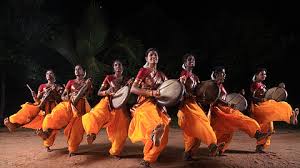
“I was rejected by village folk artistes as they didn’t believe a woman was strong enough to carry a parai and perform,” Sister Chandra remembered. It was the best of times, it was the worst of times for Dalit women to start performing Parai Attam, a traditional art form historically performed by Dalit men during funerals. Sister Chandra, the woman behind this quiet cultural revolution, had been doing community service in Dindigul when she noticed how poorly paid the men performing Parai Attam were. “I felt that people were not respecting the art or the artiste because of their social status,” she recalled. Sister Chandra also sensed the quick shift of the villagers’ interest from folk arts to community TV. “Each village has different art forms which they used to perform during festivals, but when people started enjoying television, art forms started dying,” she went on. Determined to revive the art form, Sister Chandra decided to form a troupe of her own. But being a woman, she had to also fight many gendered stereotypes around the art form, which was considered exclusively the domain of Dalit men. “I was rejected by village folk artistes as they didn’t believe a woman was strong enough to carry a parai and perform,” she remembered. At last, seeing her persistence, traditional village folk artiste Guru Ramadass taught her Parai Attam. Soon, Sister Felci and a group of village women joined, becoming the first batch of what would eventually be known as the Sakthi group. Now, Sister Felci has taken charge of it. As public perceptions changed, Sakthi’s popularity grew significantly. It began teaching more than 20 art forms including Parai Attam, Oyil Attam, and Silambam. Along with an offline batch of 20 students, two batches of online art classes were also introduced. They perform in and around several districts of Tamil Nadu and have also made their mark on the international stage. Sakthi is now flourishing. ‘Finally, you are making our girls take up Parai?’ In ancient Tamil society, parai, a hollow drum made out of a wooden frame and cow skin, was used as a percussion instrument to gather people and make announcements. Over time, it evolved into an art form predominantly performed by Dalit men. In the beginning, the idea of women performing Parai Attam was alarming to a society fed with stereotypical narratives on the art form. Concerned about their social status and perpetuating caste stereotypes, families strongly opposed the participation of their daughters. Parai artistes did not want their daughters to take up the art form as they believed their children would be discriminated against for their social status. “Initially, parents resisted sending their daughters to learn Parai Attam,” Sister Felci reminisced. They were met with questions filled with disbelief and anxiety such as ‘How can you make our girls take up Parai?’ Yet, against all odds, the team’s first performance became both a personal victory for Sister Chandra and a cultural milestone. “After that, we were invited to several villages to perform,” she said. Sakthi went on to become one of the earliest all-women Parai Attam troupes in Tamil Nadu. Sister Chandra and Sister Felci, driven by their mission to empower Dalits and women, were posted in Dindigul by their congregation, the Missionary Sisters of the Immaculate Heart of Mary, ICM. Every year, a new batch of twenty students joined Sister Chandra’s year-long residential course to learn various folk art forms such as Parai Attam, Oyil Attam, and Karagattam. The mix included young women who were school dropouts. “We encourage school dropouts to finish their studies and enroll in college. Some of them later became folk dance teachers in nearby village schools,” said Sister Chandra. Martial arts such as silambam and taekwondo are also taught by Sakthi. “This is a life-oriented program as women are also taught vocational skills such as tailoring, besides sex education and other lessons,” she said. Performances with social messages Rather than performing solely for entertainment, Sakthi’s programs are society-oriented. To spark a social dialogue and make society rethink its assumptions became the group’s goal. Sister Chandra believes that the dialogue initiated after performances has brought changes in society. She proudly spoke about how turning Parai Attam into an inclusive art form is part of such a change. “Now, women from non-Dalit communities also train for Parai Attam with the Sakthi group, which shows acceptance and how people are willing to challenge stereotypes,” she said. Sakthi’s unique style of incorporating social messages with performances made the team stand out. “Our performances raise awareness about social issues such as women empowerment, communal harmony, sexual harassment, caste, globalisation and unemployment,” said Sister Chandra. The importance of developing a reading habit is a recurring theme expressed by the team whenever it is invited for book launches and similar events. To instill confidence and capability among young talents, Sister Chandra believed that the group should be involved in choreographing, decision-making and every other aspect of their performance. This let the girls feel empowered by occupying spaces which were dominated by men, she said. ‘To build a better humanity, we have to break the chains of oppression’ is Sakthi’s motto. The group’s name reflects its goal of holding on to the female ‘energy’ and empowering women by creating a space exclusive to them. As recently as the early 2000s, women across different states were excluded from performing certain folk art forms. “For example, in Kerala, women were not allowed to perform chenda melam, an art form that involved drums. This trend is slowly changing nowadays,” said Sister Chandra. The logo of Sakthi depicts one foot of a performer bound by a chain, signifying the historical oppression, and the other foot adorned with an anklet, representing resilience and the struggle to break free from marginalisation. Taking Parai attam to the world The team of performers has kept changing over the years as many women dropped out after marriage and childbirth. However, that didn’t stop Sakthi from carrying forward its mission.
Man Accused In Five Murder Cases Gets Life Term For Killing Dalit Woman In Gurugram

A man was sentenced to life by Gurugram court for kidnapping and killing a Dalit woman in 2021. He confessed to other murders. Key evidence included his recorded confession. Police said the accused was working as a security guard at a private hospital in Sector 16 in 2021 when he molested a Dalit woman. (Canva) A Gurugram court has sentenced a man, accused in five murder cases, to life imprisonment for the kidnapping and killing of a 20-year-old dalit woman in December 2021. The court found him guilty in the case and awarded the sentence after completion of the trial. According to Rekha JS Jangra, deputy district attorney, after the convict Singh Raj was arrested for the murder of the woman on January 7, 2022, he confessed to murdering three more minor girls in 2019, 2020 and 2021 for protesting to his molestation attempt. “Singh had dumped bodies of all three minors in Agra canal near Sector 7 after the murders. Trials are ongoing against him in these cases. He had also confessed to murdering his uncle and cousin in 1987 but was acquitted due to lack of evidence in those cases,” she said. Police said Raj was working as a security guard at a private hospital in Sector 16 in 2021 when he molested a Dalit woman. Officers added that Raj confessed to killing her after she allegedly tried to extort money by threatening to file a police complaint against him, Hindustan Times reported. Jangra said he asked the woman to meet him in Sector 16 on December 31, 2021, where he strangled her to death. “He then transported the body on a bicycle to dump it in the canal. Her family in Bhupani had filed a missing complaint at Old Faridabad police station on January 2, 2022. However, this time, the body was trapped in vegetation and was recovered by police on January 6, 2022,” she said. As per the investigators, on January 5, Raj rang the woman’s family and confessed to murdering her. Her family had recorded his confession on another phone and contacted the police. Sobhita Dhulipala Radiates Timeless Charm In A Traditional South Indian Look For Her Haldi Ceremony “The cell tower location of the deceased and Singh were found to be at the same location at the time of the murder. The recording of his confession along the location was the key evidence for prosecution along with 29 witnesses,” said Jangra. The court of additional sessions judge Purushottam Kumar also imposed a total fine of ₹2.1 lakh on convict Singh Raj after finding him guilty under Sections 302 (murder), 364 (kidnapping with intent to murder) and 201 (causing disappearance of evidence) of the Indian Penal Code, along with Section 3(2)(v) of the Scheduled Castes and Scheduled Tribes (Prevention of Atrocities) Act. Curated By : Aanchal Sinha Courtesy : News18 Note: This news is originally published on https:/news18.com/bha and is used purely for non-profit/non-commercial purposes, especially human rights
Raping Dalit woman is…: Congress MLA’s bizarre theory sparks row, BJP reacts
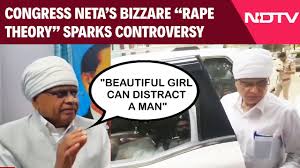
A political controversy has erupted in Madhya Pradesh after Congress MLA Phool Singh Baraiya’s remarks linking rape with religious scriptures sparked widespread outrage. The incident has led to demands for his suspension and expulsion from the party amid sharp criticism from BJP and state leaders. A political storm has erupted in Madhya Pradesh after a video surfaced allegedly showing Congress MLA Phool Singh Baraiya making remarks that appear to link rape with religious scriptures, triggering sharp reactions from across the political spectrum and demands for his suspension and expulsion from the party. The video, which emerged from an interview circulating on social media platforms, shows Baraiya, the Congress legislator from the Bhander Assembly seat, making claims that religious texts offer “spiritual rewards” for sexual violence against women from Scheduled Caste, Scheduled Tribe and Other Backward Class communities. The clip was shared online by the Bharatiya Janata Party, drawing widespread condemnation. In the clip, he is heard saying, “In India, the maximum number of rape cases are among Scheduled Castes, Scheduled Tribes and most OBCs. The theory of rape is that when a man, whatever his state of mind, sees a very beautiful woman while walking on the road, his brain can get disturbed and rape can happen. But among tribals, where are such beautiful women? Among SCs, where are such beautiful women? Among most OBCs, are there such beautiful women? Why does rape happen? Because religious scriptures give such instructions.” He then goes on to invoke religious texts to justify his argument, saying, “I do not want to say anything specific about Hindu religious scriptures, but what I mean is that it is written that when a person does this act, he gets the reward of a pilgrimage. It is written that by having relations with women of certain castes, one gets the spiritual reward of visiting places like Kashi, Prayagraj or Ayodhya. If someone cannot go on a pilgrimage, an option is given to stay at home and get the same reward by forcing himself on their women.” In the same video, Baraiya makes disturbing remarks while referring to sexual violence against infants. “Listen to why rape happens even with four-month-old, ten-month-old or one-year-old babies. Are their organs ready for sex? It happens because it is written that if I rape a girl of this caste, I will get a spiritual reward,” he says. BJP ATTACKS CONGRESS, CALLS REMARKS CRIMINAL The BJP reacted strongly, calling the remarks misogynistic, casteist and criminal. Madhya Pradesh BJP media in-charge Ashish Agrawal shared the video on X and wrote that Baraiya’s words were “not a slip of the tongue but a public display of a sick, perverted and criminal mindset”. “Measuring women on the scale of ‘beauty’ and describing rape of SC-ST women as a ‘pilgrimage reward’ is not a statement, it is an admission of a criminal mentality,” Agrawal said, adding that the comments were an attack on women, Dalits and humanity itself. He demanded immediate action from the Congress leadership, asking whether the party would suspend or expel the MLA or “accept that it stands with an anti-women and anti-Dalit mindset”. CHIEF MINISTER SEEKS EXPULSION Madhya Pradesh Chief Minister Mohan Yadav also condemned the remarks, accusing Baraiya of spreading social hatred. “Phool Singh Baraiya has worked to spread poison in society. Such an MLA should be suspended and expelled from the party so that it is clear he has respect for other sections of society,” Yadav said, adding that he strongly condemned the comments. The Chief Minister urged the Congress leadership to act decisively, especially as senior party leaders were visiting the state. “People of the country want to know what action will be taken,” he said. NATIONAL BJP LEADERS WEIGH IN Senior BJP leader Sambit Patra described the remarks as an insult not only to Sanatan Dharma but to humanity. “He is an MLA holding a constitutional position. Senior Congress leaders were present, yet no one stopped him,” Patra said. He added that the comments hurt the legacy of B R Ambedkar and demanded a response from the Congress leadership. “By evening, the country expects a clear statement and action,” he said. CONGRESS YET TO RESPOND As of Saturday, the Congress had not issued an official response or clarified its stand on the controversy. Baraiya, who has often courted controversy for his statements in the past, has also not publicly addressed the backlash over the video. Ravish Pal Singh Edited By: Sonali Verma Courtesy : India Today Note: This news is originally published on https:/indiatoday.com/bha and is used purely for non-profit/non-commercial purposes, especially human rights
Meerut Dalit Woman’s Killing: Family Says Police, BJP Helping Prime Accused Claim Minority to Escape Punishment
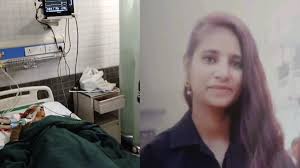
The family of a Dalit woman who was brutally killed in Meerut, allegedly by a group of upper-caste men, has accused the Uttar Pradesh police and the BJP of shielding the main accused and cutting them off from the outside world. Speaking to reporters outside his village on Wednesday, the eldest brother of the abducted woman said the police were deliberately protecting Paras Som, the prime accused in the case. “In Uttar Pradesh, criminals are killed in encounters, but Paras Som was not even touched. Everyone in the village knows he killed my mother and abducted my sister. Putting him in jail is just an eyewash,” he said. He alleged that a conspiracy was underway to help the accused escape strict punishment. “While being taken to court, he was allowed to speak to the media and claim that he is a minor. This is a planned attempt to save him, even though the whole village knows he is around 25 years old,” the brother said. The family also alleged that heavy police presence around their house was not meant for protection but to isolate them. “Paramilitary forces have been deployed outside our home. All entry points to the village have been blocked and six CCTV cameras have been installed around our house. At first we thought it was for our safety, but now it feels like they want to stop us from talking to anyone,” he said. According to the family, the incident took place on the morning of January 8 when Paras Som and his associates attacked the woman with axes as she was going to her fields with her daughter. The woman was killed on the spot and her daughter was abducted. Another brother of the abducted woman said eyewitnesses had named four people in the crime. “Paras Som, his friend Sunil Som and two others were involved. The police arrested Paras and Sunil but have done nothing to catch the other two accused. Now Paras is playing the age card on the advice of politicians,” he alleged. The police arrested Paras Som from Haridwar and rescued the woman on the night of January 10. After her statement was recorded before a magistrate, she was sent back home. While being produced in court, Paras Som told reporters, “I am a minor and I have documents to prove it. My Aadhaar card and school certificate will show this.” Meerut jail superintendent Viresh Raj Sharma said the accused had claimed to be a minor. “He has said he should be sent to a child remand home. We have asked him to present these claims before the court,” he said. Circle Officer Ashutosh Kumar said security forces were deployed only to maintain law and order. “The main accused has not submitted any proof of being a minor so far,” he said. The case has triggered political reactions across the state. Samajwadi Party chief Akhilesh Yadav said his party was closely monitoring the situation. “We are with the victim’s family at every step,” he said. Yadav had earlier sent Rs three lakh as financial assistance to the family. The killing sparked protests by Dalit groups and opposition parties, with demands for the immediate arrest of all accused and action against their properties. Bahujan Samaj Party chief Mayawati called the incident “extremely heartbreaking and shameful” and urged the government to take crimes against women seriously. The incident has also led to clashes between opposition leaders and the administration after several political delegations were stopped from visiting the victim’s village, even as BJP leaders were allowed access. Courtesy : TOP Note: This news is originally published on https:/theobserverpost.com/bha and is used purely for non-profit/non-commercial purposes, especially human rights
Meira Kumar: How A Dalit Woman Reshaped Indian Politics From The Speaker’s Chair
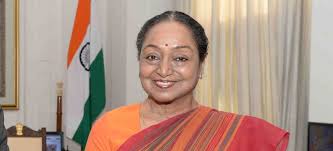
Meira Kumar is a politician and Speaker of the 15th Lok Sabha, who has left her mark on the field of Indian politics. What does it mean to shatter the ceiling when the floor that you stand on has always been irregular? Meira Kumar, India’s first woman Speaker in the Lok Sabha, has shattered political ceilings but also brought her identity of being a Dalit woman as a powerful instrument of advocacy to the heart of politics. Meira Kumar’s life is an adventurous answer to the challenge of representation in justice that can transform the moral geography of the nation. Family background and early years Meira Kumar is a politician and Speaker of the 15th Lok Sabha, who has left her mark on the field of Indian politics. Born in a politically active family with many Dalit leaders and social activists, Meira Kumar’s father Babu Jagjivan Ram was not only a well-known freedom fighter but also Deputy Prime Minister. Her mother, Indrani Devi, was a social worker. Kumar holds B.A. and M.A. in English Literature with LL.B. from the University of Delhi. It is because of Kumar’s parents, particularly her mother’s influence, that she chose to follow the path to justice for everyone. Meira Kumar has been an active social worker since her youth and was associated with various social movements for reforms and human rights. During the famine in the state of Bihar in the year 1967, she was appointed as the Chairperson of National Drought Relief Committee constituted by the Congress and she had also worked towards the establishment of the Family Adoption Scheme, through which drought-affected families would get help from voluntarily contributing households. Through all this, she had gained a good base in the provision of relief before venturing into politics. Career and entry into politics Before entering Politics, Meira Kumar served the Indian Foreign Service for more than a decade, where she was stationed in Spain and the United Kingdom. This job taught her how to negotiate, build bridges between different groups and represent India’s diverse culture to the world. However, she felt a strong pull to work directly on the social issues she cared about at home. She left diplomacy to join politics in 1985, encouraged by her father and by Rajiv Gandhi, the then prime minister of India. She ran in a by-election for a seat in the Lok Sabha from a constituency in Uttar Pradesh state defeating two other Dalit candidates. Being close to the politically powerful Gandhi family and representing the oppressed castes, Kumar’s political career progressed steadily within the Indian National Congress (INC) and she quickly made a name for herself as a strong advocate for human rights and the abolition of the caste system. Meira Kumar is a highly accomplished politician who has been a member of numerous decision-making bodies within the INC, serving twice as its General Secretary. Meira Kumar is a highly accomplished politician who has been a member of numerous decision-making bodies within the INC, serving twice as its General Secretary. She became a member of the Congress Working Committee, the organisation’s highest decision-making body in 1990 and continued it for a decade till 2000. She resigned from the Congress Party in 2000, citing differences with the party leadership but rejoined it after a gap of two years. In 2004 and 2009 she contested and won the Lok Sabha seat from Sasaram in Bihar state, the constituency once represented by her father. Advocacy for social justice During her political career, she has served on various committees, including the Public Accounts Committee and the Joint Committee on the Empowerment of Women as a Member of Parliament. Additionally, she also served as Minister of Social Justice and Empowerment (2004-2009) which deepened her activism against caste exclusion. She challenged private sector reservation opposition and said sustainable growth needs ending Dalit and tribal marginalisation. Her focus shifted from handouts to true empowerment. Appointed as the Minister of Water Resources in the 14th Lok Sabha shortly after her victory in the elections of 2009, in June of the same year, she achieved a tremendous historical feat as the first woman Lok Sabha Speaker. This moment symbolically meant a lot to women in the state of India. During her role as the Speaker, Meira Kumar achieved many milestones to bring gender equality to the politics of India. She started the gender-neutral rules in the House, replacing gendered terms with gender-neutral expressions in the rules of the House. This action brought a remarkable revolution in the setting of the Parliament to be friendly to all its members irrespective of gender. During her term as the Speaker, in 2011, Kumar reduced paper usage by 30% in the Lok Sabha with tablets and also expressed her support to the increasing nationwide protests against violence on women in the nation. She also announced the formation of a Parliamentary Friendship Group to improve relations with the nation of Bhutan. In speeches, Meira Kumar calls for ‘zero tolerance on prejudice‘ and the end of the caste system. In the 2017 presidential election, Kumar secured the United Progressive Alliance’s nomination as their joint candidate for President of India. This was a testament to her widespread respect as a symbol of social justice, secularism and constitutional values as she said, ‘Democratic values, social justice, transparency, freedom of speech, inclusiveness, destruction of caste system, end of poverty — these are part of the ideology which is close to my heart. For this very reason, on the plank of this ideology I will compete.‘ Thus, her 2017 presidential bid stressed destruction of caste barriers and inclusion. ‘Democratic values, social justice, transparency, freedom of speech, inclusiveness, destruction of caste system, end of poverty — these are part of the ideology which is close to my heart. For this very reason, on the plank of this ideology I will compete.‘ – Meira Kumar At her first press conference after being selected as joint candidate for President, with BJP’s Ram Nath Kovind, whose Dalit
Dalit Woman Raped After Accused Conceals His Religious Identity, Obscene Videos Made: Repeated Sexual Exploitation Through Blackmail, FIR Registered on Court Order
A case of sexual exploitation of a 22-year-old Dalit woman by concealing religious identity has come to light in the Garhmukteshwar police station area. It is alleged that the accused hotel owner gained the trust of the woman and her family by identifying himself as a Hindu, then drugged her, raped her, and made obscene photos and videos to blackmail her. Through this, the accused repeatedly sexually exploited the woman. The victim stated that about eight months ago, two young men came to her house to buy a buffalo. The deal did not go through, but they kept coming back to her house. One of these men introduced himself as Ajay Kumar and a hotel owner. The accused said he needed an employee to work at the hotel counter and arranged a job for the woman’s mother at a salary of Rs. 15,000 per month. It is alleged that after taking the woman to the hotel, the accused gave her a narcotic substance. While she was unconscious, he raped her and made obscene photos and videos. Fearing social stigma and disgrace, the woman did not share this with anyone and stopped going to the hotel. After some time, the accused called and revealed that his real name was not Ajay, but Yunus. He threatened that if she did not comply with his demands, he would make the photos and videos go viral on social media. After this, the accused called the woman to different places and raped her several times. The victim alleged that when she resisted, the accused would use casteist slurs and verbally abuse her over the phone, mentally harassing her. Police Station In-charge Inspector Devendra Singh Bisht said that on the orders of the court, a case has been registered against Yunus, a resident of Mohalla Madrasa in Garhmukteshwar city, under serious sections including rape, threats, blackmail, and the SC/ST Act. The police are conducting a thorough investigation into the matter. Shahrukh Khan | Garhmukteshwar Courtesy: Hindi News