
HC seeks reply on SOP for arrest, detention of transgenders

New Delhi: Delhi High Court on Wednesday asked the Centre and Delhi Police to inform it about the steps being taken to lay down an SOP for probe agencies when interrogating, arresting or detaining a transgender person. A bench of Chief Justice DK Upadhyaya and Justice Tejas Karia issued notices to central govt, police as well as Delhi govt on a PIL by law student Taaran Chandna, who said that while Delhi Police has a standing order for the arrest of women and senior citizens, it is “wholly silent” on transgender persons. The petitioner submitted that in May, NHRC issued the Advisory for Ensuring the Welfare of Transgender Persons, 2.0 for the formulation of an SOP to govern the arrest, detention, search, interrogation and imprisonment of transgender persons. However, no such SOP or guideline has been formed for Delhi, he said. The bench, while asking “the Union of India, Delhi Police and state govt to file their reply,” said that “in the meantime, we direct that the advisory issued in May 2026 shall be considered and appropriate steps as permissible in law shall be taken.” The court listed the matter for Nov 18. In the PIL, Chandna said the SOP governing the arrest and personal search of transgender persons by Delhi Police was needed to protect their fundamental rights to bodily integrity, dignity, equality and non-discrimination guaranteed under the Constitution. The “concrete and continuing harm” due to the SOP “vacuum” can be seen when the police in May 2025 arrested three transgender persons, the plea said. It alleged that despite one of them possessing female genital anatomy and another holding a valid certificate of identity, all three were physically searched by a male police officer “without any enquiry into their gender identity, without seeking self-declaration, and without consent”. Courtesy : TOI Note: This news is originally published on https:/timesofindia.com/bha and is used purely for non-profit/non-commercial purposes, especially human rights
Delhi High Court asks Centre, police to frame SOP for arrest, detention of transgender persons

The petitioner submitted that in May, the NHRC issued the ‘Advisory for Ensuring the Welfare of Transgender Persons, 2.0’ for formulation of a comprehensive Standard Operating Procedure to govern the arrest, detention, search, interrogation and imprisonment of transgender persons The high court here on Wednesday asked the Centre and Delhi Police to take appropriate steps for the formulation of an SOP on the arrest and detention of transgender persons here. A bench of Chief Justice D K Upadhyaya and Justice Tejas Karia issued notice to the central government, police as well as the Delhi government on a public interest litigation (PIL) by a law student, and asked them to consider an advisory by the National Human Rights Commission (NHRC) on the issue. The plea by Taaran Chandna said while the Delhi Police has a standing order for the arrest of women and senior citizens, it is “wholly silent” on transgender persons. The petitioner submitted that in May, the NHRC issued the ‘Advisory for Ensuring the Welfare of Transgender Persons, 2.0’ for formulation of a comprehensive Standard Operating Procedure (SOP) to govern the arrest, detention, search, interrogation and imprisonment of transgender persons. However, no such SOP or guideline has been formed for Delhi, he said. “We call upon the Union of India, the Delhi Police and the State government to file their reply. In the meantime, we direct that the advisory issued in May 2026 shall be considered and appropriate steps as permissible in law shall be taken,” the bench said. The court also asked authorities to file an affidavit detailing the steps taken by them in compliance with the advisory and listed the matter for hearing on November 18. In the PIL, Chandna said the SOP governing the arrest and personal search of transgender persons by Delhi Police was needed to protect their fundamental rights to bodily integrity, dignity, equality and non- discrimination guaranteed under the Constitution of India. The “concrete and continuing harm” due to the “vacuum” can be seen when the police in May 2025 arrested three transgender persons in an FIR, the plea said. It alleged that despite one of them possessing female genital anatomy and another holding a valid Certificate of Identity, all three were personally searched by a male police officer “without any enquiry into their gender identity, without seeking self-declaration, and without consent”. Courtesy : The Telegraph Note: This news is originally published on https:/thetelegraph.com/bha and is used purely for non-profit/non-commercial purposes, especially human rights
Parliament passes Transgender Persons Amendment Bill, 2026 with Rajya Sabha approving it today

Parliament has passed the Transgender Persons (Protection of Rights) Amendment Bill, 2026, with the Rajya Sabha approving it today. The bill was passed by the Lok Sabha yesterday by a voice vote amid an Opposition-led walkout. The bill seeks to redefine the category of transgender, removes the provision of self-perceived gender identity and excludes several socio-cultural identities as well as transmasculine individuals from its ambit. It also further defines transgender persons within a biological framework, based on intersex variations and differences in sexual development. Replying to the discussion on the Bill in the Rajya Sabha, Social Justice and Empowerment Minister Dr Virendra Kumar said the government is compassionate towards the well-being of the transgender community. He said the Bill has provisions to empower the transgenders and give them dignity. The Minister said that the NDA government has taken several initiatives to bring transgender people to the mainstream and stop discrimination against them. Starting the discussion in the Upper House, Congress MP Renuka Chowdhury said this bill dilutes the privacy of an individual provided under the Constitution. Opposing the Bill, Ms Chowdhury said self-identification cannot be taken away through bureaucratic certification. Criticizing the government, she said that the proposed bill undermines the fundamental rights and dignity of transgender persons. Calling such a move wrong and illegal, she argued that forcing transgender persons to provide their identity through official certificates is against the spirit of equality and dignity guaranteed by the constitution. She also questioned the government’s approach for not properly consulting with the transgender community before bringing the Bill. She also referred to the Supreme Court’s landmark NALSA judgement of 2014, which recognized the right of transgender persons to self-identify their gender. Ms Chowdhury said the proposed Bill violates the principles laid down in that judgement and fails to respect an already established legal framework. DMK MP Tiruchi Shiva also opposed the Bill, saying that even if the Bill is passed in Parliament with a majority, it will be struck down by the Supreme Court. He further added that the Bill violates Articles 14, 15, 19 and 21 of the Constitution and it deprives the community of the right to freedom, dignity and self-determination. Supporting the Bill, BJP MP Medha Vishram Kulkarni said, ” This Bill ensures justice, dignity, protection from criminalisation and legal safeguards for transgender persons. She also thanked Prime Minister Narendra Modi for bringing this bill with certain amendments in order to ensure that the benefits reach the deserving people in a proper manner. She said there is a need for a law that brings justice to real transgender individuals and punishes fake ones. Mrs Kulkarni said the benefits should be extended to those who are transgender by birth. She said that the amendment to extend punishment will bring down the rate of crime and forced identities. TMC’s Saket Gokhale said that 31% of Transgender people in India have attempted suicide because of the discrimination that they are facing. He alleged that now the government is going to start discriminating against them as though social discrimination were not enough. He called it unacceptable. Mr Gokhale expressed concern that gender is going to be decided by the Chief Medical Officer and a District Magistrate, and the bill does not prescribe any qualifications for the Chief Medical Officer. Sanjay Singh of AAP said the Bill is a big let-down for the transgender community. He accused the government of not doing anything for the community. RJD’s Manoj Kr Jha said that prejudices against transgender people should stop, and they should be able to live with dignity. He added that self-determination of gender should not be taken away. CPI(M)’s John Brittas said it is a black-letter day and the Bill is taking India a century back. He pleaded with the government to either withdraw the Bill or refer it to a Select Committee. Jaya Bachchan of the Samajwadi Party also questioned the government over the legislation. She sought to know what the urgency was in bringing the Bill, without examining it with the depth and care that it deserved. Courtesy : NOA Note: This news is originally published on https:/newsonair.com/bha and is used purely for non-profit/non-commercial purposes, especially human rights
Anaya Bangar finds support from transgender cricketer who knows the battle

Danielle McGahey has backed Anaya Bangar after Cricket Australia cleared a pathway for her to pursue elite women’s cricket from March 2027. Speaking to India Today, McGahey urged people to base the transgender participation debate, on evidence while treating Bangar with dignity and respect. For Danielle McGahey, Anaya Bangar’s fight to keep her cricketing dream alive carries a familiar weight. Nearly three years after becoming the first transgender cricketer to play in an official international match, McGahey saw her own international career brought to an end by an ICC rule change. Now, as Cricket Australia clears a pathway for Bangar to pursue elite women’s cricket from March 2027, McGahey has chosen to stand firmly behind her. “I want to express my full support for Anaya. I’m incredibly proud of her for continuing to pursue the sport she loves while facing an enormous amount of public scrutiny,” McGahey told India Today in an exclusive interview. McGahey represented Canada before the ICC ruling ended her international career. Her experience has given her a personal connection to the scrutiny surrounding Bangar, who can play Premier Cricket in Australia in the interim before becoming eligible for elite cricket, subject to the relevant requirements. A NEW CHAPTER AWAITS IN AUSTRALIA Anaya Bnagr will be eligible to play elite cricket in Australia from March 2027. Courtesy: Anaya Bangar Instagram For Bangar, Cricket Australia’s decision offers something that has been missing for a long time: a pathway back to competitive cricket. Her potential journey could take her from Premier Cricket to elite domestic cricket and, eventually, the Women’s Big Bash League. But eligibility does not guarantee selection or a contract. Her case also highlights the different approaches taken by cricket’s governing bodies. Cricket Australia uses a testosterone-based eligibility framework for domestic competitions, while the ICC has stricter regulations for international cricket. Under the ICC’s current policy, transgender women who have experienced male puberty are not eligible to play international women’s cricket, regardless of surgery or gender reassignment treatment. The policy was approved in November 2023 following a nine-month consultation process. MCGAHEY CHALLENGES THE ASSUMPTIONS Danielle McGahey retired from international cricket in 2023. Courtesy: Danielle McGahey Instagram McGahey believes the discussion around transgender participation should be grounded in research rather than assumptions about transgender athletes. “My position remains very clear: trans women are women, and trans women belong in women’s sport. After years of gender-affirming hormone therapy, the physiological picture is very different from what is often portrayed in public debate. “Research has shown substantial reductions in strength, muscle mass and other performance-related measures following hormone therapy, with a number of measures moving toward or becoming comparable with cisgender female ranges over time. These conversations deserve to be based on evidence rather than assumptions about transgender bodies.” Her comments come as Bangar’s eligibility continues to generate debate among players and supporters of the women’s game. South Africa international Marizanne Kapp has publicly criticised Cricket Australia’s decision, calling it “absolutely ridiculous”. The contrasting positions reflect the wider challenge facing sporting bodies as they navigate questions of inclusion, competitive fairness and eligibility. A CAREER THAT FELL APART ABRUPTLY Danielle McGahey played 6 T20Is for Canada. Courtesy: Instagram For McGahey, the debate is not an abstract one. She has lived through its consequences. The Australian-born cricketer moved to Canada and made history in September 2023 when she became the first transgender player to feature in an official international cricket match, making her T20I debut against Brazil. She went on to play six T20Is for Canada, scoring 118 runs at an average of 19.66, with a highest score of 48. At the time, McGahey had been deemed eligible under the ICC’s existing transgender participation criteria. But on November 21, 2023, the governing body approved new regulations barring transgender women who had experienced male puberty from international women’s cricket. McGahey’s international career was consequently over. “With a very heavy heart, I must say that my international cricketing career is over,” she said at the time. The decision brought a sudden end to the international journey of a player who had made history only months earlier. A PLEA FOR DIGNITY Danielle McGahey said Anaya Bangar doesn’t deserve to be ridiculed. Courtesy: Anaya Instagram That experience has shaped McGahey’s response to the scrutiny surrounding Bangar. “What has been particularly disappointing for me is seeing Anaya subjected to much of the same ridicule, hostility and dehumanising commentary that I experienced three years ago. It is incredibly disheartening to see how little some parts of the public conversation appear to have moved forward, particularly when our medical and scientific understanding of transgender people continues to develop.” McGahey said disagreement over sporting regulations should never become an excuse for personal attacks. “But beyond the sporting and scientific debate, I think it is important to remember that Anaya is a human being who is simply trying to live her life and pursue her career in cricket. Personal attacks, ridicule and dehumanising commentary are completely inappropriate. “Whatever someone’s opinion on sporting regulations may be, there is no justification for attacking someone personally, and those words can have very real consequences for the person on the receiving end of them. “I hope that as this discussion continues, people can remember the human being at the centre of it and treat Anaya with the dignity and respect she deserves.” For Bangar, the immediate focus is on the cricket field — on returning, rebuilding and earning her place through performance. For McGahey, however, Bangar’s journey is also a reminder of a battle she knows all too well: what it means to keep pursuing the sport you love when your eligibility, identity and future are being debated far beyond the boundary. Sabyasachi Chowdhury Courtesy : India Today Note: This news is originally published on https:/indiatoday.com/bha and is used purely for non-profit/non-commercial purposes, especially human rights
Parliament passes Transgender Persons Amendment Bill, 2026 with Rajya Sabha approving it today
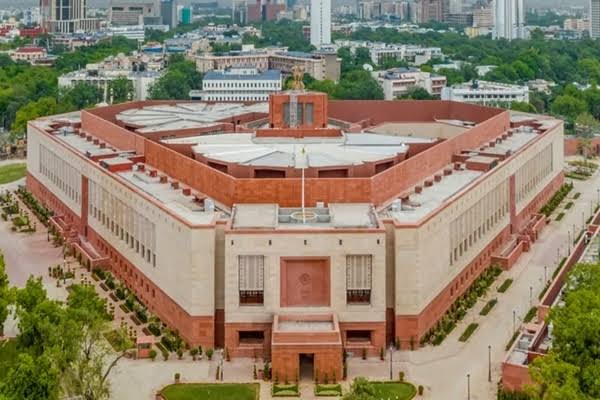
Parliament has passed the Transgender Persons (Protection of Rights) Amendment Bill, 2026, with the Rajya Sabha approving it today. The bill was passed by the Lok Sabha yesterday by a voice vote amid an Opposition-led walkout. The bill seeks to redefine the category of transgender, removes the provision of self-perceived gender identity and excludes several socio-cultural identities as well as transmasculine individuals from its ambit. It also further defines transgender persons within a biological framework, based on intersex variations and differences in sexual development. Replying to the discussion on the Bill in the Rajya Sabha, Social Justice and Empowerment Minister Dr Virendra Kumar said the government is compassionate towards the well-being of the transgender community. He said the Bill has provisions to empower the transgenders and give them dignity. The Minister said that the NDA government has taken several initiatives to bring transgender people to the mainstream and stop discrimination against them. Starting the discussion in the Upper House, Congress MP Renuka Chowdhury said this bill dilutes the privacy of an individual provided under the Constitution. Opposing the Bill, Ms Chowdhury said self-identification cannot be taken away through bureaucratic certification. Criticizing the government, she said that the proposed bill undermines the fundamental rights and dignity of transgender persons. Calling such a move wrong and illegal, she argued that forcing transgender persons to provide their identity through official certificates is against the spirit of equality and dignity guaranteed by the constitution. She also questioned the government’s approach for not properly consulting with the transgender community before bringing the Bill. She also referred to the Supreme Court’s landmark NALSA judgement of 2014, which recognized the right of transgender persons to self-identify their gender. Ms Chowdhury said the proposed Bill violates the principles laid down in that judgement and fails to respect an already established legal framework. DMK MP Tiruchi Shiva also opposed the Bill, saying that even if the Bill is passed in Parliament with a majority, it will be struck down by the Supreme Court. He further added that the Bill violates Articles 14, 15, 19 and 21 of the Constitution and it deprives the community of the right to freedom, dignity and self-determination. Supporting the Bill, BJP MP Medha Vishram Kulkarni said, ” This Bill ensures justice, dignity, protection from criminalisation and legal safeguards for transgender persons. She also thanked Prime Minister Narendra Modi for bringing this bill with certain amendments in order to ensure that the benefits reach the deserving people in a proper manner. She said there is a need for a law that brings justice to real transgender individuals and punishes fake ones. Mrs Kulkarni said the benefits should be extended to those who are transgender by birth. She said that the amendment to extend punishment will bring down the rate of crime and forced identities TMC’s Saket Gokhale said that 31% of Transgender people in India have attempted suicide because of the discrimination that they are facing. He alleged that now the government is going to start discriminating against them as though social discrimination were not enough. He called it unacceptable. Mr Gokhale expressed concern that gender is going to be decided by the Chief Medical Officer and a District Magistrate, and the bill does not prescribe any qualifications for the Chief Medical Officer. Sanjay Singh of AAP said the Bill is a big let-down for the transgender community. He accused the government of not doing anything for the community. RJD’s Manoj Kr Jha said that prejudices against transgender people should stop, and they should be able to live with dignity. He added that self-determination of gender should not be taken away. CPI(M)’s John Brittas said it is a black-letter day and the Bill is taking India a century back. He pleaded with the government to either withdraw the Bill or refer it to a Select Committee. Jaya Bachchan of the Samajwadi Party also questioned the government over the legislation. She sought to know what the urgency was in bringing the Bill, without examining it with the depth and care that it deserved. Courtesy : NOA Note: This news is originally published on https:/newsonair.com/bha and is used purely for non-profit/non-commercial purposes, especially human rights
The high cost of being trans in India, and how a new law could add to it

Although the 2026 amendment does not explicitly make gender-affirming surgery mandatory for all applicants of the transgender identity card, the requirement for a medical board review has created confusion and concern within the transgender community. Illustration showing transgender people alongside a medical board certificate, hospital bill, medicines and transgender identity card, highlighting the costs of legal recognition and healthcare. Megha*, a transgender woman from northern Kerala, got her transgender ID card in 2020, five years before undergoing gender affirmation surgery. Esha Kishore, another trans activist based in Kerala, got hers in 2015, also before undergoing gender-affirming procedures. The card is the legal document that certifies an individual’s gender identity under the Transgender Persons (Protection of Rights) Act, 2019, and neither had to undergo surgery to get it. They could apply based on their self-identification, with any medical procedures they choose to undergo coming later. Megha spent roughly Rs 3-4 lakh on her gender-affirming care, including surgery, hormone therapy, doctors’ fees, tests, travel, accommodation, food, and medication. She still spends over Rs 2,000 a month on medicines, a cost she will have to shell out for decades to come, since doctors advise most trans individuals to stay on hormone therapy until their 50s. Esha too spent a comparable amount on gender affirmation procedures, which she began a decade earlier than Megha. For many like them, legal recognition did not depend on whether, when, or how they chose to medically transition. But that has now changed. The Transgender Persons (Protection of Rights) Amendment Act, 2026, which came into force in May, removes statutory recognition of self-identification and requires a medical board to certify a person’s transgender identity. It also narrows the definition of who can be legally recognised as transgender, covering certain socio-cultural identities such as kinner, hijra, aravani, and jogta, as well as people with specified intersex variations. A heavily criticised provision also includes a separate category of people whom the law says have been compelled to adopt or present a transgender identity “by force, allurement, inducement, deceit or undue influence.” The amendment effectively excludes people whose identities are based solely on self-perception, including self-perceived trans-masculine, trans-feminine, and gender-non-binary identities. The change has left transgender persons, activists, and lawyers concerned about who will now be able to obtain legal recognition, and what the new medical-board process will require. For those who already have ID cards, however, there is some clarity. During a hearing on August 17, the Union government told the Supreme Court that transgender identity cards issued before the 2026 amendment would continue to remain operational, subject to the outcome of the petitions challenging the law. But for those seeking an ID card under the new system, the process could carry a significant medical and financial burden. Experts told TNM that requiring certification by a medical board could function as a surgery mandate in practice, even if the amendment does not explicitly say that surgery is compulsory. That could make expensive medical procedures and the costs of follow-up care a barrier to obtaining legal recognition, marking a significant departure from the earlier system, under which self-identification was enough to apply for a transgender ID card. What the amendment changed The Transgender Persons (Protection of Rights) Amendment Bill, 2026, was introduced in the Lok Sabha on March 13 and passed by the Lok Sabha on March 24 and the Rajya Sabha on March 25. It received presidential assent on March 30. The amendment makes three significant changes to the process of legal recognition. It removes the statutory right to self-identification, narrows the definition of a transgender person, and introduces a medical board as the authority responsible for certification. To understand why these changes matter, it helps to look at how the process worked earlier. Under the 2019 Act and the 2020 Rules, a person could apply to the District Magistrate for a certificate of identity as a transgender person by submitting an affidavit declaring their gender identity. The Rules specifically said the application was to be processed without a medical or physical examination. Surgery was therefore not required to obtain an initial transgender certificate. Medical intervention came into play if a person who already had a transgender certificate subsequently underwent surgery to change their gender to male or female and sought a revised certificate under Section 7 of the 2019 Act. Rule 6 of the 2020 Rules used the broader term “medical intervention” for this process, defining it to include counselling, hormone therapy, and surgical intervention, if any. The 2026 amendment changes the process for obtaining the initial certificate. The District Magistrate must now examine the recommendation of a designated medical board before issuing a certificate, although the amendment itself does not specify what medical tests, examinations, or criteria the board must use. A Tamil Nadu-based lawyer, who wishes to remain anonymous, told TNM that the new system could function as a surgery mandate in practice, even if the law does not explicitly say that every applicant must undergo surgery. “Until we get the rules under the amendment, we won’t be sure. But so far, surgery is mandatory. The 2019 Act also said surgery is mandatory, but the rules watered it down to ‘medical intervention’. The 2020 rule said the same. But now, with the 2026 amendment, they’ve restored the language of surgery.” While the lawyer’s interpretation goes beyond what the amended law expressly states, it points to the central concern raised by activists: a process that once began with an individual’s own declaration of their gender identity will now involve medical scrutiny by a state-appointed body. “What this amendment essentially does is shift that power into the hands of the government,” the lawyer said. That shift is significant in light of the Supreme Court’s 2014 landmark National Legal Services Authority (NALSA) judgement, which recognised transgender people’s right to self-identify their gender without making medical or surgical intervention a prerequisite. The 2019 Act subsequently gave statutory recognition to this principle. Section 4 recognised a transgender person’s right to be recognised
Anaya Bangar fires back at Marizanne Kapp over transgender cricket debate

Anaya Bangar became the first Indian trans-cricketer to play in Women’s Community Cricket. She has been provided the green light by Cricket Australia (CA) to play the game. After CA allowed her to play, South Africa Women’s National Cricket Team icon Marizanne Kapp was fuming about the fact and questioned Bangar’s push for a WBBL opportunity. Now the former has replied with the same. The 25-year-old is the daughter of former India cricketer Sanjay Bangar and a former Mumbai youth-level player. However, she changed her gender back in March 2026, in Thailand, and has been outspoken for transgender athletes in the midst of a worldwide controversy over transgender rights in sports. She will look forward to many more opportunities. Anaya Bangar slams Marizanne Kapp Marizanne Kapp, while replying to CA’s post, stated that it is ridiculous to allow a player and voiced that it should not be allowed. Now replying to Kapp, Anaya Bangar said that the people and cricketers who are questioning her integrity, and also Cricket Australia, should go and educate themselves before making any comments on the fact. Australia cricket apparel Anaya, while speaking with PTI, said, “I think people who want to raise their voice against it should actually educate themselves on this topic, and I’ve already provided the necessary information in terms of not having any unfair advantage, and also complying with the guidelines set by Cricket Australia.” “If anyone’s personal opinion is in that sort of way, I hope they go and educate themselves,” she replied. She is planning to feature in the WBBL next season, but will only be allowed to play if her testosterone levels remain within prescribed limits.” “Yeah, it is very disappointing”: Anaya Bangar expresses disappointment over BCCI Apart from slamming Kapp, Anaya also shared her disappointment with the Board of Control for Cricket in India (BCCI) as the board did not reply to her and served her with silence, and she hopes that the BCCI changes its policies to allow some transgender cricketers to play for the country, as she is the first case in India. “Yeah, it is very disappointing and heartbreaking that I was sold with silence. And I knew that transitioning was gonna make me steer away from cricket. So I was, I’m, I’m just grateful that at least I’m getting this opportunity to play and I hope that BCCI is open to this and tries to form policies surrounding this topic since I’m the first case in India.”Choosing Cricket Gear Anaya Bangar sights eye for India Women team She further added that she would be happy to share her experience and insights with the team and through her journey and for the development of women’s cricket in the future. The BCCI currently does not have a formal regulatory policy or official guidelines regarding the participation of transgender cricketers in domestic women’s cricket. “I’d be happy to be a part of the team and provide my insights and gatherings throughout my whole journey and what would work best for our country and women’s sport in the future.” Anaya Bangar further added, “To be honest, transitioning was always about being happy and comfortable in my own skin. And I had to take the necessary steps during that time in my life to basically give up the sport that I loved.” By Anirban Bose Courtesy : Cricket Addictor Note: This news is originally published on https:/cricketaddictor.com/bha and is used purely for non-profit/non-commercial purposes, especially human rights
In uniform, back home: Trans constables return to Garima Grih for Rakhi

Raipur: For the transgender community at Garima Grih in Raipur, Raksha Bandhan this year was more than a festival of threads and sweets. The celebration carried a special sense of pride as newly appointed transgender constables returned to the centre to celebrate with members of the community. For many residents of the shelter home, who have experienced estrangement from their biological families, the sight of members of their community joining the police force and returning in uniform was a powerful symbol of acceptance, visibility and a growing place in institutions once considered beyond their reach. Residents tied rakhis to one another, recreating familial bonds within the community. One of the most touching moments came when trans woman Nikki Dhruv tied a rakhi on the wrist of her brother, Sparsh Kashyap. Poppy Devanath said Raksha Bandhan at Garima Grih was about experiencing the affection and security of a family. Transgender rights activist Vidya Rajput said many transgender persons grow up with painful distances from their parents and siblings, even though emotional bonds often remain. Celebrating Raksha Bandhan together, she said, helps recreate some of that lost sense of home. The participation of the transgender constables added a deeper significance to the occasion. In a space created to provide shelter and dignity to a community that has long fought for recognition, seeing members of their own community return in uniform reflected a larger journey from the margins towards the mainstream, with every rakhi strengthening the bond of belonging. Courtesy : TOI Note: This news is originally published on https:/timesofindia.com/bha and is used purely for non-profit/non-commercial purposes, especially human rights
Parliament passes Transgender Persons Amendment Bill, 2026 with Rajya Sabha approving it today
Parliament has passed the Transgender Persons (Protection of Rights) Amendment Bill, 2026, with the Rajya Sabha approving it today. The bill was passed by the Lok Sabha yesterday by a voice vote amid an Opposition-led walkout. The bill seeks to redefine the category of transgender, removes the provision of self-perceived gender identity and excludes several socio-cultural identities as well as transmasculine individuals from its ambit. It also further defines transgender persons within a biological framework, based on intersex variations and differences in sexual development. Replying to the discussion on the Bill in the Rajya Sabha, Social Justice and Empowerment Minister Dr Virendra Kumar said the government is compassionate towards the well-being of the transgender community. He said the Bill has provisions to empower the transgenders and give them dignity. The Minister said that the NDA government has taken several initiatives to bring transgender people to the mainstream and stop discrimination against them. Starting the discussion in the Upper House, Congress MP Renuka Chowdhury said this bill dilutes the privacy of an individual provided under the Constitution. Opposing the Bill, Ms Chowdhury said self-identification cannot be taken away through bureaucratic certification. Criticizing the government, she said that the proposed bill undermines the fundamental rights and dignity of transgender persons. Calling such a move wrong and illegal, she argued that forcing transgender persons to provide their identity through official certificates is against the spirit of equality and dignity guaranteed by the constitution. She also questioned the government’s approach for not properly consulting with the transgender community before bringing the Bill. She also referred to the Supreme Court’s landmark NALSA judgement of 2014, which recognized the right of transgender persons to self-identify their gender. Ms Chowdhury said the proposed Bill violates the principles laid down in that judgement and fails to respect an already established legal framework. DMK MP Tiruchi Shiva also opposed the Bill, saying that even if the Bill is passed in Parliament with a majority, it will be struck down by the Supreme Court. He further added that the Bill violates Articles 14, 15, 19 and 21 of the Constitution and it deprives the community of the right to freedom, dignity and self-determination. Supporting the Bill, BJP MP Medha Vishram Kulkarni said, ” This Bill ensures justice, dignity, protection from criminalisation and legal safeguards for transgender persons. She also thanked Prime Minister Narendra Modi for bringing this bill with certain amendments in order to ensure that the benefits reach the deserving people in a proper manner. She said there is a need for a law that brings justice to real transgender individuals and punishes fake ones. Mrs Kulkarni said the benefits should be extended to those who are transgender by birth. She said that the amendment to extend punishment will bring down the rate of crime and forced identities. TMC’s Saket Gokhale said that 31% of Transgender people in India have attempted suicide because of the discrimination that they are facing. He alleged that now the government is going to start discriminating against them as though social discrimination were not enough. He called it unacceptable. Mr Gokhale expressed concern that gender is going to be decided by the Chief Medical Officer and a District Magistrate, and the bill does not prescribe any qualifications for the Chief Medical Officer. Sanjay Singh of AAP said the Bill is a big let-down for the transgender community. He accused the government of not doing anything for the community. RJD’s Manoj Kr Jha said that prejudices against transgender people should stop, and they should be able to live with dignity. He added that self-determination of gender should not be taken away. CPI(M)’s John Brittas said it is a black-letter day and the Bill is taking India a century back. He pleaded with the government to either withdraw the Bill or refer it to a Select Committee. Jaya Bachchan of the Samajwadi Party also questioned the government over the legislation. She sought to know what the urgency was in bringing the Bill, without examining it with the depth and care that it deserved. Courtesy : News On Air Note: This news is originally published on https:/newsonair.com/bha and is used purely for non-profit/non-commercial purposes, especially human rights