
Hong Kong judge rules in favor of transgender bathroom access
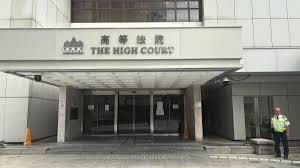
HONG KONG: A Hong Kong judge on Wednesday ruled to strike down regulations criminalizing the use of bathrooms designated for the opposite sex, ruling in favor of transgender individuals’ rights to access public toilets matching their identity. Judge Russell Coleman approved the judicial review of K, who was born a woman and identifies as a man, saying the regulations contravene an article of the city’s mini-constitution that stipulates all residents should be equal before the law. But he suspended the declaration to strike down the regulations for a year to allow the government “to consider whether it wishes to implement a way to deal with the contravention.” He said in the judgement that the regulations and “drawing the line of a person’s biological sex at birth create a disproportionate and unnecessary intrusion into the privacy and equality rights.” The ruling marks another step forward in recognizing the rights of LGBTQ+ people in the Chinese financial hub. In recent years, the government has revised policies following activists’ wins in legal challenges. Currently, only children under 5 years old accompanied by an opposite sex adult can enter a public washroom designated for the opposite sex. Those violating the rule face a fine of up to 2,000 Hong Kong dollars (about $255). K launched a legal challenge in 2022, seeking to expand the exemption to pre-operative transgender people who have been diagnosed with gender dysphoria and have a medical need to undergo the process of living in their identified gender. He argued that his constitutional rights were infringed by the prohibition against him using public toilets allocated for men, the court heard. The government did not immediately comment. Quarks, a group serving transgender youth in Hong Kong, welcomed the ruling, urging officials to take immediate action to rectify what it called long-standing discrimination in the system. “The ruling is not just an affirmation of transgender rights legally but also a big step forward for Hong Kong’s overall human rights development,” it said on Instagram. In 2023, Hong Kong’s top court ruled that full sex reassignment surgery should not be a prerequisite for transgender people to have their gender changed on their official identity cards. The next year, the government revised its policy to allow people who have not completed full gender-affirmation surgery to change their genders on ID cards as long as they fulfill certain conditions. The conditions include the removal of breasts for transgender men, the removal of the penis and testes for transgender women, and having undergone continuous hormonal treatment for at least two years before applying. Applicants also have to continue their hormonal treatment and submit blood test reports for random checks upon the government’s request. In April, activist Henry Tse, who won the legal battle in 2023 and received his new ID card reflecting his gender change last year, lodged a fresh legal challenge over the new requirements. Courtesy : TOI Note: This news is originally published on https://timesofindia.com/bha and is used purely for non-profit/non-commercial purposes, especially human rights.
US Olympic bans transgender: List of all athletes who can’t compete in the women’s sports events

The US Olympic and Para-Olympic Committee has announced that, from August 1, 2025, transgender women who have undergone male puberty will be banned from competing in women’s events. A new law signed by President Donald Trump in February 2025 gives effect to this change. Big sports bodies like USA Swimming, USA Fencing, and USA Track & Field are now making similar changes. The change has created buzz and strong opinions all over the country. Now, attention is placed on those athletes who have been affected. Transgender athletes who can no longer compete Some of the transgender athletes who are directly affected or already blocked from competing: — abc (@abc) CeCe Telfer – Track & Field A track runner who tried for the 2020 Trials, was already ruled ineligible by USA Track & Field before this change. Chelsea Wolfe – BMX Cycling A BMX rider who made it to Team USA in 2021, will no longer be able to compete. International cycling already has a similar ban in place. JayCee Cooper – Powerlifting JayCee Cooper is a transgender powerlifter, lost a legal case about competing in women’s sports in Minnesota. With the new rule, she won’t be able to take part either. Lia Thomas – Swimming Lia Thomas was the first openly transgender woman to win an NCAA women’s swimming title in 2022. She had hoped to try for the Olympics one day, but after World Aquatics banned transgender women in elite races, and now with the USOPC rule, she’s not allowed to compete for Team USA either. Andraya Yearwood & Terry Miller – High school runners These two transgender girls from Connecticut got attention for competing in girls’ high school track races. Their wins started a national debate. While they were not Olympic athletes, this new rule affects all levels, including school and college. They would not be allowed on women’s teams if they were trying to compete now. Wider impact on schools and college-level athletes Many transgender girls in U.S. schools are also being banned from girls’ teams especially in states with strict laws. This national-level change adds to that. This rule affects all transgender women who went through male puberty, even if they’ve taken hormones or transitioned years ago. The change also applies to youth and college sports under the Olympic system. Some groups are upset. The National Women’s Law Center said this new rule is “unfair” and could hurt the rights and mental health of many young athletes. Meanwhile, sports organizations across the world are watching closely. Swimming, track, and cycling already have strict rules for trans women. Now the U.S. has taken a big step too. Courtesy : TOI Note: This news is originally published on https://timesofindia.com/bha and is used purely for non-profit/non-commercial purposes, especially human rights.
United States Olympic and Paralympic Committee bans transgender from women’s events, citing Donald Trump order
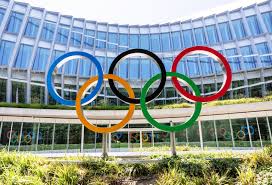
In a sweeping policy shift aligned with a recent federal directive, the United States Olympic and Paralympic Committee (USOPC) has officially barred transgender women from competing in women’s events at the Olympics and Paralympics.The ban, effective July 21, 2025, stems directly from President Donald Trump’s executive order titled “Keeping Men Out of Women’s Sports.” The USOPC updated its Athlete Safety Policy with a new subsection titled “Additional Requirements,” referencing both the executive order and the Ted Stevens Olympic & Amateur Sports Act. Go Beyond The Boundary with our YouTube channel. SUBSCRIBE NOW! “The USOPC is committed to protecting opportunities for athletes participating in sport,” the policy states. “We will continue to collaborate with stakeholders… to ensure women have a fair and safe competition environment consistent with Executive Order 14201.” In a memo, USOPC CEO Sarah Hirshland and President Gene Sykes told Team USA athletes: “As a federally chartered organisation, we have an obligation to comply with federal expectations.” Trump’s executive order, issued in February 2025, mandates that any school or institution permitting transgender girls to compete in girls’ sports will risk losing federal funding. It requires the immediate enforcement of single-sex sports teams and locker rooms, citing Title IX protections for women’s sports. “Our revised policy emphasises the importance of ensuring fair and safe competition environments for women,” the USOPC reiterated in its message to national governing bodies, urging all affiliated organisations to align with the new standards. The decision also mirrors changes within the NCAA, which recently revised its transgender participation rules to restrict women’s competitions to athletes assigned female at birth. The timing of the policy change is significant, as Los Angeles prepares to host the 2028 Summer Olympics. Courtesy : TOI Note: This news is originally published on https://timesofindia.com/bha and is used purely for non-profit/non-commercial purposes, especially human rights.
Transgender children must receive education equal opportunities to build empowered India UP Guv
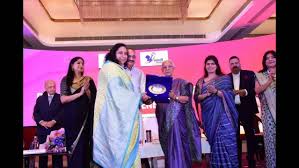
Lucknow, Uttar Pradesh Governor Anandiben Patel on Monday underscored the need to empower transgender individuals, stressing that children within this community must be provided with love, education and equal opportunities to build an inclusive and empowered India. Speaking here at the inaugural session of the Indo-American Chamber of Commerce (IACC)’s conference, “Breaking Barriers – Women in Leadership and Entrepreneurship,” Governor Patel urged entrepreneurs to employ and train members of the community. “This will not only help them become self-reliant but also lead to greater social acceptance from their families and society,” she said. The Governor appreciated ongoing efforts in districts like Varanasi and Basti where transgender individuals are being trained and provided employment opportunities through district administration initiatives. She called for replication of such efforts across all districts. Expressing concern over prevailing biases against transgender individuals, Patel emphasised that if a transgender child is abandoned by their family, arrangements must be made to ensure that they can grow up in orphanages alongside other children, receive proper education, and live a dignified life. “Being transgender is not the child’s fault. It is our social mindset that is at fault. The true spirit of Vasudhaiva Kutumbakam (the world is one family) will be realised only when we walk together with respect, irrespective of gender, class or background,” she said. The Governor also emphasised the need to mainstream children from deprived communities like the Musahar caste through education. “Education is the key to empowerment and self-reliance for every section of society,” she said. On the occasion, Patel honoured 14 women entrepreneurs for their outstanding contributions across various fields. She praised the changing landscape of women’s leadership and entrepreneurship, noting that women are not only excelling in their fields but are also becoming job creators. She called upon the audience to resolve to support women through training, employment, safety and ensuring quality education for their children. Highlighting the importance of women’s safety, Patel advised women to remain vigilant against exploitation and to be aware of their rights and government welfare schemes. The Governor also mentioned that state universities are facilitating HPV vaccinations for girl students with the support of society and the academic institutions. (This story has not been edited by THE WEEK and is auto-generated from PTI) Courtesy : The Week Note: This news is originally published on https://theweek.com/bha and is used purely for non-profit/non-commercial purposes, especially human rights.
Governor bats for empowerment of transgender kids
Lucknow: Governor Anandiben Patel on Monday emphasised the importance of providing transgender children with affection, education and equal opportunities, as this would help in developing an inclusive and empowered India. She was speaking during the conference on breaking barriers, women in leadership, and entrepreneurship organised by the Indo-American Chamber of Commerce at a private hotel. “Entrepreneurs should employ transgenders and provide them with training. This will not only help them in the direction of self-reliance, but their families and society will also start accepting them,” she said. She said in Kashi and Basti, there are many educational institutions for the transgender community. “Women today are moving ahead by overcoming all barriers. They need to be made aware and provided the benefits of the govt’s welfare schemes. The day is not far when only women will be seen in the highest posts in the country,” said the governor. On the occasion, Patel honoured 14 women entrepreneurs. Appreciating their achievements, the governor said their work is an inspiration for other women. “Whenever such programmes are organised in future, those women from rural areas should also be honoured who are bringing change in society with their hard work, courage, and innovation despite limited resources,” she said. She urged the people present to take a pledge that they will provide training, security, and employment to women and will help in providing quality education opportunities to their children. State horticulture, agricultural marketing, agricultural foreign trade and agricultural exports minister Dinesh Pratap Singh was the chief guest while folk singer Malini Awasthi and social activist Namrata Pathak were the guests of honour. Malini Awasthi shared her mother’s profound joy when the inaugural International Women’s Day was celebrated in 1975, noting its significant meaning to their generation. Courtesy : TOI Note: This news is originally published on https://timesofindia.com/bha and is used purely for non-profit/non-commercial purposes, especially human rights.
Why and How Infiltrator lived as ‘hijra’ in India for a decade:Most illegal migrants in India are Bangladeshi; why is it so easy to infiltrate?
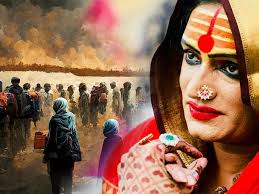
For nearly a decade, a Bangladeshi man lived undetected in Bhopal, Madhya Pradesh, posing as a transgender woman named Neha. With a full set of forged Indian documents, including Aadhaar, ration card, voter ID, and even a passport, he travelled between India and Bangladesh, reportedly paying agents ₹50,000 for the fake identity. His arrest in July 2025 has exposed a shocking infiltration tactic: using gender disguise to avoid scrutiny. As police investigate his motives and local connections, the case raises unsettling questions about security lapses, document fraud, and how deeply some infiltrators can embed themselves into Indian society. Why is India particularly vulnerable along the Bangladesh border? India shares a 4,095 km border with Bangladesh: one of the longest international boundaries in the world. Over 1,100 km of this terrain is riverine, making it extremely difficult to fence and monitor effectively. Infiltrators exploit gaps, especially in West Bengal, Assam, Tripura and Meghalaya. Additionally, dense populations, similar languages, and interlinked ethnic groups on both sides complicate detection. Organised human smuggling networks facilitate crossings using boats, farmland paths or forested trails. Political sensitivities, especially in regions like Assam with a history of illegal migration debates, often hinder aggressive enforcement. The socioeconomic gap between India and Bangladesh also acts as a push factor, encouraging thousands to cross over in search of employment, housing, or even welfare access. Despite efforts by India’s Border Security Force (BSF), lack of high-tech surveillance, local collusion, and the use of forged documents by infiltrators keep this border particularly porous and vulnerable. How do local agents and touts facilitate such infiltrations? Human trafficking networks and local touts are central to successful infiltration. These intermediaries arrange everything from illegal crossings to settlement support inside India. In the Bhopal case, Abdul Kalam alias “Neha” allegedly paid local agents around ₹50,000 for forged Aadhaar, ration card, voter ID and even a passport. These networks operate in border regions and extend into urban areas, using corrupt bureaucratic links to issue fake documents. Often, infiltrators are transported through safer transit states such as West Bengal or Bihar and eventually resettled in cities like Delhi, Mumbai or Bhopal, where anonymity is easier. Some agents also train infiltrators on how to blend in, adopting local accents or false religions or even posing as transgenders to deflect suspicion. These rackets are sophisticated and difficult to dismantle because they offer a livelihood to numerous local actors who see this as low-risk, high-profit work. Why did Abdul Kalam choose the transgender identity “Neha” in Bhopal? Abdul Kalam’s choice to live under a transgender identity was likely a strategic disguise. In India, the hijra (transgender) community has cultural recognition but is often left socially and administratively isolated, making it easier for someone like him to avoid deep scrutiny. By presenting as “Neha” and integrating into local transgender circles, he deflected attention. Neighbours and even local officials rarely questioned his background due to the marginalised nature of the group. This also helped him access NGOs and welfare schemes meant for the third gender. It’s possible the identity change was advised by agents who recognised how little official oversight transgender individuals face. Currently, authorities are conducting gender verification and interrogating him to determine whether the disguise was deliberate or linked to deeper psychological or identity issues. Regardless, it is among the most unusual camouflage tactics seen in infiltration cases so far. Author: Anjali Rajgovind Courtesy : Bhaskar English Note: This news is originally published on https:/bhaskarenglish.com/ and is for use by the non-military/non-commercial community, especially those in the human rights sector.
LGBTQ Rights in India: Madras High Court’s Gender-Neutral Toilets Set Powerful Precedent
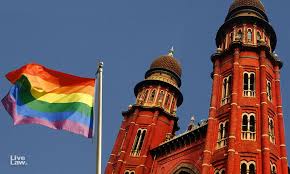
For many transgender persons in India, life is a long negotiation between identity and invisibility. You may walk past them on a street, share a bus seat, or smile at them briefly in an office corridor. But too often, society either stares with ridicule or looks away in silence. Very few see the human behind the label — someone seeking nothing more than dignity, respect and a chance to live as they truly are. In June 2024, the Madras high court made history by becoming one of the first in India to install three gender-neutral toilets on its campus. A LinkedIn post by transgender advocate Kanmani R (verified in June 2024) confirms the high court has installed three new gender neutral washrooms on its premises, marking a meaningful step toward inclusive facilities. This infrastructural change, while seemingly small, is a profound act of institutional empathy — a recognition of the rights and dignity of transgender and gender-nonconforming persons. In a legal landscape where detachment is often valorized, Justice Anand Venkatesh stood apart and more recently, so did the bench of Justice G R Swaminathan and Justice V Lakshminarayanan when approached by a same-sex couple seeking protection from their disapproving parents. Justice Anand Venkatesh paused the hearing, stating that he needed time to “understand same-sex relationships” before delivering a judgment. He wrote to psychologists, read scientific literature, and interacted with LGBTQIA+ individuals. “I am trying to break my preconceived notions about this issue. I have no hesitation in admitting that I am not fully ‘woke’ to this subject. I am willing to understand,” he said. That journey translated into a series of bold, progressive directives such as the ban on conversion therapy in Tamil Nadu; directions to revise school and college curricula to include LGBTQIA+ issues; a mandate for sensitisation of police and government officials; a push for gender-neutral restrooms in public and institutional spaces; and monitoring of implementation through status reports. It is from this context that the gender-neutral washrooms in the Madras High Court campus must be seen, not just as construction projects, but as judicially seeded symbols of change. Toilets might seem mundane, but for transgender persons, the lack of safe, affirming restrooms can lead to harassment, violence, or complete avoidance of public life. Recognising this, in the Sushma case, Justice Venkatesh urged the Union and state govts to ensure provision of gender-neutral restrooms, especially in public institutions such as courts, colleges and govt offices. His orders made it clear that dignity begins with access. Following his directions and subsequent PILs in 2023-24, the Madras HC’s campus became the first to act on these ideals, completing the installation of three gender-neutral toilets by June 2024. Even as courts such as Madras HC move toward inclusion, India’s primary transgender law —the Transgender Persons (Protection of Rights) Act, 2019 — lags behind. Justice Venkatesh had flagged issues with the law, notably the requirement of certification for gender identity, a direct contradiction of the NALSA judgment (2014); the absence of provisions for reservations, marriage, adoption, and inheritance; and tokenistic punishment for violence and abuse against transgender persons. He echoed the demand that LGBTQIA+ rights in India must not come with red tape, nor be made conditional upon medical procedures or administrative approval. The Madras HC’s move symbolises judicial responsibility not just to interpret the law, but to humanise it. It aligns with Articles 14 and 21 of the Constitution, guaranteeing equality and dignity. It responds to community-led demands, acknowledging that legal victories must be followed by institutional change. Building on this vision, the road ahead must include amending the 2019 Act to fully honour self-identification, introduce reservations, and grant family rights; enacting a national anti-discrimination law covering gender, caste, class, disability, and sexuality; public funding for gender-affirming healthcare, and psychological support tailored to transgender needs; mandatory training for police, teachers, and judges on gender identity and inclusion; and a curriculum changes at school and university levels to foster respect and awareness from a young age. Justice Indu Malhotra said it best: “History owes an apology to the LGBTQ community.” But an apology is not enough. The transgender community does not need charity. They deserve citizenship, not conditional sympathy. It’s time India matched its legal promises with social and institutional will. When the judiciary listened India has known and embraced gender diversity for centuries. Communities such as the hijras have been part of festivals, births and blessings. But colonial rule brought with it a rigid gender binary and criminalisation, casting the transgender identity into the shadows. The Criminal Tribes Act, 1871, reduced Hijras to a stereotype, criminal by default. This stigma, though the law is long gone, survives in whispered judgments and silent exclusions. Change didn’t begin in Parliament — it started in courtrooms. 1.NALSA v. Union of India (2014) A historic verdict that recognised the right to self-identify one’s gender. For the first time, India’s highest court said: You exist. You matter. You are equal. Transgender persons were granted constitutional rights under Articles 14, 15, 16, 19(1)(a), and 21. 2.Puttaswamy v. Union of India (2017) A landmark ruling on privacy, affirming that one’s gender identity is deeply personal and fundamentally protected. 3.Navtej Singh Johar vs Union of India (2018) With the striking down of Section 377, the court did more than decriminalise love — it restored the humanity of millions. 4.Arun Kumar vs IG of Registration (2019) The Madras High Court reminded us that the law must evolve with empathy — recognising that a transwoman can be a bride under Hindu marriage laws. 5.S Sushma vs Commissioner of Police (2021) A rare moment of judicial humility where a judge chose to unlearn and relearn by listening to LGBTQ+ voices. The court ordered safeguards, called out police excesses and banned conversion therapy. Law with good intentions, but glaring gaps The Transgender Persons (Protection of Rights) Act, 2019, tried to put NALSA into law. It made discrimination illegal. It defined transgender broadly. However, it fell short because it required certificates for self-identity,
Why is Modi government afraid of Bangladeshi transgender? Facts revealed
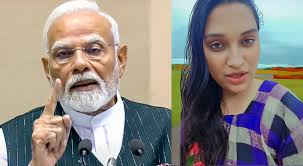
Indian police have arrested a Bangladeshi national, Abdul Kalam, who had been living in the country for several years under the identity of Neha. The Narendra Modi government of India has launched an investigation over the transgender allegedly endangering national security. According to Indian media, Abdul Kalam came to India from Bangladesh at the age of 10 and lived in Mumbai for almost 20 years before moving to Bhopal. There, he registered his identity as a transgender woman and began living under the name Neha. He also became part of the local transgender (khawaja sira) community. Abdul Kalam obtained all legal documents as an Indian citizen, including a ration card, voter ID card, and passport. According to the police, he even made several trips to Bangladesh using his Indian passport and was never suspected during that time. According to Indian media, police arrested Abdul Kalam during a covert operation. A case has been registered against him in India under charges of illegal entry, forgery, and endangering national security. He is currently under investigation. The Modi government reportedly suspects that Abdul Kalam, disguised as a transgender person, might be a spy for Bangladesh or Pakistan, potentially posing a threat to Indian citizens. However, the outcome of the ongoing investigation is still unknown. Courtesy : MM News Note: This news is originally published on https:/mmnews.com/ and is for use by the non-military/non-commercial community, especially those in the human rights sector.
‘Neha’ was Abdul all along: Bangladeshi arrested after 28 years in India

Widely known as ‘Neha Kinnar’ in the locality where he was staying, Abdul Kalam entered India at the age of 10 and went on to spend nearly 20 years in Mumbai before moving to Bhopal. He maintained the identity of a transgender woman for at least eight years in Bhopal to avoid detection by local authorities.Amritanshi Joshi After at least eight years of living under the guise of a transgender woman—and nearly three decades in total of residing in India undetected—Bhopal Police have arrested a Bangladeshi man, Abdul Kalam, who was living under the alias Neha. During an ongoing crackdown on illegal migrants, Bhopal police officials discovered that Abdul had carefully constructed a false identity as an Indian citizen, having forged documents including an Aadhaar card, voter ID, and even a passport. Police further found that Abdul had made multiple visits to Bangladesh during his nearly thirty-year stay using the forged passport. Abdul was arrested in the intervening night between Monday and Tuesday, following a coordinated, intelligence-led operation. Widely known as “Neha Kinnar” in the locality where he was staying, Abdul entered India at the age of 10 and went on to spend nearly 20 years in Mumbai before moving to Bhopal, sources close to the investigation told India Today TV. They further revealed that he maintained the identity of a transgender woman for at least eight years in Bhopal to avoid detection by local authorities. The accused had lived in various houses within Bhopal’s Budhwara locality. Residents recognised him solely by this identity. Authorities have confirmed that Abdul also travelled to and from Bangladesh using his counterfeit Indian passport, raising significant concerns about the integrity of national documentation systems and border security. Police have seized multiple falsified documents from his possession, and an investigation is currently underway to determine the extent of the document fraud and whether he was assisted by a broader network. The Intelligence Bureau and the Anti-Terrorism Squad have joined the investigation, given the serious national security implications of the case. Cybercrime specialists are analysing Abdul’s seized mobile phone, mining call logs, messaging history, and data connections to uncover potential co-conspirators or a deeper syndicate facilitating such identity fraud. “We received credible information through a confidential informant, which led to his identification and subsequent arrest. He has been residing in Bhopal for nearly a decade, but prior to that, he lived in Maharashtra. During this time, he had also returned to Bangladesh, which he managed to do using forged Indian credentials. The investigation is ongoing, and we are closely coordinating with central agencies,” said senior police official Shalini Dixit. She added that the matter is extremely serious, which is why the details of the operation have been kept completely confidential. Interrogation of the individual posing as a transgender woman is currently underway. Meanwhile, police are now preparing to conduct a gender verification test to determine whether Neha is biologically transgender or had been disguising himself as one to conceal his identity. Abdul has been placed under 30-day detention while the authorities initiate formal deportation procedures. Police are also probing whether his transgender identity was genuine or adopted purely as a means of deception. Investigators are examining whether any members of the local transgender community knowingly or unknowingly assisted him. A separate team from the Crime Branch is questioning his known associates. Officials have restricted access to Abdul, allowing only the station in-charge and two designated female officers to interact with him. The Centre has also been notified of the arrest, and multiple intelligence wings are actively involved in reviewing the data and evaluating the potential breach. He is currently in police custody at the Talaiya Police Station, where he is being interrogated under high security. Edited By: Sayan Ganguly Courtesy : India Today Note: This news is originally published on https:/indiatoday.com/ and is for use by the non-military/non-commercial community, especially those in the human rights sector.
Transgender Bangladeshi national lived in India for decade, traced in Bhopal

Acting on specific intelligence inputs from a specialised unit tracking foreign nationals residing illegally in the state, Abdul Kalam alias Neha Kinnar was recently traced to the Mangalwara locality in old Bhopal. BHOPAL: A transgender Bangladeshi national, Abdul Kalam, had been living in Bhopal for the past ten years under the assumed identity of Neha Kinnar. Surprisingly, during this time, the Bangladeshi national had even managed to get valid identity documents to legitimise herself as an Indian citizen. Acting on specific intelligence inputs from a specialised unit tracking foreign nationals residing illegally in the state, Abdul Kalam alias Neha Kinnar was recently traced to the Mangalwara locality in old Bhopal. The Mangalwara and Budhwara areas of old Bhopal are home to a significant transgender population, and Abdul Kalam, living under the identity of Neha Kinnar, had also taken up residence there. “The third gender individual was recently traced and has since then been questioned by a dedicated team of cops. Initial questioning has revealed that Abdul Kalam, who is aged around 30-32 years presently, entered India illegally, while aged 17 years and since then has lived in various parts of the country, including West Bengal, Assam, Maharashtra and MP. Abdul Kalam has been residing under the assumed identity of Neha Kinnar in Bhopal since the last ten years,” a senior Bhopal police official told TNIE. Abdul Kalam managed to get the new identity of Neha Kinnar by getting various identity proof documents to give legal sanctity to the false identity. However, it remains unclear whether these documents were procured in Madhya Pradesh or elsewhere to legalsie seld as an Indian citizen. According to sources the individual was also involved in a case of physical assault with another transgender around five years back and the final court hearing in the matter is slated shortly. According to Bhopal Police Commissioner Harinarayanchari Mishra, the dedicated verification campaign is currently underway to trace foreign nationals who are living illegally in the MP capital. As per sources, the process of Abdul Kalam aka Neha Kinnar deportation to Bangladesh is likely to start over the next few days, once the entire probe about the 10 year long illegal stay in Bhopal is over. Courtesy : TNIE Note: This news is originally published on https:/thenewindianexpress.com/ and is for use by the non-military/non-commercial community, especially those in the human rights sector.