
Transgender enrolment in schools, colleges rises, UP, Bihar lead: Government data
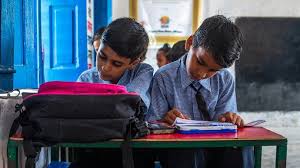
The Ministry of Education has confirmed a major rise in transgender enrolments. While Uttar Pradesh and Bihar have led in school-level figures, UP also topped higher education. Experts say more inclusion efforts are needed to sustain and support these gains. India has seen a notable increase in the enrolment of transgender students in both school and higher education, according to data shared by the Ministry of Education in the Rajya Sabha. The data was presented in response to a question by MP Swati Maliwal. As per the figures, the number of transgender students enroled in schools rose from just 155 in the 2021-22 academic year to 965 in 2023-24. This marks a more than six-fold increase in two years. STORIES YOU MAY LIKE Russian woman lists 3 reasons why she married Indian man in viral video Woman, lover arrested after her family of four die by suicide in Madhya Pradesh After Tejashwi Yadav, poll body notice to Bihar MP’s wife for having 2 voter IDs Uttar Pradesh and Bihar recorded the highest school enrolments in 2023-24, with 327 and 282 students respectively. SOME STATES SHOW DECLINE DESPITE OVERALL GROWTH Despite the nationwide upward trend, some states witnessed a fall in numbers. Rajasthan saw a decline from 107 students in 2021-22 to 77 in 2023-24, while West Bengal recorded a steep drop from 211 to 62 between 2022-23 and 2023-24. Table: State-wise transgender students in schools State/UT 2021-22 2022-23 2023-24 Uttar Pradesh 16 239 327 Bihar 4 47 282 Rajasthan 107 88 77 Karnataka 0 2 39 Maharashtra 3 32 12 West Bengal 0 211 62 Odisha 6 43 22 Jharkhand 2 11 27 Meghalaya 0 26 23 Andhra Pradesh 0 132 31 All India Total 155 880 965 INSTITUTIONAL ENROLMENT INCREASES A similar increase was seen in colleges and universities. As per the All India Survey on Higher Education (AISHE), the number of transgender students enroled in higher education increased from 302 in 2020-21 to 1,448 in 2022-23 (provisional). Uttar Pradesh topped this list as well, with 369 students in 2022-23, followed by Maharashtra (158), Madhya Pradesh (124), Telangana (104), and Tamil Nadu (98). Table: State-wise transgender students in colleges and universities State/UT 2020–21 2021–22 2022–23 (P) Uttar Pradesh 30 172 369 Maharashtra 16 118 158 Madhya Pradesh 9 76 124 Telangana 15 24 104 Tamil Nadu 35 56 98 Rajasthan 26 34 101 Karnataka 20 69 73 Kerala 32 55 54 Gujarat 7 23 62 Total 302 877 1,448 NEED FOR CONTINUED POLICY SUPPORT While the rise in enrolment is encouraging, officials and education experts emphasise that sustained efforts are needed to ensure retention and support for transgender students. Many states still report negligible or zero enrolment, including Ladakh, Nagaland, and Lakshadweep. The ministry acknowledged the need for inclusive educational frameworks and has called for institutional and policy interventions to bridge regional disparities and ensure that transgender learners can access and thrive in the system. Courtesy : India Today Note: This news is originally published on https:/indiatoday.com/bha and is used purely for non-profit/non-commercial purposes, especially human rights.
More trans people should join politics for real change: Kalki Subramaniam
In an interview with The Federal, the activist points out certain lacunae in Tamil Nadu government’s policy while saying why Kerala shows the way In a major policy move, the Tamil Nadu government recently released a comprehensive policy for transgender persons, aiming to institutionalise inclusivity in education, employment, and healthcare. While it has been hailed as a progressive step by many, some have argued that it lacks key elements such as reservation and full inclusion of transgender men. In a candid conversation with transgender rights activist Kalki Subramaniam, The Federal explores where the policy does things right, where it falters, and why the fight for dignity and equality must continue. Which section of Tamil Nadu’s new transgender policy stood out most for you? The initiative that really stood out to me is the focus on sensitising teachers and educational institutions. Gender non-conforming children often face bullying, discrimination, and stigma in schools. This pushes many of them to drop out, which becomes a lifelong setback. Without education, you lose the opportunity to dream, to become a graduate, and to have a dignified life. So, creating an inclusive environment through trained and empathetic teachers is a crucial step forward.The policy touches upon several areas—health, property rights, banning forced conversion therapy. How effective do you think these measures will be? When I read the policy, I noticed that almost 70 per cent of its provisions are already covered in the transgender protection Act of 2019. The state is essentially amplifying what’s already there, which is not a bad thing since it reassures us of the Act’s relevance. The policy also borrows from the central government’s Equal Opportunity Policy, which focuses on eliminating workplace discrimination and creating safe and inclusive environments for transgender persons. That’s a good sign. However, is there anything genuinely new? Perhaps the school-level education initiative is a fresh addition. The policy also promises the formation of committees, but we’ll have to wait and see how effectively they function. A trans woman named Samantha was brutally attacked in Tenkasi just days after the policy was launched. Does the policy do enough to ensure safety for transgender persons? Absolutely not. Transgender women continue to be murdered across the country. Last year, Sangeeta—a successful entrepreneur who started a restaurant in Coimbatore—was murdered. While the accused was identified, we never heard of any punishment. None of the previous murder cases involving transgender persons have witnessed justice. The media only covers the murder as sensational news but doesn’t follow up. More importantly, there’s a clear lack of safety, security, and sensitisation among police officers. They remain unaware of the transgender protection Act, Section 377, and other legal provisions that safeguard us. You’ve written an open letter to the Tamil Nadu chief minister listing critical omissions in the policy. Why are these demands urgent? Education is a transformative tool for the transgender community, especially young people. It ensures dignity, equality, and economic independence. But even when corporate jobs are available, transgender applicants are often rejected outright because of binary reservations —only for men and women. Reservation in education and jobs is crucial. Sadly, this policy doesn’t even mention it. Despite years of advocacy and multiple meetings with the chief minister, deputy chief minister, and the social welfare minister, there’s no reference to reservation. That’s a major setback, especially for Tamil Nadu, the first state in India to officially recognise transgender people. Are there state models Tamil Nadu could learn from? Yes. Kerala has made remarkable progress. When I first spoke about trans-inclusion in Kerala media and universities over two decades ago, there was rampant transphobia. But today, many transgender students are pursuing education at the universities of Kerala and Calicut. Kerala may not have reservation yet, but it’s making sincere efforts. For instance, a transgender man received Rs 25 lakh from the government for pilot training in South Africa. Our neighbour Karnataka has already introduced one per cent reservation for transgender people. Tamil Nadu, once a pioneer, is now lagging behind. Why is the exclusion of trans men in this policy a concern? It’s shocking. Trans men are completely overlooked. Though some are represented on the state’s transgender welfare board, the policy is largely framed around trans women with minimal reference to trans men. This erases their life experiences, especially in areas such as healthcare, documentation, and employment. It also shows ignorance of the policymakers. I’m part of the national transgender council, and I was never consulted. No officer from the Tamil Nadu social welfare department ever called to ask for inputs. That speaks volumes. There are allegations that even committee members weren’t informed before the policy’s release. Do you think that’s true? I believe so. This is not just ignorance but also a lack of care and understanding. This happens when people who are completely disconnected from transgender realities sit down to draft such an important policy. It affects thousands of lives. The omission of trans men and reservation is inexcusable. Even courts—like the Madras High Court—have recommended reservation. The Supreme Court’s 2014 judgment in the NALSA vs Union of India case also affirms this. Tamil Nadu is ignoring all of that while Karnataka is moving ahead. That’s deeply disappointing. Do you plan to engage the government further on these gaps? Yes, absolutely. I will be writing to the social justice minister as well. Activists will come together and take powerful and collective action. We are very disappointed, especially about the lack of reservation and the invisibilisation of trans men. You spoke about representation. As elections approach, trans persons like Apsara Reddy and Ganga Nayak have entered politics. Why is political participation important for the community? It’s essential. I’ve had offers from various parties but remain in a dilemma because of how poorly women are treated in politics. Still, I support Apsara Reddy, Ria, and Ganga Nayak. But representation should translate into influence—especially in policy matters. We need more trans people across political parties—DMK, ADMK, TVK, BJP, Congress. I’m hopeful we’ll soon have a
Transgender Admissions Improve In Indian Schools, Universities; Details Here

Transgender student enrolment in schools and universities has risen, with UP and Bihar leading. From 155 in 2021–22 to 965 in 2023–24, inclusion shows promise despite remaining gaps. Transgender student enrollment in Indian schools and higher education institutions has risen dramatically in the last three academic years, with Uttar Pradesh and Bihar having the most in 2023–24, as per information tabled by the Ministry of Education in the Rajya Sabha. In Indian schools, the transgender student population grew from a mere 155 in 2021–22 to 965 in 2023–24—a six-fold increment. Uttar Pradesh had the highest number with 327 enrolled, followed by Bihar with 282 students during that year. However, states like Rajasthan and West Bengal recorded decreasing figures, with Rajasthan having 107 students earlier but decreasing to 77 and West Bengal’s count dropping from 211 to 62 transgender students enrolled in schools in that period. In higher education, there has been a noteworthy advancement. Provisional AISHE figures indicate that transgender student enrolment in universities and colleges increased from 302 in 2020–21 to 1,448 in 2022–23. The numbers among states vary, with Uttar Pradesh still holding the top position with 369 students, followed by Maharashtra (158), Madhya Pradesh (124), Telangana (104), Tamil Nadu (98), Rajasthan (101), and Karnataka (73). Experts attribute this upward trend to increasing awareness, policy reforms, and outreach efforts that aim to narrow the access gaps transgender youth experience in education. Many, however, contend that inclusion is more than numbers—it is safe campuses, support infrastructure such as transgender cells, and data-based monitoring of participation. In places such as Delhi University, the failure to enrol any transgender students when a “third gender” option was provided indicates entrenched stigma and meagre institutional support. In Maharashtra, on the other hand, special transgender cells in all colleges have been made mandatory to provide counselling, academic assistance, and anti-discrimination safeguards. Sakshi Gupta Courtesy : TFPJ Note: This news is originally published on https://thefreepressjournal.com/bha and is used purely for non-profit/non-commercial purposes, especially human rights.
Promises unfulfilled: How Ayushman Bharat leaves the transgender community behind
Three years after the inclusion of gender-affirmative healthcare in the AB-PMJAY scheme, the community is unable to avail its benefits. The Transgender Persons Act 2019, mandates provision for coverage of medical expenses by a comprehensive insurance scheme. Arvinda dreams of becoming a psychologist. But the 21-year-old transwoman from Hyderabad had to discontinue her education in 2023, after finishing her polytechnic diploma, so she could work and raise money for her sex reassignment surgery. That’s the price she had to pay for living as her true self. Arvinda now earns ₹25,000 a month after taking a job at a BPO, of which around ₹12,000 goes towards repaying the loan she took to cover her medical expenses and afford other gender-affirming healthcare, including regular hormone treatments. “I had to take a loan just to be who I am,” she says, lamenting the lack of government support to ease such a financial burden. She is not alone in this struggle. The transgender community continues to face challenges in accessing healthcare, especially procedures that would help affirm their gender identity. In 2022, the Ministry of Social Justice and Empowerment (MoSJ&E) signed an MoU with the National Health Authority to launch a comprehensive health package for transgender persons under the Ayushman Bharat-Pradhan Mantri Jan Arogya Yojana (AB-PMJAY) scheme. The scheme promised health insurance coverage for transgender healthcare, including gender affirmation surgeries. However, there’s no relief for the community due to a lack of implementation of the scheme. Three years on, many like Arvinda are waiting for help, struggling to pay lakhs of money for their gender affirming healthcare. When Kalki Subramanian, Southern representative of the National Transgender Council, raised the issue of the delay, she received a positive response, but no action was taken. The council is an advisory body under the MoSJ&E, which evaluates and gives recommendations on existing policies. “The ministry has conducted a few meetings, where we demanded speeding up the process,” Kalki says. What is gender-affirming care? Gender-affirming care, as defined by the World Health Organization, encompasses a range of social, psychological, behavioural, and medical interventions designed to affirm an individual’s gender identity when it conflicts with the gender they were assigned at birth. It includes medical and psychological support, such as surgeries, hormone therapy, and counselling, that help transgender individuals align their bodies with their gender identity and improve overall mental and emotional well-being. The cost of gender affirming surgeries could range anywhere from ₹2 lakh to ₹8 lakh, and the cost for hormone treatments and therapy could range between ₹48,000 and ₹72,000 a year. What was promised The Ayushman Bharat scheme, launched on September 23, 2018, aims to provide health insurance to underprivileged rural families and selected urban worker groups based on the Socio-Economic Caste Census (2011). As of now, the AB-PMJAY dashboard reports over nine crore hospital admissions under the scheme. More than 41 crore Ayushman cards have been issued, including 4.57 lakh cards for individuals identified under the gender category marked as ‘other’. While this card could help transgender persons access general healthcare, it excludes gender-affirming services. Meanwhile, the special package announced in 2022 introduced the Transgender Healthcare (TG Plus) card, which allows transgender individuals to access over 50 medical procedures and treatments free of cost. The ministry will fund ₹5 lakh worth of health insurance per person each year under this scheme. However, the revised list of health benefit packages, released in November 2021 (before the announcement to include transgender healthcare), does not include any gender-affirming procedures. Neither has a new list of services been released. Delay in implementation The community seems to have lost hope in the scheme. “There is no step-by-step plan on how this will be implemented,” says Koyel Ghosh, Managing Trustee at Sappho for Equality, a Kolkata-based organisation working for the rights and social justice of individuals with non-normative gender-sexual orientations. Detailed information about the implementation—how to get these cards, what medical procedures are covered, etc.—is missing, Koyel adds. Obtaining the TG Plus card is essential to get gender-affirming healthcare benefits. Neither the AB-PMJAY website nor the National Portal for Transgender Persons has a provision to apply for the card. Instead, beneficiaries with a transgender certificate from the portal must visit any empanelled hospital to get a TG Plus card. This process makes the scheme inaccessible to many. “We have provided the ministry with a list of medical procedures and cost estimations last year, but there has been no progress,” said Dr Sanjay Sharma, CEO and Managing Director of the Association for Transgender Health in India (ATHI). Moreover, the requirement to possess a certificate and to visit an empanelled hospital gatekeeps many from accessing the benefits, experts suggest. Gatekeeping access to welfare Zainab Patel, a trans activist and one of the petitioners in the landmark NALSA case and the marriage equality case, says that the issue of entitlement should be separated from identity. “We have been rallying behind the government to ensure that access to welfare is not contingent on proving one’s identity. But they are making the transgender certificate/ID Card incumbent on getting the entitlement,” Zaineb says. This also goes against the Transgender Persons (Protection of Rights) Act, 2019, which does not mandate a transgender certificate to get gender affirming healthcare. Transgender certificates issued Number of applications and transgender certificates issued so far. Chart: National Portal for Transgender Persons Transgender individuals can apply for a certificate online through the National Portal for Transgender Persons or at the nearest Social Welfare Department office, using an affidavit or medical certificate. However, the process is slow, and community awareness remains low. Arvinda, despite updating all her identity documents, including her Aadhaar card to reflect her transgender identity, is still unaware of how to obtain the certificate or ID card. According to the 2011 Census, 4.8 lakh individuals identified as ‘other’ gender. But this number has grown considerably, as reported by Down to Earth. Despite this, only around 27,300 certificates have been issued so far, and more than 5,000 applications are pending approval. Because
Dept plans shelter homes for transgender community
Bhubaneswar: The social security and empowerment of persons with disabilities (SSEPD) department has prepared a plan for the construction of shelter homes in districts for the transgender community. During a meeting held on July 23, officials discussed Sweekruti, a scheme for the promotion of transgender equality and justice. A five-year action plan and tentative budget under different programme components of the Sweekruti scheme were proposed for the financial years from 2025-26 to 2029-30, according to minutes of the meeting shared by the department on Wednesday. “The construction of transgender shelter homes in districts may be provisioned for from any suitable scheme of the department where the transgender population is more or education, vocation and employment opportunities are most sought after,” read the minutes. Official sources said the proposed shelter homes will accommodate destitute and abandoned transgender people and provide them basic amenities like food, medical care and recreational facilities. Besides, the shelter homes will provide support for the capacity-building/skill development of transgender people. Officials also suggested the creation of self-help groups (SHGs) for the transgender community for better appreciation of the rights of equality and optimum delivery of scheme benefits. Banks may be roped in by the district administrations for facilitating loans after proper assessment of skills such as driving, geriatric care and making incense sticks, the minutes stated. “The sensitisation of society at college, vocational institutions/public offices, service centres along with the provision of stalls and activities during govt functions, local gatherings, festivals and melas may be taken up on a wider scale for the community,” the minutes added. Courtesy : TOI Note: This news is originally published on https://timesofindia.com/bha and is used purely for non-profit/non-commercial purposes, especially human rights.
Ms. Glamika Patel: India’s First Transgender Memory Trainer Certified by IMSC, appointed as The Official City Representative of IMSC for Bhilai & Durg (Chhattisgarh).
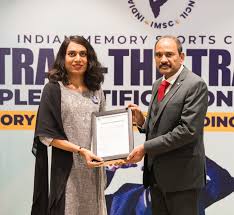
In a groundbreaking stride towards inclusion and excellence, Ms. Glamika Patel has emerged as India’s First Transgender Memory Trainer, certified by the prestigious Indian Memory Sports Council (IMSC). Her journey is not just a tale of personal triumph, but a beacon of transformation, talent, and resilience. A Historic Milestone in Hyderabad On 13th July 2025, at a special ceremony held in Hyderabad, Ms. Glamika Patel successfully completed the Triple Certification Program in Memory Skills, Speed Reading, and Study Skills, under the mentorship of Squadron Leader Jayasimha, President of IMSC. With this, she not only earned national recognition but also secured a place in history as a pioneer in the memory training field. Her exemplary performance and passion earned her the title of the Official City Representative of the IMSC for Bhilai and Durg in Chhattisgarh, marking a major step in promoting cognitive education and mental fitness in central India. A Phenomenal Memory Expert Ms. Glamika’s memory demonstrations are awe-inspiring. She can: Memorize and recall 100 random digits in various formats—forwards, backwards, by rows, by columns, and random positions. Remember a randomly arranged rainbow color sequence up to 50 positions. Perform multiple memory feats showcasing mental clarity, concentration, and precision. This rare cognitive skill set positions her as a formidable force in the growing domain of brain development and memory training in India. A Mission to Train Young Minds With unshakable passion, Ms. Glamika Patel has taken on the noble responsibility of training students from Bhilai and Durg for the Indian Memory Championship scheduled to be held in Hyderabad on 12th October 2025. Through her coaching, she aims to instill confidence, learning agility, and mental sharpness among the youth of Chhattisgarh. A Life Dedicated to Service and Excellence Beyond memory training, Ms. Glamika is a Certified Mind Trainer, Life Coach, Counselor, Healer, and Motivational Speaker. Her multifaceted personality shines through her social initiatives, she is serving voluntarily in her mother Ms. Janki Bai Patel’s enterprise, M/s Manobal Maharath Services, to help people. Her commitment to helping others defines her leadership in both personal and professional life. Academic Brilliance and Professional Achievements A rare blend of intellect and hard work, Ms. Glamika Patel secured an All India Rank of 129 in the GATE 2018 examination. She went on to join the prestigious Maharatna PSU, Steel Authority of India Limited (SAIL) as a Management Trainee (Technical) and currently serves as Deputy Manager at Bhilai Steel Plant, an integrated steel plant under SAIL. Her educational path is rooted in determination—from completing her early education at a government school and Saraswati Shishu Mandir, Chandrapur (Chhattisgarh) to earning a Bachelor of Engineering (BE), MBA, and now pursuing an MSc in Psychology. The Heart of a Daughter Despite societal challenges, Ms. Glamika came forward to take responsibility of her mother, Ms. Janki Bai Patel. Her heartfelt gestures, like personally accompanying her mother on spiritual journeys in a wheelchair, have earned her the affectionate title of “Shravan Kumari”—a modern-day symbol of filial devotion. Courtesy : Foxstory India Note: This news is originally published on https://foxstoryindia.com/bha and is used purely for non-profit/non-commercial purposes, especially human rights.
What Happens When The Margins Are Marginalised? Mx. Yashika, Caste, And The Crisis Within India’s Trans Movement

The pain in Mx. Yashika’s voice isn’t just from this smear campaign. It’s from being betrayed by movements she’s worked tirelessly to uplift. Mx. Yashika’s story begins not with triumph, but with a tremor. One that cuts through the tattered jacket of solidarity in India’s trans rights movement. A Dalit trans scholar from Saharanpur, she recently became the target of public, casteist allegations by none other than a senior member of the Uttar Pradesh Transgender Welfare Board, per a January 2025 report by The Probe. The Hindu reports, Devika Devendra S. Manglamukhi, alleged that Yashika had fraudulently obtained her caste and transgender identity certificates. These are claims which Yashika vehemently denies and has legally contested. The notice served by Yashika (with pro bono help from Chambers For Justice, a New Delhi-based law firm) demands not just a retraction, but reparations for a betrayal that feels as institutional as it is personal. “Caste atrocities against Dalit trans and queer people were never even taken into consideration,” she says. At stake here is more than one person’s dignity. It’s the erasure of Dalit trans voices from movements that claim to speak for all trans people. It’s the reproduction of caste supremacy within LGBTQIA+ spaces that purport to be inclusive. And it’s the heartbreak of being ghosted (not just by dominant-caste-led queer institutions) but also by platforms dedicated to Dalit rights. As Yashika puts it, “[Most people] ignore Dalit trans issues.” What does the notice reveal? On July 6, 2025, Devika posted on Instagram, alleging that Mx. Yashika had forged her Scheduled Caste and Transgender ID certificates. These accusations were echoed in news platforms like UP Tak and TNF Today (the latter has since been deleted but was referenced in the legal notice served by Yashika), claiming NHRC intervention, which the legal notice debunks as entirely fabricated. The UP Tak report falsely stated: “Yashika (…) has violated the rules and fraudulently got two certificates made for herself. One of these is a Scheduled Caste certificate, and the other is a Transgender Identity Card issued by the District Magistrate.” The article further insisted that trans persons should only be recognised under the OBC category as per a 2014 decision, thus implying that caste-based reservations are illegitimate for trans individuals. Such assertions not only misrepresent the NALSA judgment but also overlook the lived realities of caste and gender-based oppression. SDM Ankur Verma, cited in the same report, clarified that his office had received no formal complaint. Despite this, Devika allegedly weaponised WhatsApp groups like ‘National Network of Trans’ and ‘Webline Transgender’ to circulate defamatory content, including urging others to shame Yashika. The notice also claims Devika “used and circulated photographs of [Yashika] without her consent, which constitutes a gross invasion of her privacy.” Over and above deadnaming her repeatedly, the screenshots from these groups reference Yashika’s caste identity, her father’s name, and calls to ostracise her. The legal notice that was issued was acted upon by Advocate Sourabh Rai of Chambers for Justice, who accused Devika of criminal defamation under the Bharatiya Nyaya Sanhita and of violating provisions under the SC/ST (Prevention of Atrocities) Act and the IT Act. Devika mangalmukhi message national network of trans Devika has previously publicly targeted another Dalit trans activist. An April 2025 report by The News Minute says she had also levelled similar accusations against activist Grace Banu, another fierce advocate of horizontal reservation, at the Talkatora Police Station. She alleged that Grace had robbed and threatened her on December 22, 2024. The parallels are impossible to ignore. Transgender activists who advocate for horizontal reservation are among the other complainants listed by Devikai in her formal complaint. Ritwick Das, an activist based in Lucknow and Delhi, and Jane Kaushik, an activist based in Delhi, are among them. A pattern of casteism within queer spaces Yashika is not new to exclusion. She tells FII that while pursuing an M.A. in Human Rights at Panjab University, Chandigarh, she was denied hostel access solely due to her gender identity. This was until a 2022 Punjab & Haryana High Court order forced the administration to comply. “My family never helps me. I experienced gender exclusion from Dalit spaces as well as caste oppression among trans or cis people in the upper caste,” she explains. The very institutions she turned to for protection replicate the same hierarchies she tried to escape. The current attack, she alleges, stems from a long-standing disagreement over reservation policy. While Yashika and several Dalit trans activists advocate for horizontal reservations (recognising caste and gender identity as overlapping systems of oppression), Devika has publicly argued that all trans persons should not be categorised under SC/ST/OBC on the WhatsApp group named National Network of Trans. Yashika believes this erases the unique oppression faced by Dalit trans individuals and flattens the community into a monolith. The structural vulnerability deepens these wounds. “I never had family support. I faced intentional and systematic exclusion,” Yashika says. Even in queer spaces, caste determines who gets platformed and who gets policed. In Uttar Pradesh, she adds, “Dalit trans persons are living in fear, which is why they don’t come out openly in Uttar Pradesh,” due to fear of harassment from both the state and dominant-caste queer groups. “I feel very unsafe due to casteism and misgendering.” Where is our media? The silence around Yashika’s case is deafening. Despite the clear legal record and digital evidence of defamation, several well-known platforms (including those focusing on Dalit rights) have refused to cover her story. “Some promised they would and ghosted me,” she says. The media’s silence only shows their underlying discomfort with intersectionality. Dalit trans persons often find themselves erased from both the Dalit movement (which tends to be cis-heteronormative) and the queer movement (dominated by upper-caste voices). “They ignored our visibility and alienated us,” Yashika says. “There is no Dalit liberation without the appropriation and inclusion of Dalit trans persons in the Dalit movement.” Dalit Queer India, a collective Yashika is in conversation, affirmed her experience.
India’s biggest state introduces jobs, housing, and health support for trans people
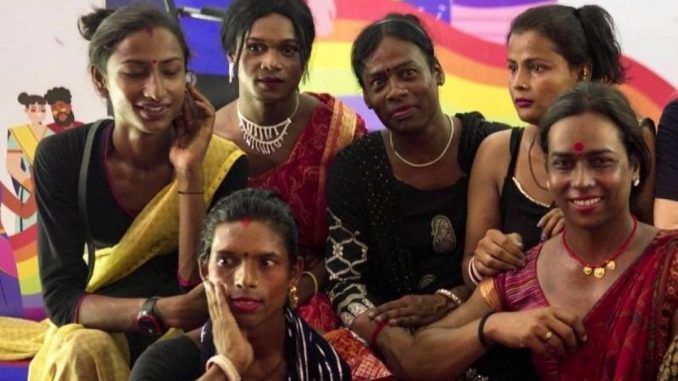
The government of Uttar Pradesh, India’s most populous state, has announced a major policy change to support its transgender population. The state’s flagship youth entrepreneurship initiative, known as the CM Yuva scheme, will now include transgender individuals as eligible participants. The expanded program will offer a range of support, including vocational training, access to interest-free loans, housing assistance, healthcare benefits, and pensions. The state is also setting up 100 dedicated welfare centers across its districts to provide skill-building opportunities in areas such as tailoring, digital literacy, culinary work, and beauty services. Each of Uttar Pradesh’s 75 districts is also expected to reserve two public sector job positions for transgender individuals. This marks a shift toward greater inclusion in employment and public life. “These steps are about giving dignity and opportunity to those who have been marginalized,” said Asim Arun, the state’s Social Welfare Minister. He emphasized that the government aims to bring transgender individuals into the mainstream through economic empowerment and social support. Transgender participants will also gain access to national welfare programs such as Ayushman Bharat for health coverage, the Pradhan Mantri Awas Yojana for housing, and other state-level subsidies and benefits. Officials say efforts are underway to carry out community surveys and awareness campaigns to ensure the program reaches those in need. The CM Yuva scheme was first launched in 2018 to support young entrepreneurs in Uttar Pradesh. It provides interest-free loans of up to ₹5 lakh (about USD 6,000) for small business ventures. To date, more than 40,000 people have benefited from the program. The government has allocated ₹1,000 crore (approximately USD 120 million) for the scheme in the 2024–2025 budget. With this new focus on transgender inclusion, the initiative aims to reduce economic inequality and promote broader participation in public life. Officials hope it will also set an example for other Indian states to follow. This development comes amid a growing national conversation about the rights and recognition of transgender people in India, where legal protections have improved but access to social and economic opportunities remains limited. Courtesy : Transgenderfeed Note: This news is originally published on https://transgenderfeed.com/bha and is used purely for non-profit/non-commercial purposes, especially human rights.
Framed, Not Freed: Bureaucratization Of Trans Identity In India

The judgment in NALSA v. Union of India (2014) was historic, not just for its re-imagining of transgender as a “third gender,” but also for rooting this re-imagination in constitutional morality. Based on provisions in Articles 14, 15, 19(1)(a) , and 21 of the Indian constitution , the Court reaffirmed entitlements to dignity, autonomy, and self-description— highlighting that gender identity is core to liberty. But declaratory power is only one side. A decade after, NALSA is more talked about than followed. This article interrogates its transformative ambition, scrutinizes the legislative and policy implications—focusing on the Transgender Persons Act (2019) — and argues for a more ambitious rights-based legal architecture that fuses recognition and redistribution. Law vs. Reality: A Shaky Implementation While the Court mandated that governments ensure equal access to education, healthcare, jobs, and social services for transgender communities after NALSA, progress has been inconsistent. Many states have failed to establish functioning Transgender Welfare Boards or dedicate targeted funding streams. Some welfare programs only exist on paper, providing little material support. A central shortcoming lies in legal gender recognition. Despite NALSA affirming self-identification; local authorities frequently demand medical or psychological evaluations before issuing gender identity certificates. Trans individuals are regularly compelled to substantiate their internal sense of self—a practice the ruling had explicitly rejected as discriminatory. Without a formal enforcement mechanism, discrimination persists in schools, hospitals, workplaces, and police stations with little recourse. Transgender people continue facing barriers. Certification over Selfhood: The Legal Backsliding After NALSA The Transgender Persons (Protection of Rights) Act 2019 was intended to build on the achievements of NALSA but marks a legislative step backward based on the desire for bureaucratic control over an individual’s autonomy. Although the title of the Act is promising it actually undermines the heart of NALSA’s ruling, by transforming a self-identification framework into one shaped by state sanctioned and bureaucratized processes. Specifically: sections 5-7 of the Act require transgender persons/individuals to apply for a certificate of identity from a District Magistrate. Where a Trans person wishes to obtain recognition as male or female, proof of gender-affirming surgery must be provided. This is intrusive and direct contradiction of NALSA- which asserted that gender identity of an individual is based on self-determination without medical intervention. In effect, the Act lays-out hierarchies of legitimacy with respect to Trans identities. In addition- the Act only provides ephemeral references to non-discrimination, not regulations setting out penalties, enforcement processes or remedies. The Act criminalizes harm in name only and does not create opportunities for institutional design preventing harm. · The Act’s silence on reservations- a very important part of the NALSA framework- is glaring; without affirmative action, equality is simulacrum. · Worse even than that – the Act was passed without consultation with Trans communities; it is very clearly a top-down, paternalistic rights framework. Recognition is not enough : Socio – Economic Realities Whereas NALSA and the 2019 Act are concerned with identity recognition, they say nothing about the material deprivation that marks the lives of the majority of transgender individuals in India. · The literacy rate of transgender individuals in the 2011 Census stood at only 51.06% below than national average 74% -numbers which probably underestimate the full extent of exclusion. · Despite legal recognition, Trans individuals continue to have deep-seated obstacles to shelter, education, and health. Schools are still places of harassment and dropout; government hospitals are not trans-friendly, with inadequate trained personnel or welcoming policies. Even programs such as Ayushman Bharat, which now formally include transgender care, have bleak implementation. · Housing continues to be insecure: Trans individuals are regularly denied rental contracts and barred from shelters. In the absence of tenancy rights or anti-discrimination housing legislation, even government programs remain out of reach. · Layered exclusions get worse for Dalit, Bahujan, Adivasi, and disabled Trans individuals—communities rendered invisible by the uniform legislative framework. State and central welfare schemes tend to demand gender-matching documents, shutting individuals out of their rights if legal recognition doesn’t match lived identity. Recognition alone will not tear down structural violence. A rights framework must incorporate redistributive justice and intersectional protections. Developing a Trans-Affirmative Legal Framework While the Indian legal framework is comparable to England and South Africa in its stated protections against discrimination based on a person’s sex, it is lacking in legislation that protects against discrimination based on a person’s gender identity and gender expression. While both article 15 prohibits discrimination on the basis of “sex”, the protections that exist under the Indian Constitution have not yet been fully realized with action from the necessary corrective amending legislation. What is needed now is a dedicated statute (similar to the UK’s Equality Act and South Africa’s Promotion of Equality and Prevention of Unfair Discrimination Act). A law of this nature must: · Define and prohibit direct, indirect, structural, and intersectional discrimination; · Apply to both public and private actors alike; · Provide civil remedies including compensation, injunctions, and organizational accountability; · Create equality commissions at both national and state levels to oversee implementation. Affirmative action must be part of any recent legal structure. As suggested by the NALSA recognition, we need horizontal reservations for Trans people as part of affirmative action in education and public employment as remedial measures of social disadvantage and inequity. Among other things, the state governments of Tamil Nadu and Karnataka include Trans persons within the OBC/MBC classification or a reasonable quota in public service examinations. Most importantly, Trans communities must have a seat at the table of law-making—they need to be practitioners of the law in terms of the drafting process, applications of the law, and in bodies which hold jurisdiction over the implementation and monitoring of the law. Appropriately engaging Trans communities makes sure their dignity is not interpreted or processed through a cisnormative or bureaucratic lens. Remember too that equality is not given, but built into. Recognition Is The Floor, Not The Ceiling A decade since NALSA, it is clear that recognition without redistribution is not enough. Transgender persons continue to
Another announcement by Nitish Kumar before Bihar elections, now a big step taken regarding transgender
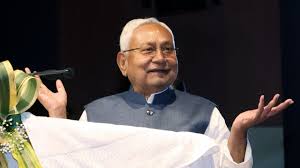
CM Nitish Kumar has taken a big step regarding transgender. The CM has ordered the formation of Safai Karamchari Commission in the state. This commission will have a chairman, a vice-chairman, five members, including a woman/transgender. The work of this commission will be to give suggestions to the government regarding the interests of the sanitation workers, protection of their rights. Amid the stir of assembly elections in Bihar, the Nitish government is making many announcements. The government announced to increase the pension of journalists on Saturday. At the same time, now the government has given a big gift to the sanitation workers. The Nitish government has now taken a big step regarding transgender. Actually, CM Nitish Kumar has ordered the formation of Safai Karamchari Commission in the state. Nitish Kumar gave this information by posting on social media handle X on Sunday. CM Nitish Kumar posted on social media handle X and said, I am happy to inform that I have directed the department to constitute Bihar State Safai Karamchari Commission to ensure protection of rights and interests of Safai Karamcharis, welfare, rehabilitation, social upliftment, redressal of grievances and monitoring of various welfare schemes in the state of Bihar. What will be the work of the commission? The CM further said, this commission will give suggestions to the government regarding the protection of the rights of the Safai Karamcharis, their rights and will review the welfare schemes related to the people engaged in cleaning work and take action to implement it. Transgenders will also be included in the commission The Bihar State Safai Karamchari Commission will have a chairman, a vice-chairman and five members, out of which one will be a woman/transgender. This commission will play an important role in connecting the deprived sections of the society associated with cleaning work in the state to the mainstream and in their social and economic development. Big announcement for journalists The assembly elections in Bihar are near. Regarding this, all the parties want to do public in their interest. The Nitish government is also making big announcements almost daily. An announcement was made for journalists on Saturday. CM Nitish Kumar said, under the Bihar Patrakar Samman Pension Scheme, now all eligible journalists will be given a pension of Rs 15,000 instead of Rs 6,000 every month. Also, in case of death of journalists receiving pension under Bihar Patrakar Samman Pension Scheme, their spouse has been instructed to be given a pension amount of Rs 10,000 instead of Rs 3,000 per month. Along with this, he also announced about electricity. The CM had said, from August 1, 2025, i.e. from the bill of July month, all domestic consumers of the state will not have to pay any money for electricity up to 125 units. This will benefit a total of 1 crore 67 lakh families of the state. Courtesy: Hindi News