
Trump admin backs parents against “woke” ideologies: Linda McMahon hosts roundtable as Virginia schools clash over transgender policies

In a bold move that puts federal education policy and local school governance on a collision course, U.S. Department of Education Secretary Linda McMahon hosted a roundtable on Wednesday with parents from Northern Virginia, many of whom are raising concerns about how schools handle transgender students. The session, attended by nine parents from Fairfax County and surrounding districts, comes after the department ordered five Northern Virginia school systems to revise policies that allow students to use bathrooms and locker rooms matching their gender identity rather than their biological sex. The department argued that the existing policies violated Title IX and warned that districts refusing to comply could be designated “high-risk,” a status that conditions federal funding. Parents voice conflicting views “We’ve been subjected for multiple years now to very invasive pronoun surveys,” said Stephanie Lundquist-Arora, a Fairfax mother, according to 7News. She and several others argued that students should use facilities based on sex rather than gender identity. The roundtable unfolded as Christina McCormick, another Fairfax parent and member of FCPS Pride, offered a counterpoint. “Really, everyone benefits, you know, from strong non-discrimination policies,” according to 7News. “It’s not just about trans students, but as a parent of trans students, I can say that the policies from Fairfax County Public Schools have made it possible for my kids to go to school happy at school. To have normalcy, just like any other student.” McMahon signals administration stance on X McMahon amplified the administration’s position in a tweet posted on X, writing, “The Trump Administration stands with parents who are fighting back against woke gender ideologies that are harming students. Taxpayer dollars will no longer support policies that allow grown men to share locker rooms with young girls.” The post included a clip from Wednesday’s roundtable, signaling the administration’s resolve to defend parents’ concerns at the federal level. — EDSecMcMahon (@EDSecMcMahon) Virginia districts push back with lawsuits The roundtable comes amid mounting legal tension in Northern Virginia. On Friday, Arlington and Fairfax counties filed lawsuits against the U.S. Department of Education, seeking to block the federal agency from freezing millions in funding over policies that allow students to use facilities consistent with their gender identity. The lawsuits, underscore the stakes: Fairfax, the state’s largest district, could face up to $167 million in jeopardized funds, while Arlington could lose $23 million. These dollars support programs ranging from free and reduced meals to counseling and special education services. “Students are punished when federal funding, primarily used to provide free breakfast and lunch for over 8,000 students or counseling and education for special needs students, is ripped away,” Arlington Superintendent Francisco Durán said, according to The Washington Post. “We strongly disagree with the U.S. DOE’s assertion that our policy violates Title IX.” Legal context and Title IX debate Legal experts note that the fight hinges on the interpretation of Title IX, the landmark federal law prohibiting sex-based discrimination. Courts remain split on whether it protects transgender students, with LGBTQ+ advocates citing cases like Grimm v. Gloucester County School Board in support of policies that allow students to access facilities matching their gender identity. Northern Virginia districts, many of which serve a third of the state’s public school students, have refused to revise their policies, arguing they comply with both state and federal law and provide a safe, inclusive environment for all children. “We have a responsibility to ensure that every child has the support needed to achieve their full, unique, and limitless potential,” the Fairfax County School Board told The Washington Post. “We will not abide attempts to pit one group of students against another.” National implications loom With the Supreme Court expected to hear a case involving transgender athletes in federally funded schools later this fall, the outcomes in Northern Virginia could have nationwide implications. For now, McMahon’s roundtable and her firm stance on X signal the Trump administration’s continued focus on parental input and a rejection of policies it labels as “woke gender ideologies.” In school hallways and courtrooms alike, the debate over transgender rights, federal authority, and local control is far from over, and for parents in Northern Virginia, the conversation is only just beginning. Courtesy : TOI Note: This news is originally published on https:/timesofindia.com/bha and is used purely for non-profit/non-commercial purposes, especially human rights.
Dedicated counselling centre for transgender community to come up in Kolhapur

Kolhapur: The district administration has decided to set up a dedicated counselling centre for the transgender community members on the Chhatrapati Pramilaraje District Hospital premises to provide support and address issues like social exclusion, discrimination and family rejection that often lead to mental health problems like stress, depression and anxiety among the members. Collector Amol Yedge on Thursday issued the directive to establishment the counselling centre, which will offer a safe and stigma-free space for individuals to express themselves. It will have specially trained counsellors focusing on mental health, social inclusion and professional empowerment According to the directives, transgender persons with valid ID cards will not be required to undergo repeated medical verification to avail of govt schemes. Coordinators have already been appointed in 27 of the district’s 42 key govt offices. “The ID card will serve as the primary proof for benefits, with no additional documents demanded. Publicity of the dedicated transgender welfare cell at the social welfare office was also emphasised. Colleges will be encouraged to conduct awareness programmes on Transgender Policy 2024, starting with workshops at Shivaji University. Separate washrooms for transgender people will be arranged at the collector’s office, police department, zilla parishad and Kolhapur Municipal Corporation, with future plans to extend such amenities at the taluka level,” Yedge said. At present, information on 190 transgender individuals with official ID cards in the district is being consolidated. “They will soon be provided with Aadhaar, ration and voter ID cards. A pilot project to deliver ration at their doorsteps, with support from philanthropic donors, is also under consideration. The stakeholders stressed the need for effective dissemination of details about all welfare measures and schemes under the policy,” an official said. Courtesy : TOI Note: This news is originally published on https:/timesofindia.com/bha and is used purely for non-profit/non-commercial purposes, especially human rights.
Society still struggling to accept humans who don’t fit into man-woman binary: NHRC chief V Ramasubramanian
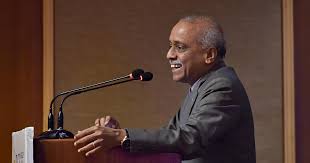
The day-long national conference on the rights of transgender persons is being held at the India Habitat Centre by the NHRC. New Delhi: India is “far ahead” of several other nations in recognising the rights of transgender persons, and while the country “may not have reached an ideal level”, but it has certainly advanced to a great extent in this area, NHRC Chairperson, Justice (retd) V Ramasubramanian said on Thursday. In his address at a national conference here, he also said that there could be or that there are human beings who “do not fit into this binary of man or woman” — is something that the societies all over, are still grappling to accept. “The consequence of this, is that trans people experience widespread discrimination and stigma in the health sector, schools, employment and housing as well as in accessing bathrooms,” the National Human Rights Commission (NHRC) chairperson said. The day-long national conference on the rights of transgender persons is being held at the India Habitat Centre here by the NHRC. Centered on the theme “Revamping Spaces, Reclaiming Voices,” the event emphasises “the immediate need to tackle systemic discrimination, uplift lived experiences, and promote meaningful inclusion for transgender persons in all areas of life”, the NHRC said. The rights panel chief began his address by quoting some texts from the Upanishads, which underline that the God pervades in all humans, and all living and non-living beings. If India is a country where the discourse on equality was taken to such great heights by the Upanishads, and if it is the philosophy of the Upanishads that every unit of creation is God’s manifestation, “can some units of such creation be discriminated against by others,” the NHRC chief asked. Can one unit of creation be considered inferior to the others and can any of such creations be treated with contempt, Justice Ramasubramanian emphasised. He said these were the pivotal questions around which this conference has been designed. “Fortunately, India is far ahead of several other countries in recognising the rights of trans persons. We may not have reached an ideal level, but we have certainly advanced to a great extent,” he asserted. This is because for the first time in history that the three pillars of democracy in India, namely “the legislative, the executive, and the judiciary, have come together, to transform the philosophy of the Upanishads into a constitutional philosophy and then to translate the constitutional philosophy into a parliamentary enactment,” he said. In his address, he also cited some data drawn from Trans Murder Monitoring, a research project of TGEU (Trans Europe and Central Asia) that tracks the murders of trans and gender diverse people globally According to its report released in 2024, there were “350 reported murders during the period from October 1,2023 to September 30, 2024”, of which 12 had happened in india, the rights panel’s chairperson said. This report also recorded the 5,000th recorded case of anti-trans murders since the year 2008. This report was released on the occasion of the Trans day Remembrance which is observed annually on November 20 to memorialise those who have been “murdered as a result of transphobia,” he added. He also underlined the change in wordings of texts of global declarations pertaining to human rights, equality and justice, over the centuries. But the mere change of terminology from ‘man’ to ‘human beings’ has “not actually transformed our stereotypical thought processes, and the society continues to think that men and women alone constitute the human race,” the NHRC chief said. “That there could be and that there are human beings who do not fit into this binary of man or woman, is something that the societies all over, are still grappling to accept,” he added. The NHRC is privileged to host this national conference as “a huge segment of our population, estimated as per the 2011 census, to be around 4.88 lakh cannot be left out of the mainstream,” the chairperson said. A comprehensive report aimed at strengthening policies and frameworks to uphold the rights and dignity of transgender persons, was also released on the occasion. Courtesy : DH Note: This news is originally published on https:/deccanherald.com/bha and is used purely for non-profit/non-commercial purposes, especially human rights.
Tesla CEO Elon Musk calls for ban on trans hormone drugs, citing concerns over ‘extreme violent’ behavior

Tesla CEO Elon Musk has said that drugs used for gender transition should be banned, arguing they are linked to violent behavior. The tech billionaire’s comment came in response to a post on X (formerly Twitter) that described the arrest of a trans-identifying person accused of breaking into a home and sexually assaulting a toddler. The post named Daniel “Dani” Senecal, who uses she/her pronouns, as the suspect. According to reports, Senecal had previously been jailed for a child sex attack and was released early from prison before the latest arrest. Musk replied to the post saying, “Something is seriously wrong. Trans sex hormone drugs are driving extreme violence and should be banned.” His remark quickly drew wide attention and has added to the debate over transgender health care and criminal justice. What are Trans hormone drugs Trans hormone drugs, as the name implies, are medicines used in hormone replacement therapy (HRT) for transgender people. Doctors prescribe these under medical supervision as part of gender-affirming care. The aim is to align a person’s physical characteristics with their gender identity. The issue of access to gender-affirming medical treatments, including hormone therapy, has been highly debated in several countries. Supporters of transgender rights argue such care is essential for well-being and is backed by major medical organizations, while critics raise concerns about safety, long-term effects, and access for minors. Musk’s comment is likely to fuel further discussion, as he has previously spoken out on social and cultural issues to his audience of over 180 million followers on X. Elon Musk has been vocal about his opinion on stance against the “woke” movement and has taken significant steps, including moving company headquarters, in response to policies he views as harmful to families and businesses. The world’s richest person once called puberty blockers as “sterilization drugs”. He then criticized the term “gender affirming care” as a “terrible euphemism.” Musk recounted his realization that he had “lost his son” (Vivian who came out as transgender in 2022) to what he calls the “woke mind virus,” a term he uses to describe the ideology he believes led to his child’s transition. Courtesy : TOI Note: This news is originally published on https:/timesofindia.com/bha and is used purely for non-profit/non-commercial purposes, especially human rights.
NHRC to host national conference on rights of transgender persons
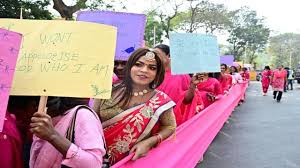
The National Human Rights Commission (NHRC) said it firmly believes that the integration of transgender persons into society is “not just a legal or institutional responsibility, but a moral imperative” India’s apex human rights body will host a national conference on the rights of transgenders on September 4, for a “transformative change”, ensuring that every member of that community lives with dignity and has access to equal opportunities, officials said on Tuesday. The National Human Rights Commission (NHRC) said it firmly believes that the integration of transgender persons into society is “not just a legal or institutional responsibility, but a moral imperative”. NHRC Chairperson Justice (retd) V Ramasubramanian will be the chief guest at the National Conference on the Rights of Transgender Persons, to be held at the India Habitat Centre. By convening this conference, the commission seeks to pave the way for a transformative change, ensuring that every transgender person in India is able to live with dignity, access equal opportunities, and reclaim their rightful space in society, the NHRC said in a statement. A wide spectrum of participants, including government officials, judicial and legal experts, policymakers, representatives of civil society organisations, community leaders, law enforcement agencies, and media representatives, will gather for the conference. The NHRC said that deliberations and recommendations at this conference will contribute towards strengthening inclusive policies and practices, advancing the rights of transgender persons, and reaffirming India’s commitment to the principles of human rights, equality, and justice for all. Centred on the theme ‘Revamping Spaces, Reclaiming Voices’, the event emphasises “the immediate need to tackle systemic discrimination, uplift lived experiences, and promote meaningful inclusion for transgender persons in all areas of life”, the statement said. The conference aims to create a national platform for dialogue on the rights and welfare of transgender persons, review the implementation of legal provisions and welfare schemes, and recommend practical policy reforms to strengthen institutional care, reduce stigma, and enhance access to education, healthcare, and employment. It also seeks to ensure “greater accountability and sensitisation within law enforcement agencies”, while celebrating the voices and resilience of transgender persons and acknowledging their contribution to India’s social fabric. “In the decades following Independence, transgender persons in India continued to face neglect and marginalisation, despite explicit constitutional guarantees of equality, dignity, and non-discrimination,” the NHRC said. Recognising the community’s vulnerability and these challenges, the NHRC said it has undertaken visits to assess the ground realities in operating Garima Greh shelters to ensure the initiative meets its objectives comprehensively. This assessment is part of the commission’s broader commitment to uphold the rights and welfare of transgender persons through better implementation and monitoring of such rehabilitation programmes. Building upon the findings from these visits, the NHRC has prepared a comprehensive report aimed at strengthening policies and frameworks to uphold the rights and dignity of transgender individuals. By identifying gaps in existing guidelines and highlighting effective interventions, the research provides evidence-based recommendations for policy enhancement, the statement said. In continuation of this effort, the Commission is organising the national conference on the rights of transgender persons to discuss and advance these crucial issues, officials said. This story has been sourced from a third party syndicated feed, agencies. Mid-day accepts no responsibility or liability for its dependability, trustworthiness, reliability and data of the text. Mid-day management/mid-day.com reserves the sole right to alter, delete or remove (without notice) the content in its absolute discretion for any reason whatsoever Courtesy : Mid-Day Note: This news is originally published on https:/mid-day.com/bha and is used purely for non-profit/non-commercial purposes, especially human rights.
Transformative Change: Empowering Transgender Rights

India’s premier human rights body is set to host a transformative national conference focused on transgender rights, aiming to ensure dignity and equal opportunity for the community. The event will gather diverse stakeholders to discuss and recommend policy reforms, enhancing inclusion and supporting transgender rights in India. India’s National Human Rights Commission is leading the charge for transformative change by hosting a national conference on transgender rights. Scheduled for September 4 at the India Habitat Centre, the event aims to ensure dignity and equal opportunities for transgender individuals, according to officials. The NHRC emphasizes that integrating transgender persons into society is not just a legal obligation but a moral duty. The conference is expected to draw government officials, legal experts, policymakers, civil society representatives, and media to discuss strategies for advancing transgender rights. Focusing on the theme ‘Revamping Spaces, Reclaiming Voices’, the conference seeks to address systemic discrimination and foster inclusion. It will also evaluate legal frameworks and welfare programs to propose reforms that promote equal access to education, healthcare, and employment for transgender persons. (With inputs from agencies.) Courtesy : Devdiscourse Note: This news is originally published on https:/devdiscourse.com/bha and is used purely for non-profit/non-commercial purposes, especially human rights.
NHRC to organise national conference on Rights of Transgender Persons in Delhi on Sept 4
The National Human Rights Commission (NHRC), India, is hosting a national conference on the Rights of Transgender Persons on Thursday in the national capital. The National Human Rights Commission (NHRC), India, is hosting a national conference on the Rights of Transgender Persons on Thursday in the national capital. Centered on the theme “Revamping Spaces, Reclaiming Voices,” the conference, which will be held at the Stein Auditorium, India Habitat Centre, emphasises the immediate need to tackle systemic discrimination, uplift lived experiences, and promote meaningful inclusion for transgender persons in all areas of life. Justice V Ramasubramanian, Chairperson, NHRC, will be gracing the event as the Chief Guest. A wide spectrum of participants, including government officials, judicial and legal experts, policymakers, civil society organisations, community leaders, academics, law enforcement agencies, and media representatives, will convene for an in-depth, day-long dialogue focused on the challenges, opportunities, and policy priorities necessary to guarantee the rights of transgender persons in India. The conference aims to create a national platform for dialogue on the rights and welfare of transgender persons, review the implementation of legal provisions and welfare schemes such as the Transgender Persons Act, 2019, and the SMILE scheme, and recommend practical policy reforms to strengthen institutional care, reduce stigma, and enhance access to education, healthcare, and employment. It also seeks to ensure greater accountability and sensitisation within law enforcement agencies, while celebrating the voices and resilience of transgender persons and acknowledging their contribution to India’s social fabric. As transgender persons have always been part of India’s social and cultural fabric, their journey reflects a passage from invisibility to recognition and now towards inclusion. Once respected and celebrated in epics, traditions, and community practices, their dignity and social standing gradually diminished over time, leaving the community struggling for acceptance and equality. Courtesy : The Statesman Note: This news is originally published on https:/thestatesman.com/bha and is used purely for non-profit/non-commercial purposes, especially human rights.
Respond to PIL seeking transgender-inclusive school textbooks, SC tells Centre, Punjab & 5 other states
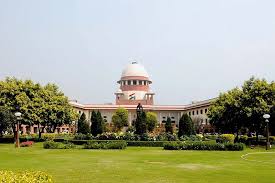
The NCERT and most SCERTs have failed to comply with the top court’s binding directions in the NALSA versus Union of India case (2014), the PIL alleges The Supreme Court on Monday issued notice to the Centre, Punjab and five other state governments on a PIL seeking inclusion of transgender-inclusive Comprehensive Sexuality Education (CSE) in school textbooks prepared by the National Council of Educational Research and Training (NCERT) and State Councils of Educational Research and Training (SCERTs). A Bench led by Chief Justice of India BR Gavai asked the Centre, NCERT and governments of Punjab, Maharashtra, Andhra Pradesh, Telangana, Tamil Nadu and Karnataka and SCERTs to file their replies in six weeks to the PIL by Kaavya Mukherjee Saha—a Class XII student – after senior advocate Gopal Sankaranarayanan highlighted the issues raised in the petition. The NCERT and most SCERTs have failed to comply with the top court’s binding directions in the NALSA versus Union of India case (2014), the PIL alleged. Despite statutory obligations under Sections 2(d) and 13 of the Transgender Persons (Protection of Rights) Act, 2019, the NCERT and most of the SCERTs neglected to integrate structured and examinable content on gender identity, gender diversity and the distinction between sex and gender into school syllabi, it alleged. The exclusion not only violated fundamental rights like right to equality but also undermines Directive Principles of State Policy, the PIL contended. The petitioner sought a direction to the authorities concerned to incorporate “scientifically accurate, age-appropriate” and transgender-inclusive CSE into examinable school syllabi across India. It also demanded binding guidelines to ensure effective implementation of gender sensitisation and transgender-inclusive sexuality education across all public and private educational institutions. Textbook reviews conducted in Maharashtra, Andhra Pradesh, Telangana, Punjab, Tamil Nadu, and Karnataka reportedly revealed systemic omissions, with Kerala being a partial exception, it submitted. The International Technical Guidance on Sexuality Education, published by UNESCO and the WHO, provides a globally accepted framework for CSE, it said. Author Satya Prakash Courtesy : The Tribune Note: This news is originally published on https:/thetribune.com/bha and is used purely for non-profit/non-commercial purposes, especially human rights.
SC Seeks Centre, NCERT Reply On Plea For Transgender-Inclusive Sex Education
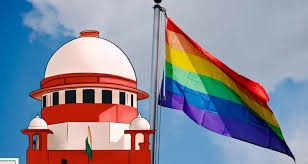
The Supreme Court has issued notices to the Centre, NCERT, and six states on a PIL demanding transgender-inclusive comprehensive sexuality education in school curricula. In response to a Public Interest Litigation (PIL) that aims to include transgender-inclusive comprehensive sexuality education (CSE) in school curricula, the Supreme Court on Monday requested comments from the Centre, NCERT, and six states, including Maharashtra. According to PTI, Senior attorney Gopal Sankaranarayanan’s arguments on behalf of the petitioner were noticed by a bench consisting of Chief Justice B R Gavai and Justice K Vinod Chandran. The bench served notices to the respondents for their responses within eight weeks. Petitioner Kaavya Mukherjee Saha added Maharashtra, Andhra Pradesh, Telangana, Punjab, Tamil Nadu, and Karnataka as parties to the case in addition to the Centre and National Council of Educational Research and Training (NCERT). Saha, a Class XII student, filed a PIL calling for the inclusion of transgender-inclusive CSE in textbooks and school curriculum created by the State Councils of Educational Research and Training (SCERT) and the National Council for Technical Education (NCERT). The motion claimed that in the NALSA v. Union of India case, the NCERT and the majority of SCERTs had disregarded the binding orders of the top court. PTI reported that the councils allegedly failed to incorporate organized and examinable information on gender identity, gender diversity, and the difference between sex and gender into school curricula, despite their statutory requirements under Sections 2(d) and 13 of the Transgender Persons (Protection of Rights) Act, 2019. According to reports, systemic omissions were found in textbooks from Maharashtra, Andhra Pradesh, Telangana, Punjab, Tamil Nadu, and Karnataka, with Kerala being the only exception. It claimed that the exclusion not only goes against the Directive Principles of State Policy but also fundamental rights including the right to equality. PTI reported that it further said that UNESCO and the WHO’s International Technical Guidance on Sexuality Education offers a universally recognised foundation for CSE. A directive to the authorities to include “scientifically accurate, age-appropriate” and transgender-inclusive CSE in examinable school curricula across the country was sought in the plea. Additionally, it asked for guidance on how to create legally binding rules that would guarantee the successful implementation of transgender-inclusive sexuality education and gender sensitisation in all Indian public and private educational institutions. Courtesy : Outlook India Note: This news is originally published on https:/outlookindia.com/bha and is used purely for non-profit/non-commercial purposes, especially human rights.
RPF team assaulted by eunuchs, transgenders at Deoria station; 2 held, others absconding

LUCKNOW: A Railway Protection Force (RPF) team was allegedly assaulted late Sunday night by a group of 6–7 individuals, including eunuchs and transgenders, at Deoria railway station in Uttar Pradesh. The incident took place around 10 pm on platform number one and was caught on video, later shared widely on social media. According to SHO Aash Mohammad of RPF Deoria, the team had intervened after receiving a passenger complaint of harassment and extortion by some transgender persons. The group allegedly turned violent, attacking the officers on duty. Two individuals, identified as Chanda and Sahil, were arrested, while others remain absconding. The Government Railway Police (GRP) Deoria registered an FIR under Bharatiya Nyaya Sanhita Sections 191(2) (rioting with deadly weapons), 115(2) (causing hurt), 121(1) (attacking public servants), 132 (assault to obstruct duty), 308 (attempted culpable homicide), 324 (mischief), and 352 (provoking unrest through intentional insults). Courtesy : TOI Note: This news is originally published on https:/timesofindia.com/bha and is used purely for non-profit/non-commercial purposes, especially human rights.