
Traffic police orders beggars, transgenders off intersections
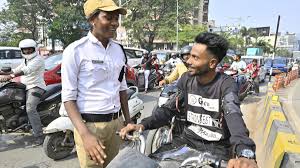
New Delhi: Delhi Traffic Police have directed all personnel to ensure there are no disruptions in the smooth flow of traffic due to the presence of beggars, transgender persons, vagabonds or hawkers at intersections. Sources said the move comes in response to increasing observations that gatherings of such individuals at busy traffic points significantly impede vehicular movement and contribute to congestion. Police sources said field staff have been instructed to take stringent measures and ensure these groups aren’t allowed to loiter, gather or carry out any activity that may hinder traffic flow or cause inconvenience to commuters. Additionally, personnel have been asked to meticulously document the locations where such gatherings frequently occur. This information then needs to be compiled and forwarded to the area’s social welfare nodal officer and Delhi govt’s social welfare department. To ensure effective implementation of the directives, deputy commissioners of police and officers in charge of traffic ranges have been tasked with monitoring compliance. A senior police officer said the objective is to maintain smooth traffic flow, enhance public safety, and uphold law and order across the city’s busy road networks. He said there have been instances when beggars and hawkers suddenly appear at traffic signals and do not move even when the light turns green, causing traffic to stop and raising the risk of accidents. He added police have received numerous complaints from the public about this issue. Police said on June 28, five Bangladeshi nationals engaged in begging were found presenting themselves as transgender persons in northwest Delhi. Police said they admitted to adopting these disguises and undergoing minor surgeries and hormonal treatments to alter their sex to evade detection. Courtesy : TOI Note: This news is originally published on https:/timesofindia.com/bha and is used purely for non-profit/non-commercial purposes, especially human rights
Team USA transgender cyclist Chelsea Wolfe calls Charlie Kirk a Nazi and cheers his killing during Donald Trump ally’s Q&A in Utah

Chelsea Wolfe, a transgender BMX freestyle rider who once joined Team USA as an alternate at the Tokyo Olympics in 2021, shocked many this week with social media posts about Charlie Kirk’s death. Kirk, the 31-year-old conservative activist and ally of Donald Trump, was shot while answering questions at Utah Valley University in Orem, Utah, on Wednesday, September 10, 2025. He was hit by one bullet in the neck and died later at Timpanogos Regional Hospital. Wolfe reacted online with celebratory messages that drew strong backlash. Team USA cyclist Chelsea Wolfe shares shocking Instagram posts after Charlie Kirk killing On Thursday, September 11, 2025, Chelsea Wolfe posted several messages on Instagram, celebrating Charlie Kirk’s murder. One story showed a USA Today news headline with a sticker from the children’s cartoon Dora the Explorer saying, “We did it!” In another, Wolfe shared a smiling selfie with thumbs up and wrote: “Being a Nazi is completely optional btw. He didn’t have to do all that, but he did and now he’s dead.” Wolfe added that Kirk lived in a way that made the world “better” after his death. Team USA transgender cyclist Chelsea Wolfe calls Charlie Kirk a Nazi and cheers his killing She continued with more comments calling Kirk a “Nazi” and “fascist.” Wolfe reposted another message that accused Kirk of spreading racism, homophobia, transphobia, xenophobia, and anti-immigrant hate daily. Many people, including sports icons, reacted with anger. Tennis legend Martina Navratilova described Wolfe’s comments as “sickening.” USA Cycling quickly released a statement clarifying that Wolfe has not been part of the national team since 2023. The group stressed that her comments are her personal opinions and do not represent the organization or its values. Charlie Kirk’s assassination sends shockwaves across the country Charlie Kirk was killed while hosting a Q&A session during his American Comeback Tour event at Utah Valley University. The gunshot came from a rooftop about 200 yards away while Kirk was speaking to students about mass shootings. — cartlanddavid (@cartlanddavid) He collapsed on stage, and security rushed him to Timpanogos Regional Hospital, where doctors confirmed his death soon after. Police detained two people briefly but later released them. By Friday, September 12, 2025, authorities confirmed that one suspect was in custody. President Donald Trump, who himself survived being shot in the ear at a campaign rally in Pennsylvania in July 2024, expressed sadness over Charlie Kirk’s killing, calling him “legendary” and saying the country had lost “a great fighter.” Charlie Kirk leaves behind his wife, Erika Frantzve, and their two young children, a three-year-old daughter and a 16-month-old son. The family had celebrated their fourth wedding anniversary in May 2025. Courtesy : TOI Note: This news is originally published on https:/timesofindia.com/bha and is used purely for non-profit/non-commercial purposes, especially human rights
Transgender Community Assembled In Agra Sends Help Of ₹25 Lakh To Punjab Flood Victims;

The transgender community from all across the nation assembled in Agra has sent help of over ₹25 lakh to the Punjab flood victims reeling due to the severe rainfall and flash floods. The ‘All India Kinnar Samaj Conference’ is being held on Fatehabad Road in Agra. Around 10 thousand Kinnars from across the country are participating in it. The transgender community from all across the nation assembled in Agra has sent help of over ₹25 lakh to the Punjab flood victims reeling due to the severe rainfall and flash floods. The ‘All India Kinnar Samaj Conference’ is being held on Fatehabad Road in Agra. Around 10 thousand Kinnars from across the country are participating in it. In this conference, the transgender community is collecting donations for the flood victims. The donations from the transgender individuals are said to amount to 25 lakh rupees. These donations will now be used to provide relief to the flood victims of Punjab. On Wednesday, at Havells Garden, transgender community made bids after donating money for the Punjab flood victims. Some donated Rs 50,000, and some donated up to Rs 1 lakh. The highest donation came from Gorakhpur. During this conference, the eunuchs prayed for the people and farmers trapped in the floods in Punjab. Ganesh Puja was performed so that the people of Punjab would get relief from the floods. Guru Mata Sadhna of Haryana said, “Eunuchs from all over the country have gathered in Agra today. A bed has been set up to collect donations for the flood victims in Punjab. Eunuchs from all over the country are donating money there. 30 lakhs have been donated. If needed, we will collect more donations. We are not doing any charitable work. We are eunuchs, we are giving money taken from people to people when needed.” Panch of All India Kinnar Samaj said that they will not give the donation money to politicians and officers as it may lead to the fraud of money. We want to provide help directly to the victims. And we will take along someone who is really helping people. Rutunjay Dole Courtesy : TFPJ Note: This news is originally published on https:/thefreepressjournal.com/bha and is used purely for non-profit/non-commercial purposes, especially human rights
Charlie Kirk shooting: Recovered rifle engraved with ‘transgender, anti-fascist ideology’, say reports

The rifle recovered in the search for the gunman who fatally shot conservative activist Charlie Kirk on Thursday was reportedly engraved with “transgender and anti-fascist ideology,” according to preliminary law enforcement reports. The .30-06-caliber Mauser bolt-action rifle believed by federal investigators to be the weapon used in the attack, was found wrapped in a towel in a wooded area near Utah Valley University, reported The New York Post. Kirk, 31, a US President Donald Trump ally and Turning Point USA founder, was shot in the neck by a single high-caliber round fired from roughly 200 yards while while addressing a crowd of about 3,000 students and supporters at Utah Valley University (UVU). The gunman reportedly blended into the university environment and appeared to be of college age, according to Utah public safety commissioner Beau Mason. The rifle has been turned over to the FBI for DNA and fingerprint analysis. Authorities obtained clear video footage showing a figure in dark clothing firing a shot from the roof of a building at UVU in Orem, Utah. Two suspects initially taken into custody have since been released. The Utah department of public safety emphasised that the shooting remains an “active investigation.” Along with the rifle, investigators collected a shoeprint, palm print, and forearm impressions. More than 130 tips had been submitted by Thursday morning, which officials said “are being fully investigated,” according to Bohls. Utah governor Spencer Cox described the attack as “believed to be a targeted assassination,” though authorities say the shooter’s identity and motive remain unknown. Officials continue to search for the gunman and are combing through surveillance footage to identify the suspect. Robert Bohls, special agent in charge of the FBI’s Salt Lake City field office, added that the individual who shot Kirk is not hiding in the wooded area where investigators recovered the rifle allegedly used in the attack. Courtesy : TOI Note: This news is originally published on https:/timesofindia.com/bha and is used purely for non-profit/non-commercial purposes, especially human rights
Transgender shot dead in Rajasthan’s Neemrana
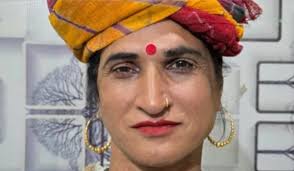
Jaipur, A transgender community leader was shot dead in broad daylight in Neemrana area of Kotputli-Behror district in Rajasthan on Wednesday. The incident, which occurred near Molhediya village, triggered protests by members of the transgender community. Neemrana Additional SP Shalini Raj said that Madhur Sharma, a ‘kinnar’ (transgender) guru in the area, was shot by two motorcycle-borne assailants. Sharma was in Neemrana with a group to collect traditional festival greetings and donations ahead of Diwali. “The kinnar was sitting under a tree inside a vehicle when two unidentified assailants arrived on a motorcycle and opened fire from close range, hitting Sharma in the head. The attackers fled the scene immediately after the shooting,” she said. Sharma died on the spot. The body was shifted to the mortuary at the community health centre (CHC) in Neemrana. The police checked the CCTV footage from nearby areas to trace the movement of the suspects. As the news of the killing spread, a large number of members of the transgender community gathered outside the CHC and protested, demanding swift action. Additional police force was deployed to maintain law and order. The police have formed a special team to investigate the murder, officials said. PTI SDA RT RT This report is auto-generated from PTI news service. ThePrint holds no responsibility for its content. Courtesy : The Print Note: This news is originally published on https:/theprint.com/bha and is used purely for non-profit/non-commercial purposes, especially human rights
Charlie Kirk dies after being shot at Utah Valley University, Trump calls him ‘Great, Legendary’

President Donald Trump confirmed the death of Conservative activist Charlie Kirk after Kirk was shot at Utah Valley University. “The Great, and even Legendary, Charlie Kirk, is dead. No one understood or had the Heart of the Youth in the United States of America better than Charlie. He was loved and admired by ALL, especially me, and now, he is no longer with us. Melania and my Sympathies go out to his beautiful wife Erika, and family. Charlie, we love you!” Trump posted on Truth Social. Kirk was on tour, and this stop at Utah Valley University was the first of at least 14 scheduled at college campuses across the country this fall. He was shot when he was asked a question about mass shootings by transgender people. A shocking video showed how the bullet hit his neck, and Charlie Kirk collapsed. “A kid came up and he asked a question about how many transgender shooters there were, and Charlie gave him another comment. And then he asked one more question, and so the question was about shooters. And before Charlie Kirk could pick up the mic again, that’s when the shot happened,” Eva Terry, who was on the ground, told CNN. One shot, straight in the neck Chilling videos from the event showed how the bullet hit Charlie Kirk in the neck as he was speaking and he collapsed as blood started coming out. he was immediately taken to the hospital and his condition was said to be serious as he was straight taken for surgery. Charlie Kirk’s family In May 2021, Charlie married Erika Frantzve, a Christian podcaster, former Miss Arizona USA (2012), businesswoman, and philanthropist. They have two children: a daughter, Sarah Rose, born in 2021 and a son born in 2023. Charlie Kirk’s rise in MAGA circle Kirk, an Illinois native, was involved in political activism from school time and embraced it full-time when Trump started to remake the Republican Party. Kirk founded Turning Point in 2012 at the age of 18 and became Trump’s medium to appeal to young voters. Charlie Kirk and his political organization, Turning Point USA, were key to President Donald Trump’s 2024 victory, and Trump himself credited Kirk. Kirk cultivated close ties with the president and his family during Trump’s first term in office. He was recently seen in the Oval Office in May, attending the swearing-in ceremony of Judge Jeanine Pirro.“I won the young people by 37%. No Republican’s ever won and I won by 37%. And Charlie Kirk will tell you, TikTok helped, but Charlie Kirk helped also,” Trump said at that time. “He just happens to be here. Look at him. He loves that we mention that name — right, Charlie? He’s done great and I appreciate all the help,” Trump said. Courtesy : TOI Note: This news is originally published on https:/timesofindia.com/bha and is used purely for non-profit/non-commercial purposes, especially human rights
Bokaro District Administration Launches Campaign for Transgender Identity Cards and Rights
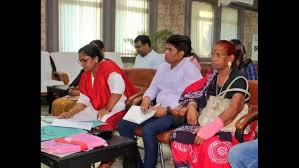
Bokaro: Deputy commissioner Ajay Nath Jha on Tuesday said the district administration will roll out a campaign to issue identity cards to the transgenders living in the district. The announcement came during a transgender welfare committee meeting, which deliberated on the steps needed to be taken to ensure the recognition of transgenders and securing their rights. Jha said that a comprehensive social and economic mapping of all transgenders in the district will be conducted. “The survey will help assess their living standards, livelihood opportunities, education, and healthcare status. Complete confidentiality would be maintained during the process so that individuals can share information without hesitation and with dignity,” he said. The administration also plans establishment of a transgender help desk at the collectorate premises. “It will provide information on govt schemes, pensions, healthcare services, and legal aid. It will also act as a grievance redressal platform to ensure quick solutions to community issues,” he said. Jha also said that the transgender community is an integral part of society and deserves equal rights, opportunities, and respect. Courtesy : TOI Note: This news is originally published on https:/timesofindia.com/bha and is used purely for non-profit/non-commercial purposes, especially human rights.
Safeguarding Transgender Rights in India
For Prelims: Transgender Persons (Protection of Rights) Act, 2019, NALSA Judgement 2014, Transgender Persons (Protection of Rights) Rules, 2020, Garima Greh. For Mains: Indian Society and the Challenges faced by Transgenders, Reforms for Transgender Persons, Transgender Persons (Protection of Rights) Act – Provisions and Associated Concerns Why in News? The National Human Rights Commission (NHRC) hosted a National Conference on Transgender Rights aimed at addressing systemic discrimination, strengthening institutional support, and reaffirming constitutional guarantees for transgender persons in India. How Does the Legal & Constitutional Framework Uphold the Rights of Transgender Persons in India? Transgender Definition: As per the Transgender Persons (Protection of Rights) Act, 2019, a transgender person is someone whose gender identity does not match the gender assigned at birth. Population: India has around 4.8 million transgender persons (Census 2011). This includes individuals with intersex variations, gender-queer identities, and socio-cultural identities such as kinnar, aaravani and jogta, etc. Part of LGBTQIA+: Transgender persons are represented by the “T” in LGBTQIA+, which stands for Lesbian, Gay, Bisexual, Transgender, Queer, Intersex, and Asexual. The “+” covers other identities like non-binary and pansexual, reflecting the evolving understanding of gender and sexuality. Legal & Constitutional Framework Transgender Persons (Protection of Rights) Act, 2019: Created a comprehensive legal structure for the protection and empowerment of transgender persons. Key Provisions Include: Non-Discrimination Clause: Prohibits exclusion or unfair treatment in education, employment, healthcare, housing, and access to public services. Self-Identification: Recognises the right to self-perceived gender identity, allowing individuals to obtain identity certificates from the District Magistrate without the requirement of medical or psychological assessments. Healthcare Access: Mandates provision of gender-affirming medical care, HIV surveillance, and inclusion in public health insurance schemes. Statutory Institutional Mechanism: Establishes the National Council for Transgender Persons (NCTP) to advise the central government on welfare policies, monitor implementation, and coordinate inter-ministerial efforts. Landmark Judgments: NALSA v. Union of India (2014): Marked a historic shift by recognising transgender persons as the “third gender”. Affirmed that gender identity is integral to dignity, equality, and personal autonomy under articles 14, 15,19 and 21 of the Constitution. Framed transgender rights as a matter of human rights, not just legal identity. Karnataka High Court in Ms. X vs State of Karnataka, 2024 upheld the right of transgender persons to change name and gender on birth certificates, as permitted under the Transgender Persons (Protection of Rights) Act, 2019 and Transgender Persons (Protection of Rights) Rules, 2020. Election Commission Directive (2009) introduced an “others” option in voter registration forms, allowing transgender individuals to avoid male or female classification. What are the Key Challenges Faced by Transgender Persons in India? Marginalisation: Historical invisibility continues to impact social and economic inclusion, despite progressive laws judgements (NALSA v. Union of India-2014). Transgender persons face stigma, bullying, and rejection, which leads to their poor mental health. A NALSA survey found 27% were denied healthcare due to gender identity. Gender-affirming treatments cost Rs 2–5 lakh and are often not covered in insurance. Ayushman Bharat TG Plus provides medical coverage but its awareness and accessibility remain limited. The literacy rate among transgender persons stands at 56.1%(2011 Census), significantly lower than the national average of 74%, highlighting the lack of a gender-sensitive curriculum across the country. Economic Exclusion: Transgenders face employment bias, workplace hostility, and lack of gender-neutral facilities, limiting economic opportunities. 92% experience economic exclusion (NHRC 2018) and 48% are unemployed (ILO 2022). Despite a 2024 RBI circular allowing transgender and queer persons to open joint bank accounts and nominate partners, access to financial services remains limited due to institutional gaps and low awareness. Law Enforcement and Social Protection Gaps: Garima Greh shelters, though progressive in intent, face issues like inadequate funding, poor awareness, and limited state coverage. Despite the 2019 Act, challenges in ID issuance, complex certification processes, and issues like police harassment and family rejection continue to hinder self-identification and timely support for transgender persons. Institutional mechanisms for child protection and elder care often exclude gender-diverse individuals. Key Measures For Transgender Welfare in India SMILE Scheme & Garima Greh provides rehabilitation, skill development, healthcare, and livelihood support for transgender persons. Ayushman Bharat TG Plus offers health insurance coverage for gender-affirming treatments and healthcare needs. National Portal for Transgender Persons facilitates access to schemes, services, and grievance redressal. Transgender individuals are included under the disability pension scheme with a specific “transgender” option. The Ministry of Home Affairs (2022) directed prisons to ensure privacy and dignity for third-gender inmates. Under state-level Initiatives, Maharashtra has set up transgender cells in colleges, while Kerala provides university reservations and hostel facilities for transgender students. What Measures Should be Taken for Transgender Empowerment in India? Legal Framework: The Transgender Persons (Protection of Rights) Act, 2019 must be fully implemented by setting up grievance redressal cells, a central digital portal for applications, conducting audits, and training police, health, and education officials on transgender rights and gender sensitivity. Economic Empowerment: Promote gender-inclusive policies, diversity hiring, financial schemes, and entrepreneurship support, scaling successful corporate models like Tata Steel’s diversity program. A World Bank report (2021) estimates that integrating transgender persons into the workforce could boost India’s GDP by 1.7%. Access to Social Services : Schools and colleges should implement inclusive policies, provide teacher training, prevent bullying and discrimination, expand counselling services, ensure gender-neutral washrooms, and promote peer and teacher support for transgender students. Ensure insurance coverage for gender-affirming treatments, establish dedicated clinics, expand mental health services, and provide sensitivity training for providers. Awareness Campaign: Conduct gender sensitisation programs, encourage diverse media representation, support cultural events like the Koovagam Festival, and promote campaigns like “I Am Also Human” to reduce stigma. Courtesy : Drishti IAS Note: This news is originally published on https:/drishtiias.com/bha and is used purely for non-profit/non-commercial purposes, especially human rights.
Sabrina Carpenter brings transgender rights message to the 2025 MTV VMAs stage

Throughout the show, drag queens carried picket signs promoting trans rights. Messages like “Protect Trans Rights” and “In Trans We Trust” appeared prominently. Singer and songwriter Sabrina Carpenter turned heads at the 2025 MTV Video Music Awards with a debut performance with her song ‘Tears’ to advocate for transgender rights. The performance was inspired by Carpenter’s music video, which features Colman Domingo in drag, and she brought that vision to life on stage. Joining her were some of the biggest names in drag, including Honey Balenciaga, Symone, Dashaun Wesley, Richie Shazam, Jewels Sparkles, Lexi Love, Jonte’ Moaning, and Denali. Male dancers in police uniforms and performers in retro ‘90s streetwear added energy and movement. Throughout the show, drag queens carried picket signs promoting trans rights. Messages like “Protect Trans Rights” and “In Trans We Trust” appeared prominently. Carpenter entered the awards show with nine nominations. Her album ‘Short ’n Sweet’ was in the running for Album of the Year, while her lead single ‘Manchild’ from the album ‘Man’s Best Friend’ received nominations across multiple categories, including Video of the Year, Best Pop, Best Direction, Best Cinematography, Best Editing, Best Visual Effects, and Song of the Summer. She took home Best Album for ‘Short ’n Sweet’ and Best Visual Effects for the ‘Manchild’ video. Fans of Carpenter may remember her first VMA appearance in 2024, when she performed a medley of her hits “Please Please Please,” “Taste,” and “Espresso.” That year, she also celebrated her first VMA win, taking home Song of the Year for “Espresso.” Courtesy : The Statesman Note: This news is originally published on https:/thestatesman.com/bha and is used purely for non-profit/non-commercial purposes, especially human rights.
Towards Equality: Why transgender-inclusive education must enter Indian schools
A landmark PIL seeks to reform curricula, highlight transgender experiences and make classrooms more inclusive for future generations A historic petition, with promise A decisive public interest litigation (PIL) filed in the Supreme Court has placed a long-neglected issue at the centre of India’s educational debate: the absence of scientifically accurate, transgender-inclusive sexuality education in school textbooks. The petition, spearheaded by Kaavya Mukherjee Saha, a Class XII student, does not merely challenge outdated institutional frameworks — it calls for a comprehensive overhaul of curricula designed by the National Council of Educational Research and Training (NCERT) and State Councils of Educational Research and Training (SCERTs). In response, the Supreme Court promptly issued notices to the Centre and six state governments — Maharashtra, Andhra Pradesh, Telangana, Punjab, Tamil Nadu and Karnataka — underscoring the urgency of the matter. At a time when conversations around equity and representation are reverberating worldwide, this litigation could become a watershed moment in shaping how Indian schools approach gender diversity. The legal and statutory backdrop The petition draws strength from binding precedents and statutory mandates. It cites the 2014 NALSA vs Union of India judgement, where the Supreme Court recognised transgender persons as a third gender and directed governments to ensure institutional inclusion. Equally significant is the Transgender Persons (Protection of Rights) Act, 2019. Sections 2(d) and 13 mandate inclusivity in education, requiring institutions to create curricula and methods that reflect gender diversity. Yet, the PIL argues, these provisions remain largely ignored. Audits of school textbooks show systematic omissions across states. While Kerala has made limited progress, most others fail to mention transgender identities meaningfully or provide teachers with sensitivity training. The result, the petition contends, is a gaping disconnect between law and classroom reality. Beyond laws: Why inclusion matters The absence of transgender representation in education is not a matter of oversight — it has profound consequences. According to the plea, such exclusion violates constitutional guarantees of equality (Article 14), non-discrimination (Article 15), freedom of expression (Article 19), and the right to life and education (Articles 21 and 21A). But the case is not only about rights on paper. Without inclusive, accurate education, schools risk perpetuating harmful stereotypes, encouraging bullying and reinforcing the social ostracism transgender students already face. As the petitioner’s counsel stressed, true reform requires “structured, examinable content” — not token mentions or optional addenda. Only when curricula embed gender diversity meaningfully can schools foster empathy, respect, and critical understanding among students. What comprehensive sexuality education should deliver At the heart of the PIL is a call for comprehensive sexuality education (CSE) that is age-appropriate, scientifically validated and informed by international benchmarks. UNESCO and the WHO’s International Technical Guidance on Sexuality Education provides such a framework, recommending curricula that address gender, sexuality, relationships and respect in a sensitive and staged manner. The petition urges Indian policymakers to adopt these global best practices, highlighting three key areas: Curricular reform that integrates transgender-inclusive content across subjects. Mandatory teacher training to ensure educators are equipped to handle sensitive discussions. Binding guidelines applicable to both public and private schools. Evidence of systemic omissions Textbook reviews across the six states named in the PIL reveal an alarming vacuum. References to transgender lives, rights, or histories are either non-existent or superficial. In May 2025, a Right to Information (RTI) reply from NCERT confirmed that no teacher training programmes on transgender-inclusive sexuality education had been conducted to date. This silence has dual consequences. Transgender students are denied affirmation and essential knowledge about their identities, while their cisgender peers grow up without the tools to become allies. A generation of young Indians, the petition argues, is being educated with dangerous blind spots around gender diversity. Judicial response: A turning point The Supreme Court’s decision to seek responses from both the Centre and the six states suggests a recognition of the issue’s Constitutional gravity. The coming months will likely see intense debate involving educators, civil society groups, policymakers and the judiciary. Should the court uphold the PIL’s demands, schools across India could soon see exam-oriented, transgender-inclusive content, alongside guidelines for effective teaching. Such an outcome would not only reform classrooms but also reaffirm the judiciary’s role in advancing social justice through education. The stakes: Rights today, progress tomorrow The urgency of the matter cannot be overstated. Today’s students will become tomorrow’s professionals, policymakers, and leaders. The biases they absorb — or the empathy they learn — are shaped directly by the education system. For transgender students, inclusive curricula are not merely symbolic; they are a matter of dignity, health and equal opportunity. For society at large, they represent a chance to move towards a culture of acceptance rather than prejudice. In essence, this debate is not about isolated reforms. It is about defining what kind of future India wants to build — one where diversity is silenced, or one where it is celebrated. Towards a new educational ethos This PIL resonates beyond its immediate legal demands. It challenges Indian society to rethink the ethos of its education system. True reform, it argues, must reflect the diversity and complexity of all children. This requires not just curriculum changes but also societal support — from parents, teachers and communities — to create schools that are safe and empowering for every student. If successful, this litigation could provide a global model for inclusive education, demonstrating how courts, policymakers and educators can work together to transform classrooms into spaces of empathy and empowerment. The road ahead: Classrooms as beacons of inclusion As the Supreme Court deliberates, the nation watches closely. Responses from governments, curriculum reviews and judicial directions will shape the trajectory of this case. Whatever the verdict, the petition has already succeeded in one crucial respect: it has forced a long-overdue conversation into the mainstream. The silence around transgender representation in schools can no longer be ignored. At its core, this litigation is not about textbooks alone. It is about whether India’s education system can rise to the Constitutional promise of equality and dignity for