
Huge win for Riley Gaines as court rules in her favor against transgender athletes in women’s sports

Riley Gaines, the former collegiate swimmer and outspoken conservative activist, has scored a major legal victory in her ongoing fight to prevent biological men from competing in women’s sports. A federal judge in Atlanta ruled Thursday that the Title IX claims against the NCAA can move forward, marking a critical milestone for Gaines and a group of 19 current and former female athletes. The lawsuit challenges NCAA policies that allowed transgender athletes to compete in women’s competitions, including the high-profile 2022 NCAA Women’s Swimming and Diving Championships. Riley Gaines leads high-profile legal battle Riley Gaines has emerged as a prominent voice in the debate over transgender participation in women’s sports. The lawsuit she leads initially included Georgia officials and the Georgia Tech Athletic Association, but the court has since dismissed them, leaving the NCAA as the primary defendant. The case now focuses solely on whether the NCAA, which receives federal funding, can be held accountable under Title IX for policies that allowed biological males to compete against women. — icons_women (@icons_women) The controversy began at the 2022 Championships, where Lia Thomas, a biological male, competed in women’s events and used women’s locker rooms and facilities. Gaines described the experience to Fox News, saying, “[Thomas] was full naked and, of course, full intact inches away from where we, 18-, 19-, 20-year-old girls, were fully undressed.” Her attorney, Bill Bock of the Independent Council on Women’s Sports (ICONS), praised the court’s decision, stating, “Judge Johnson’s ruling is a significant step forward for Plaintiffs in this lawsuit. We will now move on to the discovery phase and look forward to proving that the NCAA is fully accountable under Title IX.” What this means for women’s sports The ruling is being seen as a landmark moment in the ongoing national debate over fairness in women’s athletics. The NCAA maintains that its policies align with federal directives, noting that it continues to invest in women’s sports and promote Title IX compliance. Meanwhile, Gaines’ case shines a spotlight on questions of competitive equity, safety, and privacy in women’s sports at all levels. As the lawsuit progresses, Gaines remains the de facto spokesperson for female athletes challenging the status quo, and the coming months will be critical in determining the legal and cultural direction of transgender participation in college sports. Courtesy : TOI Note: This news is originally published on https:/timesofindia.com/bha and is used purely for non-profit/non-commercial purposes, especially human rights
3 transgender persons booked for obscene dance at Navi Mumbai traffic signal
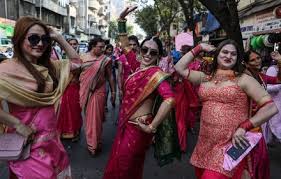
Navi Mumbai: Nerul police booked three miscreant transgenders for performing an obscene dance after stopping vehicles at a traffic signal under the Nerul flyover on the Sion-Panvel highway on Tuesday morning. Nerul police said that the accused transgender persons were detained and escorted to the police station, where an FIR was registered against them under Bharatiya Nyaya Sanhita (BNS) section 296 for performing obscene acts in public places or singing/reciting obscene songs, ballads, or words in or near public places, if done to the annoyance of others, along with Section 3(5) for common intention. The accused were released after being served notice under Bharatiya Nagrik Suraksha Sanhita (BNSS) section 35(3), directing them to appear for questioning whenever summoned for inquiry. A police officer said that yet another offence under the Maharashtra Police Act was registered against four other transgender persons a couple of days ago for creating a nuisance at a traffic signal in Nerul. Legal action is being taken after several verbal complaints against the transgender persons deliberately blocking the way of vehicles for seeking alms and causing inconvenience and annoyance to motorists. Courtesy : TOI Note: This news is originally published on https:/timesofindia.com/bha and is used purely for non-profit/non-commercial purposes, especially human rights
PCMC’s new welfare scheme to help transgender train for driving jobs
Pune: The Pimpri Chinchwad Municipal Corporation (PCMC) on Tuesday approved a new welfare scheme to train the city’s transgender community to drive. The initiative, approved during the standing committee meeting, aims to create employment opportunities in civic hospitals and other PCMC establishments. A senior PCMC official stated that the scheme willempower transgender residents to get jobs as drivers. PCMC, in 2022, became the first municipal corporation in Maharashtra to employ transgender people. At present, around 150 transgender individuals work on a contractual basis across various civic departments. They serve as security guards, marshals in civic gardens, and assist in property tax recovery. “Some have also been placed in private firms through collaborations with TATA and Lighthouse Communication,” the official said. Mamata Shinde, deputy municipal commissioner and head of PCMC’s social development department, said the proposal to launch the scheme was finalised after community representatives requested targeted skill development and employment initiatives, as they faced difficulties finding jobs. “Training will be provided to drive three- and four-wheeler vehicles. We are considering their employment in civic hospitals and schools,” she said. Shinde said Rs 25 lakh allocated under ‘Other Welfare Schemes’, which have remained unutilised every year, will be diverted to this initiative. “Many members of the community do not have any documents, such as an Aadhaar card, so the civic body will soonorganise a drive to help them obtain it,” she added. Courtesy : TOI Note: This news is originally published on https:/timesofindia.com/bha and is used purely for non-profit/non-commercial purposes, especially human rights
Vermont Christian school wins court battle over transgender athlete ban: Here’s why it matters for religious freedom

A federal appeals court has ruled in favour of a Vermont Christian school that was previously banned from participating in the state’s sports league after it forfeited a basketball game against a team with a transgender player. The ruling reinstates Mid Vermont Christian School into the Vermont Principals’ Association (VPA), the governing body for school sports in the state. In a decision issued by the US Court of Appeals for the Second Circuit on September 9, the court granted the school a preliminary injunction, allowing it to rejoin the VPA while the case continues. The court stated that the school was likely to succeed in its claim that its removal from the sports league was based on religious discrimination, as reported by the Associated Press. Forfeited game leads to expulsion from state league The incident began in 2023 when Mid Vermont Christian School, based in Quechee, forfeited a high school girls’ basketball playoff game. School officials stated that the presence of a transgender player on the opposing team compromised “the fairness of the game and the safety of our players,” as reported by the Associated Press. Following the forfeiture, the VPA expelled the school from all state-sponsored athletic and co-curricular activities, including academic competitions such as debate tournaments and science fairs. The VPA cited its policies regarding race, gender, and disability awareness, stating that the school had violated its principles. Legal case filed by Alliance Defending FreedomIn response to the expulsion, Alliance Defending Freedom (ADF), a conservative legal group, filed a lawsuit on behalf of Mid Vermont Christian School, some students, and parents. The case argued that the school’s First Amendment rights had been violated. According to ADF, the school had participated in the state’s sports league for nearly 30 years and only chose to forfeit the game to avoid breaching its religious beliefs, as reported by the Associated Press. David Cortman, an attorney with ADF, said in a statement that “the government cannot punish religious schools — and the families they serve — by permanently kicking them out of state-sponsored sports simply because the state disagrees with their religious beliefs,” as quoted by the Associated Press. Appeals court finds expulsion not religiously neutral In its ruling, the US Court of Appeals for the Second Circuit found that the VPA’s decision to expel the school was not neutral toward religion. The court wrote, “We conclude that plaintiffs are likely to succeed in showing that the VPA’s expulsion of Mid Vermont was not neutral because it displayed hostility toward the school’s religious beliefs,” as quoted by the Associated Press. The preliminary injunction means that Mid Vermont Christian School can resume participation in state-sanctioned sports and other activities while the case proceeds in court. The final outcome of the legal challenge is still pending. Emails seeking comment were sent to both Mid Vermont Christian School and the Vermont Principals’ Association, as reported by the Associated Press. Neither party has publicly responded to the court’s ruling. Courtesy : TOI Note: This news is originally published on https:/timesofindia.com/bha and is used purely for non-profit/non-commercial purposes, especially human rights
Controversial past of Team USA transgender cyclist uncovered after twisted celebration of Charlie Kirk’s assassination

Chelsea Wolfe, a transgender BMX freestyle rider from Florida, is facing huge backlash after celebrating the murder of Charlie Kirk. On September 10, 2025, Charlie Kirk, the 31-year-old conservative activist, was shot and killed while giving a speech at Utah Valley University in Orem, Utah. Soon after the news broke, Chelsea Wolfe, who was an alternate rider for Team USA at the Tokyo 2021 Olympics, shared several Instagram stories. One post showed a USA Today headline on Kirk’s death with a cartoon image of Dora the Explorer and the words, “We did it!” She also shared a selfie giving a thumbs up and called Kirk a “Nazi.” Team USA cyclist Chelsea Wolfe faces backlash over posts on Charlie Kirk’s death Chelsea Wolfe’s reaction shocked many across the country. In one post, she wrote: “Being a Nazi is completely optional btw. He didn’t have to do all that, but he did and now he’s dead. Don’t live your life in a way that the world is better following your death.” In another story, she compared Kirk again to a Nazi, saying: “We hate Nazis because they want us dead.” Controversial past of Team USA transgender cyclist uncovered after twisted celebration of Charlie Kirk’s assassination The posts drew swift attention. Sports figures, activists, and fans called her words “sickening” and “violent.” USA Cycling released a statement on September 12, 2025, making clear that Wolfe no longer represents them. — jackthompsonfox (@jackthompsonfox Jennifer Sey, founder of XX-XY Athletics, told the Daily Mail it was not surprising to see Wolfe celebrate Kirk’s assassination. She said Wolfe has a long history of calling opponents “Nazis” and pushing dangerous rhetoric. Who is Chelsea Wolfe: Past controversies, clashes with US cycling and Olympic journey Chelsea Wolfe, born May 5, 1993, in Lake Park, Florida, started BMX at the age of six and later transitioned as a teenager. She made history in June 2021 by qualifying as the first openly transgender athlete for Team USA at the Tokyo Olympics, where she was listed as an alternate in women’s BMX freestyle. But Wolfe has long courted controversy. Back in 2021, she wrote on Facebook: “My goal is to win the Olympics so I can burn a US flag on the podium.” In interviews with Fox News, she later said she did not hate the country but wanted to stand against “fascism.” Also Read: Andre Agassi And Steffi Graf’s Son Jaden Agassi Shares Unseen Photos With Catherine Holt As Couple Celebrates Love Her BMX career ended in July 2023 when the Union Cycliste Internationale (UCI) banned transgender women from competing in women’s events. Chelsea Wolfe admitted the rule change left her heartbroken and said she was on “suicide watch” during that time. She has since moved into fixed-gear cycling, where protests have continued against her inclusion in women’s races. Courtesy : TOI Note: This news is originally published on https:/timesofindia.com/bha and is used purely for non-profit/non-commercial purposes, especially human rights
Is French President Emmanuel Macron’s wife Brigitte male? Know transgender controversy in detail

French President Emmanuel Macron and his wife, Brigitte Macron, have agreed to present the evidence of the first lady’s gender. Details here. French President Emmanuel Macron is facing a bizarre predicament. Should he prove or should he not that his wife Brigitte is a woman? The controversy erupted in 2017 when blogger Natacha Rey, or Nathalie Rey, in a YouTube video, claimed that Brigitte Macron was in fact her brother, Jean-Michel Trogneux, who had changed his gender and name. She provided his evidence as a childhood picture of Brigitte’s brother that looked similar to the First Lady. Emmanuel Macron sues Natacha Rey Emmanuel Macron and his wife sued the blogger for defamation, who was found guilty in September 2024. However, the Paris Court of Appeal overturned the verdict in July 2025 because the allegations were made in “good faith” and did not constitute defamation. Right-wing influencer Candace Owens repeated the allegation in 2024 and claimed that she would stake her “entire professional reputation” on the allegation. Why is Brigitte Macron upset? Participating in the BBC’s Fame Under Fire podcast, the Macrons’ lawyer, Tom Clare, said the first lady had found the claims “incredibly upsetting” and they were a “distraction” to the French president. He said, “I don’t want to suggest that it somehow has thrown him off his game. But just like anybody who is juggling a career and a family life as well, when your family is under attack, it wears on you. And he’s not immune from that because he’s the president of a country.” The lawyer said there would be “expert testimony that will come out that will be scientific in nature.” Though he did not specify the exact nature, he said the couple was prepared to demonstrate fully “both generically and specifically” that the allegations are false. A former school teacher, Brigitte Mare Claude Macron, first married Andre-Louis Auziere in 1974. She fell in love with her student Emmanuel Macron and married him in 2007 after divorcing her husband in 2006. She has three children: Tiphaine Auziere, Sebastien Auziere, and Laurence Auziere-Jourdan. Courtesy : DNA Note: This news is originally published on https:/dna.com/bha and is used purely for non-profit/non-commercial purposes, especially human rights
Faridabad News: Transgender community participates in Swachhata Hi Seva program
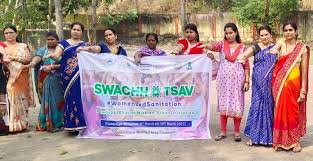
Faridabad. Under Seva Pakhwada-2025, the Zila Parishad organized a special Swachhata Pakhwada program. The primary objective of this program was to raise awareness about the importance of cleanliness in the community and to take concrete steps towards environmental protection. The active presence of transgender self-help groups and the transgender community not only enhanced the program’s prestige but also sent a powerful message of unity, inclusion, and cooperation in society. The program began by highlighting the importance of the Swachhata Abhiyan. Speakers emphasized that cleanliness is not just an individual habit, but a collective responsibility. A clean and healthy environment is difficult to imagine unless every segment of society actively participates. The presence of children, youth, women, senior citizens, as well as the transgender community, on this occasion conveyed the message that the Swachhata Abhiyan is for everyone, and everyone has an equal role to play. Courtesy: Hindi News
Why LGBTQIA+ community is battling India’s blanket ban on blood donation

Activists condemn exclusion of transgender women and gay men from donating blood, calling it unscientific, discriminatory, and out of step with global standards Despite strides in transgender and gay rights, India has latched on to a rather archaic and discriminatory policy, stemming from a fearful mindset, when it comes to the rights of homosexuals and transgender individuals in donating blood. Activists, medical experts, and members of the LGBTQIA+ community, who echo these sentiments, have slammed the Centre’s recent decision refusing to alter a long-standing ban on blood donation by transgender women and gay men. They say the ban is discriminatory, unscientific, and ignores advances in blood screening technology that make transfusions over 99 per cent safe. The government’s order has come even though the Supreme Court, in May this year, while hearing a petition on the matter, asked whether an entire identity group needs to be stigmatised when medical science has advanced to screen blood for infection. The issue in short ♦ India upholds blood donation ban on trans women, gay men ♦ Supreme Court questions rationale behind identity-based exclusions ♦ Activists call policy outdated, discriminatory, and unscientific ♦ Global shift favours behaviour-based screening over blanket bans ♦ Experts say modern tests ensure over 99% blood safety ♦ Queer community urges inclusive reforms, cites systemic healthcare bias “Why should an entire community be deemed unsafe when modern medical science can effectively screen blood for infection? This discourages willing donors and denies life-saving blood. Such prejudice is appalling,” Ujan, a transwoman from West Bengal, told The Federal. What does the law say? Clauses 12 and 51 under the Guidelines on Blood Donor Selection and Referral tag transgender individuals, homosexual and bisexual men, and female sex workers as “high-risk” groups and bar them from donating blood irrespective of their lifestyle, health conditions, or sexual practices. The guidelines were drafted in 2017 by the National Blood Transfusion Council (NBTC) and the National AIDS Control Organisation as a precaution during a time of declining HIV/AIDS incidence. It, however, continues to exclude entire communities without scientific justification, say activists. Santa Khurai, a transgender activist from Manipur, founder of the community organisation AMANA, and a petitioner in a 2021 case challenging this policy, noted, “The Supreme Court of India questioned the government’s stigmatising response to our petition in May 2025.” It was Khurai’s petition that the Supreme Court had referred to while posing the question to the Centre in May this year. Status in other countries Activists say the continuation of the ban in India is unfortunate, even though many countries, including the US, the UK, Canada, Brazil, and Australia, have replaced such blanket bans with behaviour-based risk assessments. “The US Public Health Service initially implemented a lifetime ban on men who have sex with men (MSM) donating blood in 1983, in response to the emerging HIV/AIDS epidemic. However, in 2023, the US Food and Drug Administration revised these guidelines to adopt a gender-inclusive, behaviour-based screening process,” Naveenraj, a queer activist and trainer based in Tamil Nadu, told The Federal. He emphasised that this modern approach prioritises individual risk factors over blanket bans based on sexual orientation or gender identity. Many countries, including Brazil, the UK, Canada, Australia, France, Spain, Italy, Argentina, and Chile, have already scrapped such discriminatory policies. Brazil’s Supreme Federal Court, for instance, ruled the ban unconstitutional and highlighted the efficiency of modern blood screening technologies. “India’s Supreme Court should similarly lift the ban, in keeping with its commitment to equality, dignity, and inclusion,” Naveenraj added. ‘Flawed science guides policy’ Medical professionals are also calling out the “flawed science” underpinning the policy. Umang, an undergraduate medical student in Pune, remarked, “Heterosexual and homosexual individuals can both transmit HIV. It’s practically impossible to determine someone’s sexual orientation during blood donation. With current methods, HIV detection in India is over 99.5 per cent accurate, so targeting MSMs is not about safety—it’s about exclusion.” This sense of injustice resonates deeply within the queer community. “Whether or not it’s a fundamental right, denying a minority group the chance to donate blood is dehumanising. India must take progressive steps, like the EU, Canada, and Australia, where donor eligibility is assessed based on behaviour, not identity,” Srini, a volunteer with Good As You, a Bengaluru-based queer support group, told The Federal Echoing this sentiment, Jayant Iyer, founder of Queer Nilayam in Bengaluru, called the government’s continued enforcement of the ban “disappointing, outdated, discriminatory, and unscientific.” He shared personal frustration: “I’ve been denied the chance to donate blood multiple times despite being healthy and willing. Even during shortages, prejudice trumps science and compassion.” ‘Structural transphobia’ For many, the policy reflects broader systemic bias. “Can the Indian government ban cisgender heterosexual people based on their gender or sexuality?” asked Rudrani Rajkumari, a transgender activist and founder of Xomonnoy in Guwahati. “This is not about protection; it’s about discrimination. Rather than investing in quality testing, the system excludes LGBTQIA+ people from saving lives.” From a global perspective, the issue strikes a chord with transgender communities elsewhere. “The Indian government’s stance wrongly associates LGBTQI+ identities with risk,” said Mandy Jovial, a South Africa-based transgender activist. “This is more than a blood ban—it’s structural transphobia. Fortunately, in South Africa, policies aren’t based on sexual orientation or gender identity, even though stigma persists.” What India needs Even within India, trans individuals raise questions about the logic of such exclusion. Vaidehi, a trans woman from Mysuru, asked, “How would anyone know someone’s SOGIESC [sexual orientation, gender identity and expression, and sex characteristics] unless disclosed? Assuming trans or homosexual persons have HIV is discriminatory. Anyone can have HIV. Besides, trans persons on hormone replacement therapy should consult a doctor before donating, but that’s a medical concern— not a reason to ban an entire community.” Medical experts agree that the government’s approach is flawed and misleading. “One data point doesn’t scientifically justify a ban,” said Dr Swathi SB, a public health practitioner and HIV physician in Karnataka. “Equating identity with sexual behaviour is dangerously reductionist. We need
Supreme Court adjourns plea on horizontal reservation for transgender doctors in NEET-PG admissions
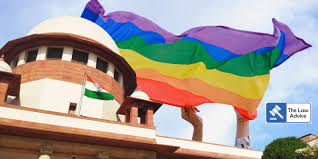
The plea contends that the absence of horizontal reservation contravenes the Supreme Court’s NALSA ruling, which mandated affirmative action for transgender persons in education and public employment The Supreme Court on Thursday (September 18, 2025) adjourned till next week the hearing of a plea by three transgender doctors seeking implementation of one per cent horizontal reservation for transgender candidates in postgraduate medical admissions under NEET-PG 2025–26. The examination was held on August 3, and the results were declared on August 19. Senior advocate Indira Jaising, appearing for the petitioners, urged a Bench of Chief Justice of India (CJI) B.R. Gavai and Justice K. Vinod Chandran to pass an “innocuous order” earmarking two seats under the all India quota and two under the State quota for transgender candidates. The Chief Justice said such a direction could create uncertainty in the admission process. “We cannot keep seats everywhere in limbo. You are asking for two seats in the all India quota, two in the State quota,” he remarked. The Bench also noted the submission of the National Medical Commission counsel that counselling had not yet begun for the postgraduate medical courses and that no immediate urgency warranted such an order. “Counselling has not started. We will keep this matter for next week high on board,” the CJI said. The plea relies on the Supreme Court’s 2014 landmark ruling in NALSA v. Union of India, which recognised transgender persons as a “third gender” and mandated their inclusion through affirmative action in education and public employment. During the proceedings, Ms. Jaising informed the court that petitioner Kiran A.R. had withdrawn from the case and that only petitioners 2 and 3, from the OBC and general categories respectively, would continue with the plea. Appearing for the Union government and medical authorities, Additional Solicitor General Archana Pathak Dave submitted that Solicitor General Tushar Mehta wished to personally address the broader issue of reservation for transgender persons. The Bench then posted the matter for hearing on September 23. The top court had earlier observed that if there was a judicial direction mandating a quota for transgender persons, it ought to be implemented. Addressing the Solicitor General, the Chief Justice had remarked, “If the 2014 judgment requires reservation to be provided, you have to comply. Why don’t you implement it within the 15% quota?” Notably, 85% of seats in government medical colleges are reserved under the State quota, while the remaining 15% fall within the all India quota. Affirmative action The petitioners have also challenged the April 16 notice and April 17 information bulletin issued by the National Board of Examinations in Medical Sciences, contending that the omission of such a quota contravenes the court’s 2014 ruling, which mandated affirmative action and reasonable accommodation for transgender persons in education and public employment. “As a result of the impugned notice, the petitioners are left with a right without remedy, whereby there are now no reservations for transgender persons in postgraduate medical education despite the binding declaration of the law by this court,” said the plea, filed through advocate Paras Nath Singh. The plea argued that in the absence of horizontal reservation, transgender students would be deprived of equal opportunity, as no specific reservation is currently extended to them to ensure representation in postgraduate medical education, despite the community facing entrenched social barriers. It added that the 2014 verdict had recognised the fundamental rights of transgender persons under the Constitution, including the right to self-determination of gender identity. In March 2023, a Supreme Court Bench led by then Chief Justice D.Y. Chandrachud had refused to entertain an application seeking clarification on whether the NALSA judgment mandated horizontal reservation. Aaratrika Bhaumik Courtesy : The Hindu Note: This news is originally published on https:/thehindu.com/bha and is used purely for non-profit/non-commercial purposes, especially human rights
MU syndicate proposes PhD in Tulu, opportunities for transgender candidates

Mangaluru: The Mangalore University (MU) syndicate has proposed introducing PhD in the Tulu language and providing opportunities for transgender individuals to pursue doctoral studies. Additionally, the syndicate resolved to appoint eligible lecturers as PhD guides in several colleges under the university’s jurisdiction. These proposals were discussed during the past syndicate meetings and are currently awaiting a detailed response from the university. Raghuraj, a syndicate member who tabled the agenda on three proposals, told TOI that although MU is located in a region where Tulu is widely spoken and celebrated, there are limited academic research opportunities available at the university. He observed that the Tulu MA programme has only a limited number of students. “The proposal for a PhD is aimed at enabling those interested in research to pursue it, which will also benefit the growth of the local language. We have urged Mangalore University to introduce a PhD in Tulu, and officials have been asked to clarify whether this can be implemented under the statutes,” Raghuraj said. The second proposal calls for allowing members of the transgender community to pursue PhDs. “Education is the right of every individual, including transgender community. I have suggested that interested candidates from the community be given the opportunity to enrol in PhD programmes, based on their academic eligibility. The university statutes also provide scope to facilitate this,” he added. MU’s campus in Konaje is recognised as a postgraduate and research centre. However, with the majority of senior professors retiring, the campus lacks sufficient PhD guides. This shortage has deprived many PhD aspirants of opportunities. “With the help of the university, we are trying to reach out to experienced faculty from aided and private institutions and are also considering allowing eligible institutions to become research centres to guide PhD aspirants,” Raghuraj pointed out. Courtesy : TOI Note: This news is originally published on https:/timesofindia.com/bha and is used purely for non-profit/non-commercial purposes, especially human rights