
Transgender women wreak havoc on police in Kanpur, stripped naked and beaten, kicked in the chest; case filed after video goes viral
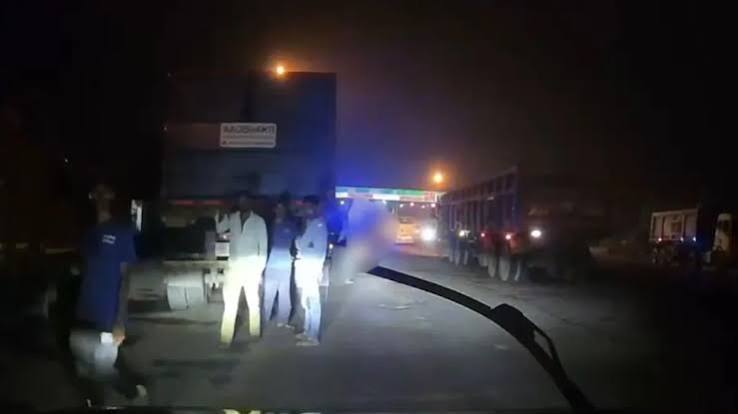
A video is rapidly going viral on social media, showing some transgender people assaulting a policeman. Based on the complaint of the victim, a case has been filed against the accused. A video of a policeman being assaulted in Kanpur, Uttar Pradesh, is rapidly going viral on social media. The video shows some transgender people assaulting a policeman. The incident caused a stir within the police department. Taking cognizance of the matter, the police have initiated action. Based on the complaint filed by the policeman, a case has been filed against the accused. The matter came to light through a viral video A video circulating on social media shows a dispute between a policeman and transgender people. As the situation escalated, scenes of transgender people assaulting the policeman have emerged. The video clearly shows transgender people arguing, then stripping naked and assaulting a police officer. Meanwhile, a transgender person is seen kicking the police officer in the chest. After the video went viral, the incident sparked widespread public discussion. However, the details of what sparked the dispute and the circumstances that led to the altercation will only be clear after a police investigation. Case Registered Based on a Report After the video surfaced, the police took the matter seriously and obtained a written complaint from the police officer involved. Based on this, a charge has been registered against the accused under relevant sections. The police are now taking further legal action in the matter, investigating the facts and circumstances surrounding the incident. ACP stated: Legal action underway Assistant Police Commissioner Ghatampur Krishnakant stated that cognizance has been taken of the video viral on social media. A case has been registered based on the written complaint submitted by the police officer concerned. Further legal action is underway in the matter as per the law. Report by Anurag Srivastava, correspondent from Kanpur Courtesy: Hindi News
Mission Uttar Pradesh: BJP is targeting Dalit votes with BSP’s cultural strategy
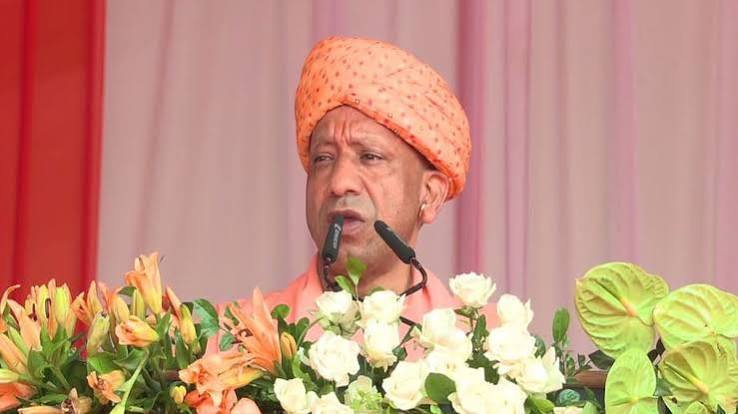
Chief Minister Yogi Adityanath has announced grand celebrations for Valmiki’s birth anniversary. The Valmikis, a major section of Dalits, claim descent from Maharshi Valmiki. Concentrated in towns and cities, they have produced an educated class and their goodwill towards BJP appears to be growing The Bahujan Samaj Party (BSP), founded by Kanshi Ram, once commanded a vast Dalit base across India, above all in Uttar Pradesh (UP). That base carried it to power in Lucknow. Mayawati, its leader, has been chief minister four times, and in 2007 she won the Assembly election outright, emerging as the single dominant force in UP politics. Over the last few elections, however, BSP’s vote share has declined steadily and the party has suffered heavy defeats. It now faces the most critical moment in its history, with no representation in either Lok Sabha or the UP Assembly. Kanshi Ram’s strategic vision had stitched together a broad Bahujan social coalition: Dalits, non-Yadav Other Backward Classes , the lower strata of Muslims and, later, Brahmins. Gradually, each of these groups grew disillusioned, and many deserted the party. Dalits, who make up roughly 21.6 per cent of UP’s population, were its core vote for decades. Among them, the Jatavs, Pasis, Koris, Sonkars, Valmikis and others became the strongest pillars of support. Kanshi Ram and Mayawati mobilised these communities through three strategies: first, a sense of dignity, by giving prominence to their identity, history, icons and heroes; second, an aspiration to a rightful share in development and politics; and third, a dream of a better future. Together, they delivered a huge Dalit vote to BSP. After 2012, though, the party’s electoral base visibly fragmented. BSP lost the Assembly election that year and today has no seat in Lok Sabha or the state Assembly, with the party’s sole MLA, Umashankar Singh, dying on August 5, 2026. Field studies suggest that, among Dalits, the party has retained its base among the Jatavs, although a section of them, too, has deserted it for various reasons. Dalit voters, then, stand at a political crossroads. Where once they had a single party, they now seek multiple choices. The most notable shift is towards the Bharatiya Janata Party (BJP), and for two reasons. First, the welfare schemes led by Prime Minister Narendra Modi, the Garib Kalyan Yojanas, have drawn Dalit and other marginalised communities to BJP. Second, the cultural politics through which BSP once mobilised Dalits has been largely appropriated by BJP strategists and reinvented. Its central plank was the forging of identity and the enhancement of dignity by celebrating Dalit cultures, histories and heroes and by honouring their saints, gurus and icons. Mayawati repeatedly said that one of the Bahujan regime’s chief achievements was the respect it accorded to these figures. BJP appears to be reinventing the same strategy with the coming Assembly election in view. Mayawati renamed Bhadohi as Sant Ravidas Nagar during an earlier tenure in 1997, honouring the revered saint worshipped widely among Dalits, especially Jatavs. Akhilesh Yadav restored the old name in 2014 after the Samajwadi Party (SP) took power in 2012. In July, Chief Minister Yogi Adityanath declared that the district would again be Sant Ravidas Nagar Bhadohi, winning goodwill among Dalits, most of whom in rural UP follow the Ravidas tradition. Adityanath has also announced grand celebrations for Valmiki’s birth anniversary. Sweepers and the Valmiki community, a major section of Dalits, claim descent from Maharshi Valmiki. Concentrated in towns and cities, they have produced an educated political class, and goodwill towards BJP appears to be growing among them. BJP, thus, is courting Dalits and marginalised groups through symbolic and substantive means. Cultural strategies BSP pioneered decades ago are now being deployed by BJP, alongside the economic benefits of its welfare schemes. Taken together, the two approaches may well draw Dalit voters towards BJP in the 2027 UP Assembly election. Badri Narayan (Badri Narayan is vice chancellor, Tata Institute of Social Sciences, Mumbai and the author of Republic of Hindutva) Courtesy : Open Magazine Note: This news is originally published on https:/openmagazine.com/bha and is used purely for non-profit/non-commercial purposes, especially human rights
Akhilesh Yadav questions Amit Shah over crimes against women, Dalits in U.P.
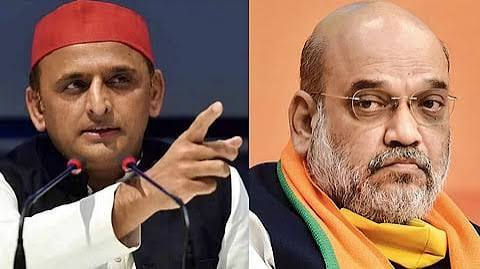
Home Minister should look into why women face so much injustice in Uttar Pradesh, why the state witnesses so many murders and why people from the Dalit community are among the worst affected, Akhilesh Yadav said Samajwadi Party president Akhilesh Yadav on Saturday (October 31, 2026) questioned Union Home Minister Amit Shah over crimes against women and Dalits in Uttar Pradesh, while party MP Awadhesh Prasad said the BJP had lost ground in the state, citing its recent electoral setbacks. “Home Minister should look into why women face so much injustice in Uttar Pradesh, why the state witnesses so many murders and why people from the Dalit community are among the worst affected,” Mr. Yadav said. Uniform Civil Code in U.P. if BJP voted to power again: Amit Shah Reacting to Mr. Shah’s assertion that the BJP government in Uttar Pradesh was firmly established and could not be dislodged, Mr. Prasad said the party’s political footing had already weakened. Mr. Shah had on Friday (October 30) compared the BJP government’s position in the state to “Angad’s foot”, saying nobody could move it, and expressed confidence that the party would return to power. “The foot has already been uprooted,” Mr. Prasad told PTI Videos. He said the BJP had failed to retain several seats in the recent Uttar Pradesh Legislative Council elections despite making every effort. He cited the party’s defeats in Varanasi, from where Prime Minister Narendra Modi has been elected, as well as in Lucknow and Agra. He also referred to its defeat in Prayagraj, a prominent educational centre. He also cited the 2024 Lok Sabha elections, saying the BJP had failed to achieve its target of winning all 80 seats in Uttar Pradesh. No government jobs in Uttar Pradesh for protesters ‘involved in regime change through violence’ “Under Akhilesh Yadav’s leadership, the Samajwadi Party won 37 seats, while the Congress won six. The opposition INDIA bloc secured 43 of the state’s 80 seats,” he said. Mr. Shah had announced on Friday (October 30) that the BJP would implement the Uniform Civil Code (UCC) in Uttar Pradesh if voted to power again. He had also targeted the SP leadership over the Ram temple issue, referring to the police firing on kar sevaks in Ayodhya on October 30, 1990, and saying the SP had ordered firing on Ram devotees while the BJP had built the Ram temple. Courtesy : The Hindu Note: This news is originally published on https:/thehindu.com/bha and is used purely for non-profit/non-commercial purposes, especially human rights
Opinion | Dalit Vote In Uttar Pradesh: From BSP Monopoly To A Three-Way Fight
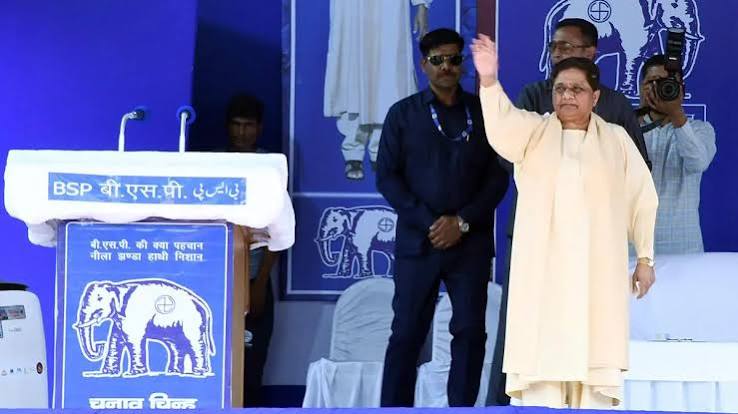
As the 2027 election approaches, Dalits, who make up about one in five voters, could decide who governs India’s most populous state. Uttar Pradesh’s politics has long run on caste arithmetic, and no bloc has been more consequential or more contested in recent years than the Dalits. Scheduled Castes (SCs) account for about 21% of the state’s population. For decades, they were seen as the private preserve of Mayawati’s Bahujan Samaj Party (BSP). That is no longer true. Ahead of the 2027 assembly election, the BJP, the Samajwadi Party (SP)-Congress alliance, and newer outfits like Azad Samaj Party are all courting Dalit voters, and their outcome could shape the next government. A vote that reaches far The Dalit population is not evenly spread. Kaushambi, Sitapur, Hardoi, Rae Bareli, and Unnao districts each have SC populations above 30%. At the other end, Shamli, Baghpat, Moradabad, Bareilly, and Balrampur districts sit between 11% and 13%. Eight assembly seats have an SC population above 40%, while 144 seats have less than 10%. It matters most in the 122 seats where SCs make up 20-30% of the population. Across 148 of the state’s 403 seats, the Dalit share exceeds the state average, and these are the seats where the community can most influence the result. Latest and Breaking News on NDTV Two communities, not one The Dalit electorate is not monolithic. Jatavs, about 12% of voters, are the BSP’s traditional core. Non-Jatav SCs, about 9%, are a more fragmented group, and the BSP was never as dominant among them. Its support there ran between 44% and 54% through 2017. Jatavs stayed loyal for two decades. BSP support in the community ranged from 60% to 87%, and it held firm even in 2022, when the party won a single seat. The break came only in 2024, when the BSP’s Jatav share fell to 44%. Non-Jatavs moved first The non-Jatavs left first. The BJP’s share among them jumped from 7% to 33% in 2017, a gain of 26 points, and reached 40% in 2022. This “non-Jatav SC consolidation” was central to the party’s 2017 sweep. The BJP exploited the differences between the two Dalit groups and built a coalition of upper castes, non-Yadav OBCs, and non-Jatav SCs that accounted for roughly 60% of the population. Meanwhile, the BSP’s non-Jatav support fell to 27% in 2022 and 15% in 2024. The BJP’s Jatav numbers stayed in single digits until 2017, then rose to 20% in 2022 and 24% in 2024. 2024: the reversal The 2024 general election broke the pattern. Non-Jatav SC support for the SP and its ally, the Congress, together constituents of the “INDIA bloc”, rose from 23% in 2022 to 56%. The BJP’s share among non-Jatavs dropped from 40% to 29%. The presence of the Congress in the alliance helped, as did the campaign warning that the Constitution and reservations were in danger. Latest and Breaking News on NDTV Jatavs moved too. Their support for the SP+ nearly tripled from 9% to 25%, matching the BJP among the community for the first time. The BSP’s lost votes did not go to one place. Non-Jatavs went mostly to the SP+, while Jatavs split between the SP+ and the BJP. The loss of the non-Jatav bloc cost the BJP a crucial 9% support gained by the SP+. Projected onto assembly segments, the SP+ led in about 225 seats and the BJP+ in 174, against a simple majority mark of 202 largely on account of this movement. The seat-level story The shifts show up clearly in the 148 seats with above-average Dalit populations: 2012: The SP dominated with 91 seats, the BSP had 34 and the BJP just 8. 2017: The BJP won 118 of the 148, and the SP fell to 14. 2022: The BJP held 93, the SP recovered to 43 and the BSP won none. 2024 (assembly segments): The SP+ led in about 94 segments, a gain of 51, while the BJP led in 44, a loss of 49. The BSP has gone from 34 seats in these constituencies to zero. Even where its base is most concentrated, it is no longer the force it was, and it may not even play spoiler. A weakened Mayawati, a growing challenger The BSP’s decline has hurt the party’s standing beyond arithmetic. Mayawati is seen as less active and less forceful than in her prime, and the “B-team of the BJP” label has stuck to her, feeding the perception that the BSP splits opposition votes to the ruling party’s benefit. New players are trying to fill the space. Chandrashekhar Azad “Ravan” of the Azad Samaj Party (ASP) is gaining some traction among Dalit youth, having won the Nagina Lok Sabha seat, though his party’s reach is still limited. Aakash Anand, Mayawati’s nephew, who was reappointed as national coordinator on October 5, just 25 days after being expelled on September 10, is trying to revive the BSP vote base. The parties’ strategies Each major party is tailoring its pitch. The SP is planning to field SC candidates even in general, unreserved seats. The tactic worked in 2024, when the party won Faizabad (Ayodhya) with a Dalit candidate. It is also reportedly adopting blue, the colour associated with Dalit identity and Ambedkarite politics, for the dress of its student wing, the Samajwadi Chhatra Sabha. The BJP faces a more delicate task. It hopes to win back non-Jatavs through welfare schemes and to attract Jatavs through political representation. Having built its rise on non-Jatav support, it cannot afford to lose that base for good. The BSP is attempting to revive its SC votebank through Aakash, who is decently popular amongst youth and is Mayawati’s counter to Ravan. He addressed his first post-reinstatement public rally in Bulandshahr on October 28, pledging his loyalty to Mayawati and urging workers to prepare for the elections. Who benefits from the BSP’s fall? The BSP’s decline has so far helped the SP more than the BJP, in both 2022 and 2024. That matters for
Man gets life term for raping Dalit minor during 2020 Covid lockdown
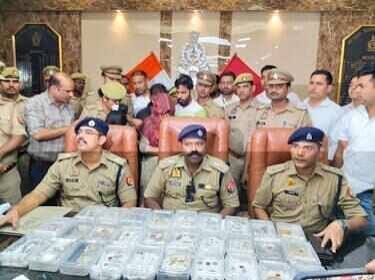
Bulandshahr: A Pocso court in UP’s Bulandshahr has sentenced a 24-year-old man to life imprisonment and Rs 30,000 fine for kidnapping and raping a 14-year-old Dalit girl during the Covid lockdown in 2020. The girl was burnt to death about four months after the crime. On the afternoon of Aug 14, 2020, the girl went to an orchard and when she did not return by evening, her family and villagers looked for her through the night. She was found in a cane field nearby, in an unconscious state the next evening. The girl later told her family how she was abducted, forcibly sedated and assaulted. The accused was held and an FIR was registered under IPC 363 (kidnapping), 376 (rape), 342 (wrongful confinement) along with Pocso and SC/ST acts. Special public prosecutor Bharat Sharma said, “Girl had initially testified before court. She was burnt alive a few months later. Two men were convicted in a separate murder case. The trial in the rape case continued on the basis of her father’s testimony, police investigation, medical reports and other evidence.” Pronouncing the verdict Wednesday, the additional sessions judge Shagun Panwar described the crime against the minor as “heinous” and stressed the need for strict punishment. It also ordered that 50% of the fine be paid to her dependents. Courtesy : TOI Note: This news is originally published on https:/timesofindia.com/bha and is used purely for non-profit/non-commercial purposes, especially human rights
UP Elections 2027: BSP’s focus will be on employment and reservation
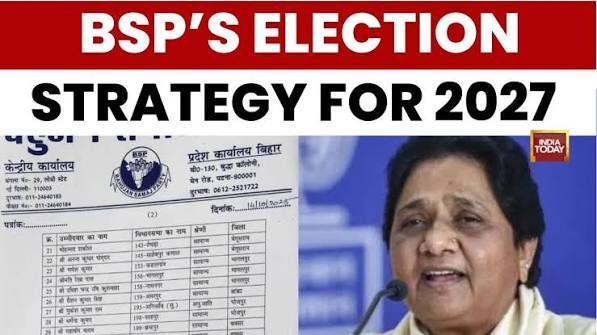
Ahead of the 2027 UP Assembly elections, the BSP has prepared to make Dalit self-respect, reservation, and employment its primary issues. Akash Anand is actively involved in the campaign to connect with the youth. Lucknow. In view of the 2027 Uttar Pradesh Assembly elections, the Bahujan Samaj Party (BSP) has intensified its political activities. The party is preparing to contest the elections by focusing on issues such as Dalit self-respect, reservation, and employment. Through this, the BSP aims to reunify its traditional Dalit voters and strengthen its hold among the youth. Akash Anand has been fielded for this purpose. The BSP’s strategy was launched by the party’s National Convenor, Akash Anand, with a workers’ conference held in Bulandshahr’s Anupshahr Assembly constituency. Starting October 28th, Akash Anand launched the party’s campaign with meetings in Bulandshahr. Issues of Dalit self-respect and reservation are being given prominence in the party’s strategy. Additionally, efforts are being made to engage youth by raising the issue of employment. The party is particularly targeting Gen-G (young voters). At the same time, efforts to engage Jat and Gurjar voters in western Uttar Pradesh are also part of the BSP’s strategy. Candidate Selection Based on Caste Equations The BSP is also considering caste-based factors when selecting candidates for the upcoming assembly elections. According to party sources, BSP chief Mayawati is reviewing the names of potential candidates for key constituencies and their winning prospects. Raj Kumar Courtesy: Hindi News
Dalit Man Allegedly Killed by Wife’s Family in UP’s Muzaffarnagar Over Inter-Caste Marriage
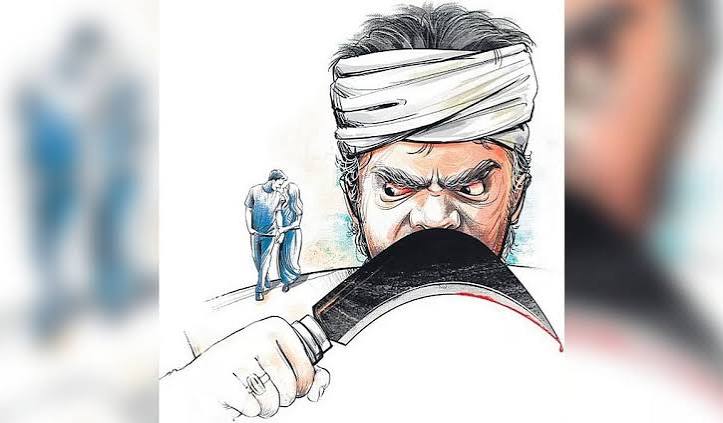
A 23-year-old Dalit man was allegedly beaten to death with bricks in Uttar Pradesh’s Muzaffarnagar, more than a year after he eloped with and married a woman against her family’s wishes. ExploreDiversity Akshay and his 20-year-old wife, Ridhima, had been living in Noida since their marriage. Akshay returned to Muzaffarnagar on Monday and was attacked that evening. He died in hospital on Tuesday. Police arrested two people on Wednesday in connection with the killing, including Ridhima’s elder brother, Vasu, said Dinesh Baghel, Station House Officer of Khatauli police station. Police suspect the murder was premeditated and are investigating whether several people were involved in planning the attack. Police Suspect Akshay’s Movements Were Shared With Attackers According to police, Akshay, a resident of Biharipur village, returned to Muzaffarnagar on Monday morning. Later that evening, he left home on his motorcycle with a man identified as Akash, telling his family that he was going to buy medicines. The two stopped at a shop on Jansath Road in the Khatauli area. Police said three masked men arrived on a motorcycle and confronted Akshay. One of them allegedly struck him with a brick, knocking him to the ground, before the attackers repeatedly hit him on the head with bricks. Akshay’s family alleged that he was left bleeding heavily as the assailants fled. Police suspect that Akash, who was with Akshay during the attack, shared information about his movements with the assailants. He is among those detained as investigators examine the circumstances leading up to the killing. Couple Had Moved to Noida After Marriage Akshay first met Ridhima while visiting his uncle, who lived in Sarai village, around six kilometres from his home. The two developed a relationship, but their families opposed it, according to the police account. About a year and a half ago, the couple eloped. Ridhima’s family subsequently filed a kidnapping complaint, police said. The couple later married in court and moved to Noida, where Akshay found work. A police officer said Ridhima’s family allegedly continued to resent Akshay despite the marriage and the couple’s move away from Muzaffarnagar. Courtesy : TOP Note: This news is originally published on https:/theobserverpost.com/bha and is used purely for non-profit/non-commercial purposes, especially human rights
Man sentenced to life imprisonment for raping Dalit minor in Barabanki

Lucknow: A special Pocso court in Barabanki sentenced a man to life imprisonment for raping a 13-year-old Dalit girl who later became pregnant. The judgment was delivered on Wednesday, nearly five years and 11 months after the case was registered. Special Judge Pran Vijay Singh convicted Lallu alias Wasim, also imposing a fine of Rs 60,000 and directing that the full amount be paid to the survivor. According to the prosecution, the girl’s mother, a resident of a village under Asandra police station limits, filed a complaint on Nov 18, 2020. She alleged the assault occurred around 10 months earlier when her daughter had gone out to graze goats. The accused, a resident of the same village, allegedly raped the minor and threatened her into silence, preventing disclosure to family members. The case surfaced after the girl became pregnant. The prosecution said the accused later gave her medication to terminate the pregnancy. Her health reportedly worsened at home, after which the family came to know about the alleged assault. Police investigated the complaint and filed a charge sheetunder relevant provisions of the Protection of Children from Sexual Offences (Pocso) Act and the Scheduled Castes and Scheduled Tribes (Prevention of Atrocities) Act. During trial, the court recorded the victim’s statement and heard testimony from seven prosecution witnesses. After hearing both sides and examining evidence, the court held the accused guilty and ordered life imprisonment along with the compensation fine forame to the survivor. Courtesy : TOI Note: This news is originally published on https:/timesofindia.com/bha and is used purely for non-profit/non-commercial purposes, especially human rights
Life imprisonment for raping a Dalit girl

Barabanki. The special POCSO court on Tuesday concluded its hearing in the rape case of a Dalit girl in the Asandra area and sentenced the accused to life imprisonment. A fine of ₹60,000 was also imposed. This entire amount will be given to the victim. According to the prosecution, a woman from a village in Asandra filed a report on November 18, 2020, stating that about 10 months ago, her 13-year-old daughter had gone to graze goats when she was raped by Lallu, also known as Wasim, from the same village. The accused threatened the girl so much that she did not even tell her family. When the girl became pregnant, Lallu administered an abortion medication. The incident came to light after the girl’s condition deteriorated at home. The investigating officer filed a charge sheet against Lallu in court under the POCSO Act and the SC/ST Act. The girl’s statement was recorded during the hearing. The prosecution presented seven witnesses in this case. After hearing arguments from both sides, Special Judge Pran Vijay Singh sentenced Lallu alias Wasim. Courtesy: Hindi News
2 govt teachers jailed for abusing Dalit principal over sitting on chair
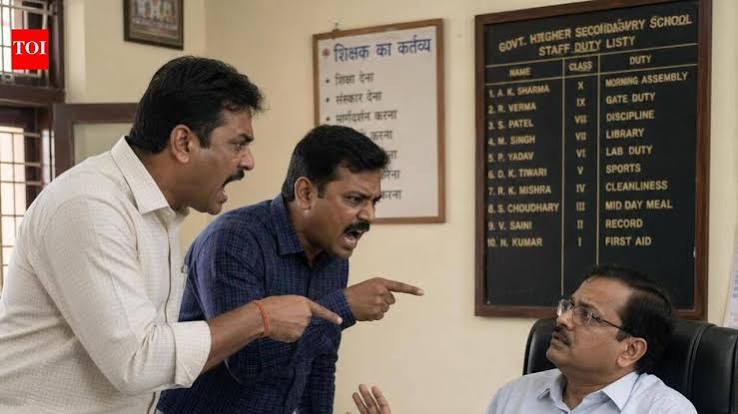
Agra: A special SC/ST court in Mainpuri sentenced two govt teachers to six months in prison and imposed fines after they abused and assaulted their Dalit principal for sitting on a chair. Additional sessions judge Jay Prakash handed down the sentence to Yogendra Singh Yadav and Omprakash Lodhi. The two had taught at a govt inter college in Ramnagar. The incident took place on July 19, 2017, when principal Babu Shri Krishna Datt was in his office. The teachers entered, objected to him sitting on the chair, hurled casteist abuses and assaulted him, overturning his desk and chair. The principal, a resident of Fatehpur district, said the accused, both in their early 50s, assaulted him outside Kishni police station two days later when he went to lodge a complaint. They hurled casteist abuses again and threatened to kill him. An FIR was registered under IPC sections 323 (voluntarily causing hurt), 504 (intentional insult) and 506 (criminal intimidation), along with section 3(1)(d) of the SC/ST (Prevention of Atrocities) Act. Though the principal later turned hostile during cross-examination, the court considered his initial statement and complaint. It held that the defence had failed to explain why he would falsely implicate his colleagues and observed that he may have faced pressure to retract his statement. On Monday, the court sentenced both teachers to six months of simple imprisonment and fined each of them Rs 6,500 under the SC/ST Act, according to govt counsel MP Singh. Courtesy : TOI Note: This news is originally published on https:/timesofindia.com/bha and is used purely for non-profit/non-commercial purposes, especially human rights