
Amid slow seat-sharing talks, SP seeks to survey Nehru-Gandhi family strongholds to gauge voter sentiment
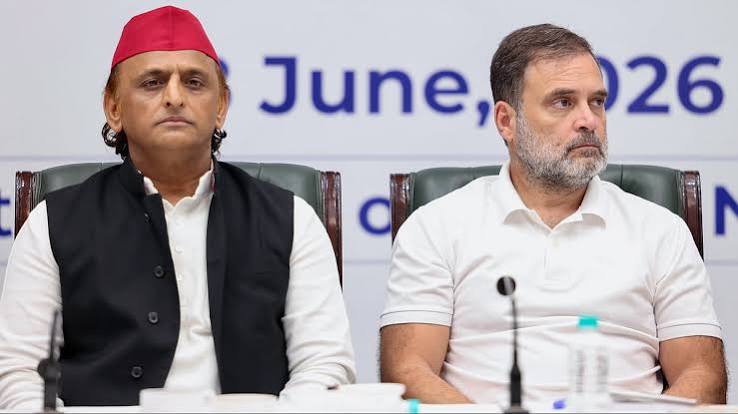
SP has commissioned surveys in several constituencies traditionally associated with the Nehru-Gandhi family to gauge voter sentiment and assess Congress’ contemporary electoral relevance. LUCKNOW: The ongoing delay in finalizing a seat-sharing arrangement between INDIA bloc partners — Samajwadi Party (SP) and the Congress — for the 2027 UP elections appears to be rooted in a deeper strategic assessment underway within the Akhilesh Yadav-led party. According to informed political sources, the SP has commissioned surveys in several constituencies traditionally associated with the Nehru-Gandhi family to gauge voter sentiment and assess Congress’ contemporary electoral relevance in these regions. The exercise comes at a time when negotiations between the two INDIA bloc partners have shown little visible progress, despite repeated assertions by both sides that they remain committed to fighting the ruling Bharatiya Janata Party (BJP) together. As Uttar Pradesh moves closer to the assembly elections, the outcome of these surveys may prove as important to alliance arithmetic as the formal negotiations themselves, a senior SP leader said. SP insiders indicate that the party leadership is seeking micro feedback from voters in Congress bastions, particularly in the Rae Bareli-Amethi belt and adjoining constituencies including those in Sultanpur. The objective is understood to be two-fold — first, to estimate the Congress’ independent vote-catching ability, and second, to determine whether conceding a large number of seats to the grand old party would be beneficial for the alliance. Moreover, SP has been posing as a bigger partner in alliance with Congress in the Hindi heartland. Notably, Akhilesh Yadav had launched his ‘PDA Rathyatra’ from Rahul Gandhi’s den Raebareli in September this year. The survey exercise assumes significance because the SP has historically been cautious about aggressively contesting constituencies linked to the Gandhi family, even during phases when there was no formal alliance between the two parties. The political sensitivity surrounding seats associated with the Gandhi family often led the SP to adopt a restrained approach rather than directly challenging Congress in its strongholds. “The latest feedback exercise is intended to provide empirical backing to SP’s negotiating position as formal seat-sharing discussions gather momentum in the run-up to the polls,” said Prof AK Mishra, a political scientist. The surveys also come amid growing indications that the Congress’ state leadership, including the state’s party in-charge Rajendra Pal Gautam, is seeking a substantially larger share of seats than it received in previous alliance arrangements. In 2017, SP had spared just 105 seats for the Congress when both the parties had contested state assembly polls in alliance. This time, Rajendra Pal Gautam has publicly argued that the party should contest more seats, at least between 180 and 200 in Uttar Pradesh. “We have given an initial list of 175 seats to the SP. The decision on seats is likely to be taken by the top brass of both the parties after Diwali. I, personally, want this to be decided as soon as possible so that we can give impetus to our poll preparations,” said Rajendra Pal Gautam. The demand reflects the Congress’ renewed confidence following Rahul Gandhi’s recent back-to-back anti-NDA government protests and the party’s relatively improved performance in some parliamentary segments during 2024 Lok Sabha elections when the party raised its tally from one MP to six. “We also want winnable seats and why should we not get them?” asked Gautam, claiming that his party should have a level playing field in UP and that it was Congress’ right as an alliance partner. However, SP leaders, including chief Akhilesh Yadav has been vocal about the winnability factor to decide the number of seats to be contested by the allies. “Any seat-sharing formula must be based on realistic assessments of ground strength and winnability. While Congress remains influential in select pockets, the SP continues to be the principal opposition force challenging the BJP across large parts of the state,” said a senior SP leader seeking anonymity. Adding another layer of uncertainty to alliance negotiations has been the recent public sparring between leaders of the two parties. Congress MP Imran Masood and SP MP Iqra Hasan were involved in a verbal spat recently, exposing underlying tensions between local leaderships of both the parties in western Uttar Pradesh. Although both SP and Congress have sought to downplay the controversy, political observers view the episode as a reminder that seat-sharing negotiations involve not only arithmetic but also the management of competing local ambitions. “Such disagreements are particularly important in districts where both parties claim significant support bases and where decisions on candidature could generate friction among grassroots workers,” said JP Shukla, a political commentator. The SP leadership is believed to be keen on avoiding a repeat of past alliance arrangements that were driven more by political symbolism than detailed constituency-level assessments. “Surveys being conducted in Congress strongholds are, therefore, likely to play a crucial role in shaping the party’s bargaining stance,” said Prof Mishra. Political analysts note that Akhilesh Yadav’s strategy appears aimed at testing whether Congress retains sufficient organizational strength in its traditional bastions to justify a larger allocation of seats. “The findings could ultimately determine whether the alliance settles on a broad accommodation or witnesses prolonged negotiations,” added the senior SP leader. For now, both parties continue to publicly project unity. Behind the scenes, however, the battle over numbers has already begun, with the SP seeking hard data from the ground before making concessions and the Congress pressing its claim for a significantly expanded presence in the state’s electoral battlefield. Namita Bajpai Courtesy : TNIE Note: This news is originally published on https:/thenewindianexpress.com/bha and is used purely for non-profit/non-commercial purposes, especially human rights
Dalit girl, 16, dies after gang rape in UP’s Firozabad
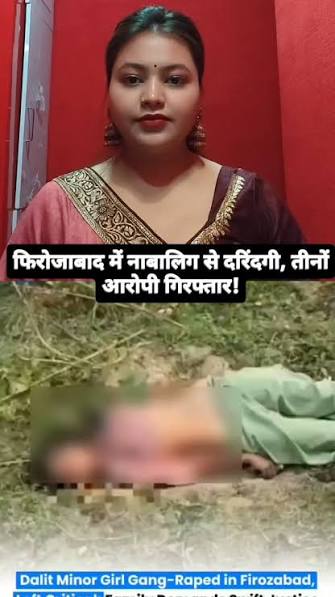
Firozabad SSP Aditya Langesh said the case would be pursued on priority under ‘Operation Conviction’ and that action would also be taken under the Gangsters Act. Add as a preferred source on Google LUCKNOW: A 16-year-old Dalit girl who was allegedly gang-raped and brutally assaulted in Firozabad on November 1 died on Friday at a hospital in Agra. She was found semi-conscious in a field. The postmortem confirmed sexual assault, along with a broken neck, crushed jaw and fractured limbs. Police said one of the accused, who had known her for the past few months, lured her to a nearby field. When she resisted, the three men allegedly strangled her and crushed her limbs and jaw. Believing her to be dead, they left her there. All three accused aged 20, 21 and 28, and from the same neighbourhood have been arrested. Two were held after a brief encounter on the night of November 1, and the third the next day. Police said they confessed during questioning. The FIR was initially filed for attempted murder, gang rape of a minor, abduction, and offences under the POCSO and SC/ST Acts. After her death, murder charges were added. Firozabad SSP Aditya Langesh said the case would be pursued on priority under ‘Operation Conviction’ and that action would also be taken under the Gangsters Act. The family has been assured compensation under the SC/ST (Prevention of Atrocities) Act. Namita Bajpai Courtesy : TNIE Note: This news is originally published on https:/thenewindianexpress.com/bha and is used purely for non-profit/non-commercial purposes, especially human rights
SP-BSP rallies in Agra within 7 days: Parties eye Dalit vote bank, differing strategies
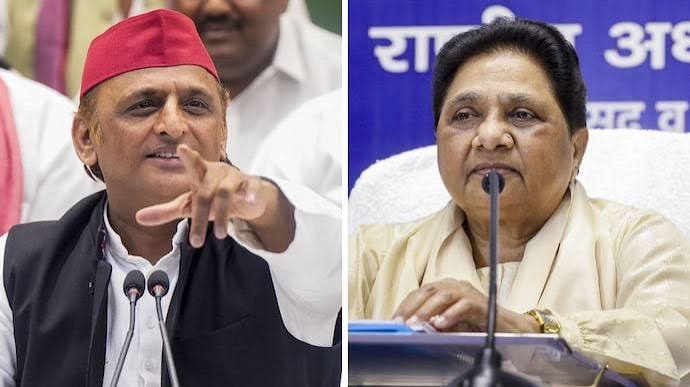
Ahead of the 2027 assembly elections, political efforts to woo the Dalit vote bank in Uttar Pradesh are gaining momentum. Agra is poised to become a hub of political activity. The SP and BSP are holding two major events here within a seven-day span. Akhilesh Yadav will attend the SP’s Dalit Mahasammelan on November 15th, while Akash Anand is expected to attend the BSP’s public meeting on November 22nd. The two parties have different strategies. The SP wants to increase its influence among the Dalit community through the PDA (Backward, Dalit, and Minority) alliance, while the BSP is trying to reconsolidate its traditional vote bank. The BSP is also preparing to announce its candidate for the Etmadpur assembly seat. Consequently, these two events in Agra are part of efforts to increase Dalit influence in politics ahead of the 2027 elections. The significance of these events is further enhanced by the significant political participation of Dalit voters in Agra and surrounding districts. The SP seeks to unite the Dalit community through the PDA (Backward, Dalit, and Minority) program, while the BSP is working to re-strengthen its traditional vote bank. The preparations of both parties indicate that Dalit voters could play a crucial role in the 2027 elections. Different strategies for both parties November 15: SP’s Dalit Mahasammelan The Dalit Mahasammelan of Western Uttar Pradesh will be held at the GIC ground in Agra. National President Akhilesh Yadav will attend the conference. National General Secretary Ramji Lal Suman is overseeing the organization. The goal is to mobilize over one lakh people from Agra, Aligarh, and Meerut divisions. The emphasis will be on connecting the Dalit community with the party and strengthening the organization through the PDA. November 22: BSP’s public meeting The BSP will showcase its strength through a large public meeting in Agra. National Coordinator Akash Anand is expected to attend. Preparations are underway to announce the candidate for the Etmadpur assembly seat. The strategy is to activate the cadre and strengthen the organization before the elections. SP’s focus on Dalits: The Dalit Mahasammelan is not merely a crowd-gathering event for the SP. The party wants to strengthen the social equation of the PDA. Akhilesh Yadav’s presence will be an attempt to convey to the Dalit community that the party is giving political priority to their issues. The plan to mobilize people from three divisions of Western UP shows the broader political scope of this event. BSP’s Challenge: Reuniting the Traditional Vote Bank For the BSP, the public meeting in Agra will be an opportunity to activate the organization and cadre. Akash Anand’s presence will be an attempt to enthuse young workers and strengthen the party’s traditional social base. The announcement of the candidate for the Etmadpur seat is also considered part of this strategy. Announcing the candidate well before the elections will give the candidate time to build public relations and strengthen the organization in the area. Why will the political message from Agra reach Western UP? Agra is an important center of Dalit politics in Western UP. The SP’s convention is part of a strategy to unite people from three divisions. The BSP also wants to send a message of activating its cadre and supporters from Agra. Both parties are busy strengthening their social equations ahead of 2027. The potential announcement of a candidate in Etmadpur could provide initial momentum to the BSP’s election preparations. Now, these three questions will be in focus: Will the SP be able to increase its influence among the Dalit community through the PDA formula? Will the BSP be able to reunify its traditional Dalit vote bank? Can this political activism, which began in Agra, change the electoral equations for the assembly seats in Western UP? Courtesy: Hindi News
‘They Beat Me While I Held My Newborn’: Dalit Woman Accuses UP Police Personnel of Assault
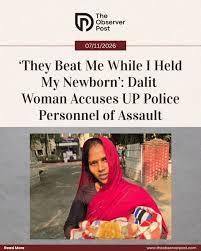
A Dalit woman in Uttar Pradesh’s Kanpur Dehat district has accused police personnel of assaulting her while she was holding her newborn daughter. The incident allegedly followed a dispute over unpaid wages in Piyasi village under the jurisdiction of Gajner police station. Dalitcommunity resources Poonam Devi alleged that villagers assaulted her and her husband, Trimul Singh, after he demanded payment for his work before Diwali. She further accused two women police personnel of holding her by both arms and beating her when she called the police for help. Police have denied the assault allegations, claiming that Poonam and her husband misbehaved with officers who arrived at the scene. Poonam visited the Superintendent of Police’s office around 2 pm on Saturday and submitted a written complaint seeking action against the villagers and police personnel involved. According to Poonam, her husband went to a villager’s house around noon on Saturday to demand his pending wages. The person allegedly told him that the payment would be made after Diwali. Trimul reportedly insisted that he be paid before the festival. This led to an argument between the two sides. Poonam alleged that the other party then assaulted her and her husband, used caste-based slurs, kicked and punched them, and threatened to kill them. She said that after managing to escape, she called the police emergency number 112. Woman Alleges Police Assaulted Her While She Held Baby Poonam alleged that police personnel who arrived at the scene assaulted her instead of hearing her complaint. She claimed that two women police personnel held both her arms and beat her. She said she was holding her newborn daughter at the time and pleaded with the officers not to assault her because of the baby. However, she alleged, they did not listen. Poonam also claimed that police personnel seized the mobile phone of a person recording the incident. Her husband was subsequently taken to the police station. Police Deny Allegations The Gajner station house officer gave a different account, saying Trimul was allegedly drunk and abusing people when the police received information about the dispute. According to the police, Dial 112 personnel and officers from the local police station reached the village, where Poonam and her husband allegedly misbehaved with them. Police said Trimul was taken to the station and action was being initiated against him for breach of peace. The station house officer rejected Poonam’s allegations of assault by police personnel as baseless. Poonam later approached the SP’s office with a written complaint, demanding action against both the villagers accused of assaulting her family and the police personnel she said had beaten her. Courtesy : TOP Note: This news is originally published on https:/theobserverpost.com/bha and is used purely for non-profit/non-commercial purposes, especially human rights
BSP’s grand convention in Lucknow on Babasaheb’s death anniversary, Mayawati to be chief guest
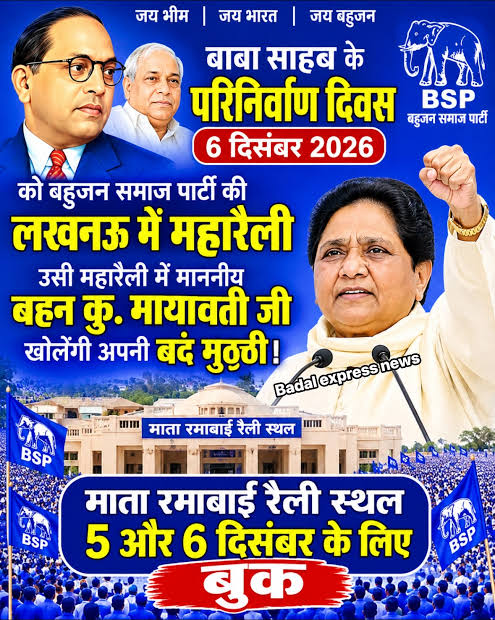
BSP chief Mayawati will attend the Mahaparinirvan Diwas event at the Dr. Bhimrao Ambedkar Social Change Site in Lucknow on December 6, 2026, as the chief guest. This has raised the pulse of opposition parties. Lucknow. Behenji is once again set to stir the political scene in Uttar Pradesh. Bahujan Samaj Party chief Mayawati will attend the tribute ceremony in Lucknow on December 6, marking Babasaheb Ambedkar’s death anniversary, as the chief guest. She has accepted the party’s invitation. She made this announcement at the BSP Uttar Pradesh unit’s review meeting held in Lucknow on Thursday. This announcement has suddenly heated up the political atmosphere in Uttar Pradesh. The party has resolved to organize the event on a grand scale and make it historic. In a meeting held on November 5th, BSP supremo Mayawati reviewed preparations for the upcoming Uttar Pradesh Assembly elections with state and divisional officials, including district presidents from all 75 districts. The meeting discussed strengthening the organization down to the booth level, selecting better candidates, and strengthening the party’s support base among the poor and vulnerable. The BSP chief called for advancing the party’s pledge of “Our vote, our rule” and working towards forming a BSP government in Uttar Pradesh for the fifth time. Mayawati also addressed various political issues, including the fairness of the electoral process and the demand for voting using EVMs and ballot papers. She appealed to party officials to fully engage in election preparations. It is worth noting that Behenji, who demonstrated her strength last year on the death anniversary of Kanshi Ram, is set to demonstrate her strength again just before the UP elections. Meanwhile, the Samajwadi Party is organizing a Dalit Mahasammelan on November 15th in Agra, known as the capital of Dalits. It remains to be seen with whom the Dalit community expresses its solidarity. These two events will make it clear who the Dalits of Uttar Pradesh stand with. Raj Kumar Raj Kumar has been active in media since 2020. He serves as Deputy Editor of Dalit Dastak. He monitors political and social activities in the country and Uttar Pradesh. Courtesy: Hindi News
Barabanki News: A Dalit girl was molested by climbing onto the roof, a report filed.
A young woman from a village told the police that she was friends with Arpit Yadav from her village. They used to talk to each other, but stopped talking due to Arpit’s bad habits. Because of this, Arpit started harassing her on her way home. The young woman says he came to the office where she worked and started using caste-related abuse. On the night of November 2nd, Arpit climbed a pole next to her house, reached the roof, and began molesting her. Hearing the noise, family members came and ran away. CO Sangam Kumar stated that a report has been filed under the SC/ST Act and an investigation is underway. Courtesy: Hindi News
UP Elections 2027: Akhilesh Yadav’s rally will heat up Dalit politics, sounding the bugle from Agra
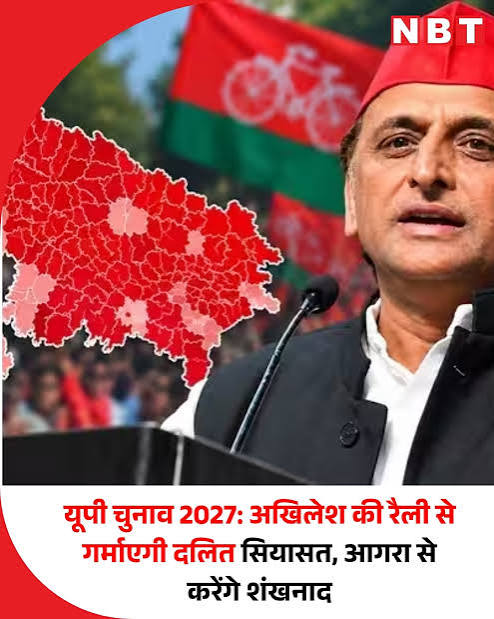
The Samajwadi Party, which is preparing for the UP Assembly elections, will hold a Dalit Mahapanchayat to increase its grassroots reach among Dalit voters. Akhilesh Yadav will launch the rally in Agra on November 15th. Lucknow: The Samajwadi Party, which is preparing for the 2027 Assembly elections, is making efforts to expand its Dalit vote bank. Along with honoring Dalit saints, promising social justice through the PDA, and increasing the use of Ambedkarite symbols in party programs and social media campaigns, the SP will now hold a Dalit Mahapanchayat to increase its grassroots reach among Dalit voters. The rally will be launched on November 15th by party national president Akhilesh Yadav in Agra. SP Rajya Sabha MP and Dalit leader Ramji Lal Suman has been given the reins of this campaign. This will be SP chief Akhilesh Yadav’s first rally for the 2027 Assembly elections. What will be the main issue of the Mahapanchayat? According to a senior party official, the main issue of this Mahapanchayat will be saving the Constitution and reservation. The SP and Congress also raised this issue in the 2024 Lok Sabha elections, which yielded political benefits for the party. Why did the SP choose Agra? Agra is considered a major Dalit center in western Uttar Pradesh. With a large Jatav community population, the region has been a strong base for BSP politics. Therefore, holding the Dalit Mahasammelan in Agra is not just an organizational event, but also a political message to establish its presence at the center of Dalit politics. The biggest reason for the SP’s strategy is the changing political landscape. The Dalit vote, which once stood strongly with the BSP, now appears to be divided among various parties. Objective: Challenge the BJP’s equation According to political analysts, the SP’s goal is not only to garner Dalit votes but also to challenge the BJP’s social equation. In view of the 2027 assembly elections and the political struggle that will follow, the Samajwadi Party (SP) is launching a campaign to expand its social base. The Agra Mahasammelan is part of this broader strategy. The Samajwadi Party has been making continuous efforts to engage Dalits for the past few years. Dalit leaders have been given significant responsibilities in organizational and electoral politics. Several prominent BSP leaders have joined the party. In addition, in the 2024 Lok Sabha elections, Dalit candidates have been fielded on general seats, in addition to reserved seats. The party is preparing to conduct a similar experiment in the assembly elections. Reported by: Anand Tripathi •Edited by: Prashant Singh About the Author Anand Tripathi has been active in journalism for 18 years. After Zee News, he has been part of the NBT Lucknow team for the past 12 years. He specializes in electricity, secretariat administration, bureaucracy, industry, infrastructure, and political news. He holds a postgraduate degree in journalism and mass communication from Makhanlal Chaturvedi Journalism University. Courtesy: Hindi News
SP’s election campaign begins in the Dalit capital: Dalit convention to be held in Agra, Akhilesh Yadav to roar in BSP’s stronghold
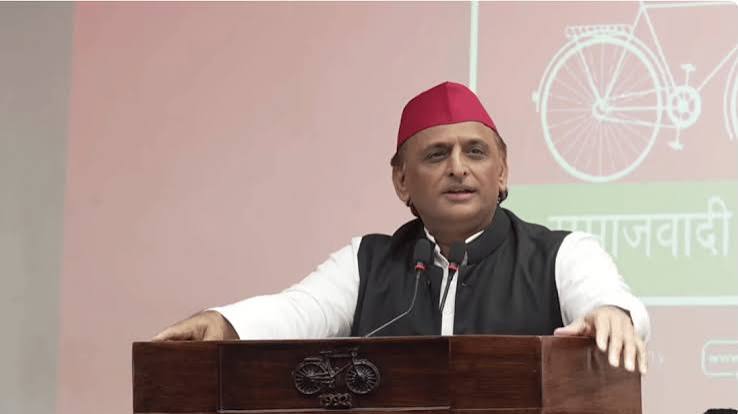
The Samajwadi Party has begun preparations for the Uttar Pradesh Assembly elections. This time, the SP will launch its election campaign from Agra. To this end, the party is organizing a Dalit convention, in which SP chief Akhilesh Yadav will participate. Riding on the banner of the Backward, Dalit, and Minority (PDA) coalition, the Samajwadi Party, dreaming of returning to power in the 2027 Assembly elections, will launch its election campaign from the Dalit capital. Akhilesh Yadav will visit Agra on November 15th. A Dalit convention will be held at the GIC grounds, and preparations for the convention are in full swing. The Samajwadi Party has chosen Agra to align with the PDA’s “D” (D) constituency. The D’s role is crucial in the state’s political trajectory. Therefore, to prepare for the Assembly elections, the SP has devised a strategy to penetrate the strongest bastion of Bahujan politics. Dalit Sammelan convener and National General Secretary MP Ramji Lal Suman stated that workers from the districts of Agra, Aligarh, and Meerut divisions will participate in this conference. Contact has been made with all districts and the meeting venue has been visited. All preparations are in the final stages. He stated that Agra is the capital of Dalits. The city has over five lakh Scheduled Caste voters. City President Shabbir Abbas stated that through this conference, the SP will implement its PDA formula. To convey a message to the BSP’s traditional cadre and voters associated with Ambedkarite ideology, SP workers and Chhatra Sabha members will be dressed in blue. Buoyed by its success in the MLC elections, the SP is making efforts to woo the Bahujan Samaj by making the issues of Dalit rights, reservation, permanent jobs, and social security a key agenda in western Uttar Pradesh. Published by: Arun Parashar Courtesy: Hindi News
Dalit Youth Alleges Three Barbers Refused Haircut Over Caste in Uttar Pradesh’s Etah
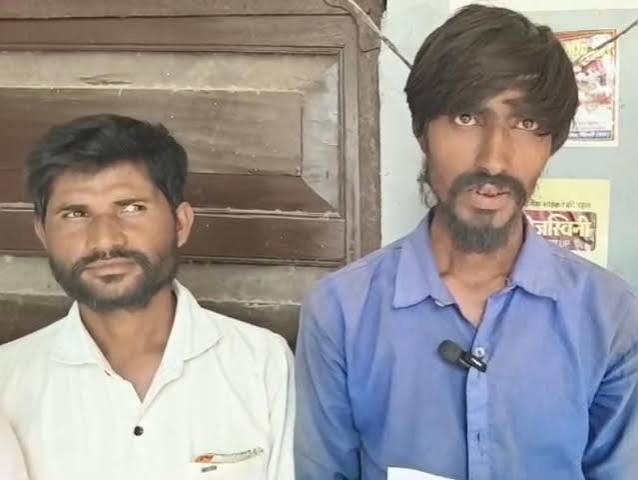
A young man from the Valmiki community in Uttar Pradesh’s Etah district has accused three local barbers of refusing to cut his hair because of his caste and using casteist slurs against him. He has filed a complaint at the Jaithra police station, seeking action against the shopkeepers. The incident allegedly took place on November 1 in Parauli village, under the Jaithra police station area. According to Ajit, son of Sewaram, he went to barber Bablu’s shop at around 10 am to get a haircut. He alleged that Bablu asked him to visit a barber from his own village instead and turned him away. Ajit then approached the shop of Sukhveer, son of Khushiram, who is also from Parauli Suhagpur. Ajit alleged that Sukhveer told him he did not cut the hair of people belonging to the Valmiki community. He subsequently went to Shankar’s shop, where he alleged that he was abused and threatened with being driven away. Ajit said Shankar used casteist remarks and verbally abused him. Speaking about the incident, Ajit questioned why caste should determine access to an everyday service such as getting a haircut. He said people from different communities apply for government jobs and participate in public life, yet members of his community continue to face discrimination when seeking basic services. Ajit has asked the police to investigate the allegations and take legal action against the three shopkeepers. Jaithra station house officer Sunil Kumar Verma confirmed that the police had received a complaint and were investigating the matter. He said the shopkeepers would be called to the police station for questioning and that action would be taken if the allegations were established. Courtesy : TOP Note: This news is originally published on https:/theobserverpost.com/bha and is used purely for non-profit/non-commercial purposes, especially human rights
Rahul emerges as INDIA bloc’s leading voice; Uttar Pradesh puts its resolve on trial
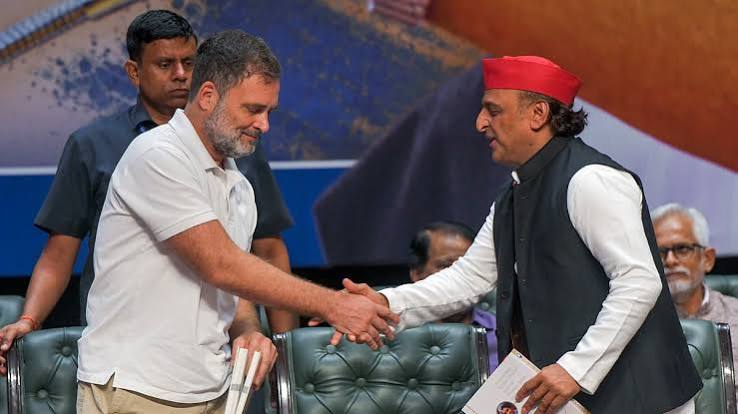
Gandhi deserves full credit for emerging as the Opposition’s spearhead and posing serious questions to those in power. But the difficult part of a seat-sharing agreement with the Samajwadi Party will be decisive. The Opposition had a spring in its step after the conclusion of its massive ‘Chalo Dilli’ rally against Chief Election Commissioner Gyanesh Kumar at the historic Ramlila Maidan on Sunday. Whether or not Kumar departs, the protest has provided a springboard for the immediate task ahead: preventing a third consecutive mandate for the Lotus in Uttar Pradesh. If the recent MLC poll drubbing did little to dent the Congress, the Samajwadi Party’s commanding performance has given it the political space to forge a formidable Opposition coalition in UP. The show of strength clearly signalled that the Congress intends to shape the Opposition’s national agenda. The Delhi rally also showcased Rahul Gandhi’s emergence as the INDIA bloc’s undisputed leader, a position his allies were reluctant to accord him until a few months ago. He built the ‘vote theft’ plank from scratch, even when many within his own party doubted its appeal among the masses. Subsequent media scrutiny of the shortcomings of the controversial special intensive revision (SIR) of electoral rolls, and alleged dissonance within the poll panel, gave his campaign further impetus. In his concluding address, Gandhi underscored Opposition unity, calling it “one protest” and signalling that the entire INDIA bloc shared a common aim: to eject Kumar from the poll body. “This is not the voice of a political party. This is the voice of Indian youth, farmers and people,” he said. But the goal was larger—to ultimately challenge India’s political leadership. He struck a reasonable, rather than shrill, note when he invoked the analogy of ‘Shiv ki barat’ (a wedding procession where everyone is free to participate), saying he wanted an India open to everyone. “If a farmer works hard, he should be allowed to fulfil his dream. If a student studies for 18 hours, they should be rewarded,” he said. Gandhi deserves full credit for emerging as the Opposition’s spearhead and posing serious questions to those in power. He is articulating the Opposition’s position with a confidence and finesse many thought he lacked. But the difficult part lies ahead: negotiating seat-sharing arrangements within the INDIA bloc, with electoral victory as the sole yardstick, not the bloated egos of regional Congress satraps. Managing the electoral ambitions of the nascent Cockroach Janta Party will pose another major challenge. The first test in preventing a split in Opposition votes lies in UP. Courtesy : TNIE Note: This news is originally published on https:/thenewindianexpress.com/bha and is used purely for non-profit/non-commercial purposes, especially human rights