
Dalit couple assaulted for protesting tree felling: Case filed against constable and contractor in Basti on court order, 5-year-old case
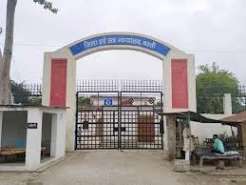
Following an order from the Special Judge SC/ST Act Court in Basti, Walterganj police have filed a case against a former constable and a contractor from their own department. The case dates back to May 26, 2021. Reena Devi, a resident of Ganeshpur, alleges that contractor Durgesh Choubey was cutting down two green mango trees planted along the PWD road in front of her house without valid permission. When she protested, the contractor used casteist slurs. Meanwhile, Vinod, a constable at the then Ganeshpur outpost, who was in plain clothes, assaulted her husband, Rajesh Kumar Sonkar, and forcibly detained him at the outpost. Allegations of having the trees cut while her husband was locked up in the outpost According to Reena Devi, when she protested against the tree felling, the constable dragged her husband by the collar and locked him in the outpost. It is alleged that the contractor had the trees cut down while her husband was detained and took away the wood. Later, as the dispute escalated, the constable had the wood pulled by a tractor and stored at the police station. The victim alleges that her husband was released after threatening to send him to jail under false charges. Following the incident, she sent a complaint to the Chief Minister’s Portal, as well as to police officers and the District Magistrate, demanding action, but she alleges that no action was taken at the police level. Five years later, a case was filed on a court order. Following the police’s inaction, Reena Devi filed a petition in the court of the Special Judge, SC/ST Act. Following the court’s order, Walterganj police registered a case against then-constable Vinod and contractor Durgesh Choubey at 5:04 pm on September 10th. The police are now investigating the matter based on the court order and the allegations made in the victim’s complaint. Raj Prakash | Basti Courtesy: Hindi News
Dalit family forced to live in hut with 5 children: Multiple complaints for housing in Achhalda, officials demand action
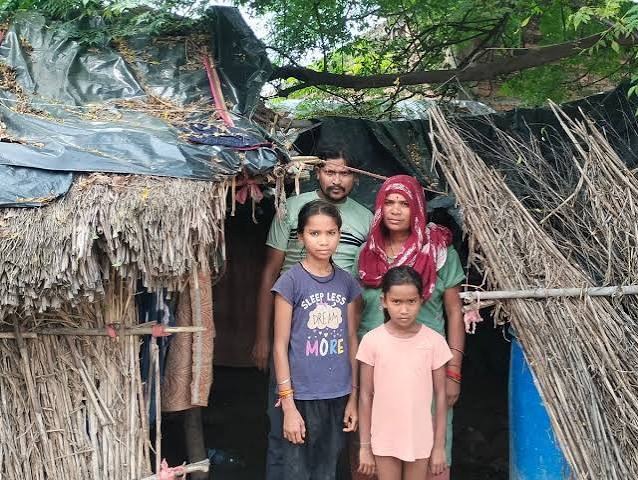
A poor Dalit family in Purva Ramdas, a hamlet in Bhasora Gram Panchayat of Achhalda development block, is struggling to find housing. Village resident Rajneesh Kumar, along with his wife and five children, are forced to live in a hut made of straw and tarpaulin. Family members reported that the hut floods during the rainy season, making it extremely difficult to live with the children. They have been struggling with housing for several years. Dalit woman Kalpana Devi reported that she has filed numerous complaints seeking benefits under the Pradhan Mantri Awas Yojana (Prime Minister’s Housing Scheme). However, her pleas have remained unanswered. She has also repeatedly appealed to the village head for housing, but the problem remains unresolved. The family has appealed to the Block Development Officer and the district administration to investigate the matter. They have demanded action against the responsible officials who were negligent in providing them with the Pradhan Mantri Awas Yojana (Prime Minister’s Housing Scheme). Akhilesh Kumar | Harchandpur (Bidhuna), Auraiya Courtesy: Hindi News
UP Election 2027: Akhilesh Yadav targets Brahmins, Dalits and Gen-Z with new PDA and blue gamcha strategy | Explained
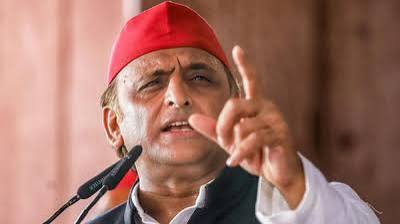
With UP elections due in early 2027, the SP chief is redefining his party’s coalition, courting Brahmins with one hand and Dalits with the other — while BJP watches its most loyal vote bank show early signs of restlessness On August 5, Samajwadi Party national president Akhilesh Yadav stood before a Brahmin Sammelan at his party’s Lucknow headquarters and made a statement that carried considerably more weight than it appeared to on the surface. He declared that the ‘P’ in ‘PDA’ stands for ‘Pandits’. This was not a slip of the tongue. When Akhilesh coined the term PDA during the 2022 UP Assembly elections, the ‘P’ explicitly stood for ‘Pichhda’, meaning backwards or Other Backward Classes. That formulation was the foundation of the social coalition he was building: Pichhda, Dalit, Alpsankhyak — backward castes, Dalits and minorities. It was a direct challenge to the BJP’s dominant Hindu consolidation strategy and helped the SP make significant gains, even if it was not ultimately enough to form the government. Now, with the 2027 UP elections scheduled for February or March of next year, the ‘P’ has been expanded, or perhaps repositioned, to include Pandits. The question being asked across Lucknow’s political circles is whether this represents a genuine strategic evolution or an opportunistic repositioning. The answer, on examination, appears to be both, and that combination is precisely what makes it interesting. Why Brahmins Matter So Much in Uttar Pradesh To understand Akhilesh’s Brahmin outreach, you need to understand the electoral arithmetic of Uttar Pradesh at a granular level. Political analysts estimate that the Brahmin community can decisively influence outcomes in more than 115 of the 403 Assembly constituencies across the state. This is not simply a function of numbers — Brahmins constitute approximately 10 to 11 percent of UP’s population — but of their geographic distribution across constituencies and their traditional role as opinion leaders in rural and semi-urban settings. The data across successive elections makes the pattern unmistakable. In 2007, when Mayawati led the BSP to a landmark 206-seat majority, the party had achieved something genuinely unprecedented: it secured 16 percent of the Brahmin vote through a deliberate Brahmin-Dalit alliance strategy. The BJP still received 44 percent, but the split was significant enough to help the BSP sweep to a majority. The 2012 SP victory saw the party win 224 seats, partly on the strength of 19 percent of the Brahmin vote, double its 2007 performance of 10 percent. The BJP got 38 percent of Brahmin votes that year, with the community fractured across multiple parties. Then came 2017, and the numbers tell a stark story. Riding the Modi wave, the BJP secured approximately 83 percent of Brahmin votes and more than 300 seats. The SP collapsed to 7 percent of Brahmin votes. In 2022, the consolidation deepened further. The BJP captured 89 percent of Brahmin votes. The SP got 6 percent. Those two numbers, 89 and 6, are the context for everything Akhilesh is doing with the Brahmin Sammelan and the reframed PDA acronym. Even a modest swing in Brahmin votes, from 6 percent to 15 or 20 percent, could alter outcomes in dozens of constituencies. What Is Driving Brahmin Discontent With the BJP? The opposition’s narrative about Brahmin disenchantment with the BJP government under Chief Minister Yogi Adityanath centres on two overlapping allegations. The first is that Thakurs or Rajputs, the caste community to which Yogi himself belongs, have been disproportionately favoured for appointments across state administration, police postings and government positions. This allegation of Thakur dominance in the state’s power structure has been circulating within Brahmin circles for several years and carries enough traction that the BJP has felt compelled to respond. The second is the Maha Kumbh episode. Akhilesh has repeatedly alleged that Shankaracharya Avimukteshwaranand Saraswati, a revered religious figure with significant standing among Brahmins, was prevented from taking a holy dip during the Maha Kumbh. Whether or not this allegation is fully accurate, it has served as a powerful symbolic touchpoint for Brahmin grievance politics, suggesting that even high-status religious figures from the community are not immune to being marginalised under the current administration. At the Brahmin Sammelan, Akhilesh wove these threads together: the BJP targets SP workers, it targets Brahmins, and now it is even after the ‘P’ in PDA. The framing positions Brahmins not as a group being invited into the SP’s coalition out of political convenience but as a community that shares a common adversary with the SP’s traditional base. How much of this narrative has actually penetrated Brahmin opinion is difficult to assess. Many Brahmins in UP remain deeply sceptical of the SP, which they have historically associated with minority appeasement policies and a governance culture they see as hostile to their interests. The gap between Brahmin discontent with the BJP and Brahmin willingness to vote SP is wide, and bridging it requires more than a well-attended sammelan. The BJP’s Response: Playing Defence on Its Own Ground The BJP has not sat passively while Akhilesh pursues his Brahmin outreach. The party’s response has been both structural and strategic. Its appointment of Nagendra Nath Tripathi, an RSS ideologue, as national organiser for senior workers’ outreach is the most revealing signal. Tripathi previously served as BJP’s zonal general secretary for Bihar and Jharkhand and is considered an expert in grassroots-level organisation. Deploying him specifically for senior workers’ outreach, a category in which Brahmin party workers are prominently represented, is a clear message that the BJP intends to actively retain rather than passively assume the loyalty of its most historically reliable upper-caste constituency. Newly appointed UP in-charge Vinod Tawde has also specifically targeted the PDA strategy in his early public interventions, signalling that the BJP has decided to contest Akhilesh’s social coalition framing rather than ignore it. The BJP’s structural advantage in this contest is considerable. It has 89 percent Brahmin votes to protect rather than 6 percent to build from. Even if Brahmin discontent is real, translating it into votes for the SP
Dalit middle-aged man beaten for demanding repayment of 13-year-old loan: 80,000 rupees case in Hardoi, assault with sticks, allegations of casteist slurs
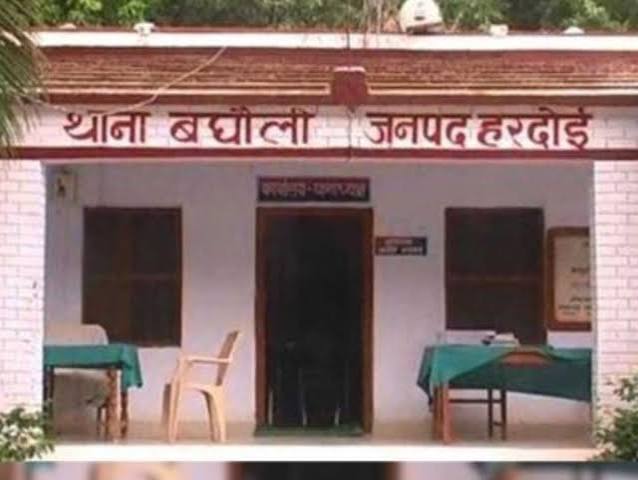
In Baghauli, Hardoi, demanding repayment of a 13-year-old loan proved costly for a Dalit middle-aged man. When he demanded the return of 80,000 rupees given in 2013, the accused kicked, punched, and beat him with sticks. He used casteist slurs and threatened to kill him. A case has been registered against the accused following court intervention based on the victim’s complaint. The report was filed at Baghauli police station at 9:15 pm on Thursday. Ram Avtar (52), a resident of Jutela village, had lent 80,000 rupees to Kamlesh Kumar Dixit of his own village in 2013. Ram Avtar paid the amount in four installments via check from the Aryavart Regional Rural Bank branch in Baghauli. This included ₹40,000 on May 23, ₹8,000 on June 4, ₹12,000 on June 11, and ₹20,000 on June 15, 2013. This transaction was documented on a ₹100 stamp in front of witnesses. When the money wasn’t returned, Ram Avtar complained to the Superintendent of Police. Threat of being implicated in a false case The police had arranged for payment by November 22, 2024, but even then, the money was not received. When the victim went to ask for the money again at 5 p.m. on June 12, 2026, the accused assaulted him with sticks and hurled casteist slurs at him. He also threatened to implicate him in a false case. When his complaint was not heard at the police station, the victim filed an application in the court of the Special Judge, SC/ST Act. On the court’s orders, Baghauli police registered a case against the accused, Kamlesh, and began an investigation. The police are investigating the matter. Shahnawaz Khan | Hardoi Courtesy: Hindi News
Adopting the color blue won’t win Dalit votes: Om Prakash
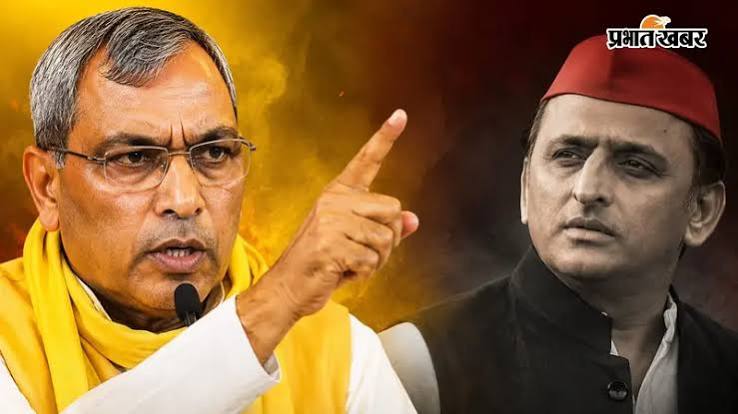
Ambedkar Nagar. District in-charge minister and Subhaspa president Om Prakash Rajbhar once again launched a scathing attack on the Samajwadi Party and Akhilesh Yadav on Wednesday. Speaking at the Circuit House on Baskhari Road, he said that merely adopting the color blue won’t win Dalit votes. Regarding the formation of the Rashtriya Suheldev Sena, he said he has been running the army for 24 years. According to him, the organization has 100,000 soldiers and 21,000 commanders, each with a distinct uniform. Taking aim at the SP’s dress code, Rajbhar said that the color blue wasn’t the SP’s creation. The BSP and he have been using this color for a long time. He sarcastically said that the SP is now copying the color. He said that Akhilesh Yadav changes his formula daily and is also repeatedly changing the PDA. He said, “In the PDA, you lost the first time with the P, you lost the second time with the D, and you will lose again this time with the A.” Rajbhar also accused Akhilesh Yadav of ignoring Dalit interests. He said that reservations in promotions were abolished and schemes named after great men were discontinued. He also alleged that districts named after Kanshi Ram and Baba Saheb were renamed. Courtesy: Hindi News
SP to Increase Focus on Dalit Voters Ahead of UP Elections, Plans to Hold ‘Save the Constitution, PDA Jan Panchayats’ in the State
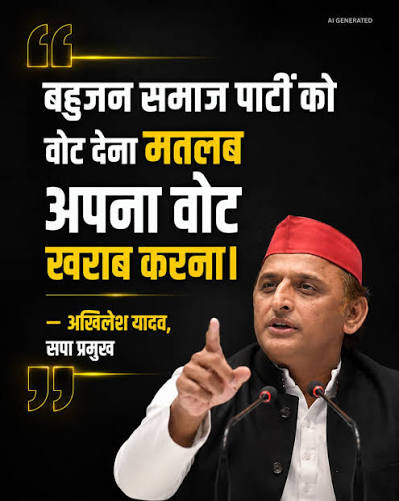
Ahead of the UP Assembly elections, the SP has further increased its focus on reserved seats. The party will organize ‘Save the Constitution, PDA Jan Panchayats’ in all reserved seats across the state. SP Focuses on Dalit Voters Lucknow: The Samajwadi Party, which is preparing for the assembly elections, has further increased its focus on reserved assembly seats. After launching the Samajwadi Chhatra Sabha uniform, the party will now organize ‘Save the Constitution, PDA Jan Panchayats’ in all reserved assembly seats across the state. The responsibility for this has been assigned to Samajwadi Baba Saheb Ambedkar Vahini, the SP’s frontal wing. It will organize ‘Save the Constitution, PDA Jan Panchayats’ in Aurai in Bhadohi, Ajgara in Varanasi, and Chakia in Chandauli on September 12, 13, and 14. The campaign will then be expanded to Dalit-dominated general constituencies. Focus on Dalit-dominated settlements The party leadership believes that strengthening the PDA (Backward, Dalit, and Minority) social equation can increase its reach among the Dalit community. As part of this strategy, issues such as the Constitution, social justice, and reservation will be prominently raised in the Jan Panchayats. According to party sources, the Samajwadi Party is preparing to field Dalit candidates in approximately 100 seats in the upcoming assembly elections. The Samajwadi Baba Saheb Ambedkar Vahini is continuously organizing programs among Dalit voters and strengthening the party at the booth level. The Vahini will organize Save the Constitution PDA Jan Panchayats in all reserved and Dalit-dominated constituencies. Programs for this are ongoing. Why the emphasis on reserved seats? There are approximately 84 assembly seats reserved for Scheduled Castes in the state. Dalit voters directly play a decisive role in elections in these seats. The SP will first take the message of “Save the Constitution” and “Save Reservation” to these seats to increase its acceptance among Dalit voters. By handing over the campaign to the Samajwadi Baba Saheb Ambedkar Vahini, the party has clearly indicated that it is prioritizing Dalit leaders, rather than Yadav leaders, to reach out to the Dalit community. This will send a message that the party wants to give representation to Dalit leadership. Edited by: Prashant Singh About the Author Prashant Singh is a consultant writer at Navbharat Times Online. He has 1.5 years of experience in journalism. He is currently part of the Uttar Pradesh and Uttarakhand teams. Previously, he covered news in West Bengal, Tamil Nadu, Kerala, Maharashtra, Andhra Pradesh, Jammu and Kashmir, Punjab, Haryana, Goa, and the Northeast. Courtesy: Hindi News
Rahul begins two-day Rae Bareli visit, to review devpt works
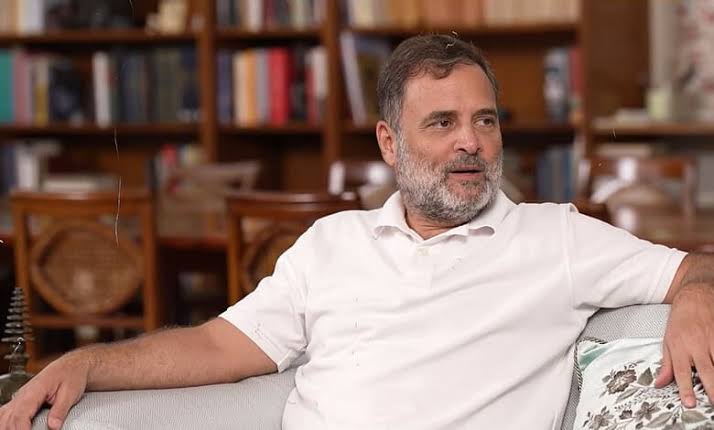
Lucknow: Congress MP Rahul Gandhi began a two-day visit to his Rae Bareli constituency on Tuesday. His packed schedule includes meetings with local stakeholders, a review of development works and a visit to flood-affected areas. He was given a warm welcome by state leadership at Amausi airport in Lucknow from where he took the road to reach Rae Bareli. On the way, he was greeted by cadres and workers in different places. Gandhi is scheduled to chair a meeting of the District Development Coordination and Monitoring Committee (DISHA) on Wednesday, where the progress of central govt schemes, pending issues and action taken on directions issued at earlier meetings are expected to come up for review. He is also scheduled to meet bullion traders and representatives of the Central Bar Association, besides delegations of sportspersons, medical professionals and chemists. Gandhi will inaugurate development works completed at a cost of Rs 3 crore from his MP Local Area Development Scheme funds. The Congress leader is expected to visit flood-affected areas in Shivgarh and Maharajganj to assess the situation and interact with residents. The visit comes as the party prepares for the Uttar Pradesh assembly elections, adding a political dimension to Gandhi’s constituency outreach. Gandhi last visited Rae Bareli in May. Gandhi’s flight makes go-around amid strong winds Congress MP Rahul Gandhi was aboard Air India flight AI-1717 from Delhi to Lucknow, which made a go-around at 3.45 pm due to strong winds. The aircraft landed safely in Lucknow on its second attempt at 3.55 pm. Courtesy : TOI Note: This news is originally published on https:/timesofindia.com/bha and is used purely for non-profit/non-commercial purposes, especially human rights
Samajwadi Party ready to adapt to Gen Z, adopting blue along with green and red
The Samajwadi Party is introducing a new dress code for its student wing. The party has adopted blue along with its traditional iconic colors, green and red. Through this color, the SP aims to connect with the youth and Dalits. The Samajwadi Party is adopting blue as its symbol along with green and red. Parvez Iqbal Siddiqui, Lucknow: Red and green have been the official colors of the Samajwadi Party (SP) since its inception. The SP was founded on October 4, 1992. Since then, its symbols have remained red and green. However, the SP is now expanding its symbolism and is also adopting blue. Blue is a powerful symbol of Dalit resistance. Blue T-shirts and jeans for the student wing The Samajwadi Party’s student wing, called the Samajwadi Chhatra Sabha, is ready to adopt a completely new and modern look. It resonates better with Gen Z. It’s a dress code that includes a blue T-shirt and jeans, or a shirt and trousers of the same shade. Akhilesh and Shivpal in Blue Scarves This isn’t the first time blue has been included in the SP’s official colors. Recently, on August 31, during a meeting of the party’s district and city presidents across the state, senior party leaders, including SP chief Akhilesh Yadav and National General Secretary Shivpal Yadav, were seen wearing blue scarves with the party’s election symbol, the bicycle, printed in red. The blue scarves were different from the previous red and green scarves, which were replaced by a red-checked gamchha during the 2024 Lok Sabha elections. When asked about the blue scarves, party officials deflected the question. Blue to woo Dalits SP officials claim that the color blue was adopted because it represents the vast open sky, under which everyone is equal and free from caste-based discrimination. It is a different matter that it was also the favorite color of Dr. B.R. Ambedkar. Blue has also been the color of Dalits. This community is now an important part of the Samajwadi Party’s PDA agenda. It is believed that the party leadership may formally announce the new dress code for the Chhatra Sabha at a special event to be held at the SP headquarters in Lucknow in the next few days. Choice of Color Popular with Youth According to sources, the SP leadership has decided to give the members of the party’s student wing a distinct identity from the rest of the party’s organizations. However, sources said that the red and green colors have been retained in the Chhatra Sabha’s logo, its basic elements, shape, and color scheme. Party strategists say that since the Chhatra Sabha comprises mostly Gen Z students, the party leadership decided to choose colors popular among the youth. Edited by: Suryakant Pathak About the Author Suryakant Pathak is a consultant at Navbharat Times (Digital). He has been associated with the digital wing of Navbharat Times, part of the Times of India Group, since June 2025. Suryakant Pathak serves on the Bihar desk at NBT Digital. Courtesy: Hindi News
A man released on bail has now been arrested under the Protection of Children from Sexual Offences (POCSO) Act… Accused of raping a Dalit minor in Mathura

A man released on bail in Mathura has been accused of raping a Dalit minor. Police have registered a case under the Protection of Children from Sexual Offences (POCSO) and the SC/ST Act and arrested him. In Mathura district, Uttar Pradesh, a man released on bail has been arrested for raping a Dalit minor. According to the agency, an official statement stated that the accused, identified as Jai Kishan (25), a resident of Mora village, was apprehended by local police near the Bati Maghera crossing on September 5. Police sources stated that on September 3, the minor girl was working in the fields when Jai Kishan took her to a nearby secluded area and raped her. They stated that Kishan threatened the girl with dire consequences if she told anyone about the incident and fled. A case has been registered under several sections… Sources said that based on the complaint, a case has been registered against Kishan under sections 65(1) (rape) and 351(3) (criminal intimidation) of the Indian Penal Code, as well as several sections of the Protection of Children from Sexual Offences (POCSO) Act and the Scheduled Castes and Scheduled Tribes (Prevention of Atrocities) Act. The accused has been involved in several crimes before… According to police sources, the accused has a prior criminal record and was released from jail on bail about a year ago after serving a three-year sentence. They said that in 2022, Jai Kishan was involved in a fight with a man from his village, during which he allegedly gouged out the victim’s eyes with his fingers. Police said that after his arrest on September 5, the accused was produced in court. Further legal action is underway in the case. Edited by: Mohammad Saqib Majeed Courtesy: Hindi News
Akhilesh wears blue scarf instead of red:SP student wing members to switch to blue T-shirts and jeans; party targeting Dalits or Gen Z?
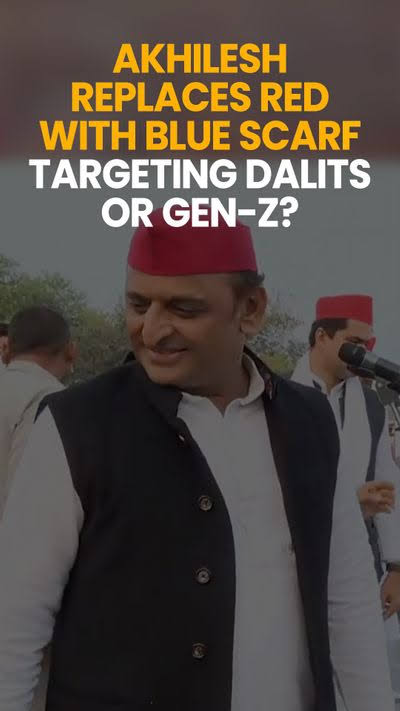
From Parliament in Delhi to election rallies in Uttar Pradesh, Akhilesh Yadav has often been seen wearing a red scarf and red cap. Along with the kurta-pyjama, these have become something of a dress code for Samajwadi Party leaders, giving office-bearers a distinct identity much like the party flag and symbol. But at a meeting of district presidents held in Lucknow on August 31, 2026, Akhilesh was seen wearing a blue scarf around his neck. Six days later, a message reached workers of the Samajwadi Party’s student wing, Samajwadi Chhatrasabha, telling them they would now wear blue T-shirts and jeans. Until now, they had worn maroon shirts and white trousers. The SP organisation has also sent blue T-shirts to student leaders, bearing the Samajwadi Chhatrasabha logo. This is the wing that remains active among students in universities and colleges across Uttar Pradesh. Is the SP using these changes to woo Dalit voters or Gen Z ahead of the elections? Read the report… Understand the change in the SP’s dress code August 31- District presidents’ meeting A meeting of district presidents and metropolitan presidents from all 75 districts was held at the Samajwadi Party office in Lucknow. The agenda was election preparations. Everyone wore red scarves around their necks. When Akhilesh Yadav arrived on stage, Shivpal was with him. Neither was wearing the usual red scarf. Both were wearing blue scarves instead. It was an unspoken message to party office-bearers. However, when Akhilesh was asked about the blue scarf, he replied in a measured tone, “The weaver brothers made it for us. So that we look a little different.” He then laughed. September 6- Message reaches Chhatrasabha workers Samajwadi Chhatrasabha is the SP’s student wing. It too has a dress code, with members wearing maroon shirts and white trousers. This was changed on September 6. Student workers have now been sent blue T-shirts and jeans. The T-shirts feature the Chhatrasabha logo and a bicycle. However, the SP’s official launch of the new dress code is scheduled for September 8. What is Akhilesh trying to achieve with the colour blue? Akhilesh Yadav has been seen wearing blue scarves before, particularly on occasions such as BR Ambedkar’s birth anniversary or at rallies in Dalit-dominated areas. According to political analysts, the SP is pursuing two major objectives through the change: Dalit vote bank – Dalits account for 21.1% of Uttar Pradesh’s voters. Wearing a blue scarf is an attempt to send the message that the SP is now a direct claimant to the politics of Dalit rights. As the BSP’s political base in UP continues to weaken, the SP wants to take over that space completely. In political history, blue has long been a symbol of Ambedkarite ideology and Bahujan politics. Through this, the SP wants to give its PDA (backward classes, Dalits and minorities) slogan a visual identity, rather than leaving it confined to speeches. Gen Z and young voters – Samajwadi Chhatrasabha has units in 80 universities and more than 8,000 colleges across UP. Until now, its members were seen in maroon shirts and white trousers. The party believes blue jeans and T-shirts will make it easier to connect with students on university and college campuses. Message to Dalits through blue, will it help? Until 2022, a large section of Dalits, particularly non-Jatavs, along with non-Yadav OBC voters, remained a strong support base for the BJP. The trend changed in the 2024 Lok Sabha elections. The ‘Constitution is in danger’ narrative and Akhilesh Yadav’s PDA strategy led to a rapid shift of the BSP’s traditional Dalit vote, along with non-Jatav Dalit and OBC voters who had moved away from the BJP, towards the SP-Congress alliance. As a result, the BJP was reduced to 33 seats in UP, while the SP emerged as the largest party with 37 seats. Akhilesh is once again trying to build the same narrative just before the elections, in an effort to secure Dalit voters’ support in the Assembly polls. Blue is considered a symbol of equality and equal rights. It can also be seen as a symbol of the thinking of Dr Ram Manohar Lohia and Dr BR Ambedkar. This is a student organisation, so changes are being made to increase youth participation. We are not limited to UP; we are also doing good work in Delhi and Madhya Pradesh. This new dress code will apply to the entire Chhatrasabha organisation across the country. Since the 2019 Lok Sabha elections, the BSP’s influence has become more deeply embedded in the SP. This was the period when the Samajwadi Party and Bahujan Samaj Party entered into an alliance for the Lok Sabha elections.The alliance broke up after the elections. After that, several prominent BSP leaders left the party and joined the SP. These included major Dalit faces such as Inderjit Saroj, RK Chaudhary and Tribhuvan Dutt. The SP then also began observing the birth and death anniversaries of Dalit icons, including Dr BR Ambedkar and Kanshi Ram.Before long, the backdrop at the Samajwadi Party office changed. Pictures of various Samajwadi leaders replaced the bicycle that had been on the backdrop. Along with green and red, blue was also added. Since then, Akhilesh Yadav has increasingly been seen wearing blue scarves on different occasions. Every colour has its own meaning. All Bahujan people identify with the colour blue. As for the dress code, changes happen in everything from time to time, and this is also being changed. It may be premature to link it to vote-bank politics. Our party works in line with what today’s youth and students think. Syed Yasir Raza | Lucknow Courtesy : Bhaskar English Note: This news is originally published on https:/bhaskarenglish.com/bha and is used purely for non-profit/non-commercial purposes, especially human rights