
‘I am Hanuman to Rahul Gandhi’: Ajay Rai after being replaced as UP Congress chief
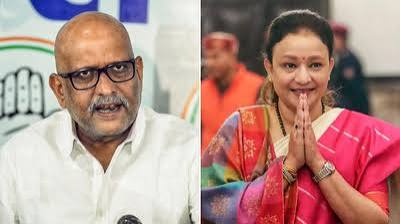
NEW DELHI: Former Uttar Pradesh Congress Committee (UPCC) president Ajay Rai on Saturday called himself a “Hanuman” to Congress leader Rahul Gandhi, saying he would continue to follow the party’s national leadership and carry out its political fight regardless of the position he holds. “Whatever decision the national leadership makes. They told me to fight Modi, and I fought openly with full strength, and I will continue to fight. So whatever the national leadership decides, I stand by it. I am certainly a ‘Hanuman’ to my leader Rahul Gandhi; wherever he says, I will be there,” he told ANI. Rai also recalled his contest against Prime Minister Narendra Modi in the 2024 Lok Sabha elections from Varanasi. Describing himself as a “simple worker”, he said he had been fielded against PM Modi with the support of the Congress leadership and Rahul Gandhi. Rai made the remarks after the Congress appointed Aradhana Mishra ‘Mona’ as the new UP Congress president, replacing him as part of an organisational reshuffle ahead of the 2027 Uttar Pradesh assembly elections. Speaking to reporters, Rai said he had always followed the decisions of the national leadership and would continue to do so. “A simple worker like me was fielded against Prime Minister Narendra Modi. With the support of the top leadership and Rahul Gandhi, we secured 4.6 lakh votes in Varanasi and defeated PM Modi in seven rounds. I thank Rahul Gandhi and the top leadership for their faith in me and extend my best wishes to Aradhana Mishra Mona. I hope she works hard, takes the party forward and strengthens the trust of workers by standing with them against oppression and injustice,” he said. Rai said political positions were temporary and pointed to his record as a five-time MLA from Pindra. He said he had worked extensively for people in his constituency and recalled arranging blood donations when required. “Positions in politics come and go. I have been an MLA from Pindra five times and have worked extensively for the people, even arranging blood donations through my family when needed. I thank the Pradesh Congress Committee employees, drivers, staff, workers and supporters who stood by me around the clock and helped me throughout my journey across Uttar Pradesh. We have always stood against oppression and injustice wherever it occurred,” he said. Meanwhile, Mishra, after taking charge as the new UP Congress president, said the party was ready for the 2027 Assembly elections and would contest them with the INDIA alliance. “Today marks the beginning of a new dawn. I express my gratitude to my leadership for entrusting me with this responsibility. This is a big challenge; time is short, and every Congress worker will have to work. Together, we must work with full strength,” she said. Mishra also highlighted the Congress’ focus on women’s empowerment, saying, “If there’s anyone who is the biggest example of ‘Beti Hun, Lad Sakti Hun’, it is me.” She recalled the party’s decision under Priyanka Gandhi Vadra’s leadership to field 40% women candidates in the 2022 Uttar Pradesh Assembly elections. “Before this, under Priyanka Gandhi’s leadership, we fielded 40% women candidates with tickets in the 2022 elections. It is evident today that the Congress Party has always worked for the empowerment of women,” she said. “We are ready for the 2027 elections, and the INDIA alliance will contest the elections with full strength. We will fight the elections with the entire alliance,” the newly appointed UP Congress chief said. Courtesy : TOI Note: This news is originally published on https:/timesofindia.com/bha and is used purely for non-profit/non-commercial purposes, especially human rights
Court takes tough stance in two Dalit harassment cases: Ayodhya court takes tough stance, requires response within one day
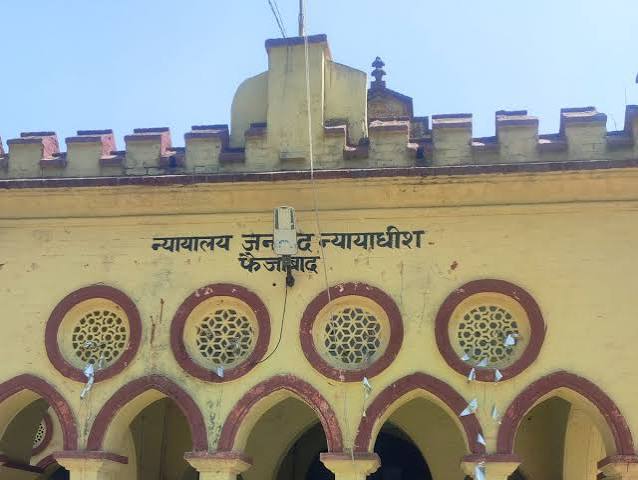
The court of Special Judge SC-ST Act Deepak Yadav, located in the Civil Lines court of Ashfaqulla Khan Ward in Ayodhya, has taken a tough stance in two cases of Dalit harassment. The court has sought an explanation from the Circle Officer (CO), Rudauli, for not filing the charge sheet on time. He has been directed to respond within one day. The first case was filed by Holupur resident Arvind Kumar against Deepchand, Ramnaresh, Changu, and Surendra Kumar. The second case was filed by Kalai resident Jaglal Ravidas against Suresh, Sonu, Ramdayal, Sachin, and two unidentified persons. Both cases were investigated by CO Rudauli. The CO stated that the charge sheet could not be filed due to law and order and government work. The court stated that the charge sheet was neither filed on time nor was an application for an extension granted. The deadline for filing a charge sheet in SC-ST Act cases is 60 days. Prashant Shekhar | Civil Lines Courtesy: Hindi News
Bhatti Vikramarka, enraged by Mallikarjun Kharge’s “insult,” called for a nationwide Dalit-Adivasi movement for self-respect.

Telangana Deputy Chief Minister Bhatti Vikramarka, calling Congress President Mallikarjun Kharge’s insult a direct attack on Dalit self-respect, warned of a nationwide movement. New Delhi: Calling Congress President Mallikarjun Kharge’s alleged insult a symbol of the ongoing discrimination against marginalized communities, Telangana Deputy Chief Minister Bhatti Vikramarka delivered a strong message on Tuesday. He called for a nationwide movement to protect the dignity and self-respect of Dalits and Adivasis. South Asians and Diaspora Addressing the “Dalit-Adivasi Self-Respect Conference” organized by the Congress SC and ST MPs Forum in New Delhi, Vikramarka emphasized that protecting the Constitution and its core values of equality, liberty, fraternity, and social justice is the paramount responsibility of every citizen of the country. During his address, he recalled that the Congress party had passed the first resolution against untouchability and later played a key role in implementing the Constitution. Targeting the BJP-led central government, he alleged that attempts are being made to weaken constitutional values and promote the ideology of Manusmriti in place of the Constitution. Bhatti stated that the Constitution of India binds every citizen of the country in a strong bond, and violating it directly means weakening the foundation of the nation. He expressed concern that although many stringent laws were enacted during the Congress governments to address discrimination against Dalits and tribals, unfortunately, incidents of discrimination continue to surface in society. Referring to Mallikarjun Kharge’s political stature, he clarified that he is not merely a Dalit leader, but a senior national leader who has achieved high constitutional and political positions through decades of public service. He described the alleged “purification” ritual that followed Kharge’s public meeting in Haldwani as a direct attack on Dalit self-respect. He also strongly criticized the action taken against Rahul Gandhi, who had demanded an FIR in the matter. Questioning the functioning of the system, he said that if someone seeks justice for an insulted person or questions the authorities, they are then sued. He believes this situation fully exposes the deep-seated discrimination against Dalits and tribals within the system. Appealing to Dalits, tribals, and minorities to unite against discrimination, Bhatti sternly stated that we cannot accept a situation where millions of people, including Scheduled Castes, tribals, and minorities, are treated as second-class citizens. He strongly urged everyone to come together and fight to protect their self-respect. Rajan Chaudhary Courtesy: Hindi News
Illegal occupation of a Dalit woman’s plot in Mainpuri: Allegations against powerful people, no action despite complaint; pleads with the Superintendent of Police for help

A Dalit woman in Bewar, Mainpuri, has demanded action from the Superintendent of Police, alleging that her plot has been forcibly occupied and construction has been carried out. The woman says that despite repeated complaints, her complaint has not been heard. Now, she has also appealed to the authorities for the safety of her family. Meena Devi, wife of Rajendra Kumar, a resident of Etawah Road, Bewar, submitted a complaint to the Superintendent of Police, stating that she owns a plot. She alleges that Rajnesh Mishra, his wife Bima, Anubhav Dubey, and Vaibhav Mishra forcibly occupied the plot and began construction there. According to the woman, she complained several times to the Bewar police station, but no action was taken. Victim Rajendra Singh says that he subsequently filed a complaint with the Superintendent of Police. After receiving no relief, he submitted a petition to Cabinet Minister Jaiveer Singh. According to the woman, the minister wrote to the District Magistrate requesting action, but the matter was not heard. In her complaint, the woman alleges that she was turned away on the pretext that the matter pertains to the Bhogaon Assembly constituency. Meena Devi alleges in her complaint that due to political pressure, officials and police were called to refrain from taking action regarding her plot. She also alleged that she was told that the encroachers were relatives of the MLA and that no action should be taken against them. Husband Rajendra Singh, citing his financial situation, stated that his five daughters are marriageable. Amidst financial difficulties, the encroachment on the plot has further exacerbated the family’s difficulties. It is alleged that the encroachers are powerful and cunning, leaving the family terrified. Victim Rajendra Singh has alleged that he and his family have been threatened with death and subjected to caste-based abuse. The victim has demanded that the authorities free the plot from encroachment and ensure the safety of his family. Abhishek Jain | Mainpuri Courtesy: Hindi News
Murder for not disclosing home address: Pappu was shot five times in quick succession, Jasso and Durga were sentenced by the court.

After 14 years, the court has sentenced two convicts to life imprisonment in the case of Pappu, a Dalit, who was shot five times in Agra for not disclosing his home address. The special SC-ST court has also imposed a fine of ₹1.70 lakh each on Jasso alias Dashrath and Durga. The court has delivered a significant verdict in the case of Pappu, a Dalit, who was shot five times in the head for not disclosing his home address. After 14 years, the special SC-ST court has sentenced two convicts to life imprisonment and a total fine of ₹3.40 lakh. The court of Special Judge SC-ST Act, Shiv Kumar, convicted Jasso alias Dashrath, a resident of village Abhuapura, Achhnera police station, and Durga, a resident of village Gudait, Palwal (Hodal) area, Haryana, and imposed a fine of ₹1.70 lakh each. The case of another accused involved in the crime was separated, while the minor accused, Rahul Kori, was sent to the Juvenile Justice Board. The prosecution presented a total of 11 witnesses, of which the testimony of the deceased’s brother, son, and doctor was crucial. The doctor told the court that five bullets had been removed from the deceased’s body. Meanwhile, Jasso, confessing to the crime before the then-COVID-19 Commissioner Vivek Tripathi, admitted that he, along with his accomplices, had fired bullets from pistols and revolvers when they were not identified. The court found both guilty based on the evidence. What happened? The incident occurred on December 7, 2012. Harichand, a resident of Dawli village under the Malpura police station, told the police that around 5 a.m., two young men arrived at his home on two bikes. They called out to his brother, Pappu, and asked for the address of Babulal Jat’s house. When he refused, they took Pappu to a drain on some pretext and shot him. Hearing the gunshots, Pappu’s son, Shashi, and nephew, Ajay, rushed to the scene and saw Jasso and Durga firing. Upon confrontation, the accused threatened them and fled. Published by: Dhirendra Singh Courtesy: Hindi News
UP: The BJP will have to fight to protect its own vote bank; Akhilesh Yadav’s new caste arithmetic will be a major test.
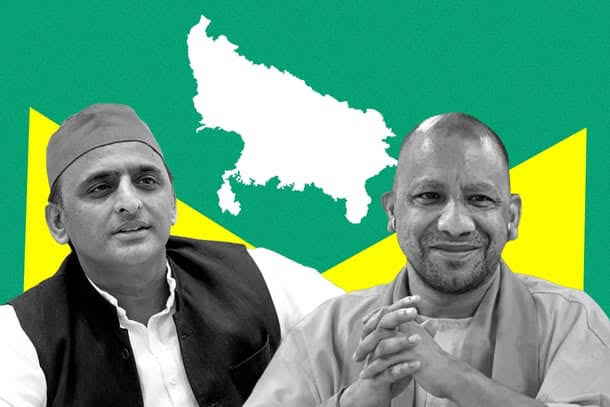
The BJP will have to fight to protect its own vote bank in the UP Assembly elections. Akhilesh Yadav’s new caste arithmetic will be a major test. The SP will target Brahmins, non-Jatav Dalits, and non-Yadav OBCs. This new strategy by the SP has increased the BJP’s concern. The SP’s strategy now aims to break the social alliance that has helped the BJP win election after election in Uttar Pradesh. After the success of the new caste arithmetic in the Lok Sabha elections, the SP’s strategy is to move beyond its image as a Muslim-Yadav party and give more priority to non-Yadav OBCs, non-Jatav Dalits, and Brahmin communities in ticket distribution. If this segment prioritizes caste over party, as in the Lok Sabha elections, the contest will be interesting. The BJP will face the challenge of maintaining its base vote bank and breaking through this SP’s maze. This new strategy by the SP has increased the BJP’s concern. According to a senior state leader and former state president, the party’s biggest challenge is to re-engage the non-Yadav OBCs and non-Jatav Dalits, a large portion of whom sided with the SP in the last Lok Sabha elections. This segment, which supported the BJP in the 2014, 2019, and the last two assembly elections, no longer displayed its previous commitment to the BJP in the last Lok Sabha elections. Since the SP’s ticket distribution formula for 2024 has been successful, it will not only favor the Kurmi, Nishad, Gurjar, Pal, Saini, Prajapati, and Pasi communities among Dalits to deal a blow to the BJP in the assembly elections, but will also woo Brahmins in eastern UP and Awadh. Therefore, to blunt this SP move, the BJP will have to make a major change in its strategy. What is the SP’s strategy? In the last election, the SP alliance distributed approximately 125 tickets among Muslim Yadavs. This made it easier for the BJP to woo the non-Yadav OBCs. This time, the SP plans to limit the number of tickets for Yadavs and Muslims to 80-85 seats. The plan is to field Dalit candidates in some general seats where the combination of Muslim, Yadav, and Dalit voters can create a formidable position. Furthermore, the plan is to provide bulk tickets to Brahmins among the upper castes, Kurmis and Nishads among the OBCs, and to give greater representation to Sainis, Gurjars, Rajbhars, Pals, and Prajapatis. In the Lok Sabha elections, the SP fielded only five candidates from the Yadav community and four from the Muslim community. Last Election Equation The SP alliance fielded approximately 128 Yadav-Muslim candidates, the same number of non-Yadav OBC candidates, 86 Dalits, and approximately 60 upper caste candidates. The NDA fielded approximately 135 non-Yadav OBC candidates, 15 from the Yadav community, approximately 140 from the upper castes, 85 from the Dalit community, and approximately 30 to 35 from the Vaishya community. Law and order will be a key issue for the BJP. A section within the BJP believes that as the elections approach, the contest will become Yogi versus Akhilesh. This will directly benefit the BJP. For example, in Bihar, the initial situation was against the NDA, but as the election approached, when the contest became Nitish versus Tejashwi, the NDA won a landslide victory on the issue of better law and order. In Uttar Pradesh too, there is a general public support for better law and order. Therefore, the BJP will have to find a counter to the SP’s new social equation with law and order and Hindutva. Himanshu Mishra, New Delhi Published by: Sharukh Khan Courtesy: Hindi News
The 2017 Shabbirpur violence gave a new direction to Dalit politics in Western UP. Do people still trust the BSP, or are Dalits following a free path?
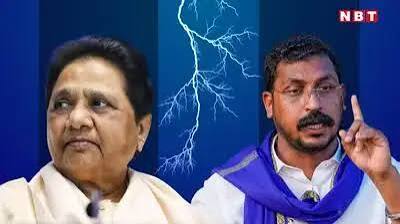
The 2017 violence in Shabbirpur, Saharanpur, gave a new direction to Dalit politics in Western UP. Does the public still trust Mayawati? Is a section of Dalit youth seeking an “independent” path? Saharanpur: The 2017 Shabbirpur (Saharanpur) violence gave a new direction to Dalit politics in Western UP. Mayawati resigned from the Rajya Sabha, accusing the government of suppressing Dalit voices. Chandrashekhar Azad emerged from this struggle. Nearly a decade later, when we moved from Shabbirpur to Saharanpur, Bijnor, and Meerut, the question had changed: Do we still trust Mayawati, but are we seeking an “independent” path? The answer on the ground was not monotonous, but a fragmented voice. Here is Mohammad Asghar’s ground report. The conductor asked, “Where are you going?” Yes, Shabbirpur. Give me a ticket. The conductor said, “The bus doesn’t go to Shabbirpur. It will drop you off 2-3 kilometers away. How will you get there? Call someone from the village.” I understood the meaning of the conductor’s reply when I got off the roadways bus. The sugarcane fields on both sides of the road to Shabbirpur village were so tall that no one was visible. The silence was frightening. The thought of how difficult it would be to protect myself if an animal or criminal came near me was overwhelming. As I walked a little further, I met a woman mowing grass. She said, “Son, if someone’s bike comes, stop it and get on it.” Shabbirpur Village, Because of Which Mayawati Resigned from the Rajya Sabha After traveling about 30 kilometers from Saharanpur, I somehow reached Shabbirpur. This is the same village because of which Mayawati had resigned from the Rajya Sabha because she was prevented from raising the voice of Dalits. And Chandrashekhar Azad, after founding the Bhim Army, formed the Azad Samaj Party (Kanshi Ram) in protest for this village. Two people were killed in the caste violence and subsequent incidents on May 5, 2017. Even today, lawsuits are ongoing between Dalits and Thakurs in this village. There’s a Ravidas temple, where police officers are on duty. The temple’s walls are narrow. Inside those narrow walls, an unfinished structure is visible, the site of the dispute over the installation of a statue of Baba Saheb Ambedkar. A few steps away from this temple is a small grocery store, where three or four young men were sitting. Shopkeeper Kapil Dev explains, “Our uncle’s son’s wedding was on May 4th. On the morning of the 5th, preparations were underway to serve the guests. Around 10-11 a.m., a mob of two to two and a half thousand people attacked the village. Ours was the first house to be set on fire. And then, one after another, about 56 houses were burned.” Not even a spoon was left in the house. When Mayawati visited Shabbirpur on May 23rd to meet the victims, she visited this very house. Discord in Mayawati’s family over party positions This all happened after the controversy surrounding the Maharana Pratap Jayanti procession. During the procession, there was a clash between the Dalit and Thakur communities over loud music and the route. One death occurred, later determined to be due to suffocation, but the violence escalated further. Talking about the village for which Mayawati resigned, Kapil Dev asked if there was any visible discord in Mayawati’s family over party positions. Kapil Dev replied, “We are blindfolded for Mayawati. We only see the elephant button.” For the older members of society, meaning those who are not part of the new generation, Mayawati remains the same, but the young people now have Chandrashekhar in their hearts. It’s true that if Chandrashekhar hadn’t raised his voice at that time, hadn’t protested from Saharanpur to Jantar Mantar, no leader would have come to listen to us. Just then, a middle-aged man coming to the shop to buy groceries says, “Chandrashekhar shouldn’t have formed a party. He has become an agent of the BJP, which is working to divide the Dalit community. He should have stayed with Mayawati.” Physiotherapist Santar Pal, sitting in the shop, says, “When Mayawati didn’t accept him into the party, he had to do something. When someone is thrown out of their home, they will build a home somewhere. Chandrashekhar did the same. Today, because of Chandrashekhar, the youth of our society are becoming aware.” Jitendra, also sitting in the shop, says, “There was a dispute over the statue of our Baba Saheb, and to this day, it hasn’t been installed. Everyone talks about us, but no one takes action. What would have happened if a statue of Baba Saheb had been installed? He is the architect of the Constitution, why do people of other castes have a problem with him?” Not much has changed. Kapil Dev says, “If Chandrashekhar Azad wants to come to the village, no matter how angry the people here are, he won’t stop him.” However, after becoming an MP, he hasn’t visited here even once. His political journey began by protesting for this village. “We want Rahul Gandhi to come to our village; he is an educated leader. We will do whatever we can.” Three or four young people sitting there agree with him. When the caste conflict erupted, Shivkumar, a Dalit, was the village head. We met his brother, Sudesh Kumar, near the water tank. Sudesh says that even after 2017, the ground situation hasn’t changed much. Some cases are still pending in court. While there may not be any visible tension, caste discrimination is still rampant here, which is why the installation of Baba Saheb’s statue has not been allowed to take place. There was tension surrounding the procession. Both Shivkumar and Sudesh Kumar are facing charges. Shivkumar, Sonu, and Chandrashekhar were booked under the NSA, which was later lifted. Sonu has since passed away. The dispute over the route of the Ambedkar Shobha Yatra continues in the village. Tensions arise every year regarding the procession. Sudesh said that if a community’s procession passes through the Dalit
Ramji Lal Suman arrives in Sambhal: Says, “If we want to defeat the BJP in 2027, the SP is the only option; Dalit convention to be held in Agra on November 15th.”
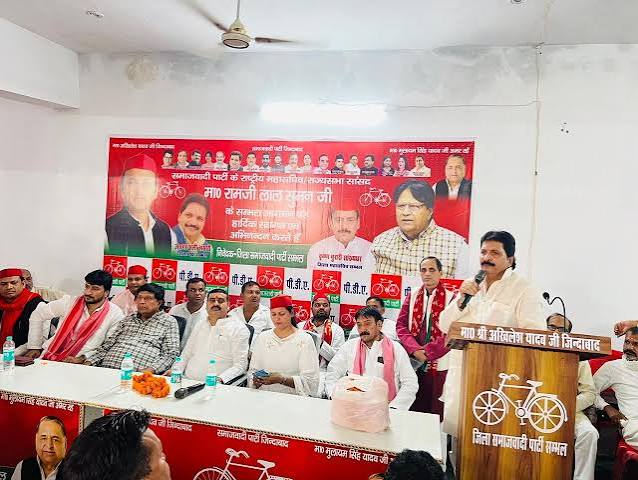
Samajwadi Party National General Secretary and Rajya Sabha MP Ramji Lal Suman arrived in Sambhal on Tuesday afternoon. He held a meeting with party workers at the SP district office located at Chandausi intersection in the Raisatti police station area. The meeting discussed preparations for the Western Uttar Pradesh Dalit convention scheduled for November 15th in Agra. Suman called on party workers to mobilize to make the convention a success. He stated that he is visiting various districts in Western Uttar Pradesh to contact workers. He claims that a climate of excitement is building among the Dalit community regarding the 2027 assembly elections, and the SP is being considered an option to defeat the BJP. Regarding the ongoing rhetoric regarding an alliance between the Congress and the SP for the 2027 assembly elections, Ramji Lal Suman stated that an alliance will be formed. He added that under the current circumstances, both parties should work together. He stated that the Samajwadi Party has authorized National President Akhilesh Yadav to negotiate the alliance. According to him, talks regarding the alliance will take place between Mallikarjun Kharge, Rahul Gandhi, Priyanka Gandhi, and Akhilesh Yadav. Suman appealed to leaders making statements regarding the alliance to exercise restraint. He said that such statements should not be made that could affect the alliance’s position. On the SP’s absence from the India Alliance meeting, he said, “There must have been a reason.” Regarding the SP’s absence from the India Alliance meeting in Delhi, Suman stated that the Samajwadi Party is part of the alliance. He stated that Akhilesh Yadav had stated his busy schedule and that a representative from the party had agreed to attend the meeting. Regarding the question about campaigning with Priyanka Gandhi and Dimple Yadav, he stated that the party leadership would decide where and with whom to campaign. Serious allegations leveled against the Chief Election Commissioner Regarding the question about Chief Election Commissioner Gyanesh Kumar, Ramji Lal Suman questioned the functioning of the Election Commission. He alleged that the Chief Election Commissioner had made decisions in favor of the BJP and said that the Samajwadi Party (SP) has long questioned the Commission’s impartiality. His statement comes amid reports that Election Commissioners Sukhbir Singh Sandhu and Vivek Joshi had raised objections to the Commission’s decisions and procedures at least 14 times in the past 10 months. The Election Commission responded by stating that the Commission’s decisions were made with the consent of all three Election Commissioners. Around 200 workers were present at the meeting. Around 200 workers, including SP District President Asgar Ali Ansari, Sambhal MLA’s son Suhail Iqbal, Gunnaur MLA’s son Akhilesh Yadav, former Chandausi candidate Vimlesh Kumari, District General Secretary Krishnamurari Shankhdhar, Syed Akhtar Israeli, Ajay Kumar, Munshi Wahid, and Councilor Mohammad Rehan, were present at the meeting. Sunny Gupta, Sambhal Courtesy: Hindi News
‘Leniency will create lawlessness’: 4 get life for gang-raping Dalit woman at crematorium 12yrs ago
Agra: A court in Aligarh has sentenced four men to rigorous life imprisonment for gang-raping a 21-year-old Dalit woman at a crematorium in 2014. The court also imposed Rs 63,000 fine on each convict. Cautioning against showing leniency in such cases, special court (SC/ST Act) judge Pratibha Saxena observed: “If a lenient view is taken, it will create a state of lawlessness in society and strengthen the morale of criminals involved in heinous crimes like gang rape. Also, women will not only feel unsafe, but lose faith in the judicial process.” Special public prosecutor Chaman Prakash said, “While rejecting the defence plea for leniency, the judge further observed that the crime was ‘grave in nature’ as the accused had gang-raped a young Scheduled Caste woman, assaulted and humiliated her with casteist slurs.” The crime took place in 2014 when the woman had gone to collect dung cakes. The convicts were Manish Kumar (34), Sachin (30), Anju (35) and Vijay (25), all from the survivor’s village. Prosecution examined six witnesses, including the survivor and the investigating officer, during the trial. The accused were convicted under IPC 376D (gang rape), 323/34 (voluntarily causing hurt), 504 (intentional insult) and the SC/ST (Prevention of Atrocities) Act. Courtesy : TOI Note: This news is originally published on https:/timesofindia.com/bha and is used purely for non-profit/non-commercial purposes, especially human rights
SP eyes Agra, the ‘Dalit Capital’ of UP, betting on youth and women voters to increase its vote share by 27,000 in each seat.

UP Assembly Election 2027: The Samajwadi Party is organizing a Dalit convention in Agra on November 15th. All local organizations are being contacted for this purpose. Sanjay Singh, Agra/New Delhi: In view of the upcoming Uttar Pradesh elections, Akhilesh Yadav has set a target of increasing his vote share by at least 27,000 in each assembly seat. In this effort, the Samajwadi Party has focused on two categories of voters: women and youth, to return to power. The party is also trying to woo Dalit voters who have been drifting away from the party amid the electoral decline of the Bahujan Samaj Party in recent years. As part of its strategy to woo Dalits, the SP has decided to organize a Dalit convention in Agra on November 15th. Agra is also known as the Dalit capital of North India due to its large population of SC voters. Ramji Lal Suman touring Western UP SP National General Secretary Ramji Lal Suman said, “I am touring various districts in Western UP to invite SC voters to attend this convention. We are in contact with local SC organizations to ensure a large turnout at the convention. We will tell voters that the BJP does not care about the interests of SC voters.” Aim to reduce BJP’s vote share by 27,000 in each seat It should be noted that former Chief Minister Akhilesh Yadav recently announced that his party has set a target of increasing its vote share by 27,000 votes in each assembly seat. His party will work to reduce the BJP’s vote share by 27,000 in each assembly seat. This was the margin of victory in 93 seats. The Samajwadi Party aims to strengthen its booth-level organization, conduct door-to-door outreach, and reverse the narrow margins of lost seats in the 2022 elections. The SP had approximately 93 seats where the margin of victory was this close. In the 2024 Lok Sabha elections, the SP gained an edge in 72 seats where the BJP won. The SP is aiming to maintain this lead and expand it to other assembly constituencies. Dalit Voters Up to 30 Percent Of the total 20 to 20.57 lakh voters in Agra, Dalit voters constitute approximately 30 percent, or approximately 600,000 to 6.2 lakh. This is a reserved seat, and BJP’s SP Singh Baghel was elected MP here in 2024. Will the Samajwadi Party secure Dalit votes in the UP elections? Share your opinion in the comment section. Click to comment. Edited by: Vaibhav Pandey About the Author Vaibhav Pandey is a Senior Journalist/Assistant News Editor at Navbharat Times Online. He has 18 years of experience in the media industry. Vaibhav Pandey joined Navbharat Times Online in 2018. Currently, he closely monitors news from Uttar Pradesh and Uttarakhand. Courtesy: Hindi News