
Will SC Rights Be Upheld? — Here’s Why AJAK Rajasthan Presses Justice Balakrishnan Commission to Block New Groups in Scheduled Caste List

The letter strongly opposes the inclusion of new groups, such as Dalit Christians or Muslims, in the SC list, arguing that it could harm existing SC communities’ rights. Jaipur-The Dr. Ambedkar Anusuchit Jati Adhikari-Karmchari Association (AJAK Rajasthan) has taken a significant step to safeguard the interests of Scheduled Caste (SC) communities by submitting a detailed letter to the Justice K.G. Balakrishnan Commission. The letter expresses serious concerns over potential changes to the Scheduled Caste list under Article 341 of the Constitution and strongly opposes the inclusion of new groups, such as Dalit Christians or Muslims, which the organization believes could jeopardize the rights and benefits of existing SC communities. Representing SC employees’ communities, AJAK Rajasthan highlighted the daily struggles of caste-based discrimination and hardships faced by its members. The organization urged the Commission to protect the constitutional rights of existing SC communities and ensure that no amendments to the SC list are made for political reasons. The letter emphasizes preserving the sanctity of Article 341 and preventing religion-based restrictions on SC rights. Key Points Raised in the Letter The list of SC/ST citizens in India was prepared on the basis of historical facts of economic, educational and caste discrimination. The Constitution of India is the supreme law of India. Public servants posted in the legislature, judiciary and constitutional institutions take an oath to work according to the Constitution of India. According to Article 51 (a) of the Constitution of India, it is the constitutional duty of every citizen to obey the Constitution of India and behave accordingly. Thus contempt/violation of the Constitution of India falls under the category of punishable offence under Section 2 of the National Dishonour Act 1971. According to the law made by the Ministry of DOPT of the Government of India, the caste of any citizen in India is inherited from his/her father on the basis of birth. The caste of the father is inherited by the son/daughter on the basis of birth. The children of a Scheduled Caste/Scheduled Tribe father get the caste of their father i.e. Scheduled Caste. People belonging to Scheduled Caste are discriminated against on the basis of caste. Similarly, their children also face caste discrimination. Even if the citizens of Scheduled Caste/Scheduled Tribe change their religion, then on the basis of the caste acquired on the basis of birth, they continue to face discrimination on the basis of social, economic, educational and caste in other religions as well. Citizens get their caste from their father, so their caste remains with them till their death and there is always discrimination against them. To solve the social, economic, educational and caste discrimination, the Constitution of India has given the Scheduled Caste / Scheduled Tribe citizens the right to constitutional representation on the basis of caste in Articles 14, 15, 16, 335, 330, 332, 243D and 243T and has tried to reduce their social, economic, educational and caste discrimination. In India, representation in government services to SC/ST citizens in proportion to their population has been given by the Constitution of India on the basis of their social, economic and educational status. On the basis of Articles 15, 16 and 335 of the Constitution of India, the people of Scheduled Castes and Scheduled Tribes have got the constitutional right of representation in educational institutions and government services in proportion to their population. In Articles 15, 16 and 335, the constitutional right of representation has been given on the basis of caste. Neither in government services nor in politics, the constitutional right of representation has been given on the basis of religion. Therefore, the right to representation of Scheduled Castes cannot be restricted on the basis of religion. The Constitution of India does not impose any restriction on the citizens of SC/ST on the basis of religion even in Articles 15, 16 and 335. If the constitutional right of SC/ST citizens to government services and political representation is restricted on the basis of religion, then it would be a violation of Articles 14, 15, 16 and 335 of the Indian Constitution. Ostracized and Deprived: 70 Dalit Families in Haryana Village Pay Heavy Price for Not Supporting Upper Caste Candidate in 2024 Assembly Elections The Constitution of India provides the SC/ST citizens the constitutional right to representation in proportion to their population in Panchayats, Municipal Bodies, Legislative Assemblies and Lok Sabha. The Constitution of India, Article 243(d) provides the Scheduled Caste and Scheduled Tribe citizens the constitutional right to representation in proportion to their population in Gram Panchayats, 243T in Municipal Bodies, 332 in Legislative Assemblies and Article 330 in Lok Sabha. None of the articles providing the constitutional right to representation imposes any restriction on the basis of religion for giving representation in proportion to their population in Gram Panchayats, Municipal Bodies, Legislative Assemblies and Lok Sabha. The right to political representation has been given to socially, economically and educationally backward castes on the basis of caste and historical facts and evidence. Neither the right to representation has been given on the basis of religion nor can any restriction be imposed on it on the basis of religion. On the basis of social, educational and economic and historical facts, the Government of India has made a law for the SC/ST citizens belonging to the castes listed in the Constitution of India that the caste of any citizen is determined by the caste of his father. The father of a citizen naturally determines his caste. The SC/ST citizens have got the constitutional right to representation in government services in proportion to their population under Articles 15, 16 and 335 of the Constitution of India. They have got the constitutional right to representation on the basis of their caste in proportion to their population through Articles 2430, 243T, 330 and 332. There is no restriction on giving representation to Scheduled Caste and Scheduled Tribe citizens on the basis of religion in any of the above articles. The right to representation of Scheduled Caste and Scheduled Tribe has
Rajasthan BJP expels ex-MLA who ‘purified’ temple after Dalit Congress leader’s visit
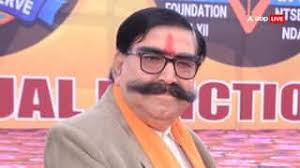
Gyandev Ahuja had carried out the ritual at a temple in Alwar after Tika Ram Jully, the leader of Opposition in the Rajasthan Assembly, visited it. The Bharatiya Janata Party on Sunday expelled former MLA Gyandev Ahuja after he conducted a “purification” ritual at a temple in Rajasthan’s Alwar following a visit by Dalit Congress leader Tika Ram Jully, The Indian Express reported. Jully, who is the leader of the Opposition in the Rajasthan Assembly, had visited the temple on the Hindu festival of Ram Navami earlier this month to attend a consecration ceremony, PTI reported. Before you scroll further… Following Jully’s visit, Ahuja performed a “purification” ritual at the temple on April 7, claiming that the Congress leader was “anti-Hindutva” and “anti-Sanatan”. Sanatana Dharma is a term some people use as a synonym for Hinduism. “This is a Lord Shri Ram temple at whose feet I have sprinkled Gangajal [water from the Ganga river],” the former MLA from Ramgarh was quoted as saying by The Indian Express. “Why Gangajal? Because some impure people came.” In response to his actions, the BJP on Sunday said that its state president Madan Rathore had “given an order to terminate the primary membership of former MLA Gyandev Ahuja after indiscipline was proved against him”. The BJP added that its state disciplinary committee had submitted a report about the incident to Rathore, The Indian Express reported. Ahuja had appeared before the committee on Sunday. Jully is the first Dalit politician in the state to become the leader of the Opposition in the Assembly. In response to Ahuja conducting the “purification” ritual, Congress leader Rahul Gandhi on April 9 had accused the BJP of “continuously insulting Dalits” and “attacking the Constitution”. “[Prime Minister Narendra] Modi ji, the country will be run by the Constitution and its ideals, not by Manusmriti, which considers Bahujans as second-class citizens,” the leader of the Opposition in the Lok Sabha had said. The Manusmriti is a Hindu scripture authored by an ascetic named Manu. The text has been widely criticised for its gender and caste-based codes. Former Chief Minister Ashok Gehlot also said that the incident showed “the ill-will of BJP towards Dalits”. “Such narrow-mindedness is not acceptable in a civilised society in the 21st century,” the Congress leader had said on X. “It cannot be condemned in the strongest words possible.” Jully too had called Ahuja’s actions as indicative of the BJP’s mentality towards Dalits, according to PTI. Ahuja, however, had said that he done nothing wrong and that his actions were against the Congress party, The Indian Express reported. “If there is even an iota of evidence that I have done something wrong, then… I am ready to shave my moustache,” The Indian Express had quoted him as saying. After his expulsion, Ahuja claimed that the BJP had been misled by Congress propaganda. Courtesy : Scroll Note: This news is originally published on https://scroll.in/na and is used purely for non-profit/non-commercial purposes, especially human rights.
Rajasthan: 2 died while cleaning sewer in Alwar; Ajaak said – Do not send cleaners into septic tank
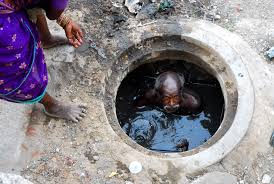
Every year many sanitation workers are dying untimely and painfully, ruining their families. The families of the deceased do not even get compensation or jobs on time. Alwar- A tragic incident in Khedli town of Alwar district of Rajasthan on Saturday, April 19, spread sensation in the entire area. Two people, Lacchi Ram (50 years) and Hemraj alias Akash, died of suffocation due to poisonous gas and getting trapped in the swamp while cleaning the sewer tank in a paper mill near Navkar Vatika. This incident has raised serious questions about the working style of the municipality and the safety of the sanitation workers. According to local newspapers, workers were sent down without any safety equipment to clean the sewerage line and chamber in Khedli town. Lacchi Ram, son of Mangtu, and Hemraj alias Akash, son of Sagar Valmiki, came in contact with poisonous gas during cleaning work and got trapped in the swamp, resulting in their death. After this incident, the local administration and municipality officials are silent, only saying that the matter is being investigated. AJAK i.e. Dr. Ambedkar Anusuchit Jati Adhikari Karmchari Association (AJAK) organization has taken a tough stand on this incident. The organization’s president Shriram Chordia has written a letter to the officials, including the Chief Minister of Rajasthan, demanding immediate action in this matter. The letter states that this incident is not only painful, but it also reflects the administration’s apathy towards sanitation workers. The organization said that similar incidents have happened in Rajasthan before, where employees have died while cleaning sewer lines and tanks. Despite this, the state government has not taken any concrete steps in this direction, which is a matter of concern for the cleaning community. The letter cites Section 7 of the Prohibition of Employment as Manual Scavengers and their Rehabilitation Act, 2013, which clearly states that no person, local authority, or agency shall employ any person for “hazardous cleaning” of sewer lines or septic tanks. Violation of this provision is punishable under Section 9 with imprisonment of up to two years, fine of up to two lakh rupees, or both for the first offence, and imprisonment of up to five years, fine of up to five lakh rupees, or both for subsequent offences. However, despite the implementation of this law, it is common for local bodies in Rajasthan to send workers to clean sewers and septic tanks without safety equipment. This leads to untimely and painful deaths of several sanitation workers every year, ruining their families. The families of the deceased do not even get timely compensation or jobs. The cleaners who go down the sewer are not provided any safety equipment due to which there is always a danger of their death. Ajaak has put forward some demands in the matter of cleaning of sewerage tank in Kherli, which include: During cleaning, the families of the deceased should be provided immediate rehabilitation and financial assistance of Rs. 1 crore should be provided to each family. One member of the dependents of the deceased families should be given a government job. To prevent recurrence of such incidents in future, technical security should be provided at the level of the state government and Municipal Corporation, Council, Municipal Corporation and Municipalities. FIR should be registered against the guilty contractor and the guilty and negligent officers of the concerned supervision who carry out the sewerage cleaning work and strict action should be taken. In future, the Prohibition of Employment of Workers Lifting Dirt Manually and Their Rehabilitation Act 2013 should be effectively implemented and the cleaners should not be sent down into sewer lines/septic tanks/manholes etc. in all the bodies. The Kherli incident is not an isolated case. Safai Karamcharis are constantly risking their lives while cleaning sewers in urban areas of Rajasthan due to lack of safety equipment and mechanised cleaning systems. Such frequent deaths are not only devastating families but also highlighting the failure of the administration. Courtesy : Geetha Sunil Pillai, Hindi News