
TM Exclusive: Tribal teacher suspended for ‘Mangalsutra-Sindoor’ comment said- How is it wrong to tell girls to focus on studies?
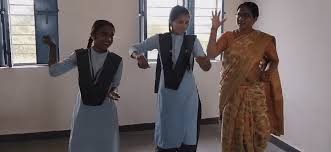
The teacher told The Mooknayak that the suspension is wrong, will challenge the order in Rajasthan High Court Udaipur- Dungarpur’s second grade teacher Maneka Damor, who came under the target of the state’s BJP government due to her statement in support of ‘Bhil Pradesh’ at the Bhil Pradesh Cultural Maharally on July 18 at Mangarh Dham in Banswara district, was suspended on July 24. Maneka was working in the Government Higher Secondary School located in Saddia in Simalwada Panchayat Samiti of Dungarpur, who has been suspended and posted in the headquarters office of Chief Block Education Officer – Dowada. The government order mentions the recommendation of departmental inquiry and suspension against Damor under Rajasthan Conduct Rules and tarnishing the image of the Education Department. The Mooknayak had a detailed conversation with teacher Maneka Damor and tried to understand the entire incident from her own words. The teacher clarified to The Mooknayak that “I did not stop any woman from wearing sindoor or mangalsutra, my intention was to explain to the gathering that tribals are not Hindus, earlier tribal women did not wear sindoor and mangalsutra, I also did not know this and so till I was not aware I also used to wear sindoor and mangalsutra but since 2016 when I have joined a tribal family, I came to know that this is not tribal culture, after that I stopped wearing sindoor and mangalsutra.” Maneka told The Mooknayak that we never opposed the worship of gods and goddesses in schools but recently in a school, when children were asked to sing a group song from Bhil Pradesh, three teachers were suspended. Regarding that incident, I said in the gathering that have some shame – action was taken against me for this, but I do not feel at all that I said anything wrong or tarnished the image of the department. What did Damor say in the Mangarh Maharally? Many tribal organizations including representatives of Bharat Adivasi Party participated in the program organized on July 18, in which Maneka Damor, founder member of Adivasi Parivar, said that I neither wear Mangalsutra, nor apply Sindoor and I do not even observe any fast. One who himself eats jaggery cannot advise others not to eat jaggery. Damor had said that our schools have been made the home of gods and goddesses, there are so many festivals and celebrations. School is a temple of education, where children come only to study, there should be no celebrations there. While teaching women and girls to focus on education, Damor had repeated the words of Baba Saheb – Education is the milk of a lioness, whoever drinks it will roar. After this, many organizations had demanded action against the teacher in this matter. They alleged that the image of the education department has been tarnished. Sanskrit teacher but Ambedkarite thinking, against hypocrisy Maneka Damor is a Sanskrit teacher, in a conversation with Mooknayak she says that earlier she followed Hindu customs, wore Mangalsutra, Sindoor, symbols of Suhaag and also observed fasts but after coming in contact with a tribal family in the last 5-7 years, there has been a change. “I came to know that the tribals are not Hindus. I read many books about this, gathered information from documents, then I came to know about the Judgment of Supreme Court dated 5th January 2011 in which the Court also accepted that the tribals are not Hindus. After that my life changed and I realized that by planting wrong things in the minds of the tribals, rituals etc. are being imposed on them. Education is the only medium by which the tribal community can awaken and demand their rights.” Maneka says that I did not stop any woman from wearing Sindoor or Mangalsutra. Video excerpts of the speech of that day are available in which I did not say anything wrong. I have said that I do not wear Mangalsutra or Sindoor – what is wrong in that? Motivating the tribal community, which lacks education, to acquire knowledge cannot be called wrong in any way. Damor told that her suspension order is wrong and she is filing a petition against it in the High Court. Full support of family, support of husband and sons Maneka told that her family used to follow Hindu customs earlier but after joining the tribal family, they also do not believe in them. Maneka’s husband is a government teacher in Gujarat and the couple has two sons who are studying in ninth and seventh classes. Maneka says that I also teach my sons that they should stay away from religious hypocrisy and focus on studies and have a scientific attitude. She says that the whole family is in her support and her sons also believe that mummy has not done anything wrong. The Mooknayak spoke to Maneka’s brother Sitaram Damor who is preparing her writ petition in Jodhpur. Sitaram told that the basis of Maneka’s suspension has been made service rules conduct but Maneka has not said any indecent or unconstitutional words. If there is any complaint, the department should have issued a show cause notice, an inquiry should be conducted and action should be taken after hearing the teacher’s side, but here the teacher was directly suspended without APO, which is unfair and a petition will be filed against this order in the High Court. Geetha Sunil Pillai Courtesy : Hindi News
### Operation Smile: Workshop Organized on Protection of Transgender Rights
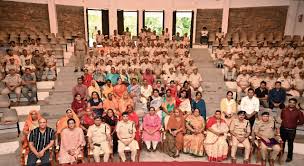
Udaipur,Under the directives of Additional Director General of Police, Civil Rights & Anti Human Trafficking (AHT), Rajasthan, Jaipur, and in compliance with the state-wide Operation Smile initiative, a range-level workshop for the transgender community was organized on Thursday at Vidya Bhawan Auditorium, Fatehpura, Udaipur. The event was held under the guidance of Inspector General of Police Rajesh Meena, Udaipur Range, and jointly hosted by the Udaipur Range Police and UNICEF Rajasthan. The objective of the workshop was to sensitize designated police officers at the station level regarding grievance redressal for transgender individuals and to educate the community about their legal rights. While presiding over the session, Additional Superintendent of Police Harsh Ratnu emphasized that integrating the transgender community into mainstream society is the responsibility of every citizen. He addressed the nodal officers of designated police stations and representatives of the transgender community from the division, sharing the efforts made by the police department to safeguard their rights. ASP Ratnu also instructed the police nodal officers to thoroughly study the Transgender Persons (Protection of Rights) Act and ensure its proper implementation at the police station level. He underlined the importance of sensitivity and non-discrimination while dealing with any marginalized group. Insights from Experts and Officials Pushpa Mai, Director of Nai Bhaur Sansthan and lead trainer for the session, provided detailed insights into the rules and conduct expected of police officials under the 2019 Transgender Rights Act. She elaborated on state government initiatives for the upliftment of the transgender community, emphasizing efforts to provide equal facilities, recognition, health care, and safe environments. ASP Mukesh Sankhla from Chittorgarh elaborated on provisions under the POCSO Act and urged police personnel working with the transgender community to act in accordance with the law. He also encouraged community members to approach nearby police stations or officials without hesitation, ensuring their cases would be prioritized. A Call for Human-Centric Policing DySP Chetna Bhathi described the transgender community as a representation of “Ardhanarishwar” and called for human-centric and compassionate policing. She said the community holds a unique place in society and that working sensitively towards their protection earns divine blessings. Amit Bhatt, Advisor with the Department of Social Justice and Empowerment, explained the online registration process for transgender individuals and highlighted several schemes for them including pensions, scholarships, the Smile Scheme, Garima Greh, the Transgender Welfare Board, and psychological support services. Mental Health and Support Services Dr. Jitendra Jeengar, Psychiatrist at Geetanjali Medical College, emphasized mental health as a fundamental need across all genders and communities. He spoke about increasing cases of depression and shared strategies for managing mental health through proper nutrition and lifestyle. He also introduced helpline number 14416 for mental health support. UNICEF Divisional Advisor Sindhu Binujeet highlighted the objectives of the workshop, urging police officials to handle all genders with empathy at the Women Help Desks and police stations. She noted that such programs are regularly organized to bridge the gap between the police and the transgender community. Active Participation and Discussions The event included the screening of gender equality videos and presentations. An open discussion was held where participants shared challenges they face related to transgender issues. Attendees included Additional SP Banwari Lal (Salumber), Additional SP Balveer Singh (Pratapgarh), nodal officers from across the range, members of the transgender community, representatives from Childline, and officers from the office of IG Police. Over 200 participants were present. The program was effectively anchored by Kuldeep Verma, while representatives from the Policing for Care initiative including Dilip Salvi and Sunil Vyas also participated actively. This workshop marked a progressive step in promoting inclusive policing and ensuring the rights and dignity of the transgender community are protected and respected. Courtesy : Pressnote Note: This news is originally published on https:/pressnote.com/ and is for use by the non-military/non-commercial community, especially those in the human rights sector.
Tribal girls forced to eat rotten food in Dungarpur, father MP told TAD minister- “Don’t sleep after eating religion’s powder…”

The authorized capacity of the hostel is 100 girls, irregularities are done by registering fake attendance of 100 girls in the records, whereas currently only 50-60 girls are studying in the said hostel, when the girls talk of complaining about all the above matters, they are threatened with expulsion from the hostel. Dungarpur- In the Scheduled Tribe Girls Hostel built behind the SBP College building of the district, the girls are being forced to eat rotten food for a long time. These girls preparing for competitive examinations have to cook food themselves, because the hostel administration is not providing them clean and nutritious food. In this case, the girls recently complained to the collector and showed evidence, after which the collector ordered an inquiry by the Tribal Area Development (TAD) officials. After the matter came to light, Bharat Adivadi Party MP Rajkumar Roat has targeted TAD Minister Babulal Kharari in harsh words over the condition of the girl students. Roat wrote in a post on x, “The government claims to spend crores and billions for tribal welfare, but in reality that money is lost to corruption. This is the condition of the multipurpose tribal girls hostel in Dungarpur under the BJP rule in Rajasthan, where the system is in shambles and corruption is at its peak. The girls are forced to eat rotten food. TAD Minister Babulal Kharari, don’t sleep after eating the powder of religion. Due to your indifference, corruption is at its peak in the hostels of the TAD department under your tenure. The future of thousands of tribal children is going into darkness, there is still time to wake up from sleep as soon as possible and take immediate action against such corrupt wardens and material suppliers.” Roat has written a letter to the TAD minister stating that poor quality, insect-infested and harmful food is being served in the multi-purpose tribal girls hostel in Dungarpur for a long time, due to which many students fell seriously ill recently, and the hostel also lacks cleanliness, clean drinking water, electricity, security and educational facilities. The warden and cook-helper are not present regularly, due to which the students are forced to make rotis themselves. Apart from this, the CCTV cameras in the hostel have been shut down for the last one year, there are no basic educational facilities like library and computer. As per the rules, the warden is required to reside in the hostel, but she goes to her own home after 6 pm every day. The authorized capacity of the hostel is 100 students, irregularities are done by registering fake attendance of 100 students in the records whereas currently only 50-60 students are studying in the said hostel, when the students talk of complaining about all the above matters, they are threatened with expulsion from the hostel. Rot demanded an impartial investigation of the said case and strict action against the guilty warden, food supplier, cook-helper, and related officials. In this case, TAD Deputy Commissioner SP Kaswa told the media that on the report of the students, the department conducted a preliminary investigation in the hostel and found that the students are being made to work there and there is no watchman. There is a provision of sweet food once a week, but that is also not being given. Investigation has been started on the basis of the report. Tribal Army condemned this incident and wrote in a post, “Serving food with insects to girls in the tribal girls hostel of Dungarpur is inhuman and shameful. These girls have come for education, not for exploitation. Strict action should be taken against the culprits. We are with the victim girls.” Courtesy: Geetha Sunil Pillai, Hindi News
Rajasthan: Dalit woman sarpanch and her husband attacked with axe over MNREGA road construction, caste-related abuses also hurled
A Dalit woman sarpanch and her husband were attacked with an axe on June 8 in Kharesh village in Rajasthan’s Deedwana district while they were overseeing a road construction project under the MNREGA scheme. The accused, Bhanwar Singh, allegedly believed that the road construction was encroaching upon his land. According to Deedwana SP Hanuman Prasad, “It was a land dispute. The road is being constructed near the house of accused Bhanwar Singh. He felt that his land was being encroached upon.” Singh allegedly hurled caste-related abuses and chased the Dalit couple with an axe. A video of the incident shows several women trying to stop Singh and snatch the axe from his hands. “The Dalit sarpanch and her husband were not seriously injured,” SP Prasad confirmed, The Observer Post reported. “We have registered a case under Sections 115 (voluntarily causing hurt) and 126 (wrongful restraint) of the Indian Justice Code as well as relevant sections of the SC/ST (Prevention of Atrocities) Act, 1989.” Bhanwar Singh is currently absconding. Police say the case is under investigation. The attack has sparked anger on social media and people are expressing disbelief over the deteriorating law and order situation in Rajasthan. Many have criticised the government and police for inaction. Courtesy : Hindi News
Rajasthan Dalit men forced to clean plates after drinking water from shop

One of the men used a metal tumbler to drink from the pot, angering the shop owner. Two Dalit men were subjected to casteist abuse, denigration, and forced to clean plates after drinking from a pot in front of a shop. The incident occurred in Kantia village in Rajasthan’s Nagaur district. The incident took place on June 1 when Omprakash Meghwal and his friend from the Dalit community stopped to drink water from a pot in front of the shop while on their way to attend a family function. Meghwal used a metal tumbler to drink from the pot, angering the shop owner, Kaluram Jat. He, along with two others, Narsiram and Omprakash, enquired about their names and caste Upon learning the men were Dalits, Kaluram, Narsiram and Omprakash hurled casteist slurs before launching a violent attack on them. They also forced them to clean the plates. After some time, Meghwal and his friend managed to run home safely. In an act of intimidation, the three men returned in a camper vehicle the same night, circling Meghwal’s predominantly Dalit neighbourhood. Locals spent the night in panic. Lakdikapul Gated CommunitySt JosephsGermanten Hospital According to local reports, Meghwal’s family allege that the police were initially reluctant to register a complaint. However, pressure mounted on them after local leaders interrupted. Based on the Dalit man’s complaint, an FIR was lodged against Kaluram, Narsiram and Omprakash. They have been booked under the Scheduled Castes and Scheduled Tribes (Prevention of Atrocities) Act and other relevant charges. On Tuesday, June 3, Azad Samaj Party chief and Nagina MP Chandrashekhar Azad flagged the incident on his X handle, calling it another example of the caste discrimination pervading India. “In Kantia village, Dalit youths were abused, humiliated, and forced to clean utensils just for drinking water. This isn’t a mere dispute—it’s a reflection of systemic, centuries-old hatred,” he said. “Does a Dalit still not have the right to drink water?” his X post read. Azad further demanded that the victims be given special protection and proper compensation. He further demanded that the state administration look into the matter and deploy forces to the village to ensure that social harmony is maintained. Courtesy : TSD Note: This news is originally published on https://thesiasatdaily.com/ and is for use by the non-military/non-commercial community, especially those in the human rights sector.
4 workers die of septic tank fumes in Jaipur, 2 critical

Jaipur, May 27 (PTI) Four men who were allegedly forced to enter a septic tank in Sitapura Industrial Area here to retrieve gold and silver particles died of toxic fumes, police on Tuesday said. The incident occurred late Monday night in a jewellery factory in G-Block of the Jewellery Zone. The deceased were identified as Sanjeev Pal, Himanshu Singh, Rohit Pal, and Arpit Yadav, police said. Two more, Ajay Chauhan and Rajpal, were rushed in a critical condition to Mahatma Gandhi Hospital, while two others, Amit Pal and Suraj Pal, were discharged after primary medical care. The workers had gone down a 10-foot-deep tank and lost consciousness. Police said initial investigation suggested that the workers had initially refused to enter the tank due to the intense heat and presence of toxic gases. However, the company management persuaded them with promise of extra money. According to police, Amit and Rohit were the first to descend into the tank. Soon, they began gasping and calling for help. The remaining six went down the tank one after another to help the first two out, but also fell unconscious. A police source said the septic tank contained a chemical sludge, believed to be carrying hold particles of gold and silver, residue from the jewellery manufacturing and cleaning processes. The sludge is periodically cleaned to extract valuable metals, a practice not uncommon in jewellery units. PTI SDA VN VN This report is auto-generated from PTI news service. ThePrint holds no responsibility for its content. Courtesy : The Print Note: This news is originally published on https://theprint.com/ and is for use by the non-military/non-commercial community, especially those in the human rights sector.
Dalit youth thrashed in Rajasthan for drinking water from pot, three held

The victim’s family claimed that police initially tried to ignore the case and remained tight-lipped even as the incident began gaining traction on social media. JAIPUR: In a shocking case of caste-based discrimination, a Dalit youth was allegedly abused and beaten in Rajasthan’s Nagaur district for drinking water from a pot kept outside a grocery shop. The incident took place on Sunday evening in Kantia village under Khinvsar subdivision. The victim, Omprakash Meghwal, a resident of Aau village, had stopped near the shop with a friend while on his way to a relative’s function. He used a metal tumbler (lota) to drink water from a pot placed outside the store. Soon after, the shop owner Kaluram Jat and two others — Narsiram and another man also named Omprakash had asked him his name and caste. When they found out that he belonged to a Scheduled Caste, they allegedly shouted casteist abuses, beat him up, and threatened to kill him. Omprakash said he tried to clean the pot with sand to calm them down, but the men continued to assault and humiliate him. Scared, he ran and took shelter at a relative’s house. Later that night, around 11:30 p.m., the accused allegedly returned in a camper vehicle, circled the locality several times, and dragged the vehicle’s tyres in an apparent attempt to intimidate the residents. The act reportedly caused panic among the largely poor Dalit families in the area. Omprakash filed a police complaint the next day. A team led by Deputy Superintendent of Police Rampratap Vishnoi visited the village, but the accused had already fled. After searches, police detained all three. Nagaur SP Narayan Togas said they have been booked under the SC/ST (Prevention of Atrocities) Act and other charges. A detailed probe is on. The victim’s family claimed that police initially tried to ignore the case. Police officials remained tight-lipped even as the incident began gaining traction on social media. Even on Tuesday, local police avoided giving clear answers when asked by reporters. Action was taken only after mounting public pressure and the video went viral. The incident has triggered widespread outrage. Azad Samaj Party chief and Nagina MP Chandrashekhar Azad strongly condemned the attack, calling it a grim reminder of entrenched caste discrimination in India. “In Kantia village, Dalit youths were abused, humiliated, and forced to clean utensils just for drinking water. This isn’t a mere dispute—it’s a reflection of systemic, centuries-old hatred,” he said. “Does a Dalit still not have the right to drink water?” This incident is similar to a 2022 case in Jalore, where a Dalit student was beaten to death by a schoolteacher for drinking water from a pot meant for upper castes. Courtesy : Rajesh Asnani, TNIE Note: This news is originally published on https://thenewindianexpress.com/ and is for use by the non-military/non-commercial community, especially those in the human rights sector.
Chittorgarh Cops Under Scrutiny After Failing to Apply POCSO & SC/ST Act in Dalit Minor’s Abduction Case
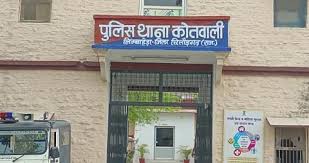
Following media exposure of the case, the SC/ST Act provisions were hurriedly added on May 29. Chittorgarh- In a shocking display of negligence, the Nimbahera Kotwali Police in Chittorgarh, Rajasthan, have come under scrutiny for their handling of a kidnapping case involving a 15-year-old Dalit minor girl. Despite the gravity of the crime, the police failed to invoke the Scheduled Castes and Scheduled Tribes (Prevention of Atrocities) Act (SC/ST Act) and the Protection of Children from Sexual Offences Act (POCSO Act), registering the case solely under Section 137(2) of the Bharatiya Nyaya Sanhita (BNS), 2023. Following media exposure of the case, the SC/ST Act provisions were hurriedly added on May 29. However, in this entire matter, while the investigation and action should have been handled by an officer at the Deputy Superintendent of Police (DySP) rank as per departmental rules, Nimbahera DySP Badrilal Rao was not even informed about the case. Child rights experts state that in cases involving minors, after recovery, the victim must be presented before the Child Welfare Committee to ensure a thorough investigation and appropriate action. On May 24, a Dalit woman residing in Bapu Basti filed a complaint at the Kotwali police station, stating that on May 23 around 3 PM, an accused from Bada Kasai Mohalla, Nimbhaheda, unlawfully entered her home and forcibly took away her 15-year-old minor daughter on a motorcycle. According to the woman, she was away for work in the neighborhood at the time, leaving her daughter and younger son alone at home. The son reported that the accused had forcefully abducted his sister. When the family went to the accused’s house to inquire about their daughter, the accused’s family responded by saying, “The girl will return, our son has taken her with him,” and threatened them against filing a police complaint. They also warned that if a complaint was lodged, something severe could happen to the minor. The Mooknayak spoke to the family, who revealed that the minor had previously known the accused but was no longer in contact. She had been living at her maternal grandparents’ home, while the accused’s residence was just eight to ten lanes away. The family suspects that multiple individuals may have been involved in the abduction. Despite several days passing since the complaint was filed, the Nimbhaheda Kotwali police have neither recovered the minor girl nor arrested the accused. Shockingly, in a serious case involving the abduction of a Dalit minor, the police failed to immediately invoke relevant sections of the SC/ST Act and the POCSO Act, indicating an attempt to downplay the gravity of the incident. Sources suggest that while the accused and the victim were previously acquainted, this does not diminish the severity of the crime. As per regulations, cases related to atrocities against Dalits must be investigated by an officer of Deputy Superintendent of Police (DySP) rank. However, Kotwali Station House Officer (SHO) Ram Sumer Meena assigned the case to a sub-inspector-level officer and deliberately avoided adding SC/ST Act provisions to prevent the matter from reaching higher authorities. This reflects the police’s arbitrary and negligent approach. The minor’s mother expressed her anguish, saying, “My daughter’s entire life is at stake. The accused has full support from his family, and we fear he may commit a serious crime against her.” The victim’s family has pleaded for immediate action and the safe return of their daughter. While the Rajasthan government has repeatedly affirmed its commitment to delivering justice for Dalits and marginalized communities, the local police’s conduct in this case raises questions about these claims. The SHO’s handling of the matter not only casts doubt on police functioning but also exposes a biased and irresponsible attitude in sensitive cases Courtesy : Geetha Sunil Pillai, The Mooknayak Note: This news is originally published on https://themooknayak.com/ and is for use by the non-military/non-commercial community, especially those in the human rights sector.
The story of appointment, dismissal and return of Rajasthan tribal judge Pinky Meena: Supreme Court said—Participation of women in judiciary will break gender stereotypes

The court said, “Pinky Meena has proved her merit in the Rajasthan Judicial Service Examination while fighting social stigma and completing her education under difficult circumstances. Her dismissal is akin to a ‘death sentence’ given for a minor irregularity (omission to hide information).” New Delhi- The Supreme Court, while giving a historic verdict in an important case of Rajasthan High Court, has provided great relief to Pinky Meena, belonging to the tribal community, against her dismissal from the services of a civil judge. In its judgment given on 22 May 2025, the Supreme Court quashed the order of 24 August 2023 passed by the Rajasthan High Court, in which Pinky Meena’s writ petition was dismissed. Along with this, the Supreme Court also quashed the show cause notice issued on 17 February 2020 and the dismissal order of 29 May 2020. In this decision, Pinky Meena has been directed to be reinstated in service with immediate effect and to provide all consequential benefits such as seniority fixation and pay fixation (excluding the previous salary). Background of the case Pinky Meena had got selected for the post of Civil Judge and Judicial Magistrate in Rajasthan Judicial Service (RJS) on the basis of her educational qualification and hard work. She has a degree of Bachelor of Arts (BA), Bachelor of Education (B.Ed), Bachelor of Laws (LLB) and Master of Laws (LLM). She started serving as a second class teacher in the Education Department of Rajasthan Government from 30 December 2014. On 18 November 2017, an advertisement was issued by the Rajasthan High Court for the post of Civil Judge, in which Pinky applied and cleared the preliminary examination, main examination and interview. On 11 February 2019, she was issued an appointment letter as Civil Judge, and she started training from 6 March 2019, which she completed with excellent performance on 7 March 2020. However, after her appointment, complaints were filed against her by persons named Abhishek Verma and Ram Niwas Meena, based on which the Rajasthan High Court issued a show cause notice against her and later terminated her services. High Court’s decision and appeal in the Supreme Court The Rajasthan High Court on 24 August 2023 dismissed the writ petition of Pinky Meena, upholding the show cause notice and dismissal order. The High Court in its judgment held that Pinky had concealed information regarding her previous government job and educational qualifications as a teacher, which amounted to irregularity under Rule 14 of the Rajasthan Judicial Service Rules, 2010. Against this, Pinky filed a Special Leave Petition (SLP) in the Supreme Court, which was heard by a bench of Justice Satish Chandra Sharma and Justice B.V. Nagarathna. Allegations against Pinky Meena and her reply The Rajasthan High Court had levelled five main allegations against Pinky: Pursuing LLB and B.Ed simultaneously: The High Court alleged that Pinky obtained LLB and B.Ed degrees in the same year, which is not permissible under Rajasthan University Ordinance 168-A. Pinky responded by saying that the LLB first year examination is not considered the main examination of the degree. Fraud in attendance during LLM: The High Court claimed that Pinky obtained the LLM degree as a regular student while serving as a teacher, which is improper. Pinky clarified that regular classes for LLM are not usually held. Concealing information about previous job: The High Court said that Pinky concealed information about her government job at the time of interview. Pinky replied that at the time of interview (November 2, 2018) she had already resigned, and there was no column in the checklist to provide such information. Absence of NOC: The High Court alleged that Pinky did not obtain a No Objection Certificate (NOC) from the Education Department for the RJS exam. Pinky said that there is no such condition in the RJS rules. Concealment of appointment information: The High Court claimed that Pinky concealed information about her RJS appointment from both the Education Department and the High Court. Pinky responded that she was not in government service at the time of appointment, so there was no need to provide any information. The Supreme Court examined these allegations and found that all these allegations relate to the time when Pinky was not in judicial service but was working in the Education Department. The Court held that no action was taken by the Education Department in these matters, and it is not appropriate to make them the basis for her dismissal in judicial service. What the Supreme Court said The Supreme Court, in its 21-page judgment, not only ordered the reinstatement of Pinky Meena in service, but also made it clear that her dismissal violates the principles of natural justice and Articles 14 and 16 of the Constitution. The court made several important observations in its judgment, which underline the gravity and social context of the case. The court said, “Pinky Meena has proved her worth in the Rajasthan Judicial Service Examination while fighting social stigma and completing her education under difficult circumstances. Her dismissal is akin to a ‘death sentence’ for a minor irregularity (omission to conceal information).” The court also held that Pinky did not disclose information about her previous government job, but it is not a serious misconduct, as she had resigned from her job on 25 October 2018, and at the time of the interview (2 November 2018) she was not in government service. The court stressed on the violation of the principles of natural justice and said, “Pinky was not given an opportunity of a fair hearing during the investigation. The inquiry officer conducted the investigation behind her back, and the investigation report was not provided to her. This is a clear violation of the principles of natural justice.” Citing the case of Shamsher Singh vs State of Punjab (1974), the Court clarified that if the termination of service of a probationer is done on the ground of misconduct, it is mandatory to give him an opportunity for proper inquiry and hearing, otherwise it would
The Mooknayak Impact: Dalit groom’s Bindauli took place with great pomp, along with police security, Bhim Army also supported the family
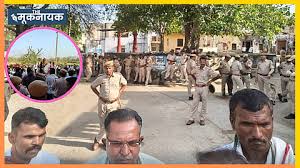
This incident came into the limelight when The Mooknayak first published the news of this matter on May 2, the National Commission for Scheduled Castes (NCSC) took suo motu cognizance and took immediate action. Rajsamand- A Dalit family in Tadawada Gujran village of Charbhuja police station area of Rajsamand district took out their son’s Bindauli on Saturday, May 3 amid tight police security. This incident came into the limelight when The Mooknayak first published the news of this matter on May 2 with the title “In this village of Rajasthan, when the Meghwal community took out Bindauli in 2022, the upper castes boycotted them, now the fear of the upcoming marriage started haunting them!”, the National Commission for Scheduled Castes (NCSC) took suo motu cognizance and took immediate action. Suresh Meghwal, brother of the groom Dinesh Meghwal, had told The Mooknayak about his apprehensions. He said, “We have been ostracised in the village since 2022. I am afraid that my brother’s marriage may be disrupted by anti-social elements. The atmosphere in the village is still tense, and we cannot take any risk regarding the safety of our guests and family.” Suresh cited an incident in 2022, when a bindauli of the Meghwal community was disrupted by upper castes, following which the community has been facing social boycott since then. Following The Mooknayak report, the NCSC took suo motu cognizance of the matter and wrote to Rajsamand Superintendent of Police (SP) Manish Tripathi, directing him to ensure adequate security for the bindauli. The commission also sought a detailed report within 15 days. Following the directions, SP Tripathi deployed around 170 policemen led by an Assistant Superintendent of Police (ASP) in the village on Saturday. Drones were also used to monitor the situation. The Bindauli was held on May 3 from 3 pm to 7 pm, with the groom riding a horse and passing through the main square, Charbhujanath temple and other places in the village. The wedding ceremony is scheduled for Sunday, May 4. “The Bindauli was conducted peacefully. The baraat will be held on Sunday for which we have sought police protection,” Suresh Meghwal said. The groom’s family had also invited the Bhim Army to the ceremony, which joined the Bindauli and extended support to the community. The police kept a tight vigil throughout, ensuring no untoward incident took place. The incident comes just a week after a Dalit groom was attacked during a Ghodchadhi in Madhya Pradesh. The Mooknayak report and the NCSC’s prompt action played a key role in handling the situation in Rajsamand in time, highlighting the importance of media and institutional support for communities facing caste discrimination. Courtesy : Geetha Sunil Pillai, Hindi News