
Rahul Gandhi’s Punjab tour likely within 10 days
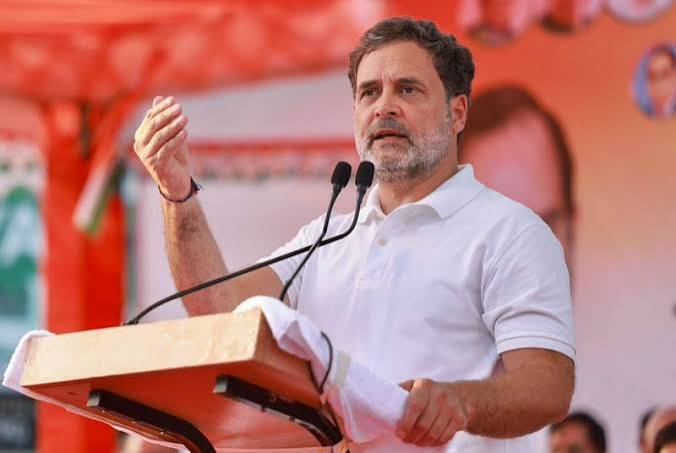
Chandigarh: Rahul Gandhi is likely to visit Punjab within the next 10 days, with his tour schedule almost finalised, AICC national media coordinator Hari Shankar Gupta said on Wednesday. A central Congress media delegation reached Chandigarh to coordinate directly with the Punjab unit and held a strategy meeting with state Congress president Amrinder Singh Raja Warring. Gupta said minor changes to Rahul Gandhi’s Punjab schedule were made due to his presence at student protests in New Delhi and his subsequent sit-in outside Parliament Street police station. He said the campaign blueprint was ready and Rahul Gandhi was expected to tour the state within a week to 10 days. Top Congress functionaries, including Warring, Charanjit Singh Channi, Partap Singh Bajwa and AICC Punjab in charge Bhupesh Baghel, would campaign together, the delegation said. Rejecting speculation about factionalism, the delegation said differences over ticket distribution were normal and that allotments would be decided by the AICC through an institutional process. The central team said all 29 political district committees across Punjab’s 23 administrative districts had been divided among its members across three zones. Wing Commander Anuma Aacharya was assigned Majha, Ishan Tyagi Doaba, while Malwa’s 19 districts were divided into Malwa-1, under Harnam Singh, and Malwa-2, under Vikram Lohia. Warring assured the delegation of organisational, logistical and grassroots support across all assembly constituencies. Courtesy : TOI Note: This news is originally published on https:/timesofindia.com/bha and is used purely for non-profit/non-commercial purposes, especially human rights
Dalit brothers allege custodial torture, move SC commission
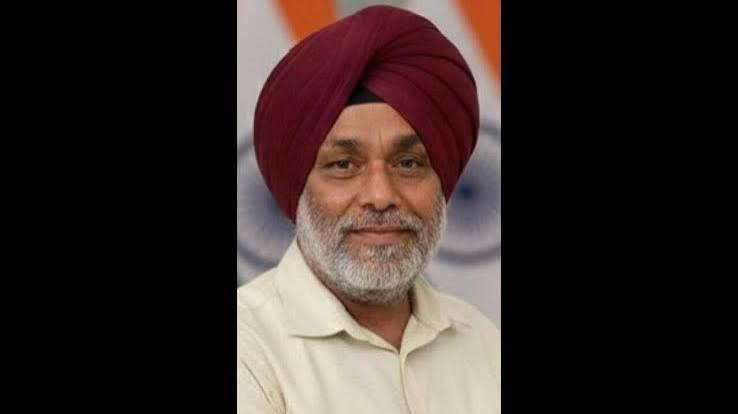
Patiala: Two Dalit brothers from Kakrala village in Nabha, Patiala district, have complained to the National Commission for Scheduled Castes, alleging that personnel at Chhintanwala police post tortured them in custody over a suspected theft. The daily-wage masons alleged that they were stripped, severely beaten, verbally abused and given electric shocks before being released. They sought an independent inquiry, legal protection and action against the personnel involved. The brothers said they had been working at the house of fellow villager Baghel Singh, where a theft was reported on the night of Aug 24. They alleged they were handed over to the police without any preliminary investigation or credible evidence. In their Sept 1 petition, they urged the commission to take suo motu cognisance of the alleged human rights violation and caste-targeted abuse. They sought an investigation by a senior independent officer or agency rather than the local police. They also sought preservation of CCTV footage, DVRs, daily diary registers and custody records, an independent medico-legal examination, removal of the accused personnel from active duty and security for their family. Punjab BJP Scheduled Caste Morcha vice-president Paramjit Singh Kainth, who visited the family with community leaders, demanded a transparent, time-bound investigation. He warned that the organisation would launch a statewide agitation if officers were shielded. Chhintanwala police post in charge, sub-inspector Chamkaur Singh, rejected the torture allegations. He said the brothers had been questioned only four days earlier as part of the investigation and accused them of using pressure tactics. Chamkaur Singh claimed CCTV footage showed that a son of one of the suspects had left a small gate open, through which burglars later entered the house on the night of Aug 24 and stole gold ornaments worth Rs 10 lakh. He said a case would be registered only after the investigation and collection of evidence, including call details. Courtesy : TOI Note: This news is originally published on https:/timesofindia.com/bha and is used purely for non-profit/non-commercial purposes, especially human rights
The Dalit enigma: Why Mayawati is going solo in Punjab
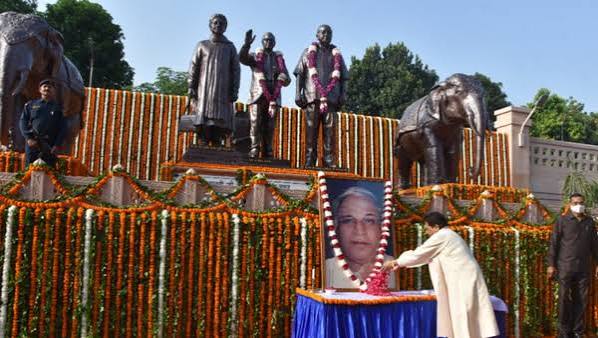
Bahujan Samaj Party (BSP) chief Mayawati has decided to go solo in the upcoming 2027 Punjab assembly election. This move has put the spotlight on a striking contradiction in the state’s politics: Punjab has India’s highest proportion of Scheduled Castes, but no political party has been able to turn that numerical strength into a durable Dalit vote bloc. On August 25, Mayawati announced that the BSP would contest the polls “alone without any alliance or compromise with anyone”, arguing that electoral tie-ups risked weakening the party’s vote share and demoralising its cadre. The decision carries particular significance in Punjab, where BSP founder Kanshi Ram began his political journey and where Scheduled Castes account for 31.94% of the population, according to the 2011 Census. Yet nearly one-third of Punjab’s population has never translated into nearly one-third of the vote for the BSP – or any other Dalit-centric political formation. Instead, the Dalit electorate has remained divided across caste, religious, regional and economic lines, allowing the Congress, AAP, SAD and BJP to each build pockets of support within it. That makes Mayawati’s 2027 gamble less about the size of Punjab’s Dalit population and more about a difficult political question: Can she turn the state’s 32% Dalit population into a coherent electoral bloc? Punjab’s number paradox The numbers explain why every major political party wants a share of the Dalit vote. Punjab had about 88.6 lakh Scheduled Castes in the 2011 Census, accounting for 31.94% of its population – the highest SC proportion among Indian states. The community is particularly concentrated in the Doaba region, which includes Jalandhar, Hoshiarpur and Nawanshahr. Eight of Doaba’s 23 assembly constituencies are reserved for SC candidates, while both Lok Sabha constituencies in the region, Jalandhar and Hoshiarpur, are reserved. Across Punjab, 34 of the 117 assembly seats are reserved for Scheduled Caste candidates. But the political influence of Dalit voters extends far beyond these constituencies. A 2021 analysis by Lokniti-CSDS professor Sanjay Kumar found that Dalits accounted for more than 30% of voters in 54 assembly constituencies and between 20% and 30% in another 45. In other words, Dalit voters can influence far more than the 34 seats formally reserved for them. But there is a crucial caveat: ‘Dalit’ is not a single political identity in Punjab. The community comprises several sub-caste and religious groups, including Ravidassias/Ad-Dharmis, Mazhabi Sikhs, Ramdasias and others. Their geographical distribution, religious affiliations, economic circumstances and political histories differ. That fragmentation has repeatedly prevented the kind of consolidated Dalit politics that emerged around the BSP in Uttar Pradesh. Punjab’s agrarian structure adds another layer. Land and economic power remain disproportionately concentrated among dominant agrarian communities, particularly Jat Sikhs. As a result, Dalit politics in the state often revolves around land rights, employment, reservation, social dignity and access to common resources, rather than caste identity alone. From Kanshi Ram’s Punjab to BSP’s high-water mark The irony is that Punjab was once among the BSP’s strongest political laboratories. Kanshi Ram, born in Punjab, built his early political movement around the mobilisation of Scheduled Castes and other marginalised communities before founding the BSP in 1984. The party’s breakthrough in Punjab came in the 1992 election. It won nine of the state’s 117 seats with 16.32% of the vote, emerging as the principal opposition party in the House. Six of those nine seats came from Doaba, underlining the region’s importance to the party’s political project. But the breakthrough proved difficult to sustain. In 1997, the BSP’s tally fell to one seat, although it still secured 7.48% of the vote. Its vote share then declined steadily — to 5.69% in 2002, 4.13% in 2007 and 4.29% in 2012. By 2017, it had fallen to 1.52%. In 2022, the BSP won just one seat with 1.77% of the vote, contesting as part of its alliance with the Shiromani Akali Dal. The steep decline in three decades captures the central problem Mayawati now faces. How 2022 exposed the paradox If the BSP’s decline showed the difficulty of sustaining Dalit-centric politics, the 2022 assembly election demonstrated how effectively mainstream parties can cut across caste identities. The AAP won 92 of Punjab’s 117 seats with 42.01% of the statewide vote, while Congress was reduced to 18 seats. The AAP’s performance was particularly striking in SC-reserved constituencies. It won 29 of the 34 reserved seats, while Congress won four and the SAD-BSP alliance one. The result also undercut the assumption that Congress’s elevation of Charanjit Singh Channi as Punjab’s first Dalit CM would automatically consolidate the Dalit vote behind the party. Channi became CM in September 2021, just months before the election. His elevation was widely viewed as an attempt to appeal to the state’s huge Dalit electorate. But in March 2022, Congress suffered a dramatic defeat. SAD and its alliance route The SAD has historically had its own Dalit support base, particularly among Sikh Dalits. Its alliance with Mayawati ahead of the 2022 election was an attempt to combine the Akali network among sections of the Sikh electorate with the BSP’s Dalit support base. The combination, however, failed to produce the revival the two parties had hoped for. The alliance won four seats – three for the SAD and one for the BSP – with a combined vote share of around 20%. BJP’s gamble: From alliance politics to going solo The BJP faces perhaps the most difficult social-coalition challenge of all. Its long-standing electoral arrangement with the SAD ended after the Akali Dal walked out of the NDA at the Centre over the farm laws. The BJP is now trying to establish itself as an independent force in a state where it historically relied heavily on the Akali alliance to provide it with a rural and Sikh social base. That means the party needs to build coalitions beyond the constituencies it traditionally relied on, while also trying to repair its relationship with farmers. Dalit voters are an obvious part of that expansion strategy. But Punjab is not Uttar Pradesh or Bihar.
AAP names Dalit face Garhi as in charge of Channi’s former seat
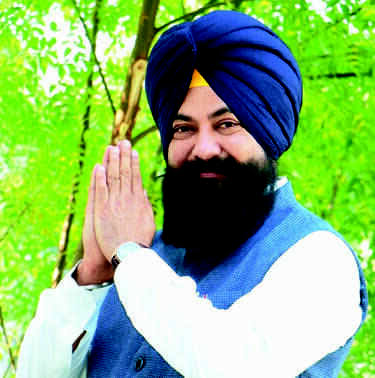
Patiala: The Aam Aadmi Party has appointed Punjab State Scheduled Castes Commission chairperson Jasvir Singh Garhi as its halqa in charge of the SC-reserved Chamkaur Sahib constituency, triggering speculation over a possible candidate change before the 2027 assembly elections. The seat is held by AAP MLA Dr Charanjit Singh, who defeated the then CM, Charanjit Singh Channi, by more than 7,900 votes in 2022. Channi had won the seat in 2007, 2012 and 2017. Party insiders said appointing an outsider as halqa in charge in a constituency represented by a sitting MLA had often preceded a candidate change. Garhi, a prominent Dalit leader with a grassroots network built during his years in the Bahujan Samaj Party (BSP), will now oversee party activities in the constituency. AAP functionaries described the move as a routine organisational exercise to energise workers. Political observers, however, see it as a possible recalibration of the party’s field leadership in a constituency with a substantial Dalit electorate. The appointment assumes significance given Garhi’s political background. A former govt veterinary inspector, he quit service in 2019 and headed the BSP’s Punjab unit for nearly five years. BSP expelled him in Nov 2024 on charges of indiscipline. He joined AAP on Jan 1, 2025, in the presence of CM Bhagwant Mann and became SC commission chairperson two months later. As commission chairperson, Garhi has taken on several Congress and BJP functionaries. He summoned Punjab Congress chief Amrinder Singh Raja Warring over remarks about late former Union minister Buta Singh and sought a written response. He also summoned leader of opposition Partap Singh Bajwa twice, including over alleged casteist remarks against Punjab minister Harbhajan Singh ETO. Garhi also summoned Congress-turned-BJP leader Ravneet Singh Bittu over alleged casteist remarks during a civic poll-related dispute in Dhuri. He rejected Sangrur police’s initial report as unsatisfactory despite Bittu issuing a public apology. MLA Dr Charanjit Singh and AAP media in-charge Baltej Pannu could not be contacted for comment. Courtesy : TOI Note: This news is originally published on https:/timesofindia.com/bha and is used purely for non-profit/non-commercial purposes, especially human rights
Dissidents push for Hindu Pradesh Congress Committee chief to end Punjab crisis
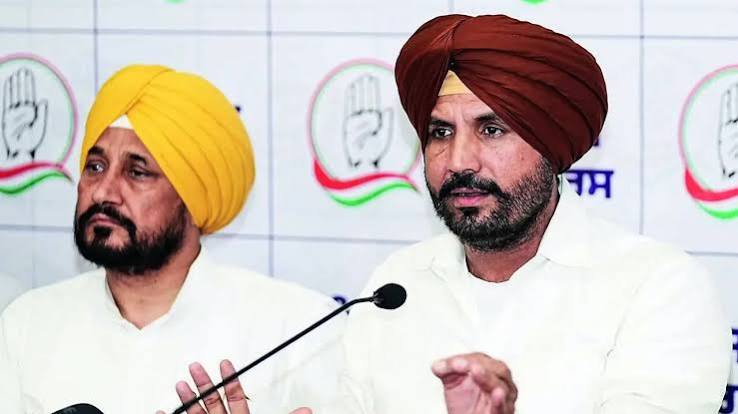
NEW DELHI: Congress is again mulling the idea of appointing a Hindu state president in Punjab amid a push from dissidents for a compromise to end the turmoil in the state unit. Well-placed sources said the deadlock in the dissidence-ridden organisation has cast a cloud over the upcoming election campaign, and the party brass is cut up about the unsuccessful fire-fighting efforts of key managers. A group of dissidents that includes senior netas like Charanjit Channi and Sukhjinder Randhawa has been seeking the replacement of state chief Amarinder Raja Warring ever since the AICC announced a clutch of poll-related panels while sticking with Warring at the helm two months ago. Now, sources said, the dissidents themselves have proposed that a Hindu Pradesh Congress Committee (PCC) chief be appointed. This group has also conveyed that they will be on board with such a replacement, even though each one of them has been fancying their chances till now, they added. With the state chief and the leader of opposition both belonging to the Jatt Sikh community, the idea of a Hindu PCC chief is meant to bring balance to the organisational set-up. This was the original idea before the AICC decided to retain Warring at the top. An insider said the party is looking at its options and may have to make some change in the leadership position — either the Punjab chief or AICC in-charge, or both. While it is too close to the elections for such an organisational overhaul, the sources said the crisis has to be defused. Sources also dismissed the notion that Rahul Gandhi will soon kickstart the state campaign in the form of a bus journey, arguing that the bus would bring all the squabbling netas together and, thereby, enforce peace. A party manager said Rahul will only start the bus journey after the organisational bickering is over. “The campaign will be about the state and state Congress. It needs an agenda so that the party can set a narrative for voters,” he said. “The state netas will have to come together and draw up a plan for winning the election together. Only then will Rahul get into it,” the party functionary said. Also, Rahul will be a part of the bus campaign for 2-3 days, and state netas will steer the rest of it for around 20 days. While Congress was hopeful of its chances in the AAP-governed state, persistent infighting in the local unit has raised concerns about its prospects. Inputs that forces like jailed MP Amritpal Singh’s “Waaris Punjab De” may be gaining ground have further alarmed some strategists. Courtesy : TOI Note: This news is originally published on https:/timesofindia.com/bha and is used purely for non-profit/non-commercial purposes, especially human rights
Baghel meets Rahul, Priyanka amid Punjab Congress infighting
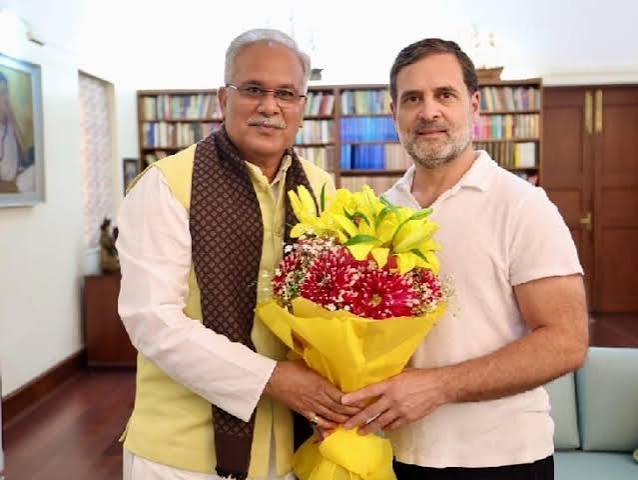
Chandigarh: Bhupesh Baghel, the AICC general secretary and in charge for Punjab, met the leader of the opposition in the Lok Sabha, Rahul Gandhi, and Congress MP Priyanka Gandhi Vadra in Delhi on Monday. During the meeting, issues relating to the continuing differences within the Punjab Congress and Rahul Gandhi’s proposed bus journey in the poll-bound state were discussed. The trio also discussed possible ways of addressing the differences within the state unit. Baghel, however, did not disclose details of the discussions on organisational issues after the meeting. The meeting comes amid continuing differences within the Punjab Congress, particularly between a group of leaders associated with the former chief minister and Congress MP, Charanjit Singh Channi, and the camp led by Punjab Pradesh Congress Committee president Amrinder Singh Raja Warring. The Channi camp has been pressing for the removal of Warring from the post of president. Last week, Baghel ruled out any change in the state unit’s existing organisational structure and said the focus would be on expanding the announced committees and bringing more functionaries into the party’s election preparations. “There will be no changes now. Only expansion will take place,” Baghel had said, indicating that the existing committees would be enlarged by adding more members, and that new committees could also be constituted as part of the party’s organisational preparations. After Monday’s meeting, Baghel said the expansion of the committees would take place shortly. However, he did not give details of the discussions on internal issues in Punjab. He said the primary focus of the meeting was Rahul Gandhi’s proposed bus journey in Punjab and related preparations. “I met both Rahul Gandhi and Priyanka Gandhi. The main topic was the bus journey planned for Punjab. I wanted to seek permission for the tour, specifically regarding the journey Rahul Gandhi is to undertake. They granted me time and asked me to submit a proposal outlining the schedule for the week, after which they will finalise the timing,” Baghel said. The former Chhattisgarh chief minister indicated that the proposed programme would not take place this week. He also hinted at a major tour covering Punjab. Baghel said a detailed programme would be prepared and shared with the party leadership before the schedule and timing were finalised. The proposed bus journey is being planned as part of the Congress’s preparations for the 2027 Punjab assembly elections. According to party sources, Rahul Gandhi is likely to begin the programme from Amritsar after paying obeisance at the Golden Temple. The tentative plan is for the first phase to cover the Amritsar-Hussainiwala stretch. Baghel also indicated that the proposed yatra would involve party functionaries from across Punjab. He said all party representatives would join the yatra, and national leaders would also participate in the programme. The proposed bus journey is likely to bring senior Punjab Congress functionaries together on a common platform as the party intensifies its preparations for the 2027 elections. AICC secretary and Punjab co-in charge Suraj Singh Thakur, who was also present at the meeting, said, “This is our family, and within a family, there has always been a good relationship between the younger and elder brothers. There are discussions over certain issues, and that is a matter within our party. We will resolve it by working together with everyone and taking everyone along, as has always been the Congress party’s approach and our principle. We will contest the Punjab elections together with everyone,” he said. Courtesy : TOI Note: This news is originally published on https:/timesofindia.com/bha and is used purely for non-profit/non-commercial purposes, especially human rights
No change in Punjab Congress leadership, says Baghel
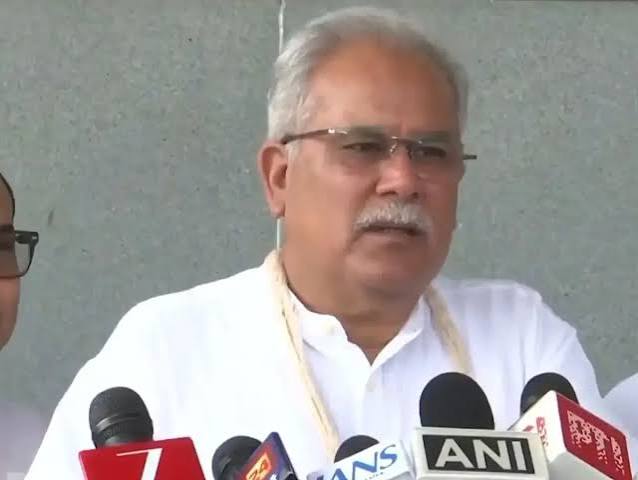
Chandigarh: Amid sustained pressure from a section of Punjab Congress leaders seeking a change in the state leadership, AICC general secretary in charge of Punjab Bhupesh Baghel on Thursday once again ruled out any change in the existing organisational structure, saying the focus was on expanding the committees already announced and bringing more leaders into the party’s election preparations. “There will be no changes now. Only expansion will take place,” Baghel said, making it clear that the existing committees would be enlarged by adding more members and new committees could also be constituted as part of the party’s organisational preparations. The development comes against the backdrop of an increasingly bitter power struggle within Punjab Congress, particularly between a group of senior leaders associated with former chief minister and Congress MP Charanjit Singh Channi and the camp led by Punjab Pradesh Congress Committee president Amrinder Singh Raja Warring. The differences became more pronounced after Congress, on July 1, retained Warring as the PPCC president while announcing several election-related committees. The camp of leaders backing Channi, including senior figures such as Sukhjinder Singh Randhawa, Rana Gurjeet Singh and Bharat Bhushan Ashu, has since expressed dissatisfaction with the organisational arrangements and pressed the party high command to address their concerns. They have been seeking the removal of Warring and a greater role for Channi. Baghel, however, dismissed the suggestion that senior Punjab leaders meeting the party high command were doing so merely to lodge complaints. Meanwhile, Congress is working on a proposal for a programme involving senior party leader Rahul Gandhi in Punjab, with the plan awaiting his approval. Baghel said a proposal had been submitted to Rahul Gandhi and that the party was waiting for his approval. As part of the tentative plan, Rahul Gandhi may begin a bus journey from Amritsar after paying obeisance at Golden Temple. He is expected to travel with senior Punjab Congress leaders in an apparent effort to bring them onto a common platform. According to party sources, the proposed first phase of the journey could cover the stretch from Amritsar to Hussainiwala, a distance of around 135 kilometres, and pass through approximately 25 to 30 Assembly constituencies. If finalised, the programme could provide Congress an opportunity to publicly project unity among its senior leaders at a time when factionalism has emerged as one of the party’s biggest challenges in Punjab. Congress leadership has held several rounds of meetings in recent weeks in an effort to ease tensions within the state unit and resolve differences among senior leaders. Party assessments have also underlined the need to contain infighting, which has repeatedly hurt Congress in Punjab. The internal rift became particularly visible during ‘Har Booth, Congress Mazboot’ campaign, when Baghel and Warring travelled across different parts of the state. Supporters of rival factions raised slogans at some programmes, while protests against Baghel were also witnessed. At some meetings, tensions between supporters of different groups reportedly escalated into scuffles. The infighting later spilled into a poster war, with posters portraying Baghel as General Dyer appearing at some places, while separate posters targeting Warring also surfaced. Courtesy : TOI Note: This news is originally published on https:/timesofindia.com/bha and is used purely for non-profit/non-commercial purposes, especially human rights
Punjab Congress faces fresh rift as Randhawa challenges Warring’s ‘one family, one ticket’ rule
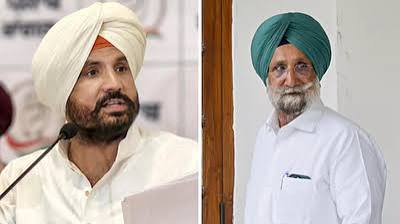
NEW DELHI: Fresh differences emerged in the Punjab Congress on Sunday after MP Sukhjinder Singh Randhawa challenged state unit chief Amrinder Singh Raja Warring’s ‘one family, one ticket’ stance ahead of upcoming assembly elections. Speaking at an event attended by former Punjab chief minister Charanjit Singh Channi, Randhawa said families could get up to four tickets if their members were capable of winning. “Some say I will not give two tickets (to a family). But those (in a family) who have the capability to win will not only get two but four tickets and ensure Congress’ victory,” Randhawa said. Randhawa also stressed that the Congress could not return to power by ignoring its workers. “We have nurtured the Congress with our blood and sweat. If the Congress is standing strong in the state today, it is because of the contribution of every worker, not any one individual,” he said. His remarks are being seen as a counter to Warring, who has advocated the ‘one family, one ticket’ policy. Warring had said that only one member of a family would get a ticket to contest the elections. “Big leaders say I will contest from here and my son will contest from there. If Raja Warring stays, one family will get only one ticket, not two. Rahul Gandhi will give tickets, and I will only recommend,” Warring had said. On Saturday, Warring also shared an old video of Rahul Gandhi on Facebook in which the former Congress president said, “One person per family should get a ticket.” “I will always follow my leader and stand by him,” Warring said. Meanwhile, BJP leader and former Union minister Ravneet Singh Bittu took a dig at the Congress over the issue, saying the party’s high command itself does not follow the one-family-one-ticket policy. Bittu claimed that the Gandhi family had not followed the Congress’ 2022 Udaipur declaration of ‘one family, one ticket’. “Is this a new thing? Sonia Gandhi is a Rajya Sabha member, while her children Rahul Gandhi and Priyanka Gandhi are Lok Sabha members. What Randhawa Saab has said is completely right. When three members of the Gandhi family can sit in Parliament, why cannot a family get four tickets?” Bittu asked. The Punjab Congress has been grappling with factionalism despite repeated assertions by the party leadership that efforts are under way to strengthen organisational unity ahead of next year’s Assembly elections. On July 1, when the Congress leadership decided to retain Warring as Punjab Congress chief and appoint Channi as chairman of its campaign committee. A section of leaders led by Channi had opposed Warring’s continuation as state unit chief and sought his removal. Channi’s supporters want him to be projected as the party’s chief ministerial face ahead of the assembly polls. Courtesy : TOI Note: This news is originally published on https:/timesofindia.com/bha and is used purely for non-profit/non-commercial purposes, especially human rights
Rahul Gandhi to visit Amritsar this month in a likely effort to quell infighting, fissures in Punjab unit
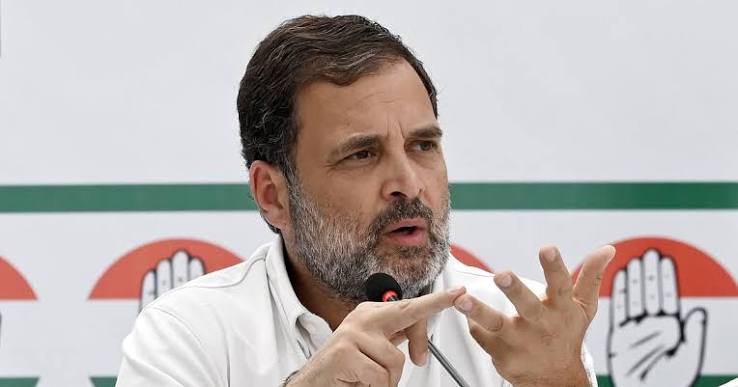
During the party’s ‘Har Booth, Congress Mazboot’ campaign, the grand old party found itself firefighting internal power struggles and fissures as public clashes erupted between rival factions. CHANDIGARH: Amid efforts to end the factionalism in the Punjab Congress ahead of the 2027 assembly elections, the Leader of the Opposition in the Lok Sabha and senior party leader Rahul Gandhi will visit Amritsar by this month-end. The reason behind the visit is the internal power struggles and fissures between the state leadership and the recent clashes between supporters of former Chief Minister Charanjit Singh Channi, state Congress president Amrinder Singh Raja Warring, besides AICC General Secretary and Punjab in-charge Bhupesh Baghel’s visit to the State leaving behing no breakthrough. Party sources said that the schedule of Rahul Gandhi’s visit is being worked out as the State unit leaders are planning to hold a ‘unity bus yatra’ during his visit, as he is expected to pay obeisance at the Golden Temple and other religious places in Amritsar. The visit of Rahul coincides with final efforts by the party high command to end infighting in the state Congress. Sources added that it is expected that during his visit, Rahul will give a message of unity to the state leadership, as the high command has already said the dissenting leaders that it will not act under pressure and will take a decision that is in sync with the ground reality. Thus, a few important decisions to achieve unity are expected in the coming days. On August 12, Leader of Opposition in the Punjab Assembly Partap Singh Bajwa met Rahul Gandhi outside Parliament House in Delhi in the presence of Congress general secretary (organisation) KC Venugopal and discussed the situation in the state unit ahead of the assembly elections. A day before, a dinner meeting was held at the Delhi residence of Gurdaspur MP and former Deputy Chief Minister Sukhjinder Singh Randhawa, which was attended by Jalandhar MP and former Chief Minister Charanjit Singh Channi, Ferozepur MP Sher Singh Ghubaya, Bajwa, and MLAs Rana Gurjit Singh and Pargat Singh. During the meeting, it was felt that MPs and senior leaders should approach the high command and brief the central leadership about the latest developments, as these leaders had asked Bajwa to get them time from Rahul for the meeting, as they have approached him but have not been given time so far. On August 7, 15 Punjab Congress MLAs wrote to the high command seeking appointments with KC Venugopal and Rahul Gandhi to discuss ‘pressing’ issues. Earlier, during the nine-day organisational tour of AICC General Secretary and Punjab in-charge Bhupesh Baghel from July 31 to August 8, the party’s ‘Har booth, Congress Mazboot’ camping, which covered around 18 districts and an earlier five-day exercise by Baghel in July at Chandigarh, which had been intended to address much the same problem, had produced little breakthrough. During the party’s ‘Har Booth, Congress Mazboot’ campaign, the grand old party found itself firefighting internal power struggles and fissures as public clashes erupted between rival factions, with supporters of former Chief Minister Channi raising slogans in his favour and verbal clashes breaking out between supporters of Channi and Warring at several meetings. “Go back Baghel” posters also surfaced in Muktsar, Patiala, Ludhiana, Bathinda and other places. The infighting came to the fore when the Congress leadership, on July 1, announced its decision to retain Amarinder Singh Raja Warring as state unit chief and appointed former Chief Minister Channi as chairperson of its campaign committee. Channi’s supporters have been demanding that he be declared the party’s chief ministerial face for the 2027 Assembly elections. Harpreet Bajwa Courtesy : TNIE Note: This news is originally published on https:/thenewindianexpress.com/bha and is used purely for non-profit/non-commercial purposes, especially human rights
Punjab Election 2027: BJP prepares to break into the Dalit vote bank. Will the Punjab situation change in 2027?

The BJP has now grasped the power of Dalit voters and the caste equations in Punjab. In the last Punjab elections, a simple Dalit candidate from the Aam Aadmi Party defeated the veteran former Congress Chief Minister Charanjit Singh Channi. The BJP now sees Dalit voters as game-changers. Punjab has the highest percentage of Scheduled Caste (SC/Dalit) population in any state in India. Dalits constitute approximately 32% to 33% of Punjab’s population. The Jat Sikh population is approximately 19% to 21%. Urban non-Dalit Hindus constitute approximately 18% to 20%. Other Backward Classes constitute approximately 20% to 31%. With the approach of the 2027 Punjab Assembly Elections, the political landscape in the state is beginning to unfold. The BJP, which has long relied on Punjab’s urban Hindu vote and as a stooge of the Akali Dal, is now fully prepared to take the lead. For decades, the BJP, confined to a minor coalition partner in Punjab, is preparing for a major political shift. The party has set its sights on the Dalit vote bank, the state’s largest social force. Following the success of the Haryana model of non-Jat and backward-Dalit alliances, the BJP is also constructing a maze of non-Jat Sikh and Dalit-Hindu alliances in Punjab. Its direct aim is to directly target the support base of the Congress and the Aam Aadmi Party. Dalits constitute approximately 32% to 33% of Punjab’s population. Jat Sikhs constitute approximately 19% to 21%. Urban non-Dalit Hindus constitute approximately 18% to 20%. Other Backward Classes constitute approximately 20% to 31%. However, Punjab’s Dalit community is not a unified whole; rather, it is primarily divided into two or three major religious and social factions: Sikhs and Hindus of the Ravidassia group, influenced by Dera Sachkhand Ballan. They constitute approximately 13% of the population and reside in the Doaba region of Jalandhar and Hoshiarpur. Second, the Mazhabi Sikhs, primarily affiliated with the Sikh religion, constitute approximately 10% of the population. They reside in the Malwa and Majha regions. Third, the Bhangi Hindu Sikhs constitute approximately 3.5% of the population and reside in urban and rural areas across Punjab. The BJP is now eyeing these voters. Will this BJP move be successful? Punjab’s 117 assembly seats are divided into three major regions. The BJP is seeking its counterweight in these regional and social dynamics. The Malwa region, which has 69 seats, will be the BJP’s target this time. Malwa, traditionally a stronghold of the Shiromani Akali Dal and the Congress, has completely shifted to the Aam Aadmi Party in 2022. There has been a long-standing tension between Jat Sikh farmers and Mazabi Sikh laborers over land and resources. What are the preparations for this time in Malwa, Doab, and Majha? Doab, which has 23 seats, is primarily a Congress-held area. It is considered the “Dalit capital” of Punjab, with a Dalit population of over 40%. This region has been a traditional stronghold of the Congress and Bahujan Samaj Party, where the Ravidassia and Ad-Dharma communities play a decisive role. Majha, meanwhile, has 25 seats. The last election saw a direct contest between the Congress and the Aam Aadmi Party, with the latter winning. This region encompassing Amritsar, Gurdaspur, and Tarn Taran is considered the center of sectarian Sikh politics, with the Congress, AAP, and the Akali Dal competing here. Will Dalit votes be divided along Haryana lines? In Haryana, the BJP consistently won elections by uniting Jats versus non-Jats and non-Jat Dalits. The BJP is pursuing a similar strategy in Punjab. For decades, the Chief Minister’s post in Punjab has been held by the Jat Sikh community, with the exception of Charanjit Singh Channi. The BJP is attempting to convey the message to non-Jat Sikh, Dalit, and Hindu voters that they have not received their due share in the state’s political leadership. The BJP is also working to bridge the social divide within Punjab’s Dalits between the religious Sikh and Ravidassia-Valmiki communities. The BJP’s primary goal is to attract sub-groups that received less representation in power during the Akali Dal and Congress regimes through organizational and welfare schemes. The BJP’s ‘Chakravyuh’ to encircle the Congress and AAP The BJP has prepared a three-pronged siege for Punjab 2027. First, deras like Dera Sachkhand Ballan and Dera Radha Soami Satsang Beas have a strong influence on Punjab’s Dalit vote bank. Through the central government, the BJP has prioritized direct contact with dera leaders and connectivity projects like the Kartarpur Corridor and the beautification of Guru Ravidas Maharaj sites. Second, the Congress made a major move by appointing Charanjit Singh Channi as the first Dalit Chief Minister in 2021. The BJP is now questioning why the Congress did not continue this experiment after Channi, which could have dented the Congress’s Dalit base. Third, the central government’s welfare schemes will be used to counter AAP’s freebies. The Aam Aadmi Party won in 2022 with significant support from Dalits and the poor. The BJP is now attempting to counter AAP’s freebies by capitalizing on the PM Awas Yojana, free rations, and schemes for Dalit entrepreneurs directly in villages, thus neutralizing the impact of AAP’s free electricity and water. Overall, the road ahead for the BJP in Punjab is not easy. The resentment against the BJP in rural areas, particularly among Jat Sikh farmers, stemming from the protests against the three agricultural laws remains a major challenge. Furthermore, the BJP lacks a strong local grassroots cadre like other parties in rural Punjab and the Malwa region. Furthermore, if the BJP focuses solely on the Hindu and Dalit equation, it risks facing a blanket opposition from the Sikh sectarian vote. Reported by: Ravi Shankar Singh Courtesy: Hindi News