
MP Chhatarpur Police accused of torturing tribal youths by putting chilli powder in their private parts, three policemen suspended
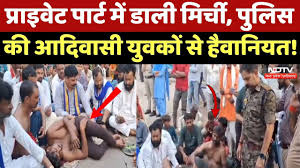
Superintendent of Police Aagam Jain has suspended Naugaon police station’s ASI Shiv Dayal Valmiki, head constable Ram Jat and constable Arvind Sharma with immediate effect. Bhopal. A sensational case of brutality of Naugaon police station has come to light in Chhatarpur district of Madhya Pradesh. Four youths of tribal society were taken into custody on suspicion of theft and not only brutally beaten, but also given inhuman torture by putting chilli powder in their private parts. In protest against the incident, Bhim Army workers gheraoed the Chhatarpur Superintendent of Police office on Saturday evening. When the matter escalated, three policemen were suspended. Meanwhile, Congress leader Digvijay Singh and Leader of Opposition Umang Singhar have assured justice by talking to the victims over the phone. What is the whole matter? Pratap Adivasi, a resident of Dharmapura village of Naugaon police station area, while talking to the media said that on the evening of July 15, at around 7:30 pm, he had gone towards Shikarpura road with his companions Shriram, Ritu, Meera and Balandi Adivasi. During this time, Naugaon police caught them and took them to the police station. According to Pratap, the police released them after questioning at 10:30 pm on July 15. But on July 16, they were again called to the police station and made to sit till 11 pm. On July 17, at 12 noon, the four youths were again taken into custody and brutally beaten on suspicion of stealing oil from the transformer. Not only this, according to the youths, the police crossed the limits of brutality by putting chilli powder in their private parts. After this, they were driven away from the police station without any case. The matter came to light when the condition of the victims deteriorated. Bheem Army gheraoed the Superintendent of Police office Bheem Army workers, along with the victims, gheraoed the office of Superintendent of Police Aagam Jain late on Saturday evening. The activists said that the youth of the tribal society have been treated like animals, which will not be tolerated. Three policemen suspended, investigation started Taking immediate action in the case, Superintendent of Police Agam Jain has suspended ASI Shiv Dayal Valmiki, Head Constable Ram Jat and Constable Arvind Sharma of Naugaon police station with immediate effect. Station in-charge Satish Singh clarified that some people were questioned on suspicion of theft, but no kind of beating or inhuman behavior was done. However, after the allegations of the victims and eyewitnesses, the role of the police is under suspicion. Digvijay Singh and Umang Singhar demanded action As soon as the information about the incident was received, senior Congress leader and Rajya Sabha MP Digvijay Singh spoke to the victim youths over the phone and assured them of justice. He also attacked the state government and said that atrocities are being committed against the tribals and the weaker sections continuously, and the administration is a mute spectator. Leader of Opposition Umang Singhar has also termed the matter serious and demanded strict action against the culprits. He said that police in Madhya Pradesh is becoming unbridled and tribal society is being continuously targeted. Ankit Pachauri Courtesy: Hindi News
Dalit woman and pregnant niece attacked in Gujarat! Caste violence captured in CCTV footage – Know what is the whole matter?

The Dalit woman accused the neighbors of using casteist abuses, assault and threats, while the other side also complained of forceful intrusion and attack. Gujarat: A dispute between neighbors that started over underground electricity repairs in Baroda village in Daskroi taluka of Ahmedabad district escalated to allegations of casteist abuses and assault. Both sides have lodged a police complaint against each other. According to the police, a 66-year-old Dalit woman has alleged that her upper caste neighbors abused her and her pregnant niece with casteist words, physically assaulted them and threatened to kill them. The incident took place on Sunday evening when the woman warned not to dig deep in the electricity repair work going on near her house, as there was a possibility of underground wiring. In the complaint, the woman said that when she was not heeded and the work continued, the dispute escalated and turned into violence. It is alleged that the neighbours snatched her stick and beat her as well as her niece. The woman says that the niece has injuries on her face and legs. She has submitted three video clips of the incident to the police as evidence and also named two people who allegedly intervened during the incident. On the other hand, the neighbours have also filed a complaint in return. They alleged that the Dalit woman and her niece forcibly entered their house and attacked them with an iron pipe and a wooden stick. The upper caste complainants say that they were threatened that they would be implicated in a false atrocity case and expelled from the society. The Vivekanand Nagar police station has registered an FIR under relevant sections of the Indian Penal Code (BNS) and the Scheduled Castes/Scheduled Tribes (Prevention of Atrocities) Act on the basis of complaints from both sides. Police say that the investigation into the case is ongoing. Rajan Chaudhary Courtesy : Hindi News
Varanasi court admits case against Rahul Gandhi for remarks against Sikhs
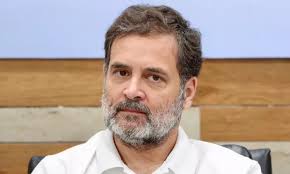
VARANASI: An MP-MLA court in Varanasi on Monday accepted a petition filed against the leader of opposition in the Lok Sabha and Congress MP Rahul Gandhi by Nageshwar Mishra, a former village head of Tilmapur Sarnath. He has accused Gandhi of making remarks against the Sikhs during his visit to the United States. Accepting Mishra’s appeal, special sessions judge (MP-MLA court) Yajurveda Vikram Singh rejected the order of the court of additional chief judicial magistrate (ACJM) delivered on Nov 28, 2024. Assistant district govt counsel (ADGC) Vinay Kumar Singh told TOI that the debate on the pending monitoring application in the court concluded, and the court will hear the case regarding Gandhi’s alleged remarks. Vivek Shankar Tiwari and Alakh Rai presented arguments in the court. The ADGC presented the case as govt counsel. Last Sept, Gandhi made a statement in the US, claiming that the environment in India is not favourable for Sikhs. Mishra filed a lawsuit in the judicial magistrate (second) court, alleging that this statement was a conspiracy to incite civil war in the country. The ACJM (MP-MLA) court dismissed the case after a hearing. Mishra filed a revision petition in the sessions court against the lower court’s order. During the hearing, Gandhi’s side filed an objection, appealing to the court to dismiss the case. In response, the monitor filed a counter-objection. Gandhi filed his written response before the MP-MLA court in Varanasi in the revision petition filed by Mishra, who sought registration of an FIR against Gandhi. Mishra had filed the petition in 2024, claiming that Gandhi made an objectionable statement during his visit to the US by stating that there was an atmosphere of insecurity among Sikhs in India. His petition was dismissed by the court on Nov 28, 2024. Mishra filed an instant revision plea, on which a notice was earlier issued to Gandhi. Courtesy : TOI Note: This news is originally published on https://timesofindia.com/bha and is used purely for non-profit/non-commercial purposes, especially human rights.
Dalit Christians allege discrimination in church, sit on hunger strike
Dalit Christians said for decades, they have not been allowed to pay subscription to the church and were kept out of planning committees. TIRUCHY: A section of Dalit Christians from Kottapalayam village near Thuraiyur sat on a hunger strike near the collectorate on Monday saying they have been facing discrimination and are not allowed to take part in the ongoing festival of the century-old St Mary Magdalene Church and other activities. The festival began on July 14. The church functions under the Roman Catholic Diocese of Kumbakonam. Bishop Jeevanandam Amalanathan said he would not take part in the chariot procession which is scheduled on Tuesday to register his protest against the “persisting caste discrimination in the parish”. Dalit Christians said for decades, they have not been allowed to pay subscription to the church and were kept out of planning committees. Further, they alleged that the church chariot is not taken into their locality. “We were told by the priest and also several dominant caste Christians that this is not our festival. The church refuses to collect subscription from us as it does from others. Instead, we’re asked to make donations,” said J Doss Prakash, a long-time parishioner. The protesters submitted a petition to the DRO during the weekly grievances meeting seeking action against the parish priest and others who allegedly threatened Dalits during a festival planning meeting on July 6. “We were abused with casteist slurs and warned not to interfere,” said another member. R Raj Nobili, a parishoner, said “Once we pay subscription, we have the right to question. That is why they are not collecting it from us. Despite running seven chariots during the festival, not even the smallest one enters our streets. The district administration should at least ensure that the chariot comes to our area,” he said. “This is a violation of equality guaranteed by the Constitution. Even after raising this through latter to authorities concerned, not one has intervened,” said Jo Kennedy, a human rights lawyer who was also part of the protest. “The church must dismantle this caste wall from within,”he added. Their other demands include formation of an inclusive parish council, equal rights in religious and festival events, and legal action for caste-based discrimination. Bishop Jeevanandam Amalanathan told TNIE that he would boycott the chariot festival on Tuesday due to the persisting caste discrimination in the parish. He said dominant caste Christians are stubborn in their stand to not give equal rights to Dalit Christians. He, however, maintained that the church did not discriminate against any one. Sources in the revenue department to whom these petitions were forwarded, said they have asked the local officials to inquire into the issue. Courtesy : TNIE Note: This news is originally published on https://thenewindianexpress.com/bha and is used purely for non-profit/non-commercial purposes, especially human rights.
LGBTQ Rights in India: Madras High Court’s Gender-Neutral Toilets Set Powerful Precedent
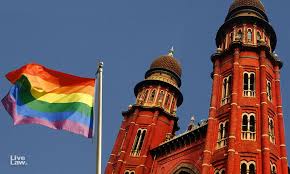
For many transgender persons in India, life is a long negotiation between identity and invisibility. You may walk past them on a street, share a bus seat, or smile at them briefly in an office corridor. But too often, society either stares with ridicule or looks away in silence. Very few see the human behind the label — someone seeking nothing more than dignity, respect and a chance to live as they truly are. In June 2024, the Madras high court made history by becoming one of the first in India to install three gender-neutral toilets on its campus. A LinkedIn post by transgender advocate Kanmani R (verified in June 2024) confirms the high court has installed three new gender neutral washrooms on its premises, marking a meaningful step toward inclusive facilities. This infrastructural change, while seemingly small, is a profound act of institutional empathy — a recognition of the rights and dignity of transgender and gender-nonconforming persons. In a legal landscape where detachment is often valorized, Justice Anand Venkatesh stood apart and more recently, so did the bench of Justice G R Swaminathan and Justice V Lakshminarayanan when approached by a same-sex couple seeking protection from their disapproving parents. Justice Anand Venkatesh paused the hearing, stating that he needed time to “understand same-sex relationships” before delivering a judgment. He wrote to psychologists, read scientific literature, and interacted with LGBTQIA+ individuals. “I am trying to break my preconceived notions about this issue. I have no hesitation in admitting that I am not fully ‘woke’ to this subject. I am willing to understand,” he said. That journey translated into a series of bold, progressive directives such as the ban on conversion therapy in Tamil Nadu; directions to revise school and college curricula to include LGBTQIA+ issues; a mandate for sensitisation of police and government officials; a push for gender-neutral restrooms in public and institutional spaces; and monitoring of implementation through status reports. It is from this context that the gender-neutral washrooms in the Madras High Court campus must be seen, not just as construction projects, but as judicially seeded symbols of change. Toilets might seem mundane, but for transgender persons, the lack of safe, affirming restrooms can lead to harassment, violence, or complete avoidance of public life. Recognising this, in the Sushma case, Justice Venkatesh urged the Union and state govts to ensure provision of gender-neutral restrooms, especially in public institutions such as courts, colleges and govt offices. His orders made it clear that dignity begins with access. Following his directions and subsequent PILs in 2023-24, the Madras HC’s campus became the first to act on these ideals, completing the installation of three gender-neutral toilets by June 2024. Even as courts such as Madras HC move toward inclusion, India’s primary transgender law —the Transgender Persons (Protection of Rights) Act, 2019 — lags behind. Justice Venkatesh had flagged issues with the law, notably the requirement of certification for gender identity, a direct contradiction of the NALSA judgment (2014); the absence of provisions for reservations, marriage, adoption, and inheritance; and tokenistic punishment for violence and abuse against transgender persons. He echoed the demand that LGBTQIA+ rights in India must not come with red tape, nor be made conditional upon medical procedures or administrative approval. The Madras HC’s move symbolises judicial responsibility not just to interpret the law, but to humanise it. It aligns with Articles 14 and 21 of the Constitution, guaranteeing equality and dignity. It responds to community-led demands, acknowledging that legal victories must be followed by institutional change. Building on this vision, the road ahead must include amending the 2019 Act to fully honour self-identification, introduce reservations, and grant family rights; enacting a national anti-discrimination law covering gender, caste, class, disability, and sexuality; public funding for gender-affirming healthcare, and psychological support tailored to transgender needs; mandatory training for police, teachers, and judges on gender identity and inclusion; and a curriculum changes at school and university levels to foster respect and awareness from a young age. Justice Indu Malhotra said it best: “History owes an apology to the LGBTQ community.” But an apology is not enough. The transgender community does not need charity. They deserve citizenship, not conditional sympathy. It’s time India matched its legal promises with social and institutional will. When the judiciary listened India has known and embraced gender diversity for centuries. Communities such as the hijras have been part of festivals, births and blessings. But colonial rule brought with it a rigid gender binary and criminalisation, casting the transgender identity into the shadows. The Criminal Tribes Act, 1871, reduced Hijras to a stereotype, criminal by default. This stigma, though the law is long gone, survives in whispered judgments and silent exclusions. Change didn’t begin in Parliament — it started in courtrooms. 1.NALSA v. Union of India (2014) A historic verdict that recognised the right to self-identify one’s gender. For the first time, India’s highest court said: You exist. You matter. You are equal. Transgender persons were granted constitutional rights under Articles 14, 15, 16, 19(1)(a), and 21. 2.Puttaswamy v. Union of India (2017) A landmark ruling on privacy, affirming that one’s gender identity is deeply personal and fundamentally protected. 3.Navtej Singh Johar vs Union of India (2018) With the striking down of Section 377, the court did more than decriminalise love — it restored the humanity of millions. 4.Arun Kumar vs IG of Registration (2019) The Madras High Court reminded us that the law must evolve with empathy — recognising that a transwoman can be a bride under Hindu marriage laws. 5.S Sushma vs Commissioner of Police (2021) A rare moment of judicial humility where a judge chose to unlearn and relearn by listening to LGBTQ+ voices. The court ordered safeguards, called out police excesses and banned conversion therapy. Law with good intentions, but glaring gaps The Transgender Persons (Protection of Rights) Act, 2019, tried to put NALSA into law. It made discrimination illegal. It defined transgender broadly. However, it fell short because it required certificates for self-identity,
Over 58% Dalit voters in Bihar think unemployment is biggest poll issue: survey
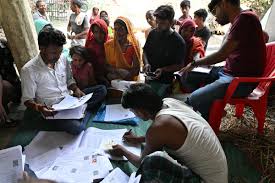
The survey was conducted and released by the National Confederation of Dalit and Adivasi Associations also found that more than 27.4% Dalit voters in Bihar have ‘no trust’ in the Election Commission A Booth Level Officer checks documents during Special Investigation Revision to the electoral roll Drive at Kamalpur Village under Jalalgarh Block in Purnia district in Bihar. File A Booth Level Officer checks documents during Special Investigation Revision to the electoral roll Drive at Kamalpur Village under Jalalgarh Block in Purnia district in Bihar. File | Photo Credit: The Hindu More than 27.4% Dalit voters in Bihar have “no trust” in the Election Commission of India (ECI), a new survey released ahead of the Assembly Elections due in the State has found. It also shows that over 58% Scheduled Caste (SC) voters in the State thought that unemployment was the biggest issue in the upcoming polls. Over 12,000 new polling stations created in Bihar The survey was conducted and released by the National Confederation of Dalit and Adivasi Associations (NACDAOR), a conglomerate of hundreds of associations across the nation. It covered a total of 18,581 SC voters from across the State and was conducted between June 10 and July 4, Ashok Bharti, Chairman of NACDAOR told The Hindu. The 2022 Bihar caste survey counted 19.65% of the State’s population as belonging to the Scheduled Castes. He added that since the Election Commission started its Special Intensive Revision (SIR) of the rolls as the survey was underway, one question was put on the survey mid-way, for which only around 8,500 responses could be gathered. Fear of losing vote To the question ‘Do you fear losing your vote in the new voter list?’, over 71% of respondents said yes and 23.4% said no with a little over 5% not expressing an opinion. Around 32 lakh voters yet to submit enumeration forms in Bihar, says Election Commission On the general question of whether they trusted the Election Commission to be impartial, over 27% said no, about 51% said yes, and 21% said they didn’t know. The survey asked a total of 11 questions such as ‘who is their favourite political leader at the national and state levels’, ‘how is the work of the State government under Chief Minister Nitish Kumar’, and ‘who do they hold most responsible for the caste enumeration that will now be conducted’. 94.68% of Bihar voters covered in electoral roll revision drive, says Election Commission It found that while over 47.5% of the respondents said Prime Minister Narendra Modi was their favourite leader at the national level, 40.3% said Leader of Opposition Rahul Gandhi, and about 12% said other politicians. Credit for caste census It further reported that to the question ‘who do they credit for the caste census?’, 33.15% respondents said Narendra Modi, 30.81% said Rahul Gandhi, and 27.57% said Bihar Leader of Opposition Tejashwi Yadav while about 8% said the names of other politicians. Further, the survey showed that about 48% said the work of the Nitish Kumar-led government was “bad”, while about 45% said it was good. Opinion: The parameters of ‘success’ in Bihar’s poll roll revision Mr. Bharti told The Hindu, “A lot of people do surveys of Scheduled Castes, but hardly do many of them actually speak to us on the ground. This survey is of Dalits, by Dalits.” He explained that they went through the process of training enumerators to survey SC respondents across about 49 Assembly segments in the six regions of Bihar, namely Kosi, Mithilanchal, Seemanchal, Bhojpur, Champaran, and Magadh Pataliputra regions. Mr. Bharti said, “We have actually surveyed people on the ground. There was higher trust in our enumerators. Unfortunately for the question on SIR, we could not cover all respondents because it came midway.” The NACDAOR conducted this survey in collaboration with political consultancy firm The Convergent Media, and this is the second survey they have put out. Mr. Bharti said the first survey they did was ahead of the Delhi Assembly elections earlier this year. Abhinay Lakshman Courtesy : The Hindu Note: This news is originally published on https:/thehindu.com/ and is for use by the non-military/non-commercial community, especially those in the human rights sector.
Dalit youths allege illegal detention and custodial torture by cops in MP

Bhopal: Four Dalit youths accused police in Madhya Pradesh’s Chhatarpur district of illegal detention and custodial torture. The youths alleged they were stripped, beaten for four days, and had chilli powder rubbed into their private parts to force a confession in a theft case. The victims, residents of the Kanjadpur Dharampura area, stated they were returning from a housewarming ceremony on July 15 when they stopped to urinate by the roadside. A Dial-100 police vehicle allegedly picked them up without explanation. One youth, who is disabled, was released, while the remaining four were taken to the police station, hung upside down, beaten with belts, and tortured. Police had previously claimed to have arrested five individuals for stealing transformer oil. The incident prompted protests by Bhim Army workers and the victims’ families, who marched to the SP office demanding action under the SC/ST Act and the suspension of the accused policemen. A sit-in was held outside the SP office, where authorities responded by locking the gates and cutting power to the premises. DIG Lalit Shakyawar later visited the site and assured that a medical examination would be conducted and action taken after investigation. Three of the victims have since undergone medical tests. “We have asked a senior officer to investigate the matter. CCTV footage from inside the police station is being examined,” said Chhatarpur SP Agam Jain. Families also alleged that one of the five detained youths is missing and feared he may have died in custody. A victim’s father-in-law further accused the police of threatening him with arrest and eviction from govt land if the protest continued. Former Congress MLA Neeraj Dixit also visited the protest site and demanded justice. A heavy police force from multiple stations was deployed. Investigations are currently underway. Courtesy : TOI Note: This news is originally published on https:/timesofindia.com/ and is for use by the non-military/non-commercial community, especially those in the human rights sector.
Do Dalits need permission to take water even after 75 years of independence? Madras High Court told the bitter truth of the country!

Taking a tough stand on caste discrimination, the Madras High Court directed the Tenkasi administration to ensure equitable distribution of water and stop injustice to Dalits. Chennai. The Madras High Court has strongly objected to the discrimination being done to the Scheduled Caste community in drawing water from public water sources and said that it is “shocking and sad even in the scientific age” that some communities still have to wait for their rightful water. Justice R.N. Manjula said that it is unfortunate that even today some communities get access to public resources only after other communities, while the Constitution and law give equal rights to all citizens. The court said, “Natural wealth like water is for everyone. It is very shocking that even in today’s scientific age, some communities have to stand for their turn. Are we not all part of the same human society?” ‘Administration cannot remain a mute spectator’ The High Court made it clear that even though it is not easy to root out caste and class-based mentality, those in power and administrative responsibility cannot remain mute spectators. The court said, “If those in the administration remain silent on these incidents, they will also be considered partners in this narrow mindset. We need practical and peaceful action, not ostentation.” The court described water as the ‘nectar of life’ and said that no citizen, especially elderly women, should have to struggle for drinking water throughout their lives. Case details The observations were made when the court was hearing a petition filed by a man named Thirumalaisamy, who sought suspension of the sentence awarded by the District Sessions Court of Tenkasi and grant of bail. Thirumalaisamy was found guilty under Section 3(1)(r) of the Scheduled Castes/Tribes (Prevention of Atrocities) Act. It was alleged that on 3 December 2016, he used caste-related slurs and threatened to kill two persons working in his field. He was sentenced to one year rigorous imprisonment and a fine of ₹1,000. The petitioner argued that since the incident did not take place in public view, the sections of the Act were not applicable. The complainant (a 65-year-old woman) objected and said that if Thirumalaisamy was granted bail, she would have to face inconvenience and fear even while fetching water as he had to pass near her house. Thirumalaisamy assured the court that he would not appear in front of the complainant, nor make any threat or gesture. The court, noting that the hearing of the appeal was not possible soon and the petitioner had promised not to pose any threat, granted him bail and suspended his sentence. The court also directed the petitioner to appear in court every month. Court’s instructions to end discrimination During the hearing, the court also mentioned that the 65-year-old complainant is facing a lot of difficulties in getting drinking water. On this, the court directed the District Collector of Tenkasi that there should be no discrimination in water distribution on the basis of caste in the village. The court gave the following orders to the officials: Adequate water connection and water supply should be ensured in all the streets. No community should be given priority in water distribution. No person or group should take excessive amount of water which causes difficulty to others. The court clarified that all citizens have equal rights on public property like water and it is the responsibility of the administration to protect this right. Rajan Chaudhary Courtesy : Hindi News
MP: Tractor stopped in Niwari, Dalit family pelted with stones and attacked with weapons, case registered against 6 people
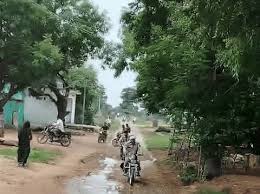
A video of this entire incident has also surfaced, in which bike-riding miscreants can be clearly seen chasing the tractor. Bhopal. A heart-wrenching incident has come to light in Prithvipur area of Niwari district of Madhya Pradesh, where bike-riding miscreants chased a tractor in a filmy style and attacked the family riding on it. The incident is of Neemta village, where this incident, which took place in broad daylight on Saturday, has created a sensation in the entire area. According to eyewitnesses and video footage, the attackers were seen chasing the tractor on six bikes. As soon as the tractor reached near Neemta village, the attackers stopped it and started pelting stones at the people riding in it. After this, they were also attacked with sharp weapons. The people riding in the tractor kept trying to save their lives, but the attackers beat them badly. Many people have suffered serious injuries in this attack. What is the whole matter? Prithvipur police station in-charge Jitendra Gurjar said that this violent attack started on Friday, when a youth named Satyam Yadav was sitting at a liquor shop. During that time, he had a dispute with a youth named Akash Ahirwar. The matter escalated to abuse and then to a fight. After this, people of Yadav community allegedly beat up other members of the Ahirwar family as well. In the preliminary investigation, the police found that this attack is the result of an ongoing rivalry and a fresh dispute, which later turned violent. 20-year-old Akash Ahirwar was going towards Chowki Chaumo on Saturday in Kamlesh’s tractor along with his family members, Sanjay, Anil and Sheela Ahirwar. As soon as they reached near Neemta village, Satyam Yadav, Shivam Yadav, Raju Yadav and Chhotu Yadav, who were already waiting in ambush, blocked the tractor’s way with a bike. After this, Satyam Yadav picked up a stone and hit Akash on the head, due to which he was seriously injured. Chhotu Yadav attacked the woman Sheela Ahirwar with a bakiya (sharp weapon). Sandeep Yadav and Satendra Yadav attacked other family members in the trolley with stones. Sanjay and Anil Ahirwar have also been injured in this attack. Video of the incident surfaced A video of this entire incident has also surfaced, in which bike-riding miscreants can be clearly seen chasing the tractor. Sharp weapons tied to a bike are also visible in the video. People sitting in the trolley are frightened and trying to save themselves. On the basis of the video, the police have identified the attackers and further investigation is being done. According to the station in-charge, after confirmation of the video, a case will be registered against more accused as well. FIR against both sides On the complaint of complainant Akash Ahirwar, the police have registered a case against Satyam Yadav, Shivam Yadav, Raju Yadav, Chhotu Yadav, Sandeep Yadav and Satendra Yadav under the relevant sections of the Indian Penal Code and the Scheduled Castes and Tribes (Prevention of Atrocities) Act. On the complaint filed by the members of Yadav community, a case has been registered against Akash Ahirwar, Sanjay Ahirwar, Anil Ahirwar, Sheela Ahirwar and one other. Ankit Pachauri Courtesy: Hindi News
Death of Dalit student Ganesh: Serious allegations against police, family did not take the body for 10 days, Rahul Gandhi opened front!
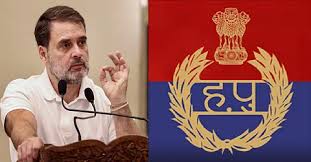
Dalit community angry over the suspicious death of Ganesh Valmiki, family accused police of murder, Rahul Gandhi and Congress leaders expressed condolences. Hisar (Haryana): The deadlock over the suspicious death of 16-year-old Dalit student Ganesh Valmiki during police action in Hisar is expected to come to an end on Friday. The family, which refused to take the body for 10 days and was protesting demanding justice, has now agreed to the last rites. The family is alleging that Ganesh died due to the police pushing him off the roof. The issue made national headlines on Thursday when Congress leader Rahul Gandhi launched a scathing attack on the BJP government over it. Rahul Gandhi wrote on Twitter in Hindi, “When power sits in the lap of Manuwadi thinking, the lives of Dalits have no value! The murder of Dalit youth Ganesh Valmiki in Hisar, Haryana and the brutality done to his family is not just a crime – it is the ugly face of the Manuwadi system of BJP-RSS which considers the lives of Bahujans in India today as cheap, which does not consider them worthy of equality and respect.” After this, former Punjab Chief Minister and Congress Dalit leader Charanjit Singh Channi also reached Hisar and met the victim’s family. A day before this, senior Dalit leader of the party Kumari Selja also met the family and expressed support. Although the Haryana government has already formed a Special Investigation Team (SIT) and Social Justice Minister Krishna Bedi also met the family, but the family continued to sit on a dharna outside the Hisar Civil Hospital, where Ganesh’s body is kept. On Monday, a large number of people from the Dalit community held a Mahapanchayat and supported the demands of the family. On Thursday, Haryana Social Justice and Empowerment Minister Krishan Bedi, while talking to the media, claimed that a settlement has now been reached. He said, “We are in constant touch with the representatives of the family. Today a meeting was held at the Chief Minister’s residence in which Ganesh’s father Vikram, uncle Dinesh and other people from the Dalit community participated. The matter has been resolved. We will go to Hisar on Friday morning and perform the last rites.” The government, meanwhile, for the first time, also issued a notice to the family under the Haryana Respectful Cremation Act, 2024, according to which if the family refuses to accept the body, the administration can ensure timely and dignified cremation. What happened on the night of July 7? The incident took place on the night of July 7, when the police received a complaint that loud music was being played on loudspeakers in the area even after 10 pm. According to the police, Ganesh and his friends were celebrating a birthday and were attacked when the police tried to stop them. Police claim that Ganesh and his friend Akash then ran to the roof of a nearby house and jumped from there. Ganesh died on the spot, while Akash was injured. Police are now looking for 10-15 more youths who were allegedly involved in the attack on the police. Meanwhile, Ganesh’s family alleges that the police pushed him off the roof, and they are demanding a murder case to be registered against the accused policemen. Police have also released some CCTV footage in their favor. In a video, Ganesh is seen standing on his roof at 9 pm. At 10:45 pm he is seen lying on a cot on the road outside his house. At 10:55 pm two youths come on a bike with a big loudspeaker and loud music is played there. At 11:32 pm, when the group of youths is dancing on the road, the police reaches there. In the video, it can be seen that the youths attack with sticks and pelt stones, due to which the policemen had to take shelter in a nearby house. Injured Akash has admitted in his statement to the police that they attacked the police and when the police chased them, both of them jumped from the roof to escape. During this, Ganesh died while he was injured. Additional Director General of Police (ADGP) K.K. Rao said, “The police is ready for a polygraph test. We were just protecting ourselves. People in the area had complained about loud music.” However, the entire incident has once again brought to the fore serious issues like accountability of police action and alleged discrimination against the Dalit community. The demand for justice is now becoming the demand of the entire society, not just one family. Rajan Chaudhary Courtesy : Hindi News