
23-year-old Dalit man found dead 12km away from where he went missing, cremated without ID check in Ahmedabad

Ahmedabad: For nearly four agonizing weeks, the family of 23-year-old Chirag Vala searched across the city, clinging to hope. What they didn’t know was that the Dalit youth from Vejalpur had been found dead — just a day after he went missing — and quietly cremated by the police as an “unclaimed” body. The police apathy and failure of inter-departmental coordination meant his family never got a chance to say goodbye. A sanitation worker by morning and an autorickshaw driver for an app-based service by day, Chirag lived in the Boot Bhavani slums of Vejalpur. He left home early on June 23, without his phone or Aadhaar card — a detail that deepens his family’s suspicion that he may have been forcibly taken. When he did not return that night, his family approached the Vejalpur police station. Instead of lodging a formal missing complaint, officers reportedly told the family to wait and cited rath yatra bandobast as the reason for their inaction, alleged family members. When the family returned the next day, police reportedly just made a ‘janva jog (station diary note)”, and no FIR was filed. Desperate, the family handed over 28 photos of Chirag to assist the police. What Vejalpur police did not know was that on June 24, Bopal police recovered an unidentified male body from the Telav canal, just 12 kilometres from where Chirag went missing. Bopal police took the decomposed body to a community health centre, then shifted it to Civil Hospital, Asarwa, said police officers. “Yet, no one from Bopal police made the effort to match the unidentified body with any missing person records from nearby police stations, a critical oversight,” alleged the victim’s mother Vali Vala. Meanwhile, Chirag’s family continued appealing to senior officers and scanning CCTV footage. “After seven days, on July 1, we cremated the body as unclaimed,” said a Bopal police officer. The truth surfaced only after Chirag’s wife, Manisha Vala, filed a habeas corpus petition in Gujarat high court on July 19. That evening, a Bopal police official called the family, asking them to visit the police station. There, male relatives were shown a photograph of Chirag’s lifeless body. “When the family members identified him, we were told that his body had already been cremated,” said Vali. “My son was murdered. We were not even allowed to see his face one last time. This happened because Vejalpur and Bopal police failed to speak to each other,” said the grieving mother. Activist Rakesh Maheria, who supported the family’s search, criticised the police: “Both police stations failed miserably. This is not mere negligence, it is inhuman.” Had there been timely sharing of information, the body could have been identified earlier, allowing the family to perform the last rites, he added. Confirming the chain of events, Bopal police inspector B T Gohil said that the body was cremated after seven days as no one had claimed it. When asked whether any state-wide alert or coordination with other stations was done, he said: “That’s probably done after a month.” Courtesy : TOI Note: This news is originally published on https://timesofindia.com/bha and is used purely for non-profit/non-commercial purposes, especially human rights.
Tiruchy church discrimination row: Bishop skips car procession
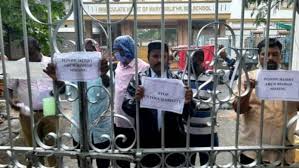
However, when revenue officials tried to hold a mediation meeting locally, Dalit representatives insisted that either the Bishop or a senior diocesan official must be present. TIRUCHY: A day after Dalit Christians alleged they were facing discrimination in the St Mary Magdalene Church at Kottapalayam near Thuraiyur, which comes under the Diocese of Kumbakonam, Bishop Jeevanandam Amalanathan boycotted the annual chariot procession on Tuesday. Over 20 Dalit Christian families hoisted black flags in their homes and boycotted the final day of the church’s 12-day annual festival which began on July 14. On Monday, a section of them sat on a hunger strike near the collectorate and submitted a petition during the weekly grievances meeting demanding equal rights in church administration and rituals. Speaking to TNIE, Collector V Saravanan said, “We have constituted a peace committee to address the issue. The RDO will conduct an inquiry. The existing laws are clear.” However, when revenue officials tried to hold a mediation meeting locally, Dalit representatives insisted that either the Bishop or a senior diocesan official must be present. “This is not simply Dalits versus non-Dalits issue. The church administration is part of the discrimination,” said J Doss Prakash, a Dalit Christian parishioner. “The festival committee is entirely controlled by non-Dalits. We are denied basic rights like paying subscription or take part in the planning. Even after decades, not even a small chariot enters our streets.” he added. Adding weight to the protest, Bishop Jeevanandam Amalanathan boycotted the procession, citing the ongoing caste tensions and the diocese’s alleged inability to resolve the matter. A peace meeting involving stakeholders is expected to be arranged later this week. Pearson Lenekar SR Courtesy : TNIE Note: This news is originally published on https://thenewindianexpress.com/bha and is used purely for non-profit/non-commercial purposes, especially human rights.
Andhra court allows re-investigation into Dalit youth’s murder by YSRCP MLC
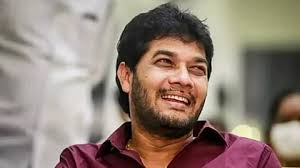
A Special Court for SC/ST cases in Rajamahendravaram, Andhra Pradesh, has granted permission for a re-investigation into the alleged 2022 murder of Dalit youth Veedhi Subrahmanyam by YSRCP MLC Ananta Uday Bhaskar. The court directed that a supplementary charge sheet be filed within 90 days. A Special Court for SC/ST cases in Rajamahendravaram town of Andhra Pradesh on Tuesday, July 22, allowed further investigation into the 2022 murder of a Dalit youth by YSRCP MLC Ananta Uday Bhaskar. The court directed that the supplementary charge sheet in the case should be filed in 90 days. The court order has cleared the way for re-investigation of the case ordered by the TDP-led NDA government. YSRCP leader and Kakinada MLC Ananta Uday Bhaskar, also known as Ananta Babu, had allegedly murdered his former driver Veedhi Subrahmanyam, a Dalit, and dumped his body at his residence in 2022. Ananta Babu had pushed the deceased during an argument, resulting in his fall and death on the night of May 19, 2022. The MLC also allegedly inflicted injuries on Subrahmanyam’s body to present it as a death in a road accident. However, the driver’s family refused to believe his version and lodged a complaint with the police. The MLC was arrested, and the YSRCP had subsequently suspended him from the party. The MLC had told police that Subrahmanyam was in an inebriated condition, and he pulled him up for not giving up bad habits. He claimed that it angered the driver, who allegedly questioned him. Allegedly enraged over this, the MLC held him by the neck and pushed. Subrahmanyam fell down and sustained head injuries. When the driver tried to hit back, the MLC pushed him again, and this time, the driver received a grievous head injury, he claimed. The MLC told police that he gave water to Subrahmanyam, but a few minutes after taking a sip, he was unresponsive. The legislator then thought of showing the incident as a road accident. He carried the body in the car to a dumping yard, where he inflicted injuries on the body with sticks. The MLC later carried the body to Subrahmanyam’s house and told his family members that he died in a road accident. After seeing the nature of injuries on the body, they refused to believe his version. There was an argument between them, and the MLC subsequently left the place, leaving behind the body in his car. As the investigation officer failed to submit the charge sheet within 90 days, Ananta Babu was released on default bail in December 2022. After the TDP-led coalition government came to power last year, it decided to re-investigate the case. In April this year, the government ordered re-investigation. Indian Police Service (IPS) officer and Kakinada DSP Manish Devraj Patil was appointed as the investigation officer. The investigating officer was asked to take the court’s permission. Written by : IANS Courtesy : TNM Note: This news is originally published on https://thenewsminute.com/bha and is used purely for non-profit/non-commercial purposes, especially human rights.
16-year-old Dalit boy sexually assaulted by 7 minors after he lost Rs 50 bet in Uttar Pradesh

MEERUT: A 16-year-old Dalit boy was allegedly sexually assaulted by as many as seven youths (all minors) after he lost a Rs 50 bet during a cricket match and could not pay. The culprits recorded a video of the incident and circulated it among peers, who also sexually assaulted him several times by threatening to upload the clip on social media. Though the initial assault took place nearly a month ago at a village in Saharanpur district of Uttar Pradesh, the complaint was lodged only on Monday after the traumatised boy could not bear it any longer and narrated his ordeal to his family. The boy’s father said his son was so traumatised that he did not step out of the house for days. “The boy was sexually assaulted several times by the group members, all minors, on the pretext of his obscene video,” said circle officer Vaibhav Pandey. “Following a complaint, an FIR under sections 3 (2)(5) of the SC/ST Act, and 3A and 4 of the Pocso Act has been registered against seven youths, and three of them have been detained. Medical examination of the victim was done and his statements were recorded. Investigation is on. The dispute over the cricket match bet is also being investigated,” said Pandey. Courtesy : TOI Note: This news is originally published on https://timesofindia.com/bha and is used purely for non-profit/non-commercial purposes, especially human rights.
Two arrested for gang-rape of 18-year-old Dalit girl in Odisha’s Jagatsinghpur
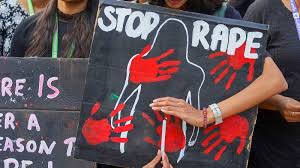
The BJD team submitted a memorandum to the Jagatsinghpur SP demanding strict action against the accused. JAGATSINGHPUR/KENDRAPARA: An 18-year-old dalit girl out to celebrate the birthday of her uncle’s daughter was reportedly gang-raped by two miscreants at Chandgarh Majurai village within Jagatsinghpur police limits on Monday evening. Police have arrested the accused Pritiranjan Behera (23) and Kartik Majhi (22), both of nearby Palasa village. Sources said the incident took place when the survivor had gone to her uncle’s place, around 50 feet from her house, to assist with the preparations for his daughter’s birthday party. She was helping in preparing food in the kitchen when she was approached by a 13-year-old girl. The minor reportedly asked her to accompany her to call another friend for the cake-cutting ceremony Instead of taking the main road, the minor led her through a secluded path near a farmland. Suddenly, the two accused ambushed the 18-year-old, gagged her with a towel, and dragged her to the backside of a toilet owned by the 13-year-old’s family. Subsequently, the two men allegedly took turns to rape her. Both the perpetrators fled the scene after committing the crime. The survivor returned home and informed her family members about the incident. She was rushed to Jagatsinghpur district headquarters hospital (DHH). A doctor of the DHH said the girl suffered external injuries and was bleeding. “Her condition is stable after treatment.” Later in the night, the girl’s father, a daily wage labourer, filed an FIR in Jagatsinghpur police station. He alleged that the assailants also physically assaulted his daughter and threatened to kill her if she disclosed the incident to anyone. Jagatsinghpur SP Bhabani Shankar Udgata said acting on the complaint, police registered a case under sections 70 (2), 74 and 35 (2) of the BNS, along with section 6 of the POCSO Act. Both the accused have been arrested. A mobile phone was recovered from the crime scene and forensic teams are analysing it. Meanwhile, a fact-finding team of the BJD led by Bhubaneswar mayor Sulochana Das and former MLAs Chiranjib Biswal and Prasant Muduli met the survivor’s family. They also visited the DHH to enquire about the girl’s condition. The BJD team submitted a memorandum to the Jagatsinghpur SP demanding strict action against the accused. Leaders of Congress and Left parties also condemned the incident. Courtesy : TNIE Note: This news is originally published on https://thenewindianexpress.com/bha and is used purely for non-profit/non-commercial purposes, especially human rights.
Cong, BJP spar as posters come up of arrested NSUI state chief with Rahul

Bhubaneswar: A day after National Students’ Union of India’s state president Udit Narayan Pradhan was arrested on charges of raping a 19-year-old student in the city, posters have surfaced throughout Bhubaneswar displaying images of the suspended Congress member alongside Lok Sabha MP Rahul Gandhi. The giant posters have come up at prominent places including Janpath, sparking heated exchanges between the Congress and BJP. State Congress president Bhakta Charan Das accused the BJP of having orchestrated this poster campaign to defame the party. “We are certain about BJP’s involvement in this negative poster campaign against the Congress. This indicates BJP’s apprehension towards Congress, which has strengthened its protests regarding the reported rise in crimes against women,” Das said. “BJP cannot stifle our voice. Women safety is our biggest focus. Our protest will be intensified in the coming days,” he added even as another Congress member criticised the BMC for not pulling down such unauthorised posters. The Congress formed a six-member committee on Monday to investigate the allegations against Pradhan. The party indicated it would support strict action if the charges were proven true. Responding strongly to the allegations, BJP MLA Babu Singh said, “Those who live in glass houses should not throw stones at others. The arrest of Udit Pradhan has exposed the double standard of Congress on issues of women’s safety.” Avilash Panda, state president of BJP’s youth wing, criticised Congress for appointing Pradhan as NSUI Odisha president. “Days before his appointment (Aug 2024), he was arrested in a criminal case in Bhubaneswar. Still, the Congress made him the NSUI state president,” Panda said. Amid the BJP-Congress confrontation over Pradhan’s arrest, BJD president and former chief minister Naveen Patnaik expressed concern over an alleged increase in crimes against women. “A disturbing wave of crimes against women is gripping Odisha. This surge in sexual assaults reflects a troubling erosion of law enforcement. When various ranks of the police face interference and political pressure, accountability weakens — and women and girls pay the price first,” Naveen wrote in a social media post. Courtesy : TOI Note: This news is originally published on https://timesofindia.com/bha and is used purely for non-profit/non-commercial purposes, especially human rights.
Oppn protests rolls revision in Bihar, stalls House business
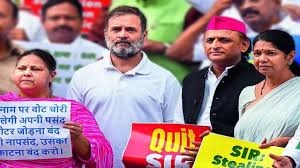
NEW DELHI: Parliament on Tuesday witnessed a strong opposition offensive against the special intensive revision (SIR) of electoral rolls in Bihar, with members across party lines forcing a washout of proceedings in Rajya Sabha and Lok Sabha, and holding a sit-in in the Parliament complex. INDIA bloc members Rahul Gandhi, Akhilesh Yadav, Kanimozhi, TR Baalu, Misa Bharti, Manoj Jha, Kalyan Banerjee, KC Venugopal and a host of other MPs gathered at the main gate of the Parliament building, where they raised slogans against the SIR and demanded that it be scrapped. At the meeting of the INDIA bloc in the chamber of Congress president Mallikarjun Kharge, the opposition decided to take up the issue in the two Houses to ensure that the urgent concern of RJD was not overshadowed by the controversy over Pahalgam terror attack and Operation Sindoor in the opening days of the Monsoon session. The issue figured prominently in Lok Sabha and Rajya Sabha that failed to transact any business. The opposition has listed Election Commission’s electoral rolls review in poll-bound Bihar as its top priority alongside the terror attack for discussion. Congress whip Manickam Tagore said, “In the first half, LoP (in LS) Rahul Gandhi wanted to speak but he was not allowed, just like Monday. We want a discussion on SIR which is a govt conspiracy to take away the right to vote of the poor.” Courtesy : TOI Note: This news is originally published on https://timesofindia.com/bha and is used purely for non-profit/non-commercial purposes, especially human rights.
Dalit women reclaiming Punjab’s farmlands. ‘We are born on this land, have a right to it’
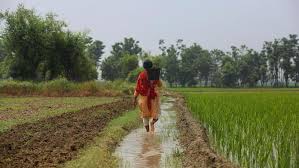
In village after village in the Malwa region, Dalit women have won the right to farm common land. They are now protesting and courting arrest to demand a new casteless settlement: Begumpura. Sangrur: Jasveer Kaur arrives on a shiny blue tractor and climbs down, her torn chappals sinking into the tilled soil. With glittering eyes and a faint smile, she surveys the newly planted paddy crop. “This land is ours,” she said proudly. It took Kaur several years of struggle to reach this moment. The seven acres of land in Sangrur’s Herike village aren’t in her name, but she fought and won the right to farm it. In village after village in the Malwa region, Dalit women like her are demanding what was long denied. They have already leveraged a 1961 law and turned it into a rallying cry for land, dignity, and ownership. The fire of hakk, or rights, is burning in their bellies. Now, Jasveer and hundreds of other women are part of a fresh agitation to claim 927 acres of unused estate land in Bir Aishwan village. They are marching, protesting, and courting arrest to demand a new settlement: Begumpura, a casteless village imagined by poet-saint Ravidas. “The Constitution of India has given us the right to own land, then why are we not given land just because we are from a lower caste?” said 41-year-old Jasveer. “We are born on this land and we have every right to have a piece of it.” Mustard fields, the Green Revolution, and, more recently, the farmers’ protests are the stories most associated with farming in Punjab. But beneath this image is a fraught history of caste discrimination. Dominant castes—primarily Jat Sikhs, along with Kamboj and Saini Sikhs—have sway over most of the farmland. Dalits, who make up about 32 per cent of Punjab’s population, own just 3.5 per cent of the state’s land. Most work as daily-wage labourers through heat waves and biting cold for around Rs 300 a day, planting and harvesting crops they have no claim on. But then, the Dalits in rural Punjab started fighting back. Their first weapon was a law that Punjab had passed in 1961. Under the Punjab Village Common Lands (Regulation) Act, one-third of village common land—known as panchayat land or shamlat deh— to be allotted to Scheduled Castes or Dalits for agricultural use. On paper, it gave Dalits the right to lease and farm these plots through panchayat auctions. In practice, the land stayed in the hands of dominant castes through dummy bidders and threats. The first major pushback came in 2008, when Dalit labourers in Benra village, Sangrur, took over panchayat land. In 2014, the Zameen Prapti Sangharsh Committee (ZPSC) began organising across the region, turning scattered protests into a coordinated campaign. Dalit women emerged as the heroes of this uprising. In their chappals and salwar-kameez, they stood on the roads, held up placards, and demanded their land. They faced off against Jats and other Chaudhrys (landlords) and braved arrests and beatings. The fierce battle spread like wildfire across the state. We women did not tell our husbands about the abuse we faced every day on the paddy fields because we feared we would not be allowed to work. Today we are here fighting for land In the Malwa region alone, Dalit families are now cultivating around 4,000 acres of land, according to the ZPSC. And now, many like Jasveer are demanding more. They are fighting for be-chirag (heirless) land to be redistributed to landless Dalits. The grit of Punjab’s Dalit women comes from years of daily indignities and casteist slurs on farms where they laboured or collected fodder. Today, they know they don’t have to tolerate it. “Dalit women have faced exploitation in the fields. They reared cattle and gathered fodder from the lands of the dominant caste,” said Ronki Ram, political science professor at Panjab University. “They did not want to depend on others’ land anymore and be subjected to everyday exploitation.” From a ‘nightmare’ to victory Until four years ago, Jasveer Kaur was just another woman in Herike village—feeding cattle, collecting fodder, raising her children, and working on a landlord’s fields. Her husband sold food from a thela, and the family scraped by on her daily earnings of Rs 300 from farm labour and selling milk. Men in the gurdwara called her “Churu Chamar”. Now she says they worry that Dalits like her might soon be called something else: landowners. On a pleasant July morning, the monsoon breeze brushed Jasveer’s hip-length hair as she briskly combed it. She was getting ready for a day in the fields. On such days, she likes to plait her hair. She gulped down three rotis with aloo ki sabzi and drank a glass of chilled water. Then she picked up her bright red dupatta and rushed to feed her three buffaloes—the mother, the father, and their newborn daughter. “Till three years ago, I was working at the farmland of the Chaudhrys. I used to collect the grass to feed the cattle from their field,” she said, as she scattered bhusa (fodder) for the animals. In many villages here, Dalit families rely on a mix of cattle rearing and daily-wage labour. Selling milk brings in some income, but fodder is always a challenge. For years, women like Jasveer gathered grass from the dominant caste’s fields and were regularly insulted for it. “It was a nightmare. It was usual for them to use abuse targeting our mothers and forefathers,” she recalled. Jasveer’s transformation began when members of the Zameen Prapti Sangharsh Committee came to Herike in 2021. She had never heard of the 1961 land law before. For the first time, someone told her she had a right to the soil beneath her feet. That same year, she and 14 other Dalit families in the village raised their voices during a panchayat land auction. They sat on dharnas and refused to work on the fields. After two years of pressure, the gram
“The church is ours, but why does the chariot not come to our streets?” — When Dalit Christians raised their voice, the bishop also rebelled!

Dalit Christians allege that the chariot is not brought to their locality, they are denied membership, the bishop protested Tamil Nadu/Tiruchi: Dalit Christians of Kottapalayam village near Thuraiyur began a hunger strike near the Tiruchi Collectorate on Monday. They alleged that they have been deliberately excluded from the ongoing annual festival of the century-old St. Mary Magdalene Church and are constantly being subjected to caste discrimination. The festival began on July 14 and the church comes under the Roman Catholic Diocese of Kumbakonam. The protesters say that they have not been included in the festival plans for decades, have not been given a place in the church committee and the Rath Yatra is not taken to their area. “Donate, but do not ask questions” J., who has been associated with the church for a long time. “We are not charged with various church memberships like others are charged with. Instead, we are only asked to pay ‘donations’. The aim is to stop us from raising our voices,” said Dos Prakash. Bishop’s symbolic protest According to a report in The New Indian Express, the church’s bishop, Jeevanandam Amalanathan, said he will not participate in Tuesday’s Rath Yatra. “The caste discrimination that continues in the parish is worrisome. Christians from dominant castes are not willing to give equal rights to Dalit Christians,” he said. However, he also said that there has been no discrimination from the church’s side. “Not a single chariot comes to our streets” The protesters said that a total of seven chariots are taken out during the festival, but not a single chariot comes to the streets of Dalit settlements. “We were abused with casteist slurs and threatened not to intervene at the festival planning meeting on July 6,” said a protester. Parishioner Raj Nobili said, “Only after giving membership do we get the right to ask questions. That is why we are not being made members. The administration should at least ensure that a chariot comes to our street as well.” “Violation of Constitution” Human rights lawyer Joe Kennedy, who was part of the protest, said, “This is a violation of the right to equality given in the Constitution of India. The church has to break the wall of casteism that has spread within it.” The protesters submitted a memorandum to the District Revenue Officer (DRO) and demanded legal action against the church pastor and others who allegedly made casteist remarks and threatened them. Key demands: Equal rights in all religious and festive activities Formation of an inclusive parish council Legal action on caste discrimination According to revenue department sources, the concerned officials have been directed to investigate the matter. Rajan Chaudhary Courtesy : Hindi News
‘SECL Chudi-Sari Pehne Lo’: When tribal women staged a semi-nude protest in Korba, Chhattisgarh!
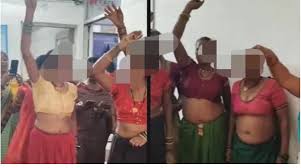
This is the first time that women have staged a semi-nude protest inside such an office. Korba- A shocking incident came to light in Kusmunda area of Korba district of Chhattisgarh, when about 20-25 land-displaced tribal women staged a semi-nude protest at the main gate of the office of South Eastern Coalfields Limited (SECL). On July 18, the women staged this protest demanding proper compensation, jobs and rehabilitation after the acquisition of their ancestral lands. This is the first time that women have staged a semi-nude protest inside such an office. The women waved their bangles and sarees and shouted slogans- SECL Chudi-Sari Pehne Lo! Seeing this kind of anger and anger among the women, the administration was also shocked and the clips of the protest went viral on social media, after which the Chhattisgarh government was also severely criticized. Korba is a major industrial and mining area of Chhattisgarh, known for coal mines and power generation. SECL’s coal mines in Kusmunda are one of the largest mining projects in India. Large scale land acquisition was done for these projects, which includes ancestral lands of Korwa and other scheduled tribes. These communities were earning their livelihood through farming and forest resources on these lands for generations. Under the Forest Rights Act 2006, they have been given rights over land and forest resources, but these provisions have been violated repeatedly. SECL acquired these lands for coal mining and in return the affected families were promised compensation, jobs and rehabilitation. However, even after many years these promises have not been fulfilled, due to which there is deep disappointment and anger among the tribal communities. The employment case of land-displaced people has been pending for a long time, for which many years have passed since applying, but the land-displaced people could not get employment. The protesting women told that they had demonstrated and struck many times in the mine earlier also. The affected families said that their lands were snatched but they neither got proper compensation, nor jobs, nor rehabilitation facilities. SECL had promised jobs for the land displaced, but in many cases fake appointments were made. Some families alleged that other people were given jobs in their name or their rights were completely ignored. After the land snatching, these families have lost their livelihood and are facing financial difficulties. The protesting women said that their lands were snatched in the name of industrial development, but the big industrialists got the benefit, while the local tribal community was neglected. The president of Bhu-Visthaap Rojgar Ekta Mahila Kisan Kusmunda said that the persons employed fraudulently in place of the real land displaced should be removed. Also, repeated applications were made to keep the real heir. Despite complaining to the local administration and SECL officials several times, no concrete action was taken, which pushed these women to this extreme step. This protest attracted widespread attention at the social and administrative level. The incident was widely discussed on social media, especially on Twitter, and many called it a symbol of the government’s insensitivity. However, no official government statement or action has been confirmed in the matter yet. The protest also reflects the growing threat to the cultural and social identity of tribal communities. After the land was taken away, these communities have not only become economically weak, but their cultural roots are also in danger. Geetha Sunil Pillai Courtesy : Hindi News