
“Find Ambedkar in books, not in statues”: Prof. Ratan Lal asked- Why don’t we have a share in universities?
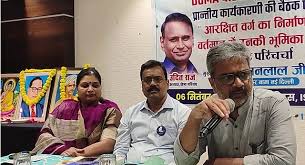
The professor questioned the priorities of the Dalit middle class. He said, “Billions of rupees were spent on our movements, but was any money spent on a serious research, book, article or educating a child abroad? Why are our children not becoming researchers? Why are they not going for PhD, Harvard, Oxford?” Bhopal- In a seminar organized in Bhopal, the capital of Madhya Pradesh, Professor Ratan Lal of Delhi University expressed deep concern over the current political and social situation of the Dalit community. He said that getting reservation was the result of a long struggle, but now the society needs to focus on education, research and intellectual discourse, and not just dream of electoral power. Professor Ratan Lal was speaking on the topic ‘Creation of reserved class, their role in the present’ in the provincial executive meeting of Doma Sangh and a discussion. He discussed in detail the historical journey of the Dalit community, the legacy of Dr. Bhimrao Ambedkar, the foundation of reservation, and the challenges of the Dalit middle class in the present times. Professor Lal warned the society that rights like education and jobs are being snatched away in rich India, and the Dalit society now has to focus on education, research and intellectual discourse instead of only power and electoral politics. He appealed to adopt Ambedkar’s practical philosophy and avoid unrealistic dreams. Professor Rattan Lal drew attention to an important historical fact in his address. He said, “Babasaheb Ambedkar used to constantly say that we are a minority in national life. Just like Muslims and Sikhs are minorities, we are also minorities. That is why constitutional safeguards are needed. Have you got reservation on the basis of the demand for minority status or on the claim of being a majority? This is a matter of thinking.” He further said that now claiming that ‘we will become rulers’ is an unrealistic dream. There are only 131 seats in Parliament and limited seats in Vidhan Sabhas, so why is everything being snatched away, this question is not in the discussion. Creation of Reserved Caste: A Difficult Historical Journey Professor Rattan Lal made it clear at the beginning of his speech that the creation of reserved class was not an easy process. He mentioned Dr. Ambedkar’s first memorandum given to the South Borough Committee in 1919, in which education and employment were described as a matter of life and death for the Dalit society. At that time, there was not a single Scheduled Caste graduate in the entire Bombay Province. Ambedkar repeatedly raised the question of education even during the formation of Simon Commission, Round Table Conference and Independent Labour Party. He presented the data in ‘Grievances of Scheduled Caste’ that out of 1056 ICS officers, only one was from Scheduled Caste, and only one among CPWD contractors. In that era, even getting a job for three constables was a reason for celebration. Professor Lal emphasised that Dalits presented themselves as minorities in national life, as did the Muslim and Sikh communities. There was a demand for minority status till 1942-44, and on this basis constitutional protection and reservation were demanded. He raised the question, “Have you got reservation in the name of minority or in the name of majority? Just think.” Ambedkar’s philosophy is practical; pressure has to be built Professor Lal described Ambedkar’s philosophy as pragmatism, which was influenced by his mentor John Dewey (Columbia University). In 1916, at the age of 24, Ambedkar wrote the first article in the Bombay Chronicle, in which he advocated building a public library instead of the bust of Firozshah Mehta. He took inspiration from Buddha, Kabir and Phule, but did not dream unrealistic dreams. Ambedkar was a supplicant, who kept demanding from the Viceroy, Congress and the government. In his 1948 Lucknow speech, he demanded separate electorate, reservation in the legislature and reservation in government jobs, but got only partial success. The professor said, “Ambedkar repeatedly said that pressure has to be built, rights have to be kept demanding.” He gave the example that there was no debate on reservation in the Constituent Assembly, because everyone including Rajendra Prasad and Jawaharlal Nehru had a consensus of historical injustice. But today the society has turned upside down, where instead of asking, claims are being made to be ‘givers’. He said sarcastically, “What will they give? We don’t have a share in universities, bureaucracy, share market, foreign policy.” Facilities were provided in poor India, rights are being snatched away in rich India Professor Lal called the rise of the Dalit middle class a by-product of modernism, industrialization and colonialism. In the 19th century, the middle class was formed from urban centers and factories, which also included Dalits. He said, “In Marxist terms, one who is not bourgeois, middle class, cannot become anything. Think tanks, bureaucrats, writers, journalists, academicians all come from the middle class.” In poor India, the fees in government schools and colleges were one or two annas, stipends and fellowships were given. In 1973, Indira Gandhi wrote a letter to all CMs to form a cell to stop atrocities on Harijans and make full appointments in the public sector. Dalits became officers through bank nationalization, and got leases through land reform. Rajiv Gandhi started a special recruitment drive, opened Navodaya Vidyalayas where education was free. Crores of rupees were earned from reservation in petrol pumps and gas agencies. Employees in public sector like ONGC increased from 3000 to 21000, out of which 7500 are SC-ST-OBC, and with an average salary of 1 lakh, 100 crore rupees are going to their homes every year. Two generations ago there were huts, now by becoming teachers, families are able to run. But now all this is being snatched away in rich India. Government schools and colleges are closing, quality is deteriorating, and private education is so expensive that it is out of reach. Sale of gas and petrol through private pipelines is ending, and jobs are decreasing due to privatization. Weaknesses
Kanchipuram District Judge had sent DSP to jail for not taking action in SC/ST case, Madras High Court cancelled the order, know what the court said

This is the first case in the country where Section 4 of SC/ST Act was directly used. The High Court said that the judge misused judicial powers by acting with personal malice against his PSO. Gave instructions for judicial investigation Chennai- Madras High Court has cancelled the externment order passed by the Principal District and Sessions Judge of Kanchipuram under Section 10 of the SC/ST (Prevention of Atrocities) Act and the order to send the Deputy Superintendent of Police (DSP) to jail under Section 4 of the same Act. The High Court has described these orders as “clear abuse of the process of law” and “motivated by personal motive”. This case is the first of its kind in the country, where Section 4 of the SC/ST Act was directly used by a judge against a senior police officer and he was sent to jail. What is the root of the controversy? The case began with a simple clash at Walajabad police station in Kancheepuram district. On July 25, 2025, a dispute broke out between two groups at a bakery in Walajabad. One group comprised Lokeshwaran Ravi, the then Personal Security Officer (PSO) of the Principal District Judge of Kancheepuram, his father-in-law and others, while the other group comprised Parvathy and her family members. Following the clash, both parties filed complaints against each other. The police, after hearing both sides and recording statements from the parties, settled the matter on July 28 itself and both CSRs (Complaint Status Reports) were closed. The petitions filed in the High Court alleged that the District Judge felt that his PSO Lokeshwaran Ravi was repeatedly sending anonymous complaints against him. Due to this, the judge approached the Superintendent of Police (SP) and demanded a change of his PSO. Even WhatsApp messages of this conversation were produced in the petition. When the judge learnt that the complaint lodged against his PSO had been closed, he called up the inspector of Walajabad police and verbally ordered him to register a fresh FIR based on the closed CSR. The judge allegedly threatened the inspector that if the FIR was not registered, action would be taken against him under Section 4 of the SC/ST Act. Following this pressure, two fresh FIRs were registered on August 20, 2025. Crime No. 282/2025 was registered against Parvathy’s husband Murugan, while Crime No. 283/2025 was registered against PSO Lokeshwaran Ravi and his family members, with sections of the SC/ST Act also added. On September 4, the Kancheepuram district judge passed a Suo Motu (of his own volition) order using Section 10 of the SC/ST Act. In this order, he ordered all the accused in Crime No. 283/2025, including PSO Lokeshwaran Ravi, to stay out of the limits of Kanchipuram district. The judge said in his order that since the police did not take any action for 15 days, he had to pass this order. However, the High Court quashed this order. DSP arrested – first case in the country The action that followed was even more shocking. On September 8, the judge summoned DSP Kanchipuram, M. Shankar Ganesh to the court and asked him for information about the compliance of the externment order. It is alleged that the DSP was made to sit in the court from morning till evening and in the evening suddenly the judge took cognizance against the DSP under Section 4 of the SC/ST Act and ordered him to be sent to judicial custody. The DSP was immediately sent to Sub-Jail, Kanchipuram in the judge’s own official car. This is perhaps the first case in the country where a judge directly used Section 4 against a senior police officer and sent him to jail. What did the High Court say Justice N. Satish Kumar of Madras High Court expressed serious objection to both these orders. He said that the procedure required to pass the externment order was not followed. The court said, “An order of externment under the SC/ST Act can be passed only when there has actually been an atrocity on the members of the Scheduled Caste/Tribe and there is a possibility of the accused committing such an offence again… In this case, looking at the complaints of both the parties, it is clear that there was only a clash between the parties while purchasing some eatables in a bakery and naturally, one party would not even know the caste of the other party.” The High Court cited an important decision of the Supreme Court (State of GNCT of Delhi vs. Praveen Kumar, 2024) on the arrest of the DSP. The High Court said, “For initiating punitive proceedings against a public servant under Section 4 of the SC/ST Act, the recommendation of an administrative inquiry is a sine qua non.” The court further said, “Only on the ground that the DSP or other police officers did not immediately comply with certain directions issued by the judge in the name of deportation, it cannot be said that the DSP or other police officers have committed any offence under Section 4(2) of the SC/ST Act.” The High Court also took note of the serious allegations levelled against the District Judge. The court said that the serious allegations of “bias, bias and abuse of power” levelled against the judge in the petitions should be independently investigated. The High Court directed the Registrar (Vigilance) of the Madras High Court to investigate all the events, conversations and WhatsApp communications between the judge and the police officers from the filing of the complaints dated July 25, 2025 to the final order of the judge. The court ordered the report to be submitted by September 23. Geetha Sunil Pillai Courtesy : Hindi News
Khadoor Sahib AAP MLA Maninder Singh Lalpura convicted in 12-year-old case of molestation of Dalit girl, sent to jail

Know what was the whole 12-year-old case in which 11 people including the MLA were convicted. The court will now pronounce the sentence on September 12. New Delhi: The troubles of Aam Aadmi Party (AAP) in Punjab are not decreasing. On Wednesday, a local court convicted Khadoor Sahib AAP MLA Maninder Singh Lalpura and 10 others in a 12-year-old molestation and assault case. Additional Sessions Judge Prem Kumar will announce the sentence in this case on September 12. Immediately after the court’s decision, MLA Lalpura and other present convicts were taken into custody by the police and sent to Patti sub-jail. The matter becomes more serious when it is learned that Lalpura is the fifth AAP MLA to be arrested by the police or the Vigilance Bureau in Punjab. His arrest comes just days after a rape case was registered against Sanaur MLA Harmeet Singh Pathanmajra, who has been absconding since September 2. Under which sections were they convicted? The victim’s lawyer Amit Dhawan said, “MLA Lalpura and other accused have been convicted under sections 354 (assault with intent to outrage the modesty of a woman), 148 (rioting while armed with a deadly weapon) and 149 (unlawful assembly) of the Indian Penal Code (IPC) as well as section 4 of the SC/ST Act.” He further said that out of the total accused, seven people—Lalpura, Saraj Singh, Davinder Kumar, Kanwaldeep Singh, Ashwani Kumar, Tarsem Singh and Harjinder Singh—were present in the court and were immediately taken into custody. Gagandeep Singh, Narinderjit Singh and Gurdeep Raj are yet to be arrested. Another accused Harvinder Singh Sushi is already lodged in Tihar Jail. ‘Justice was done, now expect strict punishment’ – Victim After this decision, the victim expressed happiness and said, “Today I am very happy because justice has finally won. I fought a long battle for this and during this time I also received death threats from the culprits. I hope that the court will give the harshest punishment to the culprits.” What was the 12-year-old case? This incident is of March 3, 2013. The victim, who belongs to the Scheduled Caste (SC) community, had come with her family to attend a wedding ceremony at a marriage palace located on Goindwal Road. It is alleged that during this time Lalpura and other accused including some personnel of Tarn Taran Police assaulted and molested her. According to the victim’s lawyer, Maninder Singh Lalpura was a taxi driver at that time. The case was so serious that the Supreme Court took suo motu cognizance of it and directed to provide paramilitary security to the victim, her cousin (who was an eyewitness) and their family. Lalpura defeated Congress’ Ramanjit Singh Sikki from Khadoor Sahib seat by a huge margin of 16,491 votes in the 2022 assembly elections. Opposition cornered AAP government After this verdict, opposition parties have targeted the ruling AAP government. Leader of Opposition Pratap Singh Bajwa said, “An AAP leader being convicted in a molestation and assault case shows a disturbing pattern. Repeatedly, such serious allegations have been leveled against AAP leaders, which shows the open tolerance of the AAP leadership towards unethical and criminal behavior.” Shiromani Akali Dal vice-president and former Khadoor Sahib MLA Ravinder Singh Brahmpura said that Lalpura’s conviction exposes the “true criminal character” of the AAP government. He said, “This verdict has removed the mask of AAP’s ‘hardcore honesty’. After being found guilty of torturing a Dalit family, Lalpura has lost the moral right to sit in the Assembly.” Rajan Chaudhary Courtesy: Hindi News
UP News: Dalit man stabbed to death in Hathras over old rivalry, angry villagers block highway

Life lost due to old rivalry, ruckus after murder, two accused arrested, police searching for others. Agra: There was a stir in Arjunpur village of Chandapa police station area of Hathras district on Tuesday night when some upper caste youths allegedly killed a Dalit man due to old enmity. The deceased has been identified as Vinay Kumar, who died in the hospital after being stabbed in the chest. After this incident, tension spread in the area and angry villagers and family members blocked the Agra-Aligarh highway for about two hours demanding justice. The angry mob also pelted stones at the houses of the accused. Members of Bhim Army and BSP also joined this protest, which made the situation more serious. Heavy police force had to be deployed on the spot to maintain law and order. When Vinay Kumar’s body reached the village on Wednesday, the atmosphere once again became heated. The family refused to perform the last rites until all the accused were arrested and a government job was assured to one of the relatives of the deceased. After a standoff that lasted for about four hours and talks with administrative officials, the body was cremated near the village pond after the assurances were given. Let us tell you that the deceased Vinay Kumar was in his 40s and he was an ‘animal friend’ who used to help in animal husbandry related work. Giving information on this matter, SP Chiranjeev Nath Sinha said, “A case has been registered immediately under the relevant sections in the matter. The two main accused, Rajesh Kaushik and Shiv Kumar, have been arrested and produced in court on Wednesday. Four police teams have been formed to arrest the remaining accused. The family has cremated the deceased as per legal and traditional procedures. The law and order situation in the area is now under control.” Police have registered a case under Indian Penal Code (BNS) sections 103 (murder), 191-2 (rioting), 109 (attempt to murder), 190 (unlawful assembly) and SC/ST Act. The deceased’s brother Litesh Kumar gave details of the entire incident in his complaint to the police. He said, “When my elder brother Vinay Kumar went out to see our animals in the barn, Raju Kaushik, Rajesh Kaushik, Shiv Kumar Kaushik, Vinod Kaushik, Ramkishan, Ramkumar and Shyamvihari from the same village surrounded him. Rajesh and Shiv Kumar caught hold of my brother, while Vinod, Ramkishan, Ramkumar and Shyamvihari were shouting, ‘Don’t leave him alive today, kill him.’ Meanwhile, Raju Kaushik stabbed my brother.” Litesh further said, “Hearing the screams, Vinay’s son Navnish, his wife, I and the neighbours ran outside and saw that they were attacking my brother. When my nephew Navnish tried to catch them, the attackers also seriously injured him. They also threatened to kill the entire family and drive them out of the village in future. I took my brother Vinay and nephew Navnish to Bangla Hospital, where doctors declared Vinay dead.” Rajan Chaudhary Courtesy : Hindi News
Dalit farmer assaulted in UP’s Badaun after complaining of cattle grazing on crops
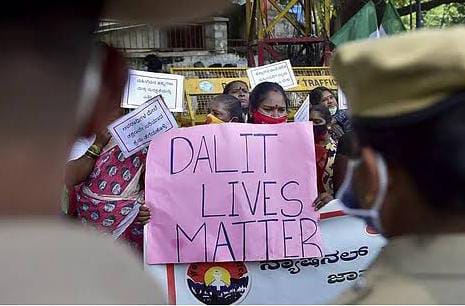
Badaun (UP): A Dalit farmer in Badaun district was allegedly beaten and subjected to casteist abuse after he confronted villagers over cattle grazing on his crops. The incident occurred in Gudhana village, where farmer Dwarika Prasad, son of Kallu Singh, had cultivated millet. He alleged that cows belonging to three villagers, Prashant, son of Satyabhan, and Saksham and Jai, sons of Gana Dayanand, frequently entered his field and destroyed his standing crops. On September 8, when the cattle once again grazed in his field, Prasad recorded a video of the incident, caught one of the cows, and approached the owners. Instead of addressing his grievance, he claimed, the accused attacked him and hurled caste-based slurs. Following his complaint, police registered a case under the Scheduled Castes and Scheduled Tribes (Prevention of Atrocities) Act against the three accused. Station Officer Udayveer Singh confirmed the development, stating, “A case of Dalit oppression has been registered on the victim’s complaint. Further action will be taken as per law.” Courtesy : Vartha Bharati Note: This news is originally published on https:/varthabharati.com/bha and is used purely for non-profit/non-commercial purposes, especially human rights
Transgender shot dead in Rajasthan’s Neemrana
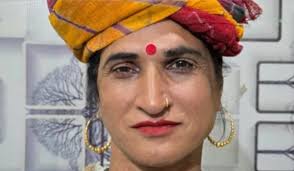
Jaipur, A transgender community leader was shot dead in broad daylight in Neemrana area of Kotputli-Behror district in Rajasthan on Wednesday. The incident, which occurred near Molhediya village, triggered protests by members of the transgender community. Neemrana Additional SP Shalini Raj said that Madhur Sharma, a ‘kinnar’ (transgender) guru in the area, was shot by two motorcycle-borne assailants. Sharma was in Neemrana with a group to collect traditional festival greetings and donations ahead of Diwali. “The kinnar was sitting under a tree inside a vehicle when two unidentified assailants arrived on a motorcycle and opened fire from close range, hitting Sharma in the head. The attackers fled the scene immediately after the shooting,” she said. Sharma died on the spot. The body was shifted to the mortuary at the community health centre (CHC) in Neemrana. The police checked the CCTV footage from nearby areas to trace the movement of the suspects. As the news of the killing spread, a large number of members of the transgender community gathered outside the CHC and protested, demanding swift action. Additional police force was deployed to maintain law and order. The police have formed a special team to investigate the murder, officials said. PTI SDA RT RT This report is auto-generated from PTI news service. ThePrint holds no responsibility for its content. Courtesy : The Print Note: This news is originally published on https:/theprint.com/bha and is used purely for non-profit/non-commercial purposes, especially human rights
‘Completely misconceived’: Madras HC dismisses plea on Rahul Gandhi’s ‘vote chori’ charge; imposes Rs 1 lakh fine on petitioner

NEW DELHI: The Madras high court dismissed a public interest litigation (PIL) seeking directions to the Election Commission of India (ECI) to clarify leader of opposition Rahul Gandhi’s “vote chori” (vote theft) allegations, terming the plea “completely misconceived.” “The petition is vague, devoid of material particulars, lacks substantive evidence, and founded solely on political claims and counter-claims. It could not be a ground to compel the ECI to issue clarifications,” the bench observed in its order on Tuesday, according to ANI. The court imposed a cost of Rs 1 lakh on the petitioner, to be paid to the Tamil Nadu State Legal Services Authority. It underlined that dismissal of the PIL should not be construed as its opinion on the allegations themselves, and said the poll panel remains free to take its own decisions in this matter. Rahul Gandhi vs Election Commission On August 7, Gandhi alleged at a press conference that the 2024 Lok Sabha elections were “choreographed” by the Election Commission to benefit the BJP, mockingly calling it the only party “immune to anti-incumbency.” Citing Congress’s “research” on voting in Karnataka’s Mahadevapura assembly segment, he alleged “vote chori” of 1,00,250 votes. The ECI dismissed the charge as “baseless” and asked Gandhi to either file a sworn declaration or apologise for his “absurd” remarks. The Raebareli MP refused, saying he had cited ECI’s own data, and that had already taken oath to the Constitution as a parliamentarian. Addressing a rally in poll-bound Bihar’s Patna on September 1, he hinted at fresh disclosures, declaring he would drop a “hydrogen bomb” after the “atom bomb.” Courtesy : TOI Note: This news is originally published on https:/timesofindia.com/bha and is used purely for non-profit/non-commercial purposes, especially human rights
Why ‘premier-like’ protocol for Rahul in Rae Bareli, asks UP min

Lucknow: UP horticulture minister Dinesh Pratap Singh on Wednesday accused the Rae Bareli district administration of giving extraordinary protocol to Congress MP and leader of opposition Rahul Gandhi during the latter’s visit to his parliamentary constituency. In a letter dashed to UP BJP chief Bhupendra Chaudhary – copies were marked to BJP national president JP Nadda, home minister Amit Shah, chief minister Yogi Adityanath, principal secretary (home) and DGP – Singh said that the Rahul was given a treatment “as if he was a premier” of a country. The development came hours after Singh led a group of BJP workers in Rae Bareli to protest the use of derogatory words for PM Narendra Modi’s mother during a recent Congress meeting in Bihar. Singh said that the administration diverted traffic in and around Rae Bareli for 70 km, forcing commuters to take a longer route. Likewise, he said, the vendors and small shopkeepers were forcibly evicted from the crossings. “This caused grave resentment amongst the public, especially the small-time shopkeepers,” he said. “The arrangements seemed to ensure that no poor were visible on the streets of Rae Bareli. The administration terrorised the marginal and poor,” he said. The minister clarified that the intention of the party workers was not to disrupt traffic during Rahul’s visit, but stage a simple protest. “Party workers had even put up banners saying that the road was open to the people,” Singh said. Accusing the district administration of “misbehaving” with the party workers, Singh alleged, “Even a microphone which was being used to regulate the traffic by party workers was snatched.” Singh said that the “insult” of the party workers prompted him and his supporters to intervene and join the protest. In political circles, the development is seen as Singh’s attempt to wheel out a narrative portraying Rahul’s presence as elitist, disruptive, or against the interests of common people. The letter aimed to project Gandhi as an entitled leader enjoying “VIP culture,” contrasting him with BJP’s pro-poor image. Singh, who was formerly with the Congress, had shifted loyalty to BJP in 2018. He even contested against Congress leader Sonia Gandhi in 2019 but lost. The BJP subsequently routed him to the legislative council and later inducted in the Yogi Adityanath cabinet. He contested against Rahul Gandhi in 2024 Lok Sabha poll, too Courtesy : TOI Note: This news is originally published on https:/timesofindia.com/bha and is used purely for non-profit/non-commercial purposes, especially human rights
UP Dalit violently attacked for touching upper-caste man’s car

Dalits in India continue to face caste-based violence, discrimination, sexual assault and social boycott, despite legal protection and government laws. A Dalit young man in Uttar Pradesh’s Fatehpur district was allegedly assaulted on September 2 following a minor altercation. Aditya Kumar was reportedly riding a bike when he accidentally brushed against the vehicle of Krishna Patel, a resident of Bairagi Purwa village. Angered, Patel and his associates intercepted him and started violently attacking his head and hurling castiest slurs. Bleeding profusely, villagers rushed him to a nearby community health center, where he is currently undergoing treatment. Based on Kumar’s complaint, the police have registered a case. Dalits in India continue to face caste-based violence, discrimination, sexual assault and social boycott, despite legal protection and government laws. Recently, an eight-year-old Dalit boy was hanged upside down from a tree for touching a water pot in Rajasthan. He was asked to clean a washroom and collect garbage. The assailants launched into an attack when he asked for water after completing his work. Posted by Veena Nair Courtesy : TSD Note: This news is originally published on https:/thesiasatdaily.com/bha and is used purely for non-profit/non-commercial purposes, especially human rights.
UP Dalit woman accuses 5, including ex-Army solider of harassment

At one instance, the former soldier drag the woman into a field with the intention of raping. When she screamed for help, he ran away. A Dalit woman hailing from the Valmiki community in Aligarh’s Kotwali area of Uttar Pradesh has accused five individuals, including a retired Army soldier, of assault, molestation and death threats. In her complaint, she stated that her family is constantly pressured to leave the village. According to the Dalit woman, her mother-in-law had purchased a plot and built a house. However, a few members from the upper caste tried to construct a passage by placing shutters near her gate, even though an alternative route was available. The woman accused the retired Army soldier, Yogendra Singh, of repeated harassment and attempted rape. “He has beaten me and molested me several times. He often peeps into my house without shame. On March 8, when I went to cut fodder in the forest, he tried to drag me into a field with the intention of raping me. I screamed, and nearby farmers rushed to help. He fled, threatening to kill me,” her complaint said. He currently serves in the Provincial Armed Constabulary (PAC) in Agra. When her husband tried to oppose the harassment, Singh and his son Dushyant barged into her house with a pistol and threatened to kill him. A case has been registered under the SC/ST Act against Yogendra Singh, Dushyant Singh, Anita, Aarti, and Shivcharan. Posted by Veena Nair Courtesy : TSD Note: This news is originally published on https:/thesiasatdaily.com/bha and is used purely for non-profit/non-commercial purposes, especially human rights.