
‘Punishment’ for visiting a temple: Enraged after seeing the surname on an Aadhaar card, a Dalit laborer was beaten and asked, “How dare you?”
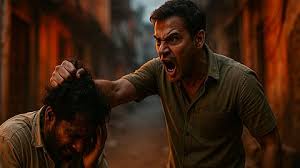
38-year-old Shailesh Solanki, who was visiting the Kaal Bhairav temple near Himmatnagar, Gujarat, was brutally assaulted. The accused assaulted him after seeing his surname on his Aadhaar card; a case has been filed under the SC/ST Act. Ahmedabad: A Dalit laborer in Himmatnagar, Gujarat, was allegedly beaten and threatened simply because he expressed his desire to visit a temple. After the victim showed his Aadhaar card for identification, the accused asked his caste and then attacked him. According to a complaint filed with the Himmatnagar rural police on Thursday, the accused hurled casteist slurs at the victim, beat him, and warned him not to enter the area again. What is the whole matter? Shailesh Solanki, a 38-year-old daily wage laborer from Khedawada Laxmipura village, stated in his FIR that the incident occurred on the evening of September 26th. He was waiting for a vehicle near an intersection in Balochpur to go to the Kaal Bhairav Temple. At that very moment, a man named Bharat Patel, a resident of Dhanupura, arrived on a scooter. He stopped Shailesh, accused him of moving suspiciously, and asked for his identification. When Shailesh explained that he was going to the temple, Patel did not believe him. When Shailesh gave his name, the accused asked him whether he belonged to the general category or the Scheduled Caste. When Shailesh showed his Aadhaar card to confirm his identity, Patel checked his surname. Upon learning that Shailesh was a Dalit, the accused became enraged and began abusing him. Shailesh stated in his complaint, “He asked me why I, a Dalit, had come to visit the temple after dark. He then slapped me several times, using casteist slurs.” Two people intervened Shortly after the attack, Narendra Singh Parmar and Jagat Singh Parmar, residents of Titpur village, arrived on a motorcycle. They intervened and stopped the fight. Despite this, Patel allegedly forced Shailesh onto his scooter, took him a short distance, and dropped him off near Ghorawada. He threatened Shailesh with dire consequences if he was seen in the area again. Shailesh said he informed his family about the incident and later contacted Narendra Singh and Jagat Singh, who offered to be witnesses. Based on Shailesh’s application, Himmatnagar Rural Police registered an FIR against the accused under sections of the Indian Penal Code for assault and intimidation and the SC/ST (Prevention of Atrocities) Act. Further investigation is underway. Rajan Chaudhary Courtesy: Hindi News
Her mother worked as a farm laborer, her father passed away, and she overcame poverty, thus becoming a Dalit daughter, Maheshwari, a DSP officer!
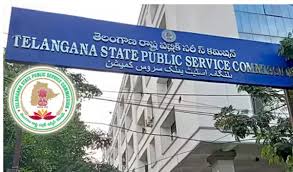
Modumpally Maheshwari of Karimnagar, Telangana, overcame poverty and hardship by passing the TGPSC Group I exam. Learn about her inspiring story. Telangana/Karimnagar: Modumpalli Maheshwari, a 29-year-old Dalit woman from Manakondur in Karimnagar district, has proven that determination and hard work can achieve anything. Overcoming poverty and hardship, she successfully passed the Telangana State Public Service Commission (TGPSC) Group I exam and secured the position of Deputy Superintendent of Police (DSP). Maheshwari’s achievement is a major step towards fulfilling her late father’s dream of seeing his daughter become a civil servant. Maheshwari credits her success to the Telangana SC Study Circle in Hyderabad, where she received coaching for the civil services exam. Maheshwari’s journey has been full of challenges, but financial constraints never hindered her educational and career goals. She completed her undergraduate studies from the Government Women’s Degree College in Karimnagar and then pursued an M.Sc. in Physics from the Satavahana University PG College in Godavarikhani, Peddapalli district. Her father, Lakshmana, worked as a migrant worker in the Gulf and passed away in 2021 due to a heart attack. After her father’s death, her mother, Shankaramma, a farm laborer, inspired her to continue her studies. “My father’s memories always inspire me and give me the strength to work hard to realize my full potential,” Maheshwari says. Maheshwari believes that the key to success in competitive exams is hard work, perseverance, and self-motivation. She explains that joining the Telangana SC Study Circle after her postgraduate studies was a turning point in her career. Speaking about her future plans, Maheshwari wants to promote cybersecurity awareness and work towards women’s empowerment through education. Her next goal is to pass the Civil Services Examination. Rajan Chaudhary Courtesy: Hindi News
No Dalit-Tribal Child in Kerala to be Left Behind in Knowledge-Based Progress: CM Vijayan
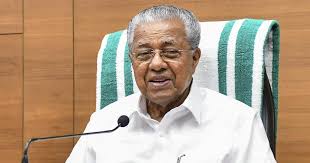
Over 13 lakh students, including 4.5 lakh SC and 80,000 ST students, currently benefit from various pre- and post-matric scholarships under the state’s e-Grants programme, regardless of family income. Kasaragod- Chief Minister Pinarayi Vijayan on Thursday said that no student from Scheduled Castes (SC), Scheduled Tribes (ST), or other marginalised communities should be left behind in the state’s march towards a knowledge-driven new Kerala. Speaking at the event at Durga Higher Secondary School Auditorium, Kanhangad, the Chief Minister said the government’s primary goal is to integrate marginalised sections into the mainstream and provide equal opportunities in education, employment, and social welfare. The campaign, which begins on Gandhi Jayanti, is under the motto: “Leap towards knowledge and employment”, reflecting Gandhiji’s vision of social inclusivity. CM Vijayan highlighted the state’s flagship initiatives aimed at empowering marginalised communities. The Unnathi Scholarship has already enabled over 1,000 SC/ST students to pursue higher education abroad. Technical training programmes under the government’s skill development schemes equip students from these communities to secure employment within six months of course completion. He also pointed to Palakkad Medical College, which admits 72 SC/ST students annually. Since 2014, 413 SC and 15 ST students have graduated as doctors, serving Kerala’s healthcare system. Additionally, the Training for Career Excellence (TRACE) programme provides stipendiary training to more than 5,000 youths in engineering, law, nursing, paramedical, management, and journalism. The CM underlined the Smart Study Room initiative, offering Rs 2.5 lakh per unit, and highlighted the state’s LIFE and SAFE housing schemes, ensuring that marginalised families receive secure homes. Over 13 lakh students, including 4.5 lakh SC and 80,000 ST students, currently benefit from various pre- and post-matric scholarships under the state’s e-Grants programme, regardless of family income. The CM also stressed the importance of ongoing campaigns, covering sanitation, anti-drug drives, healthcare, employment, rights awareness, and disaster preparedness. He said the government’s commitment is to ensure that “the taste of development and touch of welfare reaches every region, leaving no one behind”. (IANS) The CM stressed the importance of ongoing campaigns, covering sanitation, anti-drug drives, healthcare, employment, rights awareness, and disaster preparedness. Courtesy : The Mooknayak Note: This news is originally published on https:/themooknayak.com/bha and is used purely for non-profit/non-commercial purposes, especially human rights
1 dead after Dalit community centre collapses in Muzaffarnagar
Agra: A 55-year-old man, Deshveer Singh, was killed after the lintel of a Dalit community chaupal in Chandedi village of Muzaffarnagar collapsed on Wednesday night, said police on Thursday. Three others, who were present at the time, escaped unhurt. Ajit Singh, a villager, said, “First, the wall of the centre collapsed, after which the roof came down. Deshveer was sitting in the room and was buried under the debris. He was rushed to the hospital, where he was declared dead. The body was sent to the post-mortem house.” The chaupal, a recently constructed community centre used for social and religious gatherings, was built around five months ago. The incident has sparked outrage among villagers, who are demanding accountability for the poor construction quality. Authorities have launched an investigation into the cause of the collapse. DSP (Budhana), Gajendra Pal Singh, said, “The body was handed over to the family after post-mortem. The SDM and Tehsildar have inspected the spot. Further investigation is on, and action will be taken accordingly.” Courtesy : TOI Note: This news is originally published on https:/timesofindia.com/bha and is used purely for non-profit/non-commercial purposes, especially human rights
Tamil Nadu has worst discrimination record against Dalits: Governor RN Ravi
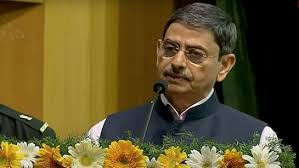
“In our state (TN), this issue remains, and every time, at every forum, I raised this issue. I will continue raising it,” Ravi said. CHENNAI: Governor RN Ravi, who has been claiming that the crime against SCs were rising and that they face persistent hardships, on Thursday charged that TN has the “worst record” as far as social discrimination against Dalits is concerned. The governor made these remarks while speaking at the Gandhi Jayanthi celebrations here. “In our society, there were a lot of distortions, and many sisters and brothers were treated as untouchables. They were not allowed to share public space. And we moved forward. We have done significant work. But, in our state (TN), this issue remains, and every time, at every forum, I raised this issue. I will continue raising it,” Ravi said. “There are schools where there are partitions – one side Dalit students and the other side non-Dalit students. Where are we? In this social discrimination against Dalits, our state has the worst record. And we must wake up, and it is possible (to change this),” he added. He said while the rest of the country has, by and large, addressed this problem, in Tamil Nadu it is an everyday affair. Courtesy : TNIE Note: This news is originally published on https:/thenewindianexpress.com/bha and is used purely for non-profit/non-commercial purposes, especially human rights
Dalit youth dies in police custody: 5 policemen suspended after 4 days of uproar, 27.50 lakh compensation, know how the administration bowed down in Dungarpur?
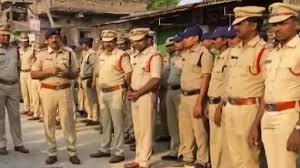
After four days of protests by the victim’s family and the tribal community, the administration relented; the victim’s family was awarded 27.50 lakh rupees, the father was given a contract job, and 5 policemen were suspended. Dungarpur, Rajasthan. The four-day tense situation following the custodial death of a youth at the Dovda police station in the district has finally ended. An agreement was reached between the administration and the deceased’s family late Wednesday evening, ending the days-long protest. What was the whole matter? The controversy began on September 26th when Dovda police detained a youth named Dilip Ahari in connection with a theft case. During police interrogation, Dilip’s health suddenly deteriorated. He was immediately taken to a local hospital in Dungarpur, from where he was referred to Udaipur for better treatment. However, Dilip died while undergoing treatment at a hospital in Udaipur on September 30. According to media reports, news of Dilip’s death sparked outrage among the tribal community and the victim’s family. They launched a protest, accusing the police of serious custodial assault. The protest first began outside the Dowada police station and later reached the district collectorate, leading to a tense situation. Four days of protests and negotiations followed. The angry protesters placed three key demands before the administration: A compensation of ₹1 crore for the victim’s family. A government job for a family member. Immediate and strict action against the accused policemen. Several rounds of negotiations were held to resolve the dispute. Led by Aspur MLA Umesh Meena and BAP MP Rajkumar Roat, the protesters engaged with the administration. On Tuesday, talks were held in the presence of TAD Minister Babulal Kharadi and Udaipur MP Mannalal Rawat, but they remained inconclusive. Finally, on Wednesday, a 10-member delegation led by MLA Umesh Meena met with Additional District Magistrate (ADM) Dineshchandra Dhakad and Additional Superintendent of Police (ASP) Ashok Kumar. After several hours of meetings, an agreement was reached between the two parties. Key Points of the Agreement The following points were agreed upon under the agreement reached between the administration and the victim’s family: Compensation: The victim’s family will receive financial assistance of ₹27.50 lakh. Job: The deceased Dilip’s father, Jivraj Ahari, will be given a contract job as a Class IV employee in the TAD hostel. Action: Five police officers, including Dovada Police Station Officer Tejkaran Singh and Head Constable Vallabhram Patidar, have been suspended for negligence in the case. Restoration of Peace and Funeral Following the announcement of the agreement, Dilip’s body was taken from the Udaipur hospital mortuary for a post-mortem examination. His last rites will be performed in his native village, Kalariya, on Thursday. With this agreement, the tension that had persisted in the area for the past four days has ended and peace has been restored. Rajan Chaudhary Courtesy: Hindi News
Discrimination against Dalit medical students: SC Commission issues notice to AIIMS and Health Ministry; find out what the matter is?
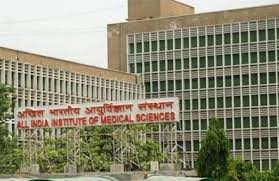
In its notice, the National Commission for Scheduled Castes (NCSC) has sought an action report from the AIIMS Director and the Ministry’s Secretary within 15 days. New Delhi. The National Commission for Scheduled Castes (NCSC) has taken a serious view of the discrimination, inhumane working conditions, and suicides faced by PG (postgraduate) medical students from the Scheduled Caste (SC) community in India’s prestigious medical colleges and universities. The Commission has issued notices to the All India Institute of Medical Sciences (AIIMS), New Delhi, and the Union Ministry of Health and Family Welfare, seeking a response within 15 days. The Commission’s action follows a detailed complaint filed by Dr. Lakshya Mittal, a laparoscopic, general, and laser surgeon from Rajasthan and the National President of the United Doctors Front (UDF). Dr. Mittal sought the Commission’s immediate intervention to protect the rights of PG medical students from the Scheduled Caste community, prevent suicides, and regulate working conditions. What’s in the complaint? In his petition (dated July 8, 2025), Dr. Mittal presented the following problems faced by students from the Scheduled Caste community to the Commission. Inhumane duty hours – PG students in medical colleges are made to work continuously for 24 to 36 hours. In many cases, the duty hours are extended to 72 hours. Violation of fundamental rights – Students are forced to work in conditions that violate Article 21 (Right to Life and Dignity) and Article 42 (Right to Humane Working Conditions) of the Constitution. Caste discrimination and harassment – Scheduled Caste students often face caste-based remarks and discrimination from classmates, roommates, and faculty. Increase in suicides and dropouts – Due to long duty hours and discrimination, dozens of students commit suicide or drop out of courses every year. The Commission said, ‘Respond within 15 days.’ In its notice (File No. SSW-II/BE/HFW/2025/301685), the National Commission for Scheduled Castes has sought an action report from the AIIMS Director and the Secretary of the Ministry within 15 days. The Commission has clarified that if a response is not provided within the stipulated time, it will be considered a violation of the Commission’s powers and the Commission may take action similar to that of a civil court. The NMC Task Force Report is also serious. In his complaint, Dr. Mittal also cited the report of a task force constituted by the National Medical Commission (NMC) in August 2024. This task force, headed by Dr. Suresh Bada Math (NIMHANS), studied the mental health and suicides of postgraduate students. The report clearly stated that continuous 24-hour duty and excessive workload not only seriously impact the mental and physical condition of doctors, but also pose a threat to the safety of patients. To address this problem, the Uniform Central Residency Scheme was created in 1992, but its guidelines have not been properly implemented to date. Rules exist, but they are not enforced. Residency Scheme 1992: This prohibits junior residents from working more than 12 hours continuously and not exceeding 48 hours per week. It also guarantees weekly leave and annual leave. PGMER Guidelines 2023: This states that “PG students will work within reasonable working hours and will be given adequate rest.” It also provides for 20 days of annual leave and weekly leave. But according to Dr. Mittal, both these rules are being completely ignored. The silence of the college management and the NMC has worsened the situation. Shocking Suicide Statistics According to the NMC report (August 10, 2022), 55 PG medical students committed suicide in the last five years, with a significant number of them belonging to the Scheduled Caste category. These cases have come to light in the past: Balmukund Bharti (2012, AIIMS Delhi): Suicide due to caste discrimination. Dr. M. Mariraj (2018, Ahmedabad): Attempted suicide due to discrimination by colleagues. Female MBBS intern (2023, Amritsar): Suicide due to caste-based harassment, case filed against professors and batchmates. JIPMER, Puducherry (2024): Junior doctors accused the head of the department of caste-based discrimination. Lokendra Singh Dhande (2024, Bengaluru): Suicide due to caste-based harassment by classmates. Speaking to The Mooknayak, Dr. Mittal said, “Scheduled Caste students overcome significant difficulties and social barriers to reach medical college. But even after admission, they face serious problems such as discrimination, unequal treatment, and inhumane duty hours. Long and unrelenting duty hours lead to mental and physical breakdowns, which not only impact their careers but also, at times, prove fatal for their lives. The future of these students working in medical education and healthcare can only be secured if the Commission intervenes immediately and concretely in this matter. The Commission’s intervention will not only protect the fundamental rights of these students but can also save the lives and futures of millions of talented young people.” What are the demands? The NMC should immediately implement the Uniform Residency Scheme 1992. Section 5.2(ii) of the PGMER 2023 should be amended to establish a duty limit of 8 hours per day and a maximum of 48 hours per week. An independent third-party monitoring agency should be established to determine fines and penalties for non-compliance. A special committee should be formed to monitor and prevent caste discrimination in medical colleges. This case not only represents a fight for the rights of Scheduled Caste students but also exposes the true nature of India’s medical education system. When students aspiring to become doctors are subjected to discrimination and inhumane conditions, it is a serious warning to both society and the government. Ankit Pachauri Courtesy: Hindi News
Odisha Cabinet approves 10-hour shifts; allows night shifts for women

The overtime work limit has been increased from 115 hours to 144 hours every financial quarter. The Odisha government on Monday (September 29, 2025) increased the daily working hours to 10 hours, subject to a 48-hour weekly cap. It also allowed women in private establishments to work night shifts subject to their written consent. The Cabinet, chaired by Chief Minister Mohan Majhi, approved an amendment to the Factories Act, 1948, aimed at promoting industrial investment and creating more employment opportunities. “The State government has extended the total number of hours of work without an interval to six hours and increased the spread over up to 12 hours inclusive of intervals for rest,” read the official statement. “Where a worker works for more than the prescribed hours, they would be entitled to wages at the rate of twice their ordinary rate of wages for overtime work,” it added. Moreover, the overtime work limit has been increased from 115 hours to 144 hours every financial quarter. “Women can be employed in all factories for all types of work. They may also be employed before 6 a.m. and beyond 7 p.m. with their written consent,” the government said. These reforms are expected to attract new investments, enable factories to meet peak demand and increase productivity, the government said. Development of model schools In another significant decision, the Cabinet approved the development of model schools under the Godabarisha Adarsha Vidyalaya (GAV) scheme at the gram panchayat level, with a focus on inclusive and quality education. Aligning with the objectives of the Right to Education (RTE) Act, 2009, the GAV scheme aims to ensure equal access to education and holistic development of the student community. “This initiative is in line with the vision of the National Education Policy (NEP), 2020 and the NIPUN Odisha scheme, and places a special focus on enhancing foundational literacy and numeracy skills to empower children socially and educationally,” the statement added. In the first phase, spanning three years (2025-26 to 2027-28), a total of 2,200 model schools will be constructed with an estimated outlay of ₹12,000 crore. Satyasundar Barik Courtesy : The Hindu Note: This news is originally published on https:/thehindu.com/bha and is used purely for non-profit/non-commercial purposes, especially human rights
Locked Up By ‘Upper Caste’ Women For Entering Home, Dalit Boy Dies By Suicide

The complainant alleged that his wife told him their son was harassed and locked inside a cowshed by three ‘upper caste’ women after he entered their house while playing. Shimla: A 12-year-old Dalit boy allegedly died by suicide by consuming poison after he was reportedly locked inside a cowshed by some so-called ‘upper caste’ women for entering their house at a village in Shimla district, officials said on Wednesday. According to the complaint filed by the father of the boy, he found his son lying unconscious on the bed on the evening of September 16. He took his son to a community health centre in Rohru before being referred to the Indira Gandhi Medical College (IGMC) in Shimla where he died during treatment, the complainant said, adding that the doctors said his son consumed a poisonous substance. The complainant alleged that his wife told him their son was harassed and locked inside a cowshed by three ‘upper caste’ women after he entered their house while playing. The women reportedly claimed that their son “defiled” their house and demanded a goat as a punishment, he alleged. Traumatised by the harassment, the boy consumed some poisonous substance, which led to his death, the complainant said. Police have registered a case against the accused women, who have been granted anticipatory bail by a local court, officials said. The incident outraged the local people, including the Dalit Shoshan Mukti Manch (DSMM), which strongly condemned the incident and demanded police to immediately arrest the accused under the SC/ST (Prevention of Atrocities) Act, 1989. The DSMM also warned to launch a mass movement by mobilising people if no action is taken against the accused. (Except for the headline, this story has not been edited by NDTV staff and is published from a syndicated feed.) Courtesy : NDTV Note: This news is originally published on https:/ndtv.com/bha and is used purely for non-profit/non-commercial purposes, especially human rights
Mathura man gets life for killing 14yo Dalit girl 16 yrs ago

Agra: A special SC/ST Act court in Mathura on Tuesday sentenced a 35-year-old man to life imprisonment for strangling a 14-year-old Dalit girl in 2009, after she objected to sexual harassment and caste-based abuse. The court also imposed a fine of a Rs 13,000 fine on Kumar Singh with non-payment attracting an additional six months in jail. The girl was found dead inside a hut near her home in Mathura’s outskirts and an FIR was filed based on a complaint by her cousin, who said she was out to fetch water from a public tap when Singh, then 19, passed obscene remarks and hurled casteist slurs at her. When she reported the incident, her family confronted the accused, who again issued caste-based threats. Later that afternoon, the girl’s body was discovered. A case under IPC sections 302 (murder), 201 (causing disappearance of evidence), and 506 (criminal intimidation), along with provisions of the SC/ST Act, was registered. The investigation was led by then DSP Gyanendra Singh. “The girl had objected to Singh’s remarks and casteist abuse,” said Suresh Prasad Sharma, special public prosecutor. “Later that day, she was found strangled to death. The postmortem confirmed the cause and ruled out any sexual assault.” Singh surrendered before court and was sent to judicial custody. He was later released on bail during the trial. In March 2010, police filed a chargesheet supported by the postmortem report and depositions from at least 10 witnesses. During trial, Singh denied the charges and claimed he was working in his paddy field with family at the time of the murder. He also alleged that the girl had been killed by her relatives as she was speaking to a boy from another caste. The court rejected both claims and pronounced him guilty. He sought leniency on the grounds that this was his first offence, but the court declined and imposed a life sentence. Courtesy : TOI Note: This news is originally published on https:/timesofindia.com/bha and is used purely for non-profit/non-commercial purposes, especially human rights