
Rewind: Silent erasure of Dalit voices, this time by AI!

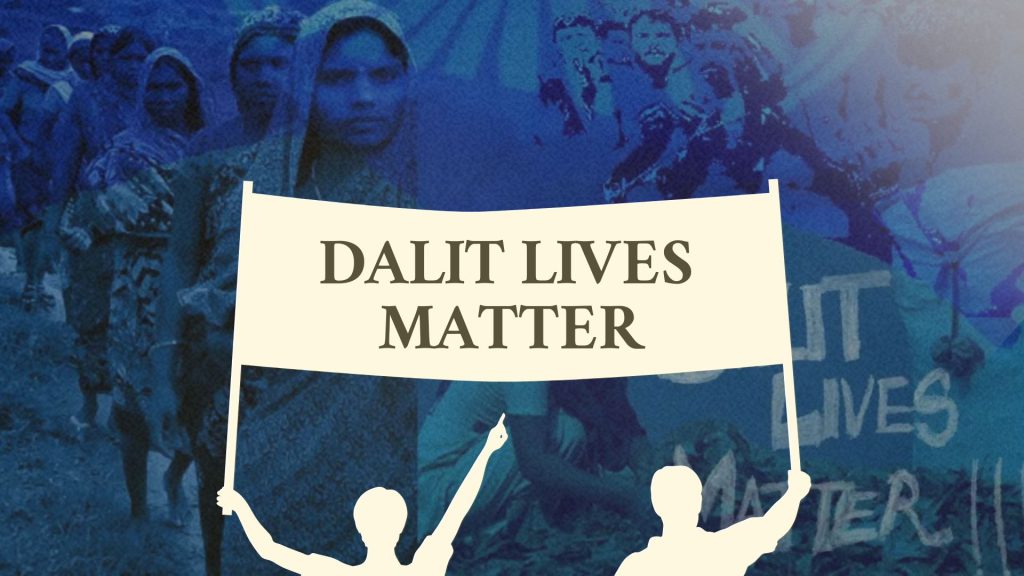
Dalit literature faces a new threat — biased algorithms, poor digitisation, and academic neglect are pushing this powerful movement rooted in resistance and equality to the margins again Dalit literature, a significant post-Independence literary movement, today faces an existential threat — not by fire or censorship, but by neglect, disinterest, and biased algorithms.In an increasingly digital world and an education system skewed toward dominant narratives, the true essence of Dalit literature and its role in understanding caste discrimination is being diluted, ignored, or distorted. Dalit literature represents a powerful body of writing rooted in the lived experience of caste-based oppression, resistance, and emancipation. Emerging from the voices of India’s most marginalised communities, Dalit literature is an assertion of identity, human dignity, and equality. However, the widespread use of artificial intelligence (AI), declining interest among non-social science students, the persistent non-digitisation of Dalit texts, institutional bias in acquiring books on Dalit literature, and the failure of India’s schooling system to integrate Dalit perspectives all mean that a generation relying on AI grows up with a distorted and incomplete understanding of caste realities in India. As defined by Arjun Dangle, Dalit literature aims to raise awareness about the caste system while examining it through a sociological lens. Rooted in principles of negativity, rebellion, and scientific rationality, Dalit writing challenges traditional hierarchies and advocates for social change. Its revolutionary nature reflects a conscious effort to resist marginalisation and assert the dignity and identity of Dalit communities. Thus, Dalit literature serves as both a form of protest and a catalyst for transformative discourse in Indian society. A Continuing Reality According to the National Crime Records Bureau (NCRB), crimes against Scheduled Castes (SCs) increased by over 17 per cent from 2018 to 2022. In education, dropout rates for Dalit students remain disproportionately high; in rural India, nearly 30 per cent of Dalit students leave school before completing Class 10. In employment, despite affirmative action policies, Dalits remain underrepresented in higher judiciary, corporate leadership, and academia. Caste discrimination is not just social but structural. From segregation in hostels and places of worship to violence for riding a horse at weddings, caste-based atrocities persist across States and class strata. Dalit literature documents these lived realities, which are often overlooked in mainstream media. Algorithms aren’t Neutral Algorithms are often seen as neutral tools that simply process data without bias. However, they reflect the prejudices present in the data they are trained on. In India, where data is shaped by deep-rooted caste hierarchies, this has serious consequences. Dalits and Muslims are often misrepresented or excluded by algorithms that classify their communities as “high risk” due to historical poverty. Elite institutions favour upper-caste applicants, reinforcing inequality in CV screening. As a result, instead of offering fairness, algorithms can amplify social discrimination, leading to systemic exclusion at scale — especially for marginalised groups like Dalits — despite the illusion of objectivity. Caste discrimination in academia also takes a serious psychological toll on marginalised students and faculty, causing stress, anxiety, and, in extreme cases, suicide. It leads to academic and professional setbacks, as biased treatment, lack of support, and exclusion from networks hinder progress and reduce career opportunities. These practices deepen educational inequality by denying marginalised communities equal access and representation in higher education and professional fields. New Form of Exclusion Caste-based bias in AI is emerging as a critical concern in India, paralleling global concerns about racial bias. This bias originates from the use of prejudiced and unrepresentative datasets that reflect dominant caste perspectives. The upper caste dominance in India extends across culture, academia, economy, politics, and now technology. AI is increasingly shaped by powerful groups, leading to underrepresentation and biased algorithms that serve their interests. While not inherently unethical, this use of AI exacerbates inequality and portrays the technology as a barrier to social justice, rather than a neutral tool. The unequal access and control over AI reflect broader systemic disparities, raising concerns about fairness and inclusivity in its development and application within Indian society. AI tools in India often fail to represent Dalit and marginalised communities due to a deep misalignment between Western-centric notions of algorithmic fairness and India’s complex socio-cultural realities. Imported models of fairness overlook caste, regional disparities, and structural inequities rooted in centuries of exclusion. The absence of reliable socio-technical infrastructure for Dalits, Adivasis, and women leads to their underrepresentation or complete erasure in datasets. This digital divide is stark — only 14.1 per cent of Scheduled Tribes (STs) and 13.5 per cent of Scheduled Castes (SCs) are computer literate, compared to 31.2 per cent of upper castes. Consequently, algorithmic outcomes in crucial sectors like policing, employment, and loans become skewed. Moreover, AI developers in India are predominantly from privileged caste and class backgrounds, often from elite institutions. Their detachment, combined with weak regulatory oversight, produces opaque, “black box” algorithms that evade public accountability. For AI to be fair, it must be re-imagined within local contexts. This means engaging marginalised communities, building inclusive data ecosystems, and fostering a culture of transparency and critique. Disinterested Academia Despite caste being a deeply embedded issue, most students in engineering, medical, business, and science fields graduate without any meaningful exposure to Dalit literature or caste dynamics. The Indian education system has confined caste-related discourse primarily to the social sciences, preventing a broader, cross-disciplinary understanding. Institutions like the IITs, IIMs, and AIIMS — which have faced serious allegations of caste-based discrimination, including the tragic suicides of Dalit students — offer minimal curricular engagement with anti-caste thought. This academic silence contributes to a lack of awareness and empathy among students, many of whom later occupy influential roles. Missing Archives Despite India’s push toward digital learning, much of Dalit literature remains un-digitised. Pioneering works in Marathi, Tamil, Telugu, Kannada, and Hindi are often published by small presses without access to digital archiving. As of 2024, the Digital Library of India and National Digital Library still lack comprehensive Dalit literature collections, particularly vernacular autobiographies, regional poetry, and essays. This exclusion from digital ecosystems
Arrest warrants against 3 cops accused of Dalit minor girl’s rape, harassment
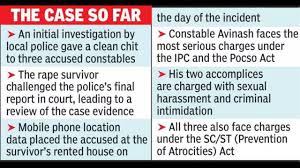
Alwar: A local Pocso court Saturday issued arrest warrants against three constables from Raini police station following allegations of rape and harassment of a minor Dalit girl. The accused — identified as constables Avinash Meena alias Sunny, Rajvendra alias Raju and Man Singh — face charges under various sections of the Indian Penal Code (IPC), the Protection of Children from Sexual Offences (Pocso) Act and the SC/ST Act. Avinash is accused of rape, while the other two are accused of molestation and harassment. The case, which dates to Nov 2023, initially saw Raini police station conducting an investigation and filing a final report (FR) that declared the accused policemen innocent. The case took a turn when the rape survivor challenged the FR in court, prompting a judge to review the evidence presented during the investigation. During later proceedings, the Pocso court demanded multiple pieces of information from the police, including call records and location data of the accused. The evidence unearthed through mobile phone calls and chat messages proved instrumental in the court’s decision to authorise the arrest of the three policemen. Special public prosecutor Vinod Kumar said that the minor girl, who he said was initially threatened by the accused policemen against filing a complaint, eventually took a brave stand against her perpetrators. He said her claims were corroborated when mobile phone location data from the three accused pointed to their presence at her rented residence on the day of the incident. The court subsequently overruled the local police’s clean chit to the accused while emphasising the importance of protecting the rights of minors, particularly of those from marginalised communities. Of the three accused policemen, constable Avinash faces the most serious charges under various sections of the IPC and Pocso Act. He is being charged under IPC sections 354A (sexual harassment), 506 (criminal intimidation), 363 (kidnapping), 366 (kidnapping with intent to compel a woman to marry), and 376 (rape). Stringent sections of the Pocso Act have also been made applicable to him. Constables Rajvendra and Man Singh also face multiple charges under various IPC sections, including sexual harassment and criminal intimidation, together with the Scheduled Castes and the Scheduled Tribes (Prevention of Atrocities) Act. Courtesy : TOI Note: This news is originally published on https:/timesofindia.com/bha and is used purely for non-profit/non-commercial purposes, especially human rights
Shot 5 times, remained in coma for 2 months:Continuously taunted by wife, police in hospital; couldn’t even move, let alone speak
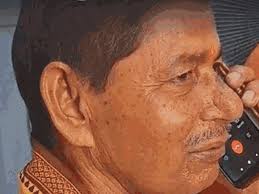
I am Arjun Paswan, from Jamuana village in Jehanabad district of Bihar. We did not own any land. Being Dalit, we survived on the mercy of landlords. We received millet to eat in exchange for working on their land. If we encountered landlords on the road, we would hold our shoes in our hands. Not only this, they kept an eye on our women. We even had separate wells. When famine struck the village, troubled by hunger, I came to Patna. When I opposed the smuggling of kerosene oil here, I was shot five times. I was in a coma for two months. My body could not move, but my mind was alert. I could hear everything—my wife’s sobs, the whispers of doctors and police officers—but could do nothing. Hearing the same kind of things repeatedly made me feel irritable inside. Actually, my story begins in the village, where I endured poverty, starvation, famine, the feudal system, and the caste system. We were a family of seven. I was the eldest among three brothers and two sisters. Therefore, I had the responsibility of running the entire family. I was married at the age of 13. Poverty was so severe that getting enough to eat was all that mattered. For that, I would go with my mother to dig soil from the canal so that water could easily reach the fields of landlords and upper castes. In return, we would get millet to eat. We had to grind the millet after bringing it home. For vegetables, we grew eggplants at home. Not just food, life itself was not easy there. If we encountered landlords while walking on the road, we would take off our shoes and hold them in our hands because wearing shoes was against their honour. Moreover, we had separate wells in the village. Bhumihar, Musahar, Kurmi, Rajput, and Dalits—all had separate wells. Additionally, if powerful landlords liked any woman from our house, they would abduct her. They would rape her. Even if we wanted to protest, we could not. Nobody would listen to us. In the name of justice, we would be given only a handful of grains. Life went on like this. Then in Bihar, there was continuous famine for three years in 1966, 1967, and 1968. The famine was so severe that people were on the verge of dying from hunger. Poor people and animals in our village began to die. To get news about the famine, we would go and listen to the radio at nearby wealthy landlords’ houses. Their rule was that they would sit on chairs in their courtyard while we sat on the ground. One day, the government announced on the radio that people from famine-affected villages should go to Punpun railway station from Jehanabad and bring fodder for their animals from there. Then four more bogies were added to the train for the 50-kilometre journey from Jehanabad to Punpun station. In the morning we would go to Punpun railway station and return by evening with grass for the animals. The entire day would be spent doing this. By then, there was nothing left to eat at home. During that time, for almost a year, our family survived by chewing sugarcane—the same sugarcane that had been brought as animal fodder during the famine. For breakfast, we would soak corn at night and eat it boiled in the morning. During the famine, a landlord falsely accused my father of theft. He was sent to jail. Then we faced new trouble. In a way, our problems were only increasing. At that time, my mother-in-law lived in Patna. She asked me to come to Patna with the family. After father went to jail, it was difficult to run the house. I felt it was better to go to Patna than to die of hunger there. We sold two cows and, with the money from that, I came to Patna with the family. After arriving in Patna, I started living with my mother-in-law in the Pirbamaria area. This is a Dalit settlement. Here, my mother-in-law got me work on the water ships running in the Ganges. These ships used to come from Kolkata to Patna. They carried oil, Dalda canisters, and sacks of sugar. Spices and makhana from Bihar’s Marufganj Mandi would go to Kolkata on these ships. I started working loading and unloading goods on them. Now, upon coming to Patna, there was just this much comfort: we did not have to sleep hungry. After a year, my father was released from jail and returned home. When he started managing the house by doing labour work, I felt that I should study; otherwise, I would have to load and unload goods all my life. I took admission in a school and started studying. I would stay in school from 10 AM to 4 PM, and after that would go to work on the water ship. There, I would work until 10 PM. This way, in 1971, I completed my education up to the 10th standard. After that, I did my intermediate from Bihar National College. During this time, I came under the influence of the leftist movement. Actually, when I was in my village, people in nearby Sikri village were also connected to leftism, whom I had seen in childhood. Here in Patna, the entire area where I lived was under leftist influence. Leftist leader Ram Avatar Shastri had been elected MP three times from here. He kept raising his voice against poverty, starvation, the feudal system, and the caste system, so I also joined them. After joining the movement, I started speaking out against the black marketing of kerosene in my area. The powerful people would loot the kerosene arriving at the depot and sell it at high prices. No one dared protest. My family members tried to stop me from opposing it, but I persisted. During this time, I began receiving threats. One day, when I left home in the morning for
Police dismiss constable over Dalit woman’s death
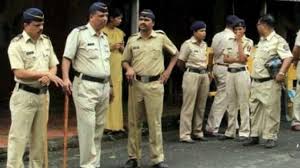
Gadwal: Followingthe death of a Dalit woman named Priyanaka, police constable Raghu Nath Goud was remanded and suspended from police duty in connection with the incident. According to police reports, Goud, a resident of Chinnoni Palli village in Gattu mandal, exploited Priyanka under the pretext of love and failed to marry her. Following Priyanka’s death by suicide, District SP T Srinivasa Rao has confirmed that Raghu Nath Goud will be permanently dismissed from his post as a police constable, ensuring that no one will be shielded by their position. A case has been registered and investigation is underway. The SP reiterated that strict legal action will be taken against all those responsible, sending a strong message that justice will be served. The young woman belonging to the Dalit community from Khammam district reportedly took her own life after being allegedly deceived in a relationship by the constable. According to reports, Priyanka had been in a romantic relationship with Raghu for several years. She had approached him with the intention of marriage, but the constable allegedly refused. Following repeated emotional distress, Priyanka had approached Gadwal police two months ago, resulting in the filing of a cheating case against the constable. Raghu was reportedly jailed and was recently released. Since then, Priyanka had been staying at the constable’s residence. On Friday, distraught over his continued refusal to marry, Priyanka allegedly consumed insecticide. She was admitted to Gadwal Government Hospital for treatment but succumbed to her injuries on Saturday morning after returning to her village. Meanwhile, on Saturday, Telangana Mal Mahanadu state leaders condemned the incident, demanding justice for Priyanka. Courtesy : The Hans India Note: This news is originally published on https:/thehansindia.com/bha and is used purely for non-profit/non-commercial purposes, especially human rights
Dalit Youth Attacked in Rae Bareli Over Loan Dispute, Faces Caste-Based Abuse
A Dalit youth was allegedly attacked in Ali Nagar Askaranpur village in Rae Bareli district after asking for money he had lent. The victim, Ashish, said he had lent ₹100 to a villager named Dheeraj, who refused to repay him. According to Ashish, Dheeraj lured him to a garden under false pretences, forced him to drink alcohol, and then attacked him with a sword used in a gimmick. During the assault, Ashish said he was subjected to caste-based abuse and received death threats. He sustained serious injuries in the attack. Ashish’s family immediately alerted the police by dialing 112. Officers reached the spot and took him to Community Health Center (CHC) Unchahar, where he received first aid. Dr. Iftekhar Ahmed of CHC Unchahar confirmed that Ashish was treated and stabilized. Kotwali in-charge Sanjay Kumar said that the police have received a complaint and the matter is under investigation. “A case will be registered against the accused, and legal action will be taken,” he added. Courtesy : TOP Note: This news is originally published on https:/theobserverpost.com/bha and is used purely for non-profit/non-commercial purposes, especially human rights
“Chirag Paswan Is Transgender,” Claims Bihar State Transgender Welfare Board Member, Dr. Rajan Singh, Calls for Public Acknowledgment
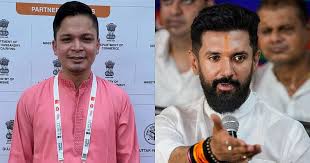
Dr. Rajan Singh, a Bihar State Transgender Welfare Board member, has sparked controversy by alleging that Union Minister Chirag Paswan belongs to the transgender community Dr. Rajan Singh claimed Chirag Paswan hides his transgender identity. He urged Paswan to acknowledge his identity publicly. Chirag Paswan is a former actor and current politician. Dr. Rajan Singh, a member of the Bihar State Transgender Welfare Board, has stirred controversy with his remarks targeting Union Minister Chirag Paswan. The video surfaced on instagram on August 27, 2025. In the video while speaking to the media, Dr. Rajan alleged that Chirag Paswan belongs to the transgender community but has been hiding his identity. He said there is no minister from the transgender community in the country and claimed that many transgender people in politics often hide their personality. He then created a stir by saying, Chirag Paswan is transgender. He has hidden his gender. The whole country and the world know that he is from the transgender community. Dr. Rajan further urged Paswan to speak openly about his identity, adding: If Chirag Paswan accepts his community publicly, we will all go to the streets and make him Chief Minister. But he does not speak. Chirag Kumar Paswan, currently serving as India’s 19th Minister of Food Processing Industries since June 2024, is a well-known politician from Bihar and has been the president of the Lok Janshakti Party (LJP) since 2021. The Bihar Assembly election is expected in later this year. Chirag is the son of the late Ram Vilas Paswan—veteran Union Minister and founder of the LJP—and Reena Sharma, a Punjabi Hindu air hostess from Amritsar. Ram Vilas Paswan, remembered for his calm nature and long-standing commitment to social justice, had a political career spanning over fifty years. He represented marginalized communities, served multiple terms in both the Lok Sabha and Rajya Sabha, and held several key ministerial portfolios. Before entering politics, Chirag Paswan briefly tried his hand at acting, appearing in the 2011 Bollywood film Miley Naa Miley Hum. He later shifted focus to politics, contesting and winning the 2014 Lok Sabha elections from Jamui constituency in Bihar. Dr. Rajan’s comments have triggered discussion, bringing the question of gender identity into the political spotlight and placing Chirag Paswan in the middle of an unexpected controversy. [Rh/VP] Courtesy : News Gram Note: This news is originally published on https:/newsgram.com/bha and is used purely for non-profit/non-commercial purposes, especially human rights
Telangana Congress sets Oct 15 deadline for ‘vote theft’ signature campaign
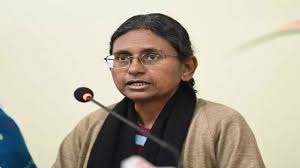
Hyderabad: Telangana Pradesh Congress Committee president B Mahesh Kumar Goud and AICC Telangana in-charge Meenakshi Natarajan on Saturday set Oct 15 deadline for ministers, district Congress presidents, and party cadres to ensure the collection of at least 100 signatures from every village as part of the nationwide campaign against the BJP’s alleged “vote chori” (vote theft). In an online meeting with DCC presidents and district in-charge ministers, the leaders said the signature collection drive in Telangana had slowed due to heavy rains and the festival season but stressed that it must be expedited and completed within 10 days. The Telangana unit aims to send 12 lakh signatures to the AICC, which will compile submissions from all states and present them to the Election Commission of India (ECI), supporting Rahul Gandhi’s claim that the BJP was manipulating elections through “vote theft.” Mahesh Goud alleged that in some states, including Maharashtra and Bihar, there were instances of 40 votes being registered in a single bedroom house, names of deceased persons continuing on electoral rolls, and living voters being deleted. “The BJP came to power at the Centre for three terms with ‘vote chori’. Take up this campaign as a prestigious issue and complete it on time,” he told the party functionaries. Meenakshi Natarajan said Rahul Gandhi had elaborated on how the BJP had indulged in vote manipulation, yet the Election Commission failed to act. AICC president Mallikarjun Kharge and general secretary (organisation) KC Venugopal have launched a nationwide movement on the issue, she said. “Everyone must work sincerely and collect signatures in large numbers. Rahul Gandhi is fighting for two key causes—social justice and an end to vote theft,” she added. Highlighting the Congress govt’s commitment to social justice, Meenakshi said the state’s move to provide 42% BC reservations made it a role model in the country. “The party should work hard and win both the Jubilee Hills by-election and the upcoming local body polls,” she said. Courtesy : TOI Note: This news is originally published on https:/timesofindia.com/bha and is used purely for non-profit/non-commercial purposes, especially human rights
‘Stealing Karpoori Thakur’s Jan Nayak title’: PM Modi’s veiled jibe at Rahul Gandhi; blames RJD rule for Bihar’s education woes
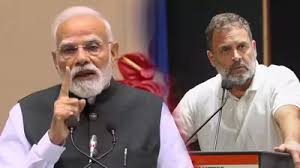
NEW DELHI: Prime Minister Narendra Modi on Saturday took a veiled swipe at Leader of Opposition Rahul Gandhi while inaugurating several education and skilling projects in Bihar, urging people to be vigilant against those attempting to claim the ‘Jan Nayak’ title associated with former Bihar chief minister Karpoori Thakur. Speaking at the inauguration of Jan Nayak Karpoori Thakur Skill University in Bihar, PM Modi said, “…Karpoori Thakur wasn’t made ‘Jan Nayak’ by social media trolls. He was made ‘Jan Nayak’ by the people of Bihar, and they did so after observing his life. I would urge the people of Bihar to be vigilant. Nowadays, people are trying to steal even this title of ‘Jan Nayak’. Therefore, I urge the people of Bihar to be vigilant so that this honour bestowed upon Karpoori Thakur by the people is not stolen… the double engine government of NDA is continuously engaged in modernising the educational institutions of Bihar.” — ANI (@ANI) PM Modi blamed the “poor state” of education during the RJD rule for triggering large-scale migration from Bihar and lauded chief minister Nitish Kumar’s government for improving the situation. He said the state government has resolved to double employment generation in the next five years compared to the last two decades, aiming to ensure that young people find work within Bihar. He targeted the previous RJD regime, recalling how “schools would not open and few recruitments were made”, forcing students to migrate to other cities. “It is rather difficult to restore a tree whose roots are rotting, and this was the state of Bihar during the RJD rule,” he said. PM Modi unveiled youth-centric initiatives worth over Rs 62,000 crore, with a special focus on Bihar. He launched PM-SETU (Pradhan Mantri Skilling and Employability Transformation through Upgraded ITIs), a centrally sponsored scheme worth Rs 60,000 crore, which aims to upgrade 1,000 government ITIs in a hub-and-spoke model. He also announced the revamped ‘Mukhyamantri Nishchay Svyam Sahayata Bhatta Yojana’, under which nearly five lakh graduates will receive a monthly allowance of Rs 1,000 for two years, along with free skill training. Additionally, the redesigned Bihar Student Credit Card Scheme will provide interest-free education loans of up to Rs 4 lakh to ease the financial burden on students. The prime minister highlighted that India’s ITIs are not only crucial for industrial education but also function as workshops for ‘aatmanirbhar Bharat’. He noted that his government has opened 5,000 ITIs in the last decade, compared to 10,000 before 2014. The inauguration of the Karpoori Thakur Skill University is part of the broader effort to create industry-ready, globally competitive youth in the state, he added. Courtesy : TOI Note: This news is originally published on https:/timesofindia.com/bha and is used purely for non-profit/non-commercial purposes, especially human rights
Three arrested in Chittoor gang-rape case of minor Dalit girl
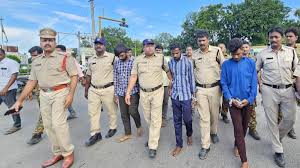
The accused, employed as loan recovery agents, used to target lone women and couples in secluded parks, secretly recording them to extort money, says the SP Chittoor district police on Friday arrested three men in the gang-rape case of a minor Dalit girl at Murakambattu city park on September 25. Superintendent of Police Tushar Dudi said the accused targeted women and couples in secluded parks, filming them to extort money. In some cases, they also resorted to sexual assault. On September 25, the trio, Mahesh (21), Kishore (31), and Hemant Prasad (27), all residents of Chittoor and working as loan recovery agents in a private firm—attacked a girl and her friend, both students, at the park. They assaulted the duo, robbed them of valuables, injured the boy, and raped the girl. The incident came to light on September 29, when the victim lodged a complaint at the Chittoor Taluk Police Station. Cases were filed under the Bharatiya Nyaya Sanhita (BNS), the POCSO Act, and the SC/ST (POA) Amendment Act, 2013. Special teams tracked the absconding accused across Andhra Pradesh, Chennai, and Bengaluru. Acting on a tip-off, police apprehended them at an isolated spot on the outskirts of Chittoor and seized their mobile phones. The accused were paraded from the AR Grounds junction to the Chittoor court complex, drawing crowds along the roadside, before being remanded to the sub-jail. The SP directed the Forest Department to strengthen security in isolated parks, install CCTV cameras, and coordinate with the police to prevent such crimes. K. Umashanker Courtesy : The Hindu Note: This news is originally published on https:/thehindu.com/bha and is used purely for non-profit/non-commercial purposes, especially human rights
Uproar over death of Dalit youth in Jaipur: Naresh Meena, accused of ‘slap incident’, camps in Raisar, protest continues with body
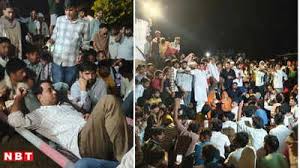
The suicide of Vikram Meena (26), a Dalit youth in the Jaipur rural area, has gained momentum. Naresh Meena arrived in Raisar to protest for justice for Vikram’s family. Along with his supporters, he announced that the protest will continue until Vikram Meena’s family’s demands are met. Jaipur: The suicide case of a Dalit youth in the Jaipur rural area has gained momentum. On Thursday, October 2, 26-year-old Vikram Meena hanged himself from a tree 100 meters away from the police station. The family alleges that Vikram was stripped and beaten by forest officials. Frustrated by the lack of police action, Vikram took his own life. Naresh Meena has now set up camp in Raisar to seek justice for Vikram’s family. Late last night, Naresh Meena arrived in Raisar with his supporters and began a sit-in protest. Naresh Meena announced that they would continue the protest until the demands of Vikram Meena’s family were met. Police fired in the air to disperse the crowd. Vikram Meena’s death angered villagers. They attacked and vandalized the forest office, forcing forest officials to flee. Later, the family and dozens of villagers reached the Raisar police station, demanding action against the forest officials who assaulted Vikram. Former Jamwaramgarh MLA Gopal Meena also joined the protest. A large crowd of villagers gathered outside the police station. Later, when BJP MLA Mahendra Pal Singh arrived, people began protesting. Stones were pelted at the police station. Subsequently, the police resorted to lathi charge, firing several rounds in the air, and dispersed the crowd by firing tear gas shells. Former MLA injured in lathicharge, detained Former MLA Gopal Meena, Aandhi Pradhan Mansi Meena, District Congress Treasurer Bhagwan Sahay Mukkad, District Councilor Vijay Meena, along with several villagers and family members of the deceased Vikram Meena, were injured in the lathicharge by the police. Villagers also pelted stones at the police in protest against the lathicharge. Police subsequently detained former MLA Gopal Meena and Pradhan Mansi Meena. Regarding the seriousness of the incident, several Congress leaders arrived at the scene. Congress MLAs Manish Yadav, Prashant Sharma, former MLA Indraj Gurjar, and Anil Chopra, the Congress candidate from the Jaipur Rural Lok Sabha constituency, also reached Raisar. Family and villagers put forward these demands to the administration: Family and villagers are sitting on a protest with Vikram Meena’s body. Several leaders, including Naresh Meena, are present with them. The family and villagers demand a judicial inquiry into Vikram Meena’s death. The forest officials who assaulted him should be immediately arrested and strict action taken against them. Action should also be taken against the policemen who threatened and drove Vikram away from the police station when he went to lodge a complaint. Action should also be taken against the police officers responsible for the lathicharge on those peacefully protesting demanding justice. Naresh Meena stated that Vikram’s family will negotiate with the administration. When the family agrees, they will end the protest and leave. Edited by: Sudhendra Pratap Singh•Reported by: Ramswaroop Lamrod About the Author Sudhendra Pratap Singh, Principal Content Producer at Navbharat Times Online. His journalism career began in Agra. He began his journey with the local newspaper Agrabharat. From there, the caravan grew through Kalpataru Express, Hindustan Newspaper, and News18, and then reached NBT.com. He currently covers politics, crime, current affairs, and off-beat news in Bihar, Jharkhand, and Rajasthan. Courtesy: Hindi News