
Dalit Teen Was Humiliated In Maharashtra’s Beed, Viral Video Sparked Public Outrage: Here’s What Happened
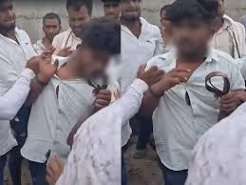
A minor Dalit boy was allegedly assaulted and humiliated in Maharashtra’s Beed district. After an FIR was registered, attention is now on the action police may take against those accused. A case involving the alleged assault and humiliation of a minor Dalit boy in Savargaon, Majalgaon taluka, has triggered concern in Maharashtra’s Beed district. The victim has been identified as Siddhant Avghade. According to the complaint, the minor was allegedly beaten and subjected to humiliating treatment. The incident reportedly came to wider attention after a video related to the case surfaced on social media. An FIR has been registered at Majalgaon Rural Police Station today, September 13, 2026. The case was registered under the provisions of the Scheduled Castes and Scheduled Tribes (Prevention of Atrocities) Act, along with relevant sections of the Bharatiya Nyaya Sanhita (BNS). What Legal Action Could The Accused Face? There are stringent laws regarding offences related to caste abuse, assault, and humiliation in the SC/ST Act. Based on the nature of the accusation and the law invoked, a guilty party may receive jail terms and fines. Arrest might be inevitable in some cases depending on the fulfilment of the requisite legal conditions. Nevertheless, the ultimate punishment shall be determined by the court based on the evidence and charge presented. It is possible that every case under the SC/ST Act may result in automatic arrest without the possibility of anticipatory bail, but this is dependent on the type of offence committed. Police Under Pressure To Act Quickly The case has gained attention after the alleged incident was discussed widely on social media. Social organisations have also reportedly demanded immediate action and the arrest of those accused. With the victim being a minor, authorities are expected to treat the matter with particular sensitivity. The investigation will determine what happened and establish the roles of those named in the case. If charges are established, the accused could face proceedings under the relevant criminal and SC/ST Act provisions. The victim and his family may also be entitled to protection and legal assistance under applicable rules. The case is now likely to remain under close public and administrative scrutiny as the investigation progresses. Published By: Sudeep Singh Rawat Courtesy : NewsX Note: This news is originally published on https:/newsx.com/bha and is used purely for non-profit/non-commercial purposes, especially human rights
UP: A new Dalit face enters state politics, Rohini Ghavri eyes Chandrashekhar’s vote bank
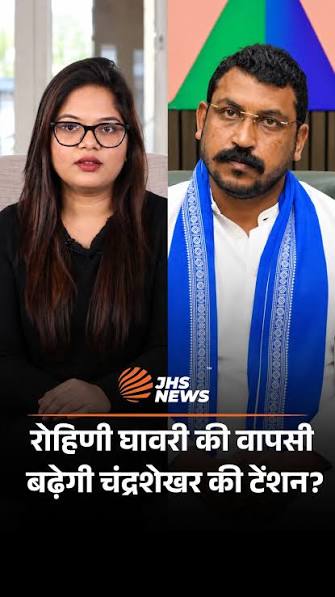
Rohini Ghavri: A new Dalit face is entering UP politics. After returning from Switzerland, Rohini Ghavri is preparing to become active in state politics. A new political front appears to be emerging in UP’s Dalit politics ahead of the 2027 assembly elections. After returning from Switzerland, Rohini Ghavri is preparing to become active in state politics. Her main focus is on uniting the Valmiki community and the 21 assembly seats in western Uttar Pradesh where Valmiki voters are considered crucial. Azad Samaj Party President and Nagina MP Chandrashekhar is also considered influential in these areas. Rohini is preparing to campaign in these areas, raising the issue of political representation for the Valmiki community. She says that for a long time, the Valmiki community has been viewed primarily as sanitation workers, while its share in political representation has been relatively low. She also aims to have a Chief Minister from the Valmiki community in a state within the next five years. She is eyeing 21 constituencies, including Agra Cantt, Etmadpur, Jasrana, Firozabad, Meerut Cantt, Meerut City, Ghaziabad, Loni, Lucknow’s Central, North, and West Assembly constituencies, as well as Sisamau, Aryanagar, Kidwai Nagar, Aligarh, and Khair. She is preparing to raise the issue of political representation of the Jatav and Valmiki communities in these constituencies. Rohini will visit several districts. Rohini will arrive in Meerut on September 13th. She will then meet with members of the Valmiki community in Lucknow on September 14th and 15th. She is also expected to meet with SP chief Akhilesh Yadav during this period. Rohini claims that Akhilesh has assured her support in her fight against Chandrashekhar. If her closeness with the SP grows and the party fields her in the election, new Dalit vote dynamics could emerge in Western Uttar Pradesh. Rohini has accused Chandrashekhar of exploiting her by promising marriage. She claims that despite providing financial support, Chandrashekhar severed ties with her after becoming an MP. She also alleged that an FIR was not filed on her complaint because she belonged to the Valmiki community. However, the parties’ views on these allegations are not included in this report. Jatav voters have consistently held significant influence in Dalit politics. Therefore, efforts to mobilize the Valmiki community as a distinct political force could create new dynamics in several seats in Western Uttar Pradesh in the 2027 elections. Rohini also speaks of moving forward with the entire community on board. Published by: Rohit Mishra Courtesy: Hindi News
IIT Mandi Janmashtami Poster Controversy: Inquiry Committee Says No Intent to Target Community, Students Will Now Be Counseled
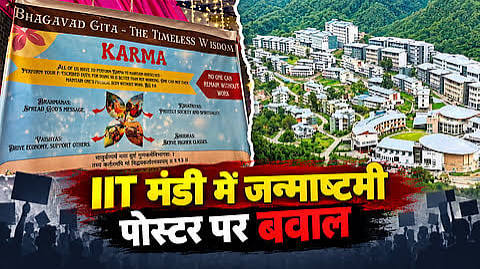
The inquiry committee also concluded in its report that the provisions of the Scheduled Castes and Scheduled Tribes (Prevention of Atrocities) Act, 1989, are not applicable in this case. Mandi – The three-member inquiry committee formed to investigate the controversial caste-based poster displayed during a Janmashtami event at the Indian Institute of Technology (IIT) Mandi has recommended counseling and sensitization training instead of disciplinary action against the students involved. The committee also stated that it found no evidence of an intent to target, insult, or offend any individual or community. The inquiry committee also concluded in its report that the provisions of the Scheduled Castes and Scheduled Tribes (Prevention of Atrocities) Act, 1989, are not applicable in this case. Following the controversy, IIT Mandi will now formulate clear rules and guidelines for student events held on campus and establish a system to monitor such events. What was the entire controversy? The controversy began with a poster displayed during a student-led Janmashtami event held on September 4th at the IIT Mandi campus. The poster was titled “Bhagavad Gita – The Timeless Wisdom.” After photos and videos of the poster surfaced on social media, it sparked strong reactions. The poster divided society into four groups: Brahmins, Kshatriyas, Vaishyas, and Shudras, assigning distinct roles to them. The poster stated that Brahmins spread God’s message, Kshatriyas protect society, Vaishyas support others by running the economy, and Shudras serve the upper castes. The poster also referenced a verse from the Bhagavad Gita, which describes the four divisions of human society based on the three gunas of nature and their corresponding actions. The poster’s description of the role of Shudras as “serving the upper classes” drew the most objection, and it was considered to promote caste hierarchy. After photos and videos of the poster circulated on social media, questions arose about the role of the IIT Mandi administration. Many people expressed concerns about caste discrimination, social equality, and the dignity of students in educational institutions. Amid the controversy, IIT Mandi clarified that the event was not officially organized by the institute and that the poster was neither approved nor endorsed by the institute. Following this, on September 6, IIT Mandi Director Professor Laxmikant Behera formed a three-member inquiry committee. What did the inquiry committee find? Now that the investigation is complete, the committee has revealed several important facts related to the matter. According to the committee, the event was not organized by IIT Mandi. No officially recognized student organization of the institute was involved. No IIT Mandi funds were used for the event. The expenses were met through voluntary contributions. The controversial poster was neither viewed, approved, nor endorsed by any authority at the institute. The content of the poster reflected a student’s personal interpretation and did not represent the views or official stance of IIT Mandi. The committee found no evidence of intent to target, insult, or offend any individual or community. The student who displayed the poster was also identified during the investigation. The inquiry committee did not recommend direct disciplinary action against the students concerned. Instead, it recommended counseling and sensitivity training. According to a senior IIT faculty member, the committee found that students need to be sensitized on such issues and therefore considered counseling and sensitization appropriate steps. The committee also pointed out a significant shortcoming at the institute level. The committee found that the IIT Mandi campus lacks a clear and defined process for organizing such events. The committee considered this an institutional shortcoming that needs to be addressed on a priority basis. Based on this recommendation, IIT Mandi will now formulate rules and guidelines for organizing student events on campus and establish a mechanism to monitor such events. A key part of the inquiry report is that the committee found the provisions of the SC/ST (Prevention of Atrocities) Act, 1989, were not applicable in the case. The report stated that the investigation found no evidence of intent to target, insult, or offend any individual or community, and that the committee concluded that the provisions of the SC/ST Act were not applicable in this case. However, upon the poster controversy, the institute director himself acknowledged that the poster had offended members of the community and expressed regret. The institute expressed regret and sympathy to those affected and stated its commitment to equality, social justice, and a discrimination-free campus. Six members from IIT Mandi’s Reservation Cell assisted the committee in the investigation process. This allowed the committee to incorporate institutional representation related to reservation and social justice issues into the investigation. Based on the available facts and information received from relevant stakeholders, the committee concluded that the event was not an official event of the institute and that the controversial poster was not sanctioned or approved by any institute official. What’s next? Following the committee’s recommendations, IIT Mandi now has two courses of action. First, the students who displayed the controversial poster will be counseled and provided sensitivity training. Second, the institute will develop clear rules, permission procedures, and monitoring mechanisms for future student events on campus. Thus, the findings of the investigation focus more on sensitivity and institutional reform than disciplinary action against students. Overall, IIT Mandi’s investigation found the controversial poster to be at odds with the institute’s official position. Furthermore, the institute acknowledged that the poster offended community members. Counseling and sensitivity training for the concerned students, along with the development of new regulations and monitoring mechanisms for student events on campus, will now proceed. Geetha Sunil Pillai Courtesy: Hindi News
Rahul’s event for youth: Cong gets IDA nod for venue
Indore: Indore Development Authority (IDA) has granted permission to Congress party to organise Leader of Opposition Rahul Gandhi’s ‘Chhatron Ki Goonj’ programme at its ground near Regional Park on Sept 19. Congress has deposited Rs 10,08,175 with IDA to secure the temporary lease of the venue, which party leaders have named “Bharat Jodo Maidan”. Addressing a news conference in Indore on Sunday, Madhya Pradesh Congress Committee president Jitu Patwari said that the link between education and employment has significantly weakened. Patwari emphasised that the party was committed to raising students’ concerns regardless of venue costs, asserting that govt accountability on exam integrity and job creation remains the central issue. Preparations for the Indore event—the fifth edition of the campaign following sessions in Kota, Dehradun, Prayagraj and Pune—were finalised following planning meetings headed by Congress central coordinator KV Baiju, MP in charge Harish Chaudhary and local leadership. Courtesy : TOI Note: This news is originally published on https:/timesofindia.com/bha and is used purely for non-profit/non-commercial purposes, especially human rights
Congress eyes 2028 polls with 10,000 Bharat Jodo youth groups
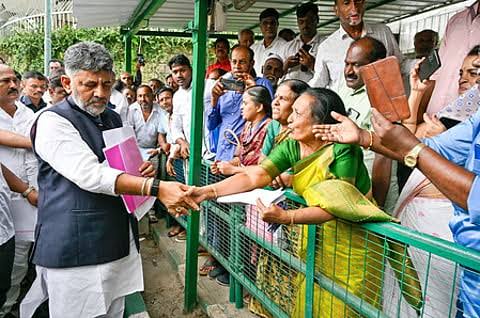
Chief Minister DK Shivakumar on Sunday highlighted the initiative’s political significance, recalling the Congress’s performance in the 2023 Assembly elections. BENGALURU: With an eye on the 2028 Assembly elections, the Congress is seeking to turn its Bharat Jodo youth network into a grassroots political and organisational force, with around 7.5 lakh youngsters already enrolled across Karnataka. Under the Youth Empowerment and Sports Department, the government will form 10,000 Bharat Jodo Yuva Sanghas across the state and plans to expand the network by enrolling around 10 lakh youths in the coming months. The initiative covers youngsters aged 16 to 35 and the party views it as a potential platform to connect with young and first-time voters. Chief Minister DK Shivakumar on Sunday highlighted the initiative’s political significance, recalling the Congress’s performance in the 2023 Assembly elections. He said the party had won seats in several areas through which Congress leader Rahul Gandhi’s Bharat Jodo Yatra passed during its Karnataka leg, from Chamarajanagar to Ballari. “The Bharat Jodo Yatra was undertaken to protect the unity and integrity of the country. The Congress won in the places through which the yatra passed. The same wave will continue in 2028, and we are confident that the Congress will return to power,” he said. Each approved Bharat Jodo Yuva Sangha will have 100-250 members and focus on sports, leadership development, cultural activities and community service. The government has announced an annual grant of Rs 10 lakh for each approved Sangha, with a total outlay of Rs 1,000 crore. The Karnataka Cabinet recently approved Rs 781 crore as an allocation under the supplementary budget to fund the Bharat Jodo Yuva Sanghas. The initiative, however, has also attracted the attention of the Opposition. BJP MLAs have reportedly begun encouraging their loyal youth supporters to join the Sanghas, sensing the potential political advantage the Congress could derive from the network. “Though the initiative may give the Congress an edge, we have tactically involved our party’s youth in it,” two BJP MLAs told TNIE. Shivakumar also said the government was seeking to expand grassroots participation by involving people in guarantee committees. Six persons from every panchayat will get an opportunity to serve on the committees, providing around 70,000 people with a role in implementing and monitoring the government’s guarantee schemes. Shivakumar said the Congress had chalked out a plan to ensure every voter in the state was covered under one or the other government scheme, including the guarantees. He said that while the party had garnered 1.36 crore votes in the 2023 Assembly elections, the five guarantee schemes had covered 4.5 crore people, including women and students. Devaraj B Hirehalli Courtesy : TNIE Note: This news is originally published on https:/thenewindianexpress.com/bha and is used purely for non-profit/non-commercial purposes, especially human rights
‘Trying to cut his voice’: DK Shivakumar backs Rahul Gandhi over FIR in ‘purification’ row

BENGALURU: Karnataka chief minister DK Shivakumar on Sunday criticised the FIR registered against Congress leader and Leader of Opposition in Lok Sabha Rahul Gandhi over his remarks on the alleged ‘purification’ ritual at Haldwani’s Ramlila Ground, saying the action was an attempt to curb his right to raise his voice for Dalits and other sections of society. Shivakumar told news agency ANI that Rahul Gandhi had every right to speak on issues concerning different sections of society in a democracy and questioned the registration of an FIR over his remarks. “This is a great democratic country. In democracy, there are a lot of issues on caste, religion, how to protect humanity, everything is there. Rahul Gandhi has been pressurising that what has been done wrong has to be rectified through an FIR,” he said. “Since he (Rahul Gandhi) is opening his voice for the Dalits of this country and their self-respect, and the BJP is filing an FIR here. The message you are sending is a letter of the opposition. He has every right to speak, every right to raise his voice, every right to stand by all sections of the society,” CM Shivakumar added. “So you are trying to cut it. With this attitude, I think democracy is not alive in this country. It is very unfortunate,” he said.Earlier, Nainital police said an investigation was underway into the FIR registered against Rahul Gandhi over his remarks on the alleged ‘purification’ ritual conducted at Haldwani’s Ramlila Ground after Congress president Mallikarjun Kharge’s rally on August 8. Speaking to ANI, police said the documents and facts available in the FIR are being examined and verified as part of the investigation. “At present, the documents and facts available in the FIR are being examined and verified as part of the investigation,” police said. The controversy began after a Congress rally at Ramlila Ground in Haldwani, ahead of the 2027 Uttarakhand Assembly elections. Members of a right-wing group later conducted a ‘shuddhikaran’ (purification) ritual at the venue, triggering criticism from Congress leaders, who alleged that the act amounted to ‘untouchability’. Kharge raised the matter in the Rajya Sabha, alleging that the ritual was linked to his identity as a Dalit leader and questioned whether such practices were acceptable in a democracy. The FIR was registered on August 30 against Rahul Gandhi over his statements regarding the ‘shuddhikaran yajna’ conducted at the Haldwvenue. The FIR was lodged following a complaint by Amit Kumar, a member of the Valmiki community, who alleged that Rahul Gandhi’s remarks hurt the sentiments of the Scheduled Caste (SC) community. Police invoked provisions of the Scheduled Castes and Scheduled Tribes (Prevention of Atrocities) Act, including Sections 3(1)(r) and 3(1)(u), along with Section 196 of the Bharatiya Nyaya Sanhita (BNS), 2023. Courtesy : TOI Note: This news is originally published on https:/timesofindia.com/bha and is used purely for non-profit/non-commercial purposes, especially human rights
‘Rahul now BJP’s papa’: Congress hits back at Mohan Yadav’s ‘Jhooth Ki Goonj’ dig
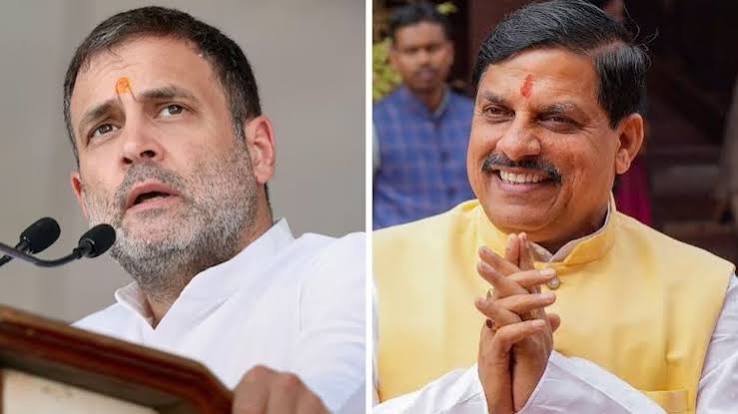
NEW DELHI: The BJP and the Congress, two arch political rivals, sparred over Rahul Gandhi’s student-outreach event, “Chhatron Ki Goonj”, with Madhya Pradesh chief minister Mohan Yadav dubbing it “Jhooth Ki Goonj” (echo of lies). Striking a combative note over the Madhya Pradesh CM’s remark, senior Congress leader PC Sharma said: “They kept calling him ‘Pappu’, but now he has become everyone’s ‘Papa’.” The verbal clash ensued after CM Mohan Yadav attacked the entire Gandhi-Nehru family, saying: “Why is it that Pandit Jawaharlal Nehru, Indira Gandhi, Rajiv Gandhi, and others in later times never contested elections from Delhi? They do not contest from Delhi because the people there know them too well. That is why they moved to Raebareli and Amethi, and now, having abandoned even those seats, he has gone to Wayanad in Kerala. People joke that the only reason he didn’t go to Arab to contest elections is that the ocean stood in the way.” He further said: “They seek out other places because they only need to face the public once every five years; they have no intention of actually working for the people. That is why, every time, they come up with new lies…” PC Sharma hit back at Mohan Yadav’s remark, saying: “Ever since Rahul Gandhi visited Jantar Mantar to speak up for the youth, the BJP has been anxious across the country”. “The leaders of the Bharatiya Janata Party are unaware of the history of the freedom struggle and why elections are contested from Raebareli… They even demanded a deposit of Rs 10 lakh for the Leader of the Opposition’s event, something unprecedented in the history of India… Ever since Rahul Gandhi visited Jantar Mantar to speak up for the youth, the BJP has been anxious across the country… They kept calling him ‘Pappu’, but now he has become everyone’s ‘Papa’. Just as people at home fear ‘Papa’ the most, the entire BJP has now started fearing him,” he told news agency ANI. The ‘Chhatron Ki Goonj’ campaign, launched by Gandhi in 2026, seeks to provide a platform for student concerns, including examination irregularities, paper leaks, rising education costs, recruitment-related issues and unemployment. The campaign has previously been held in Pune, Kota, Dehradun and Prayagraj and is aimed at bringing student grievances into the national political discourse. Courtesy : TOI Note: This news is originally published on https:/timesofindia.com/bha and is used purely for non-profit/non-commercial purposes, especially human rights
BL Santosh asks BJP-MLAs, ‘How will you win in 2027?’:Why did we lose 2024 LS polls, what is the solution; MPs, MLAs told not to fight each other
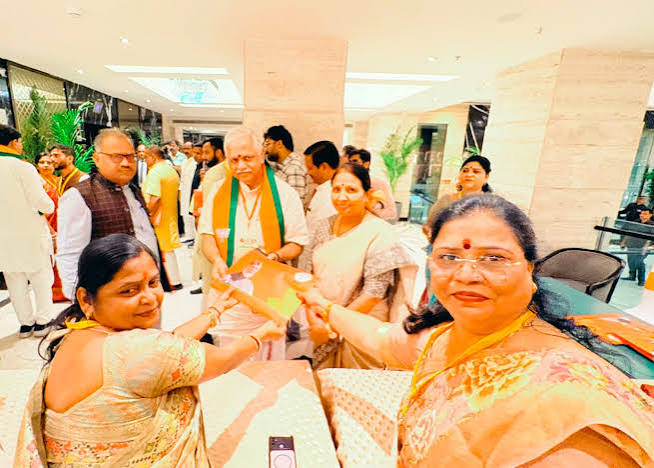
The BJP’s concern has grown in Uttar Pradesh as Dalit votes have shifted towards the Samajwadi Party. The party will now launch a campaign to reconnect with Dalits. On Saturday, national general secretary (organisation) BL Santosh held a four-hour meeting with MPs, MLAs and district presidents from the Kanpur division. BL Santosh asked the MLAs, How many votes did the BJP candidate receive in your Assembly constituency in the 2024 Lok Sabha election? What was the reason for the defeat wherever the BJP lost? How will you make up for this in 2027, and how will you win the election? The MLAs said that in 2017 and 2019, a large number of Dalit votes that had moved away from the Bahujan Samaj Party came to the BJP. The BJP also received a substantial share of Dalit votes in 2022. However, in 2024, Dalit voters became alienated because of narratives such as the Constitution being changed and reservations being scrapped, and shifted towards the Samajwadi Party. Party leaders acknowledged that the Dalit vote is still shifting towards the Samajwadi Party. This could pose a major challenge for the BJP in the 2027 election. BL Santosh and Dharampal Singh urged party leaders to remain united and fight the Assembly election together. They said there should be no conflict between MLAs and MPs or between MLAs and district presidents. Read BL Santosh’s three key points 1- People no longer like VIP culture B.L. Santosh said that people no longer like VIP culture. Convoys of vehicles, sirens and getting tolls waived send the wrong message. This harms the party as well as MPs, MLAs and district presidents. Launch campaigns to bring members of the Dalit community and Dalit leaders into the party. Implement the Ambedkar statue scheme. Organise Sant Ravidas Jayanti programmes effectively and use them to bring Dalits closer to the BJP. 2- Do not limit social media to a photo album B.L. Santosh said that social media is now the biggest political tool. Do not limit it to photographs and albums. Make full use of it in preparing for the elections. It can be used to convey the party’s message to the public quickly and effectively. However, social media must not be misused. The meeting continued from 7 p.m. to 11 p.m. BJP office-bearers from Kanpur Nagar, Kanpur Dehat, Etawah, Kannauj, Auraiya and Farrukhabad attended it. The meeting continued from 7 p.m. to 11 p.m. BJP office-bearers from Kanpur Nagar, Kanpur Dehat, Etawah, Kannauj, Auraiya and Farrukhabad attended it. 3- Get the names of women deleted during SIR reinstated L. Santosh said that the names of a large number of voters had been deleted during SIR. This included voters who support the BJP ideology. B. L. Santosh said that the process of adding names was still under way. He directed party workers to have the names of those whose names had been deleted added again. He also raised the issue of the low gender ratio among women voters. He said that after marriage, the names of many women are deleted from the voter lists in their maternal homes but are not added to the lists in their marital homes. He directed party workers to have the names of such women added to the voter list, as women are a major vote bank for the BJP. Meeting lasted 4 hours, defeated candidates were also consulted The meeting lasted from 7 p.m. to 11 p.m. BJP office-bearers from Kanpur Nagar, Kanpur Dehat, Etawah, Kannauj, Auraiya and Farrukhabad attended it. State General Secretary Shankar Lal Lodhi and Kanpur Regional President Ram Kishore Sahu were also present. BL Santosh also spoke to candidates who had lost the 2022 election. He asked them how many votes they had received and by how many votes the victory or defeat was decided. Courtesy : Bhaskar English Note: This news is originally published on https:/bhaskarenglish.com/bha and is used purely for non-profit/non-commercial purposes, especially human rights
Kerala Dalit dental student suicide case: Prime accused HOD Dr Kodanda Ram granted bail
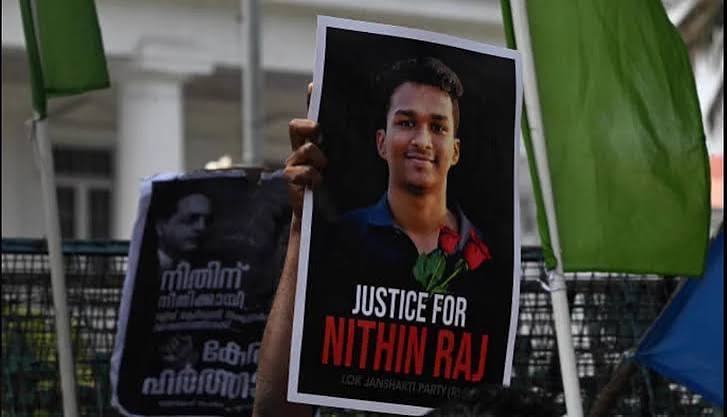
The victim’s father, Rajan V.N., filed an objection in court. He stated that his son had entered the college through merit. The HOD called him a “slumdog,” taunted him about reservations, and made comments about organ donation if his parents didn’t attend PTA meetings. Talaseri – The special court in the Kannur Dental College suicide case of Nitin Raj, a Dalit BDS student, has granted regular bail to the accused department head, Dr. M. Kodanda Ram. Judge Manoj M. of the Special SC/ST Prevention of Atrocities Act court in Talaseri granted bail in an order passed on September 9. City and Local Guide Nitin Raj belonged to the Hindu Cheraman community, which falls under the Scheduled Caste category. Nitin committed suicide by jumping from the second floor of the college campus on the afternoon of April 10. The Kannur Crime Branch’s Crime No. 1081/2026 alleges that the accused, including Dr. Ram, publicly humiliated, insulted, and threatened him. The prosecution alleges that this harassment, attributed to his caste, caused severe mental distress and led to the student’s suicide. The case has been registered under Section 108 of the Indian Penal Code and Section 3(1)(r) of the SC/ST (Prevention of Atrocities) Act. Dr. Ram is the Head of the Dental Anatomy Department at Kannur Dental College, Anjarakandy. His anticipatory bail plea was rejected by the Special Court, the Kerala High Court, and the Supreme Court. He was released on the grounds that his first arrest violated Supreme Court guidelines. He was re-arrested on July 23rd with the court’s permission. He has since been in judicial custody for over 45 days. The court clarified in its order that a detailed analysis of evidence is not conducted at the bail stage. Citing the Supreme Court’s Shajan Skaria case regarding Section 3(1)(r) of the SC/ST Act, the court stated that mere insult or threat does not apply to the offence. The victim’s caste must be the cause of the insult. The court found that at this stage, there was no evidence that the accused publicly addressed the victim by their caste, although there were allegations of public ridicule and insult. South Asians and Migrants Dr. Ram is the Head of the Dental Anatomy Department at Kannur Dental College, Anjarakandy. His anticipatory bail plea was rejected by the Special Court, the Kerala High Court, and the Supreme Court. He was released on the grounds that the first arrest was in violation of Supreme Court guidelines. Regarding the issue of abetment to suicide (Section 108 CrPC, old Section 306 IPC), the court cited several Supreme Court decisions. These include Pawan Kumar v. State of Himachal Pradesh, M. Mohan v. State, Jaideepsinh Chavda and Ramesh Kumar. The court held that mere harassment or utterances made in anger are not sufficient to constitute abetment. Clear intent, active involvement, and actions that left the victim with no option but to commit suicide must be demonstrated. These questions will be determined at trial. Crime and Justice Based on the investigating officer’s report and the case diary, the court held that further custody was not necessary for the investigation. The police had already conducted interrogations after taking custody. The court reiterated the principle that “bail is the rule, jail is the exception” and cited the Supreme Court’s decisions in Jalaluddin Khan and Manish Sisodia. The victim’s father, Rajan V.N., filed a complaint with the court. He stated that his son had entered the college on merit. The Principal called him a “slumdog,” taunted him about reservations, and made comments about organ donation if his parents did not attend PTA meetings. The father alleges that the investigation is not being conducted impartially, and the High Court has also expressed dissatisfaction with the progress of the investigation. The former investigating officer was also suspended. The accused argued that Nitin Raj was weak in studies, was under pressure from loan apps, and the incident occurred after a consultation in the principal’s cabin on April 10th. They claimed that Dr. Ram’s last contact with them was on March 13th. The court granted bail on the following conditions: A bond of Rs. 5 lakh and two sureties (one a close relative) Court and Judiciary Appearance before the investigating officer every Wednesday from 9 to 10 am (for six months or until the charge sheet is filed) Complete prohibition on entering the Kannur Dental College campus or contacting students until the trial is over Not influencing witnesses or tampering with evidence Not committing any new crime while on bail If the condition is violated, the concerned police station officer can approach the court to revoke the bail. The case is still under investigation. The court reiterated that this order is not a final verdict on the merits. Nitin Raj’s death has rekindled questions about caste-based harassment and institutional accountability on college campuses. Geetha Sunil Pillai Courtesy: Hindi News
A hotel owner in Karnataka has been booked for serving drinking water to a Dalit customer in his hands instead of a glass.
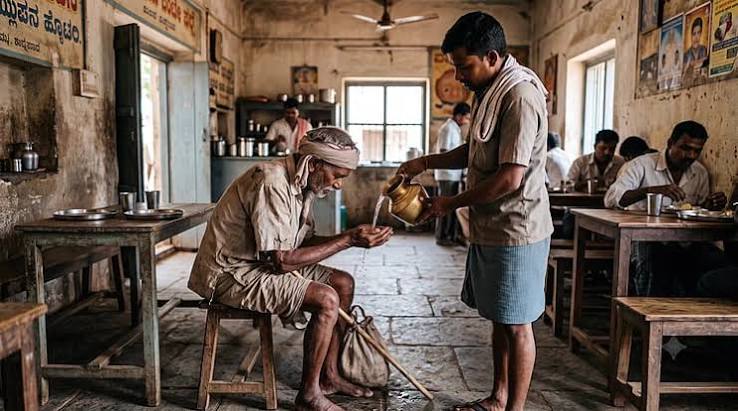
A shameful video of untouchability in Raichur, Karnataka, has gone viral. Following a complaint from the Social Welfare Department, police have filed a case under the SC/ST Act. Karnataka: A shocking case of caste discrimination has come to light in Raichur district. A case has been filed against a hotel owner for allegedly serving drinking water to a Dalit customer in his hands instead of a glass. The action was taken on Wednesday after a video surfaced of the shameful incident, which allegedly clearly depicts the evil practice of untouchability. Social Welfare Department official Ravindra Uppar stated that the incident came to light when a person from the Scheduled Caste community contacted him with a complaint about caste discrimination in the village. During his visit to the village, Uppar came across the video, which is said to be about three months old. After watching the video, he immediately approached the police and filed a written complaint. Based on the officer’s complaint, the Lingsugur police immediately took strict action. The police have registered a case against hotel owner Sharanappa Hadapada and other accused under Section 3(1)(za)(D) of the Scheduled Castes and Scheduled Tribes (Prevention of Atrocities) Amendment Act, 2015, and Section 4 of the Protection of Civil Rights Act, 1955. Morality The administration has become fully alert following this incident. Uppar stated that they, along with the Tehsildar and police officers, conducted a special survey of the village. The investigation team spoke to local residents and other hotel owners and clearly warned them that there is no place for any kind of discrimination in society. However, other hotel owners in the village have categorically denied all these allegations, stating that no such practice is observed in their area. Officer Uppar stated that the circumstances surrounding the viral video and the allegations made are yet to be thoroughly investigated. Meanwhile, Raichur Superintendent of Police (SP) Arunangshu Giri has reacted strongly to the matter. He clarified that the police have registered a case and issued notices to the accused, and the entire matter is being investigated very thoroughly. Rajan Chaudhary Courtesy: Hindi News