
Lal Topi, Blue T-Shirt: Akhilesh Yadav’s ‘PDA’ For Blue Has A Coded Message

The message is clear: the Samajwadi Party wants to talk to voters beyond its traditional Yadav-Muslim support base, particularly to Dalits. For decades, the Samajwadi Party has been instantly recognisable by two colours — red and green. Its leaders in red caps, often riding the party’s bicycle symbol, became one of the defining visual signatures of Uttar Pradesh politics. Now, ahead of the 2027 Assembly election, party president Akhilesh Yadav is adding a new colour to that political palette: blue. Akhilesh Yadav has introduced blue T-shirt and jeans as the new uniform for members of the Samajwadi Chhatra Sabha, the party’s student wing. The choice is anything but incidental. Yadav has explicitly linked blue with BR Ambedkar, the Constitution, the Bahujan movement, social justice and resistance to injustice. The message is clear: the SP wants to talk to voters beyond its traditional Yadav-Muslim support base, particularly to Dalits. The Battle For The Dalit Vote Uttar Pradesh’s Dalit electorate has historically been at the heart of BSP chief Mayawati’s political power. The BSP transformed Dalit identity into an electoral force and, for years, the party’s blue flag and Mayawati’s politics were almost inseparable. But the BSP’s electoral decline has created a political vacuum in Dalit voter space. The 2024 Lok Sabha election was a particularly significant moment. The SP won 37 seats in Uttar Pradesh, while the BSP failed to win a single seat. The result strengthened Akhilesh’s argument that his PDA — Pichhde (Backwards), Dalit, Alpsankhyak (Minorities) — coalition, where ‘P’ now also stands for Pandits, could become the alternative social coalition to the BJP’s electoral machinery. The challenge, however, is not simply to win Dalit votes. It is to persuade Dalit voters that the SP can represent their political aspirations without erasing their distinct social identity. That is where the colour blue becomes important. For a party that has historically worn red, adopting blue amounts to a symbolic attempt to enter a political space traditionally occupied by the BSP. Can PDA Give BSP And BJP The Blues? ‘PDA’ formulation has been central to Akhilesh Yadav’s post-2022 political strategy. It seeks to combine backward castes, Dalits and minorities into a broad social coalition. The idea is also an acknowledgement of a fundamental electoral reality: Yadav and Muslim votes alone cannot take the SP back to power in Uttar Pradesh. Yadavs are about 10% of the UP electorate, Muslims are a 20% strong bloc. Dalits are the next hefty bloc of 20%. Akhilesh Yadav has set his eyes there. The SP had already begun experimenting with Dalit outreach before the 2022 election, including the formation of its Baba Sahib Vahini aimed particularly at Dalits outside the Jatav community, which are Mayawati’s core base. At the time, Akhilesh also sought to bring together what he called the Samajwadi and Ambedkarwadi streams of politics. The blue uniform takes that strategy a step further. It attempts to give the ‘D’ in ‘PDA’ a visible identity. While Akhilesh Yadav is seen dressed traditionally in white kurta-pyjama with the red Samajwadi cap, for the youth wing he has presented the jeans-and-T-shirt combination as a symbol of younger generation. Apart from being caste arithmetic, it is also an attempt at political rebranding. That makes the symbolism even more interesting. Akhilesh is not abandoning the SP’s old identity; he is attempting to add one more layer to it. The red cap has a long association with socialist politics. The SP itself was founded by Mulayam Singh Yadav in 1992, but the party’s familiar red-and-green colours and the red cap evolved over time rather than appearing fully formed at the moment of its creation. Mulayam Singh suggested that the Yuvjan Sabha (SP’s youth wing) wear red caps in 1998. The red cap became increasingly prominent over the following years and, particularly after Akhilesh Yadav took control of the party, became a powerful visual marker of the SP. The party’s red has traditionally been associated with socialist politics and workers, while green has been linked to farmers. Under Akhilesh, however, the ‘lal topi’ became more than a party accessory. It became a political identity. And then Prime Minister Narendra Modi turned it into an election issue. When ‘Lal Topi’ Became A BJP Attack In December 2021, just before the last Uttar Pradesh Assembly election, PM Modi launched a sharp attack on the SP’s red caps during a rally in Gorakhpur. He called those wearing the ‘lal topi’ a “red alert” for Uttar Pradesh, linking the SP to corruption, crime, illegal occupation and what he alleged was leniency towards terrorists. The attack was meant to turn the SP’s strongest visual symbol into a warning sign. Akhilesh, however, tried to reverse the symbolism. He declared that the red cap was a “red alert” for the BJP, citing unemployment, inflation, farmers’ problems and other issues as the real warning signs for the ruling party. He also framed red as a colour of revolution and change. The SP even used the attack in its campaign music. One of its songs, “Ye Lal Rang Ki Topiya”, sought to turn PM Modi’s jibe into a socialist rallying cry, while another campaign song invoked the red cap and the bicycle as symbols of political change. So, in 2021-22, Akhilesh’s instinct was to embrace the red and fight over its meaning. Five years later, while he is keeping red, he is also adding blue to his electoral scheme. How Mayawati’s Decline Opens Up The Field The timing is significant because the decline of the BSP has altered the competitive landscape of Uttar Pradesh. For years, the SP and BSP occupied relatively distinct social and political spaces. The BSP was the principal vehicle of Dalit assertion; the SP was strongly identified with OBC, particularly Yadav, politics. A weakened BSP changes that equation. Further in the run-up to the upcoming elections, BSP is in the news for all the wrong reasons, struck by its own leadership blues thanks to Mayawati’s public chastising of her nephew, Akash Anand, once considered
Dalit youth mistreated in court for not paying ₹100: Special Judge issues directive to file case against three people, including a peon

A case of mistreatment of a Dalit youth has come to light in the court of SDM Bikapur in Ayodhya. The youth was abused using casteist slurs for not paying ₹100 and was pushed out of the court. A report will be filed against three people, including the peon. Special Judge under the SC/ST Act, Deepak Yadav, has ordered the Bikapur police to register a case and investigate. The accused include SDM peon Pankaj Mishra, his assistants Raju Tiwari and Prem Chand. Anil Kumar Rawat, a resident of Rahet village in the Bikapur Kotwali area, is facing a case in the court of SDM Bikapur. In his application to the court, Anil stated that on May 13, 2026, he arrived at the court at around 10:30 a.m. to plead his case. When he asked the peon about the file, he was allegedly asked for 100 rupees. When he refused, he was told to come back two hours later. According to Anil, he returned to the court around 12:35 p.m. This time, he was again asked for money. When he refused, the three accused allegedly abused him using casteist slurs. He was pushed out of the court, resulting in injuries. It is alleged that the accused also threatened to have the SDM dismiss the file if he did not pay the money. Anil had sought court action in this matter. After the hearing, the special judge ordered the police to register a case and investigate based on the allegations. Only after the police investigation will the truth of the allegations and further action be clear. Kaushal Kumar Shukla | Bikapur (Ayodhya), Ayodhya Courtesy : Hindi News
Inside India’s first transwomen rescue squad, trained in Kolhapur

The first batch of 10 transwomen, all associated with the Kolhapur-based Maitri NGO, went through their inaugural training module from May 26 to 28. In the last week of August, a group of people gathered at Rajaram Lake, pulled on orange life jackets, checked their ropes, and spent 10 days practising rescue drills in the water. It looked like routine disaster-response training – until you learned who they were. This is India’s first transgender disaster management and rescue team, and for its members, the life jacket has come to mean something far bigger than safety gear. The Kolhapur District Disaster Management Authority has trained over 2,500 volunteers in the last decade. In 2019, it created the state’s first all-women rescue unit, the ‘Aapda Sakhi’ team, which now counts more than 500 trained volunteers. But ahead of this year’s monsoon, officials decided to try something unique. “We thought, why not train a transwomen team,” said Prasad Sankpal, District Disaster Management Officer, Kolhapur. “So a first-of-its-kind transgender disaster management and rescue team initiative was begun in the country.” The first batch of 10 transwomen, all associated with the Kolhapur-based Maitri NGO, went through their inaugural training module from May 26 to 28. Since then, the district has trained 15 transwomen in total, with fresh rounds of practice held every three months – the most recent a 10-day exercise at Rajaram Lake in the last week of August. Recruits learned rescue swimming, how to operate an inflatable rescue boat, dry and wet lifesaving techniques, motorboat handling and maintenance, and First Aid and CPR. “So far the results are excellent,” Sankpal said. “The institutional strengthening is already visible – the volunteers now help victims of road accidents without any instructions.” More than a rescue team For the women themselves, the initiative is about something the training manual doesn’t cover. “Even today, people see us as sex workers or beggars,” said Mayuri Alvekar, founder of Maitri NGO, who brought the other volunteers on board. “I believe that such opportunities of working with the administration would help promote inclusivity and give us space in mainstream society, while changing the perspective towards us. We have been helping people during disasters or rescue needs but faced discrimination. However, now we are getting recognition and, most importantly, an identity.” “To take the initiative further, I have also created a similar volunteer team in Dhule and Parbhani,” Alvekar added. Suhasini Devmane, another team member and Maharashtra’s first transgender tourist guide, spent eight years as an ayurvedic panchakarma expert while hiding who she was. “Despite a desire to contribute to society, many of us had previously been unable to participate in social initiatives due to a lack of opportunities,” she said. “For over eight years, I had to hide my identity – else I would have lost my job, and my financial situation didn’t allow for that risk then. I believe this training will not only change society’s perspective towards transgender people but also boost the self-confidence of individuals within the community.” Shivani Gajabar, who is currently pursuing a Master of Social Work degree at Shivaji University, Kolhapur, says the acceptance hasn’t fully arrived yet. “Even today, transgender community members feel alienated from mainstream society,” she said. “Though giving us a platform in the disaster management rescue team is a welcome step and would help bring inclusivity – and we all would give our best while saving lives – I feel there is a long way ahead to fill the gap. Even when I go regularly to attend classes, no one sits on my bench. I’m all alone.” Her family cut off contact when she left home in Class 7. “They used to think I could not do any considerable work,” she said. “However, now, being part of the disaster management rescue team, my family members have started communicating with me again.” What next The administration isn’t stopping at floods and drowning rescues. “There are around 30 categories of man-made and natural disasters, including wildlife rescues involving snakes and crocodiles in Kolhapur, and the transwomen volunteers will gradually be trained for these as well,” Sankpal said. One gap the authorities want to close: money. The volunteers currently work for free. “We are also planning to deploy them for crowd management during upcoming festivals such as Navaratri, Anant Chaturdashi, and the Jyotiba Yatra among others. Also, efforts are underway to grant home guard status to the transwomen volunteers, which would come with an honorarium,” Sankpal told The Indian Express. Written by: Shubham Kurale Courtesy : TIR Note: This news is originally published on https:/theindianexpress.com/bha and is used purely for non-profit/non-commercial purposes, especially human rights
Dalit businessman attacked in Amla, son beaten: 5,000 rupees and mobile phone snatched by goons; police accused of protecting the accused

A case of assault and snatching of money and mobile phone has come to light in Amla town of Bareilly. It is alleged that goons hurled casteist slurs at the businessman, assaulted him, and snatched 5,000 rupees and mobile phone. The victim’s family filed a complaint with the CO at 11 am on Monday and accused the police of protecting the accused. Mukesh Kumar, a resident of Adarsh Nagar Colony, was returning home on his bicycle after closing his shop at around 10 pm on September 11. His bicycle collided with a motorcycle near Ramlila Gate. Three bystanders then hurled casteist slurs at Mukesh and began assaulting him when he resisted. The accused also snatched 5,000 rupees and his mobile phone. When Mukesh’s son, Aditya, learned of the incident, he rushed to the scene. It is alleged that the accused, along with 6-7 other associates, also severely beat Aditya. Aditya suffered serious injuries to his eyes, nose, and face in the attack. Sunita Devi, the wife of the victim, Mukesh, alleges that when they went to the police station on the night of the incident, a home guard made them sign papers without reading them. Only after pleading with officials at the “Thana Diwas” the next day did their injured son receive medical treatment. According to Sunita Devi, when she went to the police station on September 13th to obtain a copy of the FIR, she learned that no case had been registered. She alleges that the police simply issued a challan against the accused for disturbing the peace and released them. Sunita Devi submitted a complaint to the Amla Circle Officer on Monday, demanding justice. She also alleged that the powerful accused are now pressuring her to reach a compromise. They are threatening to implicate her in a false case and kill her if she doesn’t. Regarding this matter, Amla Circle Officer Hemant Upadhyay stated that the police are investigating the complaint and will take action as per the rules once the investigation is complete. Pradeep Kumar | Amla 2 Courtesy: Hindi News
21-year-old Dalit youth shot dead in UP’s Mau, police launch probe

Mau (UP), A 21-year-old Dalit youth was shot dead on Monday allegedly by unidentified motorcycle-borne assailants near a petrol pump here, police said. The victim, identified as Avneesh Kumar, was returning from his aunt’s house with his friend when some youths surrounded him near the Sarsena petrol pump in the Chiraiyakot police station area and opened fire, they said. Hansraj, a BSc student accompanying Avneesh, said the assailants shot him after surrounding him. “I suspect a youth named Golu may be involved in the incident. Some youths saw Golu in the market near Sarsena,” Hansraj alleged. Police said Avneesh was taken to the district hospital, where doctors declared him brought dead. Dr SK Nitin, in-charge of the emergency department at the district hospital, said a youth with a gunshot injury was brought to the facility. “He was brought dead and had suffered a gunshot injury to the head,” the doctor said. Police said a probe is underway. This report is auto-generated from PTI news service. ThePrint holds no responsibility for its content. Courtesy : The Print Note: This news is originally published on https:/theprint.com/bha and is used purely for non-profit/non-commercial purposes, especially human rights
Why is the SP’s Dalit Mahasammelan starting in Agra? Learn about Akhilesh Yadav’s plan

Samajwadi Party President Akhilesh Yadav has begun efforts to woo Dalit voters for the UP elections. As part of this effort, he will launch a Dalit convention in Agra. In light of the turmoil within the Bahujan Samaj Party and the upcoming UP elections, the Samajwadi Party has increased its focus on Dalit voters. In this regard, the SP will organize a Dalit Mahasammelan on November 15th, starting in Agra. SP President Akhilesh Yadav will also be present at the event. A large number of SP workers from the surrounding areas will participate. Agra is a crucial district in UP’s Dalit politics. This is why the SP has decided to launch the Dalit convention here. This district also has a historical connection with Dr. Ambedkar and BSP founder Kanshi Ram. It was in Agra, on March 18, 1956, that Ambedkar delivered his last major speech in the Chakri Pat Jatav Basti. In that speech, he hinted at his conversion to Buddhism, a few months before his initiation ceremony in Nagpur. BSP founder Kanshi Ram formally established the Backward and Minority Communities Employees Federation (BAMCEF) in 1978. The organization’s first unit in Uttar Pradesh was established in Agra in 1978. Later, a unit was also established in Lucknow. Why did the Dalit Conference begin in Agra? The Samajwadi Party chose Agra because the Jatav community there was already relatively organized, educated, and economically strong. Ambedkarite consciousness was also deeply ingrained here. Kanshi Ram connected these urban, educated Dalit employees and small businessmen through BAMCEF. This base later became the foundation of DS-4 and the BSP. Kanshi Ram made Agra the initial laboratory of Bahujan politics in North India. The socio-economic conditions and Ambedkarite background of the region helped his organization take root. This is why Agra is still considered a center of Dalit politics. Agra has been a hub of Dalit politics. Agra can be called the capital of Dalit politics in Uttar Pradesh because it is where Dalit consciousness, the Ambedkarite movement, and electoral politics have developed their deepest and most organized base. This isn’t just a matter of population figures; it’s the result of history, socio-economic conditions, and political experimentation. A long-standing stronghold of the Dalit movement, Dalit organizations have been active in Agra since the 1950s and 60s. The Jatav community asserted their identity and rights by erecting statues of Ambedkar, organizing processions, and embracing Buddhism. This movement later became the foundation of Kanshi Ram’s BAMCEF and the Bahujan Samaj Party. Western Uttar Pradesh, especially Agra, served as a laboratory for both Kanshi Ram and Mayawati. The Agra division comprises four districts: Agra, Mathura, Mainpuri, and Firozabad. Etawah and Hathras also border this district. These districts have a Dalit population of over 20 percent, with the Jatavs constituting the largest number, a core voter base for the BSP. The SP is attempting to make inroads into this vote bank. The Strength of Dalit Voters in This Region According to one estimate, Agra has approximately 23% Jatav voters, while Mathura has 20%, Mainpuri 20%, Firozabad 19%, Etawah 25%, and Hathras has approximately 24%. For the past several years, Akhilesh Yadav has been eyeing the Dalit voters in UP. This is why he previously formed an alliance with Mayawati, though it didn’t benefit him in the 2019 Lok Sabha elections. However, his alliance with Mayawati has alleviated accusations of anti-Dalit sentiment. This benefited Akhilesh Yadav in the 2022 and 2024 elections. Eyeing the BSP’s Vote Bank This is why Akhilesh Yadav has now developed a liking for the color blue, and has changed everything from his party’s gamchha to his T-shirts to blue. Furthermore, he has begun to prioritize the party’s Dalit leaders. This SP convention is taking place at a time of constant turmoil within the BSP. Akash Anand and Ishaan Anand have been expelled from the party. Furthermore, the party’s younger workers are distraught and looking for new leadership. Written By: Praveen Yadav About the author Praveen Yadav has been active in journalism for 21 years. He joined Star News in 2004 and is currently an input editor at ABP News. He has held various positions, including assignment head and forward planning, and has also served as head of digital media. In 2022, he also joined digital media. Courtesy: Hindi News
Madhya Pradesh’s Malwa set for high-profile political visits from September 17
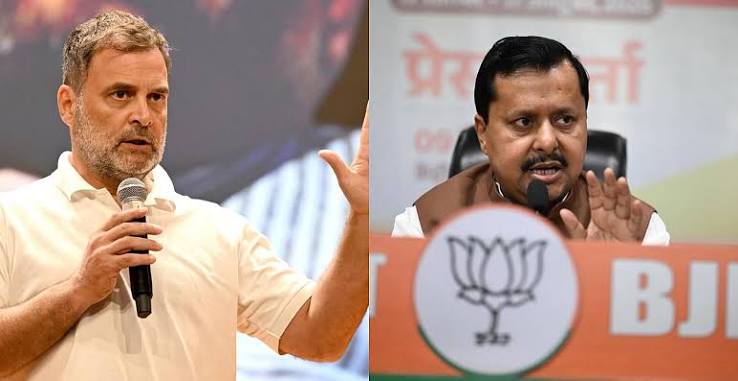
RSS chief Mohan Bhagwat and BJP national president Nitin Nabin will be in Ujjain on September 17 and 18, while Rahul Gandhi will visit Indore on September 19. BHOPAL: Madhya Pradesh’s Malwa region is set to witness a series of high-profile political visits from September 17, with RSS chief Mohan Bhagwat, BJP national president Nitin Nabin and Leader of Opposition Rahul Gandhi scheduled to visit the region over four days. Bhagwat and Nabin will be in Ujjain on September 17 and 18, while Rahul Gandhi will visit Indore on September 19 for the Chhatron ki Goonj (Echoes of Students) event. Nabin’s visit will be his first to Madhya Pradesh after becoming BJP national president. He is expected to attend the lighting of 25 lakh diyas on the banks of the Kshipra river in Ujjain on September 17, marking the launch of the month-long Seva Sankalp Abhiyan to commemorate Prime Minister Narendra Modi’s 25 years in public life. Bhagwat will attend a series of RSS meetings and events during his two-day stay in Ujjain, including the Yuva Dharma Sansad at Gita Bhawan, organised by Sevagya Sansthanam. At the Yuva Dharma Sansad, Bhagwat will address students and working professionals from across the country who have registered for the event. Sources said Nabin is also expected to meet Bhagwat during his visit to Ujjain. According to informed sources, Nabin may also travel to Mandsaur district on September 17 for the release of a female African cheetah, possibly South African cheetah Nirwa, at the Gandhi Sagar Wildlife Sanctuary. The event will mark Prime Minister Modi’s 76th birthday and four years of the cheetah reintroduction project launched at Kuno National Park. Bhagwat and Nabin are scheduled to leave Madhya Pradesh on September 18. Rahul Gandhi will address the Chhatron ki Goonj event in Indore on September 19, for which the Congress has been mobilising support across the state. In Bhopal, RSS general secretary Dattatreya Hosabale will address a gathering of more than 20,000 young RSS workers on September 20 as part of the Sangh’s centenary year celebrations. The gathering will include workers associated with RSS Mohalla Shakhas, along with thousands of swayamsevaks and prominent citizens from Bhopal and adjoining districts, taking the expected attendance to around 50,000. Courtesy : TOI Note: This news is originally published on https:/timesofindia.com/bha and is used purely for non-profit/non-commercial purposes, especially human rights
Keralam, Malaysia eye stronger ties after CM Satheesan’s meets Anwar Ibrahim
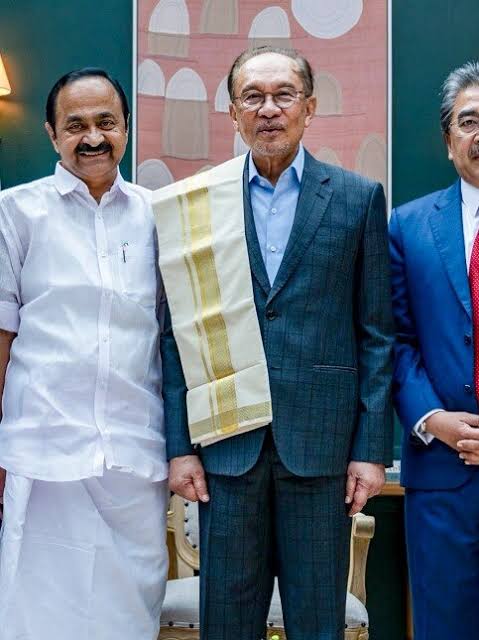
The meeting also discussed the possibility of broadening cooperation in sectors with considerable potential for mutual benefit, particularly IT, tourism, education and commerce. KOZHIKODE: Kerala and Malaysia have decided to explore stronger cooperation in key sectors including information technology, tourism, education and trade, following a meeting between Kerala Chief Minister V.D. Satheesan and Malaysian Prime Minister Anwar Ibrahim in Kozhikode on Monday. The meeting was held at the Tulah Wellness Centre in Chelembra, where Anwar Ibrahim was staying during his visit to Kerala. The discussions focused on expanding the existing ties between Kerala and Malaysia and identifying new areas for development cooperation. According to the sources, the two leaders assessed the long-standing friendship between Kerala and Malaysia and the significant role played by the Malayali diaspora in strengthening relations between the two regions. The active presence of Malayalis in Malaysia was viewed as an important foundation for further expanding bilateral and people-to-people connections. The meeting also discussed the possibility of broadening cooperation in sectors with considerable potential for mutual benefit, particularly IT, tourism, education and commerce. The decision to strengthen collaboration in these areas is expected to create new opportunities for investment, knowledge exchange, tourism promotion and business partnerships. CM arrived at the wellness centre by helicopter at around 2.30 pm to meet the Malaysian Prime Minister. Industries Minister P.K. Kunhalikutty and Indian Union Muslim League (IUML) leader Sayyid Sadiq Ali Shihab Thangal also attended the meeting. During the interaction, CM presented Anwar Ibrahim with a traditional memento featuring the cultural imagery of Kerala’s Kathakali. The Malaysian Prime Minister also exchanged gifts with the Chief Minister. The Malaysian Prime Minister has been in Kerala since Sunday evening after attending the BRICS conference in New Delhi. His visit to Kozhikode was primarily connected with his meeting with prominent Sunni scholar and Indian Grand Mufti Kanthapuram A.P. Aboobacker Musliyar. On Sunday night, Kanthapuram presented Anwar Ibrahim with the first “Excellence Award” instituted by the Sheikh Abu Bakar Foundation at a function held at Karanthur Markaz in Kunnamangalam, Kozhikode. The Malaysian Prime Minister subsequently visited the Madavoor C M Valiyyullahi Makham, a prominent pilgrimage centre in Kozhikode, accompanied by Kanthapuram. Anwar Ibrahim is scheduled to return to Malaysia via the Maldives after completing his Kerala visit. Courtesy : TNIE Note: This news is originally published on https:/thenewindianexpress.com/bha and is used purely for non-profit/non-commercial purposes, especially human rights
Police Unwilling To Register FIR Against BJP MLA Who Beat Dalit Mandal President: Kuldeep Kumar

NEW DELHI | The Aam Aadmi Party (AAP) strongly criticised the Delhi Police for failing to register an FIR against BJP MLA Gajender Drall over the assault of his party’s Dalit Mandal President, Sunil Kumar. AAP MLA Kuldeep Kumar said the Dalit family had been visiting the police station for three days seeking to register a complaint, but the police had refused to act. He questioned how ordinary Dalit workers could feel safe when even a Dalit office-bearer within the BJP was unsafe, and demanded that the Delhi Police register an FIR under the SC/ST Act and that the BJP suspend its MLA. Addressing a press conference on Sunday, AAP MLA Kuldeep Kumar said, “In the national capital Delhi, the BJP’s anti-Dalit government has created a very hostile environment for Dalits. BJP MLA Gajender Drall from Mundka Assembly constituency abducted Sunil Kumar, who belongs to the Dalit and Valmiki community, at night, took him to his house, held him hostage throughout the night and brutally beat him. Sunil Kumar is currently the Mandal President of the BJP itself, but he was beaten simply because he belongs to the Valmiki community.” Kuldeep Kumar further stated, “Even in remote villages across the country, no one treats another person with such brutality, yet this incident has taken place in the national capital under the BJP government. For the past two to three days, this family has been going from place to place seeking justice and trying to get an FIR registered, but despite the matter being highlighted, the Kanjhawala police station and the police administration are unwilling to register an FIR.” He said that he had called the DCP and posted hundreds of tweets, but the DCP did not even answer his call. He said the BJP MLA had become so arrogant because of his power that he beat a person from the Valmiki community in this manner. Kuldeep Kumar added, “We want to ask the BJP government what action it has taken against its MLA. The Delhi Police should immediately register an FIR against Mundka MLA Gajender Drall, and the BJP should immediately expel this goon MLA from the party. If this does not happen, it will be understood that this MLA carried out such an act in the national capital under the protection of the BJP itself.” The AAP MLA said that since the BJP government came to power in Delhi, Dalits and the Valmiki community had been continuously subjected to exploitation. He highlighted that very recently, a sanitation worker had been murdered, a Valmiki youth had been beaten to death, and in Trilokpuri too, a former BJP Mandal President had taken a person from the Valmiki community from his home and assaulted him. “We got a case registered under the SC/ST Act in that matter and had him arrested. The Delhi Police should immediately arrest Gajender Drall and send him to jail, and the BJP should make it clear whether it stands with Dalits or not. If it does, it should immediately have its MLA arrested and suspend him from the party,” he added. Kuldeep Kumar questioned, “When BJP’s own Dalit office-bearers are not safe within the party, how can ordinary people be safe?” The entire dispute behind this assault, he noted, is simply about how a person from the Valmiki community became a Mandal President. “The BJP gives people positions merely for the sake of appearances and appoints them, but does not remove casteism from the minds of its MLAs,” he asserted. He continued, “They have been taught this from the beginning in RSS shakhas, how to discriminate against Dalits and backward communities, and the casteism instilled in their minds will not disappear so quickly.” Victim admitted at hospital is not even receiving proper treatment: Kuldeep Kumar Kuldeep Kumar stated that he had gone to RML Hospital to meet Sunil Kumar, the victim from the Valmiki community, but the entire police and security machinery was deployed to prevent him from meeting the victim. “Has meeting a victim now also become a crime? Sunil Kumar was reportedly brutally beaten by BJP MLA Gajender Drall, abused with casteist slurs and kept locked up throughout the night,” he said. Kuldeep Kumar added, “Even after three days, the police have not registered an FIR. This is happening in the national capital, and the entire BJP government is busy protecting its MLA. The most painful part is that Sunil Kumar’s treatment has also not been properly started, and he has been kept separately in a hospital gallery.” He concluded by asserting that instead of protecting its MLA, the BJP government should give the victim justice, immediately register an FIR and take action against those responsible. Courtesy : Aam Aadmi Party ORG Note: This news is originally published on https:/aamaadmipartyorg.com/bha and is used purely for non-profit/non-commercial purposes, especially human rights
Dalits counter BJP protest in T. Narsipur over Ganesha procession
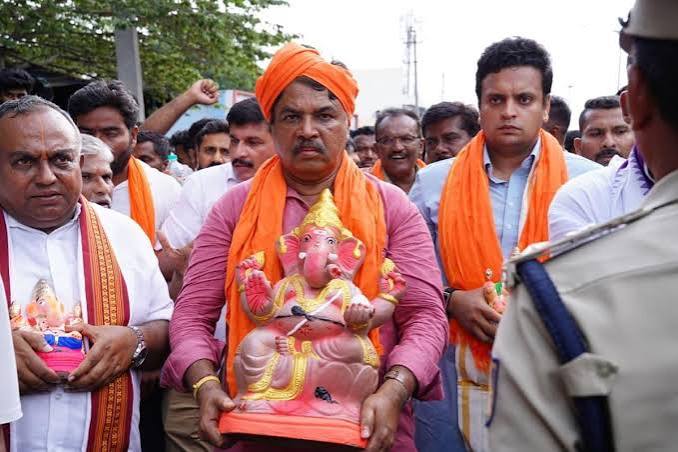
Dalit groups accuse former MP Pratap Simha of deliberately spreading communal poison in T. Narsipur with his allegedly inflammatory statements Leader of the Opposition in the Legislative Assembly R. Ashok, along with Mysuru MP Yaduveer Wadiyar, former MP Pratap Simha, MLA Srivatsa, leader Sachidananda, and BJP supporters gathering in T. Narsipur on Sunday, who were protesting against the police inspectors warning with regard to Ganesha procession. Leader of the Opposition in the Legislative Assembly R. Ashok, along with Mysuru MP Yaduveer Wadiyar, former MP Pratap Simha, MLA Srivatsa, leader Sachidananda, and BJP supporters gathering in T. Narsipur on Sunday, who were protesting against the police inspectors warning with regard to Ganesha procession. | Photo Credit: Special Arrangement Tension prevailed in T. Narsipur town near here on Sunday as BJP leaders and supporters staged a protest against the town police inspector’s remarks during a peace meeting ahead of the Ganesha procession, while a counter-protest was also staged by Dalit organisations against former MP Pratap Simha’s allegedly fomenting communal trouble remarks. Superintendent of Mysuru district police Mallikarjuna Baladandi, who visited T. Narsipur to supervise security arrangements, said additional forces had been deployed in the town to maintain law and order in view of the protests. Narsipur town police inspector Dhananjaya’s reported warning to the processionists against bursting crackers in front of the mosque on Link Road in the town had sparked a strong response from the BJP, with Mr. Pratap Simha allegedly threatening to storm the police station in protest against the police inspector’s remarks. Leader of the Opposition in the Legislative Assembly R. Ashok was arrested during BJP’s protest in T. Narsipur on Sunday against the police inspectors warning with regard to Ganesha procession. Leader of the Opposition in the Legislative Assembly R. Ashok was arrested during BJP’s protest in T. Narsipur on Sunday against the police inspectors warning with regard to Ganesha procession. | Photo Credit: Special Arrangement As BJP leaders, including Leader of the Opposition in the Legislative Assembly R. Ashok and Mysuru MP Yaduveer Krishnadatta Chamaraja Wadiyar, made their way to T. Narsipur town on Sunday, a group of Dalit activists sporting Jai Bheem flags and blue shawls gathered near the police station and shouted slogans against Mr. Simha. The activists of the Dalit groups accused the former MP of deliberately spreading communal poison in T. Narsipur with his allegedly inflammatory statements. The police managed to swiftly disperse them. Meanwhile, BJP supporters gathered in the town and started raising slogans in support of Mr. Pratap Simha and against the town police inspector. Mr. Ashok, who arrived in the town, criticised the Congress government for imposing restrictions on the celebration of the Ganesha festival in different parts of the State while addressing the large gathering of BJP supporters. He also sought action against the police inspector for threatening the groups celebrating the Ganesha festival. Mr. Pratap Simha too addressed the crowd of BJP supporters gathered in the town to protest against the police inspector’s warning. The police later arrested BJP leaders, including Mr. Ashok. They were subsequently released. Meanwhile, Mr. Baladandi said the police inspector of the town had convened a peace meeting on September 7 and asked various groups installing Ganesha idols to inform the police about the date of the immersion to ensure proper security arrangements along the route. As one group had taken out the Ganesha procession without intimating the police last year, no security could be provided for the procession, which also passed through a mosque. Hence, the police inspector asked the group not to take out the procession unilaterally without informing the police. About 15 to 20 Ganesha pandals are put up in T. Narsipur town every year, and there is no restriction on the processions. The processions can be taken out on the same route this year as well. The police have imposed no restrictions, he clarified. However, he regretted that the police inspector’s statement was being shown in a “different” manner on social media. He said necessary instructions had also been issued to police officials against issuing statements that could create confusion in the minds of the public. The Hindu Bureau Courtesy : The Hindu Note: This news is originally published on https:/thehindu.com/bha and is used purely for non-profit/non-commercial purposes, especially human rights