
Dalit Youth Assault Case- Gurugram Police arrest eight, apprehended a minor
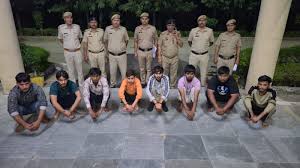
The Gurugram Police arrested eight people and apprehended a minor for allegedly assaulting a Dalit youth and hurling casteist abuse at him. The accused had allegedly fought with the youth over bursting firecrackers during Diwali in Jatola village, Farrukhnagar. The victim, Kartik, 21, was sitting outside his house when a group of seven to eight people, including arrived on a motorcycle. They allegedly assaulted him and allegedly made caste remarks. Kartik fled to his house, but the group followed, attacked him again, and threatened to kill him and his family. He later lodged a complaint with police. The accused have been identified as Ankit, 20; Himanshu, 21; Ansu, 19; Pawan, 23; Abhay, 20; all residents of Jatola; Yogesh, 22; from Farrukhnagar; Rachit, 21, from Kawali village in Rewari; and Anshu, 20, from Khol, Rewari, along with a minor aged 16. According to the police, the accused wanted to take revenge following an argument over firecrackers on October 20 (Diwali), which led to the assault. The police recovered a motorcycle used in the crime. The minor has been included in the investigation as per legal procedures, while the other eight accused were produced in court on October 25 and sent to judicial custody. Courtesy : BW Police World Note: This news is originally published on https:/bwpoliceworld.com/bha and is used purely for non-profit/non-commercial purposes, especially human rights
Harish insulted Dalits with comments on Cabinet: Telangana minister Adluri
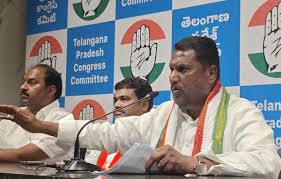
Speaking to the media at Jubilee Hills Ministers Quarters, he accused the BRS of running a “Bandipotu politics” (politics of dacoits) for a decade. HYDERABAD: SC, ST and Minority Welfare Minister Adluri Laxman Kumar on Monday slammed BRS leader T Harish Rao for calling the state Cabinet a “Dandupalyam batch” (criminal gang). Terming the BRS leader’s remarks “disrespectful and shameful”, Laxman Kumar demanded an open apology from the former for insulting ministers who belong to Dalit communities and weaker sections. Speaking to the media at Jubilee Hills Ministers Quarters, he accused the BRS of running a “Bandipotu politics” (politics of dacoits) for a decade. Stating that the Congress government, under the leadership of Chief Minister A Revanth Reddy, was ensuring inclusive governance, he said: “When I challenged Harish Rao to an open debate, he backed off. If he has courage, he should come forward and discuss these issues before the people.” Koppula arrested BRS leader and former minister Koppula Eshwar and his party colleague Korukanit Chander were arrested from the 125-feet Ambedkar statue here on Monday, when they reached there for a debate with SC, ST and Minority Welfare Minister Adluri Laxman Kumar. Eshwar dared Laxman to a debate on welfare schemes but the latter wanted to debate with former minister T Harish Rao. Police took both Eshwar and Chander into custody and shifted them to a police station. Laxman had earlier challenged BRS working president KT Rama Rao or Harish Rao to a debate. Courtesy : TNIE Note: This news is originally published on https:/thenewindianexpress.com/bha and is used purely for non-profit/non-commercial purposes, especially human rights
Odisha Continues to Face Severity of Dalit Oppression
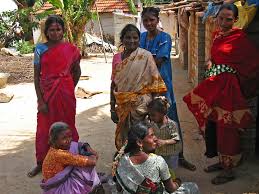
The state had the sixth highest cases of incidents of Dalit oppression over the past four years (NCRB data), including acts of bestial violence, social boycotts, and judicial discrimination. The people of Odisha must be undergoing fatigue built on almost years and years of perpetuation of atrocities on Dalits in the state, which remains the sixth highest in incidents of oppression on Dalits in India. This is contrary to the notional assumption that the people of Odisha are God-fearing and their faith rests on the premises of Lord Jagannath, who, in essence, is believed to be a tribal deity, his origin dating back to over thousands of years. The deity is said to be the Patitapavan, which in essence connotes that He is for the Patits (the most oppressed). Leaving aside the legends, numerous incidents of Dalit oppression have been reported in Odisha over the past four years, including acts of bestial violence, social boycotts, and judicial discrimination. According to the National Crime Records Bureau (NCRB) data, Odisha has the sixth highest cases of atrocities on Dalits. In 2020, there were 2,046 incidents, in 2021, the incidents reported stood at 2,327, in 2022, there were 2,902 incidents and in 2023, the reported incidents were 2,696, taking the total to 9,971 incidents in the past four years. Activists cite “poor implementation of protective laws and low conviction rate for atrocities as factors the help perpetuating the problem”, Biswapriya Kanungo, an advocate and social activist fighting for the oppressed, told this writer. What about people from the upper strata who fuel such acts of oppression? Kanungo says “this trend has exacerbated in the past one decade when the political system has shown an attitude of acquiescence to the practice of oppression of people from the lower strata or Dalits.” Reports and case studies from 2020 to 2025 document several incidents of Dalit oppression in Odisha, including brutal public humiliation, social boycotts, and denial of basic rights. “Regardless of legal protection, that are so ineffective, a deep-seated caste-based discrimination persists, particularly in rural areas, where the incidents never come to light or rather get buried in obscurity”, laments Kanungo. Most instances of Dalit oppression in Odisha are marked by physical violence and systemic discrimination. While there are laws in place to prevent such atrocities, Dalits have been facing persistent exploitation and social exclusion, especially in the rural interiors. This is compounded by an ineffective justice system that fails to protect victims. In June 2025, two Dalit men from Pana community were subjected to public humiliation coupled with physical assault by a mob in Kharigumma village in Ganjam district. They were falsely accused of cattle smuggling whereas they were transporting three cows for a wedding dowry. They were forced to drink drain water and crawl on their knees. The incident sparked widespread outrage. An incident that the National Human Rights Commission took suo motu cognisance of. In 2012, in another cruel incident in Lothra area in Bolangir district, an upper-caste mob set fire to the houses of 30 Dalit families for a reason that cannot be condoned in any society. Intolerance Toward Assertiveness After setting the houses on fire, the mob blocked the roads preventing the police and fire brigade from entering the village. This violence was reportedly a backlash against the growing economic and political assertiveness of Dalits in the region. In 2012, the NHRC issued a notice to the Odisha government regarding the social boycott of 13 Dalit families in Ganjam district. The families were denied access to shops, water sources, temples, and irrigation, and were also forced to wash clothes for a pittance. Kanungo recollects that it was in 2008, when the upper-caste majority virtually massacred Dalits and tribals in a riot that claimed over 17 lives and rendered thousands homeless, Many families were forced to take shelter in camps worse than ghettoes, while a sizable population of the tribals remained holed up in the deep woods without anything for sustenance. That incident created a global ripple and panic. The entire gamut of the social turmoil was allegedly created by the hands of Right-wing elements from the state and from Delhi who helped fuel the fire with hate-speeches and propaganda. That brought a turning point politically, when the then Chief Minister Naveen Patnaik broke his party, Biju Janata Dal’s (BJD) nine-year-long political alliance with the Bharatiya Janata Party (BJP) on the grounds of inciting communal unrest. Systemic and Institutional Discrimination In many parts of rural Odisha, Dalits are frequently denied access to public amenities, including temples, hotels, tea stalls, and public wells till date. During a 2016 incident in Nayagarh, upper-caste villagers refused water from a tanker because it had first served a Dalit hamlet. In 2025, courts in Odisha drew criticism for imposing caste-discriminatory bail conditions, such as ordering Dalit men to perform manual scavenging work. This practice, which links bail to traditionally stigmatised occupations, has been condemned by legal experts everywhere in India. Yet, this practice is still followed, as we see people getting into in filthy septic/sewer tanks digging out dirty sediments in neck deep toxic human waste. Even with advancements, untouchability continues in many subtle and overt forms in the state. In some villages, Dalits are not served by village barbers or washermen. During the 2021 Cyclone, Yaas, Dalit communities in rural areas were reportedly ostracised and denied access to rehabilitation facilities, added Kanungo. Inner Conflicts Some Dalit sub-castes in Odisha, like the Doba and Kaibarta, have been found to practice discriminatory behaviour against lower-ranked Dalits, such as the Ganda community. This promotes perpetuation of the cycles of oppression within the marginalised community itself. Isolation in Death An 80-year-old woman faced social isolation in death in Deogarh district, simply because five decades ago, she had married outside her caste. Her body was left abandoned till some local volunteers dared the oppressors and arranged her last rights with full respect. The act of compassion and courage shown by the volunteers drew appreciation from various quarters. To top
Dalit CM for Karnataka: Muniyappa, Jarkiholi backed by supporters amidst speculation
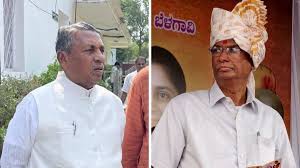
The call for a Dalit Chief Minister in Karnataka is gaining momentum amidst leadership change buzz, with names like K.H. Muniyappa and Satish Jarkiholi in contention Amid political buzz over a leadership change in Karnataka, the call for a Dalit Chief Minister is getting louder. Several Dalit organisations and senior ministers are raising the demand, with supporters of ministers of M H Muniyappa stating that Karnataka deserves a Dalit CM. Not just Muniyappa, even the names of ministers Dr. G. Parameshwar, Satish Jarkiholi, and former minister K.N. Rajanna are doing the rounds. This is amidst Jarkiholi already stating that discussions for a Dalit Chief Minister in Karnataka is currently not under discussion and has been put on a pause. Despite Jarkiholi being in contention for the post of CM, if a leadership change happens, many leaders are already openly discussing the idea. According to Home Minister Dr. G. Parameshwara, there is nothing wrong with Muniyappa becoming the Chief Minister. “He is capable and has the qualifications. I will be happy if he becomes the Chief Minister. I will be happy that our class has got an opportunity,” Parameshwara was quoted by Asianet Suvarna. A seven-time MP, Muniyappa is a senior member and was a former Union Minister. However, Parameshwara said it was the High Command that had to take the final call. Former Minister K N Rajanna too spoke in support of a Dalit Chief Minister. “What is wrong with the demand for a Dalit Chief Minister? A Dalit Chief Minister should be happy. But the high command will decide who should be the chief minister,” he added. In the background, a state is also being set for a show of strength through a Dalit conference. Speculations are that Parameshwara, HC Mahadevappa, and Jarkiholi are holding a meeting soon to discuss the outline. The conference will likely be held in Chitradurga or Davangere with the aim of highlighting to the High Command the contributions made by the community for the party. Preliminary discussions have already taken place, and a meeting will be held soon to discuss the final outline. That said, there is still no confirmation that Siddaramaiah would be removed. The Chief Minister himself has given no hints about stepping down and has rubbished all talks of his political retirement. As for the Congress party, it needs a leader like Siddaramaiah who has the ability to bring 25 percent of the votes to the Congress party. He has control of all the districts of the state. Courtesy : TW Note: This news is originally published on https:/theweek.com/bha and is used purely for non-profit/non-commercial purposes, especially human rights
Bihar Elections: Rahul Gandhi to hold first rally on October 29th, Grand Alliance manifesto to be released tomorrow; Priyanka to also take charge soon

Bihar Assembly Election 2025 – The Congress is now ready to enter the Bihar Assembly elections with full force and strategy. Former party president Rahul Gandhi will address his first election rally in the state on October 29th. Priyanka Gandhi will also return from a two-day visit to Wayanad and will soon resume her campaign. Patna: The Congress is now preparing to enter the Bihar Assembly elections with full force. Rahul Gandhi will hold his first election rally in Bihar on October 29th, while Priyanka Gandhi will also return from a two-day visit to Wayanad and will soon join the campaign. According to Congress’s plan, Rahul Gandhi will hold a total of 12 rallies and Priyanka Gandhi will hold 10. Grand Alliance to release its manifesto on October 28th Just a day before, on October 28th, the Grand Alliance will release its manifesto. Rahul Gandhi’s first rally after the manifesto’s release will formally kick off the Grand Alliance’s campaign. Congress has fielded 40 star campaigners for the first phase of the campaign. These include party president Mallikarjun Kharge, senior leaders Ashok Gehlot, KC Venugopal, Bhupesh Baghel, and many others. High Command Working to Calm Down Discontent Over Ticket Distribution The Congress high command has taken the lead in addressing the discontent that has emerged within the party over ticket distribution. Senior party leader and Bihar Election Observer Ashok Gehlot, Organization General Secretary KC Venugopal, and Election Screening Committee Chief Ajay Maken arrived in Patna late Saturday evening and reviewed the situation in a series of meetings. Several local leaders had alleged arbitrariness in ticket distribution and neglect of party workers. Party Working on a Special Strategy The Congress leadership wants to send a message of unity within the organization before Rahul and Priyanka’s rallies after Chhath Puja, so that the party can contest with full strength. Rahul Gandhi previously led a Voter Rights Yatra in Bihar, covering 110 assembly constituencies. The party is now working on a strategy to convert that public relations momentum into electoral energy. Edited by: Ravi Sinha About the Author Ravi Prakash Sinha is a senior journalist (Principal Digital Content Producer) at Navbharat Times Online. He has 25 years of experience covering current affairs, Jharkhand-Bihar politics, and ground reporting. Ravi Sinha has been with NBT (Digital) for the past three years. Courtesy: Hindi News
Bihar assembly elections: 56 days and counting – where is Rahul Gandhi?

NEW DELHI: When Rahul Gandhi set out under Bihar’s unforgiving August sun for his ‘Voter Adhikar Yatra’, it was a test of whether he could still find takers in a land where the Congress survives mostly as a fading afterimage. For 16 days, his campaign carved a noisy trail through dusty highways and crowded colonies. Today, however, as Bihar’s election heat rises and the state readies for a two-phase assembly poll, the buzz is dominated by Prime Minister Narendra Modi’s fiery speeches, Amit Shah’s rallies, Tejashwi Yadav’s roadshows and Prashant Kishor’s groundwork. Amid all this, one voice remains missing – Rahul Gandhi. The Congress leaders’s last appearance in Bihar was nearly two months ago, when he wrapped up his yatra at Patna’s Gandhi Maidan on September 1. The campaign was pitched as a moral crusade to “protect the vote” – an attempt to awaken Bihar’s electorate against what he called ‘vote chori’ (theft of votes) by the ruling NDA. Over sixteen days, he covered 1,300 km across 25 districts and 110 assembly constituencies – riding motorbikes, donning ‘gamcha’ for local appeal, visiting makhana farmers – often joined by allies like Tejashwi Yadav, Hemant Soren and others. Rahul Gandhi's Voter Adhikar Yatra. But two months later, the narrative has shifted. Rahul, who had briefly stirred Congress’s dormant base through his yatra, seems to have lost the momentum. And instead of leading the charge from the front, its leader is missing in action. When the Mahagathbandhan announced Tejashwi Yadav as its chief ministerial candidate on October 23, the press conference banner carried only one face – Tejashwi’s. Rahul was missing, both on stage and in spirit. Within the alliance, the unspoken verdict seemed clear: he may be the face of opposition on the national level, but he was no longer its in-charge in Bihar. Though there has been no official seat-sharing arrangement, RJD is contesting 143 of the 243 seats of Bihar and Congress is contesting 61 seats. In the 2020 assembly elections, Congress had the worst strike rate in the opposition camp despite Tejashwi’s electrifying campaign that led RJD to emerge as the largest single party. Congress had contested 70 seats, the most in the opposition alliance after the RJD (144), and could win only 19. Pizza breaks and policy talk abroad Since his Patna rally, Rahul Gandhi has appeared in public only five times – none of them in Bihar. In late September, he was spotted at a pizza outlet in Gurugram. In early October, he travelled to Colombia, where he declared that “India’s democratic system is under attack from all sides.” During a talk at the University of Chile, he lamented that “free and scientific thinking” was under “tremendous attack” in India. On October 17, he visited singer Zubeen Garg’s village in Assam to pay tributes. Three days later, he was seen at a sweet shop in Old Delhi, rolling laddoos for the cameras. Congress general secretary KC Venugopal, however, maintained that the party’s “full-throttle campaign” will begin only after the Chhath festival. Rahul Gandhi, he said, will tour Bihar on October 29 and 30, followed by Priyanka Gandhi Vadra and party president Mallikarjun Kharge. A joint rally with Tejashwi is planned in Muzaffarpur and Darbhanga. But will this late entry work? For the past month, while PM Modi, Amit Shah and JP Nadda have flooded Bihar with rallies and Tejashwi has built emotional momentum across districts, Congress has remained in political limbo. Rahul’s absence has left party candidates and workers scrambling for visibility and credibility on the ground. His re-entry, barely a week before Phase 1 polling on November 6, feels less like a strategy and more like irrelevance. For now, Congress is trying to make up for his absence by circulating old clips from the yatra, calling Rahul Gandhi the ‘Jan Nayak’ — the “hero of the people.” — INCIndia (@INCIndia) The crisis within the camp Adding to the drift is Congress’s own internal turmoil in Bihar. Ticket distribution had triggered open rebellion, with state leaders accusing AICC in-charge Krishna Allavaru of corruption and favouritism. Disgruntled members were seen protesting at the party headquarters. Their slogan, “Ticket chor, gaddi chhodd,” was an ironic echo of Rahul’s own “Vote chor, gaddi chhodd” taunt at the NDA government. The dissent underscores the deep disconnect between the central leadership and the local cadre, even at the last leg of the election campaign. In recent days, senior leaders like Ashok Gehlot and Bhupesh Baghel were parachuted in to manage the fallout, both within the party and with allies like RJD. Hemant Soren, who walked with Rahul in Bihar in a show of strength, eventually walked out and decided not to contest elections. But through it all, Rahul has remained absent. BJP’s blitz Meanwhile, BJP has turned Bihar into a campaign battlefield. Prime Minister Modi has led from the front with rallies in Samastipur and Begusarai, urging voters to deliver a “record-breaking victory.” Home minister Amit Shah has addressed meetings in Siwan and Buxar, while BJP president JP Nadda has courted intellectuals in Vaishali. Uttar Pradesh chief minister Yogi Adityanath has been roped in to hold over 20 rallies. The optics are unmistakable, a full-spectrum show of power and coordination. Rahul’s partner, Tejashwi Yadav, has also been a relentless presence on the ground, addressing multiple rallies a day. When asked about Rahul’s absence, he sidesteps diplomatically, but the contract remains too stark to miss. The Chhath countdown Even after literally no presence till now, Congress insists that its campaign will finally shift gears after Chhath Puja (October 27). The party’s manifesto, focusing on social justice and women’s welfare, is scheduled for release on October 28. He is scheduled to address his first political rally along with Tejashwi Yadav on October 29. The duo will hold a joint rally in Muzaffarpur and Darbhanga. His late entry may well be planned. But ask any political pundit and they will tell you that in any election, presence on the ground matters the most, and
Stalin reiterates commitment to Cong alliance, talks about bond with Rahul
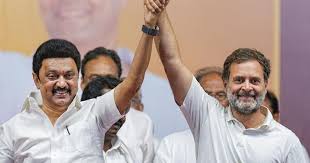
Chennai: Chief minister M K Stalin said on Monday that his bond with Congress leader Rahul Gandhi transcends politics. The alliance between DMK and Congress was for Tamil Nadu’s growth and India’s unity, he said. “DMK and Congress may have travelled different paths in the past. But today, we are travelling together, with the same ideals, for the welfare of the nation, for the growth of Tamil Nadu, and above all, for the unity of India. That is what makes this alliance significant,” he said speaking at the wedding ceremony of former Congress MLA Chokkar’s grandson in Chennai. Stalin’s remarks come amid growing demand among Congress functionaries for more seats in 2026 assembly elections. Stalin said his bond with Rahul Gandhi was defined by national welfare rather than individual interest. “I cannot express in words the affection he showers on me. When I speak about or refer to other political leaders, I have never used the word brother. But when I refer to Rahul Gandhi, I always call him my dear brother,” Stalin said. Stalin said it was because Rahul always addresses him as ‘Anna, as elder brother.’ Whether on phone calls or when they meet in person, Rahul greets him as ‘my dear brother,’ he said. “I am saying this because the bond between us goes far beyond political friendship; it has evolved into a deep ideological relationship that has today emerged as the united voice of India,” he said. Stalin said he expected the same spirit — that the welfare of the nation must come before personal interests — from everyone. “The friendship between the two movements, built on mutual understanding and shared ideals, will surely protect the future of this country. That is certain,” he said, as a reiteration that the alliance would not be disturbed by voices of discontent in Congress. Courtesy : TOI Note: This news is originally published on https:/timesofindia.com/bha and is used purely for non-profit/non-commercial purposes, especially human rights
Dalit members protest ‘police inaction’ after assault on local leader in Roorkee

ROORKEE: Dalit community members gheraoed Roorkee police station on Sunday, protesting against the alleged police inaction in arresting those accused of assaulting a local leader from Shankerpuri in full public view on Friday. The injured Dalit leader was initially admitted to a local hospital, but due to severe head injuries, he was later shifted to a facility in Dehradun. The victim, Yogesh Kumar, 40, was attacked with sticks and iron rods by over 10 men when he was returning to his village from Haridwar in a car with four friends. The attackers allegedly dragged him out of his vehicle and brutally beat him. Reason behind the attack was personal enmity, locals said. Police, meanwhile, said multiple teams have been deployed to trace the culprits. An FIR was registered on the complaint of Kumar under BNS sections related to rioting and assault. “We have arrested two accused and have also seized the vehicle used in the crime. The remaining accused will be arrested soon,” said SP (rural) SC Suyal. Members of the victim’s group staged a protest at the police station on Sunday, accusing the police of inaction. “Yogesh Kumar was attacked. His life remains in danger as the perpetrators are roaming free. Police should have arrested all of them by now. We have given a 48-hour ultimatum; if all arrests are not made, we will hold a massive protest,” said a protester. Earlier this week, Yogesh and his associates reportedly clashed with the accused over a car parking dispute. Enraged by that incident and allegedly seeking revenge, the accused are said to have carried out the attack. Members of the victim’s group staged a protest at the police station on Sunday, accusing the police of inaction. “Yogesh Kumar was attacked with an intent to kill. His life remains in danger as the accused are still roaming free. The police should have arrested all of them by now. We have given a 48-hour ultimatum; if all arrests are not made, we will hold a massive protest,” said Lokesh Katariya. Police, however, said that multiple teams have been deployed to trace the culprits and that they are closing in on all the accused. “We have arrested two accused in the case and have also recovered the vehicle used in the crime. The remaining accused will be arrested soon,” said SP (rural) SC Suyal. Courtesy : TOI Note: This news is originally published on https:/timesofindia.com/bha and is used purely for non-profit/non-commercial purposes, especially human rights
A dispute over goat grazing led to an attack on a Dalit family: Members of a specific community assaulted them in Karma village, Basti.
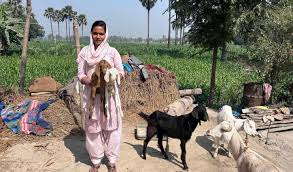
A Dalit family was attacked by members of a specific community in a dispute over goat grazing near Karma village, in the Gaur police station area. The incident occurred when the family was returning from a temple visit. According to reports, an argument broke out between the two parties regarding clearing the path while grazing goats. This altercation escalated into a physical altercation. Police took immediate action on the complaint of the victim’s family. Superintendent of Police (SP) Abhinandan took cognizance of the matter upon receiving the information. On the SP’s instructions, a case was immediately registered against the accused and orders were issued for their arrest. Upendra Kumar Courtesy: Hindi News
Madhya Pradesh shocker: Dalit man beaten to death over petty dispute; tension erupts between 2 villages

BHOPAL: A 35-year-old Dalit man was allegedly beaten to death by neighbours in Bhind district on Saturday evening following an altercation over petty monetary and other disputes, sparking tension between two nearby villages. The incident occurred around 6:30 pm within Daboh police station area, approximately 65 km from the district headquarters. The deceased, identified as Rudra Pratap Singh Jatav, was attacked with sticks by a group of men from the neighbouring village. Police stated that the deceased and the accused had an old enmity and had a history of minor disputes and verbal altercations. Additional SP Bhind, Sanjeev Kumar Pathak, told TOI, “They had fights in the past, too. The deceased lived in Raipura village while the accused lived in nearby Raniya village. Primary investigation has revealed that the accused, who are from the Kaurav community, have a shop in the village, and due to some petty monetary transactions, there were small disputes between the deceased and the accused. It escalated into a big fight on Saturday evening around 6:30 pm, leading to the murder,” Jatav was initially rushed to a local hospital and later referred to Gwalior but he succumbed to his injuries en route. Following Jatav’s death, tension escalated as the victim’s relatives and villagers vandalised a house belonging to one of the accused and set ablaze parked vehicles. Cops said a search is on for accused and the situation was brought under control. “No one from the accused side has so far complained of any vandalism,” he said. Courtesy : TOI Note: This news is originally published on https:/timesofindia.com/bha and is used purely for non-profit/non-commercial purposes, especially human rights