
Haryana: Dalit minor confined, tortured over suspicion of theft in Palwal, 10 booked
While one person accused in the matter had been arrested so far, three prime accused are absconding. The police in Haryana’s Palwal have filed a case against 10 members of a family for allegedly torturing and wrongfully confining a 12-year-old Dalit boy for several hours after accusing him of theft, the Hindustan Times reported. The incident took place on the night of December 10. While one person accused in the matter has been arrested so far, three prime accused are absconding, the newspaper reported. The members of the family have been charged with voluntarily causing hurt and wrongful confinement. They were also booked under provisions of the Scheduled Caste and Scheduled Tribe Prevention of Atrocities Act and the Juvenile Justice Care and Protection of Children Act. The police was quoted as saying that the family allegedly tied the boy’s limbs and repeatedly gave him electric shocks. The minor told the investigators that he had also been sexually abused by the family. He is being treated in hospital for burn injuries. The boy carries lights during wedding processions to financially support his family. On December 10, he was returning to Banchari village from Hodal town near Palwal with two other children when a car with persons who were allegedly drunk began chasing them at around 11.30 pm. The boy told the police that while trying to escape he jumped into the premises of a house and the other children ran towards the village. The family living in the house caught the minor, suspecting he was a thief, and assaulted him, the newspaper quoted the police as saying. They called the police hours later. The three prime suspects who are absconding filed anticipatory bail petitions on Monday. A hearing in the sessions court on Wednesday was adjourned after a medical report on the injuries sustained by the minor was presented, the Hindustan Times reported. The matter will be heard next on January 8. Courtesy : Scroll Note: This news is originally published on https:/scroll.in/bha and is used purely for non-profit/non-commercial purposes, especially human rights
Mayawati expresses concern over ‘anti-India and anti-Hindu incidents’ in Bangladesh
Referring to the recent killing of a Dalit youth in Bangladesh, the BSP chief said, “The public anger that has erupted on the streets across India over the brutal killing of a Dalit youth there is natural.” BSP president and former Uttar Pradesh chief minister Mayawati on Thursday expressed concern over “anti-India and anti-Hindu incidents” in Bangladesh and urged the Centre to take more effective steps. In a series of posts on her official X handle, Mayawati said, “In recent days, the manner in which anti-India and anti-Hindu incidents are taking place in Bangladesh makes it necessary for the central government to act with greater alertness and take more effective steps in line with people’s expectations.” She said it is well known that Hindu minorities in neighbouring Bangladesh are being subjected to communal violence and persecution. “The way Hindu minorities in Bangladesh are being harassed by targeting their life, property and religion has created a wave of concern not only in our country but also elsewhere,” she said. Referring to the recent killing of a Dalit youth in Bangladesh, the BSP chief said, “The public anger that has erupted on the streets across India over the brutal killing of a Dalit youth there is natural. The Government of India is expected to immediately take proper cognisance of this and play a more active role at every level, which appears to be the need of the hour.” Mayawati alleged that while atrocities, oppression and discrimination against Dalits and tribals had continued in India for centuries, the situation in Bangladesh is no less serious. “Although caste-based hatred, oppression and exploitation against Dalits and tribals continue in our country, the atrocities being committed in neighbouring Bangladesh are extremely painful and a matter of grave concern,” she said. She added that concerns in India over the condition of minorities in neighbouring countries remained constant. She expressed confidence that public support would be with the government on the issue and urged it to pay due attention. Courtesy : Money Control Note: This news is originally published on https:/moneycontrol.com/bha and is used purely for non-profit/non-commercial purposes, especially human rights
Amma’s Pride: Trans Filmmaker Shiva Krish’s Doc on Tamil Nadu’s First Trans Marriage Eyes Oscars
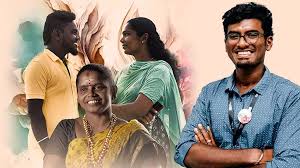
A Tamil documentary chronicling a mother’s support for her trans daughter’s pioneering marriage in Tamil Nadu has qualified as India’s sole trans-led Oscar contender. “Amma’s Pride”, a poignant 28-minute Tamil documentary short directed by transgender filmmaker Shiva Krish, has qualified as India’s only trans-led entry in the Documentary Short Subject category for the 98th Academy Awards. The film chronicles mother Valli’s unwavering support for her transgender daughter Srija, who pursued love and became part of Tamil Nadu’s first legally registered transgender marriage to Arun Kumar, facing societal stigma, school expulsions, and legal hurdles along the way. It secured eligibility after screening at the Academy-qualifying Woodland Hills event on 10 December 2025 in Los Angeles, following festival triumphs like Best Short Documentary at IDSFFK Kerala; Shiva Krish stresses that true allyship begins at home, Valli calls for parental acceptance of trans children, and the film has garnered over 60 global screenings plus 275,000 online views through campaigns like “Path to Pride”, marking a milestone for queer Indian cinema amid no official Academy statements yet. Valli’s Transformative Journey of Love and Advocacy At the heart of “Amma’s Pride” lies Valli’s profound evolution from initial shock upon learning of Srija’s transgender identity to becoming her fiercest protector and advocate. The documentary intimately documents their shared struggles over five years, including Srija’s expulsion from school due to discrimination, relentless community backlash, and the couple’s fight for legal marriage recognition in conservative Tamil Nadu society. Valli’s powerful on-camera reflection captures this shift: “Parents should support their trans children from the start. I will have the greatest satisfaction when loving and accepting them becomes the norm across families.” This raw testimony, woven with home videos and candid interviews, humanises the narrative, revealing not just pain but resilience and joy in Srija’s relationship with Arun. Shiva Krish, drawing from her own experiences as a trans woman and filmmaker, incorporates vital statistics to underscore the stakes: India’s 2011 census recorded over 4.8 lakh transgender individuals, yet trans-led stories from the country remain exceedingly rare, often overshadowed by mainstream narratives. The film’s unfiltered portrayal blending tears, laughter, and triumphs transforms statistics into lived realities, spotlighting how one family’s bond challenges deep-rooted prejudices and inspires viewers to reconsider acceptance. Trailblazing Path from Festivals to Oscar Spotlight “Amma’s Pride” embarked on its remarkable journey with a premiere in late 2024, quickly amassing international acclaim through over 60 screenings worldwide, from LGBTQIA+ film festivals and law schools to even remote locations like Antarctica via specialised groups. Key accolades include the Best Short Documentary at the International Documentary and Short Film Festival of Kerala (IDSFFK), the Jen Lynn Award at Hobnobben Festival, and the Sher Vancouver Award, propelling it toward Oscar contention. Qualification came through rigorous Academy standards, achieved via a theatrical run at the Woodland Hills venue a feat for any independent short, let alone a trans-led Indian production funded partly through crowdfunding despite early financial barriers. Post-qualification buzz has surged on social media, with Instagram campaigns like “For Your Consideration” and panels in New Delhi alongside organisations such as the Naz Foundation amplifying discussions on trans rights, marriage equality, and family dynamics. This entry builds on Shiva Krish’s prior work in social-issue storytelling, including features on marginalised communities, and positions India alongside global south voices gaining traction at the Oscars. It also follows in the footsteps of other Indian hopefuls in recent years, yet stands uniquely as a beacon for trans narratives, reshaping perceptions without diluting its intimate, community-rooted focus and reaching 275,000 online viewers through the “Path to Pride” initiative. Chhavi Chandani Courtesy : TLI Note: This news is originally published on https:/thelogicalindian.com/bha and is used purely for non-profit/non-commercial purposes, especially human rights
India’s First Transgender Football League Kicks Off in Kolkata, Empowering 200+ Players
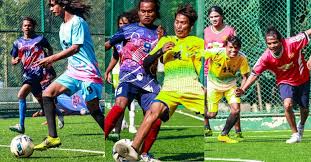
Kolkata’s groundbreaking eight-day tournament unites 16 teams of over 200 transgender athletes, fostering inclusion through football amid historic rights advocacy. India’s first Transgender Football League launched in Kolkata on December 20, drawing 200+ players from 16 teams in an eight-day tournament celebrating inclusion, skill, and visibility amid growing calls for transgender rights in sports. India’s inaugural Transgender Football League launched on December 20, 2025, in Kolkata, featuring 16 teams and over 200 transgender players competing for the Transgender Cup. Organised by the West Bengal Transgender Persons Welfare Board in partnership with the All India Football Federation (AIFF), the eight-day tournament at Vivekananda Yuba Bharati Krirangan celebrates inclusion and visibility. Players expressed unprecedented empowerment, with officials hailing it as a milestone for transgender rights; no major incidents reported as matches progress smoothly into semifinals. A Vibrant Launch with Record Participation The tournament erupted into life with colourful opening ceremonies at Kolkata’s iconic Vivekananda Yuba Bharati Krirangan, a 120,000-capacity stadium usually reserved for international matches. Over 200 transgender athletes from across India-spanning ages 18 to 45-fielded 16 teams, including powerhouses like the Kolkata Trans Warriors, Chennai Rainbow Strikers, Mumbai Pride FC, and Delhi United Queens. Matches unfold daily from 9am to 5pm, blending high-energy football with cultural performances featuring folk dances and rainbow flags. Vital statistics underscore the event’s scale: more than 5,000 spectators attended the opener, with live streams on AIFF’s YouTube channel reaching 50,000 views in the first 24 hours. Player Divya Maligi, a 28-year-old striker from Bengaluru who once faced rejection from local clubs, beamed, “We’ve never felt more seen-football gives us a platform to dream beyond discrimination. For the first time, we’re not sidelined; we’re stars.” Tournament director Rajat Mitra, a former AIFF official, elaborated, “This is about skill, not stereotypes. These athletes train rigorously, often juggling day jobs as tailors or performers. They’re role models proving transgender talent thrives when given a chance.” West Bengal Sports Minister Aroop Biswas officiated the kick-off, stating, “This league aligns with our vision of sports for all, fostering unity in diversity.” Empowerment Through Grassroots Training Beyond the pitches, the league humanises its participants through dedicated support systems. Since 2023, the West Bengal Transgender Persons Welfare Board has run free training camps in Kolkata, partnering with local coaches to build skills in dribbling, tactics, and fitness. Many players, like Chennai’s captain Priya Singh, credit these sessions for transforming lives: “I was homeless two years ago; now I lead my team. This isn’t just a game-it’s survival and hope.” The event offers cash prizes totalling ₹5 lakh, plus scholarships for top scorers to pursue coaching certifications, ensuring long-term impact. Health and welfare tents provide free medical check-ups, counselling, and hormone therapy consultations, addressing common challenges like access to gender-affirming care. No injuries or disruptions marred the first four days, with semifinals slated for December 26, building anticipation for the December 28 final. From Legal Milestones to Historic First This league emerges from decades of advocacy amid systemic barriers. The landmark 2014 NALSA judgment by the Supreme Court recognised transgender persons as a “third gender” with equal rights, yet sports bodies often lagged, citing eligibility concerns. Kerala pioneered with a transgender cricket league in 2023, but football-a national obsession-lacked a national platform until now. The 2019 Transgender Persons (Protection of Rights) Act further mandated equal opportunities, spurring state initiatives. Grassroots efforts intensified post-pandemic, with transgender welfare boards in states like Maharashtra and Tamil Nadu hosting trials that fed into this tournament. Organisers scouted talent via social media drives on Instagram and WhatsApp groups, drawing participants from remote areas like Manipur and Odisha. Globally, it echoes events like the U.S. Trans Football League, but India’s version stands out for government backing, signalling policy shifts under the National Sports Policy 2024 emphasising inclusivity. Syed Muskan Shafiq Courtesy : TLI Note: This news is originally published on https:/thelogicalindian.com/bha and is used purely for non-profit/non-commercial purposes, especially human rights
Ashwini Vaishnaw: Rahul Gandhi’s praise for Karnataka jobs affirms Make in India success
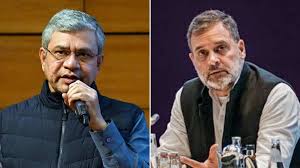
NEW DELHI: Rahul Gandhi’s praise for “transformative” job creation in Karnataka led I&B minister Ashwini Vaishnaw Wednesday to assert that it was an acknowledgement of the success of PM Narendra Modi’s ‘Make in India’ programme. He said on X, “Thanks Rahul Gandhi for acknowledging the success of PM Modi’s ‘Make in India’ programme. As you have noted, we are becoming a producer economy as we implement our PM’s vision.” In a recent social media post, the LoP in Lok Sabha had cited a news report to highlight the hiring of 30,000 staff in 8-9 months, the fastest factor ramp-up seen in India so far, by Foxconn in the Congress-ruled Karnataka. Rahul had said, “It is transformative job creation. What makes it even more powerful is that the unit is largely women-led, with around 80% women, most aged 19-24, and for many, this is their first job. Karnataka is setting an example by creating an ecosystem where manufacturing can grow at this scale and speed. This is India we must build: jobs with dignity, and opportunities for all.” Officials pointed out that it was during Covid that the Modi government, tapping into the widespread recognition to diversify supply chains, nudged Apple’s vendors, including Foxconn, to shift significant parts of their manufacturing operations from China. The nudge often resembled a covert operation as Beijing sought to block reshoring. At the time, it was a BJP government in Karnataka and Centre’s production linked incentives played a major role as it provided sops to mobile manufacturers. The government followed it up with incentives for electronic components. Since then Foxconn has bolstered its operations in the country with a large presence in Tamil Nadu and is also looking at facilities in UP. Courtesy : TOI Note: This news is originally published on https:/timesofindia.com/bha and is used purely for non-profit/non-commercial purposes, especially human rights
Such a punishment for a minor mistake! Dalit shopkeeper surrounded and brutally beaten, head crushed with feet

NS Parmar, Chhatarpur: A video has surfaced from Chhatarpur that is a disgrace to humanity. The incident is reported to have taken place on Jawahar Road in the City Kotwali police station area of the city, where a Dalit youth was subjected to extreme brutality over a trivial matter. The CCTV video clearly shows about half a dozen people surrounding a Dalit shopkeeper. A few seconds later, two of them start attacking him with kicks and punches. The young man is thrown to the ground and brutally beaten. The attackers’ cruelty doesn’t stop there in the video. They are seen pinning the young man to the ground and crushing his head with their feet. He is continuously attacked with kicks and slaps, leaving him severely injured. Bystanders stand by and watch, with no one intervening. The young man who was assaulted runs a mobile repair shop. According to initial information, the dispute arose over a minor mistake during mobile repair, which quickly escalated into a violent attack. The young man was punished with a life-threatening beating for a small technical error. Courtesy: Hindi News
Telangana: Human Rights Commission takes strict action in Dalit youth’s custodial death case, seeks report from Home Department
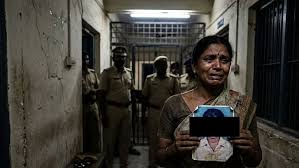
Allegations of ‘third-degree’ torture against Suryapet police: Human Rights Commission seeks detailed report from Home Department, next hearing on January 12. Hyderabad: The Telangana State Human Rights Commission (TGHRC) has taken serious note of the alleged death of a Dalit youth in police custody in Suryapet district. Taking a strong stance on the incident, the commission has ordered the state Home Department to submit a detailed report. What is the whole case? The deceased youth’s mother had filed a complaint with the Human Rights Commission alleging that her son was illegally detained and subjected to police torture. The commission took cognizance of these allegations and issued its order on Monday. According to the information presented before the commission, the youth was allegedly illegally detained by the Chilkur and Kodad rural police. The family alleges that the police subjected him to ‘third-degree’ torture, framed him in a false case, and did not even allow the family to meet him. Serious allegations by the family In her complaint, the victim’s mother stated that her son was kept in illegal police custody from November 4 to November 9. During this time, he was physically tortured and then sent to judicial custody (jail) on November 10 in a false criminal case. On the same day, the staff of Huzurnagar sub-jail called and informed her that her son was unwell. When she reached there, her son’s condition was extremely critical. Died in the hospital According to the complaint, due to his deteriorating condition, the youth was taken to the Suryapet District Government Hospital on November 14. From there, he was referred to a government hospital in Hyderabad for better treatment, where he succumbed to his injuries on November 16. Commission’s action and administration’s stance Considering the seriousness of the case and the violation of human rights, the Human Rights Commission has linked this case with previous complaints. The commission has directed the Principal Secretary (Home) to submit a detailed report on the entire incident. The next hearing in the case has been scheduled for January 12, 2026. On the other hand, Telangana Director General of Police (DGP) B. Shivadhar Reddy recently stated that the investigation into the matter is ongoing and appropriate action will be taken against the culprits. Rajan Chaudhary Courtesy: Hindi News
Dalit Daughters’ Achievements: Tina Dabi wins Rs 2 crore water award for Barmer, Deepna Netrapal makes history at CAG!
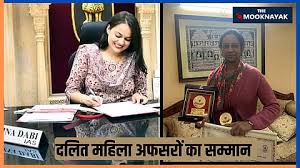
These achievements are not only personal victories but also send a strong message against caste and gender-based discrimination, where one officer is making the environment greener while the other is strengthening accounting and financial transparency. New Delhi – The outstanding performance of Dalit women officers in India’s administrative system is once again in the spotlight. Tina Dabi, an IAS officer from Rajasthan, has made history by securing the Water Conservation Public Participation Award (JSJB) for her district Barmer in the field of environmental protection, while Deepna Netrapal, a Senior IA&AS officer from Bengaluru, has won the National CAG Award for innovation in GST audit and training reforms. Deepna is the first Dalit woman officer to receive this award. These achievements are not only personal victories but also send a strong message against caste and gender-based discrimination, where one officer is making the environment greener while the other is strengthening accounting and financial transparency. The arid Barmer district of Rajasthan has won the first Water Conservation Public Participation Award for its outstanding performance in rainwater harvesting. The district will receive a prize of Rs 2 crore for this achievement. District Collector Tina Dabi said that President Draupadi Murmu will present this award at the 6th National Water Awards ceremony to be held at Vigyan Bhavan in New Delhi on November 18. Earlier, Tina Dabi has also been awarded for many of her commendable works. IAS Tina Dabi had created history by securing the first rank in the UPSC Civil Services Examination in 2015. At the age of 22, she became the first Dalit woman to achieve this feat on her first attempt. Tina has extensively promoted the construction of traditional ‘tankas’ (underground water tanks) in Barmer. Under the Central Ministry of Jal Shakti’s ‘Catch the Rain’ initiative, states were divided into five zones and given the target of establishing at least 10,000 artificial recharge and water storage structures. Barmer has surpassed this target and secured the top position in the northern region, where local water sources have been revived through thousands of tanks. This initiative by Dabi is not only addressing the water crisis but also empowering rural communities, proving to be a milestone in quenching the thirst of the desert region. On the other hand, Deepna Netrapal, Principal Director of the Regional Training Centre (RTC) and Regional Capacity Building and Knowledge Centre (RCB&KC) in Bengaluru, has been awarded the National CAG Award. This award was given to her for two major initiatives: innovation and excellence in public accounting and auditing in GST audits, and the transformation of the training setup in Bengaluru. The Comptroller and Auditor General of India launched the ‘CAG’s Award for Innovation and Excellence in Public Audit and Accounting’ scheme in 2021 to recognize and reward the exceptional and innovative work done by officers and staff of the Indian Audit and Accounts Department in the areas of public audit, accounting, entitlements, and ancillary functions. The CAG Award Scheme 2021 recognized distinctive team excellence, which fosters a meritocratic environment, and more importantly, nurtures overall qualitative improvement from an organizational perspective. With this objective, in addition to the existing scheme that rewards team efforts towards excellence and exceptional work, a new award category has been instituted in 2022 to reward the ‘Most Improved Office’. This award category seeks to recognize those offices working in the fields of accounting, auditing, and training that have demonstrated the maximum improvement in performance during the stipulated evaluation period. Geetha Sunil Pillai Courtesy: Hindi News
Why is Barmer Collector Tina Dabi being targeted? Bahujan society says: ‘Upper caste resentment against a Dalit topper, she’s not a reel star – she’s a role model!’

Society rallies in support of Tina Dabi on social media, sparking a new debate. Barmer – IAS Tina Dabi, the Collector of Barmer district in Rajasthan, is once again at the center of controversy. Last month, Tina Dabi proved that she is not only a UPSC topper but also a revolutionary warrior for water conservation, when Barmer received the national first prize under the ‘Jal Shakti Abhiyan: Catch the Rain’ from President Draupadi Murmu. But this time, police action during a protest against fee hikes by college students, where she was called a ‘reel star’, has landed her in controversy. The Bahujan society is calling it a clear casteist conspiracy – why are upper-caste forces targeting a Dalit woman topper? Tina, who became a national icon after securing AIR-1 in UPSC in 2015, is being described as a victim of ‘upper-caste resentment’. Bahujan thinkers believe that Dabi is targeted the most. The first reason is that she is a UPSC topper from a Scheduled Caste. The second is that she has many achievements to her name. The root of the controversy: ‘Reel star’ comment and police action The incident took place at Maharana Bhupal Government PG College. On Saturday, students protested outside the college against the increase in examination fees. They demanded to meet IAS Tina Dabi, who cleared the UPSC Civil Services Examination in her first attempt at the age of 22. The situation worsened when an officer described Dabi as a ‘role model’ for the students, which was opposed by students associated with the BJP-backed Akhil Bharatiya Vidyarthi Parishad (ABVP). They said, “The Collector is not a role model. If she were, she would have come to listen to the students’ demands. She is a reel star and is busy making reels, but she doesn’t pay attention to our problems.” Following this, the students were allegedly detained by the police. ABVP condemned the alleged arrest of the students in a tweet on X: “The arrest of the students is an attack on democratic values. When the police asked them to talk to IAS Tina Dabi after calling her a ‘reel star’, the ABVP students gave a clear answer.” The students claim they were detained after the protest ended. Following this, several students gathered outside the police station, demanding the release of the arrested students and an apology from the administration. Senior police officer Manoj Kumar told NDTV, “No one was detained or arrested. Four boys were brought to the police station to calm the situation and were later asked to leave. But the students gathered near the police station and insisted on an apology. A discussion took place when senior officers arrived.” Rajya Sabha MP Priyanka Chaturvedi criticized the incident, writing on social media, “Another day of intolerance from a bureaucrat in India. Despite corruption, power intoxication, and now intolerance, they get away without any serious scrutiny.” The controversy is rapidly spreading on social media. Tina Dabi completely denied the allegations: “There were no arrests or detentions. The fee hike issue had been resolved, yet the students were blocking the road and creating a disturbance. My subordinates took them to the police station, spoke to them, and released them after two hours. The ground issue is over, but it’s being kept alive on social media for defamation and cheap publicity.” Support from the Bahujan community: ‘This is a casteist conspiracy, we stand with Tina’ Bahujan thinkers are calling this an attack on Dalit excellence. Political scientist and Assistant Professor at Jadavpur University, Subhajit Naskar, tweeted: “Some UC liberals started targeting Dalit woman IAS Tina Dabi. A little investigation revealed – RSS student wing ABVP leaders were organized there! Hopefully, things are clear now.” In another tweet, Subhajit wrote: “Tina Dabi has faced the most vile casteist online abuse – despite being a topper. Even when Dalits are not appointed as Chief Secretaries or DGPs, she is proving her merit.” Anti-caste activist Prof. Rehana Ravindran called it an attack motivated by political self-interest. IRS officer Netrapal, supporting Tina in his post, wrote, “Targeting Tina Dabi in this manner… If you want, study and get Rank-1. If the roads are not good, file a complaint against the responsible engineers… The MLA should be held accountable. The local councilor, panchayat members should be held accountable. Suddenly, they target a collector just because she is a role model.” Swayam Sainik Dal tweeted: “The attempt to belittle Tina Dabi is a casteist conspiracy. Insecurity due to her brilliant success. We stand with Tina.” In another post, they said: “This controversy is a conspiracy to divert attention from illegal mining and the destruction of the Aravalli range. We will not let Tina become a victim of media trial.” Mayur Pawar wrote: “The casteist system is hell-bent on destroying Tina Dabi despite her good work. ABVP broke the campus, she took action, so a fake narrative. Stay strong Tina, we are with you.” A user, Happy Singh, targeted Anuradha Tiwari’s tweet: “This Brahmin woman is not only insulting top Dalit IAS Tina Dabi but also mocking reservation and Ambedkar’s ideology. A case should be filed under the SC/ST Act.” Author Lokesh Bag wrote, “IAS Tina Dabi is being targeted once again, and this is clearly a well-planned conspiracy. The fact that a woman from our community topped the UPSC exam with AIR-1 is still something many casteists cannot digest. As the Collector of Barmer district in Rajasthan, Tina Dabi led a major water conservation initiative, which earned the district the first ‘Jal Sanchay Jan Bhagidari Award’ from the President.” Rahul wrote: “‘Merit’ is only believed in until a Dalit tops the exam. Then it’s injustice? If you can’t defeat a ‘reserved’ student in the open merit category, then your superiority is itself reserved. Tina Dabi bothers them for this reason.” Bahujan thinker Gurudayal said: “Tina Dabi bothers you because a Dalit daughter has reached great heights. Your Brahminical superiority complex is being shattered. Reservation is an account of centuries of slavery.” Just a month
No Rahul Gandhi meeting for DK Shivakumar in New Delhi
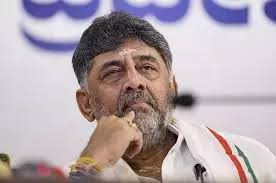
Bengaluru/Delhi: The much-anticipated visit of deputy chief minister and Congress state president DK Shivakumar to New Delhi on Tuesday failed to trigger any political movement, as he could not meet Rahul Gandhi, who is on a five-day trip to Germany to attend various events. Shivakumar’s visit had generated political interest amid speculation over a possible CM change in Karnataka, with expectations that he would meet Rahul. The developments had drawn the attention of both his and chief minister Siddaramaiah’s supporters. Speaking to reporters in the national capital, Shivakumar downplayed the purpose of his Delhi visit, saying it was limited to meetings with Union ministers on state-related issues. “I have not come for any politics here; I have come just to meet Union ministers regarding our state, for irrigation and urban development. I don’t want to comment on other political issues that are not on the cards now,” he said. The visit comes amid renewed speculation about a rotational chief ministership in Karnataka, with talk of a 2.5-year power-sharing arrangement resurfacing as the Congress govt crossed the halfway mark of its term on Nov 20. Meanwhile, Shivakumar also criticised the Viksit Bharat Guarantee for Rozgar and Ajeevika Mission (Gramin) Act, claiming that the revised funding pattern would make the scheme unworkable for states. “This is the beginning of the end. By changing Mahatma Gandhi’s name, they wanted to kill the programme (MNREGA). Which state govt will give 40% funding? No state, including BJP-ruled states, can do this. This scheme will fail… 40% is impossible for any state to provide,” he said. Approve Metro Phase III, DKS asks Centre Shivakumar urged the Centre to grant clearance for Phase III of Bengaluru Metro, connecting Hebbal and Sarjapur, and to approve the Regional Rapid Transit System (RRTS) linking Bengaluru with neighbouring states. He met the Union minister for housing and urban affairs, Manohar Lal Khattar, and submitted a requisition seeking approvals for key mass transit projects. The proposed Hebbal-Sarjapur Metro corridor will span 36.6km with 28 stations. The govt has also sought central approval for the revised completion cost of Metro Phase II. The cost of the 75km project — of which 21km is yet to be operational — escalated from Rs 26,405 crore to Rs 40,425 crore. The revised cost was approved by the state in June, citing delays, land acquisition issues, and design changes. Courtesy : TOI Note: This news is originally published on https:/timesofindia.com/bha and is used purely for non-profit/non-commercial purposes, especially human rights