
DH Changemakers 2026 | How a transgender woman is empowering her community through livestock farming
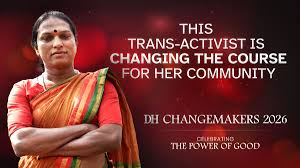
Arundathi, a transgender woman from Karnataka, is creating new opportunities for her community through livestock farming, skills training and legal support. From her small farm near Bharamasagara in Chitradurga, she helps transgender and other marginalised people raise goats and chickens so they can move away from begging and sex work and build steady, dignified livelihoods. Her simple pay-it-forward idea means that once someone becomes self-reliant, they pass on animals to another person in need, slowly spreading opportunity across districts. Along with livelihood support, Arundathi also helps people get Aadhaar cards, voter IDs and access to government schemes, making sure they are seen, recognised and included. Courtesy : DH Note: This news is originally published on https:/deccanherald.com/bha and is used purely for non-profit/non-commercial purposes, especially human rights
Odisha launches Sweekruti scheme for transgenders welfare and empowerment
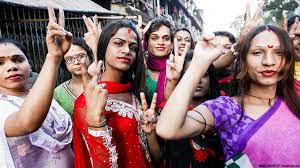
New state initiative provides financial aid, scholarships, skill training, legal support and housing to transgender persons and their families, aiming at social inclusion and dignity BHUBANESWAR: The Odisha government has launched a comprehensive welfare scheme for ensuring social inclusion, dignity and empowerment of transgender persons by addressing long-standing gaps in education, employment, healthcare, housing and legal support. Sources said the scheme Sweekruti, being implemented by the Social Security and Empowerment of Persons with Disabilities (SSEPD) department, has been designed to provide a structured, rights-based framework for the welfare of the transgender community and their families. Odisha, with a total transgender population of around 20,300 (as per the last census), is the first state to give transgender people social welfare benefits aimed at improving their overall socio-economic status. The scheme focuses on a set of key strategies that include financial assistance to parents of transgender children, pre and post-matric scholarships for transgender students, skill upgradation and entrepreneurship development training, strengthening of self-help groups, support for critical healthcare and group insurance, provision of legal aid and counselling. According to a resolution issued by the department, a key feature of the scheme is monthly financial assistance of Rs 1,500 to parents or guardians of transgender children to help them raise their children amid social stigma, discrimination and violence. This support will be provided until the child attains 18 years of age. In order to support education, eligible transgender students from families with an annual income not exceeding Rs 2.4 lakh will receive monthly scholarships ranging from `1,000 to `5,000, depending on the course pursued. Many transgenders are often denied entry into boys’ or girls’ hostels and refused rental housing, forcing them to drop out of education or employment, particularly when they migrate to cities such as Bhubaneswar, Cuttack, Rourkela, Berhampur, Balasore and Sambalpur. Secretary of the department RS Gopalan said Sweekruti will support the setting up of dedicated hostels for transgender persons by colleges, universities, urban local bodies and organisations working with the community. Transgenders will receive a stipend of Rs 3,000 per month for the duration of their studies. “The scheme will help districts set up rehabilitation centres to provide abandoned transgender persons, aged above 18 years and below 60 years, with shelter, basic amenities and capacity-building/skill development training,” he said. Hemant Kumar Rout Courtesy : TNIE Note: This news is originally published on https:/thenewindianexpress.com/bha and is used purely for non-profit/non-commercial purposes, especially human rights
Transgender community takes out procession in Secunderabad: Shri Khatu Shyam Nishan Kalash Yatra organized, people gathered to watch the procession
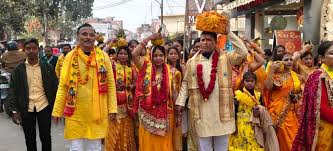
On Thursday afternoon, the Shri Khatu Shyam Nishan Kalash procession was taken out by the transgender community in Secunderabad town. The procession started from the ancient Baldev Temple on GT Road in the town and was led by the prominent Guru Rani Kinnar. Transgenders, dressed in colorful traditional attire, paraded through the town to the beat of drums and other musical instruments. The procession passed through Vijay Dwar, Bada Kabadi Bazaar, and Hanuman Chowk before concluding at the Shiva Temple in Ramwada. Along the route, townspeople showered flowers on the procession. A large number of people gathered to watch the procession. The police administration maintained security arrangements during this time. On this occasion, Guru Rani Kinnar said that this tradition is a symbol of the cultural identity of the transgender community and conveys a message of love and brotherhood in society. She also informed that a night-long vigil (Jagran) would be organized at the Shiva Temple to mark the New Year. Hemant Kumar, Secunderabad Courtesy: Hindi News
‘Mamata Banerjee threatened India’s Home Minister Amit Shah’: BJP’s big accusation
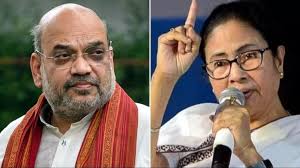
The BJP has accused West Bengal Chief Minister Mamata Banerjee of threatening Union Home Minister Amit Shah. The BJP said that if Mamata thinks she can stop the country’s Home Minister, then she is trying to stop India itself. New Delhi: The BJP has leveled very serious allegations against West Bengal Chief Minister and TMC chief Mamata Banerjee. The party claims that Mamata Banerjee openly used threatening language against Union Home Minister Amit Shah and said that if she wanted, Shah would not be able to step out of his hotel in Kolkata. The BJP alleges that this is not the first time this has happened. The TMC has displayed this kind of dictatorial behavior before. The party claims that democracy is under attack in Bengal and Mamata Banerjee has ruined it. ‘Mamata Banerjee threatened the Home Minister’ BJP MP from Puri, Odisha, and party’s national spokesperson Sambit Patra on Wednesday strongly criticized the West Bengal Chief Minister for allegedly using threatening language against Union Home Minister Amit Shah. Patra alleged that “the way Mamata Banerjee addressed Amit Shah with threatening words… Mamata Banerjee used such words of threat against the Home Minister of India, which are unthinkable.” ‘Said – If we wanted, we wouldn’t let him leave the hotel’ According to the BJP spokesperson, ‘Mamata Banerjee said that you are hiding in the hotel, if we don’t want you to, you cannot take a single step outside the hotel; and you are lucky that we allowed you to leave the hotel… If we wanted, we wouldn’t have let you leave the hotel.’ These are the words of Mamata Banerjee, the Chief Minister of West Bengal, a large state in the country, directed at her own country’s Home Minister, Amit Shah. In fact, on Tuesday, Amit Shah had targeted the TMC government over the issue of infiltrators during a press conference in Kolkata, after which Mamata retaliated against him at a public meeting. ‘TMC killed 300 BJP workers’ The BJP alleges that this is not the first time. Before the last elections, the convoy of BJP National President JP Nadda was also attacked by infiltrators. They have also alleged that TMC goons in West Bengal have killed around 300 BJP workers. Some were hanged, while others were brutally murdered. Meanwhile, 3,000 people who fled their homes are still unable to return. ‘Mamata Banerjee, you are threatening India’ The BJP says that this is the same Bengal about which it was once said, “What Bengal thinks today, India thinks tomorrow.” But Mamata Banerjee and the TMC have brought the state to this condition because of the infiltrators. They said, “Mamata Banerjee’s politics of appeasement has ruined Bengal. And the threat you are giving to the Home Minister, Mamata ji, is not just a threat to the Home Minister, it is a threat to every Indian. If you think that in Bengal you can challenge the country’s Home Minister, you can stop the Home Minister of India, you can prevent him from even stepping out on the road, then you are threatening India.” Written by: Anjan Kumar About the Author Anjan Kumar is an Assistant Editor at Navbharat Times Online. He has over 23 years of experience in electronic and digital media. He is interested in writing on topics related to politics, current affairs, judiciary, defense, foreign affairs, and business. Courtesy: Hindi News
Dalit organisations demand capital punishment to guilty in honor killing
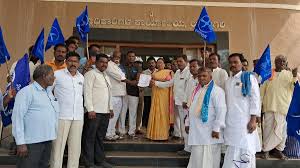
Submitting a memorandum addressed to CM Siddaramaiah, the organisations described the incident as not only an attack on an individual but also an effort to destroy humanity in the name of honor based on caste discrimination. Members of Dalit organisations submitting a memorandum demandng capital punishment for the accused in the Inam Veerapur honour killing case in Yadgir on Tuesday. Members of Dalit organisations submitting a memorandum demandng capital punishment for the accused in the Inam Veerapur honour killing case in Yadgir on Tuesday. | Photo Credit: SPECIAL ARRANGEMENT Karnataka State Dalit Sangharsh Samiti, Karnataka State Dalit Student Union, and the Karnataka State Dalit Women’s Union (Revolutionary) State Committee has strongly condemned the honor killing of a pregnant woman in Inam Veerapur village in Hubballi taluk and demanded that capital punishment be given to the accused involved in the barbaric incident. Submitting a memorandum addressed to Chief Minister Siddaramaiah through the district administration in Yadgir on Tuesday (December 30, 2025), the organisations described the incident that occurred as not only an attack on an individual but also an effort to destroy humanity in the name of honor based on caste discrimination. Deaths most dishonourable “The accused persons named as Prakash Gowda Patil, Preetam Gowda Patil, Arun Gowda Patil, Eerappa, and Mudakappa, who were responsible for this murder, should be sentenced to death. And the remaining accused should be arrested immediately,” Mallikarjun Kranthi, State Organizing Conveyor of Karnataka Rajya Dalit Sangharsh Samiti (Krantikari), who led the demonstrators, has said. “Killing a woman for marrying a Dalit man in the name of honor is an inhuman act and an attempt to disobey the principles of Basaveshwar. The state government should announce ₹50 lakh compensation to Vivekanand and also provide a government job and 4 acres of land,” Mr. Kranti urged the state government. “The government should curb honor killings by imposing the death penalty on the accused, and the remaining accused should be arrested immediately,” Mr. Kranthi added. The Hindu Bureau Courtesy : The Hindu Note: This news is originally published on https:/thehindu.com/bha and is used purely for non-profit/non-commercial purposes, especially human rights
Best of South First videos 2025: From caste discrimination to federalism

Over the past year, the South First team helped people make their voices heard, capturing their emotions vividly. In modern journalism, video stories can convey what text often fails to capture — the emotions behind the voices. Over the past year, the South First team helped people make their voices heard, capturing their emotions vividly. Here are some of South First’s best video stories from 2025. How is caste practised in Christianity? Many people think that caste discrimination exists only among Hindus. But in reality, it also exists among Christians—and sometimes it’s even harsher. Aleena, who is a writer and a Dalit Christian, talks about the discrimination that Dalit Christians face, especially from other Christians who come from privileged backgrounds. This conversation is about the political aspects of this issue, the fight for reservation for Dalit Christians, and the attacks they face from right-wing groups in India. Bengaluru pothole crisis The Karnataka government had set a deadline of 31 October to make Bengaluru pothole-free. However, the city’s roads tell a different story. From Kengeri and JP Nagar to Whitefield, Yelahanka, and Anekal, potholes continue to trouble commuters despite ongoing repair works. Citizens and activists say that little has changed on the ground, pointing to poor-quality materials and unscientific repair methods as key reasons why Bengaluru’s pothole problem refuses to go away Kerala Speaker on democracy, federalism, and the literary power of KLIBF In a conversation with South First, Kerala Legislative Assembly Speaker AN Shamseer elaborates on the vision behind KLIBF, its remarkable growth, and its impact on the literary world, positioning it as a platform for resistance in the age of misinformation. The Speaker also offers insightful takes on the pressing issues of federalism, the controversial “One Nation, One Election” proposal, and the challenges of maintaining impartiality in a politically charged atmosphere. His reflections underscore the importance of strengthening constitutional literacy and engaging the younger generation in the democratic process. In this candid interview, the Speaker also emphasises the Assembly’s commitment to a paperless future. Caste, power and the price of asking for temple rights In Vadakadu village in Pudukkottai district of Tamil Nadu, a temple festival erupted into large-scale caste violence, leaving dozens of Dalit homes damaged. Members of the dominant Mutharaiyar community allegedly launched a violent attack on the Scheduled Caste area after a long-standing dispute over temple rights escalated. Eyewitnesses recount chilling scenes of mob violence, police inaction, and systemic bias. This ground report reveals the human toll of caste hatred and political apathy. Kerala freezes PM SHRI scheme amid Left alliance rift In a dramatic political twist, Chief Minister Pinarayi Vijayan has announced that Kerala will freeze the implementation of the PM SHRI scheme — for now. A seven-member Cabinet subcommittee led by Education Minister V Sivankutty, with CPI ministers K Rajan and P Prasad among its members, will study the matter and submit a report. The move signals more than just a policy rethink — it marks a clear ideological victory for the CPI within the ruling Left alliance. While the CPI(M) emphasised practicality, the CPI stood firm on principle, declaring that “if the Centre won’t fund education, the people will.” But the controversy is far from over. Several questions remain. As Kerala politics holds its breath, the battle between funds and ideology continues. Two lakh Tamil Nadu hill tribe members’ voting rights in danger Across the hill regions of Tamil Nadu, thousands of tribal voters are facing the danger of losing their voting rights due to documentation hurdles, lack of mobile connectivity, migration for work, and insufficient time for verification. In areas with hundreds of eligible voters, dozens remain unregistered or have had their forms rejected, even though many voted in previous elections. Several hill communities still lack basic facilities such as mobile phone towers, forcing residents to walk kilometres just to access information. If tribal voters lose their voting rights, they will also lose the right to contest in local body, block and district-level elections under the ST quota. The Tamil Nadu Tribal Association has urged authorities to extend the deadline and conduct door-to-door verification to ensure no eligible voter is excluded. Courtesy : TSF Note: This news is originally published on https:/thesouthfirst.com/bha and is used purely for non-profit/non-commercial purposes, especially human rights
Dotasra slams BJP over Rahul Gandhi’s marriage, asks if commenting on private life is part of RSS’s values?
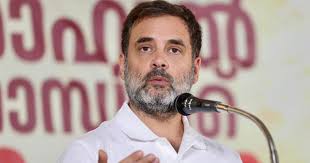
PCC Chief Govind Singh Dotasra has termed Minister Sumit Godara’s statement on Rahul Gandhi’s marriage as ‘low-minded thinking’. He said that the government, which has failed in the name of development, is only making personal comments. Dotasra criticized the government, stating that even the DPR for Yamuna water in the state has not been prepared, and more than 500 schools are in a dilapidated condition. Sikar: Rajasthan Pradesh Congress President Govind Singh Dotasra launched a scathing attack on the state’s Bhajanlal government and Minister Sumit Godara. Retaliating against the statement made regarding Rahul Gandhi’s engagement, Dotasra said that the kind of language used by the government ministers reflects their thinking and values. Questions raised about RSS’s teachings Dotasra asked whether such things are taught in the RSS’s schools. Who will get married and who will not? Who gave you the right to pry into someone’s private life? What kind of language is Minister Sumit Godara using? Are these his values? He questioned Minister Godara’s statement, asking who gave him the right to comment on someone’s private life. Dotasra alleged that the government has no vision for development, which is why such baseless statements are being made. Actually, the previous day, during a public hearing in Jaipur, Minister Sumit Godara, while talking to the media, had said that it is a good thing that Priyanka Gandhi’s son Rehan Vadra Gandhi is getting engaged, but if Rahul Gandhi also gets married, then he too will start behaving properly. DPRs for many schemes have not even been prepared till date Speaking to the media, Dotasra said that the condition of the budget announcements is such that even 10 to 15 percent of the work has not been implemented on the ground. DPRs for many schemes have not even been prepared till date. Regarding the agreements made by the government to bring Yamuna water to Sikar-Jhunjhunu in Shekhawati and the speeches given from time to time by Chief Minister Bhajanlal Sharma and all the ministers of the government, Dotasra said that bringing the water is a long way off; even the Detailed Project Report (DPR) for this scheme has not been prepared yet. More than 500 school buildings in the state are in dilapidated condition Raising questions about the education system, he said that the government is talking about AI-based education, while more than 500 school buildings in the state are in dilapidated condition and there are about 200 schools where there is not even proper seating arrangement. Thousands of schools need immediate repairs The State Congress President said that thousands of schools need immediate repairs. Referring to the Jhalawar accident, Dotasra said that the survey revealed that about Rs 16,000 crore is needed for the repair of school buildings, but even after more than a year, new buildings have not been constructed there. In many places, children are still forced to study sitting under trees. How will AI come without English, the government should explain Questioning the education policy, Dotasra said that on one hand, the government talks about stopping English education and on the other hand, it is claiming to provide AI model education. The government should explain how AI will come without English. He said that basic facilities should be strengthened first, and only then should such big claims be made. Authored by: Pulkit Saxena • Contributed by: Amit Bhardwaj About the author Pulkit Saxena is a Digital Content Producer at Navbharat Times Online. Starting his journalism career in Delhi, he now covers Rajasthan politics, crime, current affairs, and offbeat news. He has been working in the media for about 7 years. Courtesy: Hindi News
Dalits protest against Hubballi honour killing
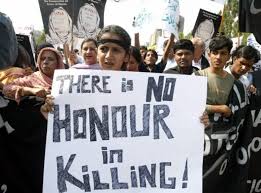
Members of Karnataka Rajya Chalavadi Mahasabha and other organisations took to the streets in Hubballi on Monday against the recent honour killing in Inam Veerapur village in Dharwad district in which a pregnant woman passed away. Protestors condemned the murder of the pregnant woman by her family members who were upset that she married a Dalit. They demanded death penalty for the accused. They walked from Ambedkar Circle to the Tahsildar’s office to express their protest. They said that attacks against Dalits and cases of families killing their women who marry Dalits are increasing and demanded steps to stop such acts. They also demanded compensation to the families of victims. It is unfortunate that in the land of Basavanna, Dalits are not able to live peacefully. Mahasabha president Parameshwar Kale and others were present. The Hindu Bureau Courtesy : The Hindu Note: This news is originally published on https:/thehindu.com/bha and is used purely for non-profit/non-commercial purposes, especially human rights
G Ram G ‘anti-dalit’, restore MGNREGA: Punjab assembly passes resolution
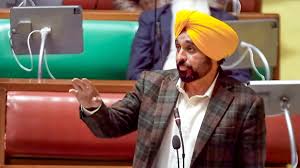
Chandigarh: Punjab vidhan sabha on Tuesday “unanimously” passed a resolution accusing the BJP-led Centre of taking away the livelihood of dalit labourers and poor families by “scrapping” MGNREGA and replacing it with the VB-G RAM G Act. Dubbing the new Act “anti-Dalit”, and a “deliberate and dangerous conspiracy” that has effectively taken away the right to survival of Dalit labourers across the country, the House demanded that it be immediately withdrawn, and MGNREGA restored to its original rights-based form. The resolution also took sharp aim at Shiromani Akali Dal, accusing the party of maintaining “silence” on the issue. “This silence is because they hope to re-establish their alliance with the BJP in 2027, even if the dalits have to pay the price for it. Keeping silent on the verdicts against dalits is also a crime,” it said. The resolution further alleged that the Centre moved beyond merely dismantling a “govt scheme” to effectively destroying the “right to survival” for the country’s dalit labourers. According to the resolution, the BJP’s decisions repeatedly prove a desire to marginalise them and reflect a sentiment that “BJP hates Dalits”. The resolution said, “Attacking MGNREGA is actually an attack on the dignity and existence of Dalits.” Through the resolution, the House noted that the “abolition” of the programme—which previously allowed labourers to stay in their villages, educate their children, and live with dignity—is a direct attack on the “dignity and existence” of the community. According to the text, the “scrapping” of the scheme “extinguished the kitchen stoves” of families. The resolution, moved by the rural development and panchayats minister Tarunpreet Singh Sond, said, “A govt that extinguishes the kitchen stoves of the dalit forfeits its moral right to seek votes from the community. This House clearly states that the policies of the BJP-led Centre are anti-Dalit.” It stated that the decision to “abolish MGNREGA” is not merely an administrative choice but a “declaration of thought from an anti-dalit perspective”. “MNREGA was the last means of survival for millions of dalits and poor dalit families in the country. It was the system that allowed dalit labourers to stay in their villages, earn their livelihood through hard work, send their children to school, and live with dignity,” the resolution said. “This House therefore recommends that the state govt demand from the BJP-led Centre govt to immediately withdraw the decision to scrap MNREGA, that MNREGA be fully restored to its original right-based form, and ensure guaranteed work and wages for Dalit labourers and poor Dalit families across the country,” it said. The resolution concluded by reaffirming that the Punjab vidhan sabha stands firmly with labourers and demands that the “abolition” of these rights be reversed to protect the “original right-based form” of the employment guarantee. ‘Extra burden on states’ Concerns were raised over the shift in financial responsibility from a fully centrally sponsored model to a 60:40 Centre-state sharing model under the new Act. It was pointed out that the change will impose an additional financial burden on states like Punjab that are already facing financial difficulties. Furthermore, if central budget limits are reached, the state must bear the entire responsibility for unemployment allowances and 100% of the costs for work provided beyond the federal allocation. A Congress MLAs alleged that there was an attempt to scrap the scheme, as the states will not be able to bear the exorbitant financial burden. The opposition party also offered support to the AAP govt to take its fight against the scheme to Delhi. Courtesy : TOI Note: This news is originally published on https:/timesofindia.com/bha and is used purely for non-profit/non-commercial purposes, especially human rights
The Constitution’s emancipatory promises on caste remain elusive
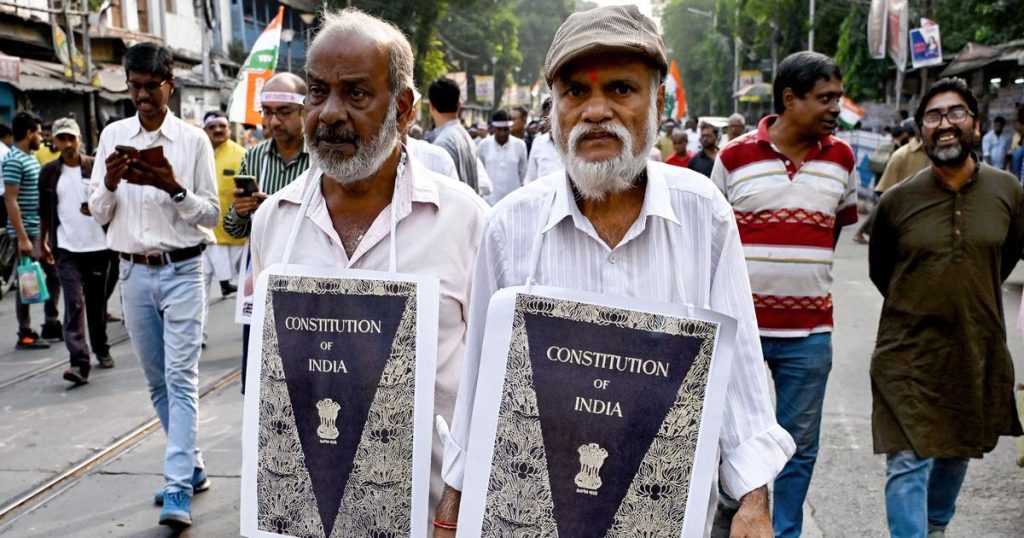
Constructively criticising the Constitution is imperative at a time when its survival is threatened by the Hindutva project. For a series of 11 short treatises by leading scholars on the ideas of free India’s Constitution, we thought it fitting to invite India’s highly regarded scholar Anand Teltumbde – also one who recently served time as a prisoner of conscience – to write the closing book in the series. In this chain of books (that I am editing with Neera Chandoke for Speaking Tiger), we have looked at how the Constitution was imagined, debated and written; its understanding of secularism, socialism and democracy; and its foundational pledges of justice, liberty, equality, fraternity, federalism and the scientific temper. We requested Teltumbde to reflect on what the Constitution has meant for India’s most dispossessed peoples, and how much it has contributed to helping access their rights to a life of dignity and hope. His conclusions are sobering, scathing and unsparing. Teltumbde sees an immense gap between the vision laid out in the Preamble and the realities of India’s present. “Liberty is under attack. Economic inequality is worse now than it was even under colonial rule. Fraternity has been shredded by rising communal hatred and growing caste consciousness under the revivalist Hindutva movement. Justice – social, economic, and political – remains elusive. The very foundation of our democracy feels dangerously fragile”. Teltumbde argues that we should not be constrained from constructively critiquing the Constitution because at this moment its very survival is gravely threatened by the Hindutva project of dismantling and rewriting the constitution to establish a Hindu Rashtra. With BR Ambedkar, he is convinced that a Hindu Rashtra would be the greatest calamity for India. Unlike the critique of the Constitution of the reactionary far-right, he affirms the emancipatory promise of the Preamble – liberty, equality, fraternity, and justice. Yet, he sees these as values the Constitution pledged but has failed to deliver. “Yes”, he says boldly, “the Constitution is flawed…but dismantling it without first building a genuinely democratic and pro-people alternative would be to destroy the last remaining legal and moral structure within which the struggle for justice can still be waged”. The gravest betrayals of the Constitution are arguably of Dalits His treatise focuses specifically on Dalits, who have for millennia been oppressed by structures of caste, and barred from education and dignified work. But they apply more generally to all oppressed and marginalised communities who constitute the Indian republic. Teltumbde observes that on the one hand, perhaps Dalits feel the greatest emotional connection among all Indians to the Constitution. This is because its writing was led by Dr Babasaheb Ambedkar who they venerate for leading the struggles for their liberation from the centuries-old bondages of caste. Yet, he believes that the Constitution has failed resoundingly in fulfilling its emancipatory promise for Dalits, arguably more than for any other community. It has contributed to the rise of a small Dalit middle-class. But this small class shares with the large mass of Dalits only “a history but not a present”. The overwhelming majority of Dalits continue to endure the caste stigma and oppression that has been their fate for millennia, living in “a vast, submerged reality of suffering and despair”. Dalits, he points out, form a quarter of India’s population, if we include Dalit Christians and Dalit Muslims. Their population, exceeding 320 million, would make them the third-largest “nation” in the world, larger than the combined population of 150 of the least populous countries on the planet. However, their wide dispersal across the country has meant that – like Muslims – they rarely form a numerical majority. Teltumbde rejects the premise of some Hindutva intellectuals that the British rule created caste. But, he avers that colonial rule fundamentally transformed caste. Before the British, caste was a dynamic, localised system. The British began counting and documenting caste. This, quoting Arjun Appadurai, didn’t just describe caste – it produced it as a rigid, bureaucratised, institutionalised hierarchy, solidifying boundaries that were previously contextual and fluid. This colonial approach, Teltumbde states, continues to reverberate in India’s social and political life. He also observes that paradoxically, colonial rule also opened some emancipatory pathways for Dalits outside the rigid caste structures of Hindu kingdoms. They found non-caste employment for the first time in the military and railways, and were able to access education and stable employment. Babasaheb himself was the son of a British military soldier. Teltumbde importantly reminds us that until Mohandas Gandhi, the Indian National Congress – dominated as it was by English-educated elites, landlords, and emerging capitalists – tended to steer clear of calling for reforms in caste, untouchability and the status of women. It later made space for moderate reforms such as widow remarriage, child marriage, and even the abolition of untouchability, but never the annihilation of caste. It was Gandhi who brought fighting untouchability into the core of the Congress agenda from 1916 onward. Particularly impactful was his movement for Dalit temple entry. The limitation of Gandhi’s approach was that while he and the Congress looked at untouchability as a moral question and a social sin to be atoned for by caste Hindus, they did not frame it as a systemic injustice that required political solutions. This conflicted with Ambedkar’s demands for separate electorates. Gandhi went on a fast unto death against separate electorates because he feared this would break Hindu unity and also encourage the Muslim League to make a similar demand. The compromise in the Poona Pact of 1932 was for reserved seats for Dalits within the general electorate rather than separate electorates. Ambedkar was dissatisfied with this because he was convinced that Dalits formed a separate community from caste Hindus like the Muslims, and therefore only separate electorates would protect their political and social interests. Gandhi followed this with a temple entry movement which incensed the conservative Hindu, but this still was not a movement for political empowerment of the Dalits. The Constitution abolished untouchability but not caste Teltumbde