
Congress wants to remove Rahul Gandhi from leadership team: Fadnavis
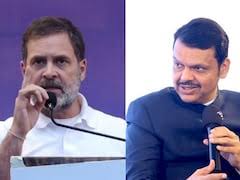
Nagpur: Chief minister Devendra Fadnavis on Sunday claimed there is a growing movement within the Congress party to remove Rahul Gandhi from the leadership team. Replying to a query from reporters about Gandhi’s recent statements that his fight is against the BJP-RSS ideology, Fadnavis said these were mere attempts to change the narrative. Fadnavis was speaking on the sidelines of a public event in Nagpur. “Rahul Gandhi’s fight is merely a superficial one. His struggle is only about how to shield himself from the continuous electoral defeats he has been facing. Within the Congress party, there is a growing sentiment that Gandhi is unable to lead them to victory, so he should be removed. Gandhi’s recent statements are being made to divert attention from that atmosphere,” Fadnavis said. Former state cabinet minister and senior Congress leader Vijay Wadettiwar refuted the allegations saying it’s a figment of Fadnavis’ imagination. Wadettiwar said, “BJP can say anything they want to, but even they know there is no truth in it. If Rahul ji started giving hate speeches, dividing people on basis of religion and caste, then Congress would have a 100% electoral strike rate. If Congress started stealing votes, deleting names through Special Intensive Review (SIR) then we would have won every election. But Rahul ji is fighting as per rules set by the Constitution and that is why BJP is afraid of him.” Regarding Gandhi’s leadership and Fadnavis’ allegation, Wadettiwar said, “From the rank and file to top echelons in the party, everybody stands behind Rahul ji. He is steering the party by staying true to the core ideology of Congress which is to take everyone along and not discriminate among one’s own citizens.” Fadnavis on Sunday denied rumours of a home department meeting discussing withdrawal of cases registered during the Maratha agitation. “No such meeting has taken place. Cases involving loss of govt property cannot be withdrawn — these are explicit directions of the Supreme Court. All other cases, we are withdrawing,” Fadnavis said. He added that he had already provided case withdrawal figures to the legislature. Courtesy : TOI Note: This news is originally published on https:/timesofindia.com/bha and is used purely for non-profit/non-commercial purposes, especially human rights
Telangana Dalit professor branded as ‘urban naxal’ by propaganda machine

The ‘Save Education Committee,’ which is a forum of eminent academicians, has demanded an end to harassment of Professor Surepalli Sujatha, HOD, Sociology in Satavahana University Hyderabad: Brand a person as an urban naxal, spread the propaganda and socially isolate the person, only to finally take a hit when the person is in a vulnerable position. This seems to be the strategy being adopted by the ideological opponents of a Dalit professor and activist, who was stripped of her position as the principal of the Arts College in Satavahana University in Telangana’s Karimnagar. Professor Surepalli Sujatha has been a prominent face in the people’s movements in Telangana for over a decade and a half now. She has been known for her activism and social work for the cause of the downtrodden sections. A sociology professor, she grew up in academia at a time when universities were gasping for freedom on campuses. Today, her freedom is being curtailed in a changing political scenario where people like her are being branded as ‘urban naxals,’ a term which is an off-dictionary term that stands in contradiction to the traditional naxalite movements in India. Her brush with the propaganda brigade happened at a time when the Centre had been going all-out to eliminate Maoists from the face of India. It came in the form of a contract professor at Satahavana University in Karimnagar, where she has been working as the Head of the Sociology Department. Sujatha tells Siasat.com that it all started with her filing a complaint against Dr Penchala Srinivas, a former contract professor in Botany, for calling the female students in the middle of the night in 2019. She says that a disciplinary inquiry was conducted, and he was removed from service back then. She remembers that when she once took her students on a study tour to Bhadradri-Kothagudem district, propaganda spread that she introduced them to Maoist leaders, a rumour she vehemently rejects. MS Admissions Admissions 2026-27 “This allegation was thoroughly investigated by both the police authorities (under Sri Kamal Hasan Reddy) and the university, and was found to be completely untrue,” she claims. She accuses the contract professor of being the man behind the rumours, also pointing out that he is an ardent right-wing person who belongs to the Munnuru Kapu community and supports Union Minister of State for Home Affairs Bandi Sanjay’s Hindutva ideology. Bandi Sanjay represents the Karimnagar Lok Sabha constituency. She tells Siasat.com that ever since the study tour incident in 2019, she has been targeted frequently, with a section constantly hounding her on social media and on the campus- looking for her to make just one mistake. Call for peace became a headache for Dalit professor That perception changed following her Facebook post during Operation Sindoor in May 2025. In it, she suggested that war has never been a solution and that peace must prevail. However, her use of the word “blood” in reference to “sindoor” drew sharp backlash on social media, with many users attacking her over the remark. Subsequently, a group of Akhil Bharatiya Vidyarthi Parishad (ABVP) members, along with some outsiders, barged onto the campus, hurled abuses at her and attempted to assault her. She narrowly escaped. She later issued an apology, stating that she regretted if her comments had hurt anyone’s sentiments, while maintaining her stand that peace should take precedence over war. She has kept a low profile since. Not just her, her student Mahesh, also a Dalit, is also a target. He completed his Master’s in Sociology and is pursuing a Master’s in Economics at the university. His association with the now-banned Telangana Vidyarthi Vedika (TVV) student organisation was seen as the cause of the target. When she lost her role as the principal, she was informed that it was because her term had ended. However, the propaganda machine continued to work tirelessly. It has been so rigorous that the newly appointed vice-chancellor Professor Umesh Kumar is also under its influence. “The contract faculty who was removed was reinstated as a part-time faculty member by the new vice-chancellor. He continued his propaganda,” she tells Siasat.com. She claims that she is constantly monitored through CCTV cameras on the campus, and if a student speaks to her, the student faces consequences. She also filed a complaint with the local police and the National Commission for Scheduled Castes (NCSC) earlier this month. She has been waiting for some action. Academicians demand Dalit professor be reinstated The ‘Save Education Committee,’ which is a forum of eminent academicians, has demanded an end to the harassment of Surepalli Sujatha. “Despite possessing all the necessary qualifications and experience, the removal of a Dalit woman professor, who is also serving as the Dean and holding additional responsibilities as the Principal of the Arts College, is an act of vindictiveness,” the Committee stated in a press release on Thursday, April 9. “It is not appropriate for the Vice-Chancellor, who is responsible for safeguarding university autonomy, academic freedom, and freedom of expression, to remain silent on this issue. “At a time when commercialisation, excessive centralisation, and communalisation of education are increasing, the university administration has the responsibility to ensure that such incidents- especially the harassment of a professor from marginalised sections, particularly a woman professor must not recur,” the Committee demanded. They urged the Vice-Chancellor to put an end to such baseless allegations, harassment, and vindictive actions and to protect the autonomy and academic environment. Ironically, Surepalli Sujatha is facing this at a time when the state government has just recently formed a cabinet sub-committee to work out the modalities of the Rohith Vemula Bill to prevent caste-based discrimination in university campuses. When asked how it was possible for the ideologically-motivated targeting usually done in the central universities to happen in a state government-run university like Satavahana University, Sujatha said that even she has been waiting for an answer to the same question. Posted by Vivek Bhoomi Courtesy : TSD Note: This news is originally published on https:/thesiasatdaily.com/bha and
Punjabi Dalit fiction is reaching an English audience at last. The book is called Gangrene

Dalit literature in India is usually tied to the Ambedkar-Phule revolutionary legacy and raw Marathi autobiographies. Now a new translation of Punjabi-Dalit stories shows caste as Punjab lives it. Navdeep Singh and Akshaya Kumar with a copy of Gangrene: Punjabi Dalit Short Stories, published last month by Penguin | Photo: Sakshi Mehra | ThePrint Navdeep Singh and Akshaya Kumar translated “Gangrene: Punjabi Dalit Short Stories” to bring nuanced Punjabi Dalit fiction to a national audience. Unlike more explicit Marathi Dalit literature, these stories explore subtle, diffused caste discrimination, identity struggles, and the enduring presence of caste in Punjab, even within Dalit communities, seeking wider recognition for this important literary tradition. *AI-generated summary. Check context in original text. Chandigarh and Jalandhar: During a visit to Panjab University, Navdeep Singh kept looking at the blue book in his hands as if it might disappear. The title is Gangrene: Punjabi Dalit Short Stories, a collection published by Penguin. The assistant professor at MR Government College in Fazilka has his name on the cover, along with that of Panjab University professor Akshaya Kumar. Yet, he is still unable to celebrate it. There is a disconnect between his academic world and his Mazhabi Dalit Sikh community in Firozpur’s Panjawa village. He has dedicated the book to his parents, but the question that haunts him is this: will the book mean anything to his community of mostly farm labourers? “I can’t fully grasp it. My parents don’t understand how big this is, and I don’t think I can quite explain it either. Maybe the next book I’m working on with Prof Akshaya will bring a sense of happiness and pride,” said the 28-year-old teacher of English literature, smiling anxiously as he sat in Kumar’s allotted quarter in Chandigarh. Gangrene brings fiction by writers such as Attarjit, Prem Gorkhi, Mohan Lal Phillauria, and Bhagwant Rasulpuri to a pan-India audience. Their stories explore what it means to be Dalit in a state where nearly a third of the population belongs to the community, but the literature has barely had any reach even within Punjab. We wanted to translate the works of Punjabi Dalit writers and bring them to a national audience. Even within the Punjabi Dalit literary landscape, these stories often struggle to find space. Yet the body of work is rich and robust, deserving a wider audience -Prof Akshaya Kumar Dalit writing in India is usually associated with Maharashtra — the raw, explosive autobiographies born from extreme deprivation and the Ambedkar-Phule revolutionary legacy. But Punjabi Dalit writing emerged from a very different terrain, influenced by agricultural abundance, the egalitarian ethos of Sikhism, Marxist thought, Dera culture, and the pre-independence Ad Dharmi socioreligious movement of the ‘untouchables’. In Punjab, the dominant social tension is not the typical “Brahmin versus Dalit” divide seen elsewhere in North India, but a conflict over land and power between dominant Jatts— classified as OBC nationally but General locally— and Dalits. “Punjab may lack the raw, in-your-face brutality seen elsewhere, but discrimination here is postponed and diffused, taking many forms,” said Kumar, who belongs to the Bania community and has lived in Chandigarh for 30 years. The subtle ways in which discrimination manifests in the state has lent itself particularly well to layered, sharply observed fiction rather than autobiographical outbursts. Here, oppression whispers through averted glances at communal wells, stolen wages, or the unequal flow of diaspora remittances. Since the 1970s, Punjabi Dalit writers have written about caste as it is lived, from exploitation in the village to alienation in the city. Attarjit’s Bathlu Chamiar is about a leatherworker in a village. Mohan Lal Phillauria’s Mochi da Put follows a man with a government job who tries to hide that he is a cobbler’s son. In Bhagwant Rasulpuri’s Roots, a man converts to Buddhism to escape caste but it doesn’t work as well as he had hoped. In contrast to portrayals by non-Dalits, such as Gurdial Singh’s 1964 novel Marhi da Deeva, which depicted Dalits as passive victims, these modern stories are infused with Ambedkarite consciousness and agency. They are also rooted in much older traditions of caste defiance—from the 17th-century warrior-poet Bhai Jaita, born into the Mazhabi community, whose epic Sri Gur Katha provided an account of the birth of the Khalsa to Giani Ditt Singh’s 19th-century polemics against caste hypocrisy. “Unlike Marathi Dalit literature, which mostly began in the 20th century as a response to extreme hardship, Punjabi Dalit writing has a much longer history,” said Rajkumar Hans, a historian and expert on Dalit studies, Punjabi literature, and Sikh history. “Punjabi Dalit stories and poems capture both subtle everyday oppression and broader social change, showing how the community has navigated inequality across generations.” No escaping caste? On the second floor of Bhagwant Rasulpuri’s spacious home in Jalandhar, rows of Punjabi books fill every wall. His wife and daughter are writers too, he says. Rasulpuri is one of Punjab’s most prominent Dalit literary voices. His day job is editing the Sunday edition of the daily Nawan Zamana, but he also runs Kahani Dhara, a quarterly Punjabi literary magazine he founded over a decade ago. It is in his writing, though, that he is most completely himself. Rasulpuri has written six short story collections and one novel over the course of 30 years, but it is relatively recently that wider recognition has come his way. His collection Delivery Man won a 2025 Dhahan Prize for Punjabi fiction, which took him to Surrey in Canada. The stories explore loneliness, displacement and gender struggles, including one in which a divorced female professor finds comfort with a delivery man. In 2017, one of his earlier stories was adapted into the acclaimed Punjabi film Chamm, about a Dalit slaughterhouse worker caught between his community’s leather-working traditions and the dominance of Jat landowners. The film also shows how some Dalits in the trade refuse to kill injured animals for money on ethical grounds. A persistent question runs through much of his work: can a person ever truly escape
SC status demanded for Dalit Christians

Anantapur: Former Union Minister and senior Congress leader Chinta Mohan called for unity among Dalit communities and demanded Scheduled Caste (SC) status for Dalit Christians, while criticising several policies of Central and State governments. Addressing a press conference on Saturday, he alleged that recent judicial interpretations and policy decisions have adversely affected Dalit Christians by denying them reservation benefits in education and employment. He stated that the Congress party would include the issue in its election manifesto and promised to push for a constitutional amendment to restore SC status if the party comes to power in 2029. Mohan also criticised the choice of Amaravati as the state capital and referred to earlier proposals supporting Tirupati as a potential capital. Courtesy : THI Note: This news is originally published on https:/thehansindia.com/bha and is used purely for non-profit/non-commercial purposes, especially human rights
Supreme Court Lets Transwoman Apply for Delhi Government Teacher Recruitment, Seeks Response On Wider Plea

The Supreme Court of India has granted interim relief to a transgender applicant while agreeing to examine systemic gaps in public recruitment. In a significant step toward inclusive employment, the Supreme Court of India on April 10, 2026, permitted a transwoman, Jane Kaushik, to apply for teacher recruitment in Delhi government schools under the “transgender” category. A bench of Justices J.B. Pardiwala and K.V. Viswanathan issued notices to the Delhi government and the DSSSB after Kaushik revealed that the recruitment portal restricted applicants to “male” or “female” binaries. The Court has now agreed to examine her larger plea for a comprehensive recruitment policy and separate vacancies for transgender persons in public employment, ensuring their constitutional rights aren’t reduced to a “dead letter.” Breaking the Binary: A Fight for Representation The petitioner, Jane Kaushik a highly qualified educator with degrees in Political Science and Education approached the apex court highlighting the “grossly apathetic attitude” of state institutions. Despite the landmark 2014 NALSA judgment, the Delhi Subordinate Services Selection Board (DSSSB) portal continued to exclude non-binary identities. During the hearing, Justice Pardiwala noted that while Kaushik was registered as a transgender person, she was physically unable to submit applications for specific teaching posts. “You are absolutely right,” the bench remarked to Kaushik’s counsel, reviving a previous interim relief that allows her to apply for any vacancy of her choice, regardless of the gender mentioned in the advertisement. This legal battle follows years of systemic hurdles; Kaushik was previously forced to resign from a school in Uttar Pradesh and denied a role in Gujarat due to her gender identity. While the Supreme Court had established an advisory committee in October 2025 to draft an “Equal Opportunity Policy,” Kaushik argued that an advisory body lacks the adjudicatory power to protect individual fundamental rights. Her plea seeks more than just a job; it demands a dedicated recruitment framework, including age relaxations and specific vacancies, to prevent transgender candidates from “aging out” of the system while waiting for bureaucratic wheels to turn. The Logical Indian’s Perspective At The Logical Indian, we believe that true progress is measured not by the laws we write, but by the dignity we afford to our most marginalised citizens. It is disheartening that over a decade after the NALSA verdict, a qualified educator must still knock on the doors of the highest court just to fill out a job application. Employment is more than a livelihood; it is a tool for social integration and self-respect. We urge the Delhi government and the Union to move beyond “committees” and implement a recruitment policy that reflects the diverse reality of our society. A classroom led by a transgender teacher is not just a win for employment it is a lesson in empathy and coexistence for the next generation. Sandipta Ghosh Courtesy : TLI Note: This news is originally published on https:/thelogicalindian.com/bha and is used purely for non-profit/non-commercial purposes, especially human rights
Cow dung slurry poured over Dalit man for ‘preparing’ beef in Odisha

A clip captured a police officer observing the incident without intervening. Kalahandi: Self-proclaimed cow vigilantes in Odisha’s Kalahandi district humiliated a Dalit man by parading him with a garland of shoes and pouring cow dung slurry on him for allegedly preparing beef. A video of the incident surfaced on Thursday, April 9, from Bhawanipatna town, where the cow vigilantes were seen publicly humiliating the man. Videos circulating online showed the unidentified victim sitting on the ground with a garland made of shoes around his neck and a large amount of meat placed in front of him that he allegedly prepared. As the villagers took his videos, a person approached the victim and placed a steel bowl over his head, drawing laughter from the crowd. Another person sprinkled white dust on his face when a resident carrying a bucket of cow dung slurry poured it over the victim. The clip also captured a police officer observing the incident without intervening. The Odisha Police did not immediately respond to a request for comment. Odisha Indian National Congress leader Amiya Pandav shared the video on social media, accusing Hindutva group Bajrang Dal of attacking the Dalit man. Courtesy : The Siasat Daily Note: This news is originally published on https:/thesiasatdaily.com/bha and is used purely for non-profit/non-commercial purposes, especially human rights
Row erupts at Telangana University over ‘Urban Naxal’ allegations against Dalit professor , student
Hyderabad: A controversy has broken out at Satavahana University in Telangana after a Dalit woman professor and a student were allegedly labelled as “Urban Naxals.” The allegation drew criticism from academics and rights groups. Seeking immediate intervention, the Telangana Save Education Committee called the allegations baseless and detrimental to the academic environment. In a statement, the committee identified Surepalli Sujatha, Head of the Sociology Department and Principal of the Arts College, and Karike Mahesh, an Economics student, as those targeted. According to the committee, a group of students submitted complaints to local authorities, including the district Collector and a Member of Parliament, while also circulating allegations in print and on social media linking the two to Maoist organizations, as reported by The observer Post. Senior members of the committee condemned the allegations and stated that any move against the professor, despite her qualifications and responsibilities, would be unjustified and that any actions risked sending a negative message to marginalised communities within educational institutions. The committee also expressed concern that the controversy could affect the university’s academic atmosphere, as it caters to students from rural, Dalit and Adivasi backgrounds. It also criticised the Vice-Chancellor for not responding to the situation and called for steps to safeguard institutional autonomy and academic freedom. Courtesy : Vartha Bharati Note: This news is originally published on https:/varthabharati.com/bha and is used purely for non-profit/non-commercial purposes, especially human rights
Dhar: ‘Aditya’ Revealed to be Abdul; Aadhaar Card Exposes ‘Love Jihad’ Plot—Accused Was Exploiting Woman Under Pretext of Marriage

Dhar: A case involving the concealment of identity to establish a relationship with—and subsequently rape—a Dalit woman has come to light in Dhamnod, located in the Dhar district. The accused’s true identity was exposed through his Aadhaar card. After the truth was revealed, the accused pressured the woman to convert her religion and threatened to kill her if she refused to comply. A case of ‘Love Jihad’ has surfaced in Dhar, a tribal-dominated district in Madhya Pradesh. The accused had befriended a young woman from the Dalit community at a mobile phone shop. Subsequently, posing under a Hindu name, he gave the woman false assurances of marriage, took her to a hotel, and raped her. However, while at the hotel, the woman spotted a photocopy of the accused’s Aadhaar card in his pocket, which listed his name as Abdul Hadi Pathan and his father’s name as Hussain Pathan. When his true identity was exposed, the accused threatened the woman and pressured her to undergo religious conversion. Meanwhile, the victim, accompanied by her family, reached the police station, where the police have registered a case against the accused under various sections of the law and have initiated an investigation. A police team was also dispatched to Khargone in search of the accused, but he has not yet been arrested. **The Story Began at a Mobile Shop** At the Dhamnod police station, the victim informed the police that approximately two years ago, she had met a young man named Aditya Thakur at a mobile shop located near the Maheshwar bus stand. The accused concealed his true identity and befriended the woman. During their conversations, the woman had disclosed to the accused that she belonged to the Balai community. Despite this, the accused continued to hide his identity and maintained the pretense of being in love with her. **How Was the Case Exposed?** According to the complaint, on December 10, 2025, the accused took the woman to the Deepak Hotel & Lodge, located at Maheshwar Phata in Dhamnod, where he raped her against her will. When she resisted, the accused claimed that both of them were Hindus and would soon get married. Subsequently, using the false promise of marriage as a pretext, he continued to sexually exploit the woman repeatedly. Subsequently, the accused intimidated and coerced her into accompanying him to the Mahakali Hotel and Lodge, where he raped her once again. During this incident, the young woman discovered a photocopy of an Aadhaar card in his pocket, which exposed his true identity. ‘Convert to Islam, and I will marry you’ When the young woman confronted him regarding his deception, the accused retorted threateningly, “So what if I am a Muslim? You simply change your religion and become a Muslim; I will then marry you.” When she resisted, the accused further threatened to kill her. Case Registered Against the Accused Acting on the victim’s complaint, the Dhamnod police have registered a case against the accused, Abdul Hadi Pathan, under sections pertaining to fraud, forcible rape, criminal intimidation (threats to life), the SC/ST Act, and the Freedom of Religion Act. Station In-charge Praveen Thackeray stated that the victim had approached the police station to lodge her complaint. Her statement has been officially recorded in the presence of a female police officer. It was revealed that the accused had befriended the young woman by concealing his true identity and using a false name. A formal case has been registered, and appropriate legal action is currently underway. Courtesy: Hindi News
Transgenders In Madhya Pradesh Seek Separate Public Toilets, Horizontal Reservation

The Madhya Pradesh Social Justice Department is drafting a transgender policy expected by year-end, focusing on documentation, infrastructure and welfare issues. Community members have demanded separate public toilets and horizontal reservation, citing barriers in identity documents and employment. Officials said consultations are underway with stakeholders, including the Transgender Board. Bhopal (Madhya Pradesh): The social justice department is drafting a comprehensive transgender policy, expected by the year-end, to address the systemic challenges faced by the community in Madhya Pradesh. Based on direct feedback from community members, the policy aims to streamline access to essential documents and improve public infrastructure to ensure a more dignified life for transgenders. Atal Bihari Institute of Policy Analysis is likely to be roped in by the department to prepare the policy. A senior officer of the social justice department told Free Press that a convention was held recently where members of the community expressed the need for separate public toilets, as they feel uncomfortable using existing facilities in public places such as markets. As they are often disowned by families, many do not have birth certificates. This leads to a multitude of problems. Moreover, they face significant hurdles in obtaining Aadhaar cards, particularly after undergoing sex reassignment surgery. Regarding reservation, the government currently includes them in the Other Backward Class (OBC) category. However, community members point out that many among them also belong to Scheduled Castes and Scheduled Tribes. In such a situation, they argue that OBC reservation is not justified and are demanding horizontal reservation instead of vertical. Social stigma also creates obstacles in securing accommodation and employment. The department has recorded 1025 transgenders in the state. Consultations on policy begin Principal Secretary, social justice department, Sonali Ponkshe Vayangankar told Free Press that the Madhya Pradesh government has constituted a Transgender Board, which held its meeting on March 30. Minister Narayan Singh Kushwah chaired the meeting, where various important issues were discussed. The Minister directed all departments to ensure speedy disposal of issues related to the community. A transgender policy will be drafted by consulting stakeholders by the year-end. Courtesy : TFPJ Note: This news is originally published on https:/thefreepressjournal.com/bha and is used purely for non-profit/non-commercial purposes, especially human rights
14 transgenders become beauticians in Ramgarh

Ramgarh: Fourteen members from the transgender community were handed certificates for completing beautician courses here on Friday. The certificates were handed over to them by Ramgarh deputy commissioner Faiz Aq Ahmed, local MLA Mamta Devi and deputy development commissioner Ashish Agarwal. “The transgender community members received beautician training at a centre in Bhurkunda from March 16 to April 2. This is for the first time that transgenders became trained beauticians,” Ahmed said. Courtesy : TOI Note: This news is originally published on https:/timesofindia.com/bha and is used purely for non-profit/non-commercial purposes, especially human rights