
Dalit Pastors Rally for SC Status
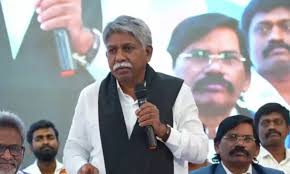
More than a 1,000 delegates from Andhra Pradesh and Telangana participated HYDERABAD: Dalit pastors, leaders of Christian organisations, and community representatives held a meeting at the YMCA auditorium to discuss strategies for securing Scheduled Caste (SC) status for Dalit Christians. Manda Krishna Madiga, founder‑president of the Madiga Reservation Porata Samithi speaking at the protest urged unity in the struggle. More than a 1,000 delegates from Andhra Pradesh and Telangana participated. Pastors and leaders delivered messages on the role Dalit Christians must play in achieving SC recognition. Gaddapati Vijay Raju, national president of the All India Christian Federation, gave an introduction on the issue, while Madiga expressed his support and called for collective action. Courtesy : Deccan Chronicle Note: This news is originally published on https:/deccanchronicle.com/bha and is used purely for non-profit/non-commercial purposes, especially human rights
South First impact: TN SC/ST Commission seeks explanation over ‘Paracheri’ tag in Virudhunagar village
The move follows a boycott call by Dalit residents of the village for the 2026 Assembly elections. They said the caste-based name continues to humiliate them. Synopsis: The Tamil Nadu Adi Dravidar and Tribal Welfare Commission has sought an explanation from the Virudhunagar district administration over the continued use of the caste-linked term “Paracheri” in official records of Vadakku Achamthavilthan village. The Commission said this violates a 2025 government order mandating the removal of caste-based names, and has asked officials to clarify the delay and action taken within a week. Acting on a South First ground report that shows the continued use of a caste-linked village name, the Tamil Nadu Adi Dravidar and Tribal Welfare Commission has sought an explanation from the Virudhunagar district administration. Commission chairman Imayam (V Annamalai) has written to the District Election Officer (District Collector), asking why the term “Paracheri” still appears in official records linked to Vadakku Achamthavilthan village in the reserved Srivilliputhur Assembly constituency. The move follows a boycott call by Dalit residents of the village for the 2026 Assembly elections. They said the caste-based name continues to humiliate them. Commission flags violation of government order In a communication dated 24 April, 2026, the Commission said the Tamil Nadu government had already issued clear directions to remove caste-based names from public records. Citing Government Order (Ms) No 313 (Municipal Administration and Water Supply Department, October 6, 2025), it said the state had instructed all local bodies and revenue authorities to remove or rename caste-based identifiers in habitations, streets, roads, water bodies and revenue villages. Despite this, the Commission said: The locality “Vadakku Achamthavilthan” (Ward No. 12, Part No. 280) in the Srivilliputhur constituency is still recorded as “Paracheri”. The same term remains in the voter list. Media reports and online circulation have brought wider attention to the issue. It added that residents boycotted the April 23, 2026 Assembly elections because the name was not changed. The Commission has asked the District Election Officer to submit a detailed explanation within one week, seeking: Reasons the caste-based name was not removed despite the government order. Steps taken, if any, to implement the renaming. Details of action against officials responsible for the delay or non-compliance. The letter also cites communications from the Municipal Administration, Rural Development, and the Revenue Administration and Disaster Management Commissionerate, showing the issue has been under consideration across departments since 2025. A name that marks caste, not place In the northern part of Achamthavilthan revenue village, more than 60 families from the Paraiyar community live in a segregated cluster. Over time, the locality came to be called “Paracheri”, a name residents say is now used both socially and in official records. It appears in voter lists, Aadhaar, PAN and bank records, while land records still carry the original village name. This split keeps the caste label in daily use. Residents say this has fixed caste identity in everyday life. “Wherever we go, the moment we mention our village name, people identify our caste,” said A. Abi, a PhD scholar from the village. For more than 15 years, residents have petitioned authorities—from the Tahsildar to the Chief Minister—to rename the locality “North Achamthavilthan”. S.V. Kumar, who leads the effort, said the effect goes beyond administrative inconvenience. “When we say our village name, others immediately correct it to ‘Paraicheri’. That moment is humiliating,” he said. RTI responses show the renaming proposal has moved through multiple levels of administration: Recommended by the Srivilliputhur RDO in March 2023 Forwarded by the district collector in July 2025 Pending with the Commissionerate of Revenue Administration and Disaster Management Election boycott Frustrated by delays, residents announced a boycott of the 2026 Assembly elections. The village has 113 voters. Election officials who met them on 4 April urged them to participate, saying action could follow after the elections. Residents refused. But on 23 April, most of them voted, hoping for change. For North Achamthavilthan residents, the demand is simple: to live without a name that marks them by caste. “No matter how far we progress, the moment we say our village name, people’s perception changes,” Abi said. Kumar added, “If you can say your village name without hesitation and I cannot, that itself shows the difference in dignity. That is why we are fighting.” Subash Chandra Bose Courtesy : South First Note: This news is originally published on https:/southfirst.com/bha and is used purely for non-profit/non-commercial purposes, especially human rights
How Ramgarh Is Changing The Story Of Transgender Communities In Jharkhand

Ramgarh in Jharkhand is emerging as a model for transgender inclusion, offering jobs, healthcare, and basic facilities. Administrative initiatives such as identity cards, dedicated OPD, and employment opportunities are enabling dignity and independence, though gaps remain. At 24, Himanshi is pursuing an MBA through distance learning, and quietly redefining what it means to be seen. She counts herself among what she calls the “0.001 per cent” of people whose families have accepted and supported them as transgender. Today, however, her identity reaches far beyond that label. She is also a government employee, and she says so with unmistakable pride. Since January, Himanshi has been working as an office attendant at the Deputy Commissioner’s office in Ramgarh district, around 50 kilometres from Ranchi. For her, the role represents more than employment; it is recognition long denied to many like her. It wasn’t the same for 23-year-old Samira, also known as Bodra. A graduate, but her family did not accept her transgender identity. She was rejected both at home and in society. Yet today, she too is a government employee. As a ward in-charge at the Ramgarh Municipal Corporation, Samira lives in a relatively normal environment—one where her transgender identity does not invite discrimination. Then there is Alia, 28, whose childhood was marked by trauma. Also a graduate, she says her struggles began within the walls of her own home. At just 11, she was sexually abused by a cousin. By the time she reached Class 10, her family had thrown her out. Today, Alia serves as support staff at Ramgarh Sadar Hospital — another transgender woman who has carved a space for herself. All three come from West Singhbhum and East Singhbhum districts of Jharkhand, regions known to have a significant transgender population. Each carry their own story of pain and social stigma. Himanshi reflects on the contradictions. “My family never rejected my identity, but I have endured society’s rejection and hostility all my life. I realised early in school that I had feminine traits. As I began expressing myself openly, the bullying, both in school and outside, became severe. People called me names. I was scared to even tell my family or teachers why this was happening to me. I was inappropriately touched and sexually abused several times, both in school and in society.” For her, societal change must begin with children. Schools, she believes, must sensitise and educate students about transgender identities and teach them to treat transgender individuals with dignity. According to her, society’s mindset remains deeply toxic and urgently needs transformation. Samira has been away from her home for five years. Her mother was happy to hear about her job, but Samira cannot return home to share that happiness. transgender government jobs IndiaIn recent years, Ramgarh has emerged as a district making meaningful strides towards transgender inclusion. Photo: Asghar Khan She says, “I was tortured at home. My father passed away early, and my mother didn’t want me to leave, but my brother and relatives harassed me constantly because of my identity. I tried many times to live like a boy, but I couldn’t. Gradually, my family stopped talking to me altogether. I was rejected everywhere—at home and outside. No one tried to understand our emotions. It’s not like we choose to become this way. Why is it so hard for people to accept that we are also part of this society?” Alia’s experience echoes a similar pattern of violence and rejection. She recounts, “When I was 11, the first person who noticed my feminine traits—my cousin—was the one who abused me. He told me not to tell anyone. I didn’t even understand what had happened. At home, everyone blamed me. My mother supported me, but after she passed away, the pressure from society forced my father to ask me to leave. Ironically, when my father fell ill later, none of those relatives helped him. I did whatever I could. If my parents were alive today, they would have been proud of my job.” These three women were employed through outsourcing in government offices only a few months ago. Alongside their day jobs, they also run a café called Trans Café. In recent years, Ramgarh has emerged as a district making meaningful strides towards transgender inclusion. After Ranchi, it is the second district in Jharkhand to build transgender-friendly toilets, with four such facilities across the city. It may also be the first district in India to establish a dedicated OPD for transgender people at the Sadar Hospital. This progress was driven by the efforts of former Deputy Commissioner of Ramgarh, Faiz Aq Ahmed Mumtaz, who took a personal interest in understanding and addressing the community’s challenges. According to the three women, the facilities introduced in Ramgarh under his leadership are unmatched anywhere else in Jharkhand. They hope this “Ramgarh model” is replicated across the state. Mumtaz explains: “A group of transgender people came to me asking for identity cards. But their problems went far beyond that. Many had no ration cards or pension cards. There were no toilets for them, and doctors often refused to examine them. Our first step was to secure their identity cards and link them to government schemes. At Sadar Hospital, we started a dedicated OPD for transgender people every Saturday afternoon so doctors could examine them properly. We also built separate toilets so they would not face difficulties in public places.” transgender identity cards IndiaUtthaan, an organisation working on transgender rights, says that the transgender population in Jharkhand is close to 30,000, yet very few facilities exist for them. Photo: Asghar Khan He says the efforts to connect community with employment and help them start a café were meant to strengthen their independence so that they would not have to depend on begging, singing, or giving ceremonial blessings for survival. It was to help them enter regular workplaces, interact with people, and become part of everyday social life. Now, there is growing demand to replicate the Ramgarh model across Jharkhand. Utthaan,
Rahul Gandhi says TMC graft & polarisation created way for BJP to enter West Bengal
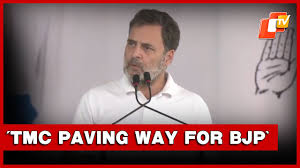
NEW DELHI: As elections in West Bengal enter the final lap, Congress neta Rahul Gandhi attacked his INDIA bloc partner, CM and Trinamool supremo Mamata Banerjee, alleging that polarisation and corruption have created a way for BJP to enter the state. “If Mamata ji had run a clean govt, and had she not polarised West Bengal, there would have been no way for BJP to make inroads into Bengal,” Rahul said on X, appealing to people to vote for Congress. “In this battle of ideologies, only Congress can defeat BJP,” he said. “BJP steals elections. SIR is their way to steal elections. There is a direct fight between Congress and BJP’s ideologies,” the leader of the opposition in Lok Sabha said in a video message. “BJP works against West Bengal’s culture, history, and Bengali language. BJP netas say ‘one nation, one language, one religion’. In this country there are many languages, religions, and ideologies. While we are trying to protect the Constitution, BJP is trying to destroy it,” he said. Courtesy : TOI Note: This news is originally published on https:/timesofindia.com/bha and is used purely for non-profit/non-commercial purposes, especially human rights
Dalits boycott polls in Vengaivayal, hoist black flags over 2022 water contamination case

The people demanded justice in the 2022 drinking water contamination case and opposed the CB-CID findings. PUDUKKOTTAI: Black flags were hoisted at the entrance of Vengaivayal as majority of Dalits boycotted polling on Thursday, demanding justice in the 2022 drinking water contamination case and opposing the CB-CID findings. Polling remained minimal in the village coming under Muttukadu panchayat, which has over 65 Dalit voters. Only eight persons cast their vote — five of them natives who had migrated but returned to vote, and three current residents. The rest of the Dalits stayed away, adhering to the boycott. The booth at Vengaivayal elementary school has over 549 voters, including people from Erayur village, mostly cast Hindus. They had announced a poll boycott earlier, but came cast their votes. “We are the ones who suffered. Instead of finding those responsible, they have named people from our own community. We cannot accept this,” said KR Murugan. Officials held peace talks during the polling, assuring steps to address the issue. However, the talks failed. Pearson Lenekar SR Courtesy : TNIE Note: This news is originally published on https:/thenewindianexpress.com/bha and is used purely for non-profit/non-commercial purposes, especially human rights
Rahul Gandhi says TMC graft & polarisation created way for BJP to enter West Bengal
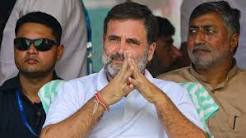
NEW DELHI: As elections in West Bengal enter the final lap, Congress neta Rahul Gandhi attacked his INDIA bloc partner, CM and Trinamool supremo Mamata Banerjee, alleging that polarisation and corruption have created a way for BJP to enter the state. “If Mamata ji had run a clean govt, and had she not polarised West Bengal, there would have been no way for BJP to make inroads into Bengal,” Rahul said on X, appealing to people to vote for Congress. “In this battle of ideologies, only Congress can defeat BJP,” he said. “BJP steals elections. SIR is their way to steal elections. There is a direct fight between Congress and BJP’s ideologies,” the leader of the opposition in Lok Sabha said in a video message. “BJP works against West Bengal’s culture, history, and Bengali language. BJP netas say ‘one nation, one language, one religion’. In this country there are many languages, religions, and ideologies. While we are trying to protect the Constitution, BJP is trying to destroy it,” he said. Courtesy : TOI Note: This news is originally published on https:/timesofindia.com/bha and is used purely for non-profit/non-commercial purposes, especially human rights
Maharashtra: Bangladeshi transgender Ayan Khan arrested for kidnapping and sexual exploitation of a minor boy

Maharashtra Police arrested Bangladeshi transgender Ayan Khan in Mumbai for allegedly kidnapping a minor, forcing him into begging, and sexually abusing him. The case has also exposed illegal infiltration, property accumulation, and a suspected cross-border financial network linked to Bangladesh Vashi: On April 19, the Maharashtra Police arrested a 30-year-old Bangladeshi transgender individual, Ayan Khan, alias Guru Maa or Babu Hijra, from Vashi. Khan is accused of kidnapping a 17-year-old boy from Shivajinagar in Govandi, with the help of an accomplice identified as Safde alias Jara, and forcing him into begging while subjecting him to sexual abuse. The arrest was made by a joint team of local police and the Crime Branch following a complaint filed by the boy’s father. Khan had previously been arrested around six months ago for illegally residing in Mumbai. During the latest investigation, police found that despite being an illegal infiltrator, Khan had acquired properties in Mumbai worth several lakhs of rupees. The abducted minor was rescued and reunited with his family, who were shocked to find him dressed in women’s clothing. Initially hesitant and fearful, the boy reportedly claimed he wanted to live as a girl. However, he later disclosed the abuse and coercion he endured between 10 March and 1 April 2026. Khan has now been booked under the Protection of Children from Sexual Offences (POCSO) Act, along with relevant provisions of the Transgender Persons Act. He remains in police custody as investigations continue. Authorities are also probing a possible larger network that may have facilitated Khan’s illegal entry into India, his continued stay, and the transfer of funds to Bangladesh. According to reports, Khan, who presented as a transgender “guru,” operated under multiple aliases, including Guru Maa and Jyoti Maa, and lived in Rafiq Nagar Part 2 in Shivajinagar, Govandi. In the area, Khan reportedly had influence over more than 300 followers. Originally from Basatpur village in Bangladesh, Khan’s arrest has led to the detention of several other Bangladeshi nationals residing illegally in the city. Investigators have also uncovered a cross-border financial trail linking earnings from alleged illegal activities in India to investments in Bangladesh. Police sources indicate that Khan used money earned in India to fund real estate and commercial ventures in Bangladesh. Despite living illegally in India for over three decades, Khan reportedly owns a house and is involved in constructing a shopping mall in Bangladesh. “During the investigation, we found documents and photographs suggesting that the accused built a house in Bangladesh using money earned here. We also recovered images related to a bhoomipujan ceremony for a mall project,” a senior Mumbai Police official said. Courtesy : Organiser Note: This news is originally published on https:/organiser.com/bha and is used purely for non-profit/non-commercial purposes, especially human rights
Kannur Dental College Student Death Case: Dalit Organizations Demand ₹10 Crore Compensation and High Court-Monitored Probe

Dalit organizations outraged over the suspicious death of student Nitin Raj at Kannur Dental College; demand ₹10 crore in compensation, a High Court-monitored investigation, and a ‘Kerala Bandh’ (state-wide shutdown) on April 28. A tragic incident in Kannur, Kerala, has shaken the entire state. Demands for justice have intensified regarding the suspicious death of Nitin Raj—a first-year BDS student at the Kannur Dental College in Ancharakandy—who died after falling from the college building. On Tuesday, an Action Council comprising several Dalit organizations in Kerala demanded that the state government provide compensation of ₹10 crore to the victim’s family. During a press conference held at the venue, the Action Council refused to accept the incident as a mere suicide, instead labeling it an “institutional murder.” They have demanded an impartial investigation into the entire affair, to be conducted under the direct supervision of the Kerala High Court. It is worth noting that on April 10, Nitin Raj was found in a critically injured state after falling from the college building; he subsequently succumbed to his injuries while undergoing treatment. Protesting the student’s death and seeking justice for the perpetrators, the Action Council has also called for a state-wide strike across Kerala on April 28. The organizations have categorically stated that the strictest possible legal action must be taken against the faculty members responsible for this tragic incident. Meanwhile, on Tuesday itself, Nitin Raj’s father and other family members visited the dental college. Upon seeing the exact spot within the college premises where his son had been found lying critically injured, the father could not hold back his tears. It was a deeply emotional scene that moved everyone present to tears. Given the gravity of the case, the police have registered a case against two faculty members: Dr. M.K. Ram and Dr. Sangeetha. Charges have been filed against both individuals for abetment to suicide, as well as under the stringent provisions of the SC/ST Act. Nitin’s family members and supporters allege that he was being subjected to constant harassment regarding his caste and physical appearance. Meanwhile, to evade arrest, both accused doctors have filed anticipatory bail petitions in the District Court. The case took a new turn when it emerged that the student’s death was also linked to online loan apps. The police have registered two FIRs against various online loan apps. In one of these cases, three individuals operating an illegal loan app from Noida, Uttar Pradesh, have also been arrested. However, Nitin’s family categorically asserts that pressure related to loans alone could not have been the cause of their son’s death. They firmly believe that the mental harassment he endured within the college campus was the primary reason behind this tragedy. Rajan Chaudhary Courtesy: Hindi News
Justice first, votes later: Dalit hamlet in Vengaivayal boycotts Tamil Nadu polls after human faeces found in drinking water tank in 2022
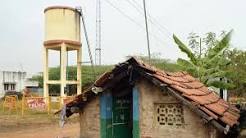
Anger and distrust kept voters away in Vengaivayal as residents raised black flags and refused to step out on polling day. Villagers say justice remains denied in the 2022 water contamination case and are demanding a fresh, fair investigation. The small village of Vengaivayal woke up on election day not with excitement, but with black flags. While most of Tamil Nadu stepped out to vote on April 23, 2026, this Scheduled Caste hamlet chose to stay away from polling booths, not out of apathy, but out of anger that has been building for years. Just a few kilometres away, life looked very different. In neighbouring Irayur, people who had earlier threatened to boycott the election quietly changed their minds and turned up to vote after rounds of negotiations. But in Vengaivayal, the mood remained stiff, emotional, and unshaken. This is not just about an election. It is about a wound that villagers say has not healed since 2022. A protest rooted in pain and distrust Boycott in Vengaivayal goes back to an incident in December 2022. Residents say their drinking water supplied through an overhead tank was deliberately contaminated with human faeces. The incident caused outrage across the state and raised serious questions about caste discrimination and safety. Even today, that memory lingers. Villagers claim the investigation has failed them. The case is being handled by the CB-CID, but many residents believe the real culprits are still free. Instead, they say, suspicion has unfairly fallen on the very people who suffered. As a mark of protest, black flags were raised across the hamlet. Streets that would usually see voters lining up remained empty. The boycott, villagers say, is their way of demanding accountability and dignity. Peace talks work next door, but not here In the weeks leading up to polling day, tensions had been high between communities in the region. Protests were held, and the atmosphere was uneasy. District officials and police stepped in holding multiple rounds of peace talks to calm situation. Their efforts saw some success but not everywhere. In Irayur, residents who had earlier planned to boycott elections eventually agreed to vote. The administration’s outreach appeared to have eased tensions there. But in Vengaivayal, the response was different. Officials from Keeranur invited villagers for a peace committee meeting. The residents attended and clearly stated their position. They said they would not participate in the election until their core demand is met: a fresh and fair investigation. Their stand remained unchanged even after the meeting. For them, voting without justice would mean accepting what they see as a flawed process. Wider boycott, demands, and official version The protest is not limited to one hamlet. In parts of Muttukadu panchayat under Kulathur taluk, both Dalits and caste Hindus have joined the boycott by citing the same issue: lack of justice in the Vengaivayal case. Meanwhile in Irayur, residents from caste Hindu communities have their own demands. They are not questioning the investigation in the same way, but they are unhappy with the lack of action. Villagers say that even though suspects have been identified, no arrests have been made. At the entrance of the village, banners have been put up demanding immediate arrests. Apart from the case, Irayur residents also raised everyday issues like poor road connectivity between Kavery Nagar and the village via Vellanur and Konjampatti, and lack of proper bus services. For them, the election is also about basic infrastructure. On the other hand, the CB-CID has presented a different picture. According to investigators, three individuals (J Muraliraja, B Sudharshan, K Muthukrishnan) were allegedly involved in the contamination incident. The motive, they say, was personal enmity linked to the dismissal of a tank operator, not caste-based hatred. The case earlier under SC/ST Special Court was transferred in February 2025 to Judicial Magistrate Court-II in Pudukkottai. But for people of Vengaivayal, these official explanations have not brought closure. Courtesy : The Statesman Note: This news is originally published on https:/thestatesman.com/bha and is used purely for non-profit/non-commercial purposes, especially human rights
Dalit Hamlet in Vengaivayal Boycotts Tamil Nadu Polls After Human Faeces Found in Drinking Water Tank in 2022

Polling day in Tamil Nadu saw a sharp contrast between two neighbouring villages, as Dalit residents of Vengaivayal boycotted voting and raised black flags, while people in nearby Irayur stepped out to cast their votes after earlier hesitation. The boycott in Vengaivayal, a Scheduled Caste hamlet in Pudukkottai district, is linked to the 2022 incident in which the village’s drinking water tank was allegedly contaminated with human faeces, an episode that had triggered outrage across Tamil Nadu. Protest driven by anger over lack of justice On April 23, 2026, while voters across the state queued at polling booths, Vengaivayal’s streets remained empty. Black flags were seen across the hamlet, reflecting a protest that residents say is rooted in pain and anger. Villagers have expressed strong dissatisfaction with the ongoing probe by the CB-CID, saying the real culprits have not been arrested. “We are the victims, but suspicion is being cast on us,” a resident said, highlighting the sense of injustice in the village. Many residents believe that voting without accountability in the case would mean accepting a flawed investigation. Pain of 2022 incident still unresolved The boycott traces back to December 2022 when the contamination of the overhead tank raised serious concerns about caste discrimination and the safety of marginalised communities. Even after more than three years, villagers say the trauma remains fresh. Investigators have named three individuals and claimed the motive was personal enmity rather than caste bias. However, this explanation has not convinced the residents. The case was earlier being heard under provisions of the SC/ST (Prevention of Atrocities) Act before being transferred to a magistrate court in 2025, a move that has further deepened mistrust. Peace talks succeed in Irayur but not in Vengaivayal In contrast, Irayur saw improved participation after several rounds of talks between officials, police and local residents. People who had initially planned to boycott the election eventually decided to vote. Authorities also held meetings with Vengaivayal residents, including a peace committee discussion. While villagers attended, they remained firm on their demand for a fresh and fair investigation. Their position did not change even after repeated outreach. Wider unrest and local concerns The protest has also extended to nearby areas such as Muttukadu panchayat, where both Dalits and caste Hindu communities have raised concerns linked to the case.Dalit community support In Irayur, residents have also highlighted everyday issues such as poor road connectivity and lack of transport facilities, adding another layer to their grievances. At several points in the area, banners demanding arrests in the contamination case were visible. Official version and public response Officials maintain that the contamination incident was linked to personal disputes involving a dismissed tank operator and was not caste-driven. However, residents of Vengaivayal remain unconvinced. For them, the boycott is not just about elections. It is a way to demand justice and assert dignity, showing that unresolved grievances continue to shape public participation in democracy. Courtesy : TOP Note: This news is originally published on https:/theobserverpost.com/bha and is used purely for non-profit/non-commercial purposes, especially human rights