
For quota baiters, a lesson from salons as Dalit youths challenge caste barriers
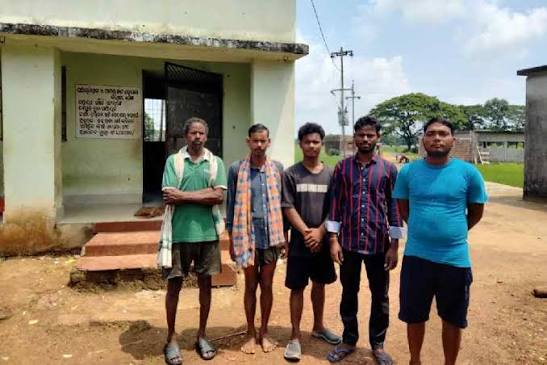
Youths in Puri district invoke the SC/ST Act after salons deny them haircuts, activists say education and reservation have helped them assert their rights In May, a group of determined Dalit youths from Jorakani Bhoi Sahi under Sauria grampanchayat in Puri district decided to assert themselves by demanding haircuts in salons that had traditionally served only the upper castes. The youths’ effort failed and set off a legal battle against the practice of untouchability, which continues even 76 years after India adopted a Constitution that guarantees equality, freedom, and justice for all. The incident stood out at a time when affluent sections have launched a campaign demanding dilution of caste-based reservation and the Scheduled Castes and Scheduled Tribes (Prevention of Atrocities) Act. There are six salons in nearby Ghoradia market run by barbers, largely OBCs. Traditionally, barbers have held the ceremonial lamp in front of wooden palanquins carrying idols from temples in processions through villages. Bhagyarathi Kandi, 26, a graduate who ekes out a living by giving tuitions, said all the shops denied them entry. “They (the barbers) said they serve the God in the temple and their caste would be diluted if they cut our hair. They said God would be annoyed too,” Bhagyarathi said. The Dalit youths filed an FIR at the Delang police station under the SC/ST Act and named the salon owners. People of the dominant Brahmin and Khandayat castes have supported the barbers’ stand to deny entry to Dalits, Bhagyarathi said. “The upper caste people met the police and demanded no action against the barbers. They said cutting the hair of Dalits means the barbers will no longer enjoy their social status and will not be able to render their services at religious events. We continue to face this untouchability,” Bhagyarathi said. Nandu Kandi, 30, said the fight would continue till the salons opened their doors to Dalits. “The boycott of Dalits is not restricted to salons. We are not allowed to attend any village festival. We celebrate our own festivities,” Nandu said, pointing to the Mangala Temple set up by Dalits. “The Brahmin priest does not come to our temple. One family from our caste is a Vaishnav Gosain (Dalit priest). He performs the rituals at the temple. On Holi or Diwali, we celebrate ourselves,” Nandu said. Rights activist Akshya Behera said the Dalits of Jorakani gathered courage to fight because many youths among them are now educated. “If we are able to fight the Savarnas (upper caste), it is because of reservation that helped us get educated. There are five/six graduates in the 25 Dalit families. They are aware of their rights and duties. The barbers, with the support of the Brahmins and Khandayats (a landed warrior caste), had never allowed entry to Dalits. But now this cannot be continued,” Behera said. He criticised the campaign to abolish caste-based reservation and the SC/ST Act. “The police are sitting on the FIR. They are not giving it any importance although the case has been filed under the SC/ST Act. The law is not enough. It must be implemented properly. Those who are demanding abolition of caste-based reservation and the scrapping of the SC/ST Act should visit Ghoradia and see how untouchability and atrocities are going on against Dalits,” Behera said. Basant Kumar Mohanty Courtesy : The Telegraph Note: This news is originally published on https:/thetelegraph.com/bha and is used purely for non-profit/non-commercial purposes, especially human rights
Andhra: Legal clinic hears Dalit atrocity victims
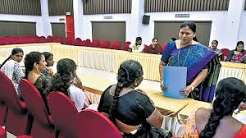
The clinic was presided over by DSS National Convener Jhansi Geddam and attended by 30 women victims of murder, rape, cheating, POCSO and other cases. VIJAYAWADA: Dalit Sthree Sakthi (DSS) conducted a Legal Clinic on Tuesday to hear grievances of women victims of caste atrocities, with government officials participating as jury members. The clinic was presided over by DSS National Convener Jhansi Geddam and attended by 30 women victims of murder, rape, cheating, POCSO and other cases. The jury comprised Director of Prosecutions Byra Koteswara Rao, SC Corporation Director Maridayya, psychologists Rama Devi and Praveena, Women and Child Welfare Department officer Ruksana, Bhoomika representative Anupama, and DBS representative Chitti Babu. The victims narrated their agony in accessing justice, pressure for compromise from the accused, and non-receipt of compensation. State Coordinator Jabali briefed the jury on the present status and follow-up of each case. Responding to the victims, jury members counselled them to remain resilient, and stand up for justice. Byra Koteswara Rao said the government has provided various schemes for the betterment of victims and advised them to properly utilise them. He assured all help from the prosecution side and said victims can opt for a Special Public Prosecutor as per law. Jhansi Geddam said the SCs and STs Act is a special law meant to provide total protection to victims but is not being properly implemented. She said compensation and rehabilitation is a right and not charity. She pointed out that delay in prosecution and trial is causing a lot of agony as victims are being threatened and pressured for compromise. State and district coordinators Devi, Prasanna, Sowjanya and Praveen coordinated the clinic. High Court advocate Priyanka explained cases pending in the High Court. Courtesy : TNIE Note: This news is originally published on https:/thenewindianexpress.com/bha and is used purely for non-profit/non-commercial purposes, especially human rights
Kerala HC denies anticipatory bail to man accused of deceiving Dalit woman for sex
The case relates to allegations that Udayan had agreed to marry a Dalit woman while suppressing the fact that he was already in a relationship with another woman and had a three-year-old child with her. The Kerala High Court has refused anticipatory bail to a 39-year-old man accused of concealing his existing relationship and three-year-old child before fixing his marriage with a Dalit woman, holding that the alleged conduct prima facie amounts to sexual intercourse by deceitful means under section 69 of the Bharatiya Nyaya Sanhita (BNS). Justice A Badharudee, on September 28, dismissed the appeal filed by Udayan, the first accused in a case registered at Feroke police station in Kozhikode, and directed him to surrender before the investigating officer. The court said that if he failed to surrender, the investigating officer was at liberty to arrest him and proceed with the investigation. The case relates to allegations that Udayan had agreed to marry a Dalit woman while suppressing the fact that he was already in a relationship with another woman and had a three-year-old child from that relationship. According to the prosecution, a marriage-fixation ceremony was held at the woman’s house on July 6, 2025, after both families had agreed to the proposed marriage. The woman’s family allegedly spent around Rs 10 lakh for the ceremony, which was attended by about 1,000 people. After the marriage was fixed, the woman travelled to Wayanad expecting the marriage to take place and stayed at Almaj Residency. The prosecution alleged that Udayan compelled her to have sexual intercourse on the premise that they had already decided to marry. The prosecution also alleged that the sexual relationship took place after Udayan had concealed his existing relationship and the child born from it. Udayan’s counsel argued that section 318(4) of the BNS was not attracted as there was no delivery of property. It was also argued that section 69 would not apply because the provision, according to the defence, required a promise to marry followed by a subsequent withdrawal, whereas Udayan was still willing to marry the complainant. The defence further contended that the mere existence of another relationship and a child could not, by itself, establish the offences and section 18 of the SC/ST (Prevention of Atrocities) Act would therefore not apply. The prosecution opposed anticipatory bail, relying on the complainant’s statement and additional statement. It argued that suppressing a relationship in the nature of marriage and a child born from that relationship amounted to “deceitful means” within the meaning of section 69 of the BNS. The prosecution also submitted that custodial interrogation was necessary for a meaningful investigation, including recording the accused’s statement, effecting seizure and recovery of the clothes allegedly worn by him at the time of the incident, and conducting a potency examination. The High Court examined section 69 of the BNS, which criminalises sexual intercourse with a woman by deceitful means, where the act does not amount to rape, as well as sexual intercourse following a promise to marry made without an intention to fulfil it. The provision carries imprisonment of up to 10 years and a fine. Its explanation states that “deceitful means” includes inducement relating to employment or promotion, or marrying by suppressing identity. The court said section 69 covers two distinct situations: sexual intercourse through deceitful means, and sexual intercourse following a promise to marry made without an intention to fulfil it. It held that the prosecution need only make out the alleged offences prima facie at this stage for the corresponding offence under Section 3(2)(va) of the SC/ST (Prevention of Atrocities) Act to be attracted. In this case, the court found that the materials indicated that the marriage had been fixed on the premise that Udayan was unmarried and had no other relationship in the nature of marriage. The court noted that he was aware of his existing relationship and the child born from it, yet concealed both from the woman and her family. The court held that the subsequent sexual intercourse, allegedly induced by the promise and premise of the proposed marriage while the earlier relationship was concealed, would prima facie fall within the first situation contemplated under section 69, sexual intercourse by deceitful means, even if the alleged act did not amount to rape. The High Court also accepted the investigating officer’s contention that custodial interrogation was necessary for the investigation. It observed that granting anticipatory bail in the circumstances could impede the investigation, particularly in relation to recording the accused’s statement and carrying out seizure, recovery and medical procedures. The court therefore held that the offences were prima facie made out and that the bar under Section 18 of the SC/ST (Prevention of Atrocities) Act applied. Consequently, Udayan was not entitled to anticipatory bail. Courtesy : TNM Note: This news is originally published on https:/thenewsminute.com/bha and is used purely for non-profit/non-commercial purposes, especially human rights
Dalit sarpanch assault: NHRC begins probe
The charges reportedly include attempt to murder, causing hurt and obstructing a public servant. KENDRAPARA: A three-member team of the National Human Rights Commission (NHRC) on Tuesday began investigation into the alleged assault of the dalit sarpanch of Tikhiri panchayat in Mahakalapada block of the district. The team, comprising NHRC deputy SP Isam Singh, Gugan Ram and Shashi Bala Sharma, arrived in Kendrapara on Monday night for a four-day visit to conduct a detailed inquiry into a complaint filed by sarpanch Chameli Ojha (33). The team visited Mahakalapada police station on Tuesday and recorded statements of the then IIC Manas Kumar Mallick in connection with the case. The NHRC officials subsequently met Mahakalapada BDO Rabi Narayan Acharya and other staff at the block office. They also visited Ojha’s house in Tikhiri and recorded her statement. Officials said the NHRC team is scheduled to meet the district collector, SP and officials of various departments. The investigators are expected to record statements of doctors at Kendrapara district headquarters hospital, officials, villagers and others connected to the case. They may also examine videos of the incident circulated on social media and accounts provided by eyewitnesses. Ojha had reportedly been assaulted and manhandled by police personnel and the BDO on June 11 after she raised allegations of corruption against officials. On June 14, a petition was filed before the NHRC alleging that Ojha had been falsely implicated in a case registered on basis of the complaint of the Mahakalapada BDO. The charges reportedly include attempt to murder, causing hurt and obstructing a public servant. Courtesy : TNIE Note: This news is originally published on https:/thenewindianexpress.com/bha and is used purely for non-profit/non-commercial purposes, especially human rights
UP: Dalit Woman, Husband Allegedly Attacked Days After She Filed Rape Case
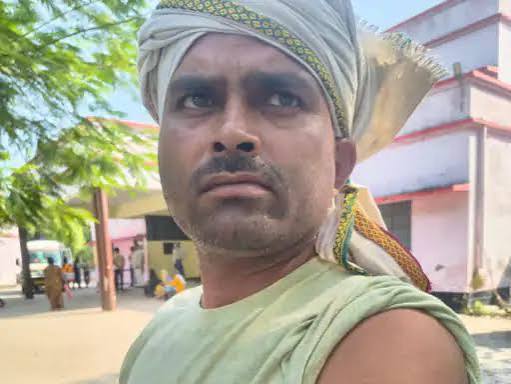
Raebareli: A Dalit woman and her husband were allegedly attacked with sticks in Uttar Pradesh’s Raebareli district on Tuesday morning, days after the woman filed a rape case against a local man. Both were injured in the attack and have been admitted to a hospital. The victim’s family has alleged that some people attacked the couple with sticks and that the incident was linked to the rape case filed by the woman. Woman Alleges Rape After Land Dispute According to the woman, she had a land dispute with a man from the village. She had approached an influential person in the village seeking help in resolving the dispute. The woman alleged that she was given a substance that made her unconscious and that the man raped her. Following her complaint, a case was registered on the court’s orders, and the matter is currently under investigation. Couple Attacked After Case Was Filed The victim’s family alleged that the accused side had developed hostility towards them after the rape case was registered. On Tuesday morning, some people allegedly attacked the woman and her husband with sticks over the dispute. Both suffered injuries and were later admitted to a hospital. Courtesy : TOP Note: This news is originally published on https:/theobserverpost.com/bha and is used purely for non-profit/non-commercial purposes, especially human rights
After Delhi and Mumbai, Bengaluru to protest against SIR on Thursday – all you need to know
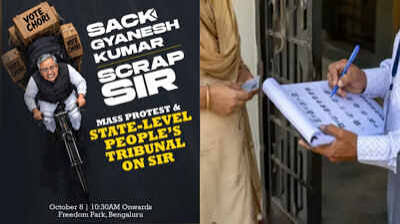
NEW DELHI: After massive protests in Delhi and Mumbai over the Special Intensive Revision (SIR) of electoral rolls, civil society groups in Karnataka are set to hold a “People’s Tribunal” in Bengaluru on October 8 to document concerns over voter deletions and alleged discrepancies in the electoral rolls. Unlike a conventional political rally, the People’s Tribunal is expected to provide a public platform for people affected by the SIR exercise to share their experiences at Freedom Park. The Bengaluru event will focus in particular on voters categorised under the Absent, Shifted, Dead, Duplicate and Others (ASDDO) categories. The tribunal comes amid growing concerns over the SIR process. The event has also drawn support from actor Prakash Raj. In a social media post, Raj said, “People’s Tribunal by Cockroaches..Dipke.Ashuthosh.. Sourav and all the youth organisations and the civil society.. The victims of SIR from across the state will be present.” People’s Tribunal by Cockroaches..Dipke.Ashuthosh.. Sourav and all the youth organisations and the civil society.. The victims of SIR from across the state will be present . requesting all the citizens to participate in this fight to save our Democracy.. come join us tomorrow 8 th October at Freedom Park .. Bengaluru #ScrapSIR #ResignGyaneshKumar #justasking — Prakash Raj (@prakashraaj) October 7, 2026 He urged citizens to participate in what he described as a fight to “save our Democracy”. CJP spokesperson Ashutosh Ranka reacted to Raj’s post with “See you Bengaluru!”, signalling his participation in the gathering. The tribunal follows protests in Delhi and Mumbai, where opposition parties, and student groups raised concerns over the SIR exercise and demanded resignation of CEC Gyanesh Kumar. Thousands gathered for the CJP-led protest at Mumbai’s Shivaji Park, while demonstrations in Delhi were met with heavy police restrictions and detentions. Courtesy : TOI Note: This news is originally published on https:/timesofindia.com/bha and is used purely for non-profit/non-commercial purposes, especially human rights
Dalit Literature Hits Lucknow Book Fair: Readers Appreciate Parliamentary Democracy, ‘Nagvanshi Bharat’ Sees Good Demand
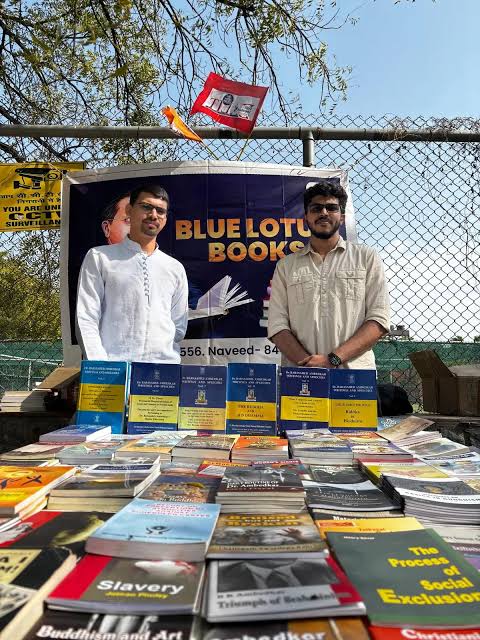
On the fifth day of the 23rd National Book Fair at Balrampur Garden, Lucknow, books on Dalit discourse were a major draw. Along with Dalit literature, books on Ambedkar, the Constitution, and Buddhist literature also sold well. At Samyak Prakashan’s stall, R.L. Chandrapuri’s ‘Brahmin Raj and the Backward Class Movement in India’, Rajkumar Historian’s ‘Nagvanshi Bharat’, and Dr. Rajendra Prasad Singh and Dr. Shashikala’s ‘Excavating Kabir with New Tools’ are being appreciated. Both volumes of ‘Yadav (Jatav) Jivana’ by Sunderlal Sagar, published in 1929, are also available in a new edition. Discussion on History and Sanatan Traditions Ashok Gopal’s translated book, Babasaheb Dr. Ambedkar: Life and Thoughts, is in the news at Setu Prakashan. Readers are liking ‘Ambedkar and Parliamentary Democracy’, edited by Ratanlal, at Rajpal’s stall. At the Constitution Promotion stall, Dr. Devendra Pratap Yadav’s “Zahreela Bahumat” and the exhibits on “Bahujan” edited by Ramkumar Gautam are also attracting attention. In Buddhist literature, Dr. Jagannath Upadhyay’s “Buddhism’s Contribution to India” is prominent. At Prabhat Prakashan’s stall, author Mahendra Kumar Agarwal was seen providing information about the history and eternal traditions of Sambhal through his book “Mera Sambhal Mahaan.” Literary figures honored in his memory The Uttar Pradesh Sahitya Sabha’s Pranam Parivar Samman ceremony was held on the main stage. Conceived by Sarvesh Asthana, literary figures were honored in his memory. This was followed by a poetry festival conducted by Mukul Mahan. In the morning, the Navsarjan ceremony released “Sadchitta Anand” and “K Se Kavi.” Literary figures, including Padmashree Vidyavindu Singh, shared their views in a dialogue on Awadhi literature. Courtesy: Hindi News
Bengaluru: Dalit body seeks sites for revenue land losers in Karanth Layout
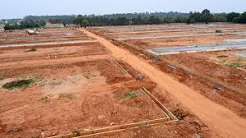
The organisation said the land losers had been waiting for nearly nine years and alleged that the BDA had failed to adequate coordinate with them. Bengaluru: The Dalit Sangharsha Samithi has urged the Bangalore Development Authority (BDA) to reserve and allot alternative sites in Dr K Shivaram Karanth Layout to revenue site owners who lost their properties for the project. In a letter to the BDA, the organisation said allotment of sites to farmers and members of the public in the Karanth Layout began on August 31, but revenue site owners were yet to be considered. The organisation said the land losers had been waiting for nearly nine years and alleged that the BDA had failed to adequately coordinate with them. It also questioned the apparent sidelining of the Justice V G Bopaiah Committee, appointed by the Supreme Court to safeguard the interests of revenue site owners. The Samithi demanded that revenue site owners be treated on par with farmers and allotted alternative sites Courtesy : DH Note: This news is originally published on https:/deccanherald.com/bha and is used purely for non-profit/non-commercial purposes, especially human rights
Rajya Sabha list: A message to the upper castes, as well as the backward and Dalit communities, an attempt to address not just one but both elections.
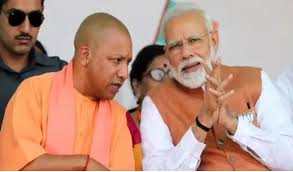
BJP Rajya Sabha list in UP: The BJP on Monday released a list of eight Rajya Sabha candidates in Uttar Pradesh. In this list, the BJP has relied on cadre rather than any outside leaders. With the announcement of eight candidates for the ten Rajya Sabha seats, the Bharatiya Janata Party has not only addressed the Upper House’s arithmetic, but also sought to send a political message for the 2027 Assembly elections and the 2029 Lok Sabha elections. By prioritizing long-time and loyal workers in the list, the party has assured the core cadre that long-term commitment and loyalty will be respected within the organization. It has also attempted to contain the resentment among the upper castes and to keep the backward and Dalit communities firmly connected. The party did not give a second chance to any of the current eight Rajya Sabha members. Influential figures from Western Uttar Pradesh, such as Union Minister BL Verma and former Chief Minister Kalyan Singh’s son Rajveer Singh, were also excluded from the list. On the contrary, by sending Cabinet Minister Dharampal to the Rajya Sabha, the party has signaled the creation of a new axis of backward leadership in Western Uttar Pradesh. Meanwhile, the selection of Shruti, the daughter of a prominent Kurmi leader from Rohilkhand and Jharkhand Governor Santosh Gangwar, has raised a new question about the BJP’s balance between nepotism and organizational loyalty. This list is also significant because the BJP is in a crucial phase of preparing for the 2027 assembly elections. At this time, selecting candidates for the Rajya Sabha is not merely a means of sending them to Delhi, but also a means of sending messages to different social groups, regions, and organizational factions. For some time now, there have been discussions about the political distance and dominance between BL Verma and Rajveer Singh regarding the leadership of the Lodhi community in Western Uttar Pradesh. BL Verma was once close to Kalyan Singh, while Rajveer Singh is considered a natural successor to his father’s political legacy. The exclusion of both from the Rajya Sabha list cannot be a normal occurrence. In contrast, the decision to send Livestock Minister Dharampal, a multiple-time MLA from Amla, to the Rajya Sabha is being seen as a strategy to promote a new leadership face among the Lodhi voters of western Uttar Pradesh. A Message to the New Through Old Faces Most of the eight names are those whose political identity has been built within the BJP organization. Among these, Priyanka Singh Rawat and Shruti Katiyar can be considered relatively new faces. Meanwhile, through names like Gopikrishna Pandey, Radhakant Ojha, Dharampal Singh, Prakash Pal, Vidyasagar Sonkar, and Rampratap Singh, the party has signaled to its old cadre that the path to the Upper House is open to those who have worked for the organization for a long time. Social alignment is also part of this strategy. By including three upper caste, three backward caste, and two Dalit candidates, the BJP has not only targeted its traditional upper caste base but also sent a message of representation to OBC and Dalit voters. Shruti’s selection, being the daughter of Santosh Gangwar, the Governor of Jharkhand and a multiple-time MP from Bareilly, again brings to the fore the question of nepotism within the BJP. The BJP has long leveled this accusation against opposition parties. In such a situation, the decision to send Shruti, who comes from a political family, to the Rajya Sabha despite her organizational background raises questions about the party’s standards. However, it is also being seen as an attempt to appease the Kurmi community in western Uttar Pradesh. While the regional balance in the Rajya Sabha list may not appear completely equal, the social and organizational message is more clear. While the BJP has sought to mitigate potential resentment among the upper castes, it has also attempted to reassure the backward castes and Dalits that their representation is secure. The biggest message is that the party may prioritize leadership preferences and electoral expediency over factional pressure or political legacy within the organization. Sudhir Kumar Singh, Lucknow Published by: Rohit Mishra Courtesy: Hindi News
Cong reaches out to smaller parties ahead of seat-sharing talks with SP
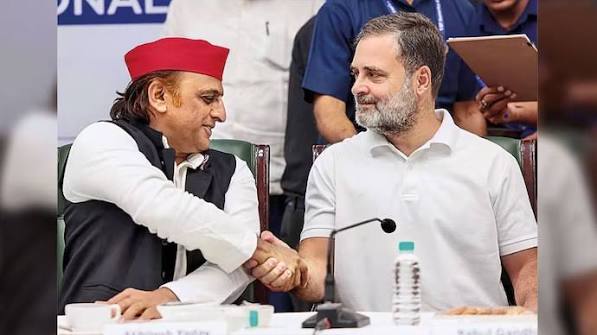
Lucknow: Congress is in talks with at least four smaller regional outfits from Uttar Pradesh even before it goes for seat-sharing negotiations with Samajwadi Party, its INDIA bloc partner in UP. Though the party functionaries claim that it is conscious of ‘gathbandhan dharma’ and wants to move ahead with SP as an alliance partner, the grand old party’s outreach to smaller political outfits is being seen as a move to strengthen its bargaining power while discussing alliance modalities with SP. Congress party’s UP in charge Rajendra Pal Gautam has pitched for ‘equal partner’ status and reiterated on Sunday that the party was preparing for 200 seats. Among smaller outfits in touch with Congress are Apni Janta Party chief Swami Prasad Maurya, who met Rahul on Saturday, followed by Sanjay Chauhan of Janwadi Party (Socialist) and Pankaj Niranjan of Apna Dal (Kamerawadi), on Sunday. Political analysts said the outreach could serve a dual purpose for Congress — expanding its social and organisational footprint ahead of the 2027 assembly elections while also giving it additional leverage when it sits across the table with SP. “Congress is trying to strengthen its position before the seat-sharing exercise begins. If it can bring smaller parties with a specific social base into its fold, it can enter negotiations with the SP with a wider alliance proposition,” a political analyst said. Another analyst said the move should not be seen as Congress preparing to move away from SP. “The Congress knows the importance of the alliance, but at the same time it would not want to enter seat-sharing talks from a position of weakness. Outreach to smaller parties gives it some room to negotiate,” he said. The timing of the outreach is also significant as Congress has been signalling an ambition to expand its footprint in UP. Gautam’s pitch for an ‘equal partner’ status and the party’s preparation for around 200 seats indicate that Congress is looking to negotiate from a position of greater strength. On Monday., Gautam told reporters in New Delhi: “We have asked for equal status in the coalition which means 200 seats and we must do it soon.” The smaller parties being approached also bring distinct OBC and local support bases, which could add to the broader INDIA bloc’s social arithmetic. Courtesy : TOI Note: This news is originally published on https:/timesofindia.com/bha and is used purely for non-profit/non-commercial purposes, especially human rights