
‘Chalo Delhi’: Chief Minister A Revanth Reddy tells Congress leaders
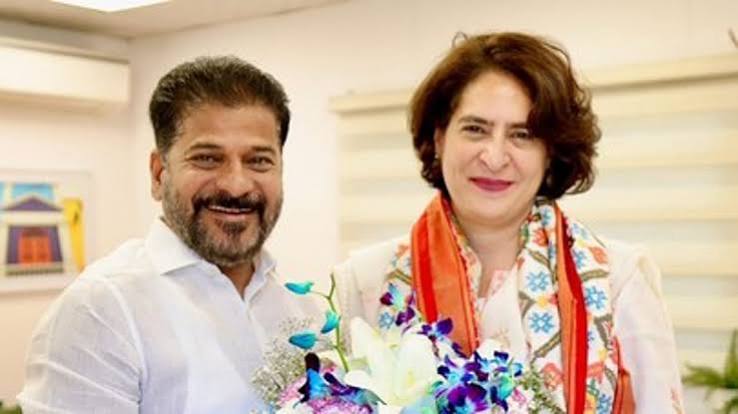
The chief minister has called upon all Lok Sabha and Rajya Sabha members, MLAs, MLCs, and key Telangana Pradesh Congress Committee (TPCC) leaders to attend the protest programme in Delhi. HYDERABAD: Chief Minister A Revanth Reddy has asked key Congress leaders from Telangana to reach Delhi on October 12 and participate in a protest to be organised by the All India Congress Committee (AICC). The chief minister has called upon all Lok Sabha and Rajya Sabha members, Members of the Legislative Assembly (MLAs), Members of the Legislative Council (MLCs), corporation chairpersons, District Congress Committee (DCC) presidents, and key Telangana Pradesh Congress Committee (TPCC) leaders to attend the protest programme in Delhi. Earlier, Delhi Police stopped Revanth as he was on his way to express solidarity with Opposition Leader Rahul Gandhi and other Congress leaders protesting against the Special Intensive Revision (SIR) of electoral rolls. Courtesy : TNIE Note: This news is originally published on https:/tthenewindianexpress.com/bha and is used purely for non-profit/non-commercial purposes, especially human rights
Tamil Nadu: Dalits forced to prostrate at the feet of a 90-year-old man who went to bury him at a crematorium; a case has been filed.
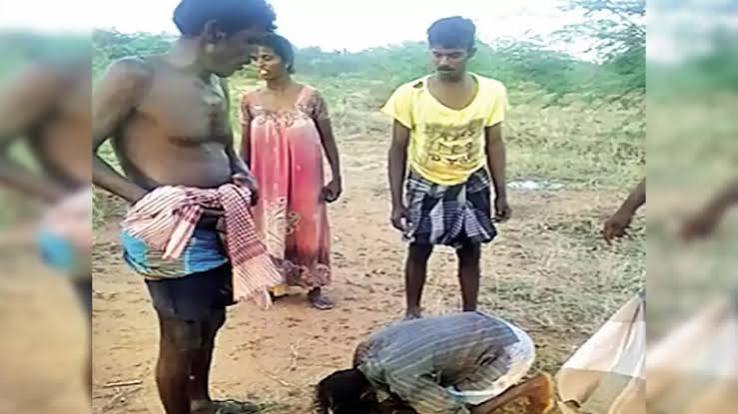
Caste dispute erupts in Erode, Tamil Nadu, over a public crematorium. Dalits prostrated themselves at the feet of powerful men after being threatened with a job ban. Tamil Nadu: A highly inhumane and shameful case of caste discrimination has emerged from Erode district. A massive controversy erupted over the cremation of a 90-year-old man in Perumbali village, located in the Madathupalayam Panchayat near Perundurai. Amidst the protests over the use of the public crematorium, two Scheduled Caste (SC) members were allegedly forced to prostrate themselves at the feet of members of the Backward Class (BC). Over 100 Scheduled Caste residents reside in Perumbali village. These villagers have long faced difficulties burying the bodies of their loved ones at the local crematorium. Due to strong opposition from the dominant castes, they were often forced to carry the bodies to Thingalur, about five kilometers away. However, after a recent survey, the Tehsildar of Perundurai declared this cremation ground public for all communities. On October 5th, Chenni, a 90-year-old Scheduled Caste man, died due to age-related ailments. When members of his community took his body to the public cremation ground for burial, they faced strong opposition from members of the backward castes, which soon escalated into a heated argument. According to the district police, the funeral was conducted under tight security from the Revenue Department and the police. During the altercation between the two communities, the Scheduled Caste members were allegedly threatened and warned not to approach the dominant caste members for any work in the future. Immediately after this threat of not giving them work, two members of the Scheduled Caste community were forced to grab the feet of the members of the BC community. The police have now taken strict legal action regarding this incident. A case has been registered at the Thingalur police station on the night of October 8, 2026 (Thursday) based on a complaint filed by the Perundurai Revenue Inspector. Two individuals have been charged under stringent sections of the Scheduled Castes and Scheduled Tribes (Prevention of Atrocities) Act in connection with this inhumane act, and the police are conducting a thorough investigation. A video of the incident is rapidly going viral on social media, clearly showing the public humiliation of members of the Dalit community. The video has sparked widespread public outrage and demands for immediate, strict action against the culprits. Iswaran, State Coordinator for the Western Region of the Bahujan Samaj Party (BSP), has strongly condemned the incident. He alleged that preventing people from using public crematoriums is a direct violation of the rights of SC community members. He described the threat of denial of work as the most brutal form of caste-based oppression. Iswaran said that taking advantage of the economic helplessness and helplessness of Dalits and forcing them to bow down at the feet of other communities is a highly condemnable act. The BSP leader also raised serious questions about the role of the police and revenue department officials present at the scene. He demanded strict action against those who opposed the funeral, as well as those officials who completely failed to prevent this insult. Rajan Chaudhary Courtesy: Hindi News
Rashtriya Janshakti Samaj Party threatens hunger strike: One-day sit-in in Ayodhya, demands action in cases of Dalit victims
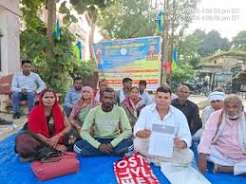
The Rashtriya Janshakti Samaj Party (Uttar Pradesh) held a day-long sit-in at Tikonia Park in Ayodhya on October 9, 2026. Led by State Vice President Anil Kumar Rawat, a memorandum addressed to the Governor was submitted to the District Magistrate, Ayodhya. The memorandum demanded legal action in pending cases of Dalit victims. The party warned that if the demands are not met by October 14, 2026, its workers will begin an indefinite sit-in, fast-unto-death, and hunger strike from October 15. The party’s main demands: A case be registered for the Dalit victim, Meenawati (Anil Rawat’s wife), in the September 27, 2026 incident. A charge sheet be filed and the accused arrested in Kotwali Nagar FIR No. 702/2025. A high-ranking officer should investigate FIR No. 391/2026 against the Bikapur SDM Peshkar, and the victim’s family should be provided with protection. The accused named in FIR No. 424/2025, dated December 2025, including Ashish, Shivakant, Vindu, and Shrikant, should be arrested. The false FIR No. 425/2025 filed against Anil Kumar Rawat and others should be withdrawn. Prabhakar Nath Chaurasia | Civil Lines (Atal Nagar), Ayodhya Courtesy: Hindi News
Karnataka High Court: Acquittal of 26 accused in 17-year-old case of desecration of Baba Saheb’s portrait and SC/ST atrocities upheld
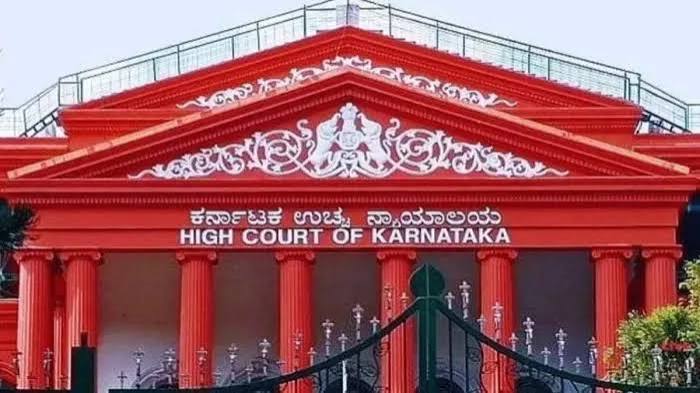
On behalf of the state, public prosecutor K. Nageshwarappa argued that the acquittal was “illegal, invalid, and contrary to the law, evidence, and material on record.” According to him, the lower court failed to properly evaluate the witnesses’ testimony, leading to a miscarriage of justice. Bengaluru: The Karnataka High Court on October 1 dismissed the state government’s appeal against the acquittal verdict delivered by the Chamarajanagar Special Court. The case relates to a 2009 incident in Bommanahalli village in Gundlupet taluk, in which a portrait of Dr. B.R. Ambedkar and a community hall signboard were vandalized, and members of the Scheduled Castes were assaulted and subjected to casteist abuse. A single bench of Justice G. Basavaraj delivered the verdict while hearing the case. The appeal was filed by the state government through the Terakanambi police. According to the prosecution, on June 6, 2009, at around 7 p.m., 29 accused persons formed an unlawful assembly in Bommanahalli village. They were armed with deadly weapons and had gathered with the common intention of rioting. They were alleged to have toppled the signboard of a “community hall” and a portrait of Dr. Ambedkar. According to the prosecution, this act was committed in public with the intention of outraging the sentiments and insulting the Scheduled Caste community. The accused were charged under sections 143, 147, 148, 341, 323, 324, 506, 427, and 295(A) of the Indian Penal Code and sections 3(1)(x) and (xi) of the Scheduled Castes and Scheduled Tribes (Prevention of Atrocities) Act, 1989. After the charge sheet was filed, the court took cognizance and issued summons. All the accused appeared and were granted bail. However: Accused No. 2 failed to appear in court despite a non-bailable warrant, and a separate Special Case No. 51/2010 was filed against him. Accused No. 25 died and the case against him was abated. The trial court framed charges and read them out to the accused in their own language. The accused pleaded not guilty and expressed their willingness to face trial. The prosecution presented a total of 13 witnesses, 21 documents (Ex. P1 to P21), and 25 material objects. In their statements recorded under Section 313 of the Code of Criminal Procedure, the accused completely denied all evidence against them but offered no defense. After a hearing, the trial court acquitted Accused Nos. 1, 3 to 12, 14 to 24, and 26 to 29. The State’s arguments in the appeal The State’s Public Prosecutor, K. Nageshwarappa argued that the acquittal was “illegal, invalid, and contrary to the law, evidence, and material on record.” According to him, the trial court failed to properly evaluate the witnesses’ testimony, leading to a miscarriage of justice. He stated that there were seven injured witnesses, and there was no reason to disbelieve them. These witnesses clearly stated that the accused attacked with hands, sticks, and sickles, causing injuries all over their bodies. He also stated that caste-based abuses were hurled and stones were thrown to break the community hall signboard bearing the image and name of Dr. B.R. Ambedkar. The public prosecutor also argued that atrocities against Dalits are punishable under a special law that serves a social purpose, and therefore, the trial court should not have insisted on a harsh interpretation of the law. Advocate Manjunath N.D., representing the accused, stated that the trial court correctly evaluated the evidence in accordance with the law and facts, and there was no basis for interfering with the verdict. He sought dismissal of the appeal. In its order, the High Court cited paragraph 30 of the lower court’s judgment. It states that the complainant is injured, the other witnesses are his son, wife, and his elder brother’s wife, while four separate witnesses belong to the same community. All eyewitnesses admitted that the scene was dark and there was no electricity in the village since 6:45 p.m. that day. The lower court remarked, “None of the eyewitnesses explained how they saw the incident and in what light.” The court also noted that there were several significant contradictions in the evidence, which cast doubt on the occurrence of the incident. In conclusion, the lower court held that “the benefit of the doubt should accrue to the accused” and the prosecution failed to prove the accused’s guilt beyond a reasonable doubt, therefore, all 10 issues were answered in the negative. The High Court, after re-examining the entire material on record, refused to interfere with the lower court’s findings. Justice G. Basavaraj said in his order, “After re-evaluating, reconsidering, and re-examining the evidence, I do not find any legal or factual error committed by the lower court.” The court thereby dismissed the appeal. Geetha Sunil Pillai Courtesy: Hindi News
Tamil Nadu Congress condemns Rahul Gandhi’s arrest, demands removal of CEC
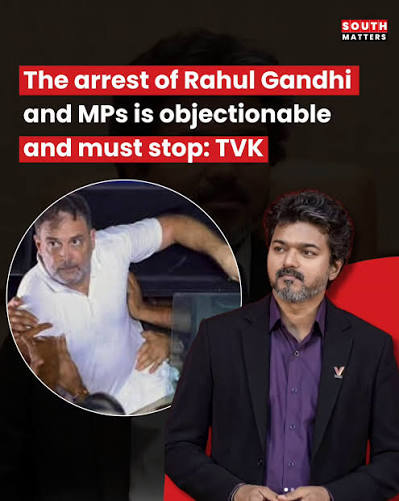
Chennai: Tamil Nadu Congress Committee on Thursday held a protest in Chennai condemning the arrest of Congress leader Rahul Gandhi and INDIA bloc MPs for organising an agitation demanding the removal of Chief Election Commissioner Gyanesh Kumar. Congress said INDIA bloc would organise protest meetings across Tamil Nadu on Oct 13 and 14 against the CEC. At the protest on Anna Salai in Chennai, TNCC functionaries raised slogans against Prime Minister Narendra Modi and Union home minister Amit Shah, accusing BJP-led Union govt of using force to suppress the Opposition. Congress functionaries burnt an effigy and posters carrying images of Modi, Shah and Kumar, causing temporary traffic congestion in the area. The protesters demanded Kumar’s immediate removal, alleging the deletion of 13 crore names from the electoral rolls through SIR across the country was an “unlawful act.” Former TNCC president Thirunavukkarasar said Congress and its allies would continue their agitation until Kumar was removed or resigned. He said Opposition parties were considering measures like approaching Supreme Court seeking Kumar’s removal and moving a resolution in the parliament in this regard when the parliament meets. “Congress will not rest until Gyanesh Kumar is removed from office. Rahul Gandhi has made it clear that the agitation will continue until he is removed,” Thirunavukkarasar said. TN Congress legislature party leader Tharahai Cuthbert, senior leader Peter Alphonse and several other functionaries attended the demo, while ministers Rajesh Kumar and P Viswanathan did not turn up for the demo. Courtesy : TOI Note: This news is originally published on https:/timesofindia.com/bha and is used purely for non-profit/non-commercial purposes, especially human rights
PRIDE AND PREJUDICE: Tamil Cinema Evolves, ‘Dorothy’ Marks Breakthrough for Transgender Representation
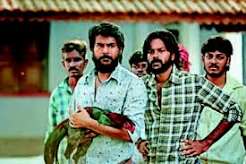
For a long time in Tamil cinema, transgender people were denied their humanity. From ‘Eeramana Rojave’ (1991) to ‘Darbar’ (2020), movies reduced them to tired tropes, letting them exist only as objects of pity and ridicule. They were called slurs such as ‘ajak’ and ‘ombodhu’ and used as plot devices to underline male superiority. When a transgender character enters the scene in a Tamil movie, the audience knows what to expect: They would clap loudly, speak in a sarcastic tone, often in innuendo. If the script is kind, they would bless the protagonist and walk away. If not, they would get humiliated. Karthik Subbaraj’s ‘Dorothy’, which released a couple of weeks ago, has disrupted this pattern by centering a transwoman’s self-discovery, and ends with her finding love. This sea change reflects the elevation that the trans community has achieved in society over the years. Kombai Anwar, an academic and filmmaker, says, “TN and Kerala govts have made efforts to improve the lives of marginalised communities. Parallelly, cinema has evolved to represent them better. First came dalit films by directors such as Vetrimaaran and Pa Ranjith, then we had movies such as ‘Habeebi’ (2026), which told the story of a small-town Muslim family. And now, we have ‘Dorothy’.” Director Subbaraj gives his leading woman grace and dignity in grief, hardship and threat to life. She comes out as trans to her family men who habitually kill off the women for refusing to toe the line, wears her identity proudly and walks her path fearlessly. “Sovereignty, the ability to make one’s own decisions, has been denied to trans characters in films. They have been kept in suffering, in a state of dependency on the mercy of others,” says Agni Pradeep, a transwoman writer. Thiagarajan Kumararaja’s ‘Super Deluxe’ (2019) fell into this trap. Vijay Sethupathi’s Shilpa returns home after gender-affirming surgery and is left to grapple with sexual violation, social stigma and anxiety as she attempts to reintegrate into the system. “Supreme Court has ruled that a transwoman can marry either a straight man or a transman. But the former is still not accepted by society,” says Jaya, general manager of Saho Daran, a city-based NGO for transpeople. This is echoed in the backlash that ‘Dorothy’ has received from a section of the audience that does not accept trans identity. Today, there are more than 500 active trans activists in Tamil Nadu, says Jaya. “You wouldn’t see as many in other states. They help members of the community access opportunities, get documentation and solve legal issues.” Though the Dravidian govts brought many schemes to improve the lives of transpeople, without acceptance from people in the education and employment sectors, they cannot “stay on the path to a better life”, Jaya says. “Even simple things like finding a house on rent is an uphill battle for transwomen, as not all people consider us ‘normal’. This is where positive representation in films matters,” she says. “We have come a long way since the infamous ‘Oororam Puliyamaram’ number in ‘Paruthiveeran’ (2007), where a group of transwomen dance to a folk song signalling sexual vulnerability among a group of drunken men,” says Kombai. The song became a pop culture reference for years thereafter. “We just want to be seen as regular people with regular lives. More than being portrayed as minstrels or ‘ardhanariswara’ or fortune tellers, we want to be accepted as people first,” says N Jency, the first transwoman in the state to get a PhD, and lecturer at Quaid-E-Millath Government College For Women, Chennai. One step forward, two steps back? How trans characters are shown in cinema Step back | Eeramana Rojave (1991) Hero and friends try to go to a movie with girls, but end up with transwomen. Slapstick comedy ensues Step forward | Kanchana (2011) A trans character is thrown out by her family, later, adopts a trans child and raises her to become a doctor Step back | I (2015) Osma, played by trans makeup artist Ojas Rajani, is infatuated with the hero, who humiliates her Step back | Darbar (2020) Rajinikanth’s character pays a group of trans women on a railway platform to sing while he beats up bad guys, reducing them to a tired stereotype Step forward | Neela Nira Sooriyan (2024) Trans filmmaker Samyuktha Vijayan plays a schoolteacher who identifies as a woman and transitions Dignity in a name In 2006, chief minister M Karunanidhi coined the terms ‘thirunangai’ (transwoman) and ‘thirunambi’ (transman), ‘thiru’- respectable; ‘nangai’ – woman and nambi – man. The intention was to remove stigma that came from words previously used to refer to them such as ‘aravani’. Today, the term is shortened to ‘thirunar’ to refer to a transperson of either orientation The shift in nomenclature led to a gradual social elevation that brought them ID cards, voting rights and access to govt schemes. In 2008, the DMK govt established the Transgender Persons Welfare Board Govt schemes: Subsidized loans for self-help groups; free sewing machines; 1 reserved seat in govt colleges; pension for transwomen over 40; ARAN shelter; special clinic at RGGGH & dist govt hospitals Courtesy : TOI Note: This news is originally published on https:/timesofindia.com/bha and is used purely for non-profit/non-commercial purposes, especially human rights
Dalit Youth Allegedly Beaten at Home in MP’s Katni After Scooter Collision Dispute
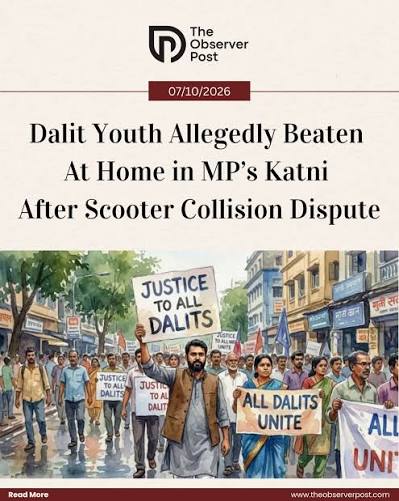
A minor dispute following a scooter collision in Madhya Pradesh’s Katni district allegedly escalated into an assault on a Dalit youth, with a video of the incident surfacing on social media. LearnHindi The incident took place in Matwara village under the Sleemanabad police station area. The victim, identified as Arvind, has alleged that some people first assaulted him in the local market and later followed him to his house, where he was dragged into the courtyard and beaten with kicks and sticks. The family has also alleged that Arvind’s clothes were torn during the assault and that he was stripped. Dispute Started After Scooter Collision According to Arvind’s family, the incident began on September 29 after a minor collision involving a scooter. The family alleged that Arvind was beaten by some people in the market following the dispute. They then allegedly went to his house and dragged him into the courtyard, where they assaulted him with kicks, punches and sticks. A video that surfaced on Monday night purportedly shows several people beating a young man while women inside the house try to intervene and protect him. Mother Allegedly Assaulted While Trying to Save Son Arvind’s mother alleged that she was also beaten and misbehaved with when she tried to intervene and save her son. The family said women present at the house attempted to stop the assault. Parts of the incident were reportedly captured on video. The allegations are being investigated by the police. Family Alleges Delay in FIR The victim’s family alleged that they approached the Sleemanabad police station after the incident but that their complaint was not immediately registered as an FIR. The family later submitted a written complaint to Katni Superintendent of Police Abhinav Vishwakarma on October 1, seeking action against those allegedly involved in the assault. FIR Registered After SP’s Intervention Police said an FIR was subsequently registered at the Sleemanabad police station following the SP’s intervention. The case has been registered under Sections 331(2), 296(b), 115(2), 351(3) and 3(5) of the Bharatiya Nyaya Sanhita. Police are examining the complaint and the video to identify all those allegedly involved in the assault. Family Seeks Arrest and Security The victim’s family has alleged that the named accused have not been arrested despite the FIR being registered. They have sought their immediate arrest and protection, claiming that the family continues to face threats. Police said efforts are underway to identify and arrest the accused. Sleemanabad police station in-charge Vijay Vishwakarma said a case had been registered and that the accused were being identified on the basis of the complaint and the video. He said the named accused and others found to be involved would be arrested and legal action would follow. Courtesy : TOP Note: This news is originally published on https:/theobserverpost.com/bha and is used purely for non-profit/non-commercial purposes, especially human rights
Dalit family attacked for protesting abusive language during thirteenth day ceremony: Woman hit with brick after entering home; case filed against accused Rinku Singh
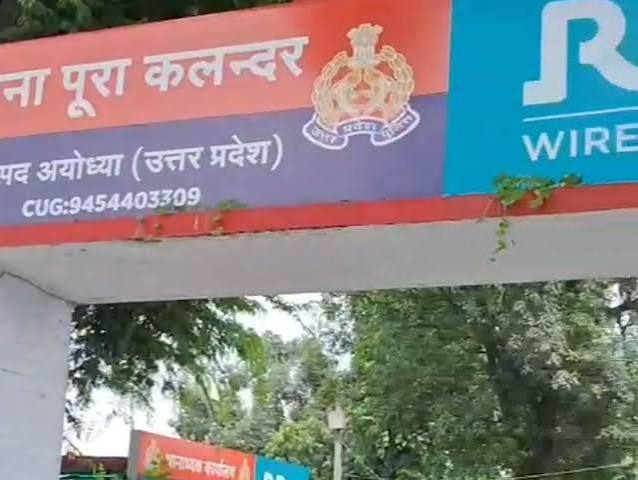
A Dalit family was attacked in Dadera village, under the Purakalandar police station area. The victim, Ramkumar, has filed a complaint against Rinku Singh, a resident of the village. According to Ramkumar, his wife’s thirteenth day ceremony was held on October 3, 2026. The accused, Rinku Singh, abused the family. When they protested, he used obscene language. Villagers intervened and sent him home. It is alleged that at around 6 a.m. on October 6, Rinku Singh entered Ramkumar’s elder brother’s house and assaulted him. He hit Ramkumar’s sister-in-law (Manoj’s wife) on the head with a brick, seriously injuring her. Following the complaint of the family, who had been receiving threats for three days, Purakalandar police have registered a case and handed over the investigation to police officer Ashutosh Tiwari. In this regard, the Pura Qalandar police station stated that a preliminary report has been filed regarding the incident, and the investigation is ongoing. Further action will be taken as directed by the Deputy Superintendent of Police. Brijesh Chandra Pandey | Pura Bazaar (Ayodhya), Ayodhya Courtesy: Hindi News
‘Age can’t outweigh crime’s gravity’: Court gives 24yo man life term for Dalit’s murder
Agra: An SC/ST court in Aligarh sentenced a 24-year-old man to life imprisonment for murdering a Dalit labourer in Nov 2021, observing that while his young age and family circumstances merited consideration, they “could not outweigh the gravity of an offence” that had ended the victim’s life and left his family, including two minor children, struggling. While pronouncing the judgment, special judge Pratibha Saxena said, “Sentencing cannot be a mechanical exercise and has to balance the gravity and manner of the crime, its impact on the victim and society, against the accused’s age, family circumstances, criminal history and prospects of rehabilitation.” According to case records, Sher Singh, a labourer, left home for work on Nov 7, 2021, but did not return. The next morning, his family was informed that his body had been found at a plot near a railway line. His brother, Munna Lal, found a plastic noose around his neck, gutka and pouches stuffed in his mouth, and injury marks around his eyes. The court noted that the murder was “particularly grave” as the victim was not merely assaulted but beaten and dragged along a road before his body was dumped in an open plot. ADGC Chaman Prakash said the postmortem revealed multiple ante-mortem injuries, including a fractured skull bone, blood clots in the brain and fractured ribs. The medical opinion attributed the death to coma and shock caused by the injuries. The court record also cited CCTV footage as an important piece of documentary evidence. Seeking leniency, the defence submitted that Manish, a resident of Barola Jafrabad, was unmarried, poor and had only his mother to support. The prosecution opposed leniency, citing the brutality of the crime and the impact of Singh’s death on his children, including a daughter. Courtesy : TOI Note: This news is originally published on https:/timesofindia.com/bha and is used purely for non-profit/non-commercial purposes, especially human rights
UP: 15-Year-Old Dalit Girl Allegedly Raped by Two Men After Being Taken to Empty House
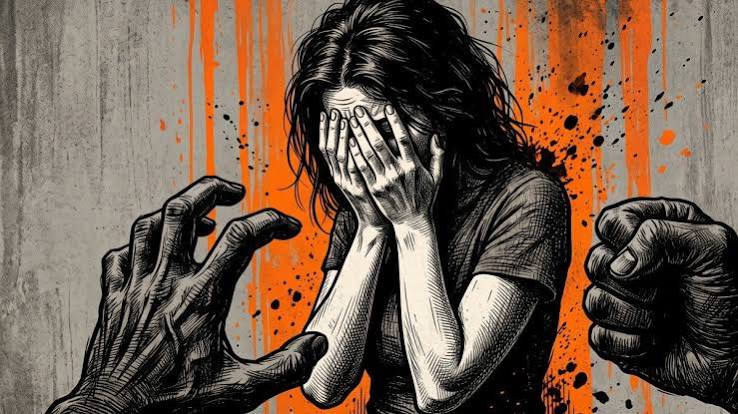
A 15-year-old Dalit girl studying in Class 9 was allegedly gang-raped by two men in a village under the Kotwali police station area. The incident reportedly took place around 10 am on Wednesday. ExploreDiversity According to the complaint filed by the girl’s father, police registered an FIR against the two accused and detained them for questioning. Girl Allegedly Taken to Empty House The girl, a resident of the village, studies in Class 9 at a school in a nearby village. On Wednesday morning, she was returning home after giving water to cattle at a cattle shed. Police said she allegedly met Gaurav Khadgवंshi and Jaspal Khadgवंshi on the way. The two allegedly took her to Gaurav’s house, where his family members were away in the fields. According to the complaint, Jaspal allegedly raped the girl while Gaurav held her hands. The complaint also alleges that Gaurav bolted the room from inside. The girl reportedly raised an alarm, following which several villagers gathered at the house and rescued her. Accused Detained, Investigation Underway Police detained both accused and began questioning them. The girl has been sent for a medical examination as part of the investigation. CO Pankaj Kumar Tyagi said an FIR had been registered against the accused and that the matter was being investigated. Members of the girl’s family and community expressed anger over the alleged sexual assault. Police said further action would be taken based on the investigation and medical examination. Courtesy : TOP Note: This news is originally published on https:/theobserverpost.com/bha and is used purely for non-profit/non-commercial purposes, especially human rights