
Dalit student abused, beaten by teacher for failing to bring textbook

The teacher Satish “pushed” Mohit, resulting in a head injury after impact with the bench Gurugram: A 14-year-old Dalit student was allegedly assaulted and insulted with casteist slurs by a teacher at a private school in the Gurugram district of Haryana. The incident is from Joginder High School in the Sohna area. Kishanlal, a resident of Javed Colony, wrote in the police complaint that a teacher identified as Satish allegedly hit his son, Mohit, for not bringing the required Hindi textbook to class. According to Kishanlal, Satish “pushed” Mohit, resulting in a head injury after impact with the bench. He said that his son already had health conditions, which he had informed the school about earlier. “After the beating, his condition worsened,” the complaint read. The injured student was initially taken to a local hospital in Sohna. However, due to his underlying conditions, he was referred to a hospital in Gurugram. The family alleged that the teacher, Satish, used derogatory, casteist and abusive language against Mohit and accused him of humiliating their child. They demanded strict action against the teacher. The school officials told Dainik Bhaskar the matter was being “unnecessarily exaggerated.” Denying all accusations, the school operator, Tejpal Saini, insisted that no such assault had occurred inside the classrooms. “There was no beating by the teacher,” he added. Meanwhile, the police have taken statements from both the teacher and the family. Posted by Khadija Irfan Rahim Courtesy : TSD Note: This news is originally published on https:/thesiasatdaily.com/bha and is used purely for non-profit/non-commercial purposes, especially human rights
Laborer assaulted in Sikriganj, case filed against 4: Case filed under serious sections including the SC/ST Act
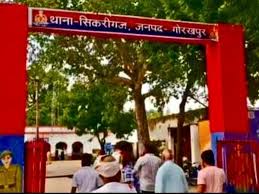
Police have filed a case against four accused in connection with the assault on a Dalit laborer on Friday in Bheusan, also known as Bankatan, village in the Sikriganj police station area. This action was taken based on the victim’s complaint. The victim, Rampreet, filed a named complaint at the Sikriganj police station on Thursday, April 30th. He stated that he was working as a laborer at the village’s Rai Bahadur Singh Master’s house when Ramsajivan Singh (also known as Guddu Singh, also known as Harendra Singh), Manish Singh, and Durgesh Singh suddenly arrived at his door. According to Rampreet, the accused surrounded him due to an old rivalry and began beating him with sticks. They hurled casteist slurs and threatened to kill him. Rampreet was seriously injured in the assault and his belongings were damaged. The victim stated that people present at the scene rescued him. Following a preliminary investigation and medical examination of the victim, the police took action on the instructions of Sikriganj Police Station Officer Anjul Kumar Chaturvedi. The Police Station Officer stated that a case has been registered based on the complaint. Khajani Circle Officer Deepanshi Rathore will investigate this case, registered under the SC-ST Act. Ardhachandra Dhari Tripathi | Khajani Courtesy: Hindi News
Allahabad HC Dismisses Plea For FIR Against Congress Leader Rahul Gandhi Over ‘Indian State’ Remark, Upholds Lower Court Order
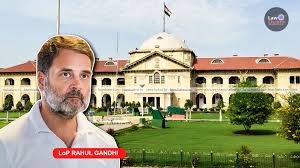
The Allahabad High Court dismissed a petition seeking an FIR against Congress leader Rahul Gandhi over his remarks on the “Indian state”. The court upheld a Sambhal trial court’s earlier order rejecting the complaint as weak. The plea was filed challenging the lower court’s decision, which has now been reaffirmed. Allahabad HC Dismisses Plea For FIR Against Congress Leader Rahul Gandhi Over ‘Indian State’ Remark | File Photo Prayagraj: The Allahabad High Court has granted major relief to Congress leader and Leader of Opposition in Lok Sabha Rahul Gandhi by dismissing a petition seeking registration of an FIR against him. Petitioner and Challenge The petition was filed by Simran Gupta, who had challenged a Sambhal trial court order that rejected her plea for criminal proceedings against Gandhi. She had sought directions for lodging an FIR based on Gandhi’s remarks concerning the Indian state. The High Court dismissed the plea and upheld the lower court’s decision, bringing the matter to a close at this stage. Origin of Complaint The case stems from a complaint filed in a Chandausi court in Sambhal, where the petitioner alleged that Gandhi’s statement made on January 15, 2025, during the inauguration of the Congress headquarters Indira Bhawan warranted legal action. In his speech, Gandhi had said that the Congress was fighting not only the BJP and RSS but also what he described as the “Indian state”. The trial court had earlier rejected the complaint, terming it weak. The petitioner then moved the High Court challenging that order, which has now been dismissed. Meanwhile, Gandhi continues to face legal scrutiny in another matter before the High Court concerning allegations linked to his alleged British citizenship. The case is being heard separately, with the next hearing scheduled later this month. The matter pertains to a plea seeking investigation into claims regarding his citizenship status. Courtesy : TFPJ Note: This news is originally published on https:/thefreepressjournal.com/bha and is used purely for non-profit/non-commercial purposes, especially human rights
Why Rahul Gandhi chose Great Nicobar as his next battlefield

As exit polls bring the Congress grim news except in Kerala, Rahul bets on the Great Nicobar narrative. But sustaining campaigns remains his enduring weakness If exit polls are right, May 4 will hand Rahul Gandhi a rarity: unambiguously good news. The Congress-led United Democratic Front (UDF) seems on course to dislodge Pinarayi Vijayan’s Left Democratic Front (LDF) government in Kerala, with Axis My India giving it 78-90 out of the legislative assembly’s total 140 seats and Manorama News-CVoter pushing the band to 82-94. The headache is what tends to follow a Congress win: a stampede for the chief minister’s chair. There are four men in the frame. K.C. Venugopal, AICC general secretary and Alappuzha MP, is Rahul’s most trusted aide. V.D. Satheesan, leader of the Opposition in the outgoing assembly and a sitting MLA, has the strongest claim from the floor. Ramesh Chennithala, a former home minister of Kerala, has waited two decades for his turn. K. Sudhakaran, the Kannur MP, has not entered his name, but his Facebook endorsement of Venugopal has already lit fires in the rival camps. Rahul has handled this kind of three-way contest before, not without some unwanted consequences though. Madhya Pradesh and Rajasthan in 2018 produced festering wars between Kamal Nath and Jyotiraditya Scindia, and Ashok Gehlot and Sachin Pilot, respectively. In both, it is the party that lost. Karnataka in 2023 ended in an awkward truce between Siddaramaiah and D.K. Shivakumar that already shows signs of fraying. Given all that, the Kerala squabble may be the easiest of Rahul’s problems. Beyond Kerala, the cupboard is bare. Assam looks set to elude the Congress again. In West Bengal, where some exit polls now predict a BJP majority, the party faces what every survey calls extinction. Tamil Nadu accommodates the Congress only at the DMK’s pleasure. With the Kerala victory, the Congress completes its transformation into a southern outfit, with Himachal Pradesh as a high-altitude footnote. This is why the BJP’s parliamentary upset of April 17 matters to Rahul in a way political punditry has under-priced. The defeat of the Constitution (131st Amendment) Bill—the Narendra Modi government’s attempt to bundle women’s reservation with delimitation—was the first time in nearly 12 years that a Modi-sponsored constitutional amendment failed the two-thirds test. Rahul’s circle now believes the Opposition has the floor strength in Parliament to dictate, not just react. The aim, they say, is to set the agenda rather than chase it. Rahul’s aides point to the caste census as proof of concept. From the day in 2023 that he reversed the Congress’s historical squeamishness on the question, Rahul pounded one slogan—“jitni abadi, utna haq” (rights in proportion to population)—until the BJP, which had once dismissed the idea as an “urban Naxal” plot, agreed in April 2025 to fold caste enumeration into the next census. The electoral pay-off in 2024 was modest, but the pressure was real. In Uttar Pradesh, where caste arithmetic decides everything, the BJP fell from 62 Lok Sabha seats to 33. Post-poll data from the Centre for the Study of Developing Societies (CSDS) showed the National Democratic Alliance (NDA) losing 19 percentage points among Koeri-Kurmi OBCs (Other Backward Classes) and 13 percentage points among other OBCs. This was on the back of an Opposition campaign that warned that a “400 paar” majority for the NDA would dismantle reservation. Rahul’s next slogan was “vote chori”—his charge was that the Election Commission (EC) and the BJP had colluded to inflate, prune and redirect electoral rolls. Rahul turned it into a series of high-decibel press conferences, complete with what he called “Hydrogen-bomb” evidence. In Bihar, where he timed his second presentation a day before the November 6 vote last year, the pitch sank: the Congress won only six of the 62 seats it contested, its second-worst showing in the state’s history, and forfeited deposits in most of the rest. The argument resurfaced only in West Bengal, where the EC’s invented category, “logical discrepancy”, was used to red-flag some 2.7 million voters during the Special Intensive Revision of rolls—a disproportionate share of them allegedly Muslim. The EC has dismissed every accusation. The Congress’s own fortunes in Bengal will be unaffected either way. Rahul’s pattern is now clear. He picks issues that may not win the next election but will deny Prime Minister Modi the comfort of an unchallenged narrative. After May 4, and especially if Bengal goes the BJP way, the saffron camp will want a chorus about the Opposition’s decimation. Rahul wants a counter-tune cued up for the rest of 2026, ideally one with a moral charge. Standing with the locally aggrieved is, by now, his most dependable register. The list runs from Yavatmal in 2008, when he sat in Kalawati Bandurkar’s hut in Vidarbha, through Niyamgiri (2008-10), where he marched with the Dongria Kondh against Vedanta’s bauxite plan, to Mirchpur (2010), Bhatta Parsaul (2011), Gopalgarh (2011), Satara (2012), Shakur Basti (2015), Una (2016), Saharanpur (2017), Mandsaur (2017) and Hathras (2020). The template never varies: travel to the wronged, embrace the cause, exit. In the era of the UPA (United Progressive Alliance), the pay-offs could be substantial—Jairam Ramesh’s 2010 rejection of Vedanta’s environmental clearance was a Niyamgiri trophy. In the NDA era, the land acquisition ordinance lapsed on August 31, 2015, with Modi citing farmer “fear” in his Mann Ki Baat radio message as the trigger. Since then, the splash has rarely converted: the Yavatmal-Washim seat in Maharashtra has voted the Shiv Sena (in its various avatars) in every Lok Sabha poll since 2009; in 2022, the Sikandra Rao assembly seat in Uttar Pradesh’s Hathras gave the Congress 1,159 votes against the BJP’s 98,094. Now, in the summer of 2026, Rahul has chosen Great Nicobar. On April 26, he flew to Sri Vijaya Puram (the renamed Port Blair). Two days later, despite a curiously timed suspension of helicopter services to the Nicobars from April 28 to May 1, he reached Campbell Bay. He met Nicobarese elders at Rajiv Nagar, settlers at Gandhi Nagar and
Himachal Congress to conduct training programmes for all office-bearers to strengthen organisation

The Himachal Pradesh Congress Committee (HPCC) President, Vinay Kumar, announced on May 1 that the party will organise training programmes for office-bearers at all levels across the state to enhance organisational capacity and deepen workers’ understanding of its ideology and policies. He explained that the initiative will focus on equipping party workers with modern communication strategies, including effective use of social media and public outreach methods to better connect with people. Vinay Kumar stated that the state unit will fully implement the directions and ideas shared by Leader of Opposition Rahul Gandhi during a recent training programme for district presidents. Describing the effort as a “historic step,” he emphasised that the programme is more than a formal exercise; it is a substantial move to strengthen the party at the grassroots level, injecting fresh energy, enthusiasm, and renewed commitment among workers. He noted that the appointment of district presidents as part of the organisational restructuring has provided new direction to the Congress in Himachal Pradesh, reinforcing the organisational framework and boosting workers’ confidence in the leadership. Vinay Kumar also thanked party office-bearers, organisers, and workers for successfully conducting the extensive training programme involving district presidents from Himachal Pradesh, Punjab, and Jammu and Kashmir, citing it as a reflection of the party’s discipline and commitment. Highlighting the significance of direct engagement, he said Rahul Gandhi’s interaction with district presidents conveyed a clear message that grassroots workers are valued and have growth opportunities within the party based on merit and dedication. He added that the training emphasised strengthening direct communication with the public, understanding their issues, and effectively mobilising them to build stronger mass movements. According to him, the guidance provided by the central leadership will form the basis of the organisation’s work in the coming years. Calling the initiative a “milestone,” Vinay Kumar said it will play a crucial role in making the Congress more organised, resilient, and responsive to public concerns. He also pointed out that such a comprehensive training programme is the first of its kind organised in Himachal Pradesh. Expressing confidence, he stated that under Rahul Gandhi’s guidance, the Congress will progress with renewed energy and continue to assert its presence on issues affecting the public. Courtesy : The News Mill Note: This news is originally published on https:/thenewsmill.com/bha and is used purely for non-profit/non-commercial purposes, especially human rights
Dalit protesters ordered to sweep police stations as bail condition in Odisha

In a pattern activists are calling casteist, at least eight protesters from Rayagada district have been directed by courts to clean police premises as a condition of release For nearly two months after he walked out of jail, 26-year-old Kumeswar Naik had to travel 20 kilometres every morning to sweep and mop the Kashipur Police Station – the very station where he had once been detained. Naik, a Dalit grocery store owner from Kantamal village in Odisha’s Rayagada district, had spent five months in jail for protesting against a bauxite mining project by Vedanta Ltd in the Tijimali hills. When the Orissa High Court granted him bail in May 2025, it came with a condition that he was to clean the police station premises every morning between 6 am and 9 am. “Walking to the police station knowing we would have to do this insulting job, I told my heart that the cause is bigger than this mere order,” Naik told Article 14, which investigated the matter. “However, I do want to point out that the judiciary itself gave this casteist order, which makes me wonder where we stand.” His case, it turns out, is not an isolated one. Pattern of orders According to Article 14‘s investigation, at least eight such bail orders were issued between May 2025 and January 2026. One was by Justice SK Panigrahi of the Orissa High Court and seven by two judges of the Rayagada district court. Of the eight protesters who received bail under such conditions, six are Dalits and two are Adivasis. Five of the eight orders were enforced. Civil society organisations and lawyers have described the conditions as casteist, arguing they effectively compel individuals to perform labour that is historically imposed on oppressed caste communities. Such conditions exceed judicial authority because they are unrelated to the legitimate purpose of bail and instead replicate historically stigmatised caste roles. Sharanya Nair, an activist supporting the anti-mining movement, told Article 14, “The bail condition reeks of the caste prejudices of the High Court and Rayagada sessions court judges against Dalit and Adivasi communities.” “I am absolutely sure that an upper caste leader arrested in this or any similar case would never have been served this kind of bail condition,” she added. In July 2025, over 86 citizens, lawyers and activists wrote to the Supreme Court asking it to take up the matter suo motu and recall the bail conditions, describing them as “not free from the prejudice against the weaker sections of our society.” The court did not intervene, according to Nair. Mining dispute The protests stem from a bauxite mining contract awarded to Vedanta Ltd by the then Biju Janata Dal (BJD) government in 2023. The project, spread over roughly 1,560 hectare in the Tijimali hills – nearly half of which is forest land – will require the displacement of two villages and over 140 families who farm the land or herd cattle in the region. Under Indian laws, including the Forest Rights Act and the Panchayati Raj Extension Act (PESA), mining in scheduled areas requires the free, prior and informed consent of gram sabhas. Villagers allege that not only was this process bypassed, but that consent records were forged, with the names of minors, deceased persons and non-residents appearing in the documents. “Consent was forged or obtained under pressure, with gram sabha meetings conducted in the presence of police or without meaningful participation from the community,” Umakant Naik, a 24-year-old Dalit farmer and activist who was arrested in 2023, told Article 14. Criminalisation of dissent Since 2023, at least 50 people have been arrested in connection with the protests, according to Nair and lawyer Mangal Murti Beuria, who represents several of the accused. The first information reports (FIR) invoke serious sections, including rioting, criminal intimidation and attempt to murder. “The Adivasis traditionally carry axes and bows for hunting and ceremonial purposes,” he told Article 14. “This is used against them by company representatives and police, who claim that villagers tried to attack them. None of it is true, but that’s how they build a criminal case to make an example of them.” The arrests have not spared women either. Naring Dei Majhi, a tribal woman in her early 50s, was the first woman arrested for participating in the protests. Her family alleges she was detained at the Rayagada district hospital, where she had gone to care for her daughter-in-law who had just given birth. She is currently facing seven criminal cases and was released in February 2026, with the same bail condition. “I will not stop fighting,” Majhi said quietly. In one family, six of seven members are facing criminal charges related to the protests. Villagers told Article 14 that the arrests have created a climate of fear, and that many have stopped travelling outside their villages for fear of detention. For Kumeswar Naik’s wife Tulanti, who was pregnant when her husband was jailed, those months were defined by anxiety and loneliness. “But we are not giving up,” she told Article 14. Courtesy : TSD Note: This news is originally published on https:/thesiasatdaily.com/bha and is used purely for non-profit/non-commercial purposes, especially human rights
Five booked after dalits allege humiliation at temple event in Gujarat’s Junagadh

According to multiple people, the temple event invitation included a condition requiring them to bring their own plates and bowls if they wished to attend the meal. AHMEDABAD: Dalit residents in Bhutdi village of Visavadar, Junagadh, have alleged humiliating conditions during a temple event. Police have booked five accused under the IPC and the Atrocities Act, while the state government has ordered immediate arrests and protection for the victims. The controversy erupted during the grand consecration of an idol event of a Ramji Temple in Visavadar, where the entire village had gathered for rituals and a community feast. Organisers, who visited the Scheduled Caste locality to extend invitations, allegedly did not offer respect; instead, they delivered terms that triggered outrage. According to multiple people, the invitation came with a clause: “If you wish to attend the meal, bring your own plates and bowls from home.” The victims further claimed they were told that, “You will only be allowed to eat after others in the village have finished.” Local youth Ajay Boricha alleged, “This was not just about utensils, it was about humiliation. Separate seating, separate drinking water arrangements, everything was designed to isolate us”. Boricha described the incident as a systematic attempt to enforce caste segregation even in a temple setting. People filed formal complaints at the Visavadar police station. Local leader Umeshbhai said, “If arrests are not made immediately, we will escalate this to the Superintendent of Police. Such caste-based humiliation cannot be tolerated in independent India,” he said, invoking constitutional rights and equality. With tensions rising and public anger mounting, the police moved in, registering a case against five accused residents of Bhutdi village. The charges include multiple sections of the IPC along with stringent provisions of the Scheduled Castes and Scheduled Tribes (Prevention of Atrocities) Act. Later, the state government stepped in decisively, terming the incident not just discrimination but a case of social boycott. Orders were swiftly issued to the district administration, demanding immediate arrests and strict enforcement of the law. In a parallel move, directives were sent to the District Superintendent of Police and the Deputy Director of the Scheduled Caste Welfare Department calling for urgent action, victim protection, and a high-level, impartial investigation. “Zero tolerance will be maintained in such cases. A detailed report must be submitted immediately, and strictest action ensured,” the directive stated. Meanwhile, on the ground, police surveillance has intensified, and efforts to apprehend the accused have been accelerated. Dilip Singh Kshatriya Courtesy : TNIE Note: This news is originally published on https:/thenewindianexpress.com/bha and is used purely for non-profit/non-commercial purposes, especially human rights
Jalaun: Dalit organizations demand beautification of Dr. Ambedkar statues, submit memorandum to CM with ground report of 134 villages

At the conclusion of Dr. Ambedkar Month in Jalaun, Dalit organizations raised their demands, submitting a memorandum to the CM for the beautification and protection of statues in 134 villages. Orai (Jalaun). Dr. Ambedkar Month, organized by the Bundelkhand Dalit Rights Forum and the Dalit Honor and Justice Center, concluded today. On this occasion, a team of social organizations reached the District Magistrate’s office and submitted a memorandum addressed to the Chief Minister. This memorandum raised the important demand for surveying and beautifying Dr. Ambedkar statues installed throughout Uttar Pradesh. Dalit Honor and Justice meetings were held in more than 135 villages of the district during Ambedkar Month. The 14-member team that reached the District Magistrate’s office for the closing ceremony included Tehsil Coordinator Pradeep Kumar, Saneshraja, Usha Devi, Devendra Anil, Sachin Chaudhary, Anita, and Surendra, along with Adv. Nikhat Praveen, Adv. Ajay Singh, Adv. Kiran Mehra and other activists participated. These activists conducted a campaign to educate and raise awareness among the community throughout the month of April. During the campaign, activists conducted a group recitation of the Preamble of the Indian Constitution and compiled the problems of people in rural areas. The memorandum stated that in many villages, underprivileged families lack access to government schemes. Furthermore, problems such as the accumulation of garbage near the statues of Baba Saheb and the poor condition of drains have also become prominent. The organization has prepared a detailed status report of the statues of Dr. Ambedkar installed in 134 gram panchayats of the district. The survey revealed that in many places, the statues are in urgent need of beautification. In some villages, there is controversy over the installation of statues, while in others, illegal occupation of government and village community land allotted in Baba Saheb’s name has been discovered. High Court advocate Kuldeep Kumar Bauddh said on this occasion that true respect for Baba Saheb is possible only by following his principles. They welcomed the ₹403 crore “Dr. Ambedkar Statue Development Scheme” approved by the Chief Minister on April 7, 2026. They emphasized that this scheme must be implemented effectively at the grassroots level to ensure proper development of the statues. The memorandum primarily demanded that a district-wise survey of statues installed across the state be conducted and an official list be released. Beautification work should be completed soon by ensuring umbrellas, boundary walls, CCTV cameras, and greenery near the statues in the 134 identified villages of Jalaun district. The organizations also demanded that villagers who wish to install Dr. Ambedkar statues in their areas through the Panchayat should be granted easy permission and approval from the district administration. The memorandum clarified that the installation of new statues should be ensured with respect and administrative support. Courtesy: Hindi News
Dalit community’s Bindooli attacked in Hariyav, Udaipur, pelted with swords and stones

Udaipur, The joy of a Dalit family in Hariyav village, under the Dabok police station area of the district, was disrupted last night when miscreants attacked the Bindooli while hurling casteist slurs. Applicant Bhairulal Meghwal stated in his police complaint that at around 10 pm on April 29, his daughter Pooja’s Bindooli was passing through the main road of Dhira Talai when Laxman Singh, Madhu Singh, Kishan Singh, Uday Singh, Arjun Singh, along with other family members and women from the village, blocked the way. It is alleged that Madhu Singh’s daughter, Manju Kunwar, grabbed a young man’s collar, hurled casteist insults at him, and threatened to cause bloodshed if the Bindooli continued. Then, the attackers suddenly stopped the DJ, forced the bride off the horse, and attacked the wedding party and guests with sticks, rods, and swords. In this violent clash, a man named Takhat Singh reportedly attacked with a sword, injuring several people, including Vardi Chand, Ganesh, Jitu, and Manju Meghwal. Stones were also pelted during the attack, seriously injuring women and children. The victims allege that, in addition to the assault, the attackers snatched gold mangalsutras from the women’s necks and committed robbery. The incident has created an atmosphere of tension in the entire area. The applicant has appealed to the Dabok police station officer to take strict legal action against the named accused and ensure justice. The police are now investigating the matter. By Sohail Khan Courtesy: Hindi News
Mathura Dalit woman assault: Dalit woman assaulted in Mathura, victim identified by jurisdiction; demand for protection and action

Mathura Dalit woman harassment: A Dalit woman in Magorra, Mathura, has accused villagers of assault, casteist remarks, and poisoning a goat. Citing threats to her life from the bullies, the victim has appealed to the police for protection and strict action. Mathura Dalit woman harassment: A Dalit woman in Nagla Bhuchan village, under the Magorra police station in the Govardhan tehsil area of Mathura, has accused some villagers of assault, abuse, and casteist remarks. The woman also alleges that the accused poisoned her goat to death. The victim has filed a police report and demanded strict action and protection. According to Pooja Devi, wife of Rajkumar, a resident of Nagla Bhuchan village, some villagers abused her and used casteist slurs on April 15th. She filed a complaint with the Magorra police station on the same day, but no action was taken at that time. The victim alleges that on the morning of April 28, 2026, when her husband was not at home, the accused poisoned a goat tied outside their house, causing its death. When her husband protested, the accused assaulted him. The victim’s husband was rescued only after locals arrived at the scene and intervened. It is alleged that the accused also threatened to kill her while leaving. On Thursday, the victim submitted a complaint to Circle Officer Anil Kumar, stating that the accused have a domineering nature and encroach upon the land of the poor. Because of this, her family is terrified. The jurisdictional officer stated that a complaint has been received. The Magorra police station has been directed to investigate, file an immediate report, and take necessary action. Strict action will be taken against the culprits. Courtesy: Hindi News