
Dalits still treated as slaves by Sanatana Dharma: Rapper Vedan
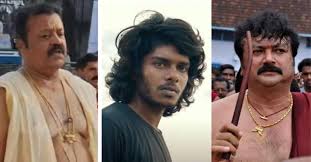
THIRUVANANTHAPURAM: Rapper Vedan said he faces challenges walking the path paved by Ayyankali and Ambedkar, but vowed to continue moving forward with courage. He was speaking at the 84th death anniversary event of social reformer Ayyankali, organised by the KPMS district committee at Olympia Hall, Chandrasekharan Nair Stadium in Thiruvananthapuram. Vedan also offered a floral tribute at the Venganur Ayyankali Smrithi Mandapam on Wednesday morning. While speaking at the event, Vedan pointed out that the casteist society of Kerala celebrates Ambedkar and Ayyankali as leaders of a particular community and that must change. He said the community is yet to grow into an organised group capable of questioning political parties, and added that there is a need to resist the politics of Sanatana Dharma that divides people, especially marginalised communities. He added that Dalits are still treated as slaves by Sanatana Dharma and that a time should come when events like this are celebrated by a diverse audience in a larger venue. “We are becoming divided ourselves. The lack of fraternity encouraged by extreme Sanatana Dharma has crept into us too. What I witnessed here today is proof of that. Next time when such an event is organised, I hope to see it held in a bigger venue with participation from a broader audience,” he said. Vedan also said he would rather call Ayyankali a Mahaveeran (great warrior) than a mahatma (a revered person). “It is unfortunate that we are remembering someone as great as Ayyankali from such a small room. He should be celebrated in a way that the world recognises him. A time will come when the mainstream accepts him,” he said. The event was inaugurated by KPMS General Secretary Alangode Surendran. Vedan was honoured at the event. When presented with the Ayyankali’s ‘Thalappavu’ (head gear), he respectfully declined to wear it, saying he did not feel worthy. He performed two songs at the event, one based on a poem by Poykayil Appachan, and another, his own rap number titled ‘Kondal’. Courtesy : MSN Note: This news is originally published on https:/msn.com/ and is for use by the non-military/non-commercial community, especially those in the human rights sector.
Beyond Binaries: The Kerala High Court Judgement On Transgender Parenthood
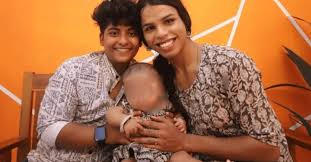
The Kerala High Court recently ruled in favour of a writ petition filed by a transgender couple seeking the issuance of a birth certificate for their child which mentioned them as “parent” rather than “mother” and “father”. n a recent historic and landmark judgement, one that could ripple beyond Kerala and can have a resounding impact on the institutional visibility of the queer community, the Kerala High Court recently ruled in favour of a writ petition filed by a transgender couple seeking the issuance of a birth certificate for their child which mentioned them as “parent” rather than “mother” and “father”. Stating the concerns raised as valid, the single Judge Bench of Ziyad Rahman A.A., J., held that the issuance of a certificate in the format as prescribed under the provisions contained in the Registration of Births and Deaths Act, 1969 (RBD Act) and Kerala Registration of Births and Deaths Rules, 1999, can cause severe difficulties to the child in life ahead. The Court also asserted that the laws that are not in line with societal changes need to evolve, and the Court must intervene to address the concerns of the concerned parties. Birth certificates being foundational documents determine access to a host of rights. Thus allowing the use of gender-neutral terminology, this ruling holds significant importance as it challenges one of the many structural ways the state invisiblises the queer community. The case in detail: challenging the binary institutional framework The couple, Ziya Paval (transgender woman) and Zahad (transgender man), had made waves back in 2023 when they became the first known transgender couple in India to have a biological child. Upon birth the Kozhikode Corporation issued a birth certificate that listed Zahad as the “mother (transgender)” and Ziya as the “father (transgender)”, ignoring and contradicting their self-identified genders. The couple felt distressed, stating that such a discrepancy could create serious problems in the life of the child—with regards to identification documents and school admission— since the biological mother of the child identified herself as a male under the Transgender Persons (Protection of Rights) Act, 2019, and was living as a male member of the society. Source: YourStory They approached the Kozhikode Corporation to issue a new birth certificate describing them simply as “parent” rather than mother and father or mentioning their gender. The Corporation dismissed their request, stating that the certificate was prescribed in accordance with the format contained in the RBD Act 1969 and the Kerala Registration of Births and Deaths Rules, 1999, which only accommodates the traditional binary nomenclature. The couple’s request was not entertained, as the corporation held that there were no other statutory provisions under which they could issue an alternative gender-neutral birth certificate. This decision led the couple to file the writ petition seeking a legal route to reinstate their fundamental rights of equality and the right to self-perceived gender identity as stated under the Transgender Persons (Protection of Rights) Act, 2019. This decision led the couple to file the writ petition seeking a legal route to reinstate their fundamental rights of equality and the right to self-perceived gender identity as stated under the Transgender Persons (Protection of Rights) Act, 2019. ‘Since scientifically there’s some contradiction in the fact that males give birth to a child, the petitioners requested the authorities to avoid the names of the father and mother but simply write ‘Parent’ to avoid further embarrassment which the third petitioner (child) would have to face during her lifetime, viz., school admission, Adhar Card, PAN Card, Passport and various other documents including job and connected matters,’ the transgender couple had explained in their petition. The apprehension of discrimination based on lived realities of transgender individuals The Kerala Court evoked the National Legal Services Authority v. Union of India (2014) judgement where the Supreme Court legally recognised the “third gender”/transgender persons and ruled that they are entitled to the fundamental rights and protection under the Constitution. Represented by Padma Lakshmi, Kerala’s first transgender lawyer argued that the rejection of their request violated their fundamental right to equality under Article 14 of the constitution. The Court maintained that the grievance raised by the couple can not be sidelined since the parental status of the couple was totally in contradiction to the life pursued by them presently. Thus, the confusions and prejudices, as perceived by the couple, in prospect were genuine and very likely to occur. Source: Rediff The Court also adjudicated that even though the child—the recipient of the birth certificate— was not a transgender person, his identity was linked and inseparable from that of the parents, who are a transgender couple, thus providing him equal protection under the Transgender Persons Act 2019. Legal precedent and the evolving nature of society Further, the court stated that the law cannot remain static, and the laws need to evolve in accordance with the changes in the society and lifestyle of people. This was consolidated by referencing the Supreme Court verdict in the Badshah v. Urmila Badshah Godse (2014) judgement, where the Supreme Court had addressed the importance of adopting different approaches in “social justice adjudication” and “social context adjudication” when interpreting laws. This meant that courts need to interpret the legal meaning reflecting the lived realities rather than being congested by the rigid and outdated categories. This statement signified the importance of purposive interpretation of existing laws to accommodate arrangements that usually expunge the queer community, thus allowing one to look beyond cis-heteronormativity. The Court also pointed out that the RBD Act was framed considering the binary concept of gender, and there was no concept of legal recognition of the third gender. The Court also pointed out that the RBD Act was framed considering the binary concept of gender, and there was no concept of legal recognition of the third gender. It held that necessary modifications could be made in appropriate cases where the interests of the transgender persons were involved. It also held that when statutory language does not account for the societal transformation,
Kerala HC allows transgender couple’s plea to have their names entered as ‘parents’, instead of father and mother, in child’s birth certificate
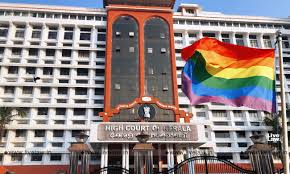
Kochi: In a significant judgment, Kerala high court has allowed a transgender couple’s petition to have their names entered in their child’s birth certificate as ‘parents’, by omitting the usual columns specifying ‘father’ and ‘mother’. The bench of Justice A A Ziyad Rahman passed the order on a petition filed by Zahhad, a transman, and Ziya Paval, a transwoman — both natives of Kozhikode and India’s first transgender parents. Zahhad had given birth to a child in Feb 2023. The birth certificate, issued by Kozhikode corporation under the Kerala Registration of Birth and Death Rules, 1999, listed Ziya as the father and Zahhad as the mother. The petitioners approached the corporation officials to change the details to reflect both as parents rather than as mother and father, but their request was rejected. The couple then approached high court, contending that Zahhad, now living as a man in society, being identified as the mother would cause complications in the future. They expressed concerns that a certificate indicating a man had given birth could cause difficulties for the child during school admissions, passport and Aadhaar applications, and other official processes. They sought a directive to denote them simply as ‘parents,’ without assigning the roles of father and mother. Allowing the plea, the bench directed the Kozhikode corporation to modify the birth certificate within two months by removing the columns for father and mother and incorporating the names of the petitioners as parents without referring to their genders. A detailed judgment is awaited. Courtesy : TOI Note: This news is originally published on https://timesofindia.com/ and is for use by the non-military/non-commercial community, especially those in the human rights sector.
Denied entry into govt schools, Dalits in 1910 Kerala threatened to cut off grain supply
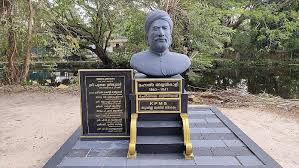
‘Identity, Conflict, and Counter-Narratives’, edited by Yagati Chinna Rao and Raj Sekhar Basu, explores the diverse facets of Dalit history and cultural experiences. At the beginning of the twentieth century, 927 out of every 1,000 Ezhavas in Travancore were illiterate; despite the removal of legal hindrances, Ezhava students were excluded from schools. Even if they were educated, employment opportunities were hard to come by, as they were not recruited into government service.A powerful political awakening had been spurred in Travancore by the 1891 G. P. Pillai-led agitation against the autocratic administration of the state and the denial to native communities of their due share in government jobs. The agitation, which adopted ‘Travancore for Travancoreans’ as its slogan, finally led to the drawing up of the Travancore Memorial (Malayali Memorial), a petition to the Maharaja signed by Nairs, Ezhavas, and Christians. However, the primary interest underlying the petition was that of the Nair community, and its major grievance was that the native upper castes were not being given adequate representation in the bureaucracy; the discrimination suffered by Ezhavas was only superficially touched on. The reply from the sirkar pointed out that ‘Ezhavas were a [contented] lot and if the government was to adopt a deliberate policy to give them a share in education and administration it would be unproductive and would create tension and strain communal harmony. Realising that the Malayali Memorial was a failure from their point of view, the Ezhava community, under the leadership of Dr Palpu, submitted in 1895 a lengthy petition, composed in English, to Sankara Subaiyer, the Dewan of Travancore, enlisting the disabilities suffered by them. Another memorandum was submitted to the Maharaja in 1896. Both of these, known as the Ezhava Memorials, demanded entry into government schools and government employment. In response, the Dewan assured the Ezhavas that they would be granted special schools, but this assurance proved insubstantial; only two primary schools were opened for them. Dr Palpu’s disappointment with the Dewan’s response gave birth to the Ezhava Mahajana Sabha in 1896, but the organisation was unable to gather any significant momentum. It was only with the formation of SNDP in 1903 under the spiritual leadership of Sri Narayana Guru that the Ezhava struggles and demands received a meaningful boost. The first objective of SNDP was to remove the obstacles in the way of Ezhava admission to government and government-aided schools. Later, the Yogam shifted its focus to establishing its own schools and colleges. Narayan Guru’s motto was ‘Strengthen through organisation, liberate by education,’ and this inspired the Ezhava community; under his guidance, SNDP attracted Ezhavas not only in Travancore but also in Cochin and Malabar. This does not mean that other communities were not seeking similar possibilities. They, too, organised themselves and began attempting to climb the social ladder, but their role was marginal in this game of power. English education, control over land, and access to government offices were the three variables that affected the status and power of every community at the time. By the 1930s, education had become a majorly contested political issue; while the lower castes that demanded education were often seeking escape from various forms of elite oppression, upper-caste interest in modern schooling was clearly linked to new opportunities for employment in the rapidly modernising states, the expanding bureaucracy and welfare network, and the economic opportunities emerging in the wake of Kerala’s economic integration with the world-system. The access enjoyed by different communities across the social spectrum to education, land, and employment was neither even nor characterised by the same calculations of advantage, but education was perceived by everyone as the door to economic upward mobility and the emerging political field. Inevitably, the powerful communities—those with economic clout and/or caste clout—triumphed. Apart from Protestant missionaries, Syrian Christians also invested a lot in education. By the end of the nineteenth century, we see the Syrian Orthodox Church registering a society to manage and coordinate its educational activities. From the 1880s, Indian Catholics started establishing schools, and they quickly made outstanding progress in this field: between 1882 and 1887, the number of schools under Catholic management increased from around 10 to over 1,000. A famous Syrian Christian leader of this time period, Father Immanuel Nidhiry, is reported to have said in a speech that an English school would be ‘a more prized asset than the golden crosses of churches’, which could be stolen. Clearly, the church accorded great importance to the matter of investing in education. It is important to note in this regard that Syrian Christians also received assistance in their efforts from the government in the form of liberal grants-in-aid. The experience of the less powerful communities, however, appears to have been different. The coastal Arayas also initiated efforts at modernisation between the late nineteenth and early twentieth centuries but did not succeed significantly. Despite its early efforts, the Araya reform movement failed to establish an adequate and sustainable network of secular community institutions to promote education and other skills needed for modern political and economic life. A large number of institutions sprang up, but they were short-lived, mainly due to financial constraints. Meanwhile, Southern Travancore was seized by a different kind of politics. Under the leadership of Ayyankali (1863–1941), Dalits started laying claim to public spaces, including schools. In 1898, Ayyankali, who later became the first Dalit nominated member in Sri Mulam Praja Sabha, broke caste rules by riding his villuvandi (ox cart) from Venganoor to Aralamudu market in Balaramapuram, heralding in a sense a more forceful era of Dalit assertion. In 1907, Ayyankali established the Sadhujana Paripalana Sangham, a movement that targeted the retrograde practice of keeping the Pulaya away from public roads and marketplaces. Several other Dalit organisations sprang up around the same time: Prathyaksha Raksha Sabha (under Poykayil Yohannan, later known as Kumara Guru Devan), Thiruvathamkoor Paraya Maha Sabha, Sidhanar Service Society, Sambavar Mahasabha, Cheramar Sangathana, and Sathya Vilasini Sangham. In 1904, the Pulayas under the leadership of Ayyankali set up a school
Rahul visiting Anvar was a mistake: Satheesan
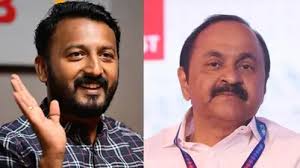
Kochi: Opposition leader V D Satheesan said that Youth Congress state president Rahul Mamkootathil’s visit to P V Anvar was not with the knowledge of the UDF or Congress leadership. The UDF decided not to engage in further discussions with him and officially informed Anvar of their decision, Satheesan told reporters in Kochi on Sunday. Despite being asked to support the UDF candidate, Anvar repeated his previous stance, resulting in the UDF closing the door. “No one was tasked with negotiating with Anvar, and Mamkootathil’s visit to him was a mistake. The UDF meeting decided to close the door on discussions, and there will be no further talks. Filing nomination is Anvar’s choice. In Nilambur, it’s between the UDF and LDF. The UDF will evaluate the govt’s nine-year performance. People are fed up with this govt. The secret alliance of the CPM with the BJP will also be discussed,” Satheesan said. UDF in Nilambur is stronger than it was in Thrikkakara, Puthuppally and Palakkad, the opposition leader said. In the 2021 polls, even during the LDF wave, the victory margin here was only 2,700. Extensive preparations have been made, and the results will be seen in Nilambur. “The UDF is so strong that it won’t yield to any pressure. UDF is an alliance formed by eminent leaders. No decision will be made to tarnish UDF’s pride. This is not my personal opinion but a unified decision of the UDF, and I was tasked with conveying it. I am prepared to face any criticism for this. There will be no response to any attacks. Aryadan Shoukath will win by a large margin,” he added. Satheesan alleged that there is a secret alliance between CPM and BJP to defeat Congress in Nilambur. He said the state govt raising no complaints regarding the collapse of the national highway could be seen as proof of this alliance. “In Nilambur, CPM and BJP have reportedly formed an agreement to defeat the UDF. This is why BJP initially decided not to field a candidate. However, they have now fielded a candidate to escape allegations against their leadership. BJP has promised the CPM that their candidate can split the UDF votes. But no UDF vote will go to either the CPM or BJP. UDF is facing the election politically and is organisationally strong,” he added. Despite widespread damage to the national highway and massive corruption worth billions of rupees, Kerala govt has not complained against the central govt, Satheesan said. The CPM, which once accused the UDF govt regarding the Palarivattom bridge, is now silent about the national highway collapse due to fear, he said. Courtesy : TOI Note: This news is originally published on https://timesofindia.com/ and is for use by the non-military/non-commercial community, especially those in the human rights sector.
Kerala: Dalit woman was made to sit in police station for 20 hours, given toilet water to drink, theft allegation turned out to be false – now delay in recording statement!
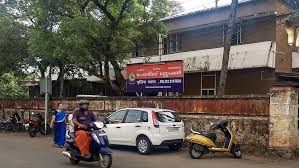
The voice of domestic help Bindu R, who was a victim of illegal detention and caste harassment at Perurkada police station, is now echoing across Kerala, the Chief Minister called the case unacceptable. Thiruvananthapuram: The process of recording the statement of Dalit woman Bindu R, who was a victim of illegal detention and mental harassment at Perurkada police station, is getting delayed. The reason for this is that the State Human Rights Commission (SHRC) has directed that the presence of a woman lawyer appointed by the District Legal Services Authority (DLSA) will be mandatory while recording the statement. After this direction, Crime Branch DYSP K.A. Vidyadharan has written a letter to the Secretary of Thiruvananthapuram DLSA demanding the appointment of a woman lawyer as soon as possible. The investigation of the case has been assigned to the Crime Branch DySP of Pathanamthitta as the SHRC had made it clear that since the case involved policemen serving in Thiruvananthapuram district, the investigation should be assigned to an officer from outside the district. According to sources, the SHRC has given directions to ensure that all legal procedures are followed and the rights and dignity of the victim are protected. Once Bindu’s statement is recorded, the investigating officer will begin examining documents from the Peroorkada police station. This will include examining the sentry report and other certified copies to find out if more policemen were involved in the case. These documents are expected to reveal the extent to which the police station staff abused their powers and intimidated Bindu. Bindu, who worked as a domestic help, was illegally detained and mentally tortured for about 20 hours on April 23 by her employer Omana Davis on false charges of theft. Following the incident, SI S.G. Prasad and ASI Prasanna Kumar of the Peroorkada police station have been suspended for their actions. Prasanna, who was handling the station’s General Diary (GD), is accused of aiding the illegal detention, making casteist remarks, and even making Bindu drink toilet water when she demanded drinking water. Prasad was suspended based on a report by the Assistant Commissioner of Special Branch. Though an FIR was lodged against Bindu, she was later released after the complainant admitted that the jewellery was found at home. Bindu approached the Chief Minister’s Office over the matter, but there, Chief Minister’s political secretary P. Sasi allegedly ignored her complaint. However, when the matter led to public outrage, Chief Minister Pinarayi Vijayan strongly condemned it, calling it “unacceptable”. This was the whole case Bindu, who is a domestic worker and hails from Chullimanoor, was accused by her employer of stealing a gold chain on April 23. Based on this complaint, the Perurkada police called her and called her to the police station. On reaching the police station, the victim repeatedly said that she was innocent, but the police did not listen to her. According to Bindu, a woman police officer took her to a room, made her remove her clothes and searched her. Then the police took her to her house and searched it too. During this time, she was not allowed to talk to the family, nor was she given food and water. Bindu told the media, “When I asked for water, a policeman said – ‘Go to the toilet and drink from there’.” Detained overnight, threatened to implicate daughters Bindu said that she was kept in the police station all night and the interrogation continued till the next morning. An FIR was registered and the police threatened her that if she did not admit to the theft, her minor daughters would also be implicated in the case. Later, when the house owner and her daughter visited the police station again, they said they had been ‘forgiven’. Some time later, the stolen gold chain was found in the house, and the complainant herself admitted that the allegation was false. Complaint ignored in CMO When Bindu, with the help of a lawyer, submitted a written complaint to the Chief Minister’s political secretary P. Sasi, she claims that Sasi neither read the complaint nor gave any assurance. “He said that such things happen and advised me to approach the court,” Bindu had said. However, later the CMO clarified that the police were directed to take action after receiving the complaint. But according to Bindu, she had also urged the CMO to register a case against the woman who had falsely accused her, which was rejected. Courtesy : Rajan Chaudhary, Hindi News
SHRC delays Dalit woman’s statement recording in Peroorkada custodial harassment case
Bindu was kept in illegal custody and mentally harassed for nearly 20 hours on April 23 after being accused of theft by her employer, Omana Davis. THIRUVANANTHAPURAM: The recording of the statement of the dalit woman, who was allegedly mentally harassed in Peroorkada police station, by crime branch (CB) will be delayed after the State Human Rights Commission (SHRC) stipulated that a woman lawyer deputed by the District Legal Services Authority (DLSA) should be present during the proceedings. Following this, Crime Branch DySP K A Vidyadharan has written to the secretary of Thiruvananthapuram DLSA urging a speedy appointment of a woman lawyer. Crime Branch Pathanamthitta DySP was given the investigation charge on the SHRC directive as the commission wanted an officer from outside the district to probe the case, which is sensational and involves serving police officers. Sources said SHRC directed the police to ensure the presence of a female lawyer to assist the victim, Bindu R, and to ensure that the proceedings are in line with the law. Meanwhile, sources said after the woman’s statement is recorded, the officer will verify the documents from Peroorkada station to assess whether more police personnel were involved in the case. The attested copies of documents, including sentry report, will be sought from the station and they will be verified. These documents, it’s expected, would reveal to what extent the cops misused laws to mentally harass the woman, who worked as a domestic worker, while she was illegally detained in the station. Bindu was kept in illegal custody and mentally harassed for nearly 20 hours on April 23 after being accused of theft by her employer, Omana Davis. The complaint, which alleged that an 18g gold chain had gone missing, later turned out to be baseless. Two officers from the Peroorkada station — SI S G Prasad and ASI Prasanna Kumar — have already been suspended for their involvement in the incident. Prasanna, who was in charge of maintaining the station’s general diary (GD), allegedly aided in the illegal detention, made casteist remarks and told Bindu to consume water from the toilet when she requested drinking water. Prasad’s suspension was based on an adverse report filed by the special branch assistant commissioner, who had probed the incident. Though an FIR was registered, she was later released after the complainant admitted that the ornaments were found at home. Later, Bindu approached the chief minister’s office but faced setback as his political secretary P Sasi allegedly dismissed her complaint. The issue gained momentum after public outcry, prompting Chief Minister Pinarayi Vijayan to call the incident ‘unacceptable’. Courtesy : TNIE Note: This news is originally published on https://thenewindianexpress.com/ and is for use by the non-military/non-commercial community, especially those in the human rights sector.
Dalit woman’s complaint: Peroorkada ASI suspended

Case pertains to illegal detention of domestic worker on a trumped-up charge of stealing gold necklace from her employer’s house The State Police suspended another officer attached to the Peroorkada police station in connection with the illegal detention of Nedumangad native Bindu R., a Dalit woman and domestic worker, on a trumped-up charge of stealing a gold necklace from her employer’s house. District Police Chief (Thiruvananthapuram City) Thomson Jose issued orders suspending grade assistant sub-inspector Prasannakumar for mistreating the woman at the police station. An inquiry conducted by the Assistant Commissioner of Police, Cantonment, found Prasannakumar guilty of dereliction of duty while being in charge of the General Diary entry on the particular day (April 23). The complainant had also accused him of harassing her and hurling abuses. She also alleged that the officer had asked her to drink water from the washroom when she asked for water. The disciplinary action comes two days after Peroorkada sub-inspector Prasad S.G. had been suspended, pending inquiry, in connection with the incident. Official sources indicated that the ongoing inquiry will continue, with possible action being adopted against more officials who were present at the station when the incident had occurred. Courtesy : The Hindu Bureau, The Hindu Note: This news is originally published on https://thehindu.com/ and is for use by the non-military/non-commercial community, especially those in the human rights sector.
Dalit woman stripped and searched in police station, asked for water and got toilet water! — Serious allegations against Kerala police
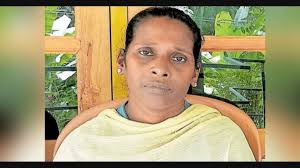
A 39-year-old Dalit woman from Kerala has made serious allegations of inhumane treatment, stripping and searching and mental harassment in police custody. The FIR in the case turned out to be false, but the action is still incomplete. Thiruvananthapuram — A 39-year-old Dalit woman Bindu was not only arrested on false charges of theft in Kerala’s capital Thiruvananthapuram, but also had to face inhumane mental torture in police custody. After this case came to light, there has been a stir in the state politics and the opposition has launched a scathing attack on the Chief Minister’s Office (CMO) and the police department. False allegation of theft and harassment in custody Bindu, who is a domestic worker and hails from Chullimanoor, was accused by her employer of stealing a gold chain on April 23. Based on this complaint, the Perurkada police called her and called her to the police station. On reaching the police station, the victim repeatedly said that she was innocent, but the police did not listen to her. According to Bindu, a woman police officer took her to a room, made her remove her clothes and searched her. Then the police took her to her house and searched there too. During this time she was not allowed to talk to the family, nor was she given food and water. Bindu told the media, “When I asked for water, a policeman said – ‘Go to the toilet and drink from there’.” Detained overnight, threatened to implicate daughters Bindu said that she was kept in the police station all night and the interrogation continued till the next morning. An FIR was registered and the police threatened her that if she did not confess to the theft, her minor daughters would also be implicated in the case. Later when the mistress of the house and her daughter reached the police station again, they said that they had been ‘forgiven’. After some time it was found that the stolen gold chain was found in the house itself, and the complainant herself admitted that the allegation was false. Complaint ignored in CMO When Bindu gave a written complaint to Chief Minister’s political secretary P. Sasi with the help of a lawyer, she claims that Sasi neither read the complaint nor gave any assurance. “He said that this is a common thing and advised me to go to court,” Bindu said. However, the CMO later clarified that the police were directed to take action after receiving the complaint. But according to Bindu, she had also requested the CMO to register a case against the woman who falsely accused her, which was rejected. Opposition and social organizations’ outrage Opposition leader V.D. Satheesan condemned the incident, saying, “This is not just an isolated incident but an example of injustice meted out to Dalits by the ruling system. Strict action should be taken against the guilty police officials.” Former Home Minister Thiruvanchoor Radhakrishnan called it “inhuman” and said that such incidents should have no place in a progressive society. Congress state president Sunny Joseph and AIDWA (All India Democratic Women’s Association) national president P.K. Srimathi also condemned the incident. “No woman should be treated like this. This is an example of police brutality,” Srimathi said. Policeman suspended, BNSS law violated An inquiry conducted by Police Commissioner Thomson Jose revealed that several procedural lapses were committed in Bindu’s arrest. The inquiry found that the police violated the provisions of the Indian Civil Security Code (BNSS) – which prohibits arresting women after sunset and before sunrise, unless with the permission of a magistrate. The police neither informed her family about the arrest nor gave any explanation in court as to why the arrest was necessary in an emergency situation. Based on these serious lapses, sub-inspector SG Prasad of Perurkada police station has been suspended and an inquiry is underway against other responsible officers. Demand for justice Bindu has filed complaints with the chief minister, the state police chief and the Scheduled Caste Commission and is now preparing to move court. She said the police not only discriminated against her on the basis of caste but also physically and mentally tortured her. Bindu said, “I have identified some policemen. I will go to court. I want justice.” Courtesy : Rajan Chaudhary, Hindi News
Asked to drink water from bucket: Kerala cop suspended for harassing Dalit woman
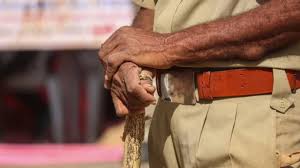
A Dalit domestic worker in Kerala, reportedly, was wrongfully accused of stealing, detained overnight and allegedly harassed by police. The gold was later found at her employer’s house. The sub-inspector has been suspended pending enquiry. A sub-inspector (SI) from a police station in Kerala’s Thiruvananthapuram was suspended after a Dalit woman was falsely accused of theft and allegedly harassed in custody. The action against SI Prasad comes after R Bindhu, a domestic worker, recently filed complaints with the Chief Minister, the State Police Chief and the State SC/ST Commission, regarding the harassment. Bindhu was reportedly summoned to the Peroorkada police station on April 23 after her employer alleged that 2.5 sovereigns of gold (around 20 g valued at about Rs 1.6 lakh) were missing. Despite a body and bag check that yielded nothing, an FIR was registered against her. She says she was detained at the station for nearly 20 hours and pressured to confess. “Police officers behaved very badly with me. One of them threatened me saying they will implicate my daughters and husband in the case. He said the society will treat me as a thief and when I asked for water, he asked me to drink from the bucket kept in the bathroom,” she recounted. She added that police treated her poorly even after the gold was recovered from her employer’s residence. Opposition leader VD Satheesan slammed the Pinarayi Vijayan-led LDF government over the incident. “Even after the complaint was withdrawn, an FIR was filed and the woman was threatened. When Pinarayi Vijayan is the Home Minister, is water from the toilet given to those who come to a police station?” he asked. Satheesan also criticised the Chief Minister’s office for allegedly dismissing Bindhu when she approached them. “She was insulted again. They told her she could go to court. Is this the justice a Dalit woman gets?” he said. Courtesy : India Today Note: This news is originally published on https://indiatoday.com/ and is for use by the non-military/non-commercial community, especially those in the human rights sector.