
Wayanad voters refute Anurag Singh Thakur’s fraud claims

Kozhikode: Several voters in Wayanad rejected BJP leader Anurag Thakur’s allegations of voter list fraud in the constituency. On Wednesday, Thakur held a news conference in Delhi and claimed that 4,246 voters of different religions were registered at the same house in Wayanad, which is represented by Priyanka Gandhi and was earlier represented by Rahul Gandhi. Among those named, two voters from Chaunderi in Kalpetta assembly segment said Thakur’s claims were completely false. He had cited them as examples of people from different religions living in the same house. Thakur had cited the case of Valliyamma (72) daughter of Somasundaram and Mariyam, daughter of Abdul Karim, as examples of voters of multiple religions registered in house number ‘o/ Chaunderi’ under booth 41 of Kalpetta. Both families added that Valliyamma and Mariyam, both elderly people, were living in separate houses. “Chaunderi is the name of our village. We were born and raised here. Many in the village use the place name as their house name. That doesn’t mean we live in one house,” said retired revenue department official K Vadivelu, who is the son-in-law of Valliyamma. Valliyamma’s daughter said that her mother had voted in all elections. “Mariyam is my mother’s childhood friend. She belongs to a different community and lives in another house at Keeripettakunnu. I don’t know how this allegation cropped up,” she said. Mariyam, whose house is located 1km away, rejected Thakur’s allegation. “Valliyamma is living in her house and I have my own,” she said. Also two other voters in Thiruvambady assembly constituency – Shahina and Madhavan V T – who were cited by BJP as examples of voters of multiple religions registered in the house named Vallikattummal in booth 24 rejected the allegation. “There are several families in ward-18 with the house name Vallikattummal. There are around 150 families with the same house name and they belong to all religions. For instance in our ward there is Vilasini, Mary, Shabeer and Gopalan and their house name is Vallikattummal,” said Shahina. Madhavan, who lives 3km away from Shahina’s home, rejected BJP’s allegation. Thakur had alleged that there were 20,438 duplicate voters in Wayanad. To substantiate his allegation, he mentioned Maimoona from Ernad assembly constituency, claiming she was registered as a voter in booths 135, 115, and 152. However, the three women named Maimoona are different individuals living in separate panchayats. Maimoona of booth 115 said that her father’s name was Vellipadan Muhammed and her husband was Mangalan Alavi. ” I voted in the booth at Thamburankunnungal all these years and have not voted anywhere else,” she said. The other two Maimoonas also refuted Thakur’s charges. Kalpetta MLA T Siddique rejected Thakur’s allegations and accused Election Commission (EC) of providing BJP with access to a digital electoral roll. Siddique asked whether EC, which served a notice to Rahul Gandhi over a news conference, would take action against Thakur for making false accusations. Siddique said Thakur has committed a criminal offence Courtesy : TOI Note: This news is originally published on https:/timesofindia.com/bha and is used purely for non-profit/non-commercial purposes, especially human rights.
Adoor Gopalakrishnan’s Casteist Speech At Kerala Film Policy Conclave Interrupted; Faces Backlash From Dalit Filmmakers
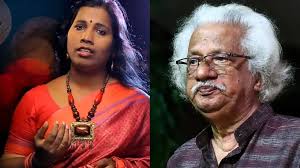
Renowned Dalit singer Pushpavathi Poypadathu slammed Adoor Gopalakrishnan’s controversial remarks during his speech. The two-day Kerala Film Policy Conclave hosted by the Kerala state government on August 2-3 to brainstorm regulatory policies for the state’s film industry ended in a fiasco when veteran filmmaker Adoor Gopalakrishnan criticised the government incentive programmes for filmmakers from Scheduled Castes and Scheduled Tribes (SC/ST) and women filmmakers. Gopalakrishnan’s remarks drew instant censure from Malayalam musician and composer Pushpavathi Poypadathu. The incident has drawn Kerala film industry personnel into a protracted division along caste and gender lines. Dalit human rights activist Dinu Veyil filed a complaint against the filmmaker for promoting ill will against SC/ST communities under Section 3(1)(u) of the SC/ST (Prevention of Atrocities) Act. Gopalakrishnan’s remarks have displayed the full force of patriarchal and Savarna attitudes that contaminate the Kerala film industry. Dalit filmmakers need “intensive training with experts”. Addressing nearly 500 film delegates from around the country and the world at the Legislative Assembly complex in Thiruvananthapuram, Gopalakrishnan, in his concluding remarks at the conclave on August 3rd, insisted that the state’s current incentive programme is badly in need of reform, with many issues plaguing it, including corruption in the use of funds. At the 13-minute mark of his speech, for nearly three minutes, Gopalakrishnan expounded on the shortcomings of both the Kerala State Film Development Corporation (KSFDC) incentive for SC/ST filmmakers and Dalit filmmakers themselves: ‘In my lifetime I have not made a film for two crores. At the same time, the government gives 1.5 crores to scheduled castes and scheduled tribes to make films. I told the esteemed minister that this will lead the way to corruption. The esteemed finance minister knows this. But no changes have been made. Also, when they are selected, I have an important recommendation to make. For these people from the scheduled castes . . . they should be given at least three months of intensive training on how to make films. Someone approaches (the state) with interest in filmmaking. Sending them away by telling them, “Go make a film,” is no way to encourage them. So, they should be given three months of training under experts. They should be taught everything, including how to budget for a film. . . These are public funds. This is tax revenue taken from the public. There are numerous very important issues in our lives that need to be funded. . . Yes, you must provide training to them. Reduce the amount from 1.5 crores for one person to fifty lakhs each for three people.’ Regarding KSFDC initiatives for women filmmakers, Gopalakrishnan reiterated his recommendations: ‘The funding for women is the same. Don’t give money just because somebody is a woman. A woman should also be given training. It is very important that we have women film directors. We have one or two, and they are good. But if we want new directors like them to come forward, they must understand the difficulties of making films.’ “Women filmmakers must understand the difficulties of making films.” KSFDC, founded in 1975, started funding initiatives for women filmmakers forty-four years later in 2019-2020, followed by funding directors from the Dalit communities in 2020-21. Under the scheme, KSFDC awards 1.5 crores each to two filmmakers from each category. The applicants go through several rounds of evaluation, workshops, and interviews conducted by a panel of expert judges appointed by KSFDC. Gopalakrishnan expounded on the shortcomings of the incentive for SC/ST filmmakers: For these people from the scheduled castes . . . they should be given at least three months of intensive training on how to make films. Someone approaches (the state) with interest in filmmaking. Sending them away by telling them, “Go make a film,” is no way to encourage them. So, they should be given three months of training under experts. They should be taught everything, including how to budget for a film‘ So far, ten films produced by KSFDC have been released and/or are slated to be released under this scheme, which include Nishiddho (Forbidden, Dir. Tara Ramanujan, 2022), Divorce (Dir. Mini I. G., 2023), and B 32 Muthal 44 Vare (From B 32 to B 44, Dir. Shruthi Sharanyam, 2023), and comprise directors from Dalit communities. Nishiddho won the Kerala State Film Award for Best Feature Film in 2022 with an international premiere at the Frankfurt Independent Film Festival, while B 32 Muthal 44 Vare won the Best Director Award in the Women/Transgender category in 2023, and Victoria won the FIPRESCI award for Best Malayalam Film by a debut director in 2024. While Gopalakrishnan’s comments garnered some applause, audience response displayed several conclave attendees looking puzzled at these casteist and sexist remarks. At the outset of the public backlash against the filmmaker, the activist body Women in Cinema Collective (WCC) strongly condemned the filmmaker for his remarks: At the Kerala Film Policy Conclave and in the days that followed, Adoor Gopalakrishnan once again exposed his upper-caste, caste, and gender-biased perspective to the public through his comments on the filmmaking experiences of new female and Dalit directors in Malayalam cinema. During his speech, Adoor has undoubtedly confirmed his patriarchal and anti-Dalit stance by making derogatory statements about renowned singer Pushpavathi, who is also the vice-chairperson of the Sangeetha Nataka Akademi, who reacted against it. WCC strongly condemns Adoor’s approach and stance.’ “Who is she? Who has empowered her?” In the aftermath of the incident, in an interview given to a prominent Malayalam news channel, Adoor Gopalakrishnan defended his remarks. He insisted that he was ‘speaking for’ the Dalit community and not against it. It appears that Gopalakrishnan has appropriated the right to ‘speak for’ the Dalit community to himself. He has no tolerance for voices from inside the Dalit community, as evidenced by his hostile and unprofessional tirade against Pushpavathi Poypadathu for ‘interrupting’ him during his speech. Referring to Pushpavathi Poypadathu at various times as ‘girl’, ‘that woman’, and ‘some woman off the street’, Gopalakrishnan barked at the interviewer: Pushpavathi
‘He portrays all members of the SC/ST section as criminals, thieves’: Dalit activist files complaint against Adoor Gopalakrishnan for ‘casteist’ remarks
Dinu Veyil labelled Gopalakrishnan a “casteist”, and filed a complaint with the Thiruvananthapuram Museum Police Station, accusing the filmmaker of encouraging ill-will Dalit activist Dinu Veyil has filed a complaint against filmmaker Adoor Gopalakrishnan for portraying members of the Scheduled Caste and Scheduled Tribes as “criminals, thieves or prone to corruption”. Veyil, founder of the non-governmental organisation Dhisha Kerala, took to Facebook to inform that an official complaint was filed at the Thiruvananthapuram Museum Police Station and SC/ST Commission. As per the post, Veyil accused Gopalakrishnan of encouraging ill will. “Portraying the SC/ST group as “Take the money and run” as taking away the money provided by the government schemes by SC/ST community links to dishonesty/IMMORALITY/corruption, thereby creating ill-will (dislike) against SC/ST community is likely to grow in the minds of others [sic],” he penned. Veyil further labelled Gopalakrishnan’s comments as “intentional humiliation”. “Although not personally targeted, Adoor’s statement insults the individuals who belong to the SC/ST category who were present in the platform, the people who belong to the ST category who applied for the present fund so far, and the people who belonged to the SC/ ST category who are watching this through social media and TV channels.” The human rights advocate had earlier bashed Gopalakrishnan and questioned the filmmaker on the genuineness of his claims. “Under what data is it said that the money given to SC/ST will create a way for corruption?” He further called the filmmaker a “casteist”. During the Kerala Policy Film Conclave held on Sunday, Gopalakrishnan took centre stage to comment that the ₹1.5 crore grant provided to SC/ST could pave the way for corruption. Though he appreciated the initiative, the filmmaker suggested that those receiving it must undergo three months of intensive training before making films. Courtesy : The Week Note: This news is originally published on https:/theweek.com/bha and is used purely for non-profit/non-commercial purposes, especially human rights.
New twist in Prayagraj’s Kerala story, girl told- preparations were on to send her to Saudi Sheikh

The girl has claimed that the training center in Kerala where she was kept was going to get lakhs of rupees from the Saudi Sheikh. Investigation has revealed that preparations were underway to send the victim Dalit girl to Saudi Arabia on a work visa. A new twist has come in the case of taking a Dalit girl from Prayagraj to Kerala and converting her religion. The victim girl has told the police that the gang that trapped her had given her training in Islamic ways and preparations were on to take her to Saudi. She was going to get lakhs of rupees from the Sheikh The girl has claimed that the training center in Kerala where she was kept was going to get lakhs of rupees from the Saudi Sheikh. Investigation has revealed that preparations were underway to send the victim Dalit girl to Saudi Arabia on a work visa. This victim Dalit girl had earlier alleged that she was trapped and taken to Kerala and her religion was converted there. Police interrogated for five hours ATS has also joined the investigation of the case of taking this girl from Prayagraj to Kerala and allegedly converting her religion. Police interrogated this girl for five hours. Meanwhile, Prayagraj Police is investigating this network of Kerala. Was being taught the ways of living like Muslims This girl has told that in the training center of Kerala, she was being taught the ways of living like Muslims and was not allowed to go out without wearing a hijab. This girl has claimed that this network of Kerala brings girls from Uttar Pradesh to Kerala and gives them training and then sends them to Saudi Arabia. In this case, the police have arrested two people so far and the rest can also be arrested. The side of the arrested people in this case has not yet come to the fore. It is also not yet known how many girls have been taken from UP to Kerala and sent to Saudi Arabia or Gulf countries. Courtesy : Krishna Rai, Hindi News
CB given two weeks to probe dalit worker’s harrassment
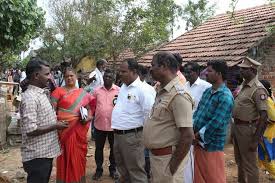
T’puram: Pathanamthitta crime branch DSP has been given two weeks to investigate allegations of police harassment against a dalit domestic worker. The case involves claims that the worker endured 20 hours of mental harassment by police over accusations of gold chain theft. During a hearing led by SHRC chairperson Justice Alexander Thomas, the DSP appeared in person. The case will be reviewed again on Aug 4 at the commission office. Justice Thomas earlier ordered that an officer from outside Thiruvananthapuram district was appointed to investigate. The commission instructed that the district police chief should consult with the South Zone IG to appoint an investigating officer. SHRC has specifically requested that the victim’s statement be recorded in the presence of a female lawyer. It was suggested that the secretary of the district legal services society appoint the female lawyer. TNN Courtesy : TOI Note: This news is originally published on https:/timesofindia.com/ and is for use by the non-military/non-commercial community, especially those in the human rights sector.
Witness to the Unheard: Remembering K.M. Salimkumar
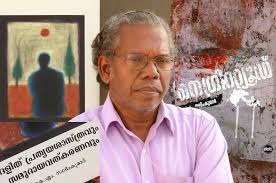
Salimkumar was part of a generation of leaders who re-evaluated their ideological roots, transitioning from strict Marxist lines to a framework informed by Ambedkarite thought. It feels as though it happened just yesterday – the long, winding bus ride to Thodupuzha, a serene town in Kerala’s Idukki district. It was 2008. We were en route to release ഭൂമിയുടെ ജാതിയും രാഷ്ട്രീയവും (Caste and the Politics of the Land), a powerful book by K.M. Salimkumar. Sitting beside me was the man himself – a relentless voice for Dalit and Adivasi rights, an activist, thinker, and writer who had spent decades challenging the status quo. He passed away on June 29, after a lifetime of confronting dominant narratives with a clarity that few dared to match. During that trip, Salimkumar spoke with thoughtful determination about his political path – from early activism with the Communist Party of India (Marxist–Leninist) Liberation to his eventual estrangement from a Left movement that, in his view, skirted around the issue of caste. His words weren’t bitter or sentimental, they were sharp. He argued that caste, as a deeply entrenched system of oppression in Indian society, often vanished beneath class-based rhetoric. For him, the revolutionary struggle had failed to acknowledge the lived experiences of those most marginalised. That journey wasn’t just about a book, it offered a glimpse into the principled world he inhabited. Born in 1949, in a tribal family in Velliammattom panchayat in Idukki, Salimkumar rose to become a formidable voice for social justice in Kerala. His early years were shaped by Marxist liberation politics, and he was incarcerated for 17 months during the Emergency. But unlike others who moderated their stance afterward, Salimkumar intensified his critique, especially of the movements he once served. He questioned why caste was so often left out of revolutionary discourse and why land struggles didn’t prioritise those without land, Dalits and Adivasis. His involvement in building political and grassroots networks was extensive. As a founder of the Dalit Unity Committee in 1999 and editor of publications like Raktapataka and Dalit Aikyashabdam, he gave platform to marginalised voices. His activism focused not on charity, but on dignity, autonomy, and rightful assertion. Salimkumar was part of a generation of leaders who re-evaluated their ideological roots, transitioning from strict Marxist lines to a framework informed by Ambedkarite thought. While many Left parties in Kerala treated caste as a secondary issue to class, Salimkumar argued it was a primary axis of oppression. He frequently reminded people that caste is not a relic of the past but a system that defines everything – from land rights to social boundaries. He openly criticised symbolic gestures like renaming Dalit colonies with sanitised, Sanskrit-inspired names. For him, such acts were attempts to cover up deeper inequalities. “Changing names doesn’t change realities,” he wrote. “The trauma, the exclusion, the inherited shame – they all remain.” ‘Negritude’, K.M. Salimkumar. His collection of columns under the title Negritude reflected this radical clarity. In them, he explored themes such as Ambedkar’s democratic philosophy, the erasure of tribal identity, and the contradictions in Kerala’s progressive self-image. By drawing connections between caste-based and racial oppression, he built a body of work that was more than literature – it was a political statement. Salimkumar also centred B.R. Ambedkar in his vision of India’s democratic future. He didn’t see Ambedkar merely as a constitutional architect, but as a radical critic of social inequality and a prophet of structural reform. He cited Ambedkar’s assertion that while Hindu privilege maintained Brahminical rule, true democracy meant Dalits must have full participation. He was especially vocal about the contradictions in Kerala’s development model. Though the state is praised for its human development indicators, he pointed out how Dalits and Adivasis continued to face displacement and marginalisation in the name of progress. During protests like the Muthanga agitation, albeit his reservations about the struggle itself, he challenged the hypocrisy of governments that claimed to be for the people while undermining the very communities they displaced. His published works – including Dalit Ideology and Communalisation (2008), Dalit Democratic Thought (2018), Reservation in a Dalit Perspective (2018), and The Subtleties of Casteism (2021) – offer critical insights into how casteism adapts to survive even in secular and progressive settings. His critique extended beyond the obvious culprits. He held the liberal elite and even self-proclaimed progressives accountable for sustaining caste structures. In his later years, Salimkumar emphasised the importance of cultural memory and literature in political struggle. He believed that writing was an act of reclaiming identity, that memory could resist erasure, and that telling one’s story was itself revolutionary. He didn’t aspire to lead in the conventional sense. He wanted to bear witness—to name what others avoided, to stay rooted in difficult truths, and to never allow silence to replace justice. In an age when even dissent is being curated and softened, KM Salimkumar’s legacy stands as a reminder that the fight for equality requires more than slogans—it demands unflinching truth. K.M. Seethi is Director, Inter University Centre for Social Science Research and Extension (IUCSSRE), Mahatma Gandhi University (MGU), Kerala, India. Seethi also served as Senior Professor of International Relations, Dean of Social Sciences at MGU and ICSSR Senior Fellow. K.M. Seethian Courtesy : The Wire Note: This news is originally published on https:/thewire.com/ and is for use by the non-military/non-commercial community, especially those in the human rights sector.
Harassment of Dalit woman: Kerala SC/ST Commission directs case against complainant

Bindu, a domestic worker was wrongfully charged over a missing gold chain complaint and faced harassment by officers in Peroorkkada police station. The Kerala State SC/ST Commission has directed the Thiruvananthapuram police to register a case against complainant Omana Daniel after a Dalit woman, wrongfully accused of theft, was subjected to custodial harassment and sexual abuse. Bindu, a 39-year-old Dalit woman who had worked as a domestic help for four years, was taken into custody by Peroorkkada police on April 23 for questioning in connection with a missing two-and-a-half sovereign gold chain, reportedly belonging to the household where she had been employed. The chain was later recovered from the complainant’s residence, revealing serious misuse of the law and negligence of human rights provisions by the police. According to Bindu, she received a call from the Peroorkada police station around 3:30 pm, informing her about a complaint filed against her. She was held in custody and interrogated until 3 am the next morning. “They used very harsh and bad language. They never asked whether I committed the crime or not. They asked where the gold was,” Bindu told TNM earlier, when the issue came into light. Despite no evidence being found at her residence during a police search, Bindu was booked under Section 305 (theft) of the Bharatiya Nyaya Sanhita (BNS). She alleged that she was denied food during custody, threatened with the arrest of her husband and two daughters if she did not surrender, and humiliated in front of her family. Peroorkada police have denied the allegations of harassment but are yet to issue an apology to her. On May 6, the Thiruvananthapuram Cantonment Assistant Commissioner was directed by the State SC/ST Commission to file an enquiry report within 20 days. The incident adds to the growing list of custodial abuse cases in the state, raising concerns over the systemic violation of human rights, particularly against marginalized communities. Written by:TNM Staff Courtesy : TNM Note: This news is originally published on https:/thenewsminute.com/ and is for use by the non-military/non-commercial community, especially those in the human rights sector.
Kerala SC/ST panel orders case over false theft complaint against Dalit domestic worker

The commission observed that the accused was subjected to severe mental agony, social humiliation and physical distress due to the false accusation and unlawful custody. THIRUVANANTHAPURAM: The state SC/ST commission has directed the police to register a case and initiate an investigation against Omana Daniel, a resident of Ambalamukku, who filed a false theft complaint against a dalit woman that resulted in her illegal detention and mental harassment by the police. R Bindu, a domestic worker from Panayamuttam in Panavoor, was accused by Omana of stealing a gold chain from her house. The complaint was filed on April 23, although the chain was reportedly lost on April 18. However, the chain was later recovered from Omana’s own house. According to the commission’s order, the assistant commissioner’s report clearly states that Bindu was unlawfully detained by the police for nearly 20 hours, without proper legal grounds. She was held overnight at the police station, subjected to harsh questioning, and kept in custody until noon the following day, without informing her family The commission observed that Bindu had been subjected to severe mental agony, social humiliation and physical distress due to the false accusation and unlawful custody. It stated that she is entitled to seek legal remedy and can file a formal complaint at the Peroorkada Police Station. Taking suo motu case of the incident, the commission has instructed the Station House Officer of the Peroorkada Police Station to register a case if Bindu files a complaint, and to ensure a fair and thorough investigation into the role of the complainant and others involved. Courtesy : TNIE Note: This news is originally published on https:/thenewindianexpress.com/ and is for use by the non-military/non-commercial community, especially those in the human rights sector.
Don’t use Sanskrit honourific ‘Mahatma’ for Ayyankali: Vedan says Dalits still enslaved by Sanatana Dharma
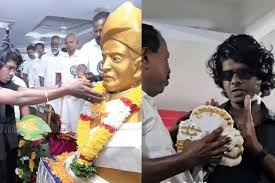
At an event held in Thiruvananthapuram, Vedan requested the organisers not to adorn him with the headgear and instead accepted it in his hands as a symbolic gesture Thiruvananthapuram: Rapper Vedan (Hirandas Murali) respectfully declined an attempt by event organisers to place a traditional headgear on his head during a memorial event for social reformer Ayyankali. The incident occurred at the “Smrithi Sangamam” event organised by KPMS (Kerala Pulayar Maha Sabha) in Thiruvananthapuram on Wednesday, marking the 84th death anniversary of Ayyankali. Vedan, the chief guest at the event, requested the organisers not to adorn him with the headgear and instead accepted it in his hands as a symbolic gesture. He was also presented with a ceremonial sword during the function. Speaking at the event, Vedan said that Dalits still remain shackled—enslaved by the structures of Sanatana Dharma. “A time will come when the broader society will celebrate icons like ‘Mahaveer’ Ayyankali and Babasaheb Ambedkar. Until then, we must remain patient,” he said. His words were met with cheers andapplause from the attendees. Vedan criticised Kerala society, alleging that both Ayyankali and Ambedkar are being misrepresented as casteists. “I have merely walked the paths they clearedfor us. Even though it’s challenging to navigate these routes through the Sanatana-dominated spaces, I will continue,” he asserted. He expressed hope for a future where thousands will gather annually to celebrate these reformers and stressed the need for societal progress to reach that stage. However, he acknowledged that it may take a long time for the marginalised to evolve into a unified and questioning political force, as divisions continue to deepen. At a separate event organised by the Sadhujana Paripalana Sangham (SJPS) in Venganoor, Vedan reiterated that Ayyankali should be called “Mahaveeran” instead of “Mahatma”, a Sanskritic title. Accepting the inaugural Villuvandi Award at the event, he urged for unity among oppressed communities. “The oppressed Scheduled Castes, Tribes, and Adivasis must come together. A time will come when we will emerge as a strong political force,” he said. Roaring Welcome at Chandrasekharan Nair Stadium Earlier, Vedan received a thunderous welcome at the Olympia Hall of Chandrasekharan Nair Stadium, where crowds chanted his name as he arrived. His declaration that he would continue to tread the path paved by Ambedkar and Ayyankali energised the gathering. He repeatedly stated, “Next year, on this very day, let us celebrate with tens of thousands gathering at the venue.” On popular request, Vedan sang a few lines from Poykayil Appachan’s poem and concluded his address with a rendition of his popular track Kadalamma. For the audience, Vedan was not just a guest — he was one among them, a family member returning home. ‘Dalit-Adivasi Communities Must Unite to Become a Political Force’ Rapper Vedan, speaking at the Ayyankali commemoration organised by Sadhujana Paripalana Sangham at the Panchajanyam Smrithi Mandapam in Venganoor, said that the lack of unity among the Dalit and Adivasi communities was the root cause of their continued marginalisation He expressed hope for a future where these communities would rise as a powerful political force. “We are merely walking the illuminated path shown by renaissance leaders like Babasaheb Ambedkar and Ayyankali. But our lack of fraternity is being exploited as a weapon by Sanatanists,” he warned. Rejecting the use of the Sanskrit honourific Mahatma, Vedan reiterated his desire to refer to Ayyankali as Mahaveeran — a title more befitting of his revolutionary spirit. Courtesy : Mathrubhumi Note: This news is originally published on https:/mathrubhumi.com/ and is for use by the non-military/non-commercial community, especially those in the human rights sector.
SHRC seeks probe into death of dalit woman

Idukki: State human rights commission has directed Idukki’s district police chief to investigate death of a dalit woman in Peermade’s Meenmutty forest area and submit findings within four weeks. The order came during an SHRC sitting at Peermade Govt Guest House. Seetha, 42, from Plakkathadam colony, was found dead on June 13. SHRC chairman Justice Alexander Thomas issued this directive following a petition by human rights activist Guinness Madasamy requesting an independent probe. While Seetha’s husband Binu claimed she was killed by an elephant when they were collecting forest produce with their children, the postmortem results didn’t support this claim. Binu told relatives that he and the children narrowly escaped the alleged attack. The case will be reviewed once the report is received. TNN Courtesy : TOI Note: This news is originally published on https:/timesofindia.com/ and is for use by the non-military/non-commercial community, especially those in the human rights sector.