
Kerala halts PM SHRI scheme after CPI’s protest, coalition tensions rise
Kerala has frozen all procedures linked to the PM SHRI schools project after the Communist Party of India (CPI) strongly objected to the move. A cabinet subcommittee will now review the matter as tensions rise within the ruling Left Democratic Front (LDF). The Kerala government has suspended all procedures related to the implementation of the Pradhan Mantri Schools for Rising India (PM SHRI) scheme following strong objections from the Communist Party of India (CPI), a key ally in the Left Democratic Front (LDF) coalition. Chief Minister Pinarayi Vijayan’s administration announced the decision after four CPI ministers boycotted the latest cabinet meeting in protest. The party accused the state government of signing the PM SHRI memorandum of understanding (MoU) without consulting the cabinet or coalition partners. SEVEN-MEMBER PANEL TO REVIEW DECISION A seven-member cabinet subcommittee has been formed to examine the scheme in detail. All related procedures will remain frozen until the committee submits its report. Kerala will write to the Centre seeking relaxations in the scheme’s conditions, calling certain provisions “unacceptable”. The chief minister has also instructed the Education Department to halt the process of finalising schools to be brought under the project. The decision followed a CPI(M) secretariat meeting at the AKG Centre, attended by Chief Minister Pinarayi Vijayan, CPI(M) national secretariat member M A Baby, state secretary M V Govindan, and LDF convener T P Ramakrishnan. However, no official government announcement has been made yet. COALITION CRACKS DEEPEN The CPI’s four ministers, K Rajan, P Prasad, G R Anil Kumar, and J Chinchurani, skipped the cabinet meeting, demanding that the government formally freeze the MoU and inform the Centre in writing, with the letter made public. Reports suggest Kerala may not be able to withdraw from the project since state representatives have already signed the agreement. Under the PM SHRI guidelines, the Centre can recover funds if a state violates the terms of the deal. Efforts to resolve the crisis have so far been unsuccessful. Chief Minister Vijayan held discussions with CPI state secretary Binoy Viswam and CPI ministers earlier this week, but talks failed to produce a consensus. POLITICAL TENSIONS OVER EDUCATION POLICY The CPI has accused the PM SHRI initiative of being a backdoor route to impose the National Education Policy (NEP) and “communalise, centralise, and commercialise” education. Union Minister of State George Kurian, however, recently clarified that the scheme does not impose any central syllabus or policy on participating states. With the dispute intensifying, the episode marks one of the sharpest rifts between the CPI and CPI(M) within the LDF government since it assumed office. Courtesy : India Today Note: This news is originally published on https:/indiatoday.com/bha and is used purely for non-profit/non-commercial purposes, especially human rights
Kerala High Court Directs BCI to Approve Two Seats for Transgender Students in All Law Colleges
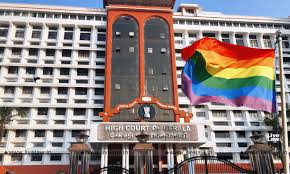
The order came after a transgender woman, denied admission despite qualifying in the Kerala Law Entrance Examination 2025, cited the NALSA judgment and the Transgender Persons Act, 2019. The Kerala High Court on Friday directed the Bar Council of India (BCI) to approve two seats for transgender students in all law colleges across the state. Justice V.G. Arun issued the interim order while hearing a petition seeking to expedite the decision on the proposal, which had been pending before the BCI. The court noted that the issue could not be kept waiting indefinitely for the Council to act. During the hearing, the petitioner’s counsel informed the court that the BCI had earlier been directed to finalise a date for its General Council meeting to decide on the matter. However, the BCI’s standing counsel told the court that the proposal had been placed before the Standing Committee for Legal Education, which, after deliberation, decided that the final decision must be taken by the General Council. The standing counsel also said it was not possible to specify when the next General Council meeting would be held. Taking note of the delay, Justice Arun remarked, “In my opinion, the issue cannot wait endlessly for the General Council of the Bar Council to meet.” Accordingly, the court issued an interim direction to the BCI to approve the Kerala government’s request, communicated through a letter dated August 6, for the creation of two seats for transgender students in all law colleges across the state. The directive came while hearing a petition filed by a transgender woman who was denied admission to Government Law College, Kozhikode, despite qualifying in the Commissioner for Entrance Examinations’ Kerala Law Entrance Examination (KLEE) 2025. The petitioner referred to the landmark NALSA v. Union of India judgment and the Transgender Persons (Protection of Rights) Act, 2019, in support of her plea. Courtesy : Outlook India Note: This news is originally published on https:/outlookindia.com/bha and is used purely for non-profit/non-commercial purposes, especially human rights
Kerala HC Orders Bar Council Of India To Approve 2 Seats For Transgender Students In All State Law Colleges
The Kerala High Court directed the Bar Council of India to approve two seats for transgender students in all state law colleges. Justice V.G. Arun issued the interim order after noting delays by the BCI, following a petition by a transgender woman denied admission despite qualifying KLEE 2025, citing NALSA v. India and the Transgender Persons Act. Kochi: The Kerala High Court on Friday directed the Bar Council of India (BCI) to approve two seats for transgender students in all law colleges across the state. Interim Order Issued Justice V.G. Arun issued the interim order while hearing a petition seeking to expedite the decision on the proposal, which had been pending before the BCI. The court observed that the matter could not be kept waiting indefinitely for the Council to act. During the hearing, the petitioner’s counsel informed the court that at an earlier session, the BCI had been directed to finalise a date for holding its General Council meeting to decide on the matter. However, the BCI’s standing counsel told the court that the proposal was placed before the Standing Committee for Legal Education, which, after deliberation, decided that the final call must be taken by the General Council. The standing counsel added that it was not possible to say when the next meeting of the General Council would be held. Taking note of this delay, Justice Arun remarked, “In my opinion, the issue cannot wait endlessly for the General Council of the Bar Council to meet.” Accordingly, the court issued an interim direction to the BCI to approve the Kerala Government’s request, communicated through a letter dated August 6, for the creation of two seats for transgender students across all law colleges in the state. The court also instructed that the approval should be given within ten days of receiving a copy of the order. The directive came while hearing a petition filed by a transgender woman who was denied admission to Government Law College, Kozhikode, despite qualifying in the Commissioner for Entrance Examinations’ Kerala Law Entrance Examination (KLEE) 2025. The petitioner also cited the landmark NALSA v. Union of India judgment and the Transgender Persons (Protection of Rights) Act, 2019, in support of her claim. (Except for the headline, this article has not been edited by FPJ’s editorial team and is auto-generated from an agency feed.) Courtesy : TFPJ Note: This news is originally published on https:/thefreepressjournal.com/bha and is used purely for non-profit/non-commercial purposes, especially human rights
Kerala HC orders Bar Council to approve two seats for transgender students
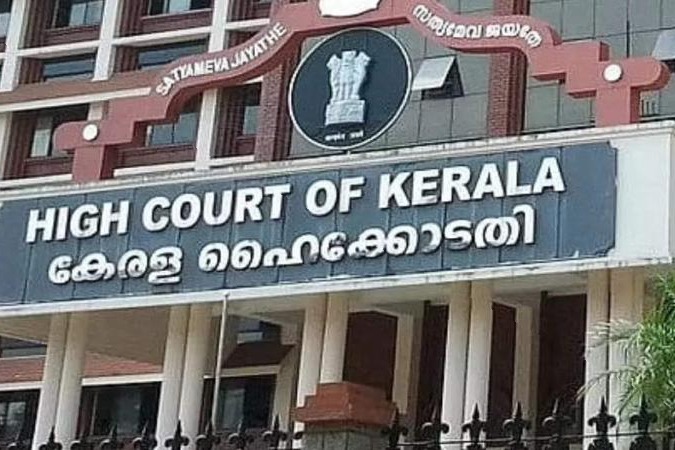
Kochi, : The Kerala High Court on Friday directed the Bar Council of India (BCI) to approve two seats for transgender students in all law colleges across the state. Justice V.G. Arun issued the interim order while hearing a petition seeking to expedite the decision on the proposal, which had been pending before the BCI. The court observed that the matter could not be kept waiting indefinitely for the Council to act. During the hearing, the petitioner’s counsel informed the court that at an earlier session, the BCI had been directed to finalise a date for holding its General Council meeting to decide on the matter. However, the BCI’s standing counsel told the court that the proposal was placed before the Standing Committee for Legal Education, which, after deliberation, decided that the final call must be taken by the General Council. The standing counsel added that it was not possible to say when the next meeting of the General Council would be held. Taking note of this delay, Justice Arun remarked, “In my opinion, the issue cannot wait endlessly for the General Council of the Bar Council to meet.” Accordingly, the court issued an interim direction to the BCI to approve the Kerala Government’s request, communicated through a letter dated August 6, for the creation of two seats for transgender students across all law colleges in the state. The court also instructed that the approval should be given within ten days of receiving a copy of the order. The directive came while hearing a petition filed by a transgender woman who was denied admission to Government Law College, Kozhikode, despite qualifying in the Commissioner for Entrance Examinations’ Kerala Law Entrance Examination (KLEE) 2025. The petitioner also cited the landmark NALSA v. Union of India judgment and the Transgender Persons (Protection of Rights) Act, 2019, in support of her claim. Courtesy : AP7AM Note: This news is originally published on https:/ap7am.com/bha and is used purely for non-profit/non-commercial purposes, especially human rights
Breaking Barriers: Dr. Priya Makes History as Kerala’s First Transgender Doctor, Symbolising Courage and Inclusion
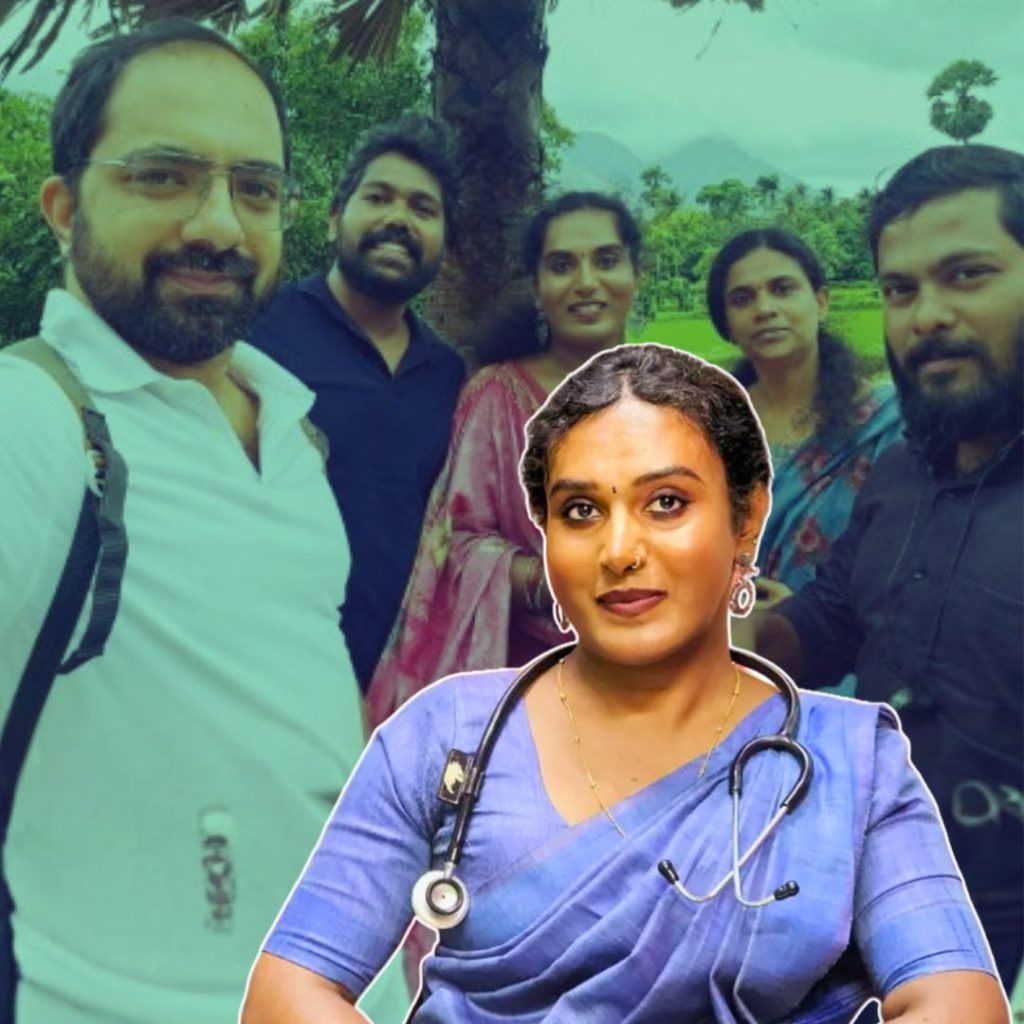
Dr. Priya’s groundbreaking journey from discrimination to becoming Kerala’s first transgender doctor embodies hope, resilience, and social change. Dr. Priya from Kerala has become the state’s first transgender doctor, a groundbreaking achievement that highlights the intersection of medicine, gender identity, and social acceptance. With a medical degree and clinical experience, she has broken barriers despite facing early childhood discrimination and ongoing societal stigma. Kerala’s Health Minister Veena George and various rights activists have welcomed her success, calling it a symbol of hope for marginalized youth seeking dignity and opportunity. Recent updates also mention challenges linked to a brief suspension by the French Medical Council earlier this year, though she continues her medical career in Kerala with community support. Overcoming Personal and Professional Barriers Born as Jinu Sasidharan, Dr. Priya struggled with her gender identity from an early age. As a child, she realised she identified as female but faced fear and embarrassment in revealing her truth. She decided to pursue education as a coping mechanism, completing a BAMS degree and then an MD from Mangaluru. Her medical journey was accompanied by hormone treatment and gender-affirming surgery, which she underwent after joining Sitaram Hospital in Thrissur. In her own words, “Life is precious. I don’t need a mask to hide my identity.” Her transitioning process included not only surgery but ongoing treatments such as voice therapy, exemplifying her commitment to living authentically while upholding her professional role. Colleagues commend her diligence and empathetic approach, depicting her as a compassionate physician dedicated to patient care irrespective of societal labels. “She is a trailblazer who demonstrates how identity and ability coexist harmoniously,” a senior official from the Kerala Medical Council noted. Societal Context and Support Systems Kerala stands out in India for progressive transgender policies. The state offers free gender affirmation surgeries and scholarships for transgender students. Yet, discrimination in education and workplaces remains a pervasive challenge. Dr. Priya’s achievement spotlights how formal policy reforms must be complemented by societal attitude shifts. Community activists argue that despite legislative support, inclusion requires enhanced awareness and anti-discrimination measures in institutional environments. Dr. Priya’s family has been a pillar of strength, providing emotional and financial support through her struggles. Their role underscores the importance of familial acceptance in transgender journeys. Public officials, including Health Minister Veena George, touted her success as a “milestone for Kerala and India,” encouraging young transgender persons to dream beyond historical limitations. However, it is worth noting that earlier in 2025, Dr. Priya faced a one-month suspension by the French Medical Council while working there, following allegations related to her practice. While the details remain confidential, the incident reflects additional layers of challenge transgender professionals may face on international platforms, compounding pressures beyond gender identity alone. The Logical Indian’s Perspective Dr. Priya’s story epitomises resilience and the pursuit of equality through courage and professionalism. At The Logical Indian, we believe that true inclusivity transcends legal rights and requires changing hearts and minds within communities and workplaces alike. Her journey signals how society enriches itself by embracing diversity rather than fearing difference. Her success should inspire not just admiration but concrete action: implementing inclusive policies, fostering safe environments in education and healthcare, and celebrating achievements of marginalized communities without prejudice. The Logical Indian urges readers to reflect on how everyday interactions in schools, workplaces, and social spaces can become platforms for empathy, dialogue, and respect. Syed Muskan Shafiq Courtesy : The Logical Indian Note: This news is originally published on https:/thelogicalindian.com/bha and is used purely for non-profit/non-commercial purposes, especially human rights
No Dalit-Tribal Child in Kerala to be Left Behind in Knowledge-Based Progress: CM Vijayan
Over 13 lakh students, including 4.5 lakh SC and 80,000 ST students, currently benefit from various pre- and post-matric scholarships under the state’s e-Grants programme, regardless of family income. Kasaragod- Chief Minister Pinarayi Vijayan on Thursday said that no student from Scheduled Castes (SC), Scheduled Tribes (ST), or other marginalised communities should be left behind in the state’s march towards a knowledge-driven new Kerala. Speaking at the event at Durga Higher Secondary School Auditorium, Kanhangad, the Chief Minister said the government’s primary goal is to integrate marginalised sections into the mainstream and provide equal opportunities in education, employment, and social welfare. The campaign, which begins on Gandhi Jayanti, is under the motto: “Leap towards knowledge and employment”, reflecting Gandhiji’s vision of social inclusivity. CM Vijayan highlighted the state’s flagship initiatives aimed at empowering marginalised communities. The Unnathi Scholarship has already enabled over 1,000 SC/ST students to pursue higher education abroad. Technical training programmes under the government’s skill development schemes equip students from these communities to secure employment within six months of course completion. He also pointed to Palakkad Medical College, which admits 72 SC/ST students annually. Since 2014, 413 SC and 15 ST students have graduated as doctors, serving Kerala’s healthcare system. Additionally, the Training for Career Excellence (TRACE) programme provides stipendiary training to more than 5,000 youths in engineering, law, nursing, paramedical, management, and journalism. The CM underlined the Smart Study Room initiative, offering Rs 2.5 lakh per unit, and highlighted the state’s LIFE and SAFE housing schemes, ensuring that marginalised families receive secure homes. Over 13 lakh students, including 4.5 lakh SC and 80,000 ST students, currently benefit from various pre- and post-matric scholarships under the state’s e-Grants programme, regardless of family income. The CM also stressed the importance of ongoing campaigns, covering sanitation, anti-drug drives, healthcare, employment, rights awareness, and disaster preparedness. He said the government’s commitment is to ensure that “the taste of development and touch of welfare reaches every region, leaving no one behind”. (IANS) The CM stressed the importance of ongoing campaigns, covering sanitation, anti-drug drives, healthcare, employment, rights awareness, and disaster preparedness. Courtesy : The Mooknayak Note: This news is originally published on https:/themooknayak.com/bha and is used purely for non-profit/non-commercial purposes, especially human rights
Amid issues in Congress district unit, Rahul and Sonia Gandhi arrive in Wayanad
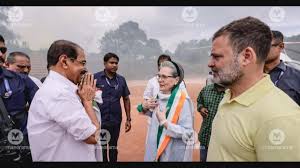
Kozhikode: Leader of opposition in Lok Sabha Rahul Gandhi and Congress parliamentary party chairperson Sonia Gandhi arrived in Wayanad for a two-day visit on Friday. While KPCC leadership described it as a private visit, AICC general secretary K C Venugopal, who accompanied the Gandhis from New Delhi, attended a district leadership meeting during the day in a bid to reportedly sort out the issues plaguing the party’s district unit. The DCC leadership meeting, convened on Venugopal’s direction, assumed significance as the Wayanad unit of Congress has been facing factionalism and controversy, particularly in connection with the deaths by suicide of former DCC treasurer N M Vijayan and his son in Dec 2024, followed by the suicide of Jose Nelledam, a grama panchayat member in Mullankolly on Sept 12 this year, and the suicide attempt by Vijayan’s daughter-in-law Padmaja Vijesh last week. The developments had even cast a shadow over Priyanka Gandhi’s week-long tour of the constituency, with CPM questioning why she did not visit Nelledam’s family. At the DCC leadership meeting, which was attended by block level leaders, Venugopal issued a stern warning to district leaders to end infighting and resolve issues immediately. He said the party would closely monitor developments in Wayanad and take strict action against those who fuel disputes. “The incidents in Wayanad were unfortunate. The party will ensure that such situations do not recur. Anyone responsible for creating problems will not be recognized, and the leadership will take the matter seriously,” Venugopal said. According to party sources, a change in the party’s district leadership would likely see N D Appachan replaced as DCC president. Meanwhile, KPCC president Sunny Joseph said that Irikkur MLA Sajeev Joseph and KPCC general secretary Jameela Alipatta have been assigned to hold discussions and resolve the issues in Mullankolly. Both have been directed to complete necessary discussions within two days and submit recommendations for a solution, after which appropriate organizational steps will be taken. He said the party would address the financial liabilities of Vijayan and the Sultan Bathery Urban Bank. Rahul and Sonia Gandhi landed at Calicut International Airport at 10am and reached Wayanad by helicopter. Wayanad MP Priyanka Gandhi, who has been in the constituency since Sept 11, received them at the Padinjarathara helipad. They later moved to a resort near Banasura Islands. Sonia and Priyanka Gandhi visited Regional Coffee Research Station, where they met coffee farmers and officials. They also visited MS Swaminathan Research Foundation’s (MSSRF) Community Agrobiodiversity Centre (CAbC) at Puthurvayal. They interacted with foundation chairperson Soumya Swaminathan over video conferencing. Meanwhile, Priyanka raked up the vote theft issue in a video message. “I urge all of you to join our vote chori (vote theft) signature campaign. Just as every vote counts, every signature counts. Every one of you standing up for democracy, standing up for the constitutional values counts,” she said. Courtesy : TOI Note: This news is originally published on https:/timesofindia.com/bha and is used purely for non-profit/non-commercial purposes, especially human rights
Priyanka Gandhi ventured into the dense forests of Wayanad at the call of tribals, revealing shocking facts.
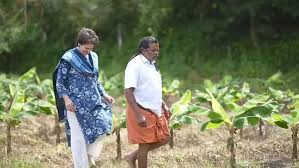
Priyanka met with the Cholanayakan community in the dense forests of Karulai, discussed their demands with officials, and also reviewed development projects such as roads and railways. Malappuram, Kerala: Congress MP Priyanka Gandhi Vadra continued her campaign to connect with people at the grassroots level in her parliamentary constituency, Wayanad. On Wednesday, she took a long walk through the dense forests of Karulai in Kerala’s Malappuram district and met with the Cholanayakan tribal community, which is on the verge of extinction. During the visit, she listened attentively to the community’s concerns and assured them of all possible support. Priyanka Gandhi has been touring her Wayanad Lok Sabha constituency since September 11. According to a party release, her forest visit came at the request of C. Vinod, a member of the tribal community. Vinod, who is pursuing a PhD in tribal economics, had informed Priyanka about the serious problems facing his community during the election campaign. During her visit to the forest, Vinod also briefed her on the conditions and challenges there. After meeting with the people in the tribal settlement, the Congress MP brought some of their representatives to the Forest Department’s inspection bungalow. There, she held a detailed meeting with Forest Department officials and community representatives regarding the community’s key demands, such as housing and a bridge. She also met with social activists working for the development of the tribal community. During her busy tour, Priyanka Gandhi visited the famous Nilambur Teak Depot after meeting the Cholanayakan community. She inspected the entire depot premises and eagerly inquired about the activities of the museum located there. Earlier in the day, Priyanka also reviewed the infrastructure development in the area. She visited the Nilambur Railway Station and reviewed the ongoing development work there. According to the release, she also held important discussions on the Vaniyambalam Railway Flyover, the renovation of Nilambur Station, and other railway-related needs in the area. Priyanka Gandhi shared a video on the social media platform ‘X’, detailing her visit to the construction site of the proposed Padinjarathara-Poozhithodu road in Kottiyambayal, Wayanad district. In her post, she wrote, “Visited the proposed Padinjarathara-Poozhithodu road site in Kottiyambayal along with the District Collector, District Forest Officer, and Executive Engineers of the Public Works Department (PWD). This new road will make a huge difference by providing an alternative route to the Thamarassery Ghat Road, improving connectivity in Wayanad district.” Rajan Chaudhary Courtesy: Hindi News
This killer stalking Kerala attacks through the nose
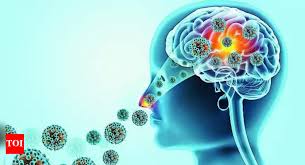
On Sept 1, two patients — a threemonth-old baby and a 52-year-old woman — died within hours of each other at Kozhikode Govt Medical College. Doctors confirmed that both were being treated for primary amoebic meningoencephalitis (PAM), an infection caused by the free-living parasite Naegleria fowleri. By mid-Sept, the toll had risen to 19, with 69 suspected or confirmed cases across Kerala. Victims ranged from infants to middle-aged adults. The scale is extraordinary: globally, researchers have identified only 488 documented infections since 1962. Rare And RuthlessPAM is one of the deadliest infections known to science. The parasite lives in warm, stagnant freshwater — ponds, lakes, unchlorinated swimming pools, poorly maintained tanks — and can infect people only when contaminated water is forced up the nose. From there, it travels along the olfactory nerve, burrows into the brain and begins dissolving tissue, unleashing catastrophic inflammation. Symptoms can begin in one to 12 days (typically 3-7 days): fever, headache, nausea and vomiting. Within days, they give way to stiff neck, confusion, seizures, hallucinations and coma. Across six decades, fewer than 20 survivors are documented globally, most with lasting neurological damage. The fatality rate is 97%. There is no vaccine or proven cure. Drugs such as Amphotericin B, Azoles, or Miltefosine are used in combination, sometimes with induced hypothermia, but success is rare. Crucially, PAM does not spread person to person and is not caused by drinking contaminated water; infection occurs via the nose Why Kerala? Worldwide, PAM tends to appear as sporadic, one-off cases, usually tied to a single contaminated reservoir or swimming pool. Kerala’s outbreak is different. Cases have surfaced across Thiruvananthapuram, Kozhikode, Thrissur and Malappuram, with no single identified source. The state’s position as a public health bellwether makes the outbreak more unsettling. Kerala has often been the first to detect emerging threats: India’s first Nipah outbreak in 2018, its early Covid-19 cases in 2020 (detected in returning medical students from Wuhan), and Zika virus in 2021. The arrival of a rare, near-uniformly fatal amoeba on this list has alarmed both doctors and the public. “Eight people died in 15 days. What is the protocol? What are people supposed to do? Even a baby was infected — was that child in a swimming pool?” Opposition leader V D Satheesan asked in the state assembly this month. Protests have broken out in several districts, with residents demanding that wells and public taps be tested. Doctors caution that Kerala’s higher numbers also reflect better detection. “The symptoms — headache, fever and vomiting — are similar to bacterial and viral brain infections. If you don’t suspect amoeba, you’ll miss it completely,” said Dr Rajeev Jayadevan, convener of the Indian Medical Association’s research cell. How Kerala Is Responding Amid mounting panic, Kerala has launched ‘Jalamanu Jeevan (Water is Life)’, a statewide chlorination drive covering wells, pools, etc. Schools have been told to disinfect storage units regularly, while panchayats and municipalities are checking public taps and wells. Hospitals, particularly in Kozhikode, Thrissur and Malappuram, are on high alert. Doctors have been instructed to treat any meningitis-like illness with a history of water exposure as potential PAM. Rapid-response teams have been sent to test community water sources, though no contaminated reservoir has been found yet. Drugs, including Miltefosine, have been stocked. But officials concede that treatment rarely saves lives. Survivors worldwide are exceptional, often treated with a cocktail of antifungals, antibiotics and cooling therapies. That is why prevention — keeping contaminated water out of the nose — remains the focus. Lessons For The World A 2025 review in the Journal of Infection and Public Health, which analysed 488 cases across 39 countries since the disease was first described, shows how there is little room for error — and what others can learn as climate change reshapes risk. The parasite is not the same everywhere: N. fowleri has multiple genetic strains; genotypes II and III predominate in Asia, North America and Europe. Clean water is the strongest defence: Free chlorine ≥ 2.0 mg/L in storage tanks/ pools can eliminate the amoeba; countries like Australia monitor disinfection as a routine public health practice. Surveillance changes the numbers: Strong labs and routine testing mean more detection (not necessarily more disease). Country tallies include India (26), Mexico (33), Czech Republic (17), New Zealand (9), Nigeria (4), Venezuela (7). Everyday habits can raise or reduce risk: In Pakistan, first cases were reported in Karachi in 2008; >140 cases have since been documented. Many were linked to nasal rinsing during ablution or showering, not swimming. A similar ablution-linked case has also been confirmed in the US. Courtesy : TOI Note: This news is originally published on https:/timesofindia.com/bha and is used purely for non-profit/non-commercial purposes, especially human rights
Dalit woman demands compensation from Kerala govt over ‘mental torture’ at police station
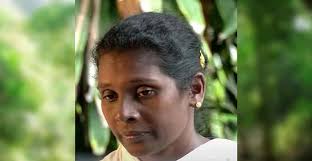
Thiruvananthapuram, Sep 15 (PTI) A Dalit woman who recently suffered “mental harassment” at a police station over an alleged fake theft case approached the state Human Rights Commission on Monday to demand compensation from the state government. The woman, R Bindhu, demanded compensation when Commission chairperson Justice Alexander Thomas considered the case during the sitting. In view of the demand of the victim, the panel decided to name the state home secretary and state and district police chiefs as official respondents and the two accused police personnel in the case as contesting respondents. The Commission asked them to examine Bindhu’s request and submit a written response in this regard, an official statement said here. Bindhu, a domestic help, recently made serious allegations against the police, citing a theft case registered against her that was later proven to be false. She had alleged that she had to suffer acute mental torture and harassment in the custody of police in Peroorkada station here in April after the owner of the house, where she was working, lodged a complaint that she had stolen their gold chain. The woman’s claims of being detained overnight at the police station without food or sleep and being asked to drink toilet water by police personnel recently sparked widespread outrage. The accused police personnel had been suspended from service following an internal inquiry. Meanwhile, Bindhu, on Monday, joined as a peon in a private school in Vithura, as the management offered the job after knowing about the incident through the media. (This story has not been edited by THE WEEK and is auto-generated from PTI) Courtesy : The Week Note: This news is originally published on https:/theweek.com/bha and is used purely for non-profit/non-commercial purposes, especially human rights