
Depressed Class United Front: A Lost Chapter in Kerala’s Dalit Politics in Annihilate Caste
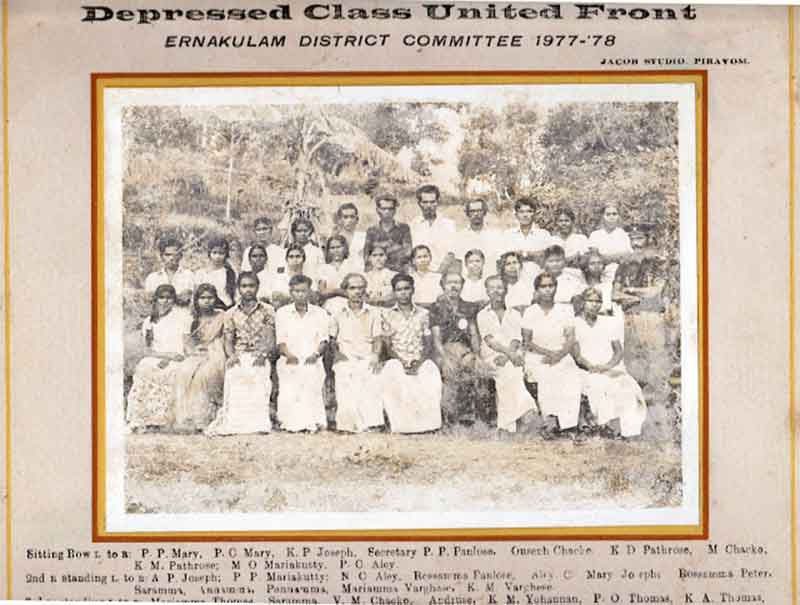
When Thiru P.J. Sabharaj convened his first public meetings in the late 1950s, he articulated a vision that was rare in Kerala’s political landscape. Caste, he insisted, could not be defeated through identity claims alone. Any meaningful anti-caste politics had to confront land ownership, labour relations, and control over the state. Advancing this vision of a casteless society, Sabharaj and his followers formed the Depressed Class United Front in 1958, later renamed the Dravida Class United Front (DCUF). DCUF was not a Dalit organisation seeking symbolic recognition or moral redress. It was an explicitly materialist anti-caste project that read caste as a system structured through unequal control over land, labour, and state power, and organised around the redistribution of these resources. In doing so, it posed a fundamental challenge to both mainstream anti-caste politics and the dominant Left in Kerala. The movement emerged from deep disillusionment. Many Dalit activists in mid-twentieth-century Kerala had joined communist organisations, drawn by their language of class emancipation and egalitarian promise. Yet in practice, the Left refrained from confronting caste relations directly, treating caste as a feudal residue that would dissolve automatically through class struggle. Sabharaj’s mobilisation meetings, held largely in Dalit-inhabited regions of Kottayam, Idukki, and Pathanamthitta, directly challenged this assumption. DCUF activists openly accused communists of preserving feudal caste relations beneath socialist rhetoric. Their slogan captured this critique with biting clarity: “Socialism on their lips. Feudalism in their hearts. Worshippers of feudalism, Enemies of the New Era- Your days are ending.” Land reform in Kerala, DCUF argued, revealed this contradiction. Despite progressive claims, it largely benefited rent-paying tenants and newly emerging landed castes, while leaving landless agricultural labourers, overwhelmingly Dalit, outside its scope. By using monetary criteria such as the ability to pay tenancy as the measure of deservingness, the state reproduced caste inequality. DCUF viewed this as a betrayal: a reform that promised redistribution but left the material foundations of caste intact. Breaking with Left parties that combined class rhetoric with paternalistic practice, DCUF nonetheless adopted Marxist tools — trade unions, study circles, collective discussions, while placing caste’s materiality at the centre of its politics. For DCUF, caste was not a cultural remnant awaiting historical extinction; it was an active system of dispossession that structured everyday life. Sabharaj framed the movement’s ambitions as nothing less than a reorganisation of material relations. Caste, he argued, was rooted in unequal productive and reproductive relations, and any serious anti-caste struggle had to begin by transforming these conditions. DCUF leaders repeatedly stressed that such a project required cultivating class consciousness among the depressed classes themselves, recognising that caste’s internal divisions obstructed genuine solidarity. This intervention complicates Kerala’s celebrated reformist narrative. Temple entry, legislative representation, and communist-led land reforms remain vital chapters in the state’s history. Yet DCUF’s archive insists that these achievements did not automatically dismantle caste. Caste endured because it continued to determine who owned land, who controlled labour, and whose material access the state protected. DCUF’s response was to unite the resourceless as a class — the “depressed class” — and confront caste at its foundation through land redistribution, labour mobilisation, and political reorganisation. Central to this vision was Sabharaj’s udama sidhantham, or theory of ownership, which became the intellectual core of the Dravida Varga Aikya Munnani. Addressing the depressed classes directly, Sabharaj declared: “The universal owner class, organise. You ought not to receive wages, but sovereignty and rule.” The claim was radical: to reconstitute Dalits not merely as victims of caste oppression, but as the rightful owners of land and resources dispossessed through centuries of Brahmanical and colonial extraction.Within this framework, the identity of the Adi-Dravida was reinterpreted as a material claim rather than a symbolic one. The “native” was not a mythic ancestor but a community which was stripped of land and livelihood through successive regimes of domination. DCUF linked this reinterpretation to concrete demands: land to the tiller, title deeds for puthuval occupiers, community control over commons, and, most strikingly, ten acres of land for every depressed-class family. They also pioneered practices in this direction. Under DCUF’s leadership, labour unions emerged across Idukki’s plantation belts, where Dalit workers faced extreme exploitation. The organisation formed the Bharata Samrakshana Dravida Sena, a militant wing intended to protect workers from workplace violence. Alongside unionisation, DCUF mobilised communities to reclaim their labour collectively, occupying uncultivated land, transforming wastelands into productive spaces, and asserting collective control over livelihood. DCUF also challenged the state’s arbitrary evictions and enclosures, arguing that government interventions routinely expropriated the labour Dalit communities had invested in making forest and wasteland cultivable. Its demands therefore extended to land ceilings, seizure of unlawfully held wealth, and protection against predatory transfers and forced displacement. Why DCUF Matters Today DCUF’s relevance extends far beyond its regional context. It offers a corrective to symbolic readings of caste by insisting that ownership, access to resources, and control over labour are constitutive of caste itself. Anti-caste politics, from this perspective, cannot be limited to identity claims, moral appeals, or quotas; it must confront land relations, labour regimes, and the state’s role in redistribution. Moreover, DCUF advanced a non-assimilationist alliance politics grounded in the agency of the depressed classes. It emphasised collectivisation, alternative livelihoods, and solidarities with other resourceless communities, particularly Adivasis. Through electoral participation, it sought not merely representation but a transformation of who controls the instruments of redistribution.Taken together, DCUF offers a crucial lesson for contemporary struggles: caste inequality cannot be dismantled without confronting material expropriation. Far from an antiquarian curiosity, DCUF remains a practical, though contested, guide for centring land, labour, and state power in the fight against caste injustice. By Sephora Jose Sephora Jose is a Postdoctoral Research Fellow in the Department of Humanities and Social Sciences at IIT Kanpur, where she also earned her doctoral degree. Her research critically examines caste and anti-caste resistance, with particular emphasis on their material foundations. Focusing on Kerala, her work traces caste relations from the colonial period to the present. She was awarded the Bluestone Rising Scholar Prize
Kerala local body polls: UDF retains Kannur corporation, increases tally
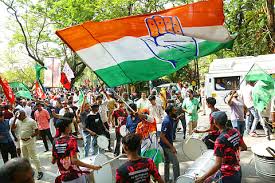
Kannur: Congress-led UDF retained the Kannur corporation with a comfortable majority by winning 36 of the total 56 seats. Moreover, the UDF managed to improve its tally from the last elections in 2020 by securing two more seats. On the other hand, the CPM-led LDF’s strength fell from 19 to 15 with many of its prominent leaders facing defeat. The BJP-led NDA, meanwhile, saw its tally increase from one to four. In 2020, BJP won only the Pallikkunnu ward. This time, the saffron party managed to retain the seat and captured the Temple and Thulichery divisions from Congress and Kokkenpara from CPM. Notably, Social Democratic Party of India (SDPI) opened its account in the civic body by winning the Arakkal ward. Sameera K defeated IUML councillor K M Sabira by 54 votes. In the same division, LDF ally Indian National League (INL) managed to secure only 364 votes as compared to 921 in the previous election. Meanwhile, Congress rebel P K Ragesh, who caused a major headache for UDF in the run up to the polls, suffered defeat from Panikkara division. Three other UDF rebels — K N Bindu from Payyambalam division, K V Riyas from Varam division, V Muhammadali from Adikadalayi division — also lost the elections. All the rebels lost to UDF candidates. Among LDF leaders who lost their wards was former state sports council president O K Vineesh who lost from the Thalikkavu division. LDF retains urban local bodies in Kannur Despite the UDF’s sweeping victory in the local body elections across the state, the LDF managed to retain control in rural local bodies in its stronghold Kannur. While UDF retained control of the Kannur corporation, the majority of municipalities were won by the LDF. The Left front secured wins in five of the eight municipalities in the district, proving its dominance in its bastion. LDF also maintained its dominance in of rural civic bodies getting an upper hand across district, block and grama panchayats. Courtesy : TOI Note: This news is originally published on https:/timesofindia.com/bha and is used purely for non-profit/non-commercial purposes, especially human rights
Fresh police team to now track down absconding Kerala legislator Rahul Mamkootathil

T’puram: The crime branch has constituted a fresh team to trace MLA Rahul Mamkootathil, who has been on the run for 11 days while facing rape allegations, police sources said. The restructuring follows internal concerns that information on the probe may have leaked from the earlier unit. Investigators believe Mamkootathil has been constantly shifting between Tamil Nadu and Karnataka and may currently be in Bengaluru, sources indicated. He reportedly left Palakkad just hours after the complainant met the chief minister with her petition last week. To evade surveillance, the legislator avoided routes with CCTV coverage and initially travelled in a red Volkswagen Polo car belonging to an actor friend to reach Pollachi, sources said. From there, he switched vehicles several times — moving to Coimbatore, then towards the Tamil Nadu–Karnataka border. He is said to have briefly stayed at a resort in Bagalur in Tamil Nadu before escaping again as officers closed in on his location. A woman advocate, with alleged links to the real estate mafia in Karnataka, is believed to be assisting him and alerting him to police movements, the officers added. The MLA has frequently changed phones and vehicles and has stayed only for short durations at each hideout. On multiple occasions, the search team was reportedly within striking distance before he slipped away. Mamkootathil’s arrest was stayed by the high court in only one of the cases, while his anticipatory bail plea in the second matter is scheduled to be heard by the Thiruvananthapuram district court on Monday. His request for interim protection was earlier rejected. The investigation team is also preparing to record the survivor’s statement without delay, the sources noted. After noticing his mobile phones briefly active following recent bail proceedings, officers suspect he has no plans to surrender. Two staff members from his office — including his driver and personal assistant — were questioned but could not provide significant leads, according to the sources. Courtesy : TOI Note: This news is originally published on https:/limesofindia.com/bha and is used purely for non-profit/non-commercial purposes, especially human rights
Nomination papers of UDF’s transgender candidate cleared
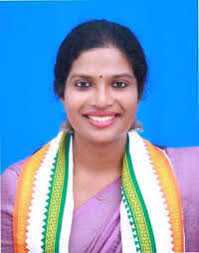
Kottayam: After officials on Saturday cleared her nomination papers, transgender woman Arunima M Kurup will be the UDF candidate from Vayalar division of the Alappuzha district panchayat. The 26-year-old is not new to politics as she is the state general secretary of KSU and the founder president of Kerala Pradesh Transgender Congress. She is also a KPCC member. Arunima, a native of Cherthala, is currently doing her LLB from an institute in Kottayam. Arunima expressed happiness as the panel approved her as a transwoman. “There was no objection from anyone,” she told TOI after her nomination was accepted. “I am contesting as a political leader. I have several ideas and projects to be implemented. A good hospital, roads, anganwadis, care for pregnant women, more workdays for MGNREGA workers and finding employment avenues for women etc., are among them,” she said. Arunima had earlier dismissed allegations made against her which claimed that she could not contest from a seat reserved for women. Arunima said that she was legally a woman in all records and was living as a woman after undergoing gender affirmation surgery six years ago. She also said that she was classified as a woman in the voter ID, Aadhaar and in the voters’ list. Courtesy : TOI Note: This news is originally published on https:/timesofindia.com/bha and is used purely for non-profit/non-commercial purposes, especially human rights
Kerala University denies PhD approval to Dalit scholar amid caste discrimination row
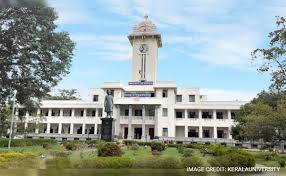
Speaking to TNM, Vipin Vijyan said he had not received any information about the withholding from the University. Prolonging the caste discrimination controversy, the University of Kerala has reportedly withheld the approval of awarding PhD Degree to Dalit scholar Vipin Vijayan while awarding PhD degrees to 64 other candidates. The decision was taken by Vice-Chancellor (in-charge) Mohanan Kunnummal. A PhD degree will be conferred after the candidate successfully completes all requirements, including thesis submission and an open defence. According to reports, the VC approved the PhDs under the syndicate’s consideration, exercising special powers granted under university regulations. The thesis work of 39-year-old Vipin Vijayan, belonging to the Pulaya community, was earlier rejected by CN Vijayakumari, Dean and Head of Kerala University’s Sanskrit department. Vijayakumari is accused of hurling caste-based slurs at the scholar, for which a case is registered against her. Speaking to TNM, Vipin said he had not received any official communication from the University pertaining to this. “I came to know about it from the newspapers. My future course of action will be decided after a detailed inquiry,” he said. On October 15, when Vipin was defending his thesis Vijayakumari disrupted the session, demanding changes in the thesis despite the supervisor’s opposition who validated the arguments made by Vipin in the thesis. According to the scholar, Vijayakumari refused to sign the thesis though both the supervisor and the thesis examining committee chairperson had approved the thesis. During the verbal altercation, Vijayakumari allegedly hurled caste abuses at Vipin. “‘Why do you need a doctorate to add to your name? You have a Pulaya surname, that is enough,’ Vijayakumari told me when I requested her to sign my PhD thesis”, Vipin had told TNM. Reports suggest that after the defence became controversial, the Vice-Chancellor requested the online recording to understand the issues raised during the open defence. However, the research guide responsible for conducting and documenting the open defence reported that no recording was made. Meanwhile, Vipin has filed a complaint against Vijayakumari with the police, the University and the SC/ST commission. The Sreekaryam police has booked Vijayakumari under Sections 3(1)(r) and 3(1)(s) of the Scheduled Castes and Scheduled Tribes (Prevention of Atrocities) Act, which deal with intentionally insulting or abusing a member of the SC/ST community by caste name in public view. Written by:TNM Staff Courtesy : TNM Note: This news is originally published on https:/thenewsminute.com/bha and is used purely for non-profit/non-commercial purposes, especially human rights
Transgender persons can’t avail assisted reproductive technology benefit under existing laws, Centre tells Kerala HC
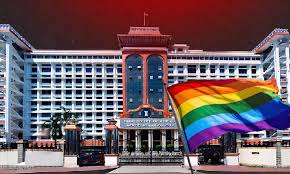
Kochi: A transgender person cannot avail the benefit of ART (assisted reproductive technology) under the existing ART Act and Rules in India, and the exclusion of transgender persons was made after detailed discussions and deliberations in parliamentary committees, the Union govt has submitted to the Kerala high court. The Act limits ART services to a specific category of people, namely, commissioning couples and single women, in the best interest of the child. Single men and transgender persons are not eligible to avail ART treatment, an affidavit filed by ministry of health and family welfare under secretary Vahboi Singsit, further stated. The affidavit was filed in response to a petition by a trans man who was female by birth and is currently undergoing sex reassignment treatment. The petitioner, a resident of Attingal in Thiruvananthapuram, sought permission to cryo-preserve his gametes so that he could use them for reproduction at a later stage. He had earlier approached a private fertility centre for gamete cryo-preservation, but the request was denied since the ART Act and Rules limit the benefits to commissioning couples and single women, prompting him to approach HC. Opposing his plea, the central govt submitted that whether transgender persons should be allowed to avail ART services is a matter of policy, and that experts must determine the impact of such a decision, particularly from the perspective of the welfare of children born through ART. The govt also pointed out that adoption regulations restrict unmarried and queer couples from adopting children, and that these issues have significant social consequences, especially concerning the health and welfare of future generations. Therefore, such questions fall within the policy domain, where the scope of judicial review is limited, the affidavit stated. Meanwhile, the bench of Justice Shoba Annamma Eapen adjourned the petition to Dec 1 for the petitioner to file reply affidavit. Courtesy : TOI Note: This news is originally published on https:/timesofindia.com/bha and is used purely for non-profit/non-commercial purposes, especially human rights
Transgender students are not eligible for NCC recruitment! Learn what the Kerala High Court told the Central Government to address this policy gap.
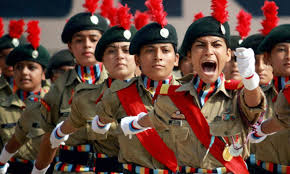
Suggestion to consider establishing an NCC Transgender Division Ernakulam: The Kerala High Court dismissed a petition filed by a 22-year-old transgender student seeking admission to the NCC due to the lack of a provision in the NCC admission rules. However, the court made an important recommendation to the Central Government, stating that transgender students should also be given the opportunity to join the NCC. The High Court directed the Ministry of Defense and the Ministry of Law to seriously consider this issue. The current law does not provide for admission of transgender students into the NCC, which the court emphasized needs to be amended. A bench headed by Justice N. Nagaresh dismissed the petition filed by transgender student Janvin Cleetus, but also directed the Central Government to review the issue and take necessary action. This decision marks a significant turning point in the fight for equal opportunities in public life for the transgender community. What is the whole matter? Janvin Cleetus, a resident of Valiathura, Thiruvananthapuram, applied for admission to the 30(K) Battalion NCC, Calicut. Cleetus possesses a transgender identity card issued by the Thiruvananthapuram District Collector on February 14, 2024, and met all the eligibility criteria and participated in the selection process. However, during the interview, he was informed that he could not be admitted to the NCC due to his gender identity. Advocate Dhanuja M.S., representing the petitioner, argued that this discrimination based on gender identity is a direct violation of Articles 14 (equality before the law), 15 (prohibition of discrimination), 19 (freedom of speech and expression), and 21 (right to life and personal liberty) of the Indian Constitution. The NCC and the central government stated in their response that Section 6 of the NCC Act, 1948, currently provides for the admission of only male and female students as cadets. They argued that NCC training involves physical exercises, sports, and long camps, where cadets are required to live together in field conditions. Therefore, the gender-specific admission policy is designed to ensure the safety and well-being of cadets of different genders. It is true that transgender candidates are disadvantaged in NCC admissions, and ideally, transgender students should also be given the opportunity to enroll in the NCC. Kerala High Court What did the High Court say? The court acknowledged that depriving transgender students of opportunities like the NCC is a matter of concern. The court made important observations in its judgment: “It is true that transgender candidates are disadvantaged in NCC admissions, and ideally, transgender students should also be given the opportunity to enroll in the NCC.” However, the court also stated that there is an “intelligible difference” in treating individuals of different genders differently, given the provisions of the existing law and the nature of the training. The court clarified that creating a transgender division in the NCC would require legislative intervention and a clear policy. Justice Nagaresh said: “The formation of an NCC transgender division would require a minimum/sufficient number of transgender students to constitute a separate division. These are matters of policy that require adequate study, which is the function of the executive. Legislative intervention is also required for their implementation.” Despite dismissing the petition, the High Court suggested a course of action on the issue. The court directed that a copy of its decision be sent to the Secretaries of the Ministry of Defence and the Ministry of Law and Justice, Government of India, “for consideration and necessary action on the issue.” Geetha Sunil Pillai Courtesy: Hindi News
A Dalit PhD scholar at Kerala University makes a heartbreaking post: “I can hear the cries of my brother Rohith Vemula… Life is slipping away again!”
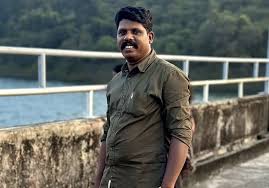
Thiruvananthapuram—A new case of casteism has surfaced in the Sanskrit Department of Kerala University. Dalit PhD scholar Vipin Vijayan has made serious allegations of caste discrimination, abuse of power, and withholding his PhD degree from the department’s Dean, Dr. C.N. Vijayakumari. Vipin claims that Dr. Vijayakumari, who is said to be associated with the RSS-BJP, deliberately disrupted his academic journey. This case has shaken the entire state and brought back memories of the Rohith Vemula case. According to a Facebook post by Vipin, he holds a B.A. and M.A. in Sanskrit from Sri Sankaracharya University, a B.Ed. and M.Ed. from Kerala University. He completed his M.Phil. in Sanskrit from the Kariavattom campus, guided by the head of the Sanskrit department, Dr. Vijayakumari. But now the same Dean is blocking his PhD, calling him “unintelligible to Sanskrit.” Citing the Dean’s alleged casteist statement, Vipin stated, “No matter how much the Pulayanas or Parayans (considered lower castes in Kerala) bow down, Sanskrit will never bow down to them like the Brahmins.” Vipin says that his dissertation, “Epistemological Review of Kenopanishad,” was praised by the examiners and recommended for a PhD. However, the Dean wrote a letter to the university claiming that Vipin doesn’t know Sanskrit, even though university rules permit research in English or Malayalam. Vipin claims that he is left-leaning and the Dean is an active member of the Sangh Parivar teachers’ organization, making her stance casteist. Vipin says, “My political ideology is being questioned, but why the silence on her ideology?” Vipin says he completed his M.Phil. in Sanskrit, guided by Dr. Vijayakumari. From Vipin Vijayan’s Facebook post The researcher alleges in his Facebook post that the university’s dean, Dr. C.N. Vijayakumari, filed a false report against him, alleging that he cannot read or write Sanskrit. According to the researcher, this allegation is completely baseless and false. Read the PhD scholar’s poignant post: “I can still hear the cries of my own brother, Rohith Vemula. I can hear the horrific mockery of casteism. I can’t sleep, and life is slipping away again. The epithet “not knowing Sanskrit” has been forever imprinted on me like a never-fading stain. There’s not a shred of truth in this propaganda, but it has left a never-healing wound in my life.” Will my words, moments from my life, ever be published on any channel or newspaper? I don’t know. I received my M.Phil. in Sanskrit from the Sanskrit Department of the University of Kerala. I am pursuing research on the basis of my M.Phil. qualification. My M.Phil. dissertation is titled “An Epistemological Critique of the Kenopanishad,” and it was guided by Dr. C.N. Vijayakumari Teacher! Yes, the same Dean who stated in her report to the university that I cannot read or write Sanskrit. What qualifications does Dr. C.N. Vijayakumari Teacher, who helped me in awarding an unqualified M.Phil. degree to someone who doesn’t know how to read or write Sanskrit, have to continue as a lecturer? Did my M.Phil. dissertation reviewer, Dr. Vijayakumari Teacher, deceive the university? Is Dr. C.N. Vijayakumari Teacher a fraud for aiding me in this fraud? Or have I forgotten Sanskrit after receiving my M.Phil.? How did I suddenly become someone who cannot read or write Sanskrit? The essence of that transformation is casteism! How did I, who didn’t even submit a nomination in the Research Students’ Association elections, become featured in the news as the General Secretary of the Research Students’ Association, an important position? I have a political bias, and Dr. Vijayakumari Teacher also has a clear political bias. I am left-wing. Teacher follows RSS-BJP politics and is an active worker in the Sangh Parivar Teachers’ Association at Kerala University. How did my political bias become a topic of discussion? Didn’t the Dean of the Sangh Parivar Teachers’ Association’s report against the SFI leader become news? Why is Dr. C.N. Vijayakumari Teacher’s political bias not being exposed? How did I become a criminal, and Dr. C.N. Vijayakumari Teacher a holy angel? I don’t know whether the media will think so. Do facts have no value in news? By ignoring the dissertation examiners and open defense chairman selected by the Vice Chancellor, the Dean, who is trying to establish non-existent power, is distrusting and challenging the Vice Chancellor’s decisions. The examiners and chairman have recommended the award of a PhD for my dissertation. C.N., who thinks and acts inappropriately for the noble academic position of Dean, Vijayakumari Teacher should not remain in that position even for a moment. Otherwise, the relevant authorities should remove the Dean. This university with its great tradition should not be disgraced; the Dean should not continue. The reason is that no other student should suffer from such abuse of power. My PhD dissertation was prepared in English, as university rules permit it. Sanskrit is not mandatory in the open defense; English and Malayalam are acceptable. If you check the Sanskrit Department library, you will find numerous theses and M.Phil theses prepared in English. Some wicked people from Thiruvananthapuram, who roam around with their faces covered in the name of protecting the university, came running to attack me like frightened dogs. Who entrusted them with the responsibility of assessing my abilities? Several media personnel called me when the news broke. Appearing before the media is impossible; I fear even venturing out. My entire life is being cut and bleeding because of a letter from the Dean. My PhD is my life. It’s as if all the academic achievements and abilities I’ve accumulated over the years have been destroyed in a single day. Does truth have no value? Otherwise, I wouldn’t exist either. Darkness is filling my life… FIR filed under SC/ST Act Following a complaint by Vipin Vijayan, the Srikarayam police have registered a case of caste-based insult against Dr. C.N. Vijayakumari, Dean of the Faculty of Oriental Studies and Head of the Sanskrit Department at the Kariavattom campus. According to the FIR filed late Saturday night, Vijayakumari refused to sign Vipin’s thesis after
A tutor raped a Dalit girl in 2001, converted to Islam and remained in hiding for 24 years. Find out how the police apprehended him.
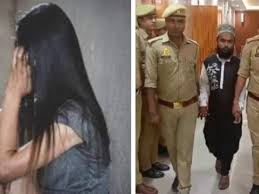
Kerala police have arrested a rape accused in Chennai after 24 years. The man was accused of sexually assaulting a minor Dalit girl in 2001. Police are investigating the case further. Thiruvananthapuram: Kerala police have arrested a rape accused who was absconding in Chennai after 24 years. This Kerala man was accused of sexually assaulting a minor Dalit girl in 2001. The accused has been identified as 50-year-old Muthukumar, who converted to Christianity and was living in Chennai under the alias Pastor Sam. Police arrested the accused on Wednesday. The accused worked as a tutor. According to Thiruvananthapuram police, Muthukumar was arrested in 2001 for raping a 14-year-old schoolgirl. At that time, the accused was working as a tutor. Police say he took the Dalit girl to his home and sexually assaulted her. He was subsequently arrested and sent to judicial custody for three months. He escaped after being released on bail in 2001. A police officer stated that this was one of the longest-pending cases. The police officer stated that the police had intensified their search for him over the past year. He further stated that he may have converted to another religion to hide. The police officer stated that he had neither purchased a mobile connection nor opened a bank account. Mother and brother traced during police investigation After being implicated in the rape case, Muthukumar was asked to vacate his rented house. He lived in the rented house with his mother. After being released on bail, he moved to Nagercoil. He then moved to Tenkasi, Tamil Nadu. The police officer stated that during the investigation, police traced his mother and brother in Tenkasi. The police officer further stated that when they checked the family’s mobile phone call details, they discovered that calls from certain numbers had stopped after the police arrived. The officer further stated that funds had also suddenly stopped flowing into their accounts from some accounts. Police are investigating further. With the help of the cyber cell, the police discovered that the same mobile device was operating with two different SIM cards. Further investigation revealed that the mobile phone was being used by a woman in Chennai, who turned out to be the accused’s wife. Police stated that the court would be informed of the accused’s arrest. Authored by: NBT Desk About the Author NBT Desk: Whether it’s national, international, sports news, or insider news from the political corridors, NBT News Desk brings you every news.
Bar Council Approves Kerala’s Proposal To Reserve Seats For Trans Students
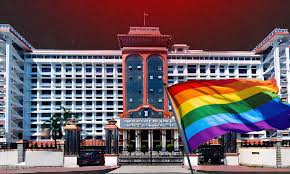
The approval follows a directive from the Kerala High Court on October 24, which had asked the BCI to consider and approve the government’s request. Kochi: The Bar Council of India (BCI) has granted interim approval to the Kerala government’s proposal to create two supernumerary seats for transgender students in all law colleges across the state. The move is being hailed as a significant step towards inclusivity in legal education. The approval follows a directive from the Kerala High Court on October 24, which had asked the BCI to consider and approve the government’s request. The Kerala government had submitted its proposal on August 6, seeking permission to introduce additional seats under the transgender category in both three-year and five-year LLB programmes. When the matter came up on Thursday, Justice VG Arun recorded his satisfaction over the progress made. “It is heartening to note that pursuant to this Court’s order dated 24/10/2025, the Bar Council of India has granted interim approval to the proposal of the Government of Kerala for two supernumerary posts in each law college for the transgender category for the academic year 2025-26,” the court observed. The development came during the hearing of a petition filed by a transgender woman, who had qualified in the Kerala Law Entrance Examination (KLEE) 2025 and was ranked eligible for admission to the Government Law College, Kozhikode. However, she was denied admission since no separate category or seat existed for transgender candidates in the allotment list prepared by the Commissioner for Entrance Examinations (CEE). The petitioner argued that the denial violated her fundamental rights, as well as the Supreme Court’s NALSA judgment and provisions of the Transgender Persons (Protection of Rights) Act, 2019, which mandate equal access to education and non-discrimination. She sought the court’s direction to secure her admission under the transgender category and to ensure that such reservations are implemented across all government law colleges and universities in the state. Following the BCI’s submission, the petitioner’s counsel informed the court that they would implead all law colleges and universities in Kerala in the case, noting that only the University of Calicut had been named so far. The court posted the matter for further hearing on Friday, November 7, to issue appropriate directions. “Let this be helpful to others also,” Justice Arun orally remarked. (Except for the headline, this story has not been edited by NDTV staff and is published from a syndicated feed.) Courtesy : NDTV Note: This news is originally published on https:/ndtv.com/bha and is used purely for non-profit/non-commercial purposes, especially human rights