
Rahul Gandhi to launch UDF’s campaign in Kerala
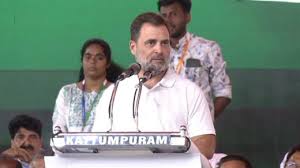
T’puram: Opposition leader in Lok Sabha Rahul Gandhi will inaugurate a public meeting in the capital on Saturday to mark the culmination of senior Congress leader V D Satheesan’s Puthu Yuga Yatra. UDF had started a statewide yatra from Kasaragod on Feb 6 ahead of the upcoming assembly election saying it would present solutions to the state’s problems before the people. UDF leaders claimed the public outrage against LDF govt was clearly mirrored throughout the yatra. Satheesan said that women and youth responded positively to his yatra and people, who did not represent political parties in UDF, also participated in the discussions held as part of the yatra. “A major portion of the yatra was set aside to discuss Kerala’s problems. It was the first time that a political yatra discussed in detail the magnitude of the damage LDF govt inflicted on key sectors, including health, education and agri. Vision documents were released on how UDF wants to rebuild health and higher education sectors,” he said. “Gandhi, who will kick-start UDF’s election campaign on Saturday, may announce some of the key promises and reforms to be included in the election manifesto,” he said. Courtesy : TOI Note: This news is originally published on https:/timesofindia.com/bha and is used purely for non-profit/non-commercial purposes, especially human rights
Wayanad: Cong launches 100 homes for survivors
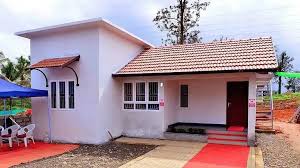
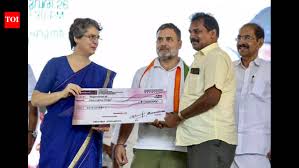
Kozhikode: Opposition leader in Lok Sabha Rahul Gandhi and Wayanad MP Priyanka Gandhi laid the foundation stone for homes Congress will build for the survivors of Mundakkai-Chooralmala landslide. The project at Kunnambetta in Meppadi panchayat will see construction of 100 houses, each measuring 1,100 sq ft on eight cents. Addressing the gathering, Rahul said the people of Wayanad showed unmatched courage in the face of disaster. “You lost and lost, but you never lost your spirit. You never lost your courage and more importantly, you never lost the compassion for others,” he said. He added that launching the housing project sends a message to survivors that the party will stand with them throughout recovery and healing. “For us, it is not a one-day event that happened. Because you are our family, we are going to stand with you whenever you need us,” he said. Speaking at the event, Priyanka said she will stay with the disaster-affected people until they rebuild their lives fully. She said the tragedy’s scenes can never be forgotten. “What I saw that day will never leave me. You lost everything – your homes, your families, sops, businesses, everything. But what struck me most was your courage, your pride, the way every single person here did whatever they could to help you. And the way you stood together, helping each other irrespective of religion and different sections you belonged to. You gave each other courage and love when you needed it most,” she said. On the delay in starting project work, Priyanka said she was pained the process took so long. She added that the delay was due to required clearances and land issues. The party purchased 3.25 acres and is now in the process of buying another 2.18 acres. Negotiations are ongoing to acquire an additional five acres, she said. Priyanka handed over Rs 5 lakh to 40 traders, who had lost their shops in the disaster. KPCC chief Sunny Joseph presided over the event. AICC general secretaries KC Venugopal and Deepa Dasmushi, IUML general secretary P K Kunhalikutty, and several other party leaders also spoke at the function. Courtesy : TOI Note: This news is originally published on https:/timesofindia.com/bha and is used purely for non-profit/non-commercial purposes, especially human rights
PM ‘sacrificing farmers’ in trade pact: Rahul
Kozhikode: Leader of opposition in the Lok Sabha Rahul Gandhi on Thursday accused Prime Minister Narendra Modi of sacrificing India’s farmers through the proposed India–US trade deal, terming it a ‘criminal act’ to open the domestic agricultural market to American producers. Speaking at an interaction with farmers in Peravoor in Kannur, Rahul alleged that the Prime Minister was under pressure to agree to the deal due to two issues—the unreleased Epstein files and a case involving the Adani Group in the United States. “I can tell you with confidence that no Indian PM would do this. Allowing American farmers to sell soyabean, corn and fruits in India is going to destroy the foundation we have built so carefully. The whole Green Revolution and White Revolution happened because we believed that we needed a foundation built in agriculture,” Rahul said. He further alleged that US President Donald Trump was exerting pressure on the Prime Minister. Rahul also claimed that ruling party members in the Lok Sabha prevented him from speaking in Parliament as he intended to raise these matters. “The first concerns the 3.5 million Epstein files that have not been released. Please understand they are held secret by the US govt. These files have information about the PM of India,” Rahul alleged, adding that the second threat was the case involving the Adani Group in the US. “The threat to the PM is very clear- If you do not do what we want, we will release to everybody the entire financial architecture of you and BJP,” Rahul said, adding that those were the two reasons that made Modi agree to the Indo-US trade deal, which he said, amounts to destroying the agricultural foundation of India using a JCB. “Indian farmers are being sacrificed so that the PM can protect himself and can protect the financial foundation of BJP,” Rahul added. Courtesy : TOI Note: This news is originally published on https:/timesofindia.com/bha and is used purely for non-profit/non-commercial purposes, especially human rights
Kerala: 23-year-old Dalit priest resigns citing caste discrimination
Vishnu said he was drawn towards priesthood because of his love for Sanatan Dharma. A 23-year-old Dalit priest in Kerala resigned from his post, alleging caste discrimination, threats and false complaints against him. PR Vishnu initially served as a part-time priest in a temple in Malikampeedika Vathurakkavu Temple in Alangad, Ernakulam. He cleared a written test and interview conducted by the Travancore Devaswom Recruitment Board, and replaced the regular priest after four months. Speaking to The Telegraph, Vishnu said he was drawn towards priesthood because of his love for Sanatan Dharma. But ever since his appointment, he claims there have been deliberate attempts to paint him as a thief. “I was shocked to know that the gold jewellery on the idol was removed and replaced with fake ones. I had a doubt and consulted a goldsmith to check the quality of the jewellery on the idol. I had a narrow escape from being branded a thief,” he said. Vishnu’s father is a daily wage labourer and mother is a homemaker. The young priest said that even his family is not spared. In his police complaint, he has accused members linked to the Communist Party of India (Marxist)-affiliated Devaswom Employees Confederation for the intimidating work environment. State president of the Devaswom Employees Confederation, Prajith Kumar, said the organisation would not tolerate any caste discrimination against priests appointed by the TDB commissioner and warned of action against staff who allegedly humiliated Vishnu. Courtesy : Scroll Note: This news is originally published on https:/scroll.in/bha and is used purely for non-profit/non-commercial purposes, especially human rights
Kerala: Dalit priest resigns, upset over caste discrimination and threats, says ‘a conspiracy was hatched to steal’
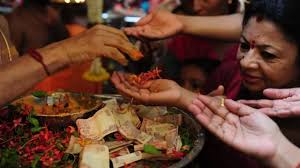
‘An attempt was made to prove me a thief by removing the idol’s original ornaments’ – Fed up with caste discrimination and threats, a 23-year-old Dalit priest in Kerala has resigned from his job. Ernakulam (Kerala): A shocking incident has emerged from Alangad in Kerala’s Ernakulam district. A Dalit priest has resigned from his post, accusing the CPI(M)-backed Devaswom Employees Confederation of caste discrimination, threats, and fabricated complaints. The young priest, P.R. Vishnu, claims that when he refused to participate in certain unfair practices and wrongdoings, retaliatory action was initiated against him, making it impossible for him to continue working at the temple. Conspiracies began just months after joining the job 23-year-old Vishnu was serving as a part-time priest at the Malikampeedika Vathurakkavu Temple in Alangad. He had been appointed to this position approximately four months earlier after being selected by the Travancore Devaswom Recruitment Board (TDB) based on a written examination and interview. However, within a few months of his appointment, the temple administration began receiving false complaints in his name from fake addresses. Love for Sanatana Dharma and Attempt to Prove Him a ‘Thief’ Due to his deep faith in Sanatana Dharma, Vishnu underwent rigorous training in Tantric rituals and chose this profession. Recounting a horrific plot against him, he said: “Every effort was made to frame me as a thief. I was shocked to see that the real gold ornaments on the idol had been replaced with fake ones. I became suspicious and immediately called a goldsmith to have the ornaments checked. This way, I narrowly escaped being falsely accused of theft.” Family also being targeted Vishnu’s father, P.K. Ramesan, is a daily wage laborer, and his mother, Soumya Ramesan, is a homemaker. The priest alleges that his family is also being deliberately harassed. Vishnu revealed that he had filed a police complaint against a local man, and he is facing intense pressure from various quarters to withdraw it. What’s the future? Regarding the recent developments, Vishnu said that he received a call from the TDB Chairman’s office on Wednesday, and Crime Branch officials have recorded his statement. He has clearly told officials that if strict action is taken against those responsible for insulting him, he may reconsider his resignation. Devaswom Employees Confederation’s clarification Amidst this controversy, Devaswom Employees Confederation State President Prajit Kumar has given his side of the story. He said, “Our organization will not allow anyone to discriminate against our priests on the basis of caste, as they are directly selected by the TDB Commissioner. We will definitely take action against the TDB employees who insulted Vishnu.” Rajan Chaudhary Courtesy: Hindi News
Kerala: Why did a Dalit priest have to resign after just four months on the job?
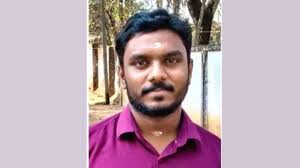
P.R. Vishnu, a Dalit priest with the Travancore Devaswom Board, has resigned. He alleged caste discrimination and ongoing threats. This harassment began after a police complaint was filed two years ago. Kochi: P.R. Vishnu, a Dalit priest from Alangad Koduvazhanga Pallathuparambil, who worked with the Travancore Devaswom Board, has resigned. Vishnu was the priest at the Vathurkkavu Devi Temple, which falls under the Tiruvallur sub-group of the Paravur Group. Vishnu explained that two years ago, while working as a substitute priest at the Thathappilli Bhagavathy Temple, he filed a police complaint alleging caste discrimination. Following this, he faced threats and taunts. Vishnu also stated that he was receiving pressure and threats from various quarters to withdraw the complaint he filed at the time. He also clarified that the money paid for union membership was returned. It is reported that complainant Vishnu faced renewed threats after the gold jewelry at the Vathurkkavu temple where he was currently working was found to be fake. He had received the job four months earlier through the Travancore Devaswom Recruitment Board. Vishnu clarified that this was the reason he decided to leave. Author: Satyam Bhardwaj Courtesy: Hindi News
False case against Dalit using forged documents? Will SC/ST Act apply? Kerala High Court’s major ruling
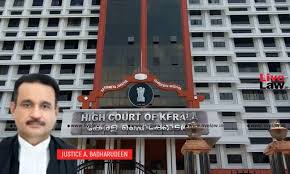
The High Court said, “When it is prima facie established that the suit filed… is false, malicious, or vexatious, particularly by using a forged plaint document, when the defendants are members of the Scheduled Castes and the plaintiffs are not members of the Scheduled Castes, the offence under Section 3(1)(q) of the SC and ST (POA) Act will prima facie be attracted.” Kochi—The Kerala High Court has held in a significant ruling that filing a false, malicious, or vexatious suit against a member of the Scheduled Castes (SC) using forged documents constitutes an offence under Section 3(1)(q) of the Scheduled Castes and Scheduled Tribes (Prevention of Atrocities) Act, 1989. A single bench of Justice A. Badruddin, on February 3, in the CRL.A. The decision was delivered in Court No. 2214 of 2025, in which the appellant, Velayudhan, a 68-year-old Dalit man, challenged an order of the Special SC/ST Atrocities Prevention Court in Thrissur. According to the case, Velayudhan filed a case at the Irinjalakuda police station. The allegation was that HIGHWAY KURIES PVT LTD and its Managing Director, Subhash, had filed a lawsuit, presenting a forged promissory note. This note was purportedly signed by Velayudhan and his father, but both denied it in written statements. The accused party withdrew the case after the complaint was filed. The complaint alleged offenses under sections 465, 468, and 471 of the Indian Penal Code, as well as sections 3(1)(p) and 3(1)(q) of the SC/ST Act. During the investigation, the Deputy Superintendent of Police filed a report on October 22, 2024, stating that the Koori company was unaware of the complainant’s caste, and therefore, the charges under the SC/ST Act should be dropped. On August 26, 2025, the Special Court dismissed the application in CRL.MP No. 1160/2024, which sought monitoring of the investigation. The court stated that the investigating officer’s report showed that the accused was unaware of the caste and had no criminal intent. The High Court, after hearing the appeal, ruled that the deemed acceptance of the investigating officer’s report by the Special Court was incorrect. The court said, “When it is prima facie established that the suit filed… is false, malicious or vexatious, particularly by using a forged plaint document, when the defendants therein are members of the Scheduled Castes and the plaintiffs are not members of the Scheduled Castes, the offence under Section 3(1)(q) of the SC and ST (POA) Act would prima facie be attracted.” The court cited Section 8(c) of the SC/ST Act, which came into effect from January 26, 2016. It states that if the accused has personal knowledge of the victim or his family, the court shall presume that the accused was aware of the caste of the victim, unless the contrary is proved. The court observed, “When a Kuri company engaged in the business of chitty (VC), after acquiring knowledge of the subscriber, deals with the subscriber for its Kuri transaction, and then files a case to recover the amount due under the Kuri transaction on the basis of an allegedly forged promissory note, the Kuri company cannot be considered to be a person who was unaware of the caste identity of the defendant in the case, especially when the knowledge of the accused’s caste identity is a matter of conjecture unless the contrary is proved by evidence.” The court upheld the offence under Section 3(1)(q) but did not comment separately on Section 3(1)(p). Partially allowing the appeal, the court partially set aside the special court’s order. The request for monitoring of the investigation was rejected, but directed that the investigating officer obtain the promissory note from the court and have the signatures examined by a forensic laboratory. The final report should be filed in the special court after obtaining expert opinion. This decision is significant in cases of false prosecution and forged documents under the SC/ST Act, as it strengthens the statutory presumption regarding caste information and emphasizes the need for thorough investigation. Geetha Sunil Pillai Courtesy: Hindi News
Hyderabad archbishop Cardinal Poola Anthony becomes first Dalit to head CBCI
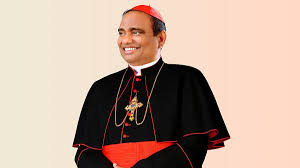
A CBCI statement said Cardinal Poola Anthony assumes office at a crucial time, bringing decades of pastoral experience and a strong commitment to faith, justice, and human dignity. KOCHI: Cardinal Poola Anthony has been elected president of the Catholic Bishops’ Conference of India (CBCI), becoming the first Dalit to head the apex body of the Catholic Church in the country. The 64-year-old cardinal, who serves as Archbishop of Hyderabad, was chosen during the 37th general body meeting of the CBCI, marking a historic moment for India’s nearly two crore Catholics. The election took place at the CBCI’s general body meeting in Bengaluru on February 7, attended by bishops from across India to discuss pastoral, social, and administrative matters. Alongside the president, new office-bearers were elected for a two-year term. Archbishop Thomas Mar Koorilos of Trivandrum was elected vice-president-first, and Archbishop Mathew Moolakkatt of Kottayam as vice-president-second. Archbishop Anil Couto was re-elected secretary general to continue coordinating CBCI’s national initiatives. The leadership reflects the Church’s ecclesial and liturgical diversity, with representation from the Latin, Syro-Malankara, and Syro-Malabar rites, highlighting CBCI’s inclusive character. The conference also expressed appreciation for the outgoing office-bearers—Archbishop Mar Andrews Thazhath, Archbishop George Anthonysamy, and Bishop Joseph Mar Thomas—for their leadership during the previous term. A CBCI statement said Cardinal Poola Anthony assumes office at a crucial time, bringing decades of pastoral experience and a strong commitment to faith, justice, and human dignity. Courtesy : TNIE Note: This news is originally published on https:/thenewindianexpress.com/bha and is used purely for non-profit/non-commercial purposes, especially human rights
How Shashi Tharoor-Congress ‘Hum Saath Saath Hai’ moment gives UDF a timely lift before Kerala polls
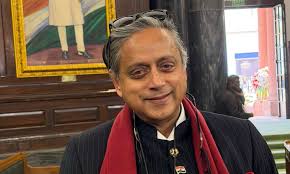
NEW DELHI: The recent patch-up and the ‘all is good’ moment between Shashi Tharoor and the Congress high command have given the Congress in Kerala much-needed momentum ahead of the April–May assembly elections. Tharoor’s meeting with Mallikarjun Kharge and Rahul Gandhi in New Delhi, after weeks of speculations about his strained ties with the party, has ended what many within the Congress described as an “awkward episode” and positioned him as a central campaign face for the Congress-led United Democratic Front (UDF). At a time when the ruling Left Democratic Front (LDF) is battling incumbency fatigue and the BJP is testing the limits of its expansion in the state, the reconciliation gives the UDF a renewed sense of coherence and momentum. ‘All is good’ at a critical moment The recent Tharoor–Congress thaw sends a strong signal of unity to cadres and allies alike at a crucial time. Tharoor reportedly had been upset over the treatment meted out to him by Rahul Gandhi at a Kochi event recently and attempts by some leaders to sideline him in Kerala. For a party often in crisis over factionalism in its state units, the optics in Kerala were damaging. The reconciliation addressed that head-on. The leader of the opposition in the assembly, VD Satheesan’s faction, and leaders seen as sympathetic to Tharoor now have little room for parallel power centres. The warmth also saves Congress from embarrassment in front of its own LDF allies. Last year, as Tharoor had pointed out, “absence of a leader” in the Kerala party unit, Indian Union Muslim League (IUML) chief Sadiq Ali Thangal had publicly asked the Congress to resolve internal differences, warning that visible discord would only benefit rivals. By bringing Tharoor back in confidence, that concern has now been allayed. This unity boost matters electorally. Since the late 1980s, Kerala voters have flipped governments every five years between the UDF and the LDF. However, this changed in the 2021 assembly polls, when the LDF failed to make gains and the LDF under Pinarayi Vijayan won a second consecutive term. The LDF improved its tally from 91 seats in 2016 to 99 in 2021, while the UDF dropped from 47 to 41 seats. Tharoor’s voter magnetism In the 2021 assembly polls, the biggest drive for the LDF sweep came from the Travancore belt, which includes Thiruvananthapuram, Kollam, Alappuzha, Pathanamthitta and Kottayam. The LDF won a majority of seats in Thiruvananthapuram and Kollam, traditionally swing-heavy areas. Tharoor’s Lok Sabha seat, Thiruvananthapuram, had also historically been a swing constituency, alternating between the Congress and the Left, and more recently becoming a BJP target seat. In the 2024 Lok Sabha elections, the BJP fielded Union minister Rajeev Chandrasekhar against Tharoor, but the Congress leader retained the seat for the fourth time by over 16,000 votes. The UDF swept 18 of 20 Lok Sabha seats. Tharoor’s appeal has been particularly visible among educated, salaried and first-time voters, segments that have shown increasing volatility in recent state and local elections. This cohort has not consistently aligned with the Congress organisation and has, at times, been receptive to the BJP’s urban outreach or the LDF’s governance pitch. Tharoor’s sustained wins in Thiruvananthapuram suggest an ability to arrest that drift, even when broader party trends are mixed. At a strategic level, this gives the UDF a pathway to expand beyond its traditional social bases without alienating them. Urban centres such as Thiruvananthapuram, Kochi and Kozhikode, where turnout fluctuates and margins are often narrow, are likely to play an outsized role in 2026. Tharoor’s presence allows the Congress to contest these spaces more credibly, particularly at a time when the BJP has signalled intent through incremental municipal gains and a recent mayoral victory. The Congress leadership’s decision to deploy Tharoor as a campaign spearhead, tasked with touring all 140 constituencies, adds star power to a contest that often hinges on narrative dominance. Tharoor’s oratory, media presence and ability to frame local issues within a national and global context give the UDF an edge in reaching undecided voters. Countering LDF and BJP narratives The patch-up blunts rival narratives at once. For the BJP, which has repeatedly highlighted Congress infighting to project itself as a disciplined alternative (recently by also using Tharoor’s name frequently), the reconciliation weakens the “internal chaos” line of attack. This comes at a moment when the BJP is seeking to capitalise on its recent mayoral win in Thiruvananthapuram municipal corporation, a symbolic breakthrough that signalled growing urban traction, even if assembly-level success remains elusive. Moreover, Tharoor’s active presence on the campaign trail is likely to help the UDF attract the younger demographic, especially aspirants and educated youth. The Congress leader’s credibility as an author, diplomat and global speaker also gives him unique traction among voters in Kerala, given the state’s high literacy rate. Both the LDF and the BJP-led NDA have also often portrayed the Congress as dynastic and directionless. The image of Tharoor standing alongside Rahul Gandhi will undercut those claims, at least for now. Risks contained, momentum regained Perhaps the most immediate benefit of the reconciliation is risk mitigation. Speculation that Tharoor might drift towards the LDF or even explore non-Congress platforms has been firmly quashed. His integration into the Congress election campaign gives a message of consistency. The memory of 2021 still looms large for Congress strategists. Despite favourable anti-incumbency indicators then, the UDF failed to convert opportunity into victory. The Tharoor patch-up is being seen as a corrective step, aimed at ensuring that organisational weaknesses do not once again squander political openings. By restoring unity, the Congress-Tharoor patch-up gives the opposition UDF a credible shot at turning the page after years of Left rule. Whether it translates into seats in elections will depend on execution, alliances and local dynamics, but for now with this ‘Hum Saath Saath Hai’ image, the UDF has scored an early and much-needed win before heading into the elections. Courtesy : TOI Note: This news is originally published on https:/timesofindia.com/bha and is used purely
Hindu on paper, Christian at heart: What lies behind Dalit reconversions in Kerala
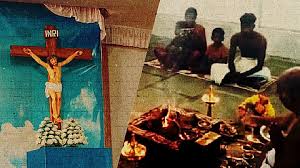
For many years now, organisations such as the Vishva Hindu Parishad have taken up the reconversion of Dalit Christians to Hinduism as ‘Ghar Wapsi’. But activists say without the reservation barrier, most Dalits would not leave Christianity, which is a core anxiety for Hindutva groups. Aneesh* read Kunju Kaaryangalude Odeythampuran, the Malayalam translation of Arundhati Roy’s The God of Small Things, when he was in college. He picked up the book prompted by a casual remark from a classmate. “He told me that there’s a character called Velutha in the novel who reminded him of me,” Aneesh recalled. “Velutha was a Dalit Christian like me, who was in love with a Syrian Christian woman,” he said, a faint, painful smile crossing his face. In the novel, Velutha is brutally tortured and killed for his ‘forbidden’ love. Though Aneesh, who belongs to the Pulaya community, has never faced physical violence like Velutha, he has encountered caste abuse, public humiliation, and social exclusion. “It was 2010. Ours was a hilly village in Kannur district. A girl from my parish and I were in a relationship. We went to the same school and attended catechism classes together. Our families were not very different financially,” he said. The relationship ended when the girl’s family came to know about it. “They publicly called me ‘Pelayan’, a casteist slur for Pulaya, ‘parassala christian’, and many other things. My skin colour, my caste, my family, everything was dragged out in public and insulted,” Aneesh said. ‘Parassala Christian’ is a derogatory term used for landless Dalit Christian families who moved from Parassala in Thiruvananthapuram to northern Kerala in search of work and land. Aneesh’s grandparents had converted to Christianity long ago. His parents had migrated to the village in Kannur nearly five decades earlier from Parassala. When the abuse began, Aneesh said there was no support from the church. “The church, the priest, no authority stood with us. It was a Syrian Christian-dominated area under the Syro Malabar Church. With that one incident, my family was casually ostracised,” he said. Unable to continue living there, Aneesh left the village and went to north India to pursue further studies. His parents eventually moved back to Thiruvananthapuram. Today, Aneesh is 40, married, and the father of two children. A few months ago, he, his wife, and their two children – both below the age of 10 – formally converted to Hinduism. The conversion, Aneesh said, was facilitated by the Vishva Hindu Parishad (VHP), a prominent right-wing Hindutva organisation. A ceremony was organised at a nearby temple. Volunteers helped him with the paperwork, to change his name through a gazette notification and obtain a caste certificate from the government. “My conversion has nothing to do with faith or spirituality,” Aneesh said. “I still go to church. I also go to the temple. But being Christian gave me nothing… no protection, no dignity, no opportunity. By converting to Hinduism, at least my children will be eligible for reservation.” Aneesh’s decision to convert was not rooted in faith but in paperwork. Like several others TNM spoke to, his move was driven by the loss of reservation benefits after generations within Christianity. This motivation runs through the data as well. Of the Dalits who converted to Hinduism in Kerala in 2024, a majority cited access to reservation in affidavits submitted to the VHP, which has been facilitating these conversions under the banner of ‘Ghar Wapsi’. Activists and church representatives argue that this is not incidental. They point out that the continued denial of Scheduled Caste status to Dalit Christians is part of a long-term political design, one that leaves families with little choice but to return to Hinduism on paper to access constitutional protections. Conversion then becomes less a matter of belief and more a survival strategy shaped by law, caste, and state policy. For several years now, organisations such as the VHP have taken up the reconversion of Dalit Christians to Hinduism as a mission. The VHP confirmed to TNM that it facilitated around 100 Dalit conversions to Hinduism in the past year. The organisation requires those seeking reconversion to submit an affidavit stating the reason for the change. According to VHP functionaries, many affidavits cite reservation as the primary reason. Anil Vilayi, VHP state president, however, says Dalit reconversions are not just about reservation. “Their ancestors may have gone to other religions due to false promises. When those promises were not fulfilled, they started returning. There is no forced conversion here. We are only helping them return to their swadharma, the faith to which they or their ancestors once belonged,” adding that they do not have any specific strategy. Anil also said that the VHP manages around 200 temples across Kerala, where the reconversions are facilitated. “Hindu communities are not economically strong. That is how Christian and Muslim organisations lure people, by offering money, housing, jobs abroad, and other material benefits,” he alleged. “Christian organisations receive foreign funding, which makes it easier for them to provide these incentives. Poor families are easily drawn in,” Anil said, invoking the common rhetoric against Christians used by the Sangh in the country. According to Anil, the VHP’s broader objective is to prevent people from leaving Hinduism. “Since the formation of the VHP, that has been our mission, in different forms,” he said. He further said that the organisation has identified around 70 taluks in Kerala – most of them in Kottayam and Thiruvananthapuram districts – where conversions from Hinduism are “rampant”. “In these regions, we are doing intensive and extensive work to prevent conversions. Across the state, we have around 100 Dharma Rakshakas who work at the ground level. They visit families and intervene,” he said. Anil also described the ritual process involved in reconversion. “There are Shuddhi Kriyas, or purification rituals, to embrace Hinduism, along with other ceremonies conducted by temple priests. In VHP-managed temples, a separate group called Aayams oversees these reconversion rituals,” he added. Another family TNM spoke to in Kottayam