
PM controls CM, wants LDF to win elections, says Rahul
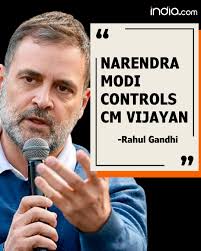
Kozhikode: Lok Sabha’s opposition leader Rahul Gandhi intensified his allegation of a partnership between CPM and BJP during roadshows in Kannur and Kozhikode on Tuesday. He claimed that Prime Minister Narendra Modi wants LDF to win the elections in Kerala. Addressing a public meeting in Kannur and later campaigning in Kozhikode, Rahul said BJP wants CPM to stay in power because it believes it can control the party, unlike UDF and Congress. He alleged that just as US President Donald Trump ‘controls’ Modi, the PM controls chief minister Pinarayi Vijayan. “The CM knows that Modi has the key to put him in jail right now but is not doing anything. That is why you hear Rahul Gandhi and Congress attacking Modi, but you will not hear the CM attacking Modi and you will never see Modi attacking the CM. If Modi says jump, the CM will jump and if he says lie down, the CM will lie down,” he said. Rahul added that while everyone who attacks BJP and RSS is not spared, they took no action in cases against Vijayan. “I have 36 cases against me, my house and my LS membership was taken away and ED interrogated me for 55 hours. If the CM opposes BJP, tell me why no action is taken on the corruption cases against him, explain why his children are not interrogated,” he asked. Modi’s failure to mention Sabarimala gold heist in his campaign speech is further proof of alleged collusion between CPM and BJP, he said. “CPM leaders stole gold from Sabarimala temple and replaced it with brass. No action was taken against them. The so-called defender of the faith came to Kerala and said nothing about Sabarimala because he wants LDF to win elections,” he said. Rahul said Modi has signed away India’s energy security and future by signing a trade deal with the US. “You will be amazed to know India can’t buy oil from who it wants. It must get US nod before buying oil,” he said. Touching upon the war in the Middle East, he warned of a financial earthquake and said fuel prices and inflation would rise. “You will see a financial earthquake in a month or two and then asked what the Centre, state govt did to protect the people,” he said. Rahul added that CPM and BJP are partnering because they are corporate parties. “Two veteran CPM leaders are sitting with us on the stage. They are here because what is today called the Left front is not the real Left party,” he said. Rahul addressed corner meetings at Kallachi, Perambra and travelled in a special bus to highlight UDF’s poll guarantees. Courtesy : TOI Note: This news is originally published on https:/timesofindia.com/bha and is used purely for non-profit/non-commercial purposes, especially human rights
Kerala Assembly polls 2026: Adivasi, Dalit outfits extend support to UDF, flag exclusion in candidate selection
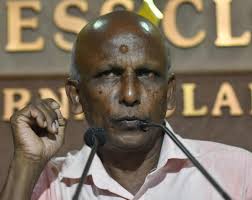
Independent candidature plan scrapped to consolidate anti-LDF votes Various Dalit and Adivasi organisations, including the Adivasi Gothra Mahasabha (AGMS) and the Ambedkarite Democratic Front (ADF), have decided to support United Democratic Front (UDF) candidates in all three constituencies in Wayanad district and across the State in the upcoming Assembly elections. Addressing a press conference at Kalpetta on Monday, M. Geethanandan, State coordinator, AGMS; Sreejith P. Sasi, State council member, ADF; Manikandan C and Mary Lydia of the Adi Shakti Summer School said they had submitted a charter of demands on Dalit and Adivasi issues to the UDF leadership, which had assured that the concerns would be considered. However, they expressed strong protest over the exclusion of eligible candidates from Adivasi communities such as the Paniya, Adiya, Kattunayaka and Vettakuruma in the selection of Scheduled Tribe candidates in Wayanad district by both the Left Democratic Front (LDF) and the UDF. The collective said that the denial of social justice in candidate selection in Wayanad for over 60 years had been brought to the attention of Rahul Gandhi, former MP of the Wayanad Lok Sabha constituency and Priyanka Gandhi Vadra, the current MP. The issue was also communicated to the Congress State leadership, but to no avail, Mr. Geethanandan said. They further alleged that neither Mr. Gandhi during his tenure nor Ms. Vadra at present were willing to directly engage with Adivasi communities to understand their issues. In response, the group announced plans to form a “political agitation committee” to bring the matter to national attention. The committee will be officially announced at an Adivasi manifesto convention to be held in Wayanad after the Assembly election results are declared. The organisations had earlier decided to field an independent candidate from the Paniya community in the Mananthavady constituency in protest against the sidelining of marginalised communities by major political fronts. However, they withdrew the decision due to the early announcement of the election schedule and the lack of adequate preparation. They also said they did not want to miss the opportunity to politically challenge the continuation of the LDF government, which had “undermined Dalit and Adivasi rights”. The collective alleged that ₹7,411 crore of SC/ST development funds had been wasted during the decade of Left rule. Despite adequate budget allocations, the government disrupted the distribution of e-grants for students, forcing many to drop out of their studies. Around 500 Adivasi families displaced by landslides and floods are yet to be rehabilitated, they said. While a township was inaugurated for victims of the Mundakkai disaster, no rehabilitation package was provided for tribal communities, the organisations added. They further alleged that instead of rehabilitating the landless, the government had illegally handed over Adivasi land to the Centre for a museum project. They also claimed that reservation policies were being undermined and that backdoor appointments were being made to benefit insiders. The group said that O. R. Kelu, Minister for the Welfare of Scheduled Castes, Scheduled Tribes and Backward Classes, should respond to these issues as he seeks re-election from Mananthavady. The Hindu Bureau Courtesy : The Hindu Note: This news is originally published on https:/thehindu.com/bha and is used purely for non-profit/non-commercial purposes, especially human rights
Tribal-dalit collective drops plan to field independent in Mananthavady
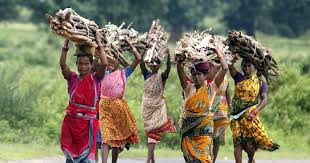
Kozhikode: Collective of adivasi and dalit organisations including Adivasi Gothra Mahasabha (AGMS) has decided to withdraw its earlier plan to field an independent candidate in Mananthavady constituency in assembly elections. AGMS and various groups including Ambedkarite Democratic Front has announced support for UDF, including in all the three constituencies of Wayanad. AGMS coordinator M Geethanandan said they have submitted a charter of demands focusing on dalit and adivasi issues to UDF leadership which has assured that it will be considered. At the same time, the organisations however said that despite the presence of eligible candidates from tribal communities such as Paniya, Adiya, Kattunayakan and Vettakuruma, both the left and right fronts have consistently sidelined them while selecting ST candidates in Wayanad. They said the decision to drop the plan for an independent candidate was influenced by the early announcement of election schedule and lack of adequate time for preparations. They said they do not want to miss the opportunity to politically challenge the 10-year-long continuity in power which had undermined dalit and adivasi rights. Organisations levelled a series of allegations against Left govt, including alleged underutilisation of Rs 7,411 crore in SC/ST development funds, disruption of e-grantz distribution for students and delays in rehabilitation for nearly 500 tribal families affected by landslides and floods. They also alleged lack of land rights, housing, employment and proper educational support for tribal communities. Courtesy : TOI Note: This news is originally published on https:/timesofindia.com/bha and is used purely for non-profit/non-commercial purposes, especially human rights
Dalit collective hits out at Congress over denied tickets; alleges RSS-NSS pressure in candidate selection
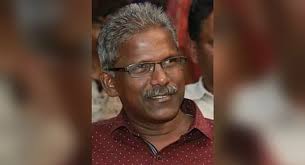
Speaking to media in Kottayam on Thursday, Dalit Samudaya Munnani leaders alleged that Congress denied the candidature for Sunny under the pressure from the RSS and NSS. KOTTAYAM: Amid ongoing challenges over the candidate selection for the assembly elections, the Congress encountered another jolt after dalit collective came out against it for reneging promised candidatures for dalit activist Sunny M Kapikad and tribal leader C K Janu. Speaking to media in Kottayam on Thursday, Dalit Samudaya Munnani leaders alleged that Congress denied the candidature for Sunny under the pressure from the RSS and NSS. They also warned that Congress’ decision to abandon the inclusive politics put forward by national leaders Mallikarjuna Kharge and Rahul Gandhi at the Raipur plenum will lead to a change in the political climate, which was favourable to the UDF. “RSS-Sangh Parivar leaders such as R V Babu and Sasikala were the first to oppose Sunny’s candidacy. It is evident that some Congress leaders were reluctant to challenge the RSS’s stance. The influence and pressure from the NSS on key Congress leaders in candidate selection highlight the oligarchic tendencies within the party,” said P A Prasad, organisation’s state general secretary. Courtesy : TNIE Note: This news is originally published on https:/thenewindianexpress.com/bha and is used purely for non-profit/non-commercial purposes, especially human rights
Dalit Samudaya Munnani: Dalit leaders announce new outfit ahead of Kerala polls
KOTTAYAM: Members of the dalit community are planning to launch a new political outfit in response to the alleged denial of candidacy to prominent thinker and writer Sunny M Kapicadu and tribal leader C K Janu. The party is set to be called Dalit Samudaya Munnani (DSM). Addressing a news conference in Kottayam on Thursday, DSM leaders said that the two were denied candidacy because Congress failed to politically include the dalit and adivasi communities. “The inclusive politics proposed by Congress national leaders Mallikarjun Kharge and Rahul Gandhi at the Raipur Plenary was abandoned by Congress in Kerala, which could lead to a change in the political climate that had turned favourable for UDF,” said DSM state committee members. DSM leaders said that initially RSS leaders like R V Babu and Sasikala opposed Kapicadu’s candidacy. “It is understood that some Congress leaders were afraid to counter the RSS stance. The influence and pressure from NSS in determining Congress candidates revealed the oligarchic governance within the party. This is extremely shameful and objectionable. If anyone suspects that RSS sleeper cells are operating within Congress, it would not be wrong. The lack of a stance by Congress in Kerala on the caste census proposed by the national leadership is a clear example,” they said. The DSM leaders added that Kapicadu received an assurance of a seat. “Even when it was a regular topic in the media, Congress leaders did not deny it. Only on the day the primary list was announced was his candidacy opposed. There is strong public sentiment against this in Kerala, which will undoubtedly be reflected in the elections,” they said. In the local body elections, the dalit and adivasi communities voted in favour of Congress, granting them a significant victory, which should not be forgotten, the DSM leaders said. Since Congress could not consider the dalitadivasi communities as a political entity, the unconditional support of these communities will be reconsidered, and they will support acceptable candidates, they added. “It is clear that neither the Left nor right fronts are interested in considering the dalit and adivasi communities, who hold a 20% vote share in Kerala. In this situation, it has been decided to form a broad Ambedkarite political party under the leadership of Kapicadu, bringing together marginalized communities, minorities, backward classes, fisherfolk, women, different gender groups, and democrats, and to actively participate in the electoral arena from the next general elections,” said according to DSM state general secretary P A Prasad and organization secretary Bijoy David. Courtesy : TOI Note: This news is originally published on https:/timesofindia.com/bha and is used purely for non-profit/non-commercial purposes, especially human rights
Cong banks on Kerala to end its long season of electoral upsets
NEW DELHI: Congress’s fortunes post-2014 have followed a familiar pattern: rout in the national elections and then a long wait for assembly wins. It was an extended barren patch of three and a half years before Congress won a state poll (Himachal) after being routed in the Pulwama-dictated 2019 Lok Sabha contest. This time, Congress is hoping that the wait – which should have ended immediately after the 2024 LS polls with wins in Haryana and then Maharashtra – will finally be over through a win in Kerala. The polls in four states and one UT are an opportunity for Congress to get back into the reckoning, which the party prematurely hoped that the creditable performance in the difficult 2024 polls would ensure. If Kerala-2026 is the essence of Congress’s stakes in the coming battles, the principal opposition party is aiming to score significant political points in Assam, TN and Bengal, given that arch-rival BJP has positioned itself as a player across the national geography. After all, in the years since the Modi-led party turned into a political juggernaut, the Rahul Gandhi-run Congress has chosen to define itself ideologically and in sole opposition to BJP – a process which has also led to greater convergence among foes within the secular camp. For once, Congress ended the longstanding dichotomy of being an ally of CPM at the national level and in Bengal, while being a rival in Kerala – which provided BJP with an easy line of attack. It decided early to go solo in Bengal. Like many of the ‘Congress vs BJP’ fields, Assam has turned barren for the former with back-to-back defeats. Communal polarisation, marginalisation via defections and Assam-specific delimitation have made its political task a challenge. Congress belatedly plumped for Gaurav Gogoi, a young face with socio-political pedigree, as its flag-bearer. By all indications, Congress is hoping for a respectable performance that can debunk the growing perception of Assam becoming a one-party turf and keep the party alive in the state. After an unexpected public squabbling with DMK, Congress settled for a minor seat share for the polls. Given that BJP has inserted itself in the AIADMK-led bloc, and speculations are rife that TVK of Tamil superstar, Vijay, can be “influenced” by BJP after elections, Congress is eager that DMK sails through. The post-Jayalalithaa landscape in the state has proved easier for DMK, as witnessed in the 2024 LS polls, but TVK’s emergence and the prospect of a three-way split of votes have created uncertainty. Reduced to less than a fringe player in Mamata Banerjee’s fief, Bengal Congress is moving with a two-fold target in its solo run. The party believes it cannot go below 2021’s pathetic result of zero seats and 3% votes. AICC state in-charge Ghulam Ahmad Mir said the party’s vote share should move upwards of 15%. Courtesy : TOI Note: This news is originally published on https:/timesofindia.com/bha and is used purely for non-profit/non-commercial purposes, especially human rights
Haunted Histories Of Faith And Dalit Christian Women’s Voices In Malayalam Literature
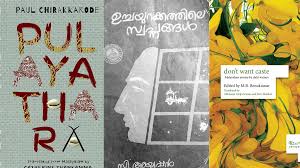
From the spectral testimony of Rosykutty to the everyday defiance of schoolgirls, these texts challenge the histories produced by upper-caste Kerala literature, which frequently marginalises or silences Dalit experiences. Dalit Christian literature emerges from a space of historical rupture, where the Dalit Christian self is continually compelled to view itself through the oppressive caste gaze. Conversion held the promise of equality, but caste ‘marks’ the body and name anyway, creating a fracture of being spiritually Christian, however socially treated as Dalit. Positioned within this hyphenated identity of being both Dalit and Christian, such writing becomes a crucial archive of resistance, recording the lived contradictions of Brahmanical Christianity and casteist society. The formation of Dalit Christian identity is inseparable from Kerala’s specific caste history, Christian institutional structure, and twentieth-century reform movements. Kerala’s caste order was structured not only around untouchability but also ‘unseeability’, with agrarian slavery binding communities such as the Pulayas and Parayas to upper-caste landlords (Mohan, 2015). By the twentieth century, Kerala witnessed powerful anti-caste and reform movements led by figures such as Ayyankali and Poykayil Appachan, that politicised questions of dignity, education, and collective mobilisation. These movements produced a new consciousness that inevitably entered literary production (Mariya, 2023). Crucially, such narratives also register the invisible burdens borne by Dalit Christian women, domestic labour, their embodied trauma, and systematic denial of speech within both caste society and ecclesiastical structures. The Quiet Work of Sustaining Family and Caste Honour When Paul Chirakkarode (1963) wrote Pulayathara, he was responding not only to caste oppression within Kerala, but also to the concrete social realities of the state, agrarian landlordism, anti-caste movements and Syrian Christian dominance within the church, alongside the persistence of Brahmanical hierarchies within both Hinduism and Christianity. Considered the first Dalit-Christian novel, Pulayathara (Pulaya Home/Land) reads as a yearning for belonging and dignity in a society that denied both. In Brahmanical Kerala, Pulayas and other ‘slave castes’ were historically landless, tied to the soil as bonded labourers but never permitted to own or inhabit it as their own. Conversion to Christianity appeared to offer a threshold into stability, access to mission land, the possibility of settlement, and a fragile claim to space, but Chirakkarode reveals how this ‘home’ was never truly theirs. The novel begins in the fields of nineteenth-century Kerala, where Thevan Pulayan bends over soil that will never belong to him. “This thara is all I have” (p. 12), he tells his son Kandankoran one evening, pointing to their fragile hut. During a particular instance following a minor mistake, Thevan is evicted without mercy, his home declared a temporary concession rather than his right. Dispossessed and humiliated, Thevan and Kandankoran seek refuge in the house of Pathrose, a Pulayan who has converted to Christianity. Kandankoran falls in love with Anna Kidathi, Pathrose’s daughter, but marriage requires what he still lacks: a home. To secure it, he converts, becoming Thomas. This new name does not grant him a new social body. He is mocked as a poocha kristiyani, a fake Christian, as his spiritual skin is still stained by untouchability. The soil, songs, and soul of his Pulaya heritage continue to call to him, reminding him and the readers of the emotional and cultural cost of leaving one world only to enter another that never truly accepts him. “He thought to himself, what a cursed creature he was!” (p. 115). Now, in this narrative, conversion and dignity are articulated through male crisis as in Thevan’s eviction, Kandankoran’s humiliation, and Thomas’s fractured identity. But the structure of that crisis depends on women. Anna is the reason for conversion, marriage, and settlement. Her body becomes the site that negotiates caste mobility, while her subjectivity remains unrecorded. This asymmetry reveals how Dalit Christian women occupy a precarious place within the intersection of caste and religion. The ‘search for home’ is therefore gendered. Men seek land and recognition; women sustain the fragile domestic space through labour and emotional endurance. After marriage, Anna Kidathi lives only a few hundred yards from her natal home, but never visits it because Kandakoran refuses to accompany her, knowing her mother disapproves of him. Anna fears that going alone would result in society labelling her an ‘incapable woman’. Her body marks the shift from daughter to wife, but she has no agency over movement between these spaces. When the narrator describes “a mist-like barrier” (p. 130) between the two houses, it signifies how caste anxiety and patriarchal norms quietly enforce her emotional and spatial exile despite physical proximity. Her longing intensifies the silencing that operates within both the household and the church. In such contexts, literature becomes the only viable space for articulation. This is powerfully echoed in C. Ayyappan’s short story Prethabhashanam (The Ghost Speaks), first published in his 1986 collection Uchayurakkathile Swapnangal (Dreams in the Afternoon Sleep), where those who were denied a voice in life return as ghosts to narrate their suffering. As John (2019) observes, “these characters were silenced and never given answers. Their ghostly afterlife becomes a paradoxical rebirth, an additional dimension of freedom that allows them to speak while still bearing the weight of their human wounds.” Haunting, Silence, and the Weight of Injustice Prethabhashanam unfolds through an unsettling monologue, the voice of Rosykutty, a Pulaya woman who returns as a ghost not to frighten but to finally speak. Sixteen days after her death, she enters the body of Kunchako’s sister, a Syrian Christian girl, to reveal the truth of her exploitation and death. In life, Rosykutty was only fifteen when Kunchako, an upper-caste man, seduced and abused her. When she became pregnant, he spat on her and beat her for daring to carry his child. As the story progresses, we find out that Rosykutty’s mother was also a victim of sexual exploitation by Kunchako’s father, revealing a haunting cycle of violence passed down through generations. This exposes Rosykutty as Kunchako’s illegitimate half-sister. Upon knowing, the spirit condemns God by asking, “How can an upper caste Christian have a Dalit girl
Rahul silent when homes of minorities demolished, acting like BJP’s agent: Industries minister

Kochi: Opposition leader in Lok Sabha Rahul Gandhi often acts like BJP’s agent and was its pawn when AAP leader Arvind Kejriwal was imprisoned, alleged industries minister P Rajeeve on Sunday. Rajeeve was responding to Congress leader Gandhi’s attack on CPM during the concluding ceremony of Puthu Yuga Yatra in Thiruvananthapuram on Saturday. The minister criticised Gandhi for neglecting his political responsibilities to the people and country during crucial times by going abroad for celebrations. He said people wouldn’t take Gandhi’s declarations seriously. “Gandhi should act with an understanding of the current situation in India. However, govt led by his party in Telangana and Karnataka demolished homes of minorities with bulldozers, but he remained silent. The govts there are acting against minorities just as BJP does,” Rajeeve alleged. Earlier, Gandhi was upset about central agencies not imprisoning chief minister Pinarayi Vijayan, and now it is about not filing new cases, Rajeeve said. “Everything was scrutinised to file cases against the chief minister, with Congress providing the necessary support, essentially working for BJP. UDF’s announcement of five guarantees was made to counter state’s achievements, but no one will take it seriously based on their experience. The memories of the past will come to mind for those who hear it,” he said. “During LDF govt’s tenure, remarkable achievements were made such as realising the Wayanad township, which no other govt could accomplish, and inaugurating Wayanad tunnel road. As part of inclusivity, Perumbalam Bridge was realised and the first phase of Chellanam tetrapod sea wall project was completed, with the second phase on the way,” he added. Courtesy : TOI Note: This news is originally published on https:/timesofindia.com/bha and is used purely for non-profit/non-commercial purposes, especially human rights
Ernakulam district panchayat to train transgender persons in cosmetology
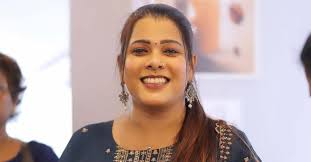
The initiatives focus on ensuring equitable access to basic needs such as employment and healthcare support, thereby creating sustainable livelihood opportunities for the community In an effort to make panchayats more inclusive and responsive to the needs of the transgender community, the Ernakulam district panchayat will implement projects to promote their welfare, dignity, and empowerment. The initiatives focus on ensuring equitable access to basic needs such as employment and healthcare support, thereby creating sustainable livelihood opportunities for the community. Discussions have already been held with members of the community. “One of their major concerns is finding a safe and secure workplace. The stigma they face from society, including in workplaces, needs to be addressed. We must ensure their holistic well-being so that they can lead a more dignified life,” said district panchayat president K.G. Radhakrishnan. As a pilot initiative, focus will be given to training individuals interested in starting their own entrepreneurial ventures. “A large section of the community have expressed interest in cosmetology. Training in cosmetology will be provided free of cost, while a subsidy will be provided to set up business ventures. Some are interested in setting up cafes. We will look at individual interests and formulate a programme,” he said. In the healthcare sector, the panchayat will go ahead with the ‘Marivillu’ programme, but starting this year, medicines will be offered through transgender clinics. Post-operative and hormonal medicines will be provided free of cost. The civic body is also planning to bring the members of the community under one umbrella. A challenge faced by the community is that a significant percentage of the them are living without disclosing their identities. “They are a highly scattered group. Most of them have arrived from different districts and have settled in Ernakulam. We can only include those residents belonging to our panchayats under our welfare schemes. We are considering how to address this,” he added Courtesy : The Hindu Note: This news is originally published on https:/thehindu.com/bha and is used purely for non-profit/non-commercial purposes, especially human rights
Rahul promises free travel for all women
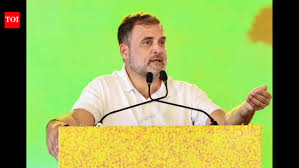
T’puram: Lok Sabha opposition leader Rahul Gandhi on Saturday launched the UDF’s campaign for the assembly elections by announcing five guarantees if it comes to power. Addressing a rally in the state capital, Gandhi promised free bus travel for women in KSRTC buses, a monthly stipend of Rs 1,000 for college-going girl students and an increase in monthly welfare pensions to Rs 3,000. He also announced a new health insurance scheme named after former chief minister Oommen Chandy, offering coverage of up to Rs 25 lakh for every household and the creation of a dedicated ministry for senior citizens. The UDF also promised interest-free loans of up to Rs 5 lakh for young entrepreneurs. Rahul also cautioned UDF leaders to remain united in the runup to the elections. Saying that this message came from the people of Kerala, he urged leaders of the alliance to work together if they wanted to return to power. Using the analogy of a group dance performance, he called on leaders to “dance together” to defeat what he termed the “corrupt” LDF govt and ensure a better future for the people of Kerala. He also expressed gratitude to the people of the state for their support during politically challenging times. The Congress leader also accused the Centre of selectively targeting opposition leaders through central agencies while sparing leaders of the ruling front in Kerala. He questioned why agencies such as the ED took action against opposition leaders but not against chief minister Pinarayi Vijayan or his family. Gandhi alleged that the BJP and the CPM indirectly worked together in the state. He said a UDF govt would focus on generating employment by supporting small and medium enterprises and creating new opportunities in the state. Earlier, Puthu Yuga Yatra led by opposition leader V D Satheesan concluded in Thiruvananthapuram. Addressing a rally, Satheesan said the people embraced the march as their own and described it as a strong endorsement of the new Kerala model proposed by the UDF. Expressing confidence about the alliance’s prospects in the upcoming elections, he said the UDF would form the govt with more than 100 seats and pledged to rebuild the state. Attacks Modi over US deal Rahul launched a sharp attack on Prime Minister Narendra Modi, accusing him of “betraying the country” by signing a deal with the US that he claimed would harm India’s farmers, small traders and national interests. Rahul said India’s vast data resources, generated by its 1.4 billion people through medical records, communications and mobility patterns, were among the country’s most valuable assets. He alleged that the deal would allow such data to be accessed by the US, which could have implications for India’s future in artificial intelligence and digital technology. This data was sold to the US as per the deal, he said. Addressing a UDF rally in the state capital, Rahul alleged that the agreement would open India’s agricultural sector to large American mechanised firms, putting small farmers in the country at a disadvantage. He said such a move was not undertaken by previous prime ministers and warned that Indian crops and agricultural livelihoods could be affected. Rahul also raised concerns about India’s energy security, claiming that the deal would force India to buy oil only from countries approved by the US. He alleged that this would limit India’s ability to independently procure oil, including from Russia. Rahul further alleged that imports from the US worth around Rs 9 lakh crore could enter India under the agreement, adding that no previous prime minister signed such a deal. Rahul claimed that several documents related to the Jeffrey Epstein case were yet to be made public and alleged that individuals close to Modi, including industrialist Anil Ambani and Union minister Hardeep Singh Puri, were mentioned in them. Rahul further referred to legal issues in the US involving industrialist Gautam Adani and alleged that the prime minister feared financial links connected to the BJP could be exposed. Rahul claimed that due to such pressures, Modi hurriedly agreed to the deal with the US and alleged that the US President publicly threatened to damage Modi’s political career. Hence, Modi was compromised, he added. Courtesy : TOI Note: This news is originally published on https:/timesofindia.com/bha and is used purely for non-profit/non-commercial purposes, especially human rights