
Samiti urge Dalits to register their religion as Buddhist in the upcoming Socio-Educational survey
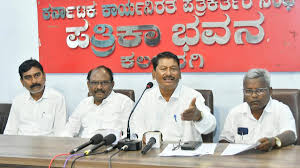
Devendra Hegde, member of Akhil Karnataka Buddha Dakhalaathi Andolan Samiti, addressing presspersons in Kalaburagi city on Saturday. Devendra Hegde, member of Akhil Karnataka Buddha Dakhalaathi Andolan Samiti, addressing presspersons in Kalaburagi city on Saturday. | Photo Credit: ARUN KULKARNI Akhil Karnataka Buddha Dakhalaathi Andolana Samiti of district unit-a consortium of Dalit Organisations, has urged the followers of B.R. Ambedkar to mark “Buddhism” as their religion while mentioning their respective castes in the caste column in the Socio-Economic survey by Karnataka State Backward Classes Commission to begin on September 22. Samiti members Devendra Hegde, Mariyappa Halli, and Arjun Bhadre addressing presspersons in Kalaburagi city on Saturday claimed that one does not face difficulties in enjoying reservation benefits by mentioning Buddhism as their religion. According to the Constitution (Scheduled Castes) Order (Amendment) Act, 1990, the members of Scheduled Castes who converted to Buddhism would continue to be recognised as Scheduled Castes and remain eligible for reservation benefits. Mr. Hedge said that Buddhism was not only a religion but a powerful force that could eliminate inequality inherent in the caste system. Members of the Karnataka State Scheduled Castes Right Communities Forum during a meeting held on September 18 at Bengaluru have resolved that people belonging to the ‘Right Communities’ to mention Buddhism as their religion followed by their respective castes in the caste column during the survey, Mr. Bhadre added. The Hindu Bureau Courtesy : The Hindu Note: This news is originally published on https:/thehindu.com/bha and is used purely for non-profit/non-commercial purposes, especially human rights
Cong launches signature campaign against ‘vote stealing’
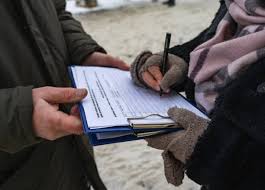
Udupi: Congress MLC Ivan D’Souza said that the ‘Vote Chor, Gaddi Chhod’ campaign launched by opposition in Lok Sabha, Rahul Gandhi has evoked a huge response from the people. He told reporters that a signature campaign to support the initiative will be launched in Udupi district. He said 100 signatures will be collected from each of the 1,111 booths in Udupi district, with a target to achieve 1,11,100 signatures during the campaign. The campaign, which has already commenced, will continue for 15 days, he said, criticising the BJP. “The BJP came to power by stealing votes. The main aim of this campaign is to send a strong message to draw the attention of the Election Commission. People will be given an opportunity to express their anger,” he said. Despite Rahul Gandhi producing evidence to substantiate his claims, no measures were taken to check the election malpractice, he alleged. He alleged that the stealing of votes takes place continuously. People should participate in the campaign to ensure that the central govt and Election Commission respond and investigate the matter. “The govt not accepting criticisms and suggestions of the people is a threat to democracy. Those who were elected and secured power through election malpractices should be sent out of power,” he added. Udupi District Congress Committee president Ashok Kumar Kodavoor, former minister K Jayaprakash Hegde, and former MLA Gopal Poojary were present. Courtesy : TOI Note: This news is originally published on https:/timesofindia.com/bha and is used purely for non-profit/non-commercial purposes, especially human rights
Karnataka MLA Yatnal booked for remarks against Dalit women
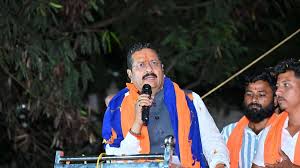
Dalit activist Mallikarjun Pujar filed a complaint, following which the police registered an FIR under sections relating to derogatory comments against women and promoting enmity. Karnataka MLA Basangouda Patil Yatnal has been booked by the local police over his statement that Dalit women must refrain from offering floral tributes to Goddess Chamundeshwari, stating that only women of the “Sanatan religion” are allowed to do that. Yatnal had made the remarks on Monday at Koppal; however, the video emerged on Wednesday, September 17, and has since been widely shared across social media platforms. “Those who offer floral tributes to Mother Chamundi should be from the Sanatan religion. Even ordinary Dalit women are not allowed to do so,” Yatnal is heard saying in the video. He also condemned Karnataka chief minister Siddaramaiah’s decision to allow Booker Prize winner Banu Mustaq to inaugurate Dasara festivities in Mysuru this year. He was booked under the provisions of the SC/ST Act for derogatory remarks against women and incitement of enmity, reported Makoob Media. Dalit activist Mallikarjun Pujar filed a complaint, following which the police registered an FIR under sections relating to derogatory comments against women and promoting enmity. Following a row over the comments, Yatnal, who was previously expelled from the BJP in March, has called the video doctored and politically motivated, meant to mislead people. Karnataka Information Technology Minister Priyank Kharge, a Dalit leader, denounced Yatnal’s derogatory statement. Accusing the BJP leaders of staying silent in a post on X, he stated, “What greatness do you seek in Hinduism when you paint a religious colour in the social system and look down on a particular class of people? Do you exclude Dalits when you say we are all Hindus, we are all one? Why are the BJP leaders, who were vocal when Shri Siddaramaiah said that there is inequality in Hinduism, silent?” Police are yet to make arrests as the investigation is underway. Edited by Syeda Faiza Kirmani Courtesy : The Siasat Daily Note: This news is originally published on https:/thesiasatdaily.com/bha and is used purely for non-profit/non-commercial purposes, especially human rights
MU syndicate proposes PhD in Tulu, opportunities for transgender candidates
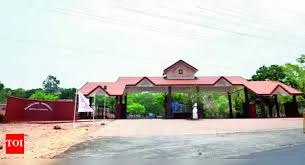
Mangaluru: The Mangalore University (MU) syndicate has proposed introducing PhD in the Tulu language and providing opportunities for transgender individuals to pursue doctoral studies. Additionally, the syndicate resolved to appoint eligible lecturers as PhD guides in several colleges under the university’s jurisdiction. These proposals were discussed during the past syndicate meetings and are currently awaiting a detailed response from the university. Raghuraj, a syndicate member who tabled the agenda on three proposals, told TOI that although MU is located in a region where Tulu is widely spoken and celebrated, there are limited academic research opportunities available at the university. He observed that the Tulu MA programme has only a limited number of students. “The proposal for a PhD is aimed at enabling those interested in research to pursue it, which will also benefit the growth of the local language. We have urged Mangalore University to introduce a PhD in Tulu, and officials have been asked to clarify whether this can be implemented under the statutes,” Raghuraj said. The second proposal calls for allowing members of the transgender community to pursue PhDs. “Education is the right of every individual, including transgender community. I have suggested that interested candidates from the community be given the opportunity to enrol in PhD programmes, based on their academic eligibility. The university statutes also provide scope to facilitate this,” he added. MU’s campus in Konaje is recognised as a postgraduate and research centre. However, with the majority of senior professors retiring, the campus lacks sufficient PhD guides. This shortage has deprived many PhD aspirants of opportunities. “With the help of the university, we are trying to reach out to experienced faculty from aided and private institutions and are also considering allowing eligible institutions to become research centres to guide PhD aspirants,” Raghuraj pointed out. Courtesy : TOI Note: This news is originally published on https:/timesofindia.com/bha and is used purely for non-profit/non-commercial purposes, especially human rights
EC rejects charges, cites action it took for Karnataka seat
NEW DELHI: EC rejected Rahul Gandhi’s allegations regarding deletion of electors in Aland in 2023, saying that it had on its own authority filed an FIR at the time against “certain unsuccessful attempts” at deletions, after which the Karnataka chief electoral officer shared all relevant information pertaining to the case with the state police. The Karnataka CEO posted on X that all information available with EC was handed over to Kalaburagi, SP on Sept 6, 2023 itself. The shared information included the objector’s name, EPIC number and mobile number used for login, Form 7 reference number, mobile number provided by the objector for processing software application medium, IP address, applicant’s place, form submission date and time, and user creation date. “Basically, the information that Rahul has asked EC to provide in a week was shared by the Karnataka CEO with the state CID two years ago,” said an EC functionary, while contrasting this with Rahul refusing to submit a signed affidavit in support of his allegations regarding roll irregularities in Mahadevapura, for which CEC Gyanesh Kumar had set him a similar deadline. As regards Rahul’s allegations regarding addition of fake voters in Maharashtra’s Rajoura constituency, the electoral registration officer of Rajoura said that between Oct 1 and 17, 2024, the constituency had received 7,592 applications for new voter enrolment. “On scrutiny by booth level officers, 6,861 applications were found invalid. These included fictitious identities, invalid photographs, documents and incorrect addresses. These applications were rejected,” the ERO said, stressing that no fake names were added to the roll. He added that taking cognisance of the irregularities, the district election officer had directed a comprehensive probe and criminal action. Courtesy : TOI Note: This news is originally published on https:/timesofindia.com/bha and is used purely for non-profit/non-commercial purposes, especially human rights
‘Mobiles, softwares used’: How Karnataka’s Aland saw massive voter deletions – Rahul Gandhi explains with ‘proof’
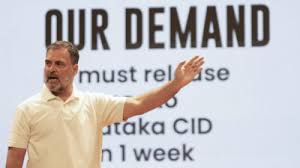
NEW DELHI: Leader of opposition in Lok Sabha Rahul Gandhi presented five evidence of mass deletions in Karnataka’s Aland assembly constituency held by Congress MLA BR Patil. He claimed before the 2023 Karnataka assembly election ‘someone’ tried to delete as many as “6,018 votes.” He added, “nobody knows how many total votes were deleted…someone got caught while trying to delete these votes by coincidence.” He said a booth-level officer discovered her uncle’s vote had been deleted. Upon investigating, she found a neighbour’s name was falsely linked to the deletion- yet neither party was aware of the action, suggesting an external force had hijacked the process. “As luck would have it, they got caught,” he said. Gandhi claimed these 6,018 applications were filed impersonating voters – applications that the supposed applicants never actually submitted. “The filing was done automatically using software…Mobile numbers from outside Karnataka, from different states, were used to delete votes in Aland, specifically targeting Congress voters,” he alleged. Emphasising the political nature of the deletions, he added: “This wasn’t random. These deletions specifically targeted booths where the Congress party was winning.” The Congress MP presented five examples, Evidence number 1: Curious case of Godabai Rahul Gandhi cited a specific case involving a woman named Godabai, whose name was used in a failed attempt to delete 12 voters from the electoral rolls. “Someone created fake logins and attempted to delete voters. Thankfully, this attempt was stopped – but Godabai, of course, had no idea,” he said. He played a clip by the woman Godabai, where she can be heard saying that she has “no idea about anything related to deletion of voters.” According to Gandhi, the operation involved the use of mobile phone numbers from outside Karnataka, raising serious questions about the origin and intent behind the deletions. “These numbers are from different states,” he said, alleging that the system was being misused in a coordinated manner to disrupt the electoral process, “this leads to key questions.” To this Gandhi posed some pin pointed question, listing them out: Whose numbers are these? How were they operated? Where were they operated from? Who generated the OTPs to disturb the process? Gandhi suggested that the deletion process was neither isolated nor accidental but a part of a broader, tech-enabled operation aimed at disenfranchising targeted voters. Evidence number 2: 12 deletions in 14 minutes – and no one knew In another instance, Rahul pointed to a man named Suryakant, who, according to records presented by him, allegedly submitted 12 voter deletion forms in just 14 minutes. One of the voters whose names were removed in this rapid deletion spree was Babita Chaudhary. Both Suryakant and Babita were present with Gandhi on stage, alongside Gandhi, while he was addressing the media. “Babita’s vote was deleted by Suryakant, or so the system says. But here’s the catch – neither Suryakant nor Babita knew anything about it,” Gandhi revealed. Gandhi used the moment to underscore how voter data was being manipulated This, he argued, was further evidence that the deletions were not just bureaucratic errors or isolated incidents but part of a deliberate, technology-driven mechanism designed to interfere with the electoral process, without the knowledge or consent of the individuals involved – specifically targeting voters in Congress-favoured areas. Evidence number 3: 2 forms in 36 seconds – filed at 4:07 am Gandhi further presented the case of Nagaraj, who, according to records, submitted two voter deletion applications in just 36 seconds. “Please try filling these forms yourself and see how long it takes you. I ask the youth of India – try it. Try filling two forms in 36 seconds. You’ll see the answer to this question,” Gandhi said, pointing to the improbability of such rapid submissions without automated tools. He further highlighted the unusual timing of the activity. “Notice also the time this gentleman filled the form. For some reason, he got up at 4:07 in the morning and suddenly filled two forms in 38 seconds.” After presenting the evidence of alleged vote chori, Congress leader went on to make two big assertions: Claim 1: Centralised, software-driven operation – not individual action Rahul Gandhi further asserted that the process was centrally coordinated and executed using software, not by individual volunteers or booth-level workers. “This is being done not by individuals but through the use of software,” Gandhi said, pointing to a pattern in the serial numbers of deleted voters. “Look at the serial numbers: serial number 1 means this is the first name in the booth. So a software is picking up the first name in the booth and using it to delete voters.” He claimed that an automated program was run where the first voter listed in each booth was falsely shown as the applicant requesting deletions. These applications were then submitted using mobile numbers from outside Karnataka, indicating cross-state coordination. “We are pretty certain this was done in a centralized manner, and it was done at scale. This was not done at a worker level. This was done at a call centre level,” Gandhi alleged, suggesting a structured, high-volume effort to influence electoral rolls in specific regions. Claim 2: Targeted Deletions in Congress-Stronghold Booths He also alleged that the voter deletions were not random, but strategically targeted at booths where the Congress party had strong support. “The top 10 booths with maximum deletions were Congress strongholds,” he said, adding that Congress had won 8 out of those 10 booths in the 2018 elections. Calling it a planned operation, not a statistical anomaly, Gandhi claimed that the pattern of deletions clearly showed political intent. “This was not a coincidence; this was a planned operation,” he said. Courtesy : TOI Note: This news is originally published on https:/timesofindia.com/bha and is used purely for non-profit/non-commercial purposes, especially human rights
Karnataka to discuss Scheduled Tribe status for Kuruba community on September 16
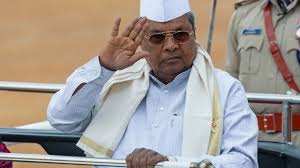
Karnataka will hold a meeting on September 16 to consider including the Kuruba community in the Scheduled Tribe list as a synonym of the Gonda tribe. Chief Minister Siddaramaiah, himself a Kuruba, could be recognised as Dalit if reclassified. The move precedes his statewide caste census. The Karnataka government has scheduled a key meeting on September 16 at 3 pm in Vikas Soudha, Bengaluru, to examine the inclusion of the Kuruba community of Bidar, Kalaburagi, and Yadgir districts in the Scheduled Tribe list. An official notice dated September 12 confirms the session, to be chaired by an IAS officer from the Department of Welfare of Scheduled Tribes. Kurubas, currently classified as Other Backward Class (OBC), have for years sought ST status, arguing it would bring greater benefits and protections. The community also wields significant political influence in Karnataka. The move carries added political weight because Karnataka Chief Minister Siddaramaiah, himself a Kuruba and the state’s Tribal Welfare Minister, would be recognised as a Dalit if the community is reclassified. Officials from multiple departments and welfare boards have been directed to attend the meeting, which will specifically look at recognising the Kurubas of the three northern districts as part of the Gonda ST group. This meeting comes just days before Siddaramaiah’s fresh caste census, a statewide Socio-Economic and Educational Survey scheduled between September 22 and October 7. The Chief Minister has said the new survey is crucial to capture current social realities and design welfare programmes, after the 2015 caste census was set aside. Nagarjun Dwarakanath Courtesy : India Today Note: This news is originally published on https:/indiatoday.com/bha and is used purely for non-profit/non-commercial purposes, especially human rights
Dalit professor of IIM Bangalore is among the top 20 marketing researchers in the world, but is facing the brunt of caste-based humiliation in the institute.
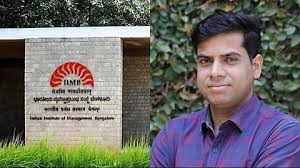
Professor Gopal Das, who is also included in the list of Stanford University, has accused 8 people including the IIM director of harassment, know what was revealed in the DCRE investigation report. Bangalore: On one hand, there is the story of India’s flag flying in the global academic world, on the other hand, the agony of struggling for respect in the country’s prestigious institute. Gopal Das, Marketing Associate Professor and Dalit scholar of Indian Institute of Management Bangalore (IIMB), has registered his name among the top 20 marketing researchers in the world. In this list released by Marketing Big15 USA in August, he has got the first place in India and second place in Asia, while globally he is at the 17th position. This honor has been given to him for his exceptional contribution to the world’s most prestigious ‘Marketing Big 15’ journals from 2018 to 2025. These journals are recognized by global standards like University of Texas at Dallas and Financial Times. Professor Das is the only Indian in this exclusive global list, which is a proud moment not only for IIMB but for the entire country. But behind this glorious achievement lies a bitter truth. Professor Das has made serious allegations of systematic harassment, humiliation and denial of opportunities at IIMB because he belonged to the Scheduled Caste community. A long journey of achievements This global ranking of Professor Das is a testimony to his consistent excellence. He has been making it to the list of top 2% scientists in the world released by Stanford University for five consecutive years, including the recent 2024 list. He joined IIMB in 2017 after completing his PhD from Indian Institute of Technology Kharagpur. His research focuses on areas such as consumer emotions, sensory marketing and ethical decision making. He is also on the editorial review board of several prestigious journals such as the ‘Journal of Public Policy and Marketing’. Serious allegations of discrimination and legal battle Professor Das, who belongs to the Scheduled Caste (SC) community and identifies himself as a Dalit, has publicly alleged caste-based discrimination at IIMB. His claims have sparked a major debate. June 2024: Professor Das lodged a complaint with President Draupadi Murmu, who visited IIMB. In this, he accused the then director of the institute Rishikesh T Krishnan, Dean (Faculty) Dinesh Kumar and six other faculty members of harassment, humiliation and denial of equal opportunities on the basis of caste. He claimed that he was excluded from important committees, not promoted and investigations were initiated against him for financial irregularities and complaints of students in a vindictive manner. November-December 2024: The Directorate of Civil Rights Enforcement (DCRE) of the Government of Karnataka investigated the matter. The inquiry report released on December 19, 2024 confirmed that Professor Das faced “humiliation and exclusion” due to caste discrimination. The report recommended action under the Scheduled Castes and Scheduled Tribes (Prevention of Atrocities) Act, 1989. December 21, 2024: Based on the DCRE report, Bengaluru police filed an FIR against the eight accused under sections of the SC/ST Act and IPC. Student organisations such as the All India OBC Students’ Association (AIOBCSA) demanded the director’s resignation. IIMB’s side However, IIMB dismissed all these allegations as “baseless”. The institute says that these allegations surfaced after Professor Das’ promotion was deferred in 2024 due to complaints of misconduct and sexual harassment by students against him. The institute emphasised its commitment to inclusivity, saying that Professor Das had been appointed to key positions such as the chairperson of the Institutional Review Board before the controversies. Until December 31, 2024, the court stayed all proceedings, giving the accused an opportunity to challenge the FIR. The case has become the centre of a wider discussion on caste dynamics in India’s top institutions. Professor Das’s supporters see his global ranking as a fitting reply to alleged bias against him. As of September 2025, the case is still sub judice with no final verdict. Geetha Sunil Pillai Courtesy : Hindi News
‘Dalit devadasis lowest on social ladder’— Karnataka tackles twin stigma of caste, sex work

Despite being banned, the devadasi system still traps tens of thousands of Dalit women in Karnataka. A new survey and state law target both caste oppression and sex work stigma. Ballari/Koppal/Bagalkot: When Huligemma went to school for the first time, the teacher asked her father’s name. She did not have any idea. Whispers followed her down the corridor — “sule maklu”, prostitute’s child. “I never looked for a father. Although I always knew a father figure in life would have security, which my mother did. I heard people saying my mother is a devadasi. It took me time to understand,” said the 21-year-old, who lives with her mother Kenchamma and three siblings in Sandur village, Ballari district. Now a new state law in Karnataka is going beyond a 1982 ban on the devadasi system. It promises housing, healthcare, inheritance rights, and protection from stigma for both devadasis and their children. The practice, which consecrates mostly Dalit women to temples but brands them as prostitutes, continues to haunt tens of thousands of lives across the state. But who benefits also depends on who gets counted. The State Human Rights Commission has asked the Siddaramaiah-led Congress government to finish a survey of Devadasis and submit recommendations by 23 October. The last survey in 2007-08 counted 46,660 women across Karnataka. The reach of the new law’s benefits will depend on how this survey is done. If, as before, it includes only women dedicated before the 1982 ban, younger Devadasis like Kenchamma — and by extension her daughter — will be left out again. Earlier this month, Siddaramaiah announced that the Devadasi survey will be carried out starting from the first week of September. “If the Devadasi system is still alive today, it is a matter of shame for all of us,” he said. Devadasis are poised at the thorny intersection of caste, religion, and sex work. Huligemma first heard about the Karnataka Devadasi (Prevention, Prohibition, Relief and Rehabilitation) Act, 2025, passed in the state assembly on 18 August, through a community newsletter. She narrated it to her mother, who struggles to read. “My mother is hopeful we four children will now be able to live a life free of poverty and discrimination,” said Huligemma. In their single-room home, she prepares sugary milk tea for Kenchamma. “I know the horrors. I will never let my daughter go through this,” said Kenchamma, a frail 45-year-old who was only ten when her parents dedicated her as a devadasi because she was “beautiful” and they needed the money. She pulls out two necklaces hidden under her blouse: a white-red beaded muthu and a mangalsutra tied at the temple. They were meant to mark her as a handmaiden of the goddess; in practice, they marked her out to men as a sex worker. When I was applying for a passport, it was so difficult to get away with the column for my father’s name. It was the worst experience. With this law, devadasi children will no longer be subjected to such atrocity -Nari Kamakshi, daughter of a devadasi “It is the worst practice, people only see you as a sex worker,” said Kenchamma, who now works as a farm labourer. More than her three sons, she dotes on Huligemma, who is doing her BA (general course) at a local college. But it’s a struggle. She has not been able to pay fees for this term. “I do not want to leave studying, it is the only way my family and I can move out of this hell,” Huligemma said. Centuries ago, no one knows exactly when, girls from poor families were dedicated to goddesses to serve in temples. What began as ritual worship turned into systematic sexual exploitation of Dalit women, particularly from Madiga, Madar, and Holeya communities. In Karnataka, about 95 percent of devadasis are Dalit. In 1982, the state banned the practice through the Devadasis (Prohibition of Dedication) Act. Yet the system stayed entrenched across northern districts like Belagavi, Vijayapura, Bagalkot, Koppal, Ballari, Raichur and Kalaburagi. To wrest themselves free, women have relied on educating children and asserting dignity through caste pride. The state’s role has been minimal, though those counted in the last survey received devadasi certificates through which they accessed some benefits. Some received land, pensions of around Rs 2,500, and financial incentives for marriage—Rs 3 lakh for men marrying a devadasi, Rs 5 lakh for women. This time, devadasis had a bigger say in shaping the law. It was drafted after seven months of research by a National Law School of India University (NLSIU) team working with NGOs, activists, and more than 15,000 devadasis. Children of 15 devadasis documented problems and suggestions across districts in northern Karnataka. Consultations followed, with the community itself proposing changes to improve their lives. RV Chandrashekar, coordinator of the drafting committee, said the survey would spell out caste details and show how the practice is bound up with casteist oppression. “Among Dalit women, devadasis are lowest on the social ladder, and the caste census in the survey will prove that,” he said. “It will give them and their children a better life.” In the Harijan colony of Bagalkot’s Rabkavi town, 33-year-old Lakshmi drapes a red-and-white chiffon saree, puts on lipstick and kajal, and sends her two children to the back room. It is sundown, the time when she starts getting customers at her doorstep, though she’s worried the incessant rain might keep them away. Lakshmi is a second-generation devadasi. She was 12 when her mother encouraged her into the profession. Unlike her four sisters, who were good at studies, her only skill was singing and dancing. For her desperately poor Dalit household, dedicating her was a way out. “Ma told me not to make noise, cooperate with the man, just do the deed,” said Lakshmi. “I did not cry, I was numb. It was just for 20 minutes.” She laughed as she spoke, as if the memory belonged to someone else. Fifteen years later, Lakshmi sits in
JD(S) MLA G.T. Deve Gowda clarifies his stand on govt. nomination to co-operative societies; says he is not anti-Dalit
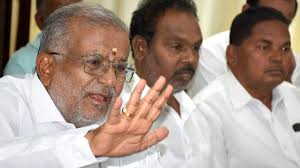
Seeking to make it clear that he was not “anti-Dalit”, JD(S) MLA and former Minister G.T. Deve Gowda said that he was not opposed to the proposed nomination to the Boards of co-operative societies, but had questioned the Karnataka government’s prerogative to nominate members to the co-operative institutions that had not received any financial assistance. Addressing a press conference in Mysuru on Tuesday, Mr. Deve Gowda said he had asked the government to also include representatives from the backward classes along with members of SC/ST communities and women among the nominated members. Mr. Gowda’s press conference was in the backdrop of protests against him by Dalit organisations over his reported opposition to the provisions of the recently passed Karnataka Co-operative Societies (Amendment) Bill 2025 during a discussion in the Legislative Assembly. He said his opposition to certain other provisions of the piece of legislation were only aimed at protecting the autonomy or freedom of the co-operative institutions. Further, Mr. Gowda cited several examples of his efforts to ensure prominent posts to Dalits in co-operative sectors as well as in politics. “I am not anti-Dalit. I am not casteist,” he said. Dharmasthala case With regard to the row over alleged mass burials at Dharmasthala, Mr. Gowda said that it was not possible to malign the reputation of an institution like the Sri Kshetra Dharmasthala or its trustee Veerendra Heggade, but asked the government to ensure that the ongoing probe into the allegations is completed at the earliest. He said it was necessary for the government, which had constituted a Special Investigation Team to probe the matter, to complete the investigation as early as possible and punish the persons guilty. Dasara inauguration Speaking about the BJP’s opposition to the State government’s decision to invite Booker Prize winner Banu Mushtaq to inaugurate this year’s Dasara festival, Mr. Gowda said that the author will not do the same if she does not have faith in the deity of Chamundeshwari. As Chief Minister Siddaramaiah had been vested with the power to take a decision on choosing a suitable guest to inaugurate Dasara 2025, he has exercised his prerogative and chosen Ms. Mushtaq, he said. The Hindu Bureau Courtesy : The Hindu Note: This news is originally published on https:/thehindu.com/bha and is used purely for non-profit/non-commercial purposes, especially human rights.