
Meet Madhu Bai Kinnar: India’s first transgender Mayor who won an election nobody thought she could
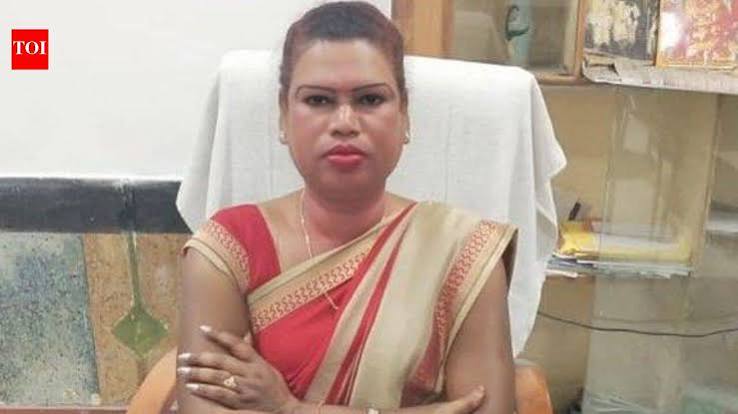
In 1980, in the Dalit community of Raigarh, Chhattisgarh, a child was born and named Naresh Chauhan. Her parents were laborers. The family was large, with five or six siblings, and life was simple and hard. She studied until class eight, but books never held her attention the way music and dance did. From a very young age, she felt something that she could not fully explain: that the life everyone expected her to live did not feel like her own. She felt more like a girl than a boy. And in the world she grew up in, that feeling came with a cost. When her family discovered how she truly felt inside, they asked her to leave the house. She was 15 years old. A new name, a new family, a new life With nowhere to go and no one to turn to, the young girl who had been named Naresh Chauhan walked away from everything she had known and found a community that welcomed her exactly as she was. She joined the transgender community of Raigarh. And for the first time in her life, she felt she belonged somewhere. She gave herself a new name: Madhu Bai Kinnar. A name she chose. A name that was truly hers. With her new community, she began dancing and singing on the streets of Raigarh and inside passenger trains on the Howrah-Mumbai route. It was not an easy life; she earned between 300 to 500 rupees a day. But she had friends, she had dignity, and she had joy. She came home every night to people who loved her. For nearly 15 years, this was her life. Invisible to the system. Dismissed by society. And yet deeply, quietly rooted in her community. The day everything changed: One form, one decision One ordinary day, Madhu went to the municipality office for her weekly collections. And there, almost by chance, she saw a form inviting applications for the mayor’s office of Raigarh. She had never planned to enter politics. It had never been a dream. But the people around her, ordinary citizens of Raigarh, tired of corruption and tired of politicians who made promises and disappeared, urged her to try. They told her that she was the one they trusted. That she was the one who actually lived among them and understood their problems. So she filled the form. And she went to work. A campaign like no other Madhu Bai Kinnar did not have political party money. She did not have powerful backers or a campaign team of hundreds. She had herself. And her friends. She collected money from her dancing and singing. And then, with four to five friends by her side every morning, she went door-to-door across Raigarh telling every single person she met about her agenda, her earthen pot election symbol, and her vision for the city. By evening, those four or five friends had become 600 to 700 people walking alongside her, drawn not by money or politics but by something they rarely saw in a candidate: honesty. Her entire 10-day campaign cost between Rs 60,000 and Rs 70,000, money she had saved herself, rupee by rupee, from years of singing on trains. January 4, 2015: A date India will not forget Just nine months after the Supreme Court of India delivered its landmark judgment recognising transgender people as a third gender, the people of Raigarh went to the polls. Running as an independent candidate, Madhu won the mayor election of the Raigarh Municipal Corporation, securing 33,168 votes and defeating the nearest rival, the ruling party BJP’s Mahaveer Guruji, by 4,537 votes. She is the first openly transgender person in India to be elected to a mayoral office. “People have shown faith in me. I consider this win as love and blessings of people for me. I’ll put in my best efforts to accomplish their dreams,” Kinnar said. The news spread across the country. And for the first time in a long time, India’s transgender community felt seen. Mayor who sat among the people What Madhu did after winning was as remarkable as the win itself. When she assumed responsibility as mayor, she rejected the big office that the mayor-elect is supposed to occupy. She wanted to be accessible to people, so their grievances reached her first-hand. She built an open cabin where people could approach her directly. She even refused to travel in the state-provided car and instead traveled in an auto. She believed simply that the people had chosen her, so she should sit among them. Her election agendas were manifold. She wanted to put an end to transgenders begging and busking in trains, ensure ration cards were issued, and work for the poor and for the transgender community equally. She and her team would go on rounds every morning, starting as early as 7 AM, urging city workers to fix clogged wells, pipes, and gutters. As a result of this hard work, in 2019, Raigarh won the Swachhata Excellence Award. More than a mayor, a mirror for all of India Madhu Bai Kinnar’s story is not just about one election in one city in Chhattisgarh. It is about what happens when a society is brave enough to look beyond gender, beyond caste, beyond everything the world uses to decide who matters, and simply votes for the person who actually cares. She was born into a family that asked her to leave. She lived on the margins for 15 years. She campaigned with her own hard-earned money. And she walked into a Mayor’s office wearing a white saree and a red bindi, and changed what India thought was possible. From a train to a town hall. From Naresh to Madhu. From invisible to unforgettable. Courtesy : TOI Note: This news is originally published on https:/timesofindia.com/bha and is used purely for non-profit/non-commercial purposes, especially human rights
Rahul Gandhi attends Congress training camp in Chhattisgarh
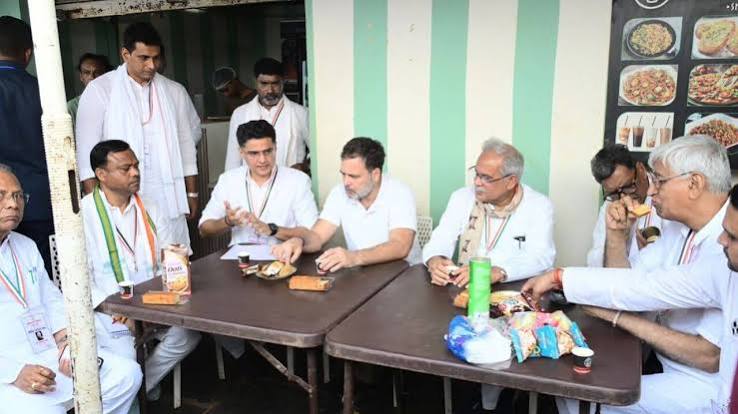
Leader of Opposition in the Lok Sabha Rahul Gandhi arrived in Abhanpur on a day-long visit to attend a 10-day Congress training camp on Sunday. During his four-hour visit, Gandhi held a 40-minute meeting with senior party leaders before interacting directly with district and city unit presidents. On his way back to the airport, Gandhi stopped at a roadside tea stall where he was seen sharing biscuits with Pradesh Congress Committee (PCC) chief Deepak Baij. Senior leaders including Sachin Pilot, Bhupesh Baghel, T S Singh Deo, and Charan Das Mahant accompanied him. While the ongoing training camp in Abhanpur was scheduled as a closed-door event, a large number of Congress workers gathered at the venue from across the state. The heavy rush led to brief chaos at the entrance. In the ensuing push and shove, Leader of Opposition in the Chhattisgarh Legislative Assembly Charan Das Mahant was left stranded outside the main gate for a period. Videos of the incident have since surfaced on social media. Gandhi departed for the airport following the conclusion of the interaction sessions. Courtesy : TOI Note: This news is originally published on https:/timesofindia.com/bha and is used purely for non-profit/non-commercial purposes, especially human rights
Raipur to host national transgender sports meet

RAIPUR: A decade after India last witnessed a major national sporting platform for transgender athletes, Raipur is set to script a new chapter in inclusion and equality. The national transgender sports meet 2025, themed ‘Samta Ka Mahotsav’, will take place on Dec 19–20, bringing together participants from Punjab, Delhi, UP, Jharkhand, Odisha and other parts of the country for two days of competition, culture and dialogue. Organised by Chhattisgarh Mitwa Sankalp Samiti- a community for transgenders and LGBTQ, with support from the department of social welfare, the event is being hailed as one of the most significant national initiatives for the transgender community in recent years. The sports festival aims to give transgender athletes a stage to demonstrate their strength, discipline and sporting excellence—transforming sports from a field of competition into a platform of dignity and identity, one of the organisers Vidya Rajpur said, the meet will help challenge stereotypes, build visibility and inspire confidence within the community. The event also comes at a time when the transgender community in Chhattisgarh and across India has been achieving notable breakthroughs. These include the introduction of a dedicated transgender column in govt job application forms, successful participation in the 2021 police recruitment and Bastar Fighter selections, and consistent performance in competitive examinations. Activists describe these milestones as proof of what inclusion can achieve when opportunities are equitable. The meet will be held at Swami Vivekanand athletic stadium in Raipur, and will feature athletics and other sporting events beginning both the mornings. “When transgender athletes run, compete and win on the field, society learns to see them through the lens of ability rather than identity,” said Vidya. Courtesy : TOI Note: This news is originally published on https:/timesofindia.com/bha and is used purely for non-profit/non-commercial purposes, especially human rights
Chhattisgarh: Dalit youth assaulted, beaten in the middle of the road in Dipka, case filed
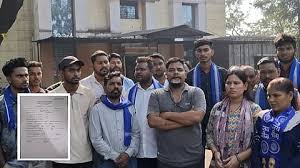
Dalit youth attacked in an Instagram dispute: assaulted with casteist slurs, FIR filed against Kunal Singh Rajput. Chhattisgarh: A serious case of assault against a Dalit youth has come to light in the Dipka police station area of Korba district. The victim alleges that a boy named Kunal Singh Rajput came to kill him. The Dalit youth suffered a serious head injury in the incident. However, in the presence of the Chhattisgarh Bhim Army Ekta Mission, the Dipka police have registered a case against the accused. According to the police, the accused is being interrogated and further action will be taken after the investigation is complete. The incident occurred on November 15th at Azad Chowk in Dipka, when Nitesh Kurre, a resident of Dipka, was going to the market with his wife at 5 pm. Kunal Singh Rajput attacked Nitesh Kurre, causing a head injury and serious injuries. The Dalit youth alleges that the accused, Kunal Singh Rajput, stopped him on the road, began assaulting him, and hurled casteist slurs at him over a social media Instagram chat and an old dispute. Police investigating the case Based on the victim’s complaint, the Dipka police have registered a case under relevant sections of the IPC, including sections 296, 115(2), and 351(2) of the Indian Penal Code, and have begun investigating the matter. Sharvan Kumar Courtesy: Hindi News
Chhattisgarh: This unique museum in Naya Raipur tells the saga of bravery of unsung tribal heroes.
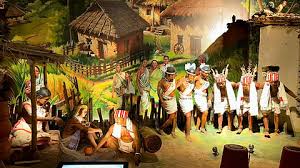
History from 1774 to 1939 comes alive in 16 galleries; the sword of Martyr Veer Narayan Singh and the ‘Adi Vani’ app are the main attractions. Raipur: Whenever the country’s freedom struggle is mentioned, images of great heroes like Bhagat Singh, Chandrashekhar Azad, and Netaji Subhash Chandra Bose come to mind. Their stories inspire millions. However, the contribution of revolutionaries from the tribal community in this struggle was no less, although very few people know about them. To recognize these unsung heroes and make their stories accessible to the public, a very special museum has been created in Naya Raipur, Chhattisgarh. The ‘Shaheed Veer Narayan Singh Memorial and Tribal Freedom Fighter Museum’ is not just a building, but a living document of history. PM Modi inaugurated Located in Sector 24 of Naya Raipur, this sprawling museum spans 9.75 acres. It was inaugurated by Prime Minister Narendra Modi on November 1 of this year. The total cost of this project, designed by the Tribal Welfare Department, was ₹53.13 crore. The museum aims to provide visitors with a holistic experience of the lives and struggles of tribal revolutionaries. Displays include life-size statues depicting key moments of the freedom struggle, historical documents containing execution orders, and weapons used by the rebels. A testimony to the struggle from 1774 to 1939 The museum is divided into 16 galleries, where hundreds of statues narrate the untold stories of the atrocities and resistance faced by tribal communities between 1774 and 1939. Sonmani Bora, Principal Secretary of the Tribal Development Department, said, “The digital experiences here, including the sword used by martyr Veer Narayan Singh against the British, his memorial, and a digital view of the famous Maa Danteshwari Temple in Dantewada, make this museum an unforgettable experience for visitors.” A Wonderful Confluence of Art and Culture The main entrance of the museum is decorated with traditional wood carvings from the Surguja region. The names of 200 tribal freedom fighters are also inscribed, giving visitors a sense of pride even before they enter. A life-size statue of Birsa Munda is installed in the courtyard. It is noteworthy that Birsa Munda’s birth anniversary (November 15) is celebrated nationwide as ‘Tribal Pride Day’. More than a dozen digital screens have been installed in the reception hall, playing animated video stories. Additionally, there is a mini-theater where short films based on the life stories of tribal leaders like Veer Narayan Singh, Gend Singh, Gundadhur, and Ramadhin Gond are shown. A glimpse of various tribes While the reception area is brightly lit, the galleries are dimmed to bring the statues to life. The exhibits showcase the culture, beliefs, arts, and skills of Particularly Backward Tribes (PVTGs) such as the Kamar, Baiga, Abujhmariya, Pahari Korwa, and Birhor. Their sculptures, paintings, and everyday objects are also on display. From the Pages of History: Captain Blunt and Veer Narayan Singh Recalling an interesting historical incident, TRTI Assistant Director Anil Virulkar told the Indian Express, “The museum also features the story of Captain Blunt of the East India Company. When he tried to invade Bastar in 1795, the local tribes—Gond, Koya, Dorla, and Madia—attacked him with their traditional weapons and forced him to retreat.” Another gallery tells the story of Veer Narayan Singh’s rebellion, who raised his voice against the British when they refused to give grain from their warehouses to tribal people struggling with hunger and poverty. Mahatma Gandhi’s visit to Dhamtari is also mentioned here. Connecting through Technology Special arrangements have been made to connect history with modern technology. TRTI Director Hina Netam said, “We have developed an app called ‘Adi Vani’, which offers translations in Gondi and Halbi languages. Additionally, we have created short films and videos in local languages such as Chhattisgarhi, Gondi, and Halbi, which will be shown on the museum’s immersive dome and other digital platforms.” This museum is certainly an enlightening pilgrimage for those who want to understand the incomparable contribution of tribal society to India’s freedom struggle. Rajan Chaudhary Courtesy: Hindi News
Jogi burns invite over omission of dalit MP Mini Mata’s name
Raipur: The Janata Congress Chhattisgarh (J) has intensified its protest against the state govt, alleging the deliberate omission of Chhattisgarh’s first Dalit MP, Mini Mata’s name, from the invitation card for the new Assembly building’s inauguration. JCC(J) state President Amit Jogi, son of former CM late Ajit Jogi, burned the inauguration invitation card in protest, accusing the govt of insulting Chhattisgarhi pride, women’s empowerment, and Dalit representation by erasing Mini Mata’s legacy. He appealed to all MLAs and former MLAs to boycott the Prime Minister’s event if the name is not reinstated. “Today, as the state prepares to inaugurate a new Assembly building on its 25th foundation day, we received an invitation from Assembly Speaker Dr Raman Singh. The shocking and infuriating aspect is that the name ‘Mini Mata’ is not mentioned anywhere on this invitation card,” Jogi said. He termed the omission a “planned conspiracy or a grave error.” Courtesy : TOI Note: This news is originally published on https:/timesofindia.com/bha and is used purely for non-profit/non-commercial purposes, especially human rights
Two Dalits assaulted for participating in Hindu festivals in Chhattisgarh, police skip SC/ST Atrocity Act bookmark_border text_fields
The first incident took place at a Kali Mata Puja celebration in Mahmand village on October 19, 2025 Bilaspur/ Chhattisgarh: Two separate assaults on Dalit individuals participating in Hindu religious festivals have been reported from Union minister Tokhan Sahu’s constituency of Bilaspur in Chhattisgar recently, according to a report. The first incident took place at a Kali Mata Puja celebration in Mahmand village on October 19, 2025, Maktoob media.com reported. Sixteen-year-old Ashutosh Barle, a tenth-grade student at Massorie Shisu Mandir Bhawan, was home from hostel for two days during vacation when he went to watch the music and lights set up for the Kali celebration. Maktoob quoted his mother Sarita Barle as saying: ‘The DJ caught his curiosity, so he went there.’ Noticing Ashutosh Barle, the attacker Pradeep Maharaj hurled casteist insults for participating in the festival, before beginning physical assaults. It was then his friends Deepeshwar, Rahul, and others joined verbally abusing Ashutosh before assaulting him with ‘fists and rods’. When the minor victim fainted at the spot, a villager reached out to his mother who rushed in to take Ashutosh home. However, the assailants went on to assail the family pelting stones at the house, with Sarita locking herself and her younger children inside a room. She later told Dalit activist Sanjeet Barman that police were not willing to record incident accurately. Another attack on a 20-year-old Dalit farmer was reported during the Laxmi Utsav celebration in Bharda village the following night on October 20, 2025. Lokesh Kumar Jangde, a driver and a small-time land owner, was watching Laxmi Utsav celebration when an upper caste member Amit Yadav questioned his presence at the festival. Amit Yadav hurled abusive remarks about Lokesh’s mother and sister before dragging him out of the marquee and started beating him. Others identified as Roshan Yadav, Shiva Yadav, and others joined in assaulting him. It is reported that an FIR has been filed but the Yadav family is allegedly pressuring Lokesh to withdraw the complaint. Calling for invoking the Scheduled Castes and Scheduled Tribes (Prevention of Atrocities) Act in both cases, activist Sanjeet Barman pointed out that ‘In Ashutosh Barle’s case, the POSCO Act is also missing.’ Courtesy : Madhtamam Note: This news is originally published on https:/madhyamam.com/bha and is used purely for non-profit/non-commercial purposes, especially human rights
Dalit youth assaulted during religious festivals in Chhattisgarh, police fail to invoke SC/ST Act bookmark_border text_fields
The omission is significant because the Atrocity Act ensures faster trials, special courts, and victim protection, unlike general charges under the IPC. In Chhattisgarh’s Bilaspur constituency, represented by BJP MP and Union Minister Tokhan Sahu, two brutal caste-based assaults on Dalit youth have sparked outrage. The attacks, which took place on consecutive nights during Hindu religious festivals, have once again highlighted how public religious spaces can become sites of caste violence The incidents occurred on October 19 and 20, 2025, in Mahmand and Bharda villages. Both victims — one a minor — sustained serious injuries. On October 19, 16-year-old Ashutosh Barle, a tenth-grade student at Massorie Shisu Mandir Bhawan, was home for a short vacation when he decided to attend a Kali Mata Puja celebration in his village. Drawn by the music and lights, he went to the event where a DJ had been set up behind the Panchayat Bhawan. There, the accused, identified as Pradeep Maharaj, noticed him and began hurling casteist slurs. He mocked the boy’s presence at the festival before physically attacking him. Soon, his friends — Deepeshwar, Rahul, and others — joined in. They verbally abused Ashutosh and beat him with “fists and rods.” Ashutosh fainted on the spot. A villager informed his mother, who rushed to bring him home. However, the attackers followed and began pelting stones at their house. Fearing for their safety, Sarita locked herself and her younger children inside. The following night, October 20, a similar attack took place in Bharda village during the Laxmi Utsav celebration. Lokesh Kumar Jangde, a 20-year-old Dalit farmer and part-time driver, was watching the program when Amit Yadav, from the dominant caste, confronted him and questioned his presence at the event. Amit hurled abusive remarks about Lokesh’s mother and sister. When Lokesh objected, he was dragged to the edge of the pandal and beaten by Amit, Roshan Yadav, Shiva Yadav, and others. Bharda village has only one Scheduled Caste family, while the rest belong to OBC and general castes. Though an FIR was filed, the Yadav family has allegedly been pressuring Lokesh to withdraw his complaint. Despite the clear caste-based nature of both attacks, neither FIR includes charges under the Scheduled Castes and Scheduled Tribes (Prevention of Atrocities) Act, 1989. The omission is significant because the Atrocity Act ensures faster trials, special courts, and victim protection, unlike general charges under the IPC. Activist Barman alleged that officers at the Torwa Police Station mishandled the complaint. He said they even abused the victim’s family and accused the minor of attending a “higher-caste festive function,” an act he described as blatant victimblaming. Barman added that “In Ashutosh Barle’s case, the POSCO Act is also missing.” He said he hopes to convince the police to apply the correct provisions in both cases. The attacks have revived memories of Chhattisgarh’s long struggle against caste discrimination. The state was once home to Guru Ghasidas, the 19th-century saint who founded the Satnami sect to promote equality and social reform. Many Dalit communities, especially the Chamar community, follow his teachings today. The back-to-back assaults in Mahmand and Bharda reveal how caste hostility continues to define rural Chhattisgarh’s social fabric — and how systemic failures in law enforcement leave Dalit victims without the justice the Constitution promises them. Courtesy : Madhyamam Note: This news is originally published on https:/madhyamam.com/bha and is used purely for non-profit/non-commercial purposes, especially human rights
Chhattisgarh and Dalit empowerment: Attacks on Christians are not about conversions
The Sangh Parivar fears the empowerment of Dalits and the spread of education among tribal and poor communities. In September 2019, Thiruvananthapuram MP Shashi Tharoor made a rare blooper. In response to the much-hyped ‘Howdy Modi’ event in Texas, US, the suave parliamentarian posted a “forwarded” photograph on his Twitter (now, X) handle, showing the rousing welcome Jawaharlal Nehru had received without any PR work on a foreign visit. “Nehru & India Gandhi [sic] in the US in 1954. Look at the hugely enthusiastic spontaneous turnout of the American public, without any special PR campaign, NRI crowd management, or hyped-up media publicity,” he tweeted, oblivious of the three apparent mistakes he was committing. Netizens and fact-checkers went on an overdrive on seeing Tharoor misspelling Indira. They went further and dug up more information, which forced the Lok Sabha member to tweet a clarification. Fact-checkers found that the photograph was taken during Nehru’s visit to the USSR, and not the US. They also claimed that the year was 1955. In 1955, a little boy from Kerala, unaware of Nehru’s visit to the USSR’s Magnitogorsk, a geographical anomaly that once consisted almost entirely of iron ore. The boy frolicked with friends on the banks of the River Pampa, now in Kerala’s Pathanamthitta district. Little did he then know that Nehru’s visit to the Soviet Union would soon take him to Durg, now in Chhattisgarh. Related: Religion, prejudice, politics and procedural lapses The migration On 2 March 1955, the USSR and India signed an agreement for an integrated iron and steel works in Bhilai, the twin city of Durg, then in Madhya Pradesh. Three years later, the first furnace roared into life. The Bhilai Steel Plant (BSP) opened up employment opportunities to several skilled and unskilled workers in Tamil Nadu and Kerala. The boy’s father was among those who grabbed the opportunity, and his family shifted from the banks of Pampa to the shores of the Shivnath River, now called a jewel of Chhattisgarh. From Kerala, it was mostly people from central Travancore who went to Bhilai. Having gained the gift of education through the Church Mission Society missionaries, they were prepared for such new opportunities, even when Kerala itself had no industries to speak of. For decades, they lived in the twin cities of Bhilai and Durg, proud contributors to India’s growth story. Their generations grew up there, chose to stay, and built peaceful lives. Today, that peace is frayed. The boy — now all grown up — whose father was an engineer at BSP, now lives in fear because of his Christian identity. They cannot even whisper ‘Hallelujah’ within their four walls. Yes, the Malayali Christian community in Durg, once so rooted and secure, now lives under the shadow of Sangh Parivar forces, especially the Bajrang Dal. Related: Missionaries serving marginalised face criminalisation Bajrang Dal vs house churches In Raipur, Durg, and the surrounding areas of Chhattisgarh, an unofficial directive to close house-churches is reportedly being enforced. These house-churches, mainly run by Pentecostal pastors, are small congregations that meet in private homes rather than formal church buildings. According to a June 2025 ruling by the Madras High Court, private homes in India can generally be used for religious prayer. However, converting a house into a permanent place of worship requires permission from local authorities. ”In Durg, there are fewer than 10 Malayali pastors, but the Christian community is strong, comprising nearly 5,000 families—from Orthodox, Latin Catholic, and Pentecostal denominations such as IPC and Church of God, etc.,” a church council leader from Durg with roots in Kottarakkara, Kollam, told South First. “Most Malayali pastors have registered churches, but some face financial constraints that prevent them from building formal church buildings. So they conduct prayers in their homes,” he said on condition of anonymity. In Bhilai, the plant authorities had allocated acres of land for Christians on lease to build churches. With nearly 30,000 permanent workers in BSP, people from South India, Bengal, and elsewhere were free to live here and practice their faith. Alongside schools and hospitals, religious institutions like churches, mosques, and temples were established. The Orthodox Diocese later built numerous schools, colleges, and professional institutions, while Catholics set up hospitals and schools in Durg. Now, after Vishnu Deo Sai became the Chief Minister of Chhattisgarh, Bajrang Dal members are being forced to stop house prayer meetings. “They come to our prayer centres with police, attack us, and shut down our churches. Police then file cases against pastors for ‘shanti bhang‘ (disturbing peace) and Section 295 (hurting religious sentiments) at the request of Bajrang Dal members. After the arrest of two Malayali nuns, the confidence of Bajrang Dal activists has increased, as the police have not taken action against them,” the church leader said. HC asks Durg to review church rules; no action yet After Bajrang Dal allegedly began shutting down house congregations and prayer meetings through threats and violence, church authorities approached the High Court. Copy of Court Order Copy of the High Court order. The Chhattisgarh High Court has directed the Durg District administration to consider representations from the United Christian Council regarding restrictions on prayer meetings in churches and halls. The petition, filed by the council’s Secretary Obed Das, sought relief against several restrictions, including barring non-Christians, banning prayers in residential or rented halls, limiting prayer duration, and recording attendees. “The administration has been issuing oral instructions restricting who can attend prayer meetings and where they can be held, despite churches being on private land,” a lawyer, who also sought anonymity, told South First. The court ordered the District Magistrate to decide the representations submitted on 6 April and 31 July 2024, after a fair hearing within four weeks. The petition was disposed of with directions to pass an appropriate order. However, the local administration has yet to act. ”Till now, no action has been taken even after the High Court’s direction. So where will we go for justice?” the church leader asked. Rising attacks Article
Dalits are doing the work doctors reject—‘No postmortem without a safai karmachari’
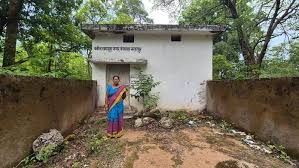
Thousands of Dalit sanitation workers across India are forced to perform autopsies in place of doctors. ‘This practice is even worse than manual scavenging.’ Delhi/Narharpur/Dharwad: Hidden in the forests of Chhattisgarh’s Narharpur is a small cement structure with black Hindi letters on the wall: Naveen Shav Griha, a house for the dead. More than 1,200 postmortems have been conducted here in the last 20 years. The person cutting open the bodies is Santoshi Durga, a sanitation worker. Her qualification is not an MBBS but her caste. There’s no running water or electricity in the dingy room. Just a worn-down cement slab and a paltry selection of knives. The town’s residents say the murda ghar is haunted, cursed. By extension, they look at 42-year-old Durga with suspicion. But to them it’s only natural that the distasteful job of dealing with the dead is relegated to a Dalit. “Townspeople say the mortuary is not auspicious, it is scary. So, they pressurised the hospital to make the mortuary outside the town,” said Durga, who works for the Narharpur Community Health Centre as a badli worker, a substitute or proxy. Sometimes, badlis sweep roads or clean drains for government safai karamcharis who don’t want to get their hands dirty. And sometimes, badlis like Durga fill in for squeamish doctors. For this, they don’t even get the pay or benefits of a permanent sanitation employee. The doctor never touches the body, he just keeps making notes. I have complete experience now. I know how to cut open the body and break open the skull. I open the body from the trachea to the navel. I show the doctor where the bones are broken, where injuries have been sustained -Santoshi Durga, contract sanitation worker Across India—whether in Narharpur or Gurugram, Dharwad or Delhi—thousands of Dalit sanitation workers are forced to perform autopsies. Called “cutters” by the medical fraternity, they get no formal training, protective gear, recognition, or additional compensation. Despite government regulations requiring an MBBS degree as the basic requirement to conduct autopsies, physicians at large do not want to go near decomposing bodies, much less handle the organs. They may supervise from a distance, but the dissection is left to sanitation workers, who are nearly always Dalit. The role is passed down generationally, turning risky medical labour into an inherited caste-based duty. The system continues to reinforce and strengthen age-old, stubborn notions of pure and impure, and lack of dignity is still ascribed to some jobs in modern India. “This practice is even worse than manual scavenging,” said Bezwada Wilson, convenor of the Safai Karmachari Andolan. Dalit sanitation workers doing postmortems Contract worker Rakesh Rajak at the postmortem room in Komal Dev District Hospital, Kanker. He has been conducting autopsies for around 15 years | Photo: Shubhangi Misra | ThePrint Not only are sanitation workers engaging in a hazardous, traumatising job without prior consent, they’re also stuck in tenuous contract work, forced to labour all seven days of the week. They depend on tips from relatives of the dead to meet their basic needs. Durga is no stranger to the murda ghar. She learnt the job of dissections from her father, who drank himself to death to cope with the pressures of the work. “My father used to conduct autopsies here earlier, but he used to get drunk and do it. I wanted to prove to him that this work can be done without alcohol. I learnt the ropes alongside him,” she said. Yet though the practice is rampant in government hospitals, the work is either invisible or it brings ignominy. Or both. “No postmortem in this country happens without a safai karmachari,” said Bhim Basfore, member of Assam’s Safai Karmachari Aayog and the son of a postmortem worker himself. “Nobody wants to do this work, and so it is handed over to the sanitation workers. Sanitation workers do three types of jobs: working on the roads, manual scavenging, and cutting dead bodies. There is a lack of awareness about the third.” Caste disguised as contingency A hammer and a couple of blades kept neatly in a black bag, along with aprons, masks, and gloves are the only tools at Durga’s disposal for her autopsy work. She doesn’t even know what bone saws, rib shears, or specialised autopsy knives are. Her kit is kept in a far corner of Narharpur Community Health Centre and is labelled with khatra (hazardous) warnings. If further testing is needed, she transports body parts back to the hospital in a basic plastic container. “Here is the box I keep organs in,” she said, pulling out a blue-lidded Pearlpet box, which she washes and reuses. Durga is the one doctors and even police call when a decaying body is found, or the victim of a murder or suicide has to be examined. She has to work with whatever she gets. The bodies might be infested with maggots, bloated, or mangled beyond recognition. The sight and stench can be unbearable. She says the state provides her hepatitis shots every quarter. Usually, bodies are brought to the mortuary in a van, with the doctor and Durga travelling together to carry out the work. “The doctor never touches the body, he just keeps making notes,” she said. “I have complete experience now. I know how to cut open the body and break open the skull. I open the body from the trachea to the navel. I show the doctor where the bones are broken, where injuries have been sustained.” The people I cut open visit me in my dreams. Earlier I was scared of them. Now I have made my peace with it, but it is still difficult to fall asleep at night – Sanitation worker in Gurugram Calling on sanitation workers for mortuary work is just the normal division of labour here. It even happens in Raipur, according to Naharpur block medical officer Bhupendra Kumar. “The autopsies always happen under the supervision of doctors. We are always present there,” he said. A