
The Key to Power and the Voice of the Dalits: Find out who is Tamil Nadu’s New ‘Kingmaker’, Thol Thirumavalavan
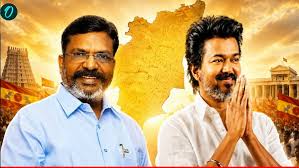
From a forensic scientist to becoming the ‘kingmaker’ of Tamil Nadu politics, learn the full story of VCK founder Thol Thirumavalavan’s struggle and success. New Delhi: Following the 2026 Tamil Nadu Assembly elections, Thol Thirumavalavan and his party, the Viduthalai Chiruthaigal Katchi (VCK), emerged as a decisive force in government formation. Respecting the public mandate and avoiding any constitutional crisis, Thirumavalavan announced unconditional support to actor Vijay’s party, the Tamil Nadu Vetri Kazhagam (TVK). Vijay’s party fell short of the magic number of a simple majority. Displaying strategic foresight, he ensured a long-term vision for the state by working with allied left parties. He also maintained his alliance with the Secular Progressive Alliance led by the Dravida Munnetra Kazhagam (DMK). By prioritizing public interest over momentary political gains, Thirumavalavan established his party as a strong ‘kingmaker’. With the support of two VCK MLAs, as well as the IUML and other allies, the VCK managed to surpass the majority of 118 seats. This move paved the way for a stable government in the state. Thirumavalavan clarified that the primary objective of his decision was to prevent President’s rule in the state and protect democratic values. Born on August 17, 1962, in Anganoor, Tamil Nadu, Thol Thirumavalavan, originally named Tolkappiyan Thirumavalavan, is one of India’s most prominent Dalit leaders, scholars, and social reformers. As the founder and president of the VCK, he is currently the Member of Parliament from the Chidambaram constituency. His outspoken advocacy for social justice has made him a prominent figure in Tamil Nadu politics for over three decades. After completing his primary education in his hometown, he graduated in Chemistry from Presidency College, Chennai. He then earned a Master’s degree in Criminology in 1988. He served as a Scientific Assistant in the Government Forensic Science Department until 1999. He later studied law at Madras Law College and completed his PhD in 2019 from Manonmaniam Sundaranar University on the subject of conversions of Dalits in Meenakshipuram. His political journey began in 1982 when he joined the Dalit Panthers Iyyakam (DPI) in Tamil Nadu. This organization was inspired by the Dalit Panthers of India and the Black Panther Party of the United States. Under the guidance of A. Malaichami, he led student protests for the Eelam Tamils and campaigned for Dalit rights. After Malaichami’s death in 1989, he became the state organizer of the DPI and later renamed the organization ‘Viduthalai Chiruthaigal’. Deeply influenced by Sri Lanka’s ethnic conflict and the struggle for Tamil identity, the organization formally transformed into a political party called the Viduthalai Chiruthaigal Katchi (VCK) in 1990. Initially, it maintained a distance from electoral politics and focused on spreading awareness against caste discrimination. In 1999, he resigned from government service and contested his first Lok Sabha election from Perambalur in alliance with the Tamil Manila Congress. Despite losing this election, he received over 2.25 lakh votes. In 2001, he won his first assembly seat from the Mangalore (now dissolved) constituency. Subsequently, in 2009, he was elected to the Lok Sabha from Chidambaram by a landslide victory, establishing the VCK as a recognized state party. Since then, he has contested several elections, winning resounding victories, establishing the VCK as a recognized state party. His party has been granted the “Matka” permanent election symbol by the Election Commission. Under Thirumavalavan’s leadership, the VCK has exemplified pragmatic politics by forming alliances with major Dravidian parties and unexpected allies like the Pattali Makkal Katchi (PMK). His slogan, coined in 1996, “Refuse to be suppressed, transcend boundaries, rise fiercely, fight back,” has always inspired generations of Dalit youth to challenge systemic oppression. Ideologically, he represents a unique amalgamation of Ambedkarite principles of social justice and Dalit empowerment, Periyar’s rationalist and anti-caste philosophy, and Marxist critiques of capitalism. The core principles of his party include the abolition of the caste system, opposition to social exclusion, protection of Tamil culture and language, women’s liberation, and support for the working class. His inspirations include Gautam Buddha, Dr. B.R. Ambedkar, Thanthai Periyar, and Velupillai Prabhakaran. Beyond politics, he has also made significant contributions to the cultural and social sphere. He has acted in Tamil films such as “Anputhozhi” and “Kalagam” and has written several books. In 2016, he launched his party’s “Velicham TV” channel. He promotes Tamil naming to eliminate caste and religious identities and led environmental initiatives such as planting one lakh palm seeds across Tamil Nadu in 2018. His political career has also been marked by controversy. He has frequently faced criticism for his comments on the Manusmriti, Hindu deities, the disabled, and LGBTQ+ issues. He faced several legal cases for his involvement in the 1999 bus burning and inflammatory speeches, though he successfully fought these charges in court. Former colleagues also accused him of accepting funds from Christian missionary organizations, a charge he has consistently denied. Despite numerous controversies, his commitment to Dalit liberation and social reform has remained unwavering. He has received numerous honors for his social and political contributions, including the 2025 Icon of Social Liberation Award, the 2019 Quaid-e-Millat Award for Integrity in Public Life, and the 2024 Best Performing Parliamentarian Award. Under his leadership, the VCK also honors social activists with the Ambedkar Sudar and Periyar Oli awards. Thirumavalavan, a lifelong bachelor, has dedicated his entire life to the upliftment of marginalized communities. His journey from a forensic scientist to becoming a kingmaker in Tamil Nadu politics is a masterful blend of social activism and political strategy. He has shaped the state’s political landscape by advocating for equality, justice, and Tamil identity. Rajan Chaudhary Courtesy: Hindi News
UP cabinet rejig signals BJP caste reset as Yogi courts OBCs, Dalits to blunt SP’s PDA narrative

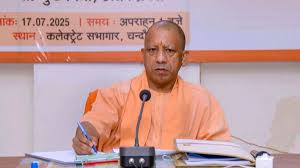
The Yogi govt expanded representation for OBCs and Dalits while rewarding loyalists & regional leaders before high-stakes Assembly battle. Three OBCs, two Dalits and a Brahmin among new ministers. Lucknow: Ahead of the upcoming Assembly elections in Uttar Pradesh, Chief Minister Yogi Adityanath has attempted to strike a caste balance through a long awaited expansion of his cabinet. At a swearing-in ceremony held at the governor’s house in Lucknow on Sunday, six leaders took oath as ministers while two leaders were promoted and assigned new responsibilities. Special emphasis was placed on maintaining social and regional balance in the cabinet expansion. The leaders who took the oath included Bhupendra Chaudhary, Manoj Pandey, Ajit Pal, Somendra Tomar, Krishna Paswan, Surendra Diler, Hansraj Vishwakarma and Kailash Rajput. Among them, Surender diler, Krishna paswan, Hansraj Vishwakarma and Kailash Rajput were inducted as Ministers of State, while the other leaders were given Cabinet and independent charge responsibilities. Another rebel SP MLA, Pooja Pal, was also expecting a call for the oath ceremony, but she was not considered in this cabinet expansion. Out of the six new ministers inducted into the cabinet, three belong to the OBC community, two are Dalits and one is a Brahmin. According to UP BJP functionaries, the party has focused on increasing the representation of OBCs and Dalits in the cabinet to counter the Samajwadi Party’s ‘PDA’ (Pichhda, Dalit, Alpsankhyak) narrative. With the latest expansion, the 60 member council of ministers now includes 25 OBC ministers, 21 from upper castes, 12 Dalits, one Sikh and one Muslim minister. By giving representation to leaders from western Uttar Pradesh, Bundelkhand, and Purvanchal, the party has tried to strike a broader social balance also. Among the new faces sworn in on Sunday were: Bhupendra Chaudhary Former Uttar Pradesh BJP president Bhupendra Chaudhary has held several organisational positions ranging from district president and regional president of western Uttar Pradesh to state BJP chief. He had also served as a minister in the Yogi government earlier and has now once again took oath as a Cabinet Minister. Manoj Pandey Rebel SP MLA Manoj Pandey represents the Unchahar Assembly seat in Rae Bareli. He previously served as a Cabinet Minister in the Samajwadi Party government. Pandey rebelled against the SP during the Rajya Sabha elections and later joined the BJP, which had promised him a ministerial berth. He has now been inducted as a Cabinet Minister. Kailash Rajput Kailash Rajput, an MLA from the Tirwa Assembly seat in Kannauj, has been made a Minister of State. Rajput, a leader from the Lodhi community, comes from the parliamentary constituency represented by Akhilesh Yadav. With his induction, Kannauj now has two ministers in the Yogi government. The move also comes after the BJP suffered setbacks among Lodhi voters in parts of central Uttar Pradesh during the 2024 Lok Sabha elections. Hansraj Vishwakarma Former Varanasi district BJP president Hansraj Vishwakarma has been inducted as a Minister of State. He belongs to the OBC Vishwakarma community and comes from Varanasi, Prime Minister Narendra Modi’s parliamentary constituency. With his induction, Varanasi now has four ministers in the state government. Surendra Diler Surendra Diler, MLA from the Khair Assembly seat in Aligarh, took oath as a Minister of State. He belongs to the Valmiki community within the Dalit social group. Through his induction, the BJP appears to be seeking to strengthen its outreach among Dalit voters. Krishna Paswan Krishna Paswan, MLA from the Khaga Assembly seat in Fatehpur district, also took oath as a Minister of State. Paswan’s induction, as a woman leader from the Dalit Pasi community, comes amid indications that a section of Pasi voters shifted towards the Samajwadi Party during the 2024 elections. Ajit Pal and Somendra Tomar Ajit Pal and Somendra Tomar have been elevated from Ministers of State to Ministers with Independent Charge. Tomar, MLA from Meerut South, currently serves as Minister of State for Energy and is considered close to Bhupendra Chaudhary. He belongs to the Gurjar community. Portfolios for the newly inducted ministers are expected to be announced later. Prashant Srivastava Courtesy : The Print Note: This news is originally published on https:/theprint.com/bha and is used purely for non-profit/non-commercial purposes, especially human rights
With 3 OBCs & 2 Dalits, Cabinet rejig signals BJP’s bid to blunt SP’s PDA push ahead of 2027 Uttar Pradesh polls
PDA is a coinage used by the Samajwadi Party (SP) for ‘Pichda’ (backwards), Dalits and ‘Alpsankhyak’ (minorities), denoting the opposition party’s overtures towards communities that hold the key to power in Uttar Pradesh. Lucknow: With three OBCs and two Dalits among the six BJP leaders who took oath as ministers in the Yogi Adityanath ministry 2.0 on Sunday, the Cabinet expansion can be seen as a move by the saffron party to blunt the Samajwadi Party’s ‘PDA’ push ahead of next year’s Assembly elections in Uttar Pradesh. PDA is a coinage used by the Samajwadi Party (SP) for ‘Pichda’ (backwards), Dalits and ‘Alpsankhyak’ (minorities), denoting the opposition party’s overtures towards communities that hold the key to power in Uttar Pradesh. The induction of three OBC and two Dalit faces into the Cabinet made the ruling party’s focus obvious, especially on non-Yadav OBCs and non-Jatav Dalits in the state. The three new OBC faces include Bhupendra Chaudhary (Jat), Kailash Rajput (Lodh) and Hansraj Vishwakarma (Lohar), while Krishna Paswan (Pasi) and Surendra Singh Daler (Valmiki) represent the Dalit communities. The sixth minister, Manoj Kumar Pandey, is a Brahmin. Additionally, two state ministers were promoted with independent charge – Ajit Pal (Pal) and Somendra Tomar (Gurjar) – both non-Yadav OBCs. The first Cabinet expansion of the Adityanath Cabinet took place on March 5, 2024, just ahead of the Lok Sabha elections, in which the BJP faced shock reverses in Uttar Pradesh with the SP-Congress alliance winning 43 of the 80 Lok Sabha seats in the state, limiting the BJP-led-NDA to 36, down from 64 in 2019. This included the stunning loss of the Ayodhya seat to SP’s Awadhesh Prasad, the first Dalit (Pasi) to win the constituency, strengthening the SP’s belief that the PDA narrative can be a bankable option in 2027. Prasad was vocal again on Sunday. “I congratulate the new ministers. However, it is obvious that the BJP is rattled by the SP’s PDA push, and that is why we are convinced that 2027 would see the BJP’s ouster from Uttar Pradesh,” Prasad told PTI over the phone. That the saffron party was working to counter the SP’s PDA card became obvious when senior ministers, including deputy chief ministers Keshav Prasad Maurya and Brajesh Pathak, as well as Finance Minister Suresh Khanna, positioned the BJP as the “real” party that cared for the PDA. “SP’s PDA talk is bogus. We are the real PDA,” Keshav Maurya said. The BJP considered that his Brahmin identity would be useful in aligning with this key upper caste group, which the opposition has consistently claimed was unhappy with the saffron party. After taking the oath, Pandey lost no time in targeting SP chief Akhilesh Yadav, his former political boss. “The SP and its leadership are frustrated by the BJP’s phenomenal election wins. As a BJP cadre, I will leave no stone unturned to carry out the tasks assigned to me by the party leadership,” Pandey, now the second BJP minister in the Cabinet from Rae Bareli after Dinesh Pratap Singh, told PTI. Varanasi and Kannauj, too, have been fortified with additional ministers each, hinting at the BJP’s carefully crafted political agenda ahead of next year’s state polls. Hansraj Vishwakarma, BJP’s Varanasi chief who took oath as a minister of state on Sunday, became the fourth minister in the Cabinet from the holy city – the other three being Labour Minister Anil Rajbhar and two ministers of state (independent charge), Ravindra Jaiswal and Daya Shankar Mishra ‘Dayalu’. Barely 25 days back, a political controversy erupted over the alleged sexual assault and murder of a teenage girl from the Lohar community in Ghazipur, just 80 km from Varanasi. Thus, the elevation of Vishwakarma, a Lohar, is also being interpreted as an effort to assuage the community. “No doubt the BJP is desperate, and this appointment, among others, shows its desperation,” SP spokesman Anurag Bhadauria said. Sunday’s Cabinet rejig also saw Kailash Rajput become the second BJP minister from Kannauj, the Lok Sabha constituency of SP chief Akhilesh Yadav, after Social Welfare Minister Asim Arun, a Dalit Courtesy : DH Note: This news is originally published on https:/deccanherald.com/bha and is used purely for non-profit/non-commercial purposes, especially human rights
High command aware of who did what, Rahul tells CM contenders
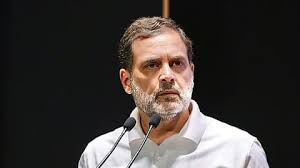
Rahul reportedly told leaders the party knew the sources behind thousands of emails sent over the leadership issue. THIRUVANANTHAPURAM: As the Congress high command prepares to announce Kerala’s next chief minister, more details have emerged from Saturday’s deliberations in New Delhi involving senior leader Rahul Gandhi, party president Mallikarjun Kharge and the three contenders: V D Satheesan, Ramesh Chennithala and K C Venugopal. Rahul is learnt to have cautioned the trio against staking any claim to the election victory, making it clear that the high command was fully aware of the role played by each of them in the campaign. “No one should stake any claim. The high command is well aware of who did what,” Rahul reportedly told the leaders during the discussions. He also warned them of strict disciplinary action if the ongoing street protests, flex-board war and social media campaigns were not brought to an immediate halt. Rahul also reportedly told the leaders that he had received thousands of emails regarding the leadership issue and that the party leadership was aware of the sources of the communication. In what is being viewed as an apparent dig at Satheesan, Rahul allegedly referred to the intervention of certain religious organisations in the Congress decision-making process. Sources said the leadership was aware of the large-scale canvassing by the Jamaat-e-Islami in favour of Satheesan. According to them, the high command made it clear that it did not require outside influence in deciding party affairs. Could The MV Hondius Hantavirus Outbreak Become The Next COVID-19_ “A senior Jamaat-e-Islami leader called for public protests if Satheesan is denied the chief minister’s post. This is the first time the party is witnessing such canvassing for the selection of its chief minister,” a senior Congress leader said. While congratulating the three leaders on the UDF’s landslide victory, Rahul also apparently told them that the high command recognised their leadership roles in securing the mandate. However, he cautioned them that the high command had a clear picture of the role played by each and reminded them that the campaign had been carried out under the direct monitoring of the party leadership. “Hence, staking claim to the victory is unacceptable and disappointing,” Rahul said. “The credit for the victory belongs to the Congress leadership and the UDF constituents. The high command has a complete picture of what happened on the ground,” he added. Dig at Satheesan In what is being viewed as an apparent dig at Satheesan, Rahul allegedly referred to the intervention of certain religious organisations in the decision-making process. Sources said the leadership was aware of the large-scale canvassing by the Jamaat-e-Islami in favour of Satheesan Courtesy : TNIE Note: This news is originally published on https:/thenewindianexpress.com/bha and is used purely for non-profit/non-commercial purposes, especially human rights
Veteran politician to 29-year-old doctor: Here is a look at Vijay’s Cabinet, a mix of youth and experienced
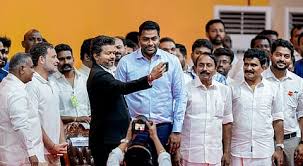
Vijay’s cabinet of ministers is a mix of veteran politicians like KA Sengottaiyan and N Anand and freshers like Aadhav Arjuna and S Keerthana. TVK chief Joseph C Vijay on Sunday took oath as the chief minister of Tamil Nadu, along with nine other ministers, including freshers who made their electoral debut in the recently concluded Assembly elections. Here is a look at the profiles of the TVK ministers. KA Sengottaiyan: From his early days as a leader of Kullapalayam Panchayat in Coimbatore during the 1970s, Sengottaiyan has carved out a storied 50-year career in Tamil Nadu politics. His journey from a grassroots party worker to a 10-time legislator stands as a testament to his political endurance. Born in 1948, Sengottaiyan’s ascent began when he was just 29 years old. His tireless work earned him his first MLA seat from the Sathyamangalam assembly constituency in 1977, when the AIADMK first rose to power under its legendary founder M G Ramachandran, who was fondly called MGR. After MGR’s passing, Sengottaiyan emerged as a staunch loyalist of J Jayalalithaa. Throughout AIADMK’s various terms in power, he held several key portfolios, most notably serving as the Revenue Minister. His influence continued in the administration of Edappadi K Palaniswami, where he served as the School Education Minister. In this role, he was credited with introducing ambitious reforms. He was expelled from the AIADMK in November 2025 after a series of public disagreements with Palaniswami, and he soon joined the Vijay-led TVK, where his decades of political experience proved invaluable. Aadhav Arjuna: Perhaps TVK’s most visible face, Aadhav Arjuna is a basketball player and is currently the president of Basketball Federation of India. A political strategist, he briefly served as Deputy General Secretary for Viduthalai Chiruthaigal Katchi (VCK) before parting ways with its chief Thol Thirumavalavan. The Villivakkam MLA-elect is the son-in-law of ‘lottery king’ Santiago Martin and has been credited for TVK’s growth. N Anand: Also known as ‘Bussy’ Anand, he is recognized as one of the closest political associates of TVK president Vijay. He played a key organizational role during the formation and growth of the party, helping build its ground network and campaign machinery across Tamil Nadu. He earned his nickname ‘Bussy’ after winning the election from the Bussy constituency in Puducherry in 2006 in Puducherry Munnetra Congress. Anand will have the distinction of serving the 17th Tamil Nadu Assembly, after having previously been MLA in Puducherry. He is known for doing voluntary services in his assembly segment ensuring a garbage free area. S Keerthana: TVK MLA-elect from the Sivakasi constituency, S Keerthana has been making headlines after the 29-year-old became the first woman MLA to achieve victory in the constituency, putting an end to nearly seven decades of male domination. Born in 1996 in Virudhunagar, Keerthana studied in a Tamil-medium government school before building a career in political consulting. She completed her BSc in Mathematics from a college affiliated with Madurai Kamaraj University and later pursued MSc in Statistics from Puducherry University in 2019. Before entering active politics, Keerthana worked as a political consultant and digital campaign strategist with Showtime Consulting and IPAC. She was also involved in election campaigns for the Telugu Desam Party (TDP), Trinamool Congress (TMC) and Dravida Munnetra Kazhagam (DMK). Over the years, she worked with former CMs Stalin, Mamata Banerjee and incumbent AP CM Chandrababu Naidu. KG Arunraj: A former Indian Revenue Service officer and a medical doctor by profession, Arunraj was sworn in as a minister in Vijay’s cabinet on Sunday. Kottaipalayam Ganesan Arunraj, aged 46 now, gave up his prestigious government job and joined Vijay’s Tamilaga Vettri Kazhagam. He served as its general secretary, policy and propaganda, before becoming the minister of the first-ever TVK cabinet under Vijay. Arunraj had won from Tiruchengode Assembly constituency in Namakkal district, securing 79,500 votes and trounced his nearest rival SRMT Sekar of the AIADMK by a margin of 28,172 votes. He earned his MBBS from Madras Medical College and had served as government medical officer at the primary health centre in Krishnagiri. He completed his schooling in Salem district. R Nirmal Kumar: A prominent leader of TVK, who played a crucial role in post-poll negotiations in meeting the left party leaders and securing their support for government formation, Nirmal Kumar had headed the IT and social media unit of the TVK. He won from the Thirupparankundram Assembly constituency in Madurai. He was with the BJP initially heading its IT and social media wing and following a brief stint with the AIADMK. Nirmal Kumar joined the TVK in 2025. He became a key strategist for the TVK and is credited with building the digital presence for the TVK while serving as deputy general secretary of IT and social media wing. He holds degrees in engineering and law. A Rajmohan: Rajmohan, an actor, stand-up comedian, television anchor, and director who took the oath of office as a minister, was TVK’s propaganda secretary. He won from Egmore Assembly constituency. P Venkataramanan: TVK treasurer P Venkataramanan who assumed charge as minister, is a practicing advocate and he won from Mylapore Assembly constituency. He is the Brahmin face of TVK. In October 2024, at the first state conference of TVK he had administered the oath to thousands of party activists. Dr K T Prabhu: Dr Prabhu, another newly inducted minister in Vijay’s Cabinet, is a dentist by profession. He won from Karaikudi constituency in Sivaganga district, defeating NTK founder, and actor-director Seeman. Courtesy : TNIE Note: This news is originally published on https:/.com/bha and is used purely for non-profit/non-commercial purposes, especially human rights
Congress leader Jairam Ramesh questions Centre over environment clearances for Great Nicobar project
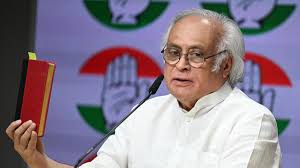
Ramesh alleged that the clearances were based on hurried assessments conducted over a few days and weeks in one of India’s most ecologically sensitive island regions. NEW DELHI: Senior Congress leader Jairam Ramesh on Sunday intensified his attack on the Centre over the Rs 72,000 crore Great Nicobar Island Development Project, alleging that the environmental studies used to grant clearances for the mega infrastructure venture were “grossly inadequate” and reduced the Environmental Impact Assessment (EIA) process to a “mockery”. In a letter to Union Environment Minister Bhupender Yadav, Ramesh questioned the Ministry of Environment, Forest and Climate Change’s claim that the ecological impacts of the project were being “effectively managed”. He alleged that the clearances were based on hurried assessments conducted over a few days and weeks in one of India’s most ecologically sensitive island regions. The Congress MP said the government’s own regulations require detailed and multi-season environmental studies for projects of this scale, particularly in the Andaman and Nicobar Islands. Citing a November 3, 2009 Office Memorandum issued by the Ministry, Ramesh said port projects in the islands must undergo “comprehensive Environmental Impact Assessment including physical and mathematical modelling and ground verification”. He said a proper baseline assessment should cover at least three seasons to capture ecological variations and biodiversity patterns. Ramesh said he could not find the “comprehensive and robust EIA studies” referred to in the ministry’s Frequently Asked Questions issued on May 1, 2026. Instead, he pointed to the Final EIA report submitted in March 2022, which showed that baseline environmental studies were conducted only during the winter season between December 2020 and February 2021. Congress general secretary in-charge communications, Jairam Ramesh. Bulldozer ignores concerns of locals: Congress flays Great Nicobar project Calling the exercise a “Rapid EIA”, the Rajya Sabha MP said a three-month, single-season study was insufficient to assess the environmental consequences of a large-scale port and infrastructure project in a biodiversity-rich island ecosystem. He also alleged that biodiversity assessments linked to the project were conducted over short periods. According to the letter, a “Quick Primary Survey of Ecology and Biodiversity” was carried out between December 14 and 22, 2020, while the survey on leatherback turtles lasted from February 12 to 18, 2021. Ramesh cited passages from the EIA report, claiming the study acknowledged that biodiversity mapping remained incomplete because of the island’s dense forests. Quoting the report, he said: “Based on our site observations, it appears that what is uncovered so far is not complete and what is hidden may be even more valuable.” He also questioned studies conducted by institutions including the Zoological Survey of India and the Wildlife Institute of India. According to Ramesh, the Zoological Survey relied on baseline data collected between February and March 2021, while the Wildlife Institute’s report described itself as a “Rapid Assessment Study” conducted over five days in April 2021. Congress general secretary in-charge communications, Jairam Ramesh. Controversial Rs 80,000 crore Great Nicobar Project gets NGT green light Describing the environmental studies as “an insult to science”, the Congress leader alleged that the clearances were granted on the basis of incomplete ecological data. Ramesh also objected to the Centre’s refusal to publicly release the report of the High-Powered Committee constituted after proceedings before the National Green Tribunal examining clearances linked to the project. Questioning the “logic and legality” behind classifying the report as confidential, he said that when EIA reports, detailed project reports and airport DPRs related to the project were already in the public domain, there was no justification for withholding the committee’s findings. Warning that the island’s “globally unique” ecosystem faced irreversible damage, Ramesh said compensatory afforestation could not offset the environmental destruction likely to be caused by the project. He added that several security experts had argued India’s strategic interests could be safeguarded without causing “such ecological devastation”. Mukesh Ranjan Courtesy : TNIE Note: This news is originally published on https:/thenewindianexpress.com/bha and is used purely for non-profit/non-commercial purposes, especially human rights
Thol Thirumavalavan’s VCK: The Dalit Political Party That Emerged As Kingmaker In Tamil Nadu
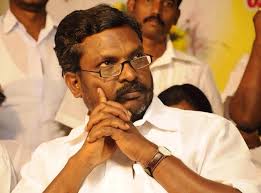
(As Tamilaga Vettri Kazhagam (TVK), the single largest party in Tamil Nadu Assembly election 2026, scrambles to find numbers to stake claim to form the government, it is Thol Thirumavalavan’s Viduthalai Chiruthaigal Katchi (VCK) that has emerged as the kingmaker. So far, the TVK has managed to earn the support letters from the Congress, the Communist Party of India (CPI) and Communist Party of India (Marxist) – CPI(M). Even with the support of three parties, the TVK remains short of a seat.Politics But there is speculation that the TVK is eyeing a plum post, including the Deputy chief minister post. Not just this, TVK also hopes that Thirumalavalan should be fielded from the Tiruchirapalli East constituency in the event of TVK founder Vijay vacating it. People also ask AI powered insights from this story .5 QUESTIONS1What is the Viduthalai Chiruthaigal Katchi (VCK)?⌵ The Viduthalai Chiruthaigal Katchi (VCK) is a Dalit political party in Tamil Nadu founded in 1982. It is dedicated to the liberation of the working class, advocating for the annihilation of caste, social justice, and secularism. 2How did VCK become a kingmaker in Tamil Nadu?⌵ VCK emerged as a kingmaker in Tamil Nadu when the Tamilaga Vettri Kazhagam (TVK), the single largest party after the 2026 Assembly election, needed support to form the government. VCK’s two seats were crucial for TVK to reach the majority mark. 3What are VCK’s political goals?⌵ VCK strives to bring Dalits and the marginalized into the political mainstream. The party aims to unite all people to transform society through social empowerment and political authority. 4What is the history of VCK’s electoral participation?⌵ VCK first entered the electoral arena in September 1999, contesting in the Chidambaram Parliamentary constituency. R Thirumavalavan was elected to the Tamil Nadu Legislative Assembly from the Mangalore constituency in 2001. 5What role did VCK play in the 2026 Tamil Nadu government formation?⌵ VCK discussed a share in power, including key posts like the Deputy Chief Minister’s post for Thol Thirumavalavan, with TVK. The party’s support was essential for TVK to form the government. Vijay, who won from two constituencies, has to vacate one and is likely to retain Perambur in Chennai. A source, quoted by PTI, said the VCK discussed a share in power, including two or three key posts for the VCK at the virtual meeting chaired by Thirumavalavan on Friday evening. It deliberated on seeking deputy chief minister’s post for Thirumavalavan and a Cabinet post for its newly elected members. The party won two seats in the April 23 Assembly election. Justifying the demands, VCK deputy general secretary Vanni Arasu told reporters that the party’s stance on a share in power reflected the people’s feelings. As the VCK now emerges as the kingmaker in the Tamil Nadu politics, here is everything you need to know about the party. According to the Viduthalai Chiruthaigal Katchi website, the party is dedicated to the“liberation of the working class.”It says,“Our movement is built on the unwavering pillars of Annihilation of Caste, Social Justice, and Secularism.” “We strive to bring Dalits and the marginalized into the heart of the political mainstream, uniting all people to transform society through true Social Empowerment and political authority,” it says. Formerly known as Dalit Panthers Iyyakkam, the party was founded in 1982 by M Malalchami aiming to protect Dalits from caste-based violence. In September 1999, VCK entered the electoral arena for the first time. Contesting in the Chidambaram Parliamentary constituency in alliance with TMC (Moopanar), Thiru R. Thirumavalavan (Thol) secured a remarkable 2,25,768 votes. In 2001, R Thirumavalavan was elected to the Tamil Nadu Legislative Assembly from the Mangalore constituency. In 2006, VCK joined the AIADMK alliance to contest the Assembly General Elections. In 2013, the party expanded and launched the movement in Andhra Pradesh under ‘Vimuktha Chiruthalu’. It also has an official channel ‘Velicham TV’. Courtesy : MenaFN Note: This news is originally published on https:/menafn.com/bha and is used purely for non-profit/non-commercial purposes, especially human rights
Two-thirds of the BJP’s first government in Bengal is comprised of Dalits, tribals, and backward classes: Only two of the six ministers, including the Chief Minister, are upper castes, as the party strikes a balance in social relations.

The BJP’s first government in West Bengal has prominently featured Dalits, tribals, and backward classes, with only two of the six ministers being upper castes. KOLKATA: On May 9, 2026, a historic Bharatiya Janata Party government was formed in West Bengal. Suvendu Adhikari was sworn in as the state’s first BJP Chief Minister. Five other cabinet ministers were sworn in alongside him. The BJP has carefully attempted to strike social balance based on caste and region in its first cabinet in Bengal. The party won 207 seats in the 2026 assembly elections, ending the 15-year rule of the Trinamool Congress (TMC). Today, it formed a new government, with Chief Minister Suvendu Adhikari and five ministers sworn in. The new cabinet is prominently representing ethnic and social groups. Key faces in the cabinet and their social alignment Suvendu Adhikari (Chief Minister): Suvendu comes from the Bengali Brahmin community. The party projected Adhikari, who joined the BJP from the TMC, as a “giant killer.” His appointment to the Chief Minister’s post will strengthen the party in coastal Bengal. A longtime TMC strategist, Suvendu will also be responsible for eliminating Mamata Banerjee’s remaining strength. Dilip Ghosh: Dilip Ghosh, who has been sworn in as a minister in the Suvendu Adhikari government, is the former state president of the party and has been elected as an MLA from Kharagpur. He is considered the OBC face of the BJP in Bengal. His role will be crucial in appeasing the party’s long-time workers and Hindutva base. Agnimitra Paul: Agnimitra Paul was elected as an MLA from Asansol South. She represents the Kayastha community, which holds a significant position in Bengal politics. Additionally, Agnimitra, as a female face, is part of the BJP’s strategy to expand its reach to women voters. Ashok Kirtania: Elected MLA from the Bongaon North Assembly constituency, Ashok Kirtania belongs to the Dalit Matua community. The Matua vote bank has been a major strength for the BJP in the North 24 Parganas and Nadia regions of Bengal. The Matua community’s vote is decisive in approximately 24 seats in West Bengal, directly influencing election results. Khudiram Tudu: Khudiram Tudu, a Scheduled Tribe (Santhal) member, was elected MLA from Ranibandh in Bankura district. Tribal voters play a decisive role in the Jhargram-Jangalmahal region of Bengal. The BJP has secured a strong electoral lead in this region. Khudiram Tudu has been appointed minister to further strengthen the BJP’s hold on the tribal community and Jangalmahal. He took oath as minister today wearing traditional tribal attire. Nisith Pramanik: Former Union Minister of State, Nisith Pramanik, was elected MLA from Mathabhanga this time and was appointed a minister today. He is considered a prominent leader of the Rajbanshi community in North Bengal. The Rajbanshi caste is the largest Scheduled Caste community in Bengal. Nisith Pramanik has been appointed a minister to strengthen the BJP in North Bengal along with the Rajbanshi community. What is the BJP’s strategy? In West Bengal, the BJP has long worked on polarizing Hindu votes and social alignment. In contrast to the TMC’s Muslim-centric politics, the BJP attempted to bring together groups such as the upper castes (Brahmins and Kayasthas), OBCs, Dalits (Matuas), tribals, and Rajbanshis, and achieved significant electoral success. In the BJP’s first cabinet, representation was given to South Bengal, North Bengal, and Jangalmahal to maintain regional balance. For social inclusion, Brahmins, Kayasthas, OBCs, Matuas, tribals, and Rajbanshis received representation. Women were also represented through Agnimitra Paul. Political analysts believe this cabinet represents a reflection of social arithmetic. While retaining long-standing organizational leaders, the party is also prioritizing new faces and the backward, Dalit, and tribal communities. The Suvendu Adhikari government now has to focus on issues such as development, law and order, and the CAA-NRC. It remains to be seen how sustainable this caste-regional balance will be and how it will manage Bengal’s traditional cultural diversity. However, this is just a first step. Further changes will become clearer in the full cabinet expansion. Mukesh Srivastava Courtesy: Hindi News
Thol Thirumavalavan: Champion of Dalit liberation and kingmaker of Tamil Nadu politics
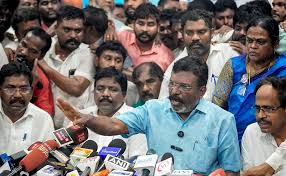
From forensic scientist to the political king maker, the VCK founder’s journey reflects a lifelong commitment to Dalit emancipation and Tamil identity In the aftermath of the 2026 Tamil Nadu Assembly elections, Thol Thirumavalavan and the Viduthalai Chiruthaigal Katchi (VCK) emerged as a pivotal force in government formation. Recognizing the importance of upholding the people’s mandate and preventing a constitutional crisis, Thirumavalavan announced VCK’s decision to extend unconditional support to Vijay’s Tamilaga Vettri Kazhagam (TVK), which had fallen short of a simple majority. Demonstrating strategic foresight, he coordinated closely with allied Left parties to ensure a long-term vision for the state while maintaining VCK’s continued association with the DMK-led Secular Progressive Alliance. By placing the public interest above short-term political calculations, Thirumavalavan positioned his party as a kingmaker, ensuring that the mandate of the electorate was respected. With the support of VCK’s two MLAs, along with backing from the IUML and other allies, TVK crossed the 118-seat threshold, securing the numbers necessary to form a stable government. Thirumavalavan emphasized that his party’s intervention was aimed at preventing President’s rule and safeguarding democratic norms, reflecting his enduring commitment to both Dalit empowerment and broader state governance. Thol Thirumavalavan, born Tholkappiyan Thirumavalavan on August 17, 1962, in Anganur, Tamil Nadu, is a scholar, social reformer, and one of the most prominent Dalit leaders in India. He is the founder and president of the Viduthalai Chiruthaigal Katchi (VCK) and currently serves as a Member of Parliament representing the Chidambaram constituency. Known for his unflinching advocacy for social justice, Thirumavalavan has been a pivotal figure in Tamil Nadu politics for over three decades. Thirumavalavan completed his early schooling in his hometown before earning a Bachelor’s degree in Chemistry from Presidency College, Chennai, followed by a Master’s in Criminology in 1988. He initially worked as a Scientific Assistant in the Government Forensic Science Department until 1999. Later, he pursued law at Madras Law College and earned a Ph.D. from Manonmanium Sundaranar University in 2019, focusing on the religious conversion of Meenakshipuram Dalits. His political journey began in 1982 when he joined the Dalit Panthers Iyyakam (DPI) in Tamil Nadu, inspired by the Dalit Panthers of India and the Black Panther Party in the United States. Mentored by A. Malaichamy, he coordinated student protests for Eelam Tamils and organized campaigns for Dalit rights. Following Malaichamy’s death in 1989, Thirumavalavan became the state organizer of DPI, later renaming the organization Viduthalai Chiruthaigal. Influenced by the ethnic conflict in Sri Lanka and the Tamil identity struggle, the organization formally became the Viduthalai Chiruthaigal Katchi (VCK) in 1990, marking its transition into a political party. Thirumavalavan initially avoided electoral politics, focusing on raising awareness about caste discrimination. However, in 1999, he resigned from his government position to contest his first Lok Sabha elections from Perambalur in alliance with the Tamil Maanila Congress, securing over 2.25 lakh votes despite losing. In 2001, he won his first Assembly seat from Mangaloree constituency (later dissolved), and in 2009, he was elected to the Lok Sabha from Chidambaram with a victory margin of over 1 lakh votes. Since then, he has contested multiple elections, winning significant victories and establishing VCK as a recognized state party with the permanent election symbol of a “Pot.” Under Thirumavalavan’s leadership, VCK has become a powerful political force in Tamil Nadu, forming alliances with both major Dravidian parties and unexpected partners such as the Pattali Makkal Katchi (PMK), reflecting a pragmatic approach to electoral politics. His slogans and speeches, such as the 1996 call to “Refuse to be subdued, Transgress, Rise vehemently, Retaliate,” have inspired generations of Dalit youth to challenge systemic oppression and assert their rights. Ideologically, Thirumavalavan draws from a rich tapestry of thinkers and movements. He combines Ambedkarite principles of social justice and Dalit empowerment, Periyar’s rationalist and anti-caste philosophy, and Marxist critiques of capitalism, while also embracing the revolutionary activism of the Black Panthers. VCK’s core principles include the abolition of the caste system, opposition to social exclusion, protection of Tamil culture and language, advocacy for women’s liberation, and support for the working class. His influences range from Gautama Buddha and Dr. B.R. Ambedkar to Thanthai Periyar and Velupillai Prabhakaran. Beyond politics, Thirumavalavan has engaged in cultural and social initiatives. He has acted in Tamil films like Anputhozhi and Kalagam, HE HAS authored several books and launched the VCK’s television channel, Velicham TV, in 2016. He has promoted Tamil naming conventions to eliminate caste and religious identifiers and spearheaded environmental projects, including planting 1 lakh palm seeds across Tamil Nadu in 2018. Thirumavalavan’s career has not been without controversy. He has faced criticism for remarks on Manusmriti, Hindu deities, differently-abled persons, and LGBTQ+ issues. Legal cases have been filed against him, ranging from alleged incitement during public speeches to bus-burning incidents in 1999, although he has often successfully contested these charges in court. He has also been accused by former associates of receiving funds from Christian missionary organizations, a claim he has consistently denied. Despite such controversies, Thirumavalavan’s commitment to Dalit emancipation and social reform remains unwavering. Thirumavalavan has received multiple awards for his social and political contributions, including the Icon of Social Liberation Award (2025), the Quaid-e-Milleth Award for probity in public life (2019), and recognition as one of the best-performing MPs (2024). VCK under his leadership also honors social activists through awards such as the Ambedkar Sudar Award and Periyar Oli Award. As a lifelong bachelor, Thirumavalavan has dedicated his life to the upliftment of marginalized communities, blending scholarship, activism, and political strategy. From grassroots organizing to becoming a kingmaker in state politics, he has shaped Tamil Nadu’s political landscape while consistently advocating for equality, justice, and Tamil identity. Courtesy : TNIE Note: This news is originally published on https:/thenewindianexpress.com/bha and is used purely for non-profit/non-commercial purposes, especially human rights
High command yet to decide on Kerala CM amid intense factional campaigns

Poster wars, public demonstrations and hectic consultations in Delhi intensify as Congress leadership moves closer to announcing Kerala’s next chief minister The suspense over Kerala’s next Chief Minister persisted on Saturday as Congress leaders held an extended round of discussions in New Delhi, but no final decision emerged from the meeting. Sources said senior leader Rahul Gandhi reprimanded the leaders over the public show of factionalism, warning that the unrest was tarnishing the party’s massive electoral mandate. The chief ministerial deadlock remained unresolved even after top leaders held nearly three hours of discussions with the frontrunners. According to sources, Rahul Gandhi was unhappy that the lobbying for the top post had begun almost immediately after the election results, saying the leaders could not wait even a few days for the high command’s decision. He also urged the leaders to rein in workers and end internal divisions. AICC general secretary and Congress state in-charge Deepa Dasmunshi told reporters that deliberations on the leadership issue were still ongoing. She confirmed that all Congress MLAs had signed a one-line resolution authorising the high command to take the final call on who will lead the new United Democratic Front (UDF) government in Kerala. Deepa Dasmunshi said the ultimate decision will be made by Congress president Mallikarjun Kharge and senior leader Rahul Gandhi. The crucial discussions in Delhi are reportedly nearing it’s end after intense lobbying, public campaigns and internal consultations within the Congress-led United Democratic Front (UDF) following its sweeping Assembly election victory. The high-level meeting, which commenced at 4 pm at the residence of Congress president Mallikarjun Kharge, is being attended by senior leaders Rahul Gandhi, V D Satheesan, K C Venugopal, Ramesh Chennithala and KPCC chief Sunny Joseph. AICC observers Mukul Wasnik and Ajay Maken, who submitted their report to Kharge on Friday after consulting MLAs and alliance partners, are also participating in the deliberations. The leadership question has triggered visible factional mobilisation across Kerala, with supporters of senior Congress leaders V D Satheesan, K C Venugopal and Ramesh Chennithala openly campaigning for their respective leaders through posters, flex boards, road shows and demonstrations. Senior Congress leader K Muraleedharan on Saturday indicated that the decision-making process in New Delhi had entered its final phase. “The information from Delhi is that discussions on the chief ministerial candidate will be completed within 24 hours,” Muraleedharan told reporters in Thiruvananthapuram. However, he cautioned that public displays of support alone would not determine the leadership issue. “Flex boards and demonstrations cannot decide who becomes Chief Minister. I conveyed the sentiments of the people from my constituency to the party leadership,” he said, adding that seniority was not the only criterion and that the opinions of coalition partners and MLAs would also be taken into account. The Congress-led UDF registered a decisive victory in the Assembly elections, winning 102 of the 140 seats, while the Left Democratic Front (LDF) was reduced to 35 seats and the BJP secured three constituencies. Following the victory, the Congress Legislature Party had passed a resolution authorising the All India Congress Committee (AICC) leadership to decide the next leader of the legislature party, effectively handing the final call to the party high command. The focus has now shifted entirely to New Delhi, where senior Kerala Congress leaders, including Satheesan, Chennithala and KPCC president Sunny Joseph, arrived on Friday night for consultations with the central leadership. Sunny Joseph said a key meeting involving the top contenders would be held at Congress president Mallikarjun Kharge’s residence and expressed hope that a consensus would emerge quickly. “We expect a quick decision. The matter has been completely left to the AICC leadership,” he said. At the same time, Joseph appealed to party workers to refrain from public demonstrations and poster campaigns over the Chief Ministerial issue. The political atmosphere within the Congress has become increasingly tense over the past few days, with supporters of different factions openly projecting their preferred candidates. Posters backing Chennithala appeared in Idukki, while flex boards supporting Venugopal surfaced in Thiruvananthapuram soon after the UDF’s landslide victory. Supporters of Satheesan also organised marches and demonstrations demanding that the Leader of Opposition be elevated as Chief Minister. The growing factional activity has drawn criticism from several senior Congress leaders. Veteran leader P J Kurien condemned incidents involving the destruction of flex boards and attempts to pressure the party leadership through public campaigns. “Everyone has the right to express opinions. But destroying flex boards and pouring black oil on them is wrong. A Chief Minister cannot be decided through pressure tactics,” he said. Congress MLA T Siddique also expressed concern over public attacks against senior leaders and urged workers to maintain party discipline. “Leaders who dedicated their lives to public activity should not be humiliated in public. This is not Congress culture,” Siddique said. He nevertheless expressed confidence that the Congress high command would resolve all differences through a unanimous decision. Congress MP Rajmohan Unnithan further intensified the debate on Saturday after strongly criticising the destruction of a flex board featuring K C Venugopal and late Congress stalwart Oommen Chandy. Calling such actions “divisive tactics,” Unnithan said all three leaders — Satheesan, Venugopal and Chennithala — were legitimate contenders for the Chief Minister’s post and that supporters were free to campaign for them within the limits of party discipline. “People who destroyed the flexboard of Venugopal, which also carried Oommen Chandy’s image, cannot be seen as part of Congress,” he said. Unnithan also defended the Indian Union Muslim League’s right to comment on the leadership issue after remarks by Congress MLA Mathew Kuzhalnadan suggesting that the IUML should not interfere in Congress internal affairs. The Kasaragod MP argued that all UDF constituents, including the IUML, Kerala Congress and Revolutionary Socialist Party, had a stake in the formation of the next government and were entitled to express their opinions. “In fact, all the minority and religious groups who helped the UDF win are eligible to express their views on the matter,” he said. He