
Rahul Gandhi’s ‘Chhatron Ki Goonj’ event in Pune gets nod with 30 conditions; CM Fadnavis reacts
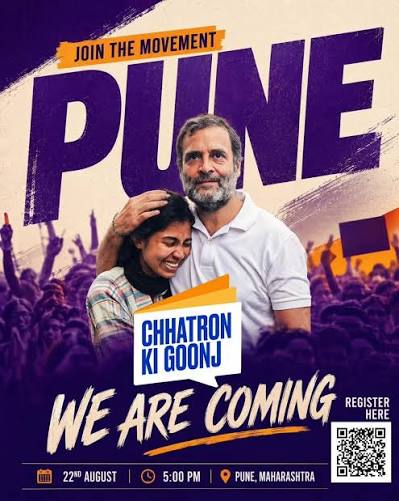
NEW DELHI: Police have granted permission for Congress leader Rahul Gandhi’s August 22 ‘Chhatron Ki Goonj’ event in Pune, subject to 30 conditions, including a ban on “objectionable” banners and images. The police have also directed organisers to ensure that religious sentiments are not hurt during the event. The event, billed as the ‘voice of students’, is dedicated to female students and will focus on education, safety, equality, competitive exams and career opportunities. According to the permission order issued on Wednesday, the programme will be held from 4.30 pm to 9.30 pm at the SSPMS College ground near RTO Chowk. Police expect 8,000 to 10,000 people to attend. Maharashtra chief minister Devendra Fadnavis, reacting to the campaign, said the event appeared to be a “monologue” rather than a dialogue with students. The CM told PTI, “Whether it is ‘Chhatron Ki Goonj’ programme or Rahul Gandhi is trying to find his political ground, I cannot say. But from what I understand, if they had held an open event of this kind, perhaps it would have been a dialogue with students.” Fadnavis alleged that entry to the event would be restricted to registered girls from Congress-affiliated educational institutions. “An attempt is being made to ensure that only people who subscribe to their ideology attend the event,” he said, adding, “Therefore, we may call it ‘Chhatron Ki Goonj’, but at the same time, I would say that, with those who have been invited through Congress, this is more of a monologue than a dialogue.” Meanwhile, among the conditions, organisers have been told not to display “objectionable images, pictures or banners”. They will also be responsible for any untoward incident that results in a law-and-order situation, the order said. “No one’s religious sentiments should be hurt during the programme and responsibility for ensuring this will be on the organisers,” it stated, according to news agency PTI. Maharashtra congress vice president Mohan Joshi confirmed that permission had been granted and said the organisers would comply with all 30 conditions. Police have also directed organisers to provide adequate security, separate arrangements for men and women, sufficient entry and exit gates, drinking water, toilets, fire-safety equipment and parking facilities. Private security personnel, including women guards, and volunteers, particularly women, are to be deployed. CCTV cameras covering the venue must remain operational during the day and night. The organisers have also been directed to comply with Supreme Court directions on permissible noise levels, as well as the Noise Pollution (Regulation and Control) Rules, 2000 and the Environment (Protection) Act, 1986. Drones have been prohibited for photography at the venue, while emergency access for police, medical and fire services must remain available. The permission is subject to a no-objection certificate from the traffic department and can be cancelled if any illegal activity affecting law and order is detected, police said. Any dispute over the venue will also lead to immediate cancellation of the permission. The restrictions come as Pune police have imposed 14-day prohibitory orders across the city from Tuesday until August 31, citing security concerns linked to upcoming festivals and protests. Congress leader Pawan Khera has alleged that the restrictions were imposed to disrupt Gandhi’s programme. Police, however, have cited security requirements. Gandhi launched the student-focused campaign in Kota on June 17 and later addressed its second and third segments in Dehradun and Prayagraj on July 17 and August 8. Courtesy : TOI Note: This news is originally published on https:/timesofindia.com/bha and is used purely for non-profit/non-commercial purposes, especially human rights
‘I stand with them’: Rahul Gandhi backs protest by Bundelkhand tribals against ‘Ken-Betwa project’
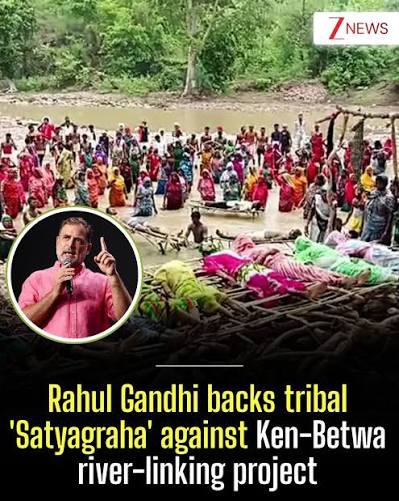
NEW DELHI: Congress leader and leader of opposition in the Lok Sabha, Rahul Gandhi, on Wednesday backed tribal residents of Madhya Pradesh’s Bundelkhand region protesting against the Ken-Betwa River Link Project, saying the Congress stands with them and promising to visit the protest site to pressure the government over their demands for compensation and rehabilitation. Rahul shared a video on X featuring accounts from tribal residents affected by the project and said, “The problems, demands, struggles, and personal ordeals of the tribal brothers and sisters who are carrying out a satyagraha against the Ken-Betwa project–their own account. For years, these residents of Bundelkhand have been enduring injustice and oppression solely for their rights; they deserve respect and support,” he said. “In this fight of our tribal brothers and sisters, I and the Congress stand with them,” he said. In the video, a tribal representative claimed that the project would affect 21 tribal-dominated villages and lead to the loss of around 4.6 million trees, besides affecting the Panna Tiger Reserve. The representative also claimed that around 11,500 acres of land belonging to nearly 7,000 families would be affected. The residents urged Rahul to raise their concerns about alleged administrative harassment in Parliament and join their movement. Rahul assured them that he would visit the site and put pressure on the government. The tribal residents have been holding a Satyagraha against the project, demanding adequate compensation and dignified rehabilitation for people whose land is being acquired. Rahul had also supported the agitation earlier in July. Sharing a poem and visuals from the protest, he said the tribal residents were demanding fair compensation through non-violent means and described tribal people as the “original owners of the country”. “The tribal brothers and sisters of Madhya Pradesh had sat on a water satyagraha and hunger strike because their land was taken away for the Ken-Betwa project, but they received neither fair compensation nor dignified rehabilitation. The ‘truth’ is that tribals are the original owners of the country–the first right to water, forests, and land belongs to them alone. And their ‘satyagraha’ is because that very right is being snatched from them today.” “In their unique way, their demand is simply this: provide a proper means of livelihood–or else life is no different from a funeral pyre. But even this is unacceptable to the BJP government. Instead of listening to them, their peaceful protest is being crushed with police force. We stand with our tribal brothers and sisters. We will secure justice for them–compensation and rehabilitation will have to be provided,” he added. The Ken-Betwa Link Project is a major river-linking initiative aimed at transferring surplus water from the Ken river in Madhya Pradesh to the Betwa river through a 221-km-long link canal. The project is being implemented in the drought-prone Bundelkhand region of Madhya Pradesh and Uttar Pradesh. The Rs 44,605-crore project is the first river-linking project under the National Perspective Plan. According to the government, it is expected to irrigate 1.062 million hectares, provide drinking water to around 6.2 million people and generate hydropower. The project involves construction of the 77-metre-high Daudhan Dam and two tunnels in the Ken river basin in Panna. The government says the project will enable irrigation across 8.11 lakh hectares in 2,000 villages across 10 districts and benefit around seven lakh farmer families. It is also expected to provide drinking water to 44 lakh people in Madhya Pradesh and 21 lakh people in Uttar Pradesh, while generating 103 MW of hydropower and 27 MW of solar energy. Courtesy : TOI Note: This news is originally published on https:/timesofindia.com/bha and is used purely for non-profit/non-commercial purposes, especially human rights
SP-Congress’s new plan! Dalit youth to be in charge of general constituencies as well; will the political equation change before 2027?
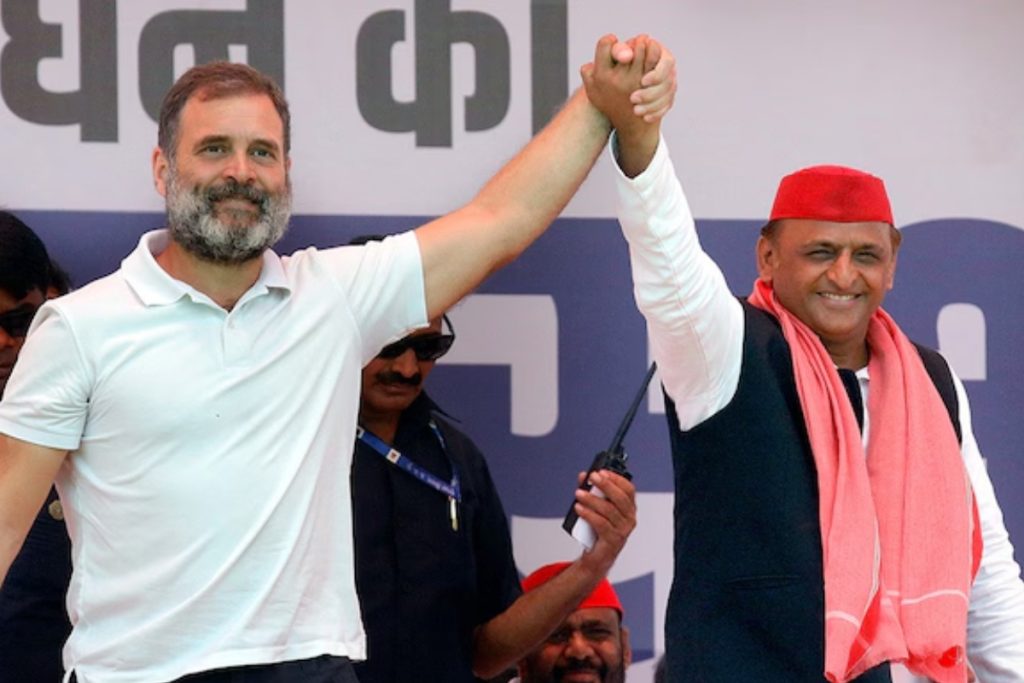
Political parties in Uttar Pradesh have already intensified their preparations for the 2027 assembly elections. Following the BJP, efforts to balance social equations have begun in the opposition camp as well. The Samajwadi Party and Congress have begun giving Dalit and backward class youth key organizational responsibilities. Significantly, Dalit youth are also being appointed in-charge of general assembly constituencies. Both parties are attempting to connect with youth influenced by socialist and Ambedkarite ideology. These youth are being given the responsibility of strengthening the organization in various assembly constituencies and connecting new members to the party. Dalit youth given responsibility for general seats As part of this strategy, the Samajwadi Party has appointed Dalit youth as assembly in-charges for several general seats. Manoj Paswan has been appointed in Unchahar, Shivshankar Saroj in Babaganj, and Ram Karan Nirmal in the Kaushambi-Fatehpur region. Meanwhile, Vineet Kushwaha from Madhuban and Rahul Raj from Kushinagar have also been assigned organizational responsibilities. These leaders have been primarily tasked with expanding their reach among youth, engaging new workers, and strengthening the party’s ideology. This initiative by the SP is being considered an important step towards strengthening the PDA (Backward, Dalit, and Minority) social equation. Congress also focusing on youth Congress has also planned to activate youth at the assembly level. The party has assigned the responsibility of strengthening the organization among youth to Shailendra Dhruv Yadav in Ballia, Murali Manohar in Velthara Road, Subhash Pal in Bilgram, and Tarun Patel in Gaura. The strategy of opposition parties is not limited to reconnecting with their traditional voters. They are also targeting youth who were once with the BSP or are reportedly dissatisfied with the current political situation. BSP’s focus on the old Brahmin equation On the other hand, the Bahujan Samaj Party is also trying to re-establish its old social equation for 2027. Mayawati’s party is once again eyeing the Brahmin community. However, several prominent Brahmin leaders of the BSP have left the party in recent years. Antu Mishra’s expulsion is considered the latest in this trend. Discussion of the 2007 formula is rekindled. In the 2007 assembly elections, the BSP fielded a large number of Brahmin candidates. The party gave tickets to over 80 Brahmins, of whom 41 won the elections and reached the assembly. This social equation played a key role in the BSP’s formation of a full majority government. Now, ahead of 2027, while the SP and Congress are busy strengthening the PDA through Dalit and backward youth, the BSP faces the challenge of recapturing its old Brahmin base. Consequently, social equations may play an even more important role in Uttar Pradesh’s electoral politics in the coming days. By Asha Sharma Courtesy: Hindi News
Amazing stories of the Chief Minister: The Dalit woman who became the Chief Minister of Uttar Pradesh for the first time with the support of the BJP. Learn the full story of 1995.
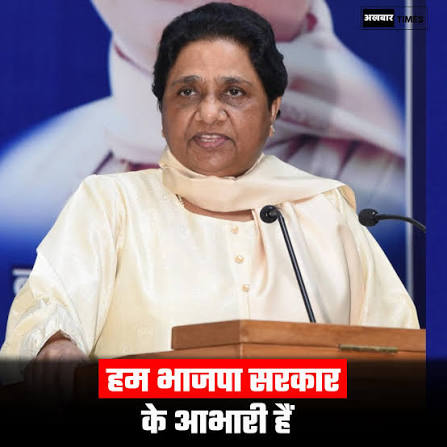
UP CM’s amazing kisses, Mayawati’s BJP support: Mayawati is a prominent figure in Uttar Pradesh politics. There are many stories related to her political life that are still discussed today. But there is one incident when the political equations changed in just one day and it took her to the position of Chief Minister of Uttar Pradesh. In 1995, after the alliance with the Samajwadi Party broke, the BJP supported Mayawati. On June 3, she took oath as Chief Minister and became the first Dalit woman Chief Minister of Uttar Pradesh. So, in ‘Amazing Stories of the UP CM’, read the entire fascinating story of Mayawati becoming the Chief Minister of Uttar Pradesh for the first time with the support of the BJP. Mayawati’s First CM Story: Mayawati’s name needs no introduction in Uttar Pradesh politics. She has served as Chief Minister of Uttar Pradesh four times. But the most important milestone in her political journey was the year 1995, the year she became the Chief Minister of Uttar Pradesh for the first time. At that time, she was around 39 years old. Significantly, Mayawati’s government was formed with the support of the BJP. She took the oath of office as Chief Minister on June 3, 1995. With this, she became the first Dalit woman Chief Minister of Uttar Pradesh. This alliance between the SP and BSP had broken. Subsequently, with the support of the BJP, Mayawati’s path to power was paved. In this part of “Amazing Stories of UP CMs,” read the entire story in detail, when a Dalit woman became the Chief Minister of Uttar Pradesh with the support of the BJP, bringing about a major change in the state’s politics. Mayawati Entered Politics with Kanshi Ram Mayawati’s political journey was not easy. During her studies and employment in Delhi, she met Kanshi Ram. Kanshi Ram inspired her to enter politics. Mayawati then entered active politics with the Bahujan Samaj Party. Kanshi Ram founded the Bahujan Samaj Party in 1984. Mayawati gradually became a prominent face of the party. She began to be recognized as a vocal leader of the Dalit community, particularly in the Dalit community. Mayawati won the Bijnor seat in the 1989 Lok Sabha elections. After this, her name began to rise rapidly in national politics. UP’s politics changed in 1993 Now the story turns to the 1993 assembly elections. At that time, the BJP had emerged as the dominant force in UP. However, Mulayam Singh Yadav and Kanshi Ram joined forces after the elections. The Samajwadi Party and the Bahujan Samaj Party formed a government together. Mulayam Singh Yadav became the Chief Minister, and Mayawati’s party became a partner in the government. However, this alliance between the two parties did not last long. Tensions between the two parties grew, and eventually the alliance broke. A major political turning point occurred on June 2, 1995 In 1995, a development occurred in UP politics that captured national attention. Mayawati decided to withdraw support from Mulayam Singh Yadav’s government. This completely changed the power dynamics in the state. Mayawati staked claim to form the government, but she lacked a majority on her own. This is where the BJP came into play. BJP Supports Mayawati At that time, the Bharatiya Janata Party decided to support Mayawati. With the BJP’s support, the path was cleared for Mayawati to become Chief Minister. On June 3, 1995, Mayawati was sworn in as Chief Minister of Uttar Pradesh. She became the first Dalit woman Chief Minister of Uttar Pradesh. This was a historic moment in Indian politics. A Dalit woman’s rise to the top position of power in the country’s largest state was a major political event in itself. Mayawati’s first term was short. For the first time, Mayawati failed to remain Chief Minister for long. Her government, formed with the support of the BJP, lasted only about four months. In October 1995, her government fell. Following this, President’s rule was imposed in Uttar Pradesh. However, in these few months, Mayawati demonstrated such political strength that she later became one of the most prominent leaders in Uttar Pradesh politics. The Politics of the BJP and the BSP Changed From Here This experiment of 1995 was not only significant for Mayawati. It also marked the beginning of a political relationship between the BJP and the Bahujan Samaj Party. In the following years, the two parties formed several alliances. Sometimes Mayawati became Chief Minister with the support of the BJP, and sometimes the BJP supported her government. This alliance is considered one of the most interesting political events in Uttar Pradesh politics during that period. Mayawati became Chief Minister four times again After 1995, Mayawati became Chief Minister of Uttar Pradesh three more times. She also became Chief Minister in 1997. After this, her government was formed with the support of the BJP in 2002. However, in 2003, the BJP withdrew its support, and her government collapsed. Subsequently, in 2007, Mayawati secured a majority on her own. This was the strongest phase of her political career. She formed a government with an absolute majority and completed a full five-year term. An alliance changed her entire political journey. Mayawati’s first Chief Ministership is also special because she came to power at a time when forming a government in Uttar Pradesh was difficult for any single party. On one hand, the Samajwadi Party and BSP alliance had broken down. On the other hand, the BJP had emerged as the most powerful political force. Meanwhile, the BJP’s support catapulted Mayawati to the position of Chief Minister. The same Mayawati, who became Chief Minister in 1995, later became a leader who surprised all political parties by forming a majority government in Uttar Pradesh in 2007. The woman who first assumed the Chief Ministership with the support of the BJP, a few years later, came to power on her own. This is the biggest and most interesting turning point in Mayawati’s political journey. Written by:Krishna.Pandey Courtesy: Hindi News
‘Right way’: Rahul Gandhi lauds ‘understanding’ between Jharkhand govt, protesting students
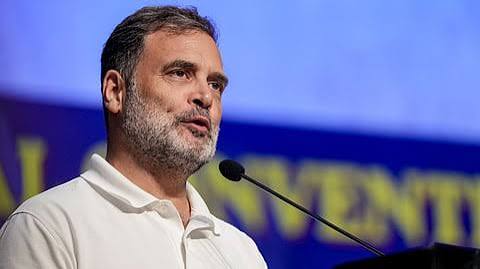
Rahul Gandhi also vowed to change the system across the country to establish a framework that propels students forward rather than holds them back. Congress leader Rahul Gandhi on Tuesday praised the “understanding” reached between protesting students and the Jharkhand government, calling it the “right way” as Chief Minister Hemant Soren chose dialogue while the students exercised restraint and got their demands accepted. Gandhi also vowed to change the system across the country to establish a framework that propels students forward rather than holds them back. “An understanding has been reached between the students of Jharkhand and the state government, and the students have ended their hunger strike – it was heartening to hear this news,” Gandhi said in a post in Hindi on X. “Chief Minister Hemant Soren ji and the Jharkhand government chose the path of dialogue and arrived at a solution. The students exercised restraint and made their demands accepted,” the Leader of Opposition in the Lok Sabha said. This is the right way – when students raise questions, they should get answers, he said. “We stand with every student in the country. And we will uproot and transform this recovery system, so that every student gets the full reward of their hard work and the right to fair competition,” Gandhi said. This system will change across the country, and a framework will be established that propels students forward, rather than holding them back, the former Congress chief said. Gandhi had written to Soren, urging him to personally meet representatives of the protesting students and take appropriate action to resolve the issue. He had said the students’ protest was peaceful and their demands legitimate, while asserting that the youth of India was its future and that “we owe them our solidarity and support at this moment of crisis”. The Congress is part of the ruling JMM-led government in Jharkhand. Students protesting against alleged irregularities in Jharkhand recruitment examinations may take a call on withdrawing their demonstration on Tuesday after the state government cancelled all recruitment tests, including the JSSC-CGL exam, conducted by an outsourced agency since 2014. The announcement came after Soren chaired a marathon Cabinet meeting at the state secretariat on Monday. He also said an exam reforms committee headed by senior IAS officer Amitabh Kaushal would recommend measures to strengthen the recruitment examination process. “The government has decided to cancel the Jharkhand Staff Selection Commission-Combined Graduate Level (JSSC-CGL) exam, which was one of the major demands of the protesting students. We have also decided to cancel all tests conducted by outsourced agency TSR Data Processing Pvt Ltd (TDPL) and the results published by it,” Soren had told reporters after the meeting. Student leader Devendra Mahto, who had been on hunger strike for 16 days over the alleged exam irregularities, ended his fast around midnight on Monday. Two protesters, Prem Nayak and Umme Habiba, also called off their hunger strike, while three others – Rahul Kranti, Sabita Kumari and Rupesh Pal – continued their fast. Students were seen celebrating and waving the Tricolour after the announcement. Activist Sonam Wangchuk congratulated Mahto over a video call, describing the government’s decision as a “victory for everyone”. Courtesy : TNIE Note: This news is originally published on https:/thenewindianexpress.com/bha and is used purely for non-profit/non-commercial purposes, especially human rights
Sang same ‘Vande Mataram’ as national leaders: Kharge hits back at BJP over ‘incomplete’ charge
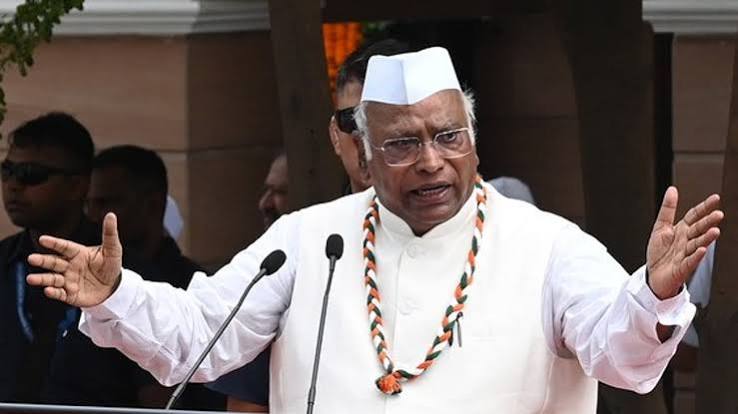
Kharge said if singing the version he did was a crime, cases should also be filed against the leaders who had sung it the same way. Congress president Mallikarjun Kharge on Tuesday responded to the BJP’s criticism over his rendition of an “incomplete” ‘Vande Mataram’, saying he sang the version followed by national leaders such as Mahatma Gandhi, Sardar Vallabhbhai Patel and former prime minister Atal Bihari Vajpayee. Talking to reporters in South Goa, Kharge said if singing the version he did was a crime, cases should also be filed against the leaders who had sung it the same way. The ruling BJP has alleged that the Congress chief sang an “incomplete” version of the national song during his public meeting in South Goa on Monday, and accused the grand old party of disrespecting the national song. Speaking over the controversy, Kharge said, “I sang the ‘Vande Mataram’ which Mahatma Gandhi, Jawaharlal Nehru sang…the same song which Vallabhbhai Patel and Atal Bihari Vajpayee sang. If that is the crime, then file a case against Gandhiji, Nehru and Vallabhbhai Patel.” Kharge said the BJP was unaware of the historical decisions taken by the Congress on the national song and the national anthem. “They don’t know that before they were born, the Congress had passed the resolution to decide about the national song and the national anthem,” he said. The Congress president said he had followed the version of ‘Vande Mataram’ that had been sung for decades. “I did what has been happening for the last 80 years,” Kharge said. Courtesy : TNIE Note: This news is originally published on https:/thenewindianexpress.com/bha and is used purely for non-profit/non-commercial purposes, especially human rights
Sonia Gandhi memoir ‘Belonging’ to chronicle love, loss and six decades in public life to be out on November 10
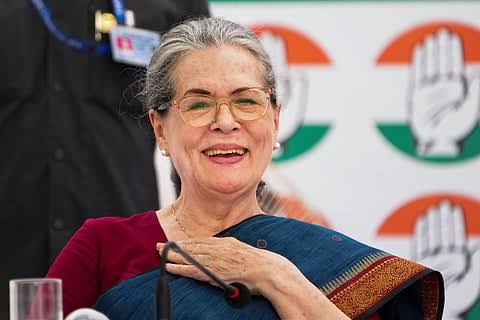
The memoir traces her journey from post-war Italy to the centre of Indian politics and the Nehru-Gandhi family. NEW DELHI: Congress leader Sonia Gandhi’s long-awaited memoir, Belonging: A Journey of Love, will be published on November 10, publisher Alfred A. Knopf announced on Tuesday, offering a candid account of her journey from post-war Italy to the heart of Indian politics. At 19, while studying in Cambridge, England, Sonia met Rajiv Gandhi in 1965. Her life subsequently unfolded within the Nehru-Gandhi family, first largely away from politics and later at its centre. The memoir traces her transition from a private family life to public duty, shaped, she says, by grief and loss. “It was heartbreak and loss that threw me into the public world of politics. Up till then I had guarded my privacy fiercely,” Gandhi said in a statement issued through Knopf. The narrative is set against some of the most turbulent chapters in India’s post-Independence history. It recounts the death of Rajiv’s younger brother Sanjay Gandhi in a 1980 plane crash, Indira Gandhi’s assassination by her bodyguards in 1984 and Rajiv Gandhi’s assassination by an LTTE suicide bomber during an election campaign in Tamil Nadu in 1991. According to the publisher, the memoir also offers a portrait of Sonia Gandhi’s early years in India, learning Hindi, adapting to Indian customs and cuisine, and raising her children with Rajiv while living in the Prime Minister’s residence in New Delhi. Sonia Gandhi says the book seeks to move beyond the political mythology surrounding one of India’s most powerful families. “Much has been written about my family, but few narratives were able to reach into the truth of their motivations, their actions and even their very human failings,” she said. “In many ways, this book is a homage to their humanness.” Her own political career, which she initially resisted, eventually made her the longest-serving president of the Congress. The decisive chapter came after the 2004 general election, when Congress emerged as the largest party and formed the United Progressive Alliance. Gandhi led the alliance but declined the prime minister’s post, with Manmohan Singh becoming prime minister. The UPA subsequently governed India for a decade. Gandhi said writing the memoir required confronting experiences she had long kept private. “Writing about my life did not come easily to me. It meant opening myself up, sharing moments and experiences I had always held deep inside,” she said. The memoir, she added, ultimately revealed a connecting thread of “love and loyalty” running from her childhood in Italy to her decades in India. “My story also offers readers a unique perspective of the social and political changes I have witnessed for six decades in the beautiful country of my belonging,” Sonia Gandhi said. Courtesy : TNIE Note: This news is originally published on https:/thenewindianexpress.com/bha and is used purely for non-profit/non-commercial purposes, especially human rights
“Mallikarjun Kharge’s insult is a direct attack on the existence of Dalits,” Telangana Congress holds protest with appeal for unity against BJP
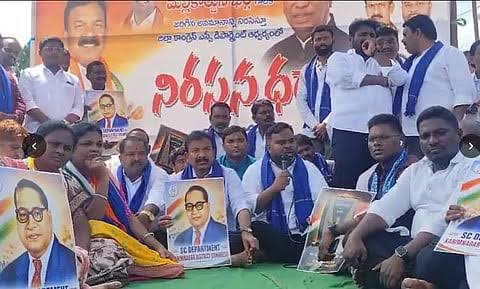
The alleged insult of Congress President in Haldwani has sparked widespread outrage in Telangana. The TPCC issued a stern warning to the BJP-RSS and appealed to Dalits to unite. New Delhi: The alleged insult to Congress National President Mallikarjun Kharge has sparked widespread outrage within the Telangana Congress. On Monday, August 17, members of the Telangana Pradesh Congress Committee (TPCC) held a massive protest against the Bharatiya Janata Party (BJP). Congress leaders have made a clear call that the time has come for Dalits across the country to unite against the BJP’s policies. The protest was organized to protest the alleged “purification” of the stage after Kharge’s event in Haldwani, Uttarakhand. South Asians and Diaspora The main event of this strong protest was held in Karimnagar. Dr. Kavampally Satyanarayana, the party’s Scheduled Caste (SC) Cell Chairman and MLA, attended the protest. He described the humiliation of Kharge as highly condemnable and appealed to the marginalized sections of society to unite. The controversy began on August 13th. Mallikarjun Kharge, the Leader of the Opposition in the Rajya Sabha and Congress chief, alleged that some individuals associated with the BJP had desecrated the stage immediately after his speech at the Ramlila Maidan in Uttarakhand. Expressing deep regret over this act, Kharge said that coming from a Dalit background, the incident had made him acutely aware of the “sting of untouchability.” Addressing the protesters at the protest, MLA Satyanarayana sharply attacked the ruling party. He said that this humiliation of Mallikarjun Kharge was not just an attack on one person, but on the self-respect and existence of the entire Dalit community. It should not be taken lightly at any cost. He urged all Dalits to stand firmly against the BJP’s discriminatory and oppressive policies. People and Society The TPCC directly blamed the BJP, which is in power at the center, for this purification ritual. Congress leaders said the ruling party should bow its head and take accountability to prevent such discrimination in the future. Satyanarayana issued a stern warning to the BJP, the Rashtriya Swayamsevak Sangh (RSS), and the Sangh Parivar, urging them to remain vigilant. He accused these organizations of staging a hypocritical drama. Citing the Haldwani incident, he clarified that this mentality of the BJP is an insult to democratic spirit and a blatant violation of constitutional values. Rajan Chaudhary Courtesy: Hindi News
‘Please save Telangana’: BRS leader Dasoju Shravan urges Rahul Gandhi to act over CM’s remarks against KCR
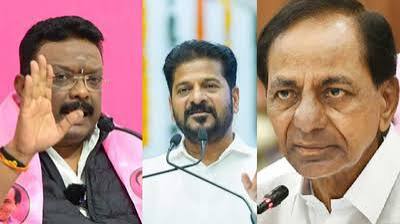
HYDERABAD: Bharat Rashtra Samithi (BRS) leader Dasoju Shravan Kumar on Monday appealed to LoP and Congress leader Rahul Gandhi and AICC Telangana in-charge Meenakshi Natarajan to intervene in the state’s political situation, accusing chief minister A Revanth Reddy of using an “abusive political discourse”. Dasoju Shravan said people in Telangana had trusted the Congress and voted it to power based on Rahul Gandhi’s appeals, election declarations and promises. He alleged that the current government had failed to live up to those expectations. “On behalf of the people of Telangana, I make an honest appeal to the Leader of the Opposition in Lok Sabha, Rahul Gandhi, and AICC Telangana in-charge, Meenakshi Natarajan: please save Telangana. The people of Telangana trusted Rahul Gandhi, the several declarations, and the promises made by the Congress Party, voting them into power. In return, what kind of Chief Minister have you given us? A man who relies on aggressive language, brazen loot, and abusive political discourse; just a day after Independence Day, he had the audacity to utter ugly abuses against the Leader of the Opposition in the Telangana Legislative Assembly, K Chandrashekar Rao,” he said. Dasoju Shravan’s remarks came after Reddy on Monday criticised former chief minister K Chandrashekar Rao, saying he was staying at his farmhouse like Dhritarashtra and ignoring his son’s actions. Reddy also accused BRS leaders of using party workers for their own benefit after losing power. “During the BRS rule, the KCR family benefited, while common people were given importance in the Praja Palana (People’s governance),” he alleged. The chief minister said the Telangana Assembly session would be held in September and urged Congress workers and MLAs to work towards securing a two-thirds majority in the 2029 elections. Reddy said he would continue working for the people and address their concerns. He also said that even “1,000 KCRs” could not harm him as long as he had the support and blessings of the people. Courtesy : TOI Note: This news is originally published on https:/timesofindia.com/bha and is used purely for non-profit/non-commercial purposes, especially human rights
Jharkhand government accepts students’ demands, cancels JSSC-CGL and all exams conducted by TDPL
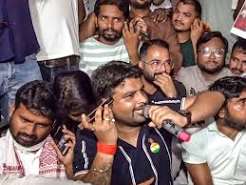
Jharkhand CM orders probe into recruitment exam irregularities since 2014, announces panel for exam reforms Jharkhand Chief Minister Hemant Soren on Monday announced the cancellation of the JSSC-CGL examination and all activities associated with TSR Data Processing Private Limited (TDPL), including examinations conducted by the company, published results and selections, amid a 24-day-long student protest over alleged irregularities in recruitment exams. The government had earlier announced the cancellation of the 14th JPSC examination and two backlog examinations. Addressing the media at Jaipal Singh Stadium, Soren said the state Cabinet had decided to cancel the JSSC-CGL examination, a key demand of the protesting students. “We have decided to cancel everything associated with TDPL—including the examinations conducted, the results published, the candidates selected or who participated, and all other activities carried out by TDPL,” Soren said. The Chief Minister also ordered a comprehensive inquiry into irregularities in all recruitment examinations conducted from 2014 to the present. “A comprehensive inquiry will be conducted into all errors—minor or major—that have occurred since 2014. We will also soon convene to discuss the amendments made to the MMDR Act by the Central Government; if necessary, we may even call a special session to deliberate on this specific issue,” he said. Soren said investigations by the Special Investigation Team (SIT) and the Criminal Investigation Department (CID) had brought to light “several shocking facts”. “Since the investigation is ongoing, it is not possible to disclose every detail openly; however, it has been observed that individuals appointed through the CGL process are now being arrested on charges related to irregularities in the JPSC examinations. Furthermore, there appears to be a complex, interconnected network involving various companies that have operated here at different times,” he said. He said the government had directed the concerned department and the CID to conduct a thorough investigation covering examinations held from 2014 onwards. Student leader Devendra Nath Mahato welcomed the government’s decision and thanked Soren, the state administration, police, media, students and parents for supporting the movement. Mahato said the students would cooperate with the ongoing investigation and efforts to clean up the recruitment examination system, but stressed that they wanted structural reforms to prevent paper leaks and other irregularities in the future. “We, the students, will continue to support this investigation and the effort to eradicate this corrupt system at its very roots, and we will persist in our struggle regarding the ongoing reform process,” Mahato said. However, the protesting students said not all their demands had been fulfilled, with their demand for a CBI inquiry into the alleged examination irregularities still unresolved. They also said no decision had been taken on the 11th to 13th JPSC examinations. He said the students were awaiting an official notification before deciding their next course of action. “If our issues are resolved and our demands met, why would we need to hold further protests?” he said, while seeking a system that would guarantee against paper leaks and examination irregularities in the future. Mahato said the students were not yet “fully satisfied” despite the government accepting their demands, as they wanted broader reforms across the examination system. “While our demands have been met, we cannot say we are fully satisfied yet, as a long battle still lies ahead,” he said. JPSC-JSSC Reform Manch leader Piyush Kumar Singh said the agitation would continue until the remaining demands were addressed. “No decision has been taken on 11th to 13th JPSC and our demand for CBI inquiry still remains unfulfilled, therefore, our agitation will continue till it is not fulfilled,” Singh said. Meanwhile, the cancellation of the JSSC-CGL examination has also left candidates who were selected through the process facing uncertainty. Some successful candidates said they would challenge the government’s decision in court. A successful candidate said the appointments had been made following a High Court division bench ruling and that the Supreme Court had also upheld the process. “We were appointed following a High Court division bench ruling. We had the Supreme Court’s seal of approval, yet suddenly, we became unemployed. We are upset with the Chief Minister. Sir, please reconsider this decision. What about the honourable court’s stance? What will happen to the hundreds of our brothers who resigned from previous jobs to join this one?” the candidate said. The candidates said they would approach the court again, pointing out that they had secured their appointments following judicial intervention. Chief Minister Soren said the government would ensure transparency in examination-related reforms and address concerns raised by students. “I do not consider these young people to be different groups. They are all concerned about their future. The government will move ahead with complete transparency on reforms,” he said. The Chief Minister said an existing standard operating procedure (SOP) for conducting examinations should have prevented the irregularities had it been properly followed. He added that further improvements would be made based on suggestions received from stakeholders. The government has also decided to constitute a committee headed by senior IAS officer Amitabh Kaushal to frame rules and procedures for conducting recruitment examinations in a manner that prevents irregularities. A portal has also been opened for students, teachers and parents to submit suggestions on examination reforms, which will subsequently be shared with experts, Soren said. The student agitation in Ranchi, centered on alleged irregularities in examinations conducted by the Jharkhand Public Service Commission (JPSC) and Jharkhand Staff Selection Commission (JSSC), entered its 24th day on Monday. The protesters have been demanding reforms in the examination system, action against those responsible for alleged irregularities and measures to prevent paper leaks and malpractice in future recruitment examinations. With the government now accepting the demand for cancellation of the JSSC-CGL examination and announcing a wider probe into examinations since 2014, the students are expected to decide their next course of action after reviewing the government’s formal orders. However, the demand for a CBI inquiry and a decision on the 11th to 13th JPSC examinations remain unresolved, raising the possibility that the agitation could continue.