
‘Talks with DMK to resume soon’
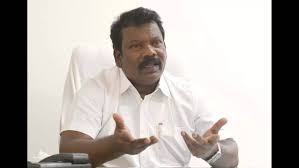
Chennai: TNCC president K Selvaperunthagai said on Sunday the talks with the DMK will resume in ‘two or three days.’ He reiterated the Congress was holding alliance talks only with DMK. “We commenced our talks with DMK two months ago. After the recent meeting of DMK MP Kanimozhi Karunanidhi with our party leader Rahul Gandhi in Delhi, DMK informed us that alliance talks will resume in another two to three days,” Selvaperunthagai told reporters in Chennai. When asked about AICC in-charge for Tamil Nadu, Girish Chodankar’s statement that even new parties are interested in allying with Congress, Selvaperunthagai said Girish just meant that Congress was strong. His remarks do not mean that Congress was holding talks with new parties, he said. Earlier, Congress’ panel for alliance talks held a meeting here. The meeting was to discuss resuming talks with DMK and to plan the TN visit of Congress leaders Rahul Gandhi, Mallikarjun Kharge and Priyanka Gandhi in Feb end. Courtesy : TOI Note: This news is originally published on https:/timesofindia.com/bha and is used purely for non-profit/non-commercial purposes, especially human rights
‘Alternative govt’: Shashi Tharoor on his vision of Congress’ role; dismisses rift rumours
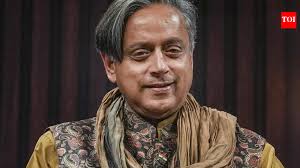
NEW DELHI: Congress leader Shashi Tharoor on Sunday dismissed speculation of a rift within the party, asserting that he is on the same page with Congress president Mallikarjun Kharge and Lok Sabha Leader of Opposition Rahul Gandhi. The statement comes after a recent closed-door meeting with the party’s top leadership. Referring to his meeting with Rahul Gandhi and Kharge, the Thiruvananthapuram MP said, “We’re on the same page. We’re moving forward determinately. I think it’s extremely important, both at the state level and at the national level, that Congress must represent not just an opposition party, but an alternative government.” Emphasising the party’s readiness to govern, Tharoor added, “An alternative government is what the people want to see, whether at the centre or the state. We need to stay together, work together and move forward together, and we’re doing that.” Tharoor’s remarks come after weeks of speculation about internal unease following his perceived sidelining at a Congress event in Kochi last month and his subsequent absence from a key Kerala strategy meeting chaired by Kharge. The tensions had triggered concerns within the party that the issue could snowball into a larger messaging problem ahead of the high-stakes Kerala elections. After weeks of visible discomfort, Kharge and Rahul Gandhi met Tharoor on Thursday in a detailed “redressal” meeting. The meeting, held in Kharge’s chamber in the Parliament House complex, lasted over an hour and forty-five minutes. Emerging from the meeting, Tharoor struck a conciliatory tone. Speaking to reporters, he said, “We had a discussion with my two party leaders, the LoP and the Congress president. We had a very good, constructive, positive discussion. All is good and we are moving together on the same page.” Sources told PTI that the discussion was “comprehensive”, covering a wide range of issues, with the leadership making time for a thorough exchange. Tharoor later reinforced the truce on social media, thanking Kharge and Gandhi for a “warm and constructive discussion” and reiterating that they were “all on the same page” as the party moves forward “in the service of the people of India”. Addressing speculation over the Congress’ chief ministerial face in Kerala, Tharoor categorically denied any such ambition. “That was never the issue. I am not interested in being the candidate for anything. At the moment I am already an MP, that is my job,” he said. The Congress leader also dismissed reports suggesting he might quit the party. “I can say that I am going to be in the Congress and that I am not going anywhere,” he said, adding that he would campaign extensively across Kerala’s 140 Assembly constituencies for the Congress-led United Democratic Front (UDF). Tharoor highlighted that he had campaigned in 56 constituencies in the last Assembly elections and hoped to cover even more this time. “It is very important that we send the right message to voters and have an opportunity to make a significant impact on people’s lives,” he said. Rejecting reports of discord, Tharoor described them as “exaggerated” and maintained that discussions within the party were healthy. “I see it in a positive way that one has an opportunity to discuss all issues very cordially and constructively in the spirit of camaraderie,” he said. The Congress is seeking to wrest power from the Left Democratic Front after a decade in opposition in Kerala. Party leaders acknowledge that unity will be critical as the BJP also looks to expand its footprint in the state. Courtesy : TOI Note: This news is originally published on https:/timesofindia.com/bha and is used purely for non-profit/non-commercial purposes, especially human rights
PM Modi isn’t renaming Adampur Airport after Sant Ravidas without reason; it’s a major move in Dalit politics, here’s how.
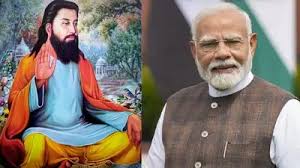
Prime Minister Narendra Modi is arriving in Punjab on Sunday on the occasion of the 649th birth anniversary of Sant Guru Ravidas. PM Modi will arrive at Adampur Airport at approximately 3:45 PM, where he will unveil the airport’s new name, ‘Shri Guru Ravidas Ji Airport, Adampur’. He will also inaugurate the terminal building at Halwara Airport in Ludhiana, Punjab. Adampur Airport’s name is changing Chandigarh: Prime Minister Narendra Modi is arriving in Punjab on Sunday. He will rename the Adampur airport after Sant Ravidas, who is revered especially among Dalits. He will also visit Dera Sachkhand Ballan, the headquarters of the Ravidassia community. This visit is part of his continued efforts to reach out to his followers, who are present in large numbers not only in Punjab but also in several other states. PM Modi’s decision to rename this airport as Shri Guru Ravidas Ji Airport comes on the occasion of the saint’s 649th birth anniversary, a demand that had been pending for a long time. By associating himself with this occasion and scheduling a visit to the Dera, PM Modi will send a strong message to the Dalit community. Focus on Sant Ravidas from Varanasi to Sagar The PM is emphasizing that he wants to nurture the community that is important for the BJP not only in terms of politics but also in terms of a broader cultural agenda. He has launched projects over the past few years for the development of the birthplace of the Bhakti movement poet-saint Ravidas. Born in Varanasi, he has also launched projects for building a memorial for him in Sagar, Madhya Pradesh, and has paid tributes at Ravidas temples. Meeting with Niranjan Das During his visit, Modi will participate in a public event and interact with the Dera’s spiritual head, Niranjan Das. Niranjan Das was also awarded the Padma Shri on the eve of this Republic Day. Punjab has the highest number of Dalits This Dera is located in Jalandhar, which is part of the Doaba region, where the Scheduled Caste population is higher than in the rest of the state. Dalits constitute approximately 32% of the population in Punjab, which is higher than in any other state, while in the Doaba region, this figure is around 42%. BJP’s focus on Punjab through Dalits Dalits in Punjab are divided into several sub-groups, with the Ravidasia community, which comprises 10-12% of the population, being a major sub-group, and Ravidas is a revered figure among the Scheduled Castes. Reaching out to members of marginalized castes has been a crucial part of the BJP’s Hindu unity agenda. This has helped the party’s growth. The Punjab Assembly elections are scheduled for early next year. Following the rapid rise of the Aam Aadmi Party (AAP) and the rift in relations between the BJP and the Akali Dal, four parties, including the Congress, are in the political race in the state. Curated by: Shashi Pandey Mishra About the Author Shashi Pandey Mishra is a Senior Journalist at Navbharat Times Online. She writes on politics, crime, health, and human interest stories. She also enjoys writing on issues related to women and children. She also writes ground reports and interesting stories. She has 18 years of experience in journalism. Courtesy: Hindi News
Talks with Rahul smooth: Kanimozhi
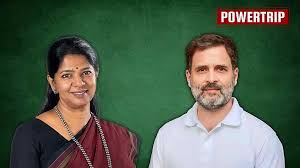
Chennai: DMK deputy general secretary Kanimozhi Karunanidhi on Friday said her recent meeting with Congress leader Rahul Gandhi was “smooth” and dismissed speculations about a possible rift between the long-time allies. She said chief minister M K Stalin will make announcements regarding seat negotiations. In a related development, TNCC chief K Selvaperunthagai told TOI that seat-sharing talks with DMK are anticipated next week. Kanimozhi’s meeting with Rahul Gandhi took place in New Delhi in the wake of senior Congress functionaries going public with their demand for power sharing. “As far as I know, there is no conflict. The discussions were cordial,” the DMK leader told reporters in Tirunelveli. Kanimozhi said there was a possibility of new parties joining DMK-led alliance and Stalin would decide on them. The DMK is likely to allocate two more seats to Congress, in addition to 25 offered in the 2021 assembly election. DMK sources told TOI that discussions at Rahul’s Delhi residence that lasted around 45 minutes, “resolved” the issue of power sharing, and Congress leadership “understood that it was not possible” in Tamil Nadu. Leaders of both parties, however, did not wish to be quoted on the specifics of the talks on power-sharing. A senior DMK leader, who was privy to the meeting, said Congress high command held high respect for DMK and its leadership, and the long-standing alliance between the parties. “Both parties are ideologically aligned, and we do not wish to break ties,” the DMK leader said. Moreover, the Congress understands the significance of DMK’s strength as an ally and the support it will offer to Congress in the 2029 Lok Sabha elections, said another senior DMK leader. Rahul is believed to have expressed interest in commencing talks between the seat negotiation committees of both parties soon. During his interactions with senior TNCC functionaries in New Delhi recently, Rahul Gandhi sought their views on alliance with TVK. Many expressed a preference for continuing alliance with DMK with a decent number of seats. A senior leader bluntly told the leadership that severing ties with DMK would be suicidal for the party. In Tiruvarur, Selvaperunthagai described Kanimozhi’s meeting with Rahul Gandhi as “honest and dignified,” unlike AIADMK general secretary Edappadi K Palaniswami’s visit to Delhi. “We have not exerted pressure on our ally, DMK, nor will we. We will ask for whatever we want and get it,” he said. Congress general secretary (organisation) K C Venugopal is scheduled to flag off a padayatra by TNCC workers against VB-G RAM G in Chennai on Feb 5. Courtesy : TOI Note: This news is originally published on https:/timesofindia.com/bha and is used purely for non-profit/non-commercial purposes, especially human rights
Congress leaders pay tribute to Mahatma Gandhi, protest changes to MGNREGA
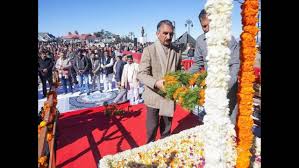
Shimla: Chief minister Sukhvinder Singh Sukhu, along with Congress leaders, paid floral tributes to the father of the nation, Mahatma Gandhi, on his death anniversary, observed as Martyrs’ Day, at the historic Ridge in Shimla on Friday. Following the tribute, the Congress leaders observed a two-hour fast from 11 am to 1 pm to protest against “renaming and dilution of the Mahatma Gandhi National Rural Employment Guarantee Act (MGNREGA)” by the BJP-led Union govt. Addressing mediapersons, the CM alleged that the central govt not only altered the name of MGNREGA but also weakened the core objectives of the scheme. He said thw MGNREGA was earlier a strong pillar of rural employment, particularly benefiting youth and women, but opportunities under the scheme are now being steadily reduced. Sukhu highlighted that village pradhans earlier had the authority to undertake development works such as road construction under MGNREGA, which ensured employment close to people’s homes. He added that during the Covid-19 pandemic, the scheme played a vital role in providing employment to a large number of people. However, he expressed concern that the powers of panchayat pradhans are now curtailed. The CM added that for nearly two decades, MGNREGA guaranteed employment and also provided unemployment allowance when work was not made available. He said the two-hour fast was a symbolic protest against the systematic dismantling of the scheme. He also pointed out that while the central govt earlier bore 100% of the expenditure, it now shifted to a 90:10 funding pattern, which could adversely affect states like Himachal Pradesh. Responding to a question, Sukhu said he raised concerns over the proposed reduction in import duty on apples from New Zealand with Union minister Piyush Goyal, cautioning that it could severely impact apple growers in Himachal Pradesh. Courtesy : TOI Note: This news is originally published on https:/timesofindia.com/bha and is used purely for non-profit/non-commercial purposes, especially human rights
Evening news wrap: Ajit Pawar laid to rest, govt assures time-bound probe into plane crash, and more
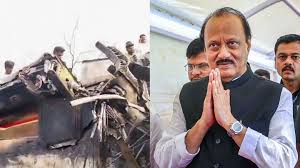
Ajit Pawar laid to rest: Maharashtra Deputy Chief Minister Ajit Pawar was cremated with full state honours in Baramati as the civil aviation ministry assured a time-bound probe into the Learjet 45 plane crash that killed him and four others. SC halts new UGC rules: The Supreme Court stayed the UGC’s new higher education regulations amid nationwide protests and issued notices to the Centre and the commission on petitions challenging the rules. Economic Survey projects 7.4% growth: The Economic Survey 2025–26 projected India’s GDP growth at 7.4% for FY26 and said inflation was at historic lows despite global economic uncertainties. Tharoor meets Congress leadership: Congress leader Shashi Tharoor met Rahul Gandhi and Mallikarjun Kharge, dismissing speculation of differences and saying he was on the same page with the party leadership. Minor sexually assaulted in Delhi: A six-year-old girl was allegedly sexually assaulted in northeast Delhi’s Bhajanpura, with two minor accused held, one absconding, and locals staging a protest demanding justice. Here are five news from the day: Ajit Pawar laid to rest, govt assures time-bound probe into plane crash Ajit Pawar was given full state honours as his body was taken to the Vidya Pratishthan ground for the funeral, while supporters assembled outside Ahilyabai Holkar Government Medical College to bid him a final farewell. The ministry of civil aviation (MoCA) issued a statement on the probe into the plane crash at Baramati airport that killed Maharashtra deputy chief minister Ajit Pawar and four others on Wednesday. The ministry said the probe into the Learjet 45 aircraft crash is progressing expeditiously. Read full story SC stays new UGC rules amid uproar The Supreme Court put on hold the UGC’s new regulations for higher education institutions, which were framed to promote equality, following widespread protests over the rules’ contentious definition of discrimination. A bench comprising Chief Justice Surya Kant and Justice Joymalya Bagchi issued notices to the Centre and the UGC on petitions challenging the regulation. Read full story Tharoor meets Rahul, Kharge, says ‘we are all on same page’ Congress leader Shashi Tharoor met party president Mallikarjun Kharge and Leader of Opposition Rahul Gandhi amid speculation about differences between him and the party leadership. After meeting Rahul Gandhi and Kharge, Tharoor asserted that “all is good” and that he was on the “same page” with the Congress leadership. Read full story 6-year-old girl sexually assaulted in Delhi; 2 boys held, one absconding A six-year-old girl was sexually assaulted, allegedly by three boys, aged between nine and 16 years, in northeast Delhi’s Bhajanpura. A case was registered under Pocso Act and two of the boys were apprehended. The survivor’s family and neighbours are said to have blocked a road on Monday in protest against the incident that had taken place in the evening of Jan 18. Read full story GDP growth pegged at 7.4%, inflation at historic lows, says Economic Survey 2025-26 India is likely to remain the fastest-growing major economy, with real GDP growth estimated at 7.4% in FY26 despite global headwinds such as geopolitical tensions, fragmented trade and financial vulnerabilities, according to the Economic Survey 2025–26. Presented in Parliament by Union finance minister Nirmala Sitharaman, the survey said India’s macroeconomic foundations had improved on the back of strong domestic demand, prudent fiscal consolidation and a healthier financial sector, while stressing the need for strategic resilience amid rapid changes in the global economic order. Follow live updates Courtesy : TOI Note: This news is originally published on https:/timesofindia.com/bha and is used purely for non-profit/non-commercial purposes, especially human rights
‘All is good’: Shashi Tharoor meets Mallikarjun Kharge, Rahul Gandhi – Inside details of nearly 2-hour meeting
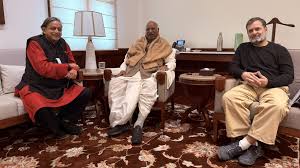
NEW DELHI: After weeks of visible discomfort, Congress president Mallikarjun Kharge and Lok Sabha leader of opposition Rahul Gandhi finally met the senior leader Shashi Tharoor on Thursday. The PTI sources described it as a detailed “redressal” meeting ahead of the crucial Kerala assembly polls. The meeting, held in Kharge’s chamber in the Parliament House complex, lasted for over an hour and forty-five minutes and came amid party concerns that the Tharoor episode could snowball into a larger messaging problem in Kerala, where Congress is pushing hard to return to power after a decade in opposition. Emerging from the meeting, Tharoor struck a deliberately upbeat tone. “We had a discussion with my two party leaders, the LoP and the Congress president. We had a very good, constructive, positive discussion,” he told reporters. Shutting down recent speculations, he said, “All is good and we are moving together on the same page. What more can I say.” — ShashiTharoor (@ShashiTharoor) Inside the meeting Sources told news agency PTI that it was a “comprehensive” meeting in which “a wide array of subjects were covered” and that Kharge and Gandhi made “the time necessary for a thorough discussion.” Tharoor later reinforced the truce with a post on X, thanking both leaders for a “warm and constructive discussion” and repeating the now-official line that they were “all on the same page” as the party moves forward “in the service of the people of India.” A photo from the meeting showing Tharoor, Rahul and Kharge smiling was also put out on social media. What wasn’t discussed: CM face Asked if the issue of the chief ministerial face for Kerala was discussed, Tharoor attempted to close that door firmly. “That was never the issue,” he said, adding: “I am not interested in being the candidate for anything. At the moment I am already an MP … I have their interest to look after in Parliament, that is my job.” The meeting comes after Tharoor was reportedly upset about the treatment meted out to him at a recent Kochi event and what his camp saw as attempts by some state leaders to sideline him. The immediate tipping point, sources close to him had said, was Rahul Gandhi allegedly not acknowledging Tharoor on stage at the ‘Maha Panchayath’ in Kochi on January 19, even while mentioning other leaders. Tharoor, a four-time MP and one of the Congress Working Committee members from Kerala, was present on the dais. Soon after, he skipped a key Kerala strategy meeting chaired by Kharge, triggering speculation that internal tensions were deepening at precisely the wrong moment. Congress is seeking to wrest power from the Left after 10 years in opposition. In that backdrop, the last thing the leadership can afford is the spectacle of internal rivalries, especially when the BJP is also attempting to expand its footprint and the LDF remains organisationally tight. A senior Congress source told PTI: the “proof of the pudding will be in the eating” and the next few weeks will show whether the “same page” line translates into actual political coordination. Courtesy : TOI Note: This news is originally published on https:/timesofindia.com/bha and is used purely for non-profit/non-commercial purposes, especially human rights
Modi Playing the Dalit Caste Card to Push Rahul Gandhi Out of the Ring and Don the Mantle of Dalit Messiah
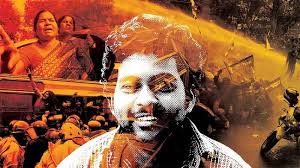
The Supreme Court’s decision to stay the recent University Grants Commission (UGC) regulation on the ground that it adopted a non-inclusive definition of caste-based discrimination and excluded certain categories from institutional protection is certainly not a setback for Narendra Modi. Instead, it could significantly elevate his stature in the eyes of Dalits and the poor. Politically, the most important observation made by the bench of Chief Justice Surya Kant and Justice Joymalya Bagchi—“If we don’t intervene, it will lead to dangerous consequences, divide society, and have grave impact”—will have far-reaching implications. The court also observed that by limiting the scope of “caste-based discrimination” only to SC, ST, and OBC categories, the UGC had effectively denied institutional protection and grievance redressal to individuals belonging to the “general” or non-reserved categories who may also face harassment or bias based on caste identity. However, this order also raises a crucial question: why did the court not take suo motu cognisance when hundreds of SC, ST, and OBC students in IITs and IIMs allegedly died by suicide due to discrimination? With the epithet “Hindu Hridaya Samrat” losing relevance amid the mushrooming of multiple claimants, Narendra Modi appears to have chosen a new path in saffron politics—to don the crown of a Dalit Messiah. For the first time in his eleven-year rule as Prime Minister, Modi has made a politically astute move by antagonising traditional upper-caste supporters through measures perceived as protective of Dalits and marginalised students. Modi refused to heed the advice of friends and well-wishers to retrace his steps, despite being aware of the consequences. Some protesters even targeted his caste identity, claiming that “the Teli is out to destroy our future” (Modi belongs to the Teli community, an OBC group). Yet Modi appears unmoved. He seems confident that upper-caste voters will not desert the BJP despite their anger over the new rules. With the 2029 Lok Sabha election in view, winning over Dalits and EBCs appears to be at the top of his priority list. Shivam Singh, one of the founders of the Savarna Sena (Forward Caste Army), stated that protests would be withdrawn if the government assured that general-category students would not be affected. Data shows that complaints related to caste discrimination in universities were around 173 in 2016–17 but rose to over 350 in the 2023–24 academic year, indicating a significant increase. Even memories of 1990, when upper-caste youth launched violent protests against the implementation of the Mandal Commission report, do not seem to deter Modi. During that agitation, over 150 people attempted suicide, with at least 63 succumbing to their injuries. The protest, which began after Prime Minister V.P. Singh announced the implementation of the Mandal Report, turned violent as many students resorted to self-immolation. Rajeev Goswami’s attempt became the symbolic face of the agitation. The compulsion to identify with Dalits and the proletariat has become so acute for Modi’s political survival that he has sought to reinvent himself as a modern Dalit Messiah. This shift also reflects the rise of hardline Hindutva leaders such as Yogi Adityanath within the BJP ecosystem, many of whom are associated with the “Hindu Hridaya Samrat” image. Modi, unwilling to be overshadowed by any rival within the saffron camp, appears determined to chart an independent path by aligning himself with Dalits and EBCs. Recent political developments have significantly strengthened Rahul Gandhi’s appeal among Dalits. What was once a peripheral issue has become a central ideological plank of his leadership as Leader of the Opposition. Although the Congress had historically lost Dalit trust in the 1990s, Rahul Gandhi has attempted to reclaim this space by linking social justice with the demand for a caste census—what he calls an “X-ray of the country.” He is increasingly perceived by Dalits and EBCs as a potential liberator. By placing the caste census at the centre of his political narrative, Rahul Gandhi has moved beyond tokenism. He aims to demonstrate the underrepresentation of Dalits, Adivasis, and OBCs in corporate, media, and academic institutions. He has targeted what he calls BJP’s “Manuvaad” and accused the government of weakening constitutional protections for marginalised communities. His claim that 95 per cent of upper-caste bureaucrats decide the fate of Dalits and the poor has found resonance among these communities. With Rahul Gandhi aggressively shaping the Dalit narrative, Modi appears left with little option but to reposition himself. Yet he faces competition not only from regional leaders but also from the BJP’s own targeted outreach strategies. After V.P. Singh, no national leader could fully capture the imagination of Dalits as a Mandal Messiah, although regional leaders like Mulayam Singh Yadav, Lalu Prasad Yadav, Ram Vilas Paswan, and Nitish Kumar emerged as protagonists of Mandal politics. Over time, however, they came to be seen largely as caste leaders rather than representatives of collective Dalit empowerment. Experts and liberals fear the emergence of violent protests similar to those witnessed after the Mandal Commission’s implementation in 1990. Upper-caste students in Bihar and Uttar Pradesh have already taken to the streets against the UGC’s Promotion of Equity in Higher Education Institutions Regulations, 2026. Sit-in protests have been organised across universities, with demonstrators claiming that the rules would lead to caste conflict and disrupt social harmony on campuses. Critics argue that the rules are one-sided and lack safeguards against false complaints. They question the effectiveness of “Equity Squads” and the potential for increased conflict. The regulations require every university and college to establish an Equal Opportunity Centre and an Equity Committee, with representation from SC, ST, and OBC communities. Institutions must address complaints within 24 hours, failing which they risk severe penalties. The 2026 regulations mark a legally binding step towards safer and more equitable campuses, aiming to curb the sharp rise in reported caste-based discrimination cases between 2019 and 2024. Yet a crucial question remains: why did the Modi government choose this moment and this mechanism to introduce such rules? In 2022, the Supreme Court had directed the UGC to formulate accessibility guidelines for students with
Kanimozhi meets Rahul in Delhi
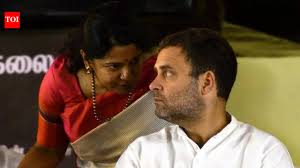
Chennai/Delhi: DMK parliamentary party leader K Kanimozhi met Congress leader Rahul Gandhi at his residence in New Delhi on Wednesday, when he urged the DMK to begin the seat-sharing talks for the Tamil Nadu assembly election at the earliest. DMK as well as Congress leaders said the talks were `pleasant and cordial.’ The subject of power sharing too cropped up during the discussions. Though the differences over power-sharing remain inconclusive, there was mutual respect for each other’s position, a Congress leader said. A DMK leader said the interaction helped ease tensions between the allies. Rahul Gandhi is learnt to have conveyed that the DMK should soon begin seat-sharing talks with the committee formed by Congress President Mallikarjun Kharge. The meeting has come a day after Tamil Nadu Congress election in-charge Girish Chodankar said they were waiting for nearly two months for a response from the DMK to begin formal alliance talks. Sources said the meeting between Kanimozhi and Rahul lasted for about 30-minutes. The interaction has reaffirmed the DMK – Congress alliance and put to rest speculation over alleged rifts. “Overall, it was cordial and positive,” he said. The focus of Wednesday’s meeting was on starting negotiations and that the number of seats were not discussed. Both sides agreed that formal talks would begin after chief minister MK Stalin constituted a negotiation committee, expected in early February. Congress general secretary KC Venugopal is likely to visit Tamil Nadu in the first week of February for the talks, party sources said. The meeting Rahul – Kanimozhi meeting has gained significance as a section of the state Congress was pushing for a larger share of seats and a coalition govt. Some Congress leaders publicly supported actor Vijay’s Tamilaga Vettri Kazhagam as a possible alternative, reflecting the unease within the party. The DMK has rejected the proposal for sharing power. “I am confident that we will together arrive at a good solution,” said K Selvaperunthagai, TNCC president. After the alliance framework is finalised, Congress leaders Rahul Gandhi and Priyanka Gandhi are expected to campaign in the state. Their planned January visit for village committee meetings was postponed due to the delay in concluding seat-sharing. Courtesy : TOI Note: This news is originally published on https:/timesofindia.com/bha and is used purely for non-profit/non-commercial purposes, especially human rights
Rahul Gandhi to join stir seeking NREGA reinstatement in AP
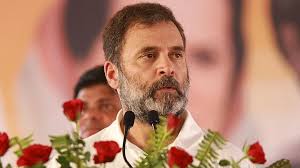
Vijayawada: APCC chief YS Sharmila announced that senior Congress leader and leader of opposition in Lok Sabha Rahul Gandhi will soon launch an agitation against the BJP-led NDA centre from Andhra Pradesh at Bandlapalli, where the NREGA scheme was first launched two decades ago, demanding the Centre to roll back the VB-G RAM G Act and reinstate the NREGA in its original form. Sharmila met Rahul Gandhi in New Delhi on Tuesday and requested him to participate in the agitation campaign. Responding positively to Sharmila’s request, Rahul Gandhi agreed to visit AP and take part in the agitation. Courtesy : TOI Note: This news is originally published on https:/timesofindia.com/bha and is used purely for non-profit/non-commercial purposes, especially human rights