
Eyeing Dalit votes, BJP begins Kalash Yatras across Punjab
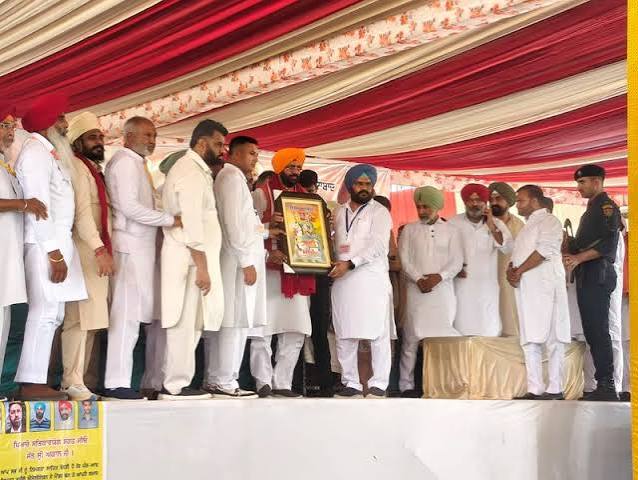
The BJP on Sunday launched statewide Kalash Yatras to distribute soil brought from Varanasi among temples dedicated to Guru Ravidas. The soil has been brought by senior Punjab BJP leaders from Seer Goverdhan near Varanasi, universally acknowledged as the birthplace of Guru Ravidas.South Asians & Diaspora The yatras that will continue till August 6 are being seen as the party’s move to expand its footprint among the Dalits, who constitute around one-third of the state’s population. The Kalash Yatras are being held as part of the BJP’s Samrasta Sankalp Abhiyan to commemorate the 650th birth anniversary of Guru Ravidas. The Samrasta Sankalp Abhiyan was launched on July 29, coinciding with the festival of Guru Purnima. According to party insiders, presidents of all districts were called for a meeting at Guru Ravidas Bhawan in Sector 7, Chandigarh, on Saturday. Each of them was handed over a ceremonial pitcher containing the sacred soil. The meeting was held under the leadership of state BJP president Kewal Singh Dhillon. Anil Vasudeva, a former Mayor of Pathankot, said the soil would be mixed with Tulsi plants that hold deep cultural and spiritual value. “It will then be distributed among Ravidas temples in Punjab,” he said. A party leader said, “We have been asked to do anything and everything to make sure the party forms the government in Punjab (in the Assembly poll scheduled for early next year).” Saini slams AAP over drugs Faridkot: Haryana CM Nayab Singh Saini launched a sharp political attack on the ruling AAP, questioning its sincerity in tackling Punjab’s drug menace. “How can those who allegedly consumed drugs inside the Assembly ever make Punjab drug-free?” he said. Saini inducted several local figures into the BJP. At a Denotified Tribes community conference in Sadiq, he promised that job reservation for the community, withdrawn by the Punjab Government, would be restored if the BJP came to power in 2027. Courtesy : The Tribune Note: This news is originally published on https:/thetribune.com/bha and is used purely for non-profit/non-commercial purposes, especially human rights
DMK slams Congress for ‘trading trust for berths’
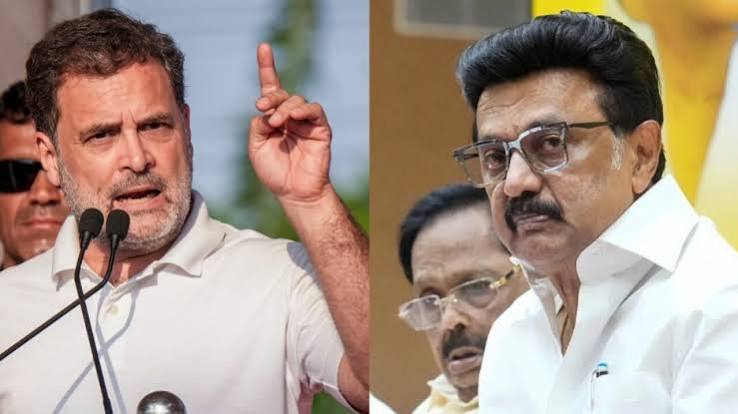
NEW DELHI: DMK Sunday mounted a furious pushback against Rahul Gandhi’s describing any support to govt’s widely speculated move to revive the bill to increase Lok Sabha’s strength, coupled with delimitation of constituencies, as a betrayal of Tamil Nadu amid buzz in political circles that the regional party may come around to backing the measure. A day after Rahul, during his visit to Tamil Nadu, said any party supporting the constitution amendment bill in Parliament will be a 21st century Ettappan, a historical figure reviled for treachery, senior DMK MP Dayanidhi Maran came out with a blistering retort. “These are the people who traded our trust in them for mere ministerial berths,” he said, lashing out at “poisonous snakes” which sell trust to “buy” power, a reference to Congress’s decision to snap ties with DMK and TVK. Maran’s strongly worded rejoinder captured the lingering sense of betrayal within the Dravidian party over Congress’s swift embrace of its rival after the national party went to the poll as DMK’s ally and was fully backed by the latter on all key issues, including Rahul’s leadership, in national politics through its years in office. BJP is hopeful that DMK’s bubbling anger with Congress will help its bid to win over the party’s support for its key legislative measures, especially delimitation, in Parliament, even though govt has so far not taken any official step to revive the bill that was defeated by a united Opposition in the last session. DMK has anyway indicated its openness over the issue, saying it will take a call after studying the bill and insisting that the proposed law should not harm south India’s interests. Rahul’s comments are also a nod to the acknowledgement in Opposition camp of the possibility of DMK revising its stand on a bill which, opposition parties have alleged, will allow BJP-led governing alliance to reconfigure constituencies to its advantage for the 2029 Lok Sabha poll. Targeting Rahul, Maran added, “Those who come to Tamil Nadu and stay silent about Cauvery rights are traitors. Those who only talk about irregularities in the exam, rather than insisting on completely abolishing NEET are traitors. Those who condemn BJP’s horse-trading but ignore TVK’s disgusting horse-trading are merely continuing that betrayal.” Courtesy : TOI Note: This news is originally published on https:/timesofindia.com/bha and is used purely for non-profit/non-commercial purposes, especially human rights
Warring downplays pro-Channi slogans, accuses AAP of politicising Congress events
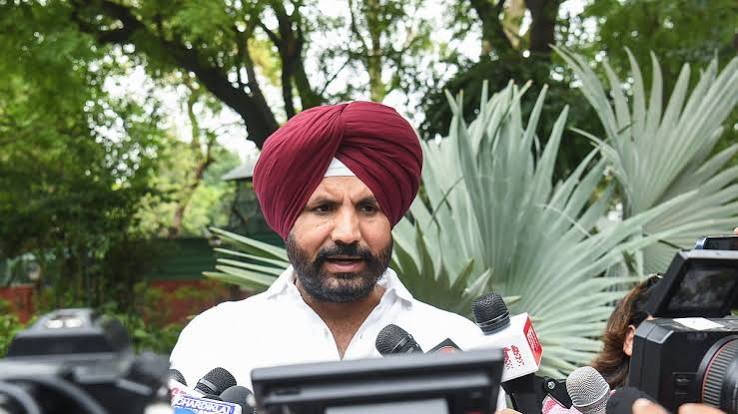
Seeking to end the controversy, Warring himself raised the slogan, “Charanjit Singh Channi Zindabad.” Punjab Congress chief Amrinder Singh Raja Warring on Sunday brushed aside the pro-Charanjit Singh Channi slogans raised at Congress programmes over the past two days, accusing the Aam Aadmi Party (AAP) of blowing the issue out of proportion and television channels of focusing only on the sloganeering. The remarks came after supporters of Jalandhar MP and former chief minister Charanjit Singh Channi interrupted the Congress’ “Har Booth, Congress Mazboot” programme in Barnala with pro-Channi slogans in the presence of AICC general secretary in-charge of Punjab, Bhupesh Baghel. Similar slogans were raised at party events in Patiala and Sangrur on Saturday. Interacting with reporters in Barnala, Warring said, “The current (AAP) government is presenting the slogans raised in favour of Charanjit Singh Channi as if they were chanted in favour of Pakistan.” He also criticised television channels for highlighting only the sloganeering while ignoring other developments at the party’s outreach events. “No television channel is showing that a leader from Shutrana joined the Congress on Saturday, or that 40-50 AAP MLAs are likely to switch sides,” he alleged. “I gave a speech, and everybody listened to it. The party workers clapped. But no TV channel is showing it,” Warring said, questioning the attention given to the slogans. “What happens if a slogan is raised? Channi had been our chief minister. I myself had raised the slogan ‘Ghar Ghar Challi Gal, Channi Karda Masle Hal’ (Go from house to house and say, Channi does resolve problems). I had raised slogans in favour of Partap Singh Bajwa also,” he said. Seeking to end the controversy, Warring himself raised the slogan, “Charanjit Singh Channi Zindabad.” The episode has once again drawn attention to the Congress’ internal factionalism in Punjab, despite the party leadership’s repeated claims of working towards organisational unity ahead of the 2027 Assembly elections. The leadership tussle resurfaced after the Congress high command on July 1 retained Warring as the Punjab Congress chief while appointing Channi as the chairperson of the party’s campaign committee. Courtesy : TNIE Note: This news is originally published on https:/thenewindianexpress.com/bha and is used purely for non-profit/non-commercial purposes, especially human rights
Slipper thrown at Pappu Yadav over Ram temple skit; MP alleges bid on life
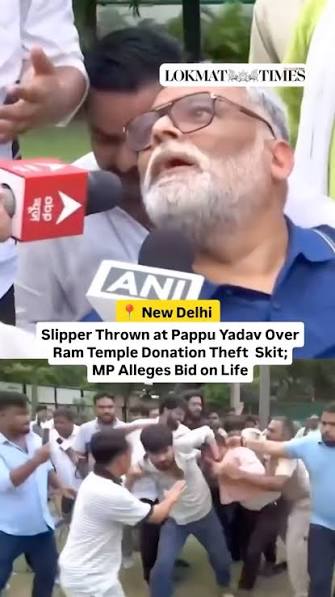
Yadav was addressing the media amid the controversy over the protest staged on Friday, which has led to an FIR being registered in Varanasi against him for allegedly hurting religious sentiments. Independent MP Pappu Yadav was targeted with a slipper during a press conference at his residence on Sunday after he defended his skit inside the Parliament House complex on the alleged theft of donations at the Ram temple. The incident triggered a scuffle between his supporters and the alleged attacker. Yadav was addressing the media amid the controversy over the protest staged on Friday, which has led to an FIR being registered in Varanasi against him, Leader of Opposition in the Lok Sabha Rahul Gandhi and Samajwadi Party MP from Faizabad (Ayodhya) Awadhesh Prasad for allegedly hurting religious sentiments. During the press conference, a man interrupted Yadav, questioned his actions and accused him of insulting Lord Ram before hurling a slipper at the MP. Yadav’s supporters immediately overpowered the man, leading to a brief scuffle. Yadav later alleged that it was an attempt on his life. According to police sources, the alleged attacker has been identified as 34-year-old Sumit, a native of Bulandshahr in Uttar Pradesh who works in an iron fabrication business in Ghaziabad. Police said he has no previous criminal record. Police also said another man, identified as Happy, was waiting in an SUV parked outside Yadav’s residence when the incident took place. Investigators are verifying their claims and probing the motive behind the attack. The controversy stems from a protest staged by Rajesh Ranjan alias Pappu Yadav inside the Parliament House complex on Friday. Dressed in saffron attire, Yadav, along with other Opposition MPs, performed a skit near the Makar Dwar to protest the alleged embezzlement of donations at the Ram temple in Ayodhya. As part of the demonstration, MPs, including Rahul Gandhi, placed money into donation boxes while Yadav slipped cash into his pockets to symbolise the alleged theft of donations at the temple. The BJP on Sunday accused Gandhi and Yadav of hurting Hindu sentiments and demanded that they publicly apologise. However, a defiant Yadav said they were protesting to protect Sanatan and will not be cowed down by any number of FIRs. His remarks came a day after an FIR was registered in Varanasi on a complaint by seers against him, Gandhi and Awadhesh Prasad. Separately, BJP MP Bansuri Swaraj and other party leaders lodged a police complaint in Delhi. The RSS affiliate Vishva Hindu Parishad (VHP) also criticised Gandhi and Yadav, alleging that the two leaders insulted Sanatan Dharma through the protest staged in the Parliament complex. Courtesy : TNIE Note: This news is originally published on https:/thenewindianexpress.com/bha and is used purely for non-profit/non-commercial purposes, especially human rights
Can BJP crack Punjab? Inside its strategy to challenge AAP and Congress in 2027
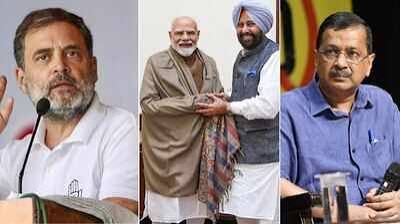
NEW DELHI: When it comes to BJP’s election playbook, there is always a method to the madness. Punjab, which votes early next year, appears to be following the same script. All these headlines, when looked at in isolation, appear to be one-off political developments separated in time. But one look at them together in the context of a wider long-term objective, they appear not just connected but also planned with a purpose. This is a perfect example of the BJP election playbook in action. The BJP, which over the years played second fiddle to the Akalis in Punjab, contested the 2022 elections alone after snapping ties with the Shiromani Akali Dal (SAD). However, it could win only 2 seats with a vote share of 6.6%. Even the 2024 Lok Sabha elections were a huge disappointment. The BJP polled 18.65% of votes but could not win any seat. However, the BJP appears determined not to let the past numbers dictate its future strategy. And that explains the aggression with which the party has gone for the kill in Punjab. Punjab, which over the years alternated between the Congress and the Akalis, broke the duopoly in 2022 when it overwhelmingly voted for Arvind Kejriwal’s AAP. And that perhaps gives BJP its biggest hope as it marshals its resources. Now, let’s analyze all these headlines as a part of one story to understand how the BJP is gearing up to add another state to its ever-expanding kitty. The Ravidassia outreach When Prime Minister Narendra Modi visited Punjab on February 1 this year, the BJP’s election playbook was already in action. The visit was part of a well thought-out and planned outreach that could increase the party’s base and presence in the state. The occasion was the 649th Birth Anniversary of Sant Guru Ravidas Ji. The Ravidassia community form an important electoral bloc of Punjab’s Scheduled Caste population, especially in the Doaba region. A slew of announcements were made, including renaming of Adampur Airport after Guru Ravidas and the launch of the Shri Guru Ravidas Ji Maharaj Express between Jalandhar and Varanasi. It was the start of a planned outreach. That outreach has continued with the Punjab BJP launching the statewide implementation of the ‘Samrasta Sankalp Abhiyan’ from July 29, the auspicious occasion of Guru Purnima, to commemorate the 650th birth anniversary year of Guru Ravidas Maharaj. Punjab BJP chief Kewal Singh Dhillon said the nationwide campaign will continue till February 20 (Magha Purnima) under the guidance of the BJP national leadership and aims to spread Guru Ravidas’s timeless message of equality, dignity, social harmony and social justice across Punjab. Targeted political acquisition The BJP, enriched by its experience from victories in states like West Bengal and Odisha, perhaps knows the importance of organisational strength in winning states. So in Punjab, after breaking its alliance with the Akalis, the BJP has been on an overdrive to build a strong local leadership. After the 2022 elections, several prominent Congress leaders had joined the BJP. And now in the run up to the 2027 electoral battle, seven AAP members of Rajya Sabha from the state are already a part of the party. And this acquisition includes Raghav Chaddha, once the most trusted associate of AAP chief Arvind Kejriwal. Chadha has a good understanding of the electoral thinking of AAP that rules Punjab now and can help the BJP capitalise on its weaknesses. As the elections approach, we could see Raghav Chaddha play a greater role in crafting and implementing BJP’s Punjab campaign. The ‘Dhillon’ signal When the BJP replaced one Congress export Sunil Jakhar with another Kewal Singh Dhillon as its state chief, the change was aimed to send across a message. Dhillon, who is a seasoned politician and a prominent industrialist, became the first Jat Sikh to head the BJP in the state. The purpose was clear: outreach among Sikh voters to help increase the acceptability of the party after its Akali alliance ended. The BJP would hope that Dhillon could help the party expand its rural footprint. Besides Dhillon’s political base is in Barnala, which falls in the Sangrur-Malwa region. This region is considered a stronghold of Punjab chief minister Bhagwant Mann and the Aam Aadmi Party. Ravneet Singh Bittu and Punjab focus Ravneet Singh Bittu, who joined the BJP in March 2024 ahead of the general elections after ending his long association with the Congress, seems to have an important role in the saffron party’s blueprint for Punjab. During the 2024 campaign, Bittu was projected as an important Sikh face for the BJP by none other than Amit Shah. For those who remember, the entire BJP had rallied in support of Bittu after Rahul Gandhi had referred to him as “traitor”. The BJP made Bittu a minister in the Modi government and a member of Rajya Sabha despite his Lok Sabha election loss from Ludhiana in 2024 to showcase his importance. But after his RS tenure ended in June this year, he quit as minister amid hints that he will play a key role in BJP’s Punjab plans. According to reports, in June, Bittu had expressed his desire to work for Punjab in the Vidhan Sabha after spending nearly 17 years in Parliament. Bittu had then said that the BJP made him the minister even though he had lost the 2024 parliamentary elections. “People of Punjab are fed up (with other parties). People are very much aware of development and progress taking place in other (BJP-ruled) states and they want prosperity in Punjab as well,” Bittu had then said. Ravneet Singh Bittu is the grandson of former Punjab chief minister Beant Singh, who was assassinated in 1995. During his political career in the Congress, he was elected MP thrice and also served as the grand-old-party’s leader in the Lok Sabha and as its whip in the Lower House. PM Modi’s ‘double-engine’ promise When Prime Minister Narendra Modi visited Punjab for the second time on July 17, his focus was on development, youth
Karnataka Cabinet expansion, KCV to arrive with final list
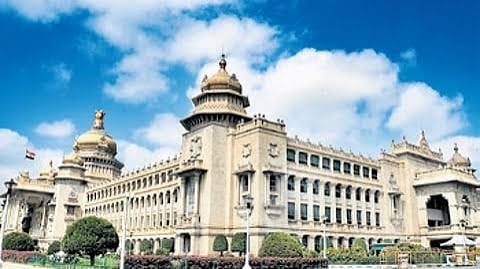
The names of PM Narendraswamy, Basavanthappa, Sharath Bachegowda, Kaneez Fathima Zameer Ahmed and Tanvir Sait too are doing the rounds. BENGALURU: AS cabinet expansion is most likely on Monday, AICC General Secretary KC Venugopal is expected to arrive here from Kerala on Sunday evening with the list of twenty legislators to be inducted as ministers. The swearing-in ceremony at Lok Bhavan is likely at 4 pm. Ministerial aspirants made last-ditch efforts by meeting former CM Siddaramaiah at his Cauvery residence on Saturday. MLAs Yashwant Rayagouda Patil, Appaji Nadagouda, Rizwan Arshad, Vijayananda Kashappanavar, AS Ponnanna, Yasir Ahmed Khan Pathan, Appaji C S Nadagouda, Yashwant Rayagouda Patil and Ashok S Pattan were among them. Transport Minister Byrathi Suresh also met Siddaramaiah. The list of probable include, Ajay Dharam Singh – Kalaburagi (Rajput), Yashwantrayagouda Patil – Indi (Lingayat), T Raghumurthy – Challakere (Valmiki), B Nagendra – Bellary Rural (Valmiki), Shivaraj Tangadagi – Kanakagiri (Bovi Dalit), Salim Ahmed – MLC (Muslim), NS Bosa Raju – MLC (Raju Kshatriya), Santosh Lad – Kalaghatagi (Maratha), SS Mallikarjun – Davanagere (Lingayat), Vijayanand Kashappanavar – Bagalkot (Lingayat), Puttaranga Shetty – Chamarajanagar (Uppara), AS Ponnanna – Virajpet (Kodava), N Cheluvarayaswamy – Nagamangala (Vokkaliga), Shivalingegowda – Arasikere (Vokkaliga), Basavaraj Shivannavar – Byadagi (Kuruba), Laxman Savadi(Lingayat), Laxmi Hebbalkar (Lingayat), Dr Arathi Krishna (Vokkaliga), Annapoorna E Tukaram (ST), and Anekal Shivanna (SC). The names of PM Narendraswamy, Basavanthappa, Sharath Bachegowda, Kaneez Fathima Zameer Ahmed and Tanvir Sait too are doing the rounds. Courtesy : TNIE Note: This news is originally published on https:/thenewindianexpress.com/bha and is used purely for non-profit/non-commercial purposes, especially human rights
Ram Temple skit row: Rahul Gandhi, Pappu Yadav, Awadhesh Prasad booked for ‘insulting Sanatan Dharma’
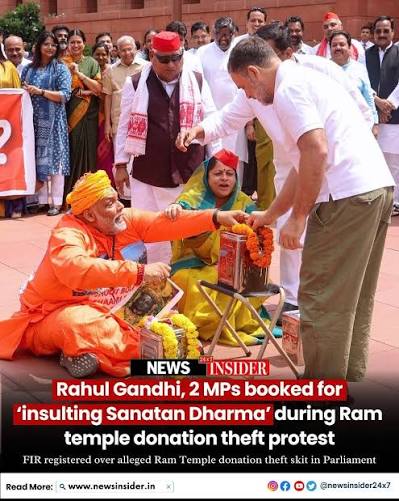
NEW DELHI: Varanasi Police on Saturday registered a case against leader of opposition in the Lok Sabha Rahul Gandhi and two other MPs for allegedly “insulting Sanatan Dharma” and “hurting religious sentiments” during an opposition protest in Parliament, an official said. Rahul Gandhi, independent MP Rajesh Ranjan alias Pappu Yadav, Samajwadi Party’s (SP) Awadhesh Prasad, and several other opposition parliamentarians had on Friday enacted a skit depicting the alleged theft of offerings from the Ram Temple in Ayodhya. Pappu Yadav and Awadhesh Prasad have also been named in the FIR. While Pappu Yadav, dressed in saffron robes, portrayed a temple priest who “stole” the offerings, Awadhesh Prasad represents the Faizabad constituency, which includes Ayodhya.According to Gaurav Banswal, Deputy Commissioner of Police, Kashi Zone, an FIR was registered based on a formal complaint submitted at Kotwali police station by some seers, who alleged that the trio had “insulted” Sanatan Dharma in Parliament. Seer Jagatguru Balak Das described Pappu Yadav’s conduct as “unforgivable”. “No follower of Sanatan Dharma can forget this act. It has hurt our religious sentiments. So we have demanded that a case be registered,” PTI quoted him as saying. On Friday, MPs of the Congress-led opposition INDIA bloc held a protest over the alleged Ram Temple donation theft and police action against student agitators during their July 20 Parliament march. The opposition leaders staged a skit to highlight the alleged temple donation theft. As part of the protest, they placed donation boxes near the stairs leading to the Makar Dwar of Parliament. MPs, including Rahul Gandhi, put money into the boxes, while Pappu Yadav, who sat nearby, was shown slipping it into his pockets. Congress MP Priyanka Gandhi Vadra, SP’s Dharmendra Yadav, and Jharkhand Mukti Morcha’s Mahua Maji were among those who participated in the protest. The SP is aggressively highlighting the issue ahead of the Uttar Pradesh assembly elections scheduled for February-March 2027. The Akhilesh Yadav-led party has been out of power since March 2017. Courtesy : TOI Note: This news is originally published on https:/timesofindia.com/bha and is used purely for non-profit/non-commercial purposes, especially human rights
India’s students do not need PM Modi’s forgiveness, they are owed his apology: Rahul Gandhi
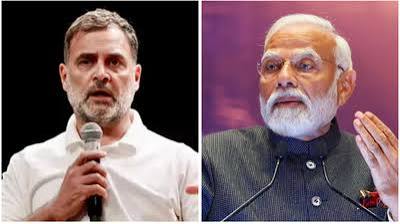
NEW DELHI: Reacting sharply to Prime Minister Narendra Modi’s late night Instagram video on Friday, Leader of Opposition in Lok Sabha Rahul Gandhi while citing leaked papers, cancelled exams and years of hard work of students destroyed in the process, lashed out at the PM for having the “audacity” to speak of “forgiving” students. “India’s students do not need his forgiveness. They are owed his apology,” Gandhi said. In an Instagram video posted on Friday night PM said that he will forgive young protesters accused of abusing him and his late mother, saying they are misguided children and it is “our job to show them the right way”. “Nothing is more painful than seeing a parent grieve their child. Behind every young life lost is a family carrying pain that will never leave them – and serious questions about a broken education system,” Gandhi said in a post on X where he also shared images of his interaction with parents and students. “Leaked papers. Cancelled exams. Years of preparation destroyed overnight. Our students are told to work honestly in a system that is not honest with them. And the Prime Minister has the audacity to speak of “forgiving” students,” Gandhi added. Alleging that the PM has not met a single grieving parent and has not sat with a single student whose future was stolen by a leaked paper, Gandhi said that the students don’t need Modi’s forgiveness rather “they are owed his apology”. Reacting sharply to the PM”s video, Congress general secretary Jairam Ramesh said in a post on X that the “PM enjoys playing the victim card” and added that Modi’s “InstaGram Sabhas are fooling no one”. “Late last night, in an act of supreme self-obsession, the PM said that he forgave our youth. This is an insult to the nation and to our youth which has suffered under his govt and is legitimately demanding an apology from him,” Ramesh said. The Congress leader went on to accuse the PM of using “vile vitriol against his predecessors and political opponents”. “He very frequently peddles lies to defame them, not just in his public speeches but in Parliament itself. He unleashes an army of foul-mouthed abusers both in Parliament and outside and gives them full protection,” Ramesh alleged. The Congress leader said that “the entire nation is wanting the PM to apologise for the trauma suffered by the youth due to paper leaks and the brutality unleashed on student protesters. Ramesh also raised the donation theft by Ram Temple Trust in Ayodhya. “The entire nation is waiting for the PM to apologise for the ‘Chanda Chori Astha Dhoka’ by the Ram Mandir Trust, an establishment which he had grandly announced in the Lok Sabha on February 5, 2020,” he added. Ramesh further said that “the entire nation is still expecting his apology for his Tughlakian decision of Nov 8 2016 that destroyed crores of livelihoods and shuttered lakhs if MSMEs. The list is endless.” Courtesy : TOI Note: This news is originally published on https:/timesofindia.com/bha and is used purely for non-profit/non-commercial purposes, especially human rights
‘Disappointed with PM Modi’: Shehzad Poonawalla’s sarcastic ‘dictator’ jibe at oppn after quitting BJP
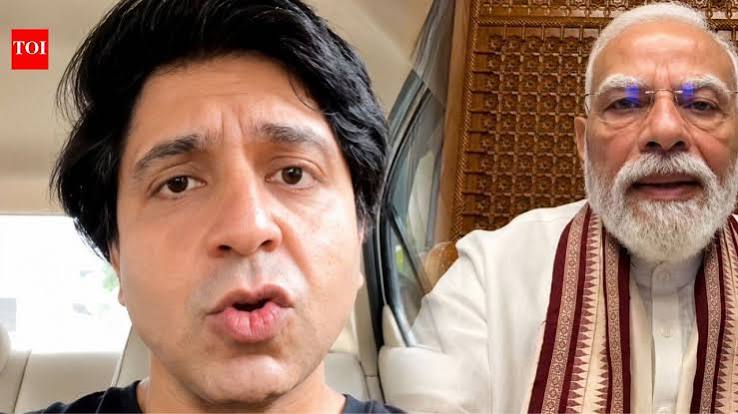
NEW DELHI: A day after resigning from the party, former BJP national spokesperson Shehzad Poonawalla on Saturday released an Instagram video saying he was “disappointed” with Prime Minister Narendra Modi. In a sarcastic jibe at the Congress and its most prominent face, leader of opposition in the Lok Sabha Rahul Gandhi, Poonawalla said that unlike Congress prime ministers, PM Modi, despite being in office for 12 years, was still to become a “dictator.” Poonawalla’s remarks came after PM Modi, in his fifth Instagram video since the recent student protests in Delhi, said he had “forgiven” protesters who allegedly abused him and his late mother during the agitation. Several people, mostly youngsters, were booked for allegedly abusing the PM and his mother, after the protests ended with the resignation of Dharmendra Pradhan as Union education minister on July 25. “I am completely disappointed with Prime Minister Narendra Modi. It has been 12 years and he has still not learnt how to be a dictator,” Poonawalla said in his Hindi video, adding that instead of becoming a dictator, the prime minister appealed for those who abused him to be forgiven. He urged the prime minister to learn “real dictatorship” from former prime ministers Indira Gandhi and Jawaharlal Nehru, Rahul Gandhi’s grandmother and great-grandfather, respectively. Poonawalla, a former Congress member, also referred to cases filed against students in Congress-ruled Karnataka and Kerala. He further referred to the alleged curbing of free speech during Nehru’s tenure and invoked the Emergency imposed by Indira Gandhi in 1975. “Who got all parliamentarians put in jail? Indira Gandhi. Who ordered police to fire at seers? Indira Gandhi,” Poonawalla remarked. The second incident he referred to appeared to be a reference to the 1966 police firing on protesters outside Parliament during a demonstration demanding a nationwide ban on cow slaughter. The former BJP spokesperson also referred to several protest movements that he alleged were “crushed” by Congress governments at the Centre and in various states. “We saw during the 2011 Anna Hazare agitation that 1,200-1,300 people were arrested. Anna Hazare himself was arrested. Rajbala lost her life,” he remarked, referring to the anti-corruption movement led by activist Anna Hazare that had put the then Congress-led UPA government under pressure. Rajbala was a woman protester who died following a Delhi Police crackdown at Ramlila Ground during the agitation. “Come on, Modi ji. It has been 12 years and you have still not become a dictator. You have poured water on the hopes of the Left-liberals,” Poonawalla concluded. PM Modi’s Instagram videos have been described as an attempt by the prime minister to reach out to “Gen Z” — the demographic with the largest participation in the recent student protests. Courtesy : TOI Note: This news is originally published on https:/timesofindia.com/bha and is used purely for non-profit/non-commercial purposes, especially human rights
Opposition parties up in arms against CM Vijay’s Karnataka visit plan
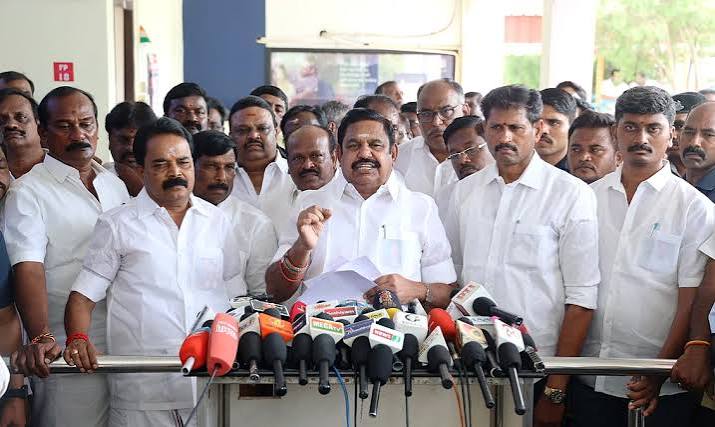
AMMK general secretary T T V Dhinakaran also opposed the reported visit, saying it would serve no purpose as Karnataka had openly rejected the CWMA’s direction. CHENNAI: The ‘proposed visit’ of Chief Minister C Joseph Vijay to Karnataka to discuss the Cauvery water dispute has come under criticism from opposition parties in Tamil Nadu. Leaders of the AIADMK, PMK, AMMK and the NTK said the visit, if it happens, would not help Tamil Nadu secure its share of Cauvery water, and urged the CM to drop the plan. AIADMK general secretary Edappadi K Palaniswami criticised the CM for not convening an all-party meeting on the Cauvery and Mekedatu issues. He also questioned the government’s silence over the union minister’s recent statement on the Mekedatu project and Karnataka Chief Minister D K Shivakumar’s refusal to release water despite the Cauvery Water Management Authority’s (CWMA) order. In a statement, he demanded that an all-party meeting be held immediately to discuss the issues affecting TN farmers. PMK president Anbumani Ramadoss said Karnataka has decided to challenge the CWMA order to release water to TN and has called an all-party meeting on August 2. He questioned how the talks, if any, between the two CMs could succeed when Karnataka had already refused to follow the CWMA order, and warned that such a meeting could weaken Tamil Nadu’s stand against the proposed Mekedatu dam. Similarly, AMMK general secretary T T V Dhinakaran also opposed the reported visit, saying it would serve no purpose as Karnataka had openly rejected the CWMA’s direction. In a statement, he urged the state to focus on legal action, consult farmers’ associations and raise the Cauvery and Mekedatu issues with Congress leader Rahul Gandhi to put political pressure on the Congress government in Karnataka. The politcal leaders had made the remarks ahead of the Karnataka CM deferring the bilateral talks with Vijay. Following Shivakumar’s announcement, NTK chief coordinator Seeman said Tamil Nadu was handling the Cauvery issue in a slow and careless manner. In a statement, he said it would be a “historic mistake” for the CM to visit Karnataka for talks. He argued that TN should instead continue its legal and political fight to protect its water rights. Courtesy : TNIE Note: This news is originally published on https:/thenewindianexpress.com/bha and is used purely for non-profit/non-commercial purposes, especially human rights