
Congress at 140: Is the grand old party ready to make a comeback in 2026?
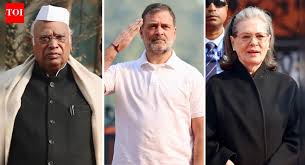
Mahatma Gandhi once envisioned a future where the Congress would quietly dissolve itself into a Lok Sevak Sangh after Independence, having fulfilled its role and returned power to the people. History, as it often does, chose drama instead. The party stayed on, grew older, heavier with legacy — and now, at 140, finds itself older than independent India and still very much in the business of electoral survival. Founded in 1885, the Indian National Congress didn’t just witness the making of modern India; it scripted large parts of it. But fast-forward to the present, and the party that once defined the political centre is struggling to locate it. The slogans are loud, the marches long, the symbolism familiar—but dominance has been replaced by damage control, and nostalgia no longer guarantees votes. Now, stepping into its 141st year, the Congress has little time to blow out birthday candles and even less room to get things wrong. A series of assembly elections across five states is lining up as its next reality check, testing whether fresh campaign calls, revived alliances, and lessons from a bruising 2025 can finally add up. From rebranding protest politics to fighting key battles in the south and the northeast, the grand old party is once again at the crossroads — older, wiser, and under pressure to prove it still knows the way forward. Does Congress need to change its campaign calls? Save the Constitution, vote chori, caste survey — these are some of the battle cries Congress tried to campaign on. Rahul Gandhi walked miles for it. While the leader of the opposition in Lok Sabha may have charmed those he walked with, the votes did not enter its account. 2026, however, would see a break from these campaign calls as the Grand Old Party announced nationwide protests against the BJP-led central government for replacing the rural employment scheme – MGNREGA – with VB G-RAM-G law. “We also pledge to democratically oppose every conspiracy to remove Gandhiji’s name from MNREGA,” Mallikarjun Kharge said at the CWC meet as he announced the campaign from January 5. But the question is, would the people who need the scheme relate to “conspiracy to remove Gandhiji’s name from MNREGA”? While the CWC release does highlight what it describes as the systematic dilution of MNREGA, including unilateral changes to the scheme’s structure without consultation or parliamentary debate, the beneficiaries in whose name the Congress is mobilising are unlikely to engage with or prioritise such detailed party statements. Battle in the South and the Northeast Kerala ; Out of the five states that are set to see ballot contests this year, Kerala, Assam and Puducherry remain the crucial ones for Congress. The party will directly face the BJP or the Left in these assembly elections. The party is riding on high confidence with a sweeping comeback in the Kerala local body polls. However, the BJP-led NDA’s Trivandrum win cannot be ignored. The local body election results offer the Congress-led UDF a clear strategic edge heading into the upcoming assembly polls. A pronounced anti-incumbency wave has cut through the LDF’s welfare and governance narrative, pushing the Left to its weakest grassroots position in years and denting its push for a third consecutive term. While the BJP’s expanding footprint has complicated Kerala’s traditional bipolar contest, the erosion of LDF dominance gives the UDF momentum, credibility, and a renewed claim as the principal alternative as the assembly battle approaches. Assam ; After its 2016 defeat in Assam—driven by deep anti-incumbency, alliance consolidation by the BJP, and voter frustration over corruption, jobs, and governance—the Congress is recalibrating its approach. This time, the party is foregrounding a grassroots-first strategy through its “Raijor Podulit Raijor Congress” campaign, aimed at rebuilding credibility from the bottom up. By crowdsourcing inputs for its manifesto via thousands of “aspirational boxes” and sustained community outreach across regions, the Congress is seeking to address precisely the issues that cost it power earlier: employment, fair wages for tea workers, flood management, public health, and governance delivery. At the organisational level, the Congress is also positioning itself as the anchor of a broad opposition alliance to take on the BJP, while trying to avoid the fragmentation that helped its rivals in the past. However, the decision to contest 100 of 126 seats has exposed fault lines within the alliance, making seat-sharing and coordination a key test of leadership. Balancing assertiveness with accommodation, translating consultation into votes, and countering the BJP’s entrenched narrative on identity and development remain the party’s central challenges as it looks to convert renewed mobilisation into an electoral comeback in Assam. Tamil Nadu ; Congress finds itself walking a tightrope within the DMK-led alliance. While it wants to improve its bargaining position by pressing for a higher number of seats, the party has to contend with its relatively weak independent base in the state and the DMK’s clear upper hand. The party’s challenge lies in projecting relevance and cohesion without appearing disruptive, ensuring smooth coordination at the grassroots for vote transfer, and managing internal ambitions—all while avoiding strain in a long-standing alliance that remains crucial for its electoral survival in Tamil Nadu. Conflicting actions by individual leaders, including high-profile meetings outside the alliance framework, have added to doubts about unity and discipline, even if these are intended mainly to strengthen Congress’s hand in talks. West Bengal ; Congress heads into the West Bengal polls facing an existential challenge shaped by years of steady decline and shrinking political space. From being a significant player with strongholds in Malda and Murshidabad a decade ago, the party has slipped into near irrelevance, drawing a blank in the 2021 assembly election and losing even its traditional bases. This collapse has coincided with the BJP’s rapid rise as the principal opposition to the Trinamool Congress, leaving Congress squeezed out of the bipolar contest. Compounding the problem is Mamata Banerjee’s clear insistence on going it alone, shutting the door on any meaningful alliance and reducing Congress’s bargaining power to
PM silent when poor die while BJP leaders show arrogance: LoP
New Delhi: Congress president Mallikarjun Kharge and Lok Sabha LoP Rahul Gandhi targeted the governing BJP over deaths from contaminated water, calling the tragedy evidence of BJP’s “empty” claims and corruption, and lamenting that PM Modi always prefers silence when the poor die. Rahul said Madhya Pradesh has become the “epicentre of misgovernance” where unhygienic water deaths have been preceded by deaths from cough syrups and rats killing infants in govt hospitals. “Not water, but poison was distributed in Indore, and the administration remained in deep slumber,” he said. Alleging corruption in all the central govt schemes including Jal Jeevan Mission that Modi “never gets tired of trumpeting” about, Kharge pointed out that Indore has won the “cleanest city” award for eight consecutive years under the Centre’s “swacch sarvekshan survey”. The Congress brass, without naming the viral spat between a senior MP minister Kailash Vijayvargiya and a journalist, said the govt showed brazen arrogance when the families of the victims needed solace. “When ministers are questioned, they resort to abuse and intimidation. Drunk on the arrogance of power, they turn the tables on the journalists. The entire machinery swings into action to cover up the misgovernance of BJP govts,” Kharge said. Asking when would action be initiated against officials and leaders, Rahul said clean water is not a favour, but its “right to life” that has been destroyed by the “insensitive” govt. Kharge said the govt has fed India with empty promises for last 11 years, but has “failed to provide either clean water or clean air”. Courtesy : TOI Note: This news is originally published on https:/timesofindia.com/bha and is used purely for non-profit/non-commercial purposes, especially human rights
Karnataka govt removes EVM trust survey from its website after BJP bias charge
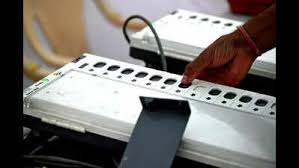
Bengaluru: Congress govt in Karnataka went on the defensive Friday after a survey assessing voter trust in Electronic Voting Machines (EVMs), commissioned by the Karnataka chief electoral officer (CEO), triggered political controversy, prompting the state to remove the report from the Karnataka Monitoring and Evaluation Authority (KMEA) website hours after it went viral. The survey, conducted by KMEA under the department of planning, programme monitoring and statistics at the behest of the CEO (Election Commission), concluded that a majority of voters believed elections in India were free and fair and that trust in EVMs had increased. Reacting sharply, Karnataka chief minister Siddaramaiah said the survey was being selectively used to create a misleading narrative that concerns raised by Congress leader Rahul Gandhi over electoral malpractice had been disproved. In a post on X, Siddaramaiah said the exercise was an end-line administrative evaluation of voter awareness under the SVEEP (Systematic Voters’ Education and Electoral Participation) programme, conducted in May 2025, and not a political opinion poll certifying electoral integrity. He noted that Rahul Gandhi had raised allegations of organised voter list manipulation, termed “Vote Chori”, only in Aug 2025, based on material that emerged later. The CM also questioned the survey’s limited sample size and flagged a possible conflict of interest involving the NGO that conducted it. Referring to Aland in Kalaburagi district, Siddaramaiah said a Karnataka police SIT had filed a 22,000-page chargesheet in a voter deletion case, arguing that administrative surveys could not override criminal evidence or pending questions before the election commission. Minister Priyank Kharge alleged the survey was biased, claiming CEO through KMEA had sought assistance from an NGO run by an individual closely linked to the Prime Minister’s Office. “The survey was conducted by a Modi’s man who works in the PMO and has authored a lavish tribute to the PM. The BJP is falsely peddling the survey as a state govt survey,” he alleged, adding that the data covered only 5,000 respondents across more than 100 constituencies. He said the BJP was answerable for alleged voter fraud reported from Aland. Congress MLC and former AICC general secretary BK Hariprasad charged that the survey was conducted “only to sing paeans” about the election commission. The survey, titled Lok Sabha Elections 2024: Evaluation of endline survey of KAP (Knowledge, Attitude and Practice) of Citizens, which was removed from website, covered 5,100 respondents across 102 assembly segments in the Bengaluru, Belagavi, Kalaburagi and Mysuru divisions. It was undertaken by the Grassroots Research and Advocacy Movement, Bengaluru, founded by Balasubramaniam, and monitored by KMEA. The findings showed high confidence in the electoral process even in Kalaburagi. “While recognition of the importance of each vote (above 81.3%) and trust in the electoral process and EVMs (above 83.6%) was high, concerns over inducements and the influence of money and muscle power remained, especially in regions like Kalaburagi,” the report said. It added rural voters generally perceived elections as fair due to effective booth-level officer engagement, while urban youth expressed concerns about elite dominance, lack of transparency and apathy. The evaluation adopted a mixed-methods KAP framework, using structured questionnaires, 23 in-depth interviews, 57 focus group discussions and 16 booth-level case studies across urban, semi-urban and rural areas. It reported EPIC possession at 99.02% and voter list inclusion at 98.1%, though awareness gaps persisted in urban areas. According to officials, KMEA is a statutory body tasked with independent evaluation of public programmes to support evidence-based policymaking. The state govt has not issued an official explanation for the removal of the survey from the KMEA website. Courtesy : TOI Note: This news is originally published on https:/timesofindia.com/bha and is used purely for non-profit/non-commercial purposes, especially human rights
Tamil Nadu assembly elections 2026: Congress asks DMK for 38 seats, three cabinet berths
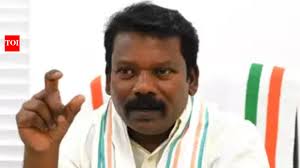
CHENNAI: Congress has asked DMK, its principal ally in Tamil Nadu, for 38 seats in the upcoming assembly election, and three cabinet berths if the alliance wins, multiple sources told TOI. The demand comes in the wake of a section within Congress whispering about a probable tie-up with Vijay’s TVK. “Our leadership has communicated this to DMK top leadership; negotiations will soon begin,” said a senior Congress leader who did not want to be named. He said the demand stemmed from his party’s “unconditional support to the DMK govt, which completed its full term in 2011 despite not having absolute majority in assembly” and “our willingness to give DMK ministerial berths in the UPA govts.” When contacted, two DMK leaders said they were not aware of the Congress demand. “There will be clarity only when formal seat-sharing talks between the parties begin.” Congress sources said attempts are being made to persuade the DMK leadership to provide “at least an oral assurance” on power sharing. “A meeting between AICC President Mallikarjun Kharge and former Union minister P Chidambaram is expected soon, after which the picture may become clearer,” said a source. Congress constituted a negotiation committee on Nov 22 last year, after an emissary of DMK president M K Stalin met Congress leaders Rahul Gandhi and Mallikarjun Kharge in Delhi. On Dec 3, the Congress panel led by AICC general secretary Girish Chodankar met Stalin. Two days later, AICC member Praveen Chakravarty met Vijay, sparking another round of speculation and confusion. While a few second-rung leaders fanned rumours of a Congress-TVK alliance in the making, TNCC president K Selvaperunthagai expressed concern over the party speaking in different voices. Recently, a few Congress functionaries shared stage with TVK leaders at a Christmas event in Arumanai in Kanyakumari. Those in Congress opposing any friendship with TVK ask how Rahul Gandhi could share a stage with Vijay who has been calling DMK an evil force. “Our MLAs haven’t spoken ill of DMK for years. How can we turn against the party overnight? Besides explaining such things, questions about leading and funding the campaign pose challenges to the idea of such an alliance,” said a senior Congress leader. Courtesy : TOI Note: This news is originally published on https:/timesofindia.com/bha and is used purely for non-profit/non-commercial purposes, especially human rights
‘Mamata Banerjee threatened India’s Home Minister Amit Shah’: BJP’s big accusation
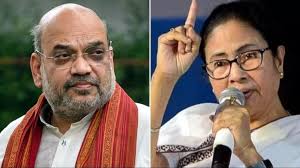
The BJP has accused West Bengal Chief Minister Mamata Banerjee of threatening Union Home Minister Amit Shah. The BJP said that if Mamata thinks she can stop the country’s Home Minister, then she is trying to stop India itself. New Delhi: The BJP has leveled very serious allegations against West Bengal Chief Minister and TMC chief Mamata Banerjee. The party claims that Mamata Banerjee openly used threatening language against Union Home Minister Amit Shah and said that if she wanted, Shah would not be able to step out of his hotel in Kolkata. The BJP alleges that this is not the first time this has happened. The TMC has displayed this kind of dictatorial behavior before. The party claims that democracy is under attack in Bengal and Mamata Banerjee has ruined it. ‘Mamata Banerjee threatened the Home Minister’ BJP MP from Puri, Odisha, and party’s national spokesperson Sambit Patra on Wednesday strongly criticized the West Bengal Chief Minister for allegedly using threatening language against Union Home Minister Amit Shah. Patra alleged that “the way Mamata Banerjee addressed Amit Shah with threatening words… Mamata Banerjee used such words of threat against the Home Minister of India, which are unthinkable.” ‘Said – If we wanted, we wouldn’t let him leave the hotel’ According to the BJP spokesperson, ‘Mamata Banerjee said that you are hiding in the hotel, if we don’t want you to, you cannot take a single step outside the hotel; and you are lucky that we allowed you to leave the hotel… If we wanted, we wouldn’t have let you leave the hotel.’ These are the words of Mamata Banerjee, the Chief Minister of West Bengal, a large state in the country, directed at her own country’s Home Minister, Amit Shah. In fact, on Tuesday, Amit Shah had targeted the TMC government over the issue of infiltrators during a press conference in Kolkata, after which Mamata retaliated against him at a public meeting. ‘TMC killed 300 BJP workers’ The BJP alleges that this is not the first time. Before the last elections, the convoy of BJP National President JP Nadda was also attacked by infiltrators. They have also alleged that TMC goons in West Bengal have killed around 300 BJP workers. Some were hanged, while others were brutally murdered. Meanwhile, 3,000 people who fled their homes are still unable to return. ‘Mamata Banerjee, you are threatening India’ The BJP says that this is the same Bengal about which it was once said, “What Bengal thinks today, India thinks tomorrow.” But Mamata Banerjee and the TMC have brought the state to this condition because of the infiltrators. They said, “Mamata Banerjee’s politics of appeasement has ruined Bengal. And the threat you are giving to the Home Minister, Mamata ji, is not just a threat to the Home Minister, it is a threat to every Indian. If you think that in Bengal you can challenge the country’s Home Minister, you can stop the Home Minister of India, you can prevent him from even stepping out on the road, then you are threatening India.” Written by: Anjan Kumar About the Author Anjan Kumar is an Assistant Editor at Navbharat Times Online. He has over 23 years of experience in electronic and digital media. He is interested in writing on topics related to politics, current affairs, judiciary, defense, foreign affairs, and business. Courtesy: Hindi News
Congress Compares Rahul Gandhi to Lord Ram, BJP Calls it ‘Unforgivable’
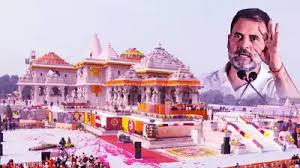
The BJP has reacted strongly to the Congress party comparing Rahul Gandhi to Lord Ram. The BJP called it the height of sycophancy and said that what the Congress has done is unforgivable. Congress Compares Rahul Gandhi to Lord Ram New Delhi: A Congress leader has sparked a major political controversy by comparing Rahul Gandhi to Lord Ram. The BJP has reacted sharply to this act by Maharashtra Congress leader Nana Patole, calling it an ‘unforgivable’ insult to faith. The party also called it the ‘height of sycophancy’. In an interview, Patole compared Rahul Gandhi, the Leader of the Opposition in the Lok Sabha, to Lord Ram, saying that his leader is doing what Lord Ram used to do. ‘An Unforgivable and Serious Insult to Faith’ BJP national spokesperson CR Kesavan strongly attacked Nana Patole’s statement on X (formerly Twitter). He said, “Nana Patole’s comparison of Rahul Gandhi to Lord Ram is an unforgivable and serious insult to the sentiments and faith of millions of Hindu devotees. Nana Patole had earlier disrespectfully demanded the purification of the divine Ram Temple in Ayodhya after Honorable President Droupadi Murmu visited and prayed for the welfare of the country.” ‘Deceitful Mentality Unacceptable’ The BJP spokesperson said that “Nana Patole’s shameful comments and deceitful mentality are completely unacceptable and highly condemnable. Will Nana Patole dare to ask Rahul Gandhi why he mocked the Pran Pratishtha ceremony as a song and dance program, or why Rahul Gandhi has not yet visited the Ayodhya Ram Temple?” ‘Congress Party Shows the Height of Sycophancy’ Another BJP spokesperson, Shehzad Poonawalla, targeted the Congress, saying, “Once again, the Congress party has shown the height of sycophancy. The Congress party says that Rahul Gandhi is like Lord Ram. Recently, they said that Christmas can only be celebrated because of Sonia Gandhi. What kind of sycophancy is this?” And then you are insulting the Hindu faith? This is the same Congress party that said the Ram Temple should not be built. This same Congress called the consecration ceremony of the Ram Temple a song and dance. They are continuously attacking the faith of Hindus.’ ‘Rahul Gandhi is doing the work of Lord Ram’ In fact, a PTI video asked Patole in an interview why Rahul Gandhi has not yet visited the Ayodhya temple, even though it has been built for a long time. To this, Patole said, “Our leader Rahul Gandhi is doing the work of Lord Ram. The work of Lord Ram was to provide justice to the oppressed, the deprived, and the victims. And by traveling across the country, our leader is doing the same work that Lord Ram did. Serving the oppressed and the victims is more important to Rahul ji than going to the temple and having a photo session…” Written by: Anjan Kumar About the Author Anjan Kumar is an Assistant Editor at Navbharat Times Online. He has over 23 years of experience in electronic and digital media. He is interested in writing on topics related to politics, current affairs, judiciary, defense, foreign affairs, and business. Courtesy: Hindi News
Rahul Gandhi faces a major challenge this year, informed by internal party politics and the electoral dynamics in five states.
Last year was significant for the BJP in many ways. The party won state after state, and the landslide victory in the Bihar elections at the end of the year has doubled the party’s enthusiasm. Meanwhile, Congress’s losses have raised questions about Rahul Gandhi within the party. New Delhi: Elections are scheduled for this year in Kerala, Assam, West Bengal, Tamil Nadu, and Puducherry (a Union Territory). Political parties in these states face different dynamics and challenges in this new year’s electoral contest. Regardless of the outcome, the results will have no impact on national politics. Nevertheless, there are some things in these election results that people will be eagerly awaiting. Kerala, Tamil Nadu, and Bengal are three states where the lotus has never bloomed. The BJP is putting its full force in Bengal. A victory in any of these states would be significant. Opposition parties also face a significant challenge. Mamata Banerjee is concerned about Bengal, while the Left parties are concerned about Kerala. After a series of defeats, Rahul Gandhi faces a much bigger challenge. The BJP’s biggest challenge in 2026 will be winning the West Bengal Assembly elections. Union Home Minister Amit Shah claimed on December 30 that the BJP will oust the Mamata Banerjee government from power by securing a two-thirds majority in the upcoming elections. The BJP’s chief election strategist attacked the ruling TMC, raising issues of corruption, misgovernance, and infiltration. In the last assembly elections in West Bengal, the BJP emerged as the main opposition party, significantly outpolling the Left and Congress, but political analysts believe the ruling TMC remains a dominant political force in the state. Political analysts believe that both Tamil Nadu and Kerala remain a formidable challenge for the BJP. The BJP made its presence felt in Kerala with its success in the municipal elections and hopes to capitalize on this success in the upcoming assembly elections. It is also looking for a suitable ally in Tamil Nadu, currently ruled by the DMK, to expand its reach in the state. The Assam elections will test the BJP’s position in the Northeast, as it faces challenges from the Congress and regional parties. These state elections truly pose a significant challenge for both the Congress and Rahul Gandhi. After a series of defeats, questions are being raised about Rahul Gandhi within the party. A section within the party now sees a ray of hope in Rahul Gandhi’s sister, Priyanka Gandhi Vadra. Rahul Gandhi also recognizes that he must re-establish his position as the face of the Congress. A victory in Kerala will strengthen Rahul Gandhi’s position. The Assam elections are a test for the Congress, which lost its hold on the state more than a decade ago. The central leadership’s bet on Gaurav Gogoi will also be tested, as the party hopes he has the potential to follow in the footsteps of his late father, Tarun Gogoi. Curated by: Pankaj Singh About the Author Pankaj Singh is an Assistant Editor at Navbharat Times Digital. He has been involved in journalism for over 18 years. He has extensive experience in current affairs, politics, and ground reporting. During this time, he has covered the Delhi Assembly elections, railways, and Lok Sabha elections, as well as political news. Courtesy: Hindi News
‘Leader of propaganda’: BJP slams Rahul Gandhi over ‘dead economy’ remark; cites India as 4th largest economy
NEW DELHI: BJP national spokesperson Shehzad Poonawalla on Wednesday hit out at leader of opposition in the Lok Sabha Rahul Gandhi over his earlier remarks describing India as a “dead economy”, calling him a “leader of propaganda” after India overtook Japan to become the world’s fourth-largest economy. Speaking to ANI, Poonawalla accused Rahul Gandhi of spreading what he termed “malicious propaganda” against the country and said recent economic data had exposed the Congress leader’s claims. “Rahul Gandhi, who is an expert at making anti-India statements, goes to Berlin and spreads malicious propaganda against India, sometimes against the army, sometimes against constitutional institutions, against Sanatan and economic power, has now faced reality today. Rahul Gandhi used to say that India’s economy is dead, India’s economy and production are dead; this is a leader of propaganda, not a leader of opposition,” Poonawalla said. He added that India’s economic position had improved sharply over the past decade. “India’s economy has now reached the fourth position, while in Manmohan Singh’s era, it was at the 11th position. Today, we have overtaken Japan. In the next two and a half to three years, we will become the third-largest economy. He should stop defaming India and spreading malicious propaganda against India,” Poonawalla said. Rahul Gandhi had earlier, in July 2025, echoed then US President Donald Trump’s remark calling India’s economy “dead”. “Yes, he is right, everybody knows this except the Prime Minister and the Finance Minister. Everybody knows that the Indian economy is a dead economy. I am glad that President Trump has stated a fact. The entire world knows that the Indian economy is a dead economy,” Gandhi had said at the time. According to a press release issued by the Centre, India’s Gross Domestic Product has crossed USD 4.18 trillion, placing it as the fourth-largest economy globally. The government said India is expected to climb further in the global rankings in the coming years. The release also noted that India’s real GDP expanded by 8.2 per cent in the second quarter of the financial year 2025-26, marking a six-quarter high. This followed growth of 7.8 per cent in the first quarter and 7.4 per cent in the fourth quarter of FY 2024-25, pointing to resilient domestic demand despite a challenging global trade environment. Meanwhile, Congress leader Rashid Alvi questioned the credibility of the GDP figures, alleging that the government had altered the calculation method. “It is completely wrong and baseless. Even today, the GDP data that is provided shows that we are the fourth or fifth largest economy in the world. The government has completely changed the way GDP is calculated. GDP is calculated worldwide on a production basis, but they have switched to a consumer basis,” Alvi said. Alvi’s remarks come amid debate over India’s national accounts data after the IMF’s annual review assigned it a Grade ‘C’. Union Finance Minister Nirmala Sitharaman had said the grading was due to the continued use of the 2011-12 base year, adding that a revised base year of 2022-23 would be adopted from next year. Courtesy : TOI Note: This news is originally published on https:/timesofindia.com/bha and is used purely for non-profit/non-commercial purposes, especially human rights
Dotasra slams BJP over Rahul Gandhi’s marriage, asks if commenting on private life is part of RSS’s values?
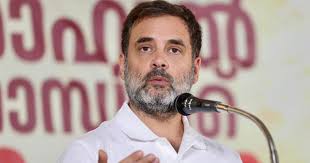
PCC Chief Govind Singh Dotasra has termed Minister Sumit Godara’s statement on Rahul Gandhi’s marriage as ‘low-minded thinking’. He said that the government, which has failed in the name of development, is only making personal comments. Dotasra criticized the government, stating that even the DPR for Yamuna water in the state has not been prepared, and more than 500 schools are in a dilapidated condition. Sikar: Rajasthan Pradesh Congress President Govind Singh Dotasra launched a scathing attack on the state’s Bhajanlal government and Minister Sumit Godara. Retaliating against the statement made regarding Rahul Gandhi’s engagement, Dotasra said that the kind of language used by the government ministers reflects their thinking and values. Questions raised about RSS’s teachings Dotasra asked whether such things are taught in the RSS’s schools. Who will get married and who will not? Who gave you the right to pry into someone’s private life? What kind of language is Minister Sumit Godara using? Are these his values? He questioned Minister Godara’s statement, asking who gave him the right to comment on someone’s private life. Dotasra alleged that the government has no vision for development, which is why such baseless statements are being made. Actually, the previous day, during a public hearing in Jaipur, Minister Sumit Godara, while talking to the media, had said that it is a good thing that Priyanka Gandhi’s son Rehan Vadra Gandhi is getting engaged, but if Rahul Gandhi also gets married, then he too will start behaving properly. DPRs for many schemes have not even been prepared till date Speaking to the media, Dotasra said that the condition of the budget announcements is such that even 10 to 15 percent of the work has not been implemented on the ground. DPRs for many schemes have not even been prepared till date. Regarding the agreements made by the government to bring Yamuna water to Sikar-Jhunjhunu in Shekhawati and the speeches given from time to time by Chief Minister Bhajanlal Sharma and all the ministers of the government, Dotasra said that bringing the water is a long way off; even the Detailed Project Report (DPR) for this scheme has not been prepared yet. More than 500 school buildings in the state are in dilapidated condition Raising questions about the education system, he said that the government is talking about AI-based education, while more than 500 school buildings in the state are in dilapidated condition and there are about 200 schools where there is not even proper seating arrangement. Thousands of schools need immediate repairs The State Congress President said that thousands of schools need immediate repairs. Referring to the Jhalawar accident, Dotasra said that the survey revealed that about Rs 16,000 crore is needed for the repair of school buildings, but even after more than a year, new buildings have not been constructed there. In many places, children are still forced to study sitting under trees. How will AI come without English, the government should explain Questioning the education policy, Dotasra said that on one hand, the government talks about stopping English education and on the other hand, it is claiming to provide AI model education. The government should explain how AI will come without English. He said that basic facilities should be strengthened first, and only then should such big claims be made. Authored by: Pulkit Saxena • Contributed by: Amit Bhardwaj About the author Pulkit Saxena is a Digital Content Producer at Navbharat Times Online. Starting his journalism career in Delhi, he now covers Rajasthan politics, crime, current affairs, and offbeat news. He has been working in the media for about 7 years. Courtesy: Hindi News
Chief examination of Savarkar’s grandnephew in defamation case against Rahul Gandhi completed before Pune court
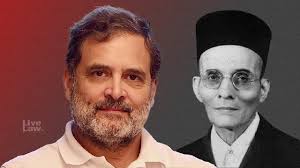
Pune: An MP/MLA court in Pune on Tuesday completed the chief examination of Satyaki Savarkar, the grandnephew of Hindutva ideologue Vinayak Damodar Savarkar, in a defamation case he has filed against Congress leader Rahul Gandhi over the latter’s alleged objectionable remarks during his March 2023 speech in London. The court proceedings lasted for over five hours. The cross-examination of Satyaki by the defence lawyer was deferred to Jan 13. During the proceedings on Tuesday, Rahul Gandhi’s counsel Milind Pawar objected to running the pen drive containing the link to Gandhi’s alleged defamatory speech in open court. The objection was overruled as the court said there was no need to file a separate application as it had allowed the drive as evidence. The examination focused on the contents of Rahul Gandhi’s speech and the alleged damage to Vinayaka Damodar Savarkar’s reputation. Satyaki said Rahul Gandhi in his impugned (under challenge) speech claimed that the disputed assertions were part of a book written by the Hindutva ideologue. Satyaki said he was providing a list of 29 books written by Savarkar and told the court that he filed the defamation case only in relation to the specific incident mentioned by Gandhi in the speech, which, according to him, does not find mention in any biography of Savarkar. “I am a descendant of Savarkar and have the right to file the complaint,” Satyaki said. He told the court that he faced criticism on social media and received emails, letters, and explanations following Rahul Gandhi’s speech. “I was asked many questions about the role of Savarkar,” Satyaki said. Courtesy : TOI Note: This news is originally published on https:/timesofindia.com/bha and is used purely for non-profit/non-commercial purposes, especially human rights