
Mumbai: Man Posing As Transgender Rapes Powai Woman on Pretext of Blessing Her With Child, Arrested
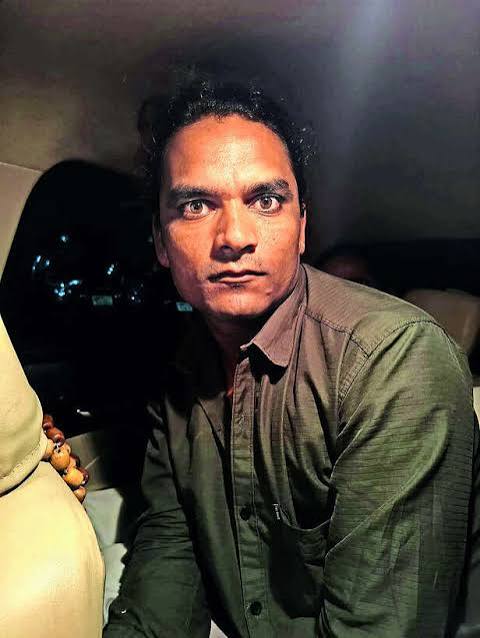
A 30-year-old man reportedly posed as a transgender person, entered a woman’s house in Mumbai’s Powai area and sexually assaulted her on the pretext of blessing her with a child. The accused, identified as Anil Shinde, was later arrested. The police nabbed accused Anil Shinde, 30, from Kalwa after tracing the autorickshaw which he had taken from the building. A 30-year-old man reportedly posed as a transgender person, entered a woman’s house in Mumbai’s Powai area and sexually assaulted her on the pretext of blessing her with a child. The accused, identified as Anil Shinde, was later arrested. The police nabbed accused Anil Shinde, 30, from Kalwa after tracing the autorickshaw which he had taken from the building. Woman Alone With Elderly Relative When Accused Entered Home The woman, who has been married for around five years, lives with her husband, who was away at the time of the incident, and an elderly relative, The Indian Express reported. The couple do not have a child, and Shinde used it as a pretext to enter the home and perform a ritual to bless them with a child. Shinde then s*xually assaulted the woman and fled the house with INR 2,000 on Wednesday afternoon, police was quoted as saying. The police nabbed the accused the same night after tracing the autorickshaw, which he had taken from the building after assaulting the woman. Befriended on Instagram, 14-Year-Old Girl Lured to Nalasopara Chawl and Gang-Raped; 2 Minors Arrested. How The Crime Took Place Anil Shinde allegedly arrived at the flat on Wednesday, posing as a transgender person, when the elderly relative of the couple opened the door for him. The woman’s husband was at work at that time. He initially pretended to bless the elderly woman, police was quoted as saying. But during his conversation with her, Shinde learnt that there was a young woman in the house and had no child despite being married for several years. He then offered to perform a ritual on the woman that would bless the couple with a child. He allegedly spoke to the young woman for some time and then asked her to lie down on the bed, police said. He first touched her head on the pretext of performing the ritual and then touched her inappropriately and raped her, the Indian Express report added, citing police. Raipur: 16-Year-Old Raped by Father, Passed Off as Adult; Newborn Sold, 8 Arrested. Woman Realised She Was Assaulted An Hour Later She realised that she had been s*xually assaulted almost an hour after Shinde left the house, telling her that she would be soon blessed with a child. Shinde demanded money before leaving, and the woman allegedly gave him INR 2,000. After realising that she had been raped, the woman informed her husband, and the couple approached Powai police station that evening. The police registered a rape case and began examining the CCTV footage from the building and surrounding areas, in which they allegedly spotted Shinde boarding an autorickshaw. He was traced to Kalwa and was detained on Wednesday night. Accused Was A Man Posing As Transgender, Police Probe Similar Cases During the investigation, police found that Shinde was indeed a man who was posing as a transgender person. He has been arrested and produced before a court, which remanded him to police custody till Monday. Police are now investigating if Shinde may have used a similar modus operandi to carry out similar crimes. Women and Child Helpline Numbers: Childline India – 1098; Missing Child and Women – 1094; Women’s Helpline – 181; National Commission for Women Helpline – 112; National Commission for Women Helpline Against Violence – 7827170170; Police Women and Senior Citizen Helpline – 1091/1291. (The above story first appeared on LatestLY on Aug 21, 2026 08:12 AM IST. For more news and updates on politics, world, sports, entertainment and lifestyle, log on to our website latestly.com). By Team Latestly Courtesy : LatestLY Note: This news is originally published on https:/latestly.com/bha and is used purely for non-profit/non-commercial purposes, especially human rights
Rahul Gandhi’s ‘Chhatron Ki Goonj’ event in Pune gets nod with 30 conditions; CM Fadnavis reacts
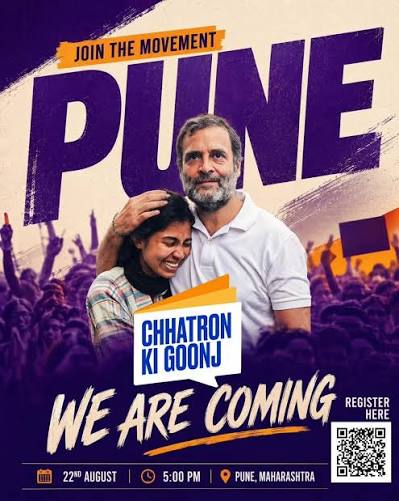
NEW DELHI: Police have granted permission for Congress leader Rahul Gandhi’s August 22 ‘Chhatron Ki Goonj’ event in Pune, subject to 30 conditions, including a ban on “objectionable” banners and images. The police have also directed organisers to ensure that religious sentiments are not hurt during the event. The event, billed as the ‘voice of students’, is dedicated to female students and will focus on education, safety, equality, competitive exams and career opportunities. According to the permission order issued on Wednesday, the programme will be held from 4.30 pm to 9.30 pm at the SSPMS College ground near RTO Chowk. Police expect 8,000 to 10,000 people to attend. Maharashtra chief minister Devendra Fadnavis, reacting to the campaign, said the event appeared to be a “monologue” rather than a dialogue with students. The CM told PTI, “Whether it is ‘Chhatron Ki Goonj’ programme or Rahul Gandhi is trying to find his political ground, I cannot say. But from what I understand, if they had held an open event of this kind, perhaps it would have been a dialogue with students.” Fadnavis alleged that entry to the event would be restricted to registered girls from Congress-affiliated educational institutions. “An attempt is being made to ensure that only people who subscribe to their ideology attend the event,” he said, adding, “Therefore, we may call it ‘Chhatron Ki Goonj’, but at the same time, I would say that, with those who have been invited through Congress, this is more of a monologue than a dialogue.” Meanwhile, among the conditions, organisers have been told not to display “objectionable images, pictures or banners”. They will also be responsible for any untoward incident that results in a law-and-order situation, the order said. “No one’s religious sentiments should be hurt during the programme and responsibility for ensuring this will be on the organisers,” it stated, according to news agency PTI. Maharashtra congress vice president Mohan Joshi confirmed that permission had been granted and said the organisers would comply with all 30 conditions. Police have also directed organisers to provide adequate security, separate arrangements for men and women, sufficient entry and exit gates, drinking water, toilets, fire-safety equipment and parking facilities. Private security personnel, including women guards, and volunteers, particularly women, are to be deployed. CCTV cameras covering the venue must remain operational during the day and night. The organisers have also been directed to comply with Supreme Court directions on permissible noise levels, as well as the Noise Pollution (Regulation and Control) Rules, 2000 and the Environment (Protection) Act, 1986. Drones have been prohibited for photography at the venue, while emergency access for police, medical and fire services must remain available. The permission is subject to a no-objection certificate from the traffic department and can be cancelled if any illegal activity affecting law and order is detected, police said. Any dispute over the venue will also lead to immediate cancellation of the permission. The restrictions come as Pune police have imposed 14-day prohibitory orders across the city from Tuesday until August 31, citing security concerns linked to upcoming festivals and protests. Congress leader Pawan Khera has alleged that the restrictions were imposed to disrupt Gandhi’s programme. Police, however, have cited security requirements. Gandhi launched the student-focused campaign in Kota on June 17 and later addressed its second and third segments in Dehradun and Prayagraj on July 17 and August 8. Courtesy : TOI Note: This news is originally published on https:/timesofindia.com/bha and is used purely for non-profit/non-commercial purposes, especially human rights
How the Matang reservation debate is reshaping Maharashtra’s Dalit politics
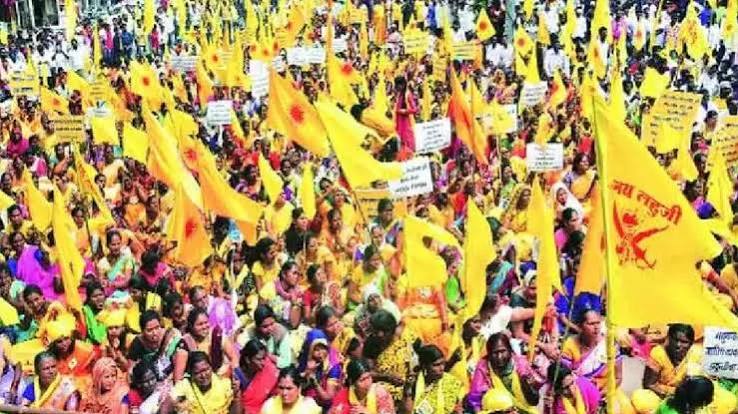
The Matang community is intensifying its demand for the sub-categorisation of Scheduled Castes in Maharashtra to combat historical marginalisation and secure a fair share of reservation benefits Social conflict has once again erupted in Maharashtra over the demand for subcategorisation within the Scheduled Castes (SC) category. The Matang community has intensified its agitation for sub-categorisation, while legislators from various parties within the category have taken a firm stand against it. Over the past two decades, demands for reservation and the issue of sub-categorisation among various castes have remained central to political discourse in Maharashtra. Although the Supreme Court has empowered state governments to implement sub-categorisation within Scheduled Caste and Scheduled Tribe reservations, the Maharashtra government faces opposition from legislators across party lines and various Dalit organisations regarding this decision. But how do electoral arithmetic and the politics of pressure tactics adversely affect the decentralisation of power? In the context of intra-category disparities within the Scheduled Castes and the equitable distribution of resources, how are issues such as cultural politics, caste identity, and political polarisation shaping the policy of social justice? Marginalisation of the Matang community In 2003, the then state government established the ‘Krantivir Lahuji Salve Matang Samaj Study Commission’ to consider the demands of the Matang community. The commission examined appointments to posts reserved for Scheduled Castes across various government departments. It highlighted the dominance of the Mahar and Chambhar communities in reserved positions at all levels of the administration. Available data indicates that the Matang community has lagged behind regarding government posts across all employment categories. For example, according to statistics from the Lahuji Salve Commission, based on data received from 22 municipal corporations in the state, out of 21,066 posts reserved for Scheduled Castes, the Mahar community secured 12,299 positions and the Chambhar community secured 3,578, whereas the Matang community received opportunities for administrative employment in only 1,897 posts. These figures demonstrate that both the Mahar community (which has a larger population than the Matang community) and the Chambhar community (which has a smaller population) secured greater representation. History of categorisation demand In 2003, the then Maharashtra government constituted the ‘Krantivir Lahuji Salve Matang Samaj Study Commission’. The mandate of this commission was to conduct an in-depth study of the backwardness of the Matang community and allied sub-castes in the state and to make recommendations for their comprehensive development. The study report was submitted in 2008. Based on the backwardness of the Matang community and allied subcastes, the commission recommended granting a separate 5 per cent reservation to the Matang community through a process of sub-categorisation. Since then, the Matang community has been continuously agitating across the state to press for this demand of sub-categorisation. In 2024, responding favourably to the Matang community’s demand, the state government established the ‘Justice Anant Badar Committee’, a one-member judicial commission. This commission submitted its report regarding the social and educational backwardness of the Scheduled sub-castes to the state government in March 2026. However, the report has not yet been made public, as the government has issued instructions to invite objections regarding the matter. The government is facing a dilemma, as legislators from all political parties are demanding that the report be made public immediately and that the process of sub-categorisation be halted. Despite the Supreme Court’s approval of subclassification, various Dalit organisations in the state have launched strong opposition to it. Mahar and Matang: Divergent social paths Dr Babasaheb Ambedkar belonged to the Mahar community. On October 14, 1956, at Deekshabhoomi in Nagpur, he embraced Buddhism along with millions of his followers. On that day, millions of Ambedkar’s followers renounced Hinduism and embraced Buddhism. Following this historic event, hundreds of thousands of Ambedkar’s followers in Maharashtra embraced Buddhism. This was not merely a religious conversion; it marked the starting point of a new struggle for education, social equality, human dignity, and political rights. The movement instilled a sense of self-respect within the Dalit community and initiated a new wave of social transformation. During the period of Ambedkar’s conversion movement, some followers from the Matang and Chambhar communities also embraced Buddhism alongside the Mahar community. However, the extent and social scope of conversion varied across these communities. Due to their distinct historical, cultural, and spiritual legacies, significant sections of the Matang and Chambhar communities remain connected to Hindu traditions, deities, and religious practices, a fact to which the Mahar community, and indeed the Dalit movement at large, takes strong objection. Given the history of untouchability and denial of temple entry, following Ambedkar’s path of conversion, viewed as the first step toward social advancement, remains a central issue for the Dalit movement. The socio-economic structure of the landless and resource-poor Matang community has played a vital role as artists within religious and folk traditions. Consequently, the economic and cultural practices of the Matang community appear historically intertwined with various religious activities of the Hindu tradition. This leads to criticism from within the Dalit movement: that the Matang community, despite experiencing untouchability, acts as a key bearer of Hindu religious and cultural traditions. This lies at the heart of the contention. Identity crisis of Matangs Inspired by Ambedkar, his followers established the Republican Party of India (RPI) in 1957. Subsequently, the party split due to leadership disputes and organisational conflicts. However, this political movement produced several prominent Dalit leaders, such as Rajabhau Khobragade, R.S. Gavai, Ramdas Athawale, and Prakash Ambedkar. All these leaders hail from the Mahar community, highlighting the long-standing influence and role of ‘Mahar’ leadership in Dalit politics in Maharashtra. Under the leadership of Ambedkar, a comprehensive movement encompassing education, organisation, and political representation emerged within the Mahar community; this movement remains their greatest strength to this day. However, a similar process of social transformation did not take place within the Matang community. Ambedkar’s influence helped overcome the fragmentation within the Mahar community; their unity regarding social issues is a significant asset. Educational progress and political representation have accelerated the process of social development for the Mahar community. In contrast,
‘Say no to addiction’: In striking avatars, transgender activists stage colourful awareness drive in Mumbai
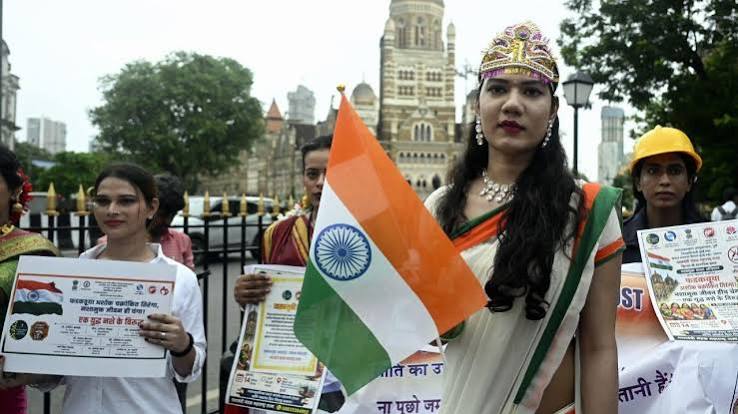
Members of Kinnar Ma Trust, in association with the Maharashtra State Nashabandi Mandal (Anti-Liquor/Prohibition Board), staged a peaceful anti-addiction awareness drive outside the BEST depot near Chhatrapati Shivaji Maharaj Terminus (CSMT) in Mumbai on Friday. Dressed in distinctive avatars, including Bharat Mata, a doctor, an engineer, an advocate and a tribal character, the participants campaigned against alcohol and tobacco use and raised awareness about addiction and de-addiction. Divya Nair Courtesy : Mid-Day Note: This news is originally published on https:/mid-day.com/bha and is used purely for non-profit/non-commercial purposes, especially human rights
Rahul Gandhi to visit Pune on Aug 22

Pune: Leader of Opposition in Lok Sabha Rahul Gandhi will visit Pune on Aug 22 to participate in ‘Chhatron ki Goonj’ initiative by the Congress. Announcing Rahul’s visit to Pune, state Congress president Harshwardhan Sapkal on Friday said Gandhi will interact with students during his visit. “Before Pune, Rahul participated in ‘Chhatron ki Goonj’ initiative in Kota, Dehradun and Prayagraj cities where he spoke to the students to understand their issues. In a similar manner, he will interact with girl students in Pune to understand the challenges being faced by them in regards with the education system,” Sapkal said. Rahul’s interaction with the younger generation in Pune will take place against the backdrop of the recent Cockroach Janata Party’s protest at Jantar Mantar in Delhi where he and other opposition members raised the issue of violence against the protesters. During his visit to Pune, the Congress leader is expected to target the centre on the recent NEET paper leak issue. Courtesy : TOI Note: This news is originally published on https:/timesofindia.com/bha and is used purely for non-profit/non-commercial purposes, especially human rights
Yavatmal Murder Case | Dalit woman elected Sarpanch on a general seat, then murdered her husband out of enmity: Bombay High Court upholds life imprisonment for 10 convicts!
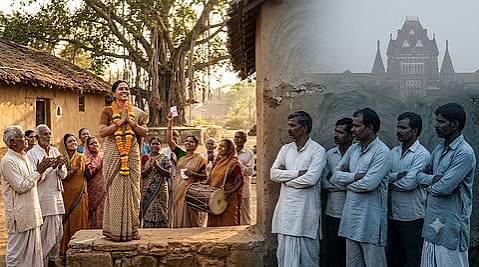
The division bench stated in its 179-page judgment that a comprehensive consideration of the oral evidence, medical and forensic evidence, and other proven facts establishes beyond reasonable doubt that the accused assembled unlawfully and, with a common objective, committed the murder of Mahesh Gawande out of political enmity. Yavatmal – The Nagpur bench of the Bombay High Court has delivered a major verdict in the highly publicized 2018 Sarpanch-husband murder case in Parwa village, Yavatmal district. The division bench of Justice Urmila Joshi-Phalke and Justice Nivedita Mehta dismissed the appeals of the ten convicts, upholding the life imprisonment sentences awarded by the Special (Prevention of Atrocities) Court in Yavatmal. The verdict was delivered on August 4. The murder of a woman’s husband in broad daylight by multiple assailants in a village political battle, and the subsequent eight-year legal battle, has reached a crucial juncture with this High Court decision. What is the whole matter? Nalini Gawande, a resident of Parwa village in Yavatmal district, was elected as a Gram Panchayat member in April 2015. In January 2016, after a no-confidence motion was passed against the then Sarpanch, Rama Chimurkar. The post of Sarpanch was reserved for the general category, and Nalini, who belonged to the Dalit Buddhist community, became Sarpanch, a move opposed by a faction in the village. Munna Thakur, a prominent among the accused, openly objected to this election, and since then, a continuous conflict has erupted between the two factions. In December 2017, the accused abused Nalini’s husband, Mahesh Gawande, on the basis of caste, while in January 2018, a dispute erupted again over the distribution of hand pumps in the village. On January 27, 2018, accused Munna Thakur directly threatened over the phone that “her husband would be killed.” The very next day, on January 28, the accused attacked Nalini’s home, vandalized household items, and also assaulted Prafull Shabarkar. Fed up with this constant harassment, Nalini Gawande and her family moved to Yavatmal city. Murder in broad daylight On March 27, 2018, at around 1 p.m., Nalini returned to Parwa village with her husband Mahesh, son Mayur, and nephew Samyak to carry out repairs. At around 1 p.m., Mahesh Gawande left the house to have a snack with Sheikh Imran and Sheikh Israel, the repairmen. Mahesh was talking to Prashant Shabarkar, Nitin Lokhande, Raju Kawale, and Prakash Bhagat, who were playing cards near the Anganwadi, when the accused, armed with deadly weapons, formed an unlawful assembly and attacked Mahesh Gawande. Hearing the noise, son Mayur and nephew Samyak rushed to inform Nalini of the incident. Nalini then rushed to the scene and witnessed the accused attacking her husband with weapons. She screamed for help, which drew a crowd, and the accused fled the scene. Police arrived at the scene, and Mahesh was rushed to the Yavatmal District Hospital, where he had already died by the time they arrived. Nalini filed a police complaint that evening. According to the post-mortem report, a total of seventeen wounds were found on Mahesh Gawande’s body, including stab wounds near the left eye, on the cheek, on the jaw, on the forehead, on the chest, and on the abdomen, and a slit wound was also found. Medical officials concluded that these wounds were caused by sharp and sharp weapons, such as a knife, chopper, sword, and sickle, and determined the cause of death to be multiple stabbings and slashing of the throat. What the Investigation Revealed During the investigation, police recovered swords, sickles, and other weapons from the accused. The chain of custody of these weapons was established by the police through various panchnamas. Samples of soil collected from the crime scene and the nails of the body matched, which was confirmed by forensic examination and strengthened the eyewitness testimony. A total of eighteen witnesses were examined during the investigation, including Nalini Gawande, her son Mayur, and key eyewitnesses Sharda Narayane and Prashant Shabkar. Following the completion of the investigation, the police filed a charge sheet, and the trial was held in the Special (Prevention of Atrocities) Court of Additional Sessions Judge-2 in Yavatmal under Special Case No. 18/2018. On January 20, 2020, the Sessions Court convicted the accused under sections 302 (murder), 149 (unlawful assembly, offence committed with common intention), 120-B (conspiracy), 143, 147, 148, and 201 of the Indian Penal Code and sentenced them to life imprisonment. The accused appealed to the High Court. Ten convicts—Sunil Deotale, Hanuman Pendor, Shubham Tekam, Raj Thakur, Munna Thakur, Vinod Chapriya, Sumit alias Pandya alias Sumedh Meshram, Praveen Bhagat, Bhimrao Awathare, and Swapnil Kumbhekar—filed five separate criminal appeals against the Sessions Court’s decision. Defense lawyers argued that there were inconsistencies in the eyewitnesses’ statements, that their testimony was unreliable because they were relatives of the complainant, and that the guilt of the accused had not been proven beyond a reasonable doubt. However, the High Court rejected these arguments. The court noted that eyewitness Nalini Gawande, a woman from a rural background, could not be expected to provide an accurate and photographic account of an incident that unfolded over a few minutes when multiple attackers were attacking with deadly weapons. Citing the Supreme Court’s decision in State of Punjab vs. Hakam Singh, the division bench clarified that minor inconsistencies are not appropriate when evaluating the testimony of rural witnesses. The bench also elaborated on the thirteen principles of evidence evaluation laid down in the Supreme Court’s decision in Balu Sudam Khalde v. State of Maharashtra (2023). The court stated that the testimonies of Nalini Gawande, Mayur Gawande, Sharda Narayane, and Prashant Shabkar were corroborative, consistent, and reliable, and that minor discrepancies, despite their existence, did not affect the fundamental facts of the case. The judgment noted that the post of Sarpanch was held by the general category, and Nalini belonged to the Scheduled Castes. The accused party opposed her election as Sarpanch. This background was seen as the origin of the political rivalry that arose in the case. The court’s observations on unlawful
Huge rally in Nanded against Scheduled Caste sub-classification
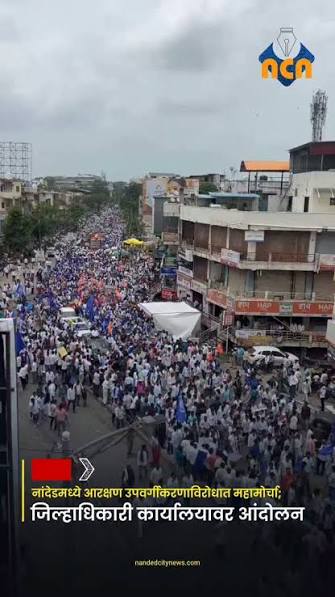
Chhatrapati Sambhajinagar: A massive rally opposing the alleged move to sub-classify the Scheduled Caste (SC) category was held in Nanded on Sunday, with Dalit activists accusing state govt of trying to divide the community and warning of intensified protests if the proposal goes ahead. The rally, attended by several Dalit and social leaders, culminated in a public meeting where speakers expressed strong opposition to reservation sub-categorisation and called for unity among SC communities. Republican Sena functionary Anandraj Ambedkar alleged that govt was creating social divisions under the pretext of implementing a Supreme Court ruling. “We are not fighting against any elements of the society, but govt. To achieve the success, we have to remain united,” Ambedkar said. He further accused chief minister Devendra Fadnavis of misleading people on the issue of reservation sub-categorisation. Former minister Chandrakant Handore said the move would create divisions within the Dalit community and warned of stronger resistance if govt failed to reconsider its stand. Courtesy : TOI Note: This news is originally published on https:/timesofindia.com/bha and is used purely for non-profit/non-commercial purposes, especially human rights
Silenced by caste, forged by resistance: Meet Urmila Pawar, the voice that forced India to confront its deepest shames

There is a kind of writing that does not simply tell a story. It breaks something open. It reaches into the parts of society that have been deliberately kept in shadow and holds a lamp up to them steadily, fearlessly, and without flinching. Urmila Pawar has been doing exactly that for over four decades. At the AutHer Awards 2026, the seventh edition of the prestigious joint initiative by JK Paper and The Times of India, Urmila Pawar received the Lifetime Achievement Award, a recognition that feels less like a culmination and more like a long-overdue acknowledgment of a voice that has always been essential, even when the world was not yet ready to hear it. She is 80 years old. And she has not stopped writing, fighting, or speaking. A childhood woven from poverty, caste, and quiet resistance Urmila Pawar was born in 1945 in Adgaon village of Ratnagiri district, Maharashtra, into the Mahar community, one of the communities that faced the most severe caste discrimination in Indian society. Her father’s insistence on educating his children led to Pawar eventually leaving the Konkan region for Mumbai to study. In a community where education for girls was not a given, this decision was quietly radical. She went on to earn a master’s degree in Marathi literature from the University of Mumbai, a woman from a Dalit family, in a system that had been designed to keep her out. When she was 12 years old, her family converted to Buddhism, inspired by Dr. B.R. Ambedkar. That conversion was not just religious. It was political. It was a declaration that they would no longer accept the identity that caste had forced upon them. And for Urmila Pawar, Buddhist philosophy would go on to shape every word she ever wrote. In 2003, Urmila Pawar published Aaydan in Marathi. The word “bamboo basketry” means things woven from bamboo, a direct reference to the work her mother did to survive. The English translation, titled The Weave of My Life: A Dalit Woman’s Memoirs, was published in 2009, translated by Maya Pandit. The autobiography covers many themes, including injustice, exploitation, hunger, poverty, and humiliation. But what makes it extraordinary is not the suffering it documents. It is the dignity and the clarity with which it is told. This memoir is not just a story but an account of a woman who believed that she had the power to create changes. The Weave of My Life questions the established norms and beliefs related to caste, class, and patriarchy. It explicitly challenges the deliberate neglect of histories related to caste oppression, struggles, and resistance. In this frank and intimate memoir, Pawar not only shares her tireless effort to surmount hideous personal tragedy but also conveys the excitement of an awakening consciousness during a time of profound political and social change. The book created a sensation. It was read, discussed, debated, and taught in universities. It was recognised as one of the most significant works of Dalit literature ever written by a woman. A life lived at the intersection of writing and activism Urmila Pawar’s contribution goes far beyond a single autobiography. She is the author of two acclaimed short story collections, Sahava Bot and Chauthi Bhint, and, with Meenakshi Moon, co-authored a book on the role of women in the Dalit movement. She is also a former actor of radical Marathi theatre and a playwright. For years she worked in the department of labour welfare for the government of Maharashtra. She was not writing from the comfortable distance of an academic or a literary professional. She was writing from within the lives she was documenting as a government officer, as a Dalit woman, and as someone who had lived the reality she put on the page. She is a prominent figure in the Dalit and feminist movements. Her writing is self-reflective and makes the reader ponder over these intimately felt oppressions. She also received the Matoshree Bhimabai Ambedkar Award in 2004 and was offered the Laxmibai Tilak Award, which she declined, a gesture that itself spoke to her unwillingness to accept recognition on terms she did not fully endorse. The Lifetime Achievement Award for Urmila Pawar is not simply recognition for a body of work. It is recognition for a body of resistance. She delicately navigated her readers through her long journey from the harsh landscape of the Konkan region to Mumbai, first as a Mahar and later as a woman as she challenged the conventions of both caste and gender to emerge as an activist and a strong literary voice. In a country where Dalit women’s stories have been systematically excluded from the literary mainstream, Urmila Pawar insisted on being heard. She wrote in Marathi, in the language of her community, about the lives that polite society preferred not to acknowledge. And she was right to insist. Because in order to begin to comprehend Dalit feminist writings, closely reading Pawar’s work is paramount to setting up a historical context for the Dalit feminist movement in Maharashtra. At 80, Urmila Pawar is not a relic of the past. She is a reminder that the most important stories are often the ones the world has worked hardest to suppress and that the writers who tell them anyway are the ones who matter most. Suggest a better headline for this and make it more engaging and impactful and deep and emotional. Courtesy : TOI Note: This news is originally published on https:/timesofindia.com/bha and is used purely for non-profit/non-commercial purposes, especially human rights
Main accused in Maharashtra TET paper leak arrested from Bihar

Earlier, the SIT arrested Suman Kumari Gupta, wife of the alleged mastermind Bijendra Gupta, from Patna after call records and financial transactions reportedly linked her to him. Nearly a month after the Maharashtra Teacher Eligibility Test (TET) 2026 was postponed over a question paper leak, police have arrested the alleged mastermind, Bijendra Gupta, who was living under a false identity in Bihar. Gupta, who was arrested by Bhiwandi Police from Bihar, was brought to Pune Airport, from where he will be taken to Bhiwandi, ANI reported. Gupta allegedly has been linked to multiple paper leak cases. He has allegedly been involved in leaks related to the 2023 Odisha Staff Selection Commission (OSSC) examination, the Bihar Public Service Commission (BPSC) examination and the Madhya Pradesh Public Service Commission (MPPSC) examination. Gupta’s arrest comes after Maharashtra Police earlier arrested three other accused — Kapil Dahiya, Mithun Singh and Sonu Singh, from Bihar and Punjab, in connection with the case. The TET 2026 examination was postponed on June 27, a day before it was scheduled to be conducted, after police in Maharashtra’s Thane district detected that a portion of the question paper had been leaked and arrested three persons. Investigators have since found that the alleged racket extended across Delhi, Agra, Bihar and Haryana. Earlier, the SIT arrested Suman Kumari Gupta, wife of the alleged mastermind Bijendra Gupta, from Patna after call records and financial transactions reportedly linked her to him. Initial probe found that the confidential question papers were allegedly sourced directly from Mahim Patran Pvt. Ltd, a private printing press located in Agra, Uttar Pradesh. The TET paper leak came close on the heels of the national controversy triggered by the NEET-UG paper leak, raising fresh concerns over the integrity of competitive Courtesy : TNIE Note: This news is originally published on https:/thenewindianexpress.com/bha and is used purely for non-profit/non-commercial purposes, especially human rights
Non-cognisable complaint lodged against transgender person for assaulting man in local train compartment
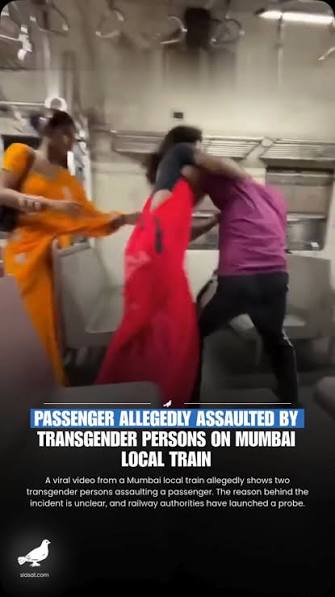
Mumbai: After a video clip capturing two transgender persons beating up a man inside a local train compartment went viral, the Govt Railway Police (GRP) tracked down the duo on Monday. One of them is a minor and was sent back to his guru with a warning. Police registered a non-cognisable complaint against the other and confirmed that preventive action will be taken against him. Elaborating on the incident, police said that the two transpersons were begging in local train compartments recently. When they asked for money from the man (captured in the video), he refused and argued that others had already taken money from him that day. This sparked an altercation, which ended in violence as the two transpersons rained kicks and blows on him. A co-passenger filmed the incident, which occurred on a Western Railway local between Mahim and Bandra stations in the general compartment. After the video was posted online, it came to the attention of the GRP. They tracked down the two and brought them to the Mumbai Central GRP chowky on Monday. “We registered a non-cognisable complaint against one of them and will take preventive action,” confirmed DCP (GRP) Pradnya Jedge. Courtesy : TOI Note: This news is originally published on https:/timesofindia.com/bha and is used purely for non-profit/non-commercial purposes, especially human rights