
Rahul Gandhi will try to persuade the rebellious Bihar Congress MLAs; a meeting will be held on January 23.

Amidst speculations that all six Congress MLAs from Bihar might leave the party, these MLAs have received a summons from Delhi. A meeting will be held with Rahul Gandhi and party president Mallikarjun Kharge at Indira Bhavan in Delhi on January 23. Patna: All six Congress MLAs from Bihar have been summoned to Delhi. This summons is very significant amidst speculations that all six Congress MLAs from Bihar might leave the party. A crucial meeting will be held at Indira Bhavan on January 23 in the presence of Rahul Gandhi and Congress President Mallikarjun Kharge. The main objective of this meeting is to strategize on strengthening the organization in Bihar and to elect the leader of the legislative party. Congress MLAs may switch sides It is noteworthy that for the past month, there have been speculations that Congress MLAs in Bihar might switch sides. Several leaders of the ruling party have claimed that all six Congress MLAs will leave the party. It is also being claimed that the Congress MLAs might join the JDU. These speculations gained further momentum when not a single party MLA attended the Congress’s Dahi-Chura feast on the occasion of Makar Sankranti. Now it is believed that Rahul Gandhi and party president Kharge in Delhi might try to dissuade these MLAs from leaving the party by holding talks with them. The Bihar Congress held a meeting with its MLAs on Monday. In this meeting, Bihar Pradesh Congress Committee in-charge Krishna Allavaru and state president Rajesh Ram met with the chairmen of various party cells, departments, and MLAs to discuss the future strategy. Along with strengthening the organization, the responsibility of ensuring the strong implementation of the MNREGA law in the districts was also assigned. Protest against the rape and murder of a student Meanwhile, the Congress staged a strong protest against the government in Bihar over the rape and murder of a NEET student. The protesting women activists carried bangles for the Home Minister. They also burnt an effigy of Chief Minister Nitish Kumar. Bihar Congress President Rajesh Ram and in-charge Krishna Allavaru also participated in this protest. Krishna Allavaru said, “The police tried their best to suppress the case. An FIR was registered due to public pressure. An SIT has been formed, but the investigation should be conducted properly.” The meeting in Delhi will prove crucial in deciding the Congress party’s future strategy in Bihar. The election of the legislative party leader is expected to give the party a new direction. Plans are being made to work at the grassroots level to strengthen the organization. Emphasis is also being placed on effectively implementing the MNREGA scheme so that common people can benefit from it. Authored by: Suryakant Pathak About the Author Suryakant Pathak is a consultant at Navbharat Times Online. He has been working in journalism for the past 31 years. He writes news, analysis, and blogs on India’s international relations and political and social developments in India and around the world. Courtesy: Hindi News
‘Decision at right time’: DK Shivakumar’s brother namedrops Rahul Gandhi in CM row; Siddaramaiah puts it to ‘high command’
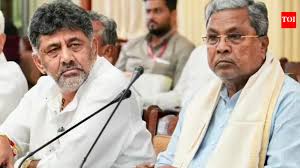
NEW DELHI: The ongoing tension over the Karnataka chief minister’s post resurfaced on Tuesday after DK Shivakumar’s brother said Rahul Gandhi had assured the deputy chief minister that a decision would be taken at an appropriate time.Former MP DK Suresh described Shivakumar as a committed party functionary and said the Congress leadership, including Gandhi, had asked him to exercise restraint while assuring him that the matter would be resolved in due course. “The party has already asked him to be patient. Rahul Gandhi, during the meeting in Mysuru, also said that an appropriate decision would be taken at the right time,” news agency PTI reported him as saying. He also said that Shivakumar’s approach was guided by the need to keep all 140 Congress legislators together and maintain stability in the government. Emphasising that political authority requires perseverance, he added, “In the interest of the party and legislators, and with the goal of keeping all 140 legislators together, he is patiently waiting for the party’s decision.” With an eye on the 2028 assembly elections, Suresh also stressed that unity within the Congress would be critical. “He is also the party president and should maintain discipline first, which he is following diligently,” he said refering to Shivakumar. The leadership churn in Karnataka intensified after the Congress government completed the halfway mark of its five-year term on November 20, 2025. The speculation centres on a reported power-sharing understanding between Chief Minister Siddaramaiah and Shivakumar at the time of government formation in 2023. Shivakumar has previously said discussions on the issue were held with the Congress high command and that while a decision had been taken, its timing is yet to be finalised. Suresh indicated that the upcoming legislative session, scheduled from January 22 to 31, could be a reference point, after which the party leadership’s stand may become clearer. Meanwhile, chief minister Siddaramaiah said he would travel to New Delhi if called by the Congress high command to discuss the leadership issue. He reiterated that any such engagement would depend on a formal summons from the party leadership. “I will go if I am called by the Congress high command,” he said. Siddaramaiah also sought to shift focus to governance, noting that the joint session of the state legislature would be held from January 22 to 31, alongside a special session on MGNREGA. He said preparations for the 2026–27 state budget would begin after the session, with official ANI sources indicating that the budget is likely to be presented in March. Siddaramaiah had previously said he intends to present his 17th state budget next year, adding to his record as finance minister. Courtesy : TOI Note: This news is originally published on https:/timesofindia.com/bha and is used purely for non-profit/non-commercial purposes, especially human rights
‘Safeguarded as ‘amanat’ for years’: Family presents Feroze Gandhi’s driving licence to Rahul; he shares photo with mother
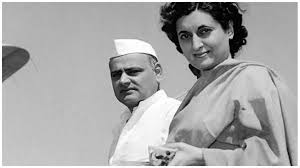
RAE BARELI: In a warm gesture, a family in Rae Bareli presented Rahul Gandhi the driving licence of his grandfather, Feroze Gandhi. Delighted to see the piece of memory, Rahul immediately clicked a picture of the document and sent it to his mother. “The document was preserved for decades by our family,” said Vikas Singh, member of the Rae Bareli Premier League cricket tournament committee. “It was safeguarded by my late father-in-law and later by my mother-in-law as an “amanat” to be returned to the Gandhi family,” he said. Courtesy : TOI Note: This news is originally published on https:/timesofindia.com/bha and is used purely for non-profit/non-commercial purposes, especially human rights
Modi govt insulted Bapu by renaming MGNREGA: Rahul
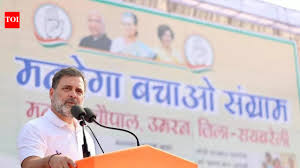
Rae Bareli: Congress MP Rahul Gandhi on Tuesday accused the Modi govt of seeking to centralise power and weakening welfare safeguards for India’s rural workforce. The renaming and restructuring of the Mahatma Gandhi National Rural Employment Guarantee Act (MGNREGA) is an insult to the Father of the Nation, said Rahul, who reached Rae Bareli on a two-day visit. Rahul said the G RAM G has removed the financial safeguards and protections that MGNREGA provided to marginalised workers.”BJP govt has insulted Mahatma Gandhi and is attacking the very roots of our democracy,” he said. “The scheme should be implemented at the panchayat level, with village heads accountable for financial decisions, rather than being run centrally from Delhi or Lucknow,” he said while addressing party workers and villagers at the first ‘MGNREGA Chaupal’ in his constituency. VB-G RAM G guarantees 125 days of wage employment to rural households, but Rahul alleged it shifts a significant part of the financial burden onto state govts. The Leader of Opposition said the Modi govt intends to divert funds for rural labourers to a handful of industrialists, including Gautam Adani and Mukesh Ambani. “While we are protecting the people, Narendra Modi is concentrating wealth in the hands of a select few. The money that should go to labourers must not end up with big corporate houses,” he said. The Congress MP warned that BJP-run states may refuse to provide their 40% share of funding under the VB-G RAM G Act, further undermining the scheme’s effectiveness. The Congress leader reiterated that MGNREGA, a panchayat-based programme, safeguarded poor workers and promoted local governance. He accused the Centre of attempting to dismantle a programme that provided wage security to millions of rural households. “This is a fight to protect the Constitution and the rights of workers. Modi and the RSS want to take India back to the pre-Independence era, where people’s land and resources could be handed over to corporate houses,” he said. He said Congress has launched a nationwide “MGNREGA Bachao Sangram” campaign (from Jan 10 to Feb 25) for the scheme’s restoration and mobilising public opinion across the country. Rahul Gandhi also inaugurated a local cricket tournament and held meetings with party office-bearers and workers, emphasising grassroots outreach alongside the broader political campaign. Earlier, he met party workers at the Bhuyemau guest house. Courtesy : TOI Note: This news is originally published on https:/timesofindia.com/bha and is used purely for non-profit/non-commercial purposes, especially human rights
Why I think burning Manusmriti, breaking idols are justified acts of Dalit resistance
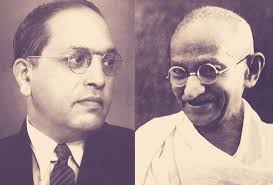
Rajiv Shah, who is among those esteemed journalist friends who have stood by the issues of the Dalit and oppressed communities, has raised a question regarding our 1972 protest in a recent blog, “Would breaking idols, burning books annihilate caste? Recalling a 1972 Dalit protest” (Counterview, January 9, 2026): Why did Dr. Babasaheb Ambedkar feel the need to burn the Manusmriti? Why did Periyar lead a procession crowning the idol of Rama with a garland of footwear? Why did Jyotiba Phule write so harshly against Rama, Krishna, the Gita, and Varnashrama in his book Gulamgiri? And why did we feel the need to break the idol of Krishna? A similar question was asked of Gandhiji during the freedom struggle when he called upon the people to spin the takli (spindle). He was asked: “Will the British leave the country just by spinning yarn? Will walking to Dandi for a fistful of salt bring independence?” In 1935, Dr. Babasaheb Ambedkar declared, “I was born a Hindu because it was not in my hands, but I will not die a Hindu.” Twenty years later, in 1955, along with eight lakh Dalits, he embraced Buddhism. At that time, Dr. Ambedkar administered 22 vows. The initial vows were purposefully negative: – I shall have no faith in Brahma, Vishnu, and Mahesh, nor shall I worship them. – I shall not regard Rama and Krishna as Gods. – I shall not believe in Gauri, Ganpati, or any other gods and goddesses of Hinduism, nor shall I worship them. – I do not believe that God has taken any incarnation. – I shall believe that the propaganda that Buddha was an incarnation of Vishnu is false and mischievous. – I shall not perform Shraddha or Pind-daan. – I shall not follow any rituals or ceremonies that are inconsistent with Buddhism. – I shall not allow any ceremonies to be performed by Brahmins. The question remains: Why did Dr. Ambedkar find it necessary to make people take these negative vows against Hinduism? There is a need to understand the reasons for burning the Manusmriti or breaking idols by reading an interview with Gandhiji conducted by a curious journalist. The answers Gandhiji gave reveal the rigidity of the system we fight: Journalist: We cannot understand why you emphasize Varnadharma. Do you consider current caste distinctions appropriate? What is your definition of Varna? Gandhiji: Varna is the pre-determination of a person’s choice of occupation. Following the ancestral occupation for livelihood is called Varnadharma. Every child naturally follows the father’s Varna. Therefore, Varna is a law of heredity. It was not imposed; it was a law discovered by those responsible for the welfare of the Hindu race. It is an immutable law of nature. Journalist: If a man performs an occupation other than the one he was born into, what is his Varna? Gandhiji: According to Hindu belief, he still belongs to the Varna of his birth. But by not living according to his Varna, he causes his own destruction and falls—he becomes “fallen” (patit). Journalist: If a Shudra performs the work of a Brahmin, does he become fallen? Gandhiji: A Shudra has as much right to knowledge as a Brahmin. But if he tries to earn his “livelihood” through “teaching,” he becomes “fallen” from Varnadharma. A hundred years ago, a carpenter’s son never dreamed of becoming a lawyer. Today he does, because he sees it as an easy way to make money. Journalist: Is a man not free to follow the profession of his choice? Gandhiji: His ancestral calling should be his only choice. There is nobility in it. Today, society has become disorganized. Journalist: If a Shudra possesses all the qualities of a Brahmin, can he be called a Brahmin? Gandhiji: He cannot be called a Brahmin in this birth. It is better for him not to assume a Varna into which he was not born. That is a sign of true humility. Journalist: But you follow the Bhagavad Gita, which says Varna is decided by qualities (Guna) and actions (Karma). Why do you bring in birth? Gandhiji: I follow the Gita because it presents principles and leaves the practice to us. The Gita says Varna follows Guna and Karma, but these are inherited at birth. When Lord Krishna says, “Chaturvarnya maya srishtam” (The four-fold order was created by Me), I interpret that as being by birth. If Varnadharma is not by birth, it has no meaning. Journalist: Do you not see people with qualities different from their families? Gandhiji: That is a difficult question. We don’t know the individual’s entire past. If my father is a trader and I have the qualities of a warrior, I may serve the country as a soldier without pay, but I must satisfy myself by earning my “livelihood” only from trade. I have verified that Gandhiji did not change these views on the Varna system until he died. It is clear: in Hindu scriptures, Varna is birth-based and cannot be changed by action. Education is reserved for Brahmins, arms for Kshatriyas, trade for Vaishyas, and the Shudras (SC/ST/OBC)—who make up 85% of the country—are left with labor and service. Gandhiji even suggests that if a Shudra’s son becomes a doctor, he should still earn his living by his ancestral sweeping work, using his medical knowledge only for free service. Today, we see a resurgence of “Satyug” (Brahminism). Should such a system not be stopped? Inequality and exploitation have been fought globally. Karl Marx showed a path through Das Kapital, yet Marxism struggled in India. I believe if Marx were born in India, his book would have looked different. He would have talked not just about Class struggle, but the intersection of Varna (Caste) and Class. In India, Varna struggle is the primary necessity. Dr. Babasaheb Ambedkar noted that political revolutions are always preceded by religious and social ones—whether it was Luther in Europe, Puritanism in England and America, or Prophet Muhammad in the Arab world. Even in India, the political
Sultanpur: Rahul Gandhi given final chance in defamation case, must appear in MP-MLA court on February 20
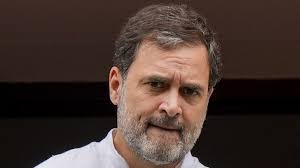
Rahul Gandhi Defamation Case: The MP-MLA court in Sultanpur has given Congress leader Rahul Gandhi a final opportunity in the defamation case. Sultanpur: The MP-MLA court has given Congress leader and Raebareli MP Rahul Gandhi a final chance in the defamation case. The court has ordered Rahul Gandhi to appear in person and record his statement on February 20. The case was heard on Monday. During the previous hearing, the witness in the case, Ramchandra Dubey, had recorded his statement. Following this, cross-examination was conducted by the lawyers. However, Rahul Gandhi could not be present in court during this hearing. Rahul Gandhi’s lawyer stated that Rahul Gandhi will appear in the MP-MLA court on February 20. This case is related to a statement made almost eight years ago during the Karnataka assembly elections. It is alleged that Rahul Gandhi made objectionable remarks about the current Home Minister Amit Shah at that time. BJP leader Vijay Mishra, feeling aggrieved by this remark, had filed a complaint against Rahul Gandhi. Currently, the case is being heard in the MP-MLA court. Rahul Gandhi has already recorded his statement and is currently out on bail. Curated by: Devesh Pandey About the Author Devesh Pandey is a consultant at Navbharat Times Online. He has 8 years of experience working in TV channels and digital media. He has experience and interest in politics and sports. He covered several IPL matches and the World Cup 2023 in Lucknow. In politics, he also covered the 2017 and 2022 UP elections. Courtesy: Hindi News
On two-day visit to Rae Bareli, Rahul to lead save MGNREGA campaign
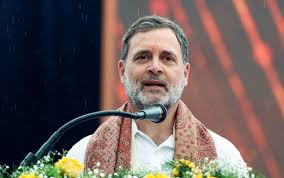
Lucknow: Congress MP and leader of opposition in Lok Sabha Rahul Gandhi will begin a two-day visit to his parliamentary constituency Rae Bareli from Tuesday where he is scheduled to address an “MGNREGA Chaupal” as part of the party’s nationwide campaign, ‘MGNREGA Bachao Sangram’. On Tuesday, he is expected to address the ‘chaupal’ in Unchahar area, where the Congress plans to highlight issues related to rural employment and livelihoods. The outreach comes against the backdrop of the BJP govt repealing the Mahatma Gandhi National Rural Employment Guarantee Act (MGNREGA) and introducing the Viksit Bharat — Guarantee for Rozgar and Ajeevika Mission (VB-G RAM G Act). According to party sources, Gandhi will also visit villages in his constituency to interact with residents and discuss local issues, including concerns surrounding the new legislation. Later in the day, he will inaugurate a cricket tournament at the Rajiv Gandhi Stadium, where former India cricketer RP Singh, a Rae Bareli native, is expected to be present. On Jan 21, Gandhi is scheduled to hold meetings with party officials and workers from Rae Bareli and neighbouring Amethi. Amethi MP Kishori Lal Sharma will also attend the interactions, party leaders said.The Congress organised sit-ins, protests and panchayat-level outreach programmes across Uttar Pradesh under the ‘MGNREGA Bachao Sangram’. Last week, the party members staged protests in Varanasi led by state unit chief Ajay Rai, including a symbolic fast, followed by a protest march by NSUI workers.Earlier this month, the Congress announced a year-long protest plan – the first phase being from Jan 10 to Feb 25 . Courtesy : TOI Note: This news is originally published on https:/timesofindia.com/bha and is used purely for non-profit/non-commercial purposes, especially human rights
‘Cannot disclose, time will answer’: DK Shivakumar after meets Rahul Gandhi, Mallikarjun Kharge in Delhi amid power tussle speculation
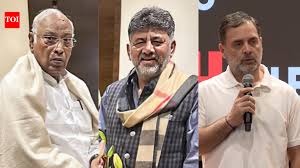
NEW DELHI: Karnataka Deputy chief minister DK Shivakumar attended a meeting as an observer for the Assam elections at 10 Rajaji Marg, the residence of Congress President Mallikarjun Kharge, while refraining from commenting on his discussion with the party high command. Leader of the Opposition Rahul Gandhi was also present at the meeting on Friday. Amid speculation over a power tussle in Karnataka, Rahul Gandhi and DK Shivakumar were face-to-face for the first three hours of the meeting. Afterward, Shivakumar went back to meet Mallikarjun Kharge, according to news agency ANI. Speaking to reporters today, he declined to discuss his meeting with the Congress high command. Shivakumar, who is in New Delhi after canceling his scheduled visit to Davos for the World Economic Forum 2026, asked the media “not make a big deal” out of his visit, stating he came to the national capital for government and party work. Maintaining that he would not disclose anything regarding the meeting, he said, “I cannot disclose it. Time will answer everything… We are all politicians; politicians do whatever politics they want. There is nothing wrong with that. We have met. Why do you make a big deal out of it? We come here for government work, for party work. We come here for politics.” His visit to Delhi comes amid speculation over a possible leadership change in Karnataka. As the state government crossed the halfway mark of its tenure in November 2025, a speculated tussle for the CM post began, with CM Siddaramaiah, Deputy CM Shivakumar, and Home Minister G Parameshwara in the fray. Earlier today, the Deputy CM said that he prefers not to speak even when there is “good news.” “When there is good news, we don’t talk about it. It’s Sunday, a good day. We are people who work for the people and wish well for them. We do not disclose or discuss anything related to such matters, including leadership change,” Shivakumar said. Courtesy : TOI Note: This news is originally published on https:/timesofindia.com/bha and is used purely for non-profit/non-commercial purposes, especially human rights
Caste Still Biggest Admission Form In India, Need Anti-Discrimination Law: Rahul
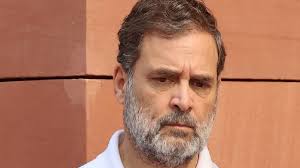
Rahul Gandhi urged Dalit youth to raise their voices and demand implementation of the Rohit Vemula Act. New Delhi: On the 10th death anniversary of Dalit student Rohith Vemula on Saturday, Congress leader Rahul Gandhi said the reality for youngsters from the community has not changed on campuses and stressed the need for an anti-discrimination law. Vemula, a 26-year-old Dalit student of the University of Hyderabad, died by suicide on January 17, 2016, following alleged harassment. In a post in Hindi on X, Gandhi said, “Today marks 10 years since Rohith Vemula’s passing. But Rohith’s question still resonates in our hearts: Does everyone in this country have an equal right to dream?” “Rohith wanted to study; he wanted to write. He wanted to understand science, society and humanity to make this country a better place. But this system could not tolerate a Dalit’s progress,” the leader of the opposition in the Lok Sabha said. Institutionalised casteism, social exclusion, daily humiliation, language that reminded him of his “place” and inhumane treatment — “this was the poison that pushed a promising young man to a point where his dignity was stripped away, and he was left alone”, Gandhi said. “And today? Has the reality for Dalit youth changed? The same contempt on campus, the same isolation in hostels, the same feeling of inferiority in classrooms, the same violence — and sometimes, the same death. Because caste is still the biggest admission form in this country,” he added. That is why the Rohit Vemula Act is not just a slogan but a necessity, the Congress leader asserted. “So that caste-based discrimination in educational institutions becomes a crime, strict action is taken against the perpetrators and the freedom to break, silence and exclude any student on the basis of their caste is ended,” he said. This fight is not just in Parliament, it is a fight of the youngsters on campuses and “it is our fight”, Gandhi said. “Dalit youth — raise your voices, organise yourselves, stand with each other. Demand: Implement the Rohit Vemula Act now. We need an anti-discrimination law now,” he stressed. The Congress governments in Karnataka and Telangana are in the process of implementing the law as soon as possible, he said. “We want an India that is just, humane and equal — where no Dalit student has to pay for their dreams with their life. Rohith, your fight is our responsibility,” Gandhi said. The death of the 26-year-old Dalit student on January 17, 2016, triggered a nationwide agitation against casteism in institutions of higher learning. Gandhi had joined the student protests over Vemula’s suicide. Courtesy : ETV Bharat Note: This news is originally published on https:/etvbharat.com/bha and is used purely for non-profit/non-commercial purposes, especially human rights
Indore water contamination: Rahul Gandhi visits families of deceased

NEW DELHI/INDORE: The Leader of the Opposition in the Lok Sabha, Rahul Gandhi, today met the families of the victims who died due to the consumption of contaminated drinking water in Indore and also those who are undergoing treatment in hospital. Gandhi accused the BJP government in Madhya Pradesh of criminal negligence over the deaths and illnesses caused by contaminated drinking water in the Bhagirathpura area of Indore, saying the government must take responsibility and ensure compensation and assistance to the affected families. After meeting the victims and their families, Gandhi said access to clean drinking water remains a serious issue in the country even today. He alleged that the failure to provide safe drinking water and control pollution reflected the government’s inability to discharge its basic responsibilities. Several people have died and many others have fallen ill after consuming contaminated water in the area, he noted, adding that such incidents were a direct consequence of administrative negligence. “The affected families must be given proper compensation and support,” he demanded. Quoting local residents, the Congress leader said there was still no assured supply of clean drinking water in Bhagirathpura, and that alternative arrangements were temporary and largely symbolic. He warned that once public attention faded, the situation could revert to its earlier state. Residents, he said, were demanding a permanent and systematic solution, which was fully justified. Gandhi said that as Leader of the Opposition, it was his duty to raise the concerns of the affected families and stand with them in their struggle for basic civic amenities. He also questioned the implementation of the Smart City scheme, remarking that this appeared to be the new model of a “Smart City” where citizens did not even have access to clean drinking water. The problem, he said, was not limited to Indore but was prevalent in many cities across the country. Later, in a post on X, Gandhi alleged that the BJP’s “double-engine government” model was marked by poisoned water, air, medicine and land, and that when questions were raised, bulldozers were deployed instead of accountability. He said no one was held responsible for the deaths of the poor, and demanded punishment for those responsible, along with proper treatment and immediate compensation for the victims. Courtesy : TOI Note: This news is originally published on https:/timesofindia.com/bha and is used purely for non-profit/non-commercial purposes, especially human rights